
Abstract
An excavator’s undercarriage system represents a significant portion of the machine’s total value and maintenance cost. Central to this system is the track roller, a component tasked with bearing the immense weight of the construction machinery and guiding the track chain. This guide provides a comprehensive examination of the excavator track roller in 2025, moving beyond simple operational descriptions to explore the nuanced principles of its function, maintenance, and longevity. It delves into the material science behind roller construction, the physics of load distribution, and the tribological challenges of its operating environment. By analyzing common failure modes through a diagnostic lens, the text offers seven professional strategies for operators and fleet managers. These strategies encompass proactive inspection protocols, optimized lubrication practices, and mindful operational techniques designed to mitigate wear. The objective is to empower readers with a deeper, more holistic understanding, transforming routine maintenance from a procedural checklist into a sophisticated practice of asset preservation, thereby enhancing machine uptime and operational efficiency.
Key Takeaways
- Conduct daily walk-around inspections to catch early signs of wear or damage.
- Implement a strict lubrication schedule based on operating hours and conditions.
- Understand the difference between single and double flange roller placement for correct maintenance.
- Optimize operating techniques, avoiding excessive high-speed travel and sharp turns.
- Properly clean the undercarriage to allow for accurate inspection of each track roller.
- Select high-quality replacement rollers based on material and manufacturing processes.
- Adjust track tension correctly to prevent accelerated wear on rollers and other components.
Table of Contents
- Tip 1: Understanding the Anatomy and Function of a Track Roller
- Tip 2: Mastering Regular Inspection and Cleaning Protocols
- Tip 3: Implementing a Proactive Lubrication Strategy
- Tip 4: Recognizing and Diagnosing Common Failure Modes
- Tip 5: Optimizing Operational Techniques to Reduce Wear
- Tip 6: Selecting the Right Replacement Track Roller for Your Machine
- Tip 7: Integrating Advanced Monitoring and Future Technologies
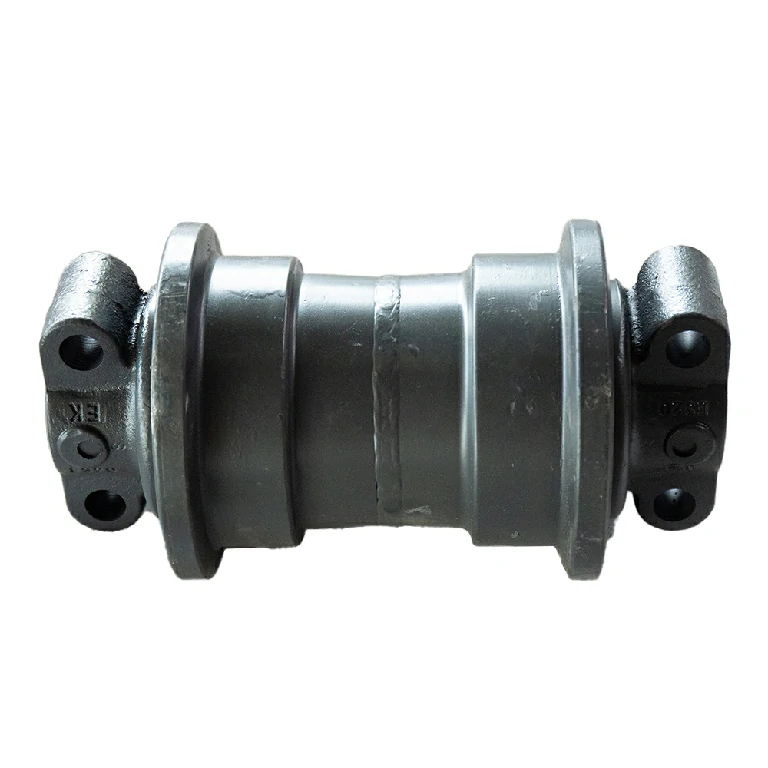
Tip 1: Understanding the Anatomy and Function of a Track Roller
To truly care for a machine, one must first develop an intimate understanding of its constituent parts, not merely as static objects but as dynamic participants in a complex mechanical ballet. The excavator’s undercarriage is a testament to this idea. It is the machine’s foundation, its connection to the earth, and the source of its mobility. Within this robust system of sprockets, idlers, and chains, the track roller plays a role of profound significance. It is a component of immense strength, yet its longevity is governed by principles of care and operational respect. Let us begin our exploration by dissecting this vital part, moving from its basic definition to the subtleties of its design and function.
What Exactly is a Track Roller?
At its most fundamental level, a track roller, sometimes called a bottom roller or lower roller, is a wheel. But what a wheel it is. It does not roll freely across an open road; instead, its journey is a confined one, perpetually guiding and supporting the heavy, articulated track chain. Imagine a freight train. The wheels of the train car carry the immense load, but they are guided by the fixed path of the railway track. The track roller serves a similar dual purpose. It is mounted to the bottom of the excavator’s track frame, and its primary responsibility is to bear the entire operational weight of the machine—which can be anywhere from a single ton for a mini-excavator to over 100 tons for a large mining machine—and transfer that load through the track chain to the ground.
Simultaneously, the grooved profile of the roller, known as the flange, engages with the track links. This engagement ensures the track chain remains aligned, preventing it from slipping off the undercarriage as the machine travels, turns, or works on uneven surfaces. So, a track roller is not just a passive wheel; it is an active guide, a load-bearing pillar, and a critical element for locomotion. Its health dictates the stability, efficiency, and smoothness of the entire machine’s movement. Without properly functioning rollers, the excavator would be unstable, its movement erratic, and the entire undercarriage system would be at risk of catastrophic failure.
The Core Components: A Look Inside
Peeling back the hardened steel shell of a track roller reveals a marvel of engineering designed to withstand incredible forces and harsh environments. The apparent simplicity of its exterior belies an internal complexity that is essential for its performance.
At the very heart of the roller is the shaft, a solid, hardened steel pin that serves as the axis of rotation. The shaft is fixed to the excavator’s track frame and provides the structural backbone for the entire assembly.
Rotating around this shaft is the roller body or shell. This is the part you see from the outside, the component that makes direct contact with the track chain. It is forged from a high-carbon, boron-alloyed steel, a material chosen for its exceptional toughness and resistance to abrasive wear. The manufacturing process is not simple casting; it involves forging to create a grain structure that provides superior strength, followed by a meticulous heat treatment process. This process hardens the outer surface to resist the grinding wear from the track links while leaving the core slightly softer and more ductile to absorb the shock loads without fracturing.
Between the stationary shaft and the rotating roller body are the bushings. These are typically bronze or a specialized bi-metal composite. The bushing is a sacrificial bearing surface, designed to provide a low-friction interface for rotation. Its quality is paramount; a poor-quality bushing will wear quickly, leading to excessive play, misalignment, and eventual failure of the entire roller.
Protecting this delicate internal environment from the outside world of mud, water, dust, and debris is the seal group. This is perhaps the most critical and sophisticated part of the roller. Modern track rollers use duo-cone seals, which consist of two finely lapped metal seal rings held in constant contact by two elastomeric toric rings. This design creates a hermetic seal that performs two functions simultaneously: it keeps the internal lubricating oil in, and it keeps external contaminants out. The failure of this seal is often the beginning of the end for a track roller.
Single Flange vs. Double Flange Rollers
As you inspect the line of track rollers along an excavator’s track frame, you may notice a subtle difference in their shape. Some will have a flange, or raised rim, on both sides, while others will have a flange on only one side. This is not an accident or a manufacturing defect; it is a deliberate design choice known as single flange and double flange configuration. The placement and alternation of these two types of rollers are engineered to provide optimal guidance for the track chain.
| Feature | Single Flange Track Roller | Double Flange Track Roller |
|---|---|---|
| Design | Features one guiding flange on the outer side. | Features two guiding flanges, one on each side. |
| Position | Typically placed adjacent to the track shoe guide lugs and sprocket. | Alternated with single flange rollers along the track frame. |
| Primary Function | Provides lateral guidance while allowing for slight track flexibility. | Provides rigid guidance, fully capturing the track link. |
| Application | Essential for guiding the chain around the curves of the sprocket/idler. | Forms the primary “rail” for the straight sections of the track. |
| Wear Pattern | Wear is concentrated on the single flange. | Wear can occur on both flanges, especially during frequent turning. |
Double flange rollers act like the primary rails of a railway, with their two flanges creating a deep channel that securely cradles the track link. They provide the main source of guidance along the straight sections of the track frame. Interspersed between them are the single flange rollers. These are strategically placed to align with the master pin and the raised portions of the track links, providing guidance without interference. This alternating pattern—double, single, double, single—creates a system that is both secure and flexible, allowing the track chain to navigate the transition around the sprocket and idler without binding while remaining firmly aligned during travel. Understanding this distinction is not just academic; it is vital for correct reassembly and for diagnosing specific wear patterns.
The Distinction Between Track Rollers and Carrier Rollers
A common point of confusion for those new to heavy machinery is the difference between a track roller and a carrier roller. Both are “rollers” and part of the undercarriage, but their location and function are entirely distinct. As we’ve established, track rollers are located on the bottom of the track frame, supporting the machine’s weight on the track chain that is in contact with the ground.
The carrier roller, or top roller, is located on the top side of the track frame. Its sole purpose is to support the weight of the track chain itself as it returns from the sprocket to the front idler. It prevents the long, heavy expanse of track from sagging excessively. A sagging track could strike the track frame, create undesirable vibrations, and potentially lead to de-tracking. The carrier roller bears no portion of the machine’s weight; its load is limited to the chain alone julimachinery.com. Consequently, carrier rollers are much smaller than track rollers and are not built to withstand the same immense compressive and shock loads. While both are important for a healthy undercarriage, their roles, and therefore their maintenance requirements and failure modes, are fundamentally different. Confusing the two can lead to incorrect parts ordering and improper maintenance assessments.
Tip 2: Mastering Regular Inspection and Cleaning Protocols
The relationship between an operator and their machine is built on a foundation of observation and response. The machine communicates its state of health through subtle cues—a new sound, a slight vibration, a streak of oil. The diligent operator learns to read this language. For the excavator undercarriage, a system that accounts for up to 50% of a machine’s lifetime maintenance costs, this language is written in patterns of wear, the presence of debris, and the integrity of its components. Mastering a disciplined regimen of inspection and cleaning is not a chore; it is the most effective and economical form of preventative medicine you can practice for your construction machinery.
The Daily Walk-Around: Your First Line of Defense
Before the engine ever turns over, before the day’s work begins, the daily walk-around inspection should be an inviolable ritual. This is not a casual stroll but a focused examination. For the undercarriage, this means crouching down and looking closely at the track rollers. What are you looking for?
First, look for the obvious: signs of leakage. A coating of oil mixed with dust and dirt around the end caps of a track roller is a red flag. It indicates that the duo-cone seal has failed. This roller is now living on borrowed time. The internal lubricant is escaping, and abrasive dirt and water are making their way in, rapidly destroying the internal bushings and shaft.
Second, check for any rollers that are not turning freely. You can often spot this by looking for a shiny, flattened spot on the roller’s running surface. This “flat-spotting” occurs when a roller seizes and is dragged along by the track chain instead of rotating with it. This creates immense friction and accelerates wear on both the roller and the expensive track links.
Third, look for structural damage. Inspect the roller flanges for significant chipping, cracking, or excessive, knife-edged wear. Check the bolts that secure the roller to the track frame, ensuring they are all present and appear tight. This entire process may take only five minutes, but those five minutes can be the difference between catching a problem early and dealing with a major, work-stopping failure later.
Establishing a Formal Inspection Schedule
While the daily walk-around is essential for catching acute problems, a more formal, documented inspection process provides a long-term view of undercarriage health. This is particularly important for fleet managers in regions like Australia’s mining sector or large-scale construction projects in the Middle East, where machine uptime is paramount.
This formal inspection should be conducted at regular service intervals, perhaps every 250 or 500 hours, and the findings should be recorded. This involves more than just a visual check. It may involve using specialized tools to measure the wear on roller treads and flanges. By tracking these measurements over time, you can establish a wear rate for each component. This data is incredibly powerful. It allows you to move from a reactive maintenance model (fixing things when they break) to a predictive one. You can forecast when a set of rollers will likely reach the end of their service life and schedule their replacement during planned downtime, rather than suffering an unexpected failure in the middle of a critical job. This data-driven approach, championed by many leading equipment specialists, transforms maintenance from an expense into a strategic investment in reliability.
The Art of Cleaning: More Than Just Aesthetics
In many working environments, from the muddy agricultural fields of Southeast Asia to the dusty quarries of Africa, an excavator’s undercarriage quickly becomes packed with material. It is tempting to view this buildup as a normal consequence of work, but it is a silent enemy to the track roller.
Packed material, especially when it is abrasive or corrosive, significantly accelerates wear. It fills the space between the moving components, grinding away at the roller shells, flanges, and seal guards. When this material freezes in colder climates like Russia, it can become as hard as concrete, placing immense strain on the rollers and track chain when the machine is started, potentially causing immediate and severe damage.
Furthermore, a dirty undercarriage is an uninspectable undercarriage. You cannot see a leaking seal, a loose bolt, or a cracked flange when it is hidden under a thick layer of dried mud. Therefore, regular cleaning is a prerequisite for effective inspection. Using a pressure washer or a simple spade at the end of each workday to clear out the bulk of the accumulated debris is a vital task. It not only extends the life of the rollers by reducing abrasive wear but also enables the daily inspection to be meaningful. A clean undercarriage is a transparent undercarriage, one that can clearly communicate its state of health.
Identifying Early Warning Signs of Wear
Learning to identify the early signs of wear is like a doctor learning to spot the first symptoms of a disease. It allows for early intervention before the condition becomes critical. For a track roller, the signs progress in a predictable pattern.
The first sign is often “peening” on the roller tread. This appears as a slight flattening or mushrooming of the metal at the edges of the contact surface, caused by the immense pressure from the track links. While some peening is normal, excessive peening can indicate an overload condition or improper track tension.
Next, you will observe flange wear. As the track chain moves, it exerts side forces on the roller flanges, especially during turning. The flanges will begin to thin out. When they become sharp or “knife-edged,” their ability to guide the track is compromised, and the risk of de-tracking increases.
Simultaneously, the roller tread itself will wear down. As the diameter of the roller decreases, it affects the geometry of the entire undercarriage. The pitch between rollers effectively changes, which can accelerate wear on the track link bushings. Measuring the roller diameter and comparing it to the manufacturer’s specifications is a key part of the formal inspection process. Recognizing these signs and understanding what they signify allows you to take corrective action, whether it is adjusting operator habits, checking track tension, or scheduling a replacement before a minor wear issue cascades into a major system failure.
Tip 3: Implementing a Proactive Lubrication Strategy
Within the hardened steel shell of every track roller lies a carefully engineered ecosystem of moving parts. This ecosystem’s survival depends entirely on one thing: proper lubrication. Lubrication is the lifeblood of the roller. It reduces friction, dissipates heat, and prevents the catastrophic metal-on-metal seizure of the internal components. To neglect lubrication is to sentence the roller to a premature and costly death. A proactive lubrication strategy is not merely about adding oil; it is about understanding its function, using the correct type, and applying it at the right time.
Why Lubrication is the Lifeblood of Your Rollers
Let us visualize what happens inside a track roller as it works. The outer shell, weighing hundreds of kilograms and supporting many tons of the machine’s weight, is spinning around a stationary steel shaft. The only thing preventing these two powerful components from grinding each other into dust is a microscopic film of oil, often no thicker than a human hair, maintained within the space of the bronze bushing.
This oil film performs several heroic tasks. First, it mitigates friction. Without it, the heat generated would be immense, causing the metal to expand, warp, and eventually weld itself together in a permanent seizure. Second, it acts as a coolant, carrying heat away from the high-pressure contact zone between the bushing and the shaft and dissipating it through the roller body. Third, it helps to flush away microscopic wear particles that are inevitably created, preventing them from accumulating and acting as an abrasive paste.
The integrity of this oil film is protected by the duo-cone seals. When these seals function correctly, the oil can last for the intended service life of the roller. However, as one maintenance guide points out, in harsh conditions, these seals can be compromised. When a seal fails, this entire protective system collapses. The oil leaks out, and contaminants like water, sand, and grit pour in. The result is a rapid escalation of wear. The friction and heat skyrocket, the bushing is quickly destroyed, and the roller seizes. This is why a small oil leak spotted during a daily inspection is such a critical warning.
Choosing the Right Lubricant for Your Environment
Not all lubricating oils are created equal. The oil inside a track roller must be robust enough to handle extreme pressures and a wide range of temperatures. For most modern track rollers, manufacturers specify a heavy-duty gear oil, typically in the SAE 30 to SAE 50 viscosity range. The choice depends heavily on the ambient operating temperature.
In the hot climates of the Middle East or central Australia, a thicker, higher-viscosity oil (like SAE 50) is necessary. A thinner oil would lose too much viscosity at high temperatures, failing to provide an adequate protective film. Conversely, in the frigid winters of Russia or Korea, a thinner, lower-viscosity oil (like SAE 30) is required. A thicker oil would become too stiff in the cold, preventing it from flowing properly into the tight clearances of the bushings upon startup, leading to a period of “dry running” and accelerated wear.
It is paramount to consult the machine manufacturer’s operation and maintenance manual for the specific recommendation for your machine and climate. Using the wrong type of oil can be just as damaging as using no oil at all. Some older or specialized rollers may have grease zerks instead of being oil-filled. In these cases, it is equally important to use the specified type of grease, typically one with extreme pressure (EP) additives.
Step-by-Step Lubrication Procedure
For rollers that are designed to be “lubricated-for-life,” your primary job is to protect the seals that keep the factory-filled oil in place. For rollers that require periodic relubrication (which is less common in modern designs but still exists), or for situations where a seal has been replaced, a precise procedure must be followed.
- Position the Machine: The first step is to position the machine safely. If possible, rotate the track so that the fill plug on the roller you are servicing is in the “3 o’clock” or “9 o’clock” position. This prevents the oil from immediately spilling out when the plug is removed. It is also wise to raise the side of the machine you are working on, taking the weight off the rollers. This allows the lubricant to distribute more evenly and makes inspection easier.
- Clean the Area: Thoroughly clean the area around the fill plug. You do not want to introduce any dirt or grit into the roller’s internal mechanism during the filling process.
- Release Pressure: Slowly and carefully loosen the plug. There may be some pressure built up inside the roller, especially if it is warm. Loosening it slowly allows this pressure to vent safely.
- Fill to the Correct Level: Using a clean funnel or a dedicated oil pump, add the specified type of oil. The correct fill level is crucial. You should fill the roller until the oil is level with the bottom of the fill plug opening. Overfilling can be as damaging as underfilling. An overfilled roller has no room for the oil to expand as it heats up, which can blow out the very seals you are trying to protect.
- Replace and Tighten the Plug: Once filled, reinstall the plug and tighten it to the manufacturer’s specified torque. Do not overtighten, as this can damage the threads or the plug itself.
Common Lubrication Mistakes to Avoid
Even with the best intentions, mistakes can happen. Being aware of common pitfalls can help you avoid them.
- Ignoring a Leak: The most common mistake is seeing a minor leak and ignoring it. A leaking track roller is a failed roller. It needs to be replaced. Attempting to “top it off” every day is a futile and costly exercise that ignores the root problem: a breached seal and ongoing internal contamination.
- Using the Wrong Oil: As discussed, using an oil with the incorrect viscosity for your climate can lead to inadequate lubrication and premature failure.
- Overfilling: The temptation to add “a little extra for good measure” must be resisted. The resulting pressure buildup from thermal expansion will destroy the seals.
- Contamination During Filling: Using dirty funnels, pumps, or rags can introduce abrasive particles into the clean internal environment of the roller, defeating the purpose of the lubrication.
- Mixing Lubricants: Never mix different types or brands of oil unless you are certain they are compatible. Incompatible additives can react with each other, reducing the effectiveness of the lubrication.
By treating lubrication not as a menial task but as a precise, technical procedure, you actively safeguard the health and extend the life of one of your machine’s most critical and expensive components.
Tip 4: Recognizing and Diagnosing Common Failure Modes
A track roller leads a brutal existence. It is perpetually squeezed, shocked, and abraded in an environment saturated with dirt and moisture. It is a testament to modern metallurgy and engineering that they last as long as they do. However, failure is an eventual certainty. The key to managing an undercarriage effectively is to recognize the signs of impending failure long before it becomes catastrophic. Learning to diagnose these failure modes is a skill that saves both time and money, allowing for planned interventions rather than costly, reactive repairs.
Flat Spotting: Causes and Prevention
One of the most distinctive signs of a problem is “flat spotting.” This occurs when a track roller seizes and stops rotating. As the excavator moves, the rotating track chain drags the stationary roller along, grinding a flat spot into its hardened surface. You can often hear this as a rhythmic clunking sound as the machine travels, once per track revolution.
The primary cause of a seizure is a complete loss of internal lubrication. This is almost always preceded by a seal failure, which allows the oil to escape and contaminants to enter. The abrasive slurry of dirt and water rapidly wears away the internal bushings. Friction and heat build up until the roller’s internal components weld themselves together.
Prevention of flat spotting, therefore, is fundamentally about protecting the seals and ensuring proper lubrication. This circles back to our previous tips: diligent daily inspections to spot leaks early, regular cleaning to prevent abrasive material from packing around and damaging the seal guards, and avoiding operating in deep, corrosive water for extended periods where possible. Once a roller has a significant flat spot, it is beyond repair. It must be replaced, as it will cause severe damage to the track links it contacts with every rotation of the track.
Flange Wear: The Telltale Signs
The flanges on a track roller are its guiding hands. They keep the powerful track chain in line. As the machine turns or works on side slopes, the track links push against these flanges, causing them to wear. A certain amount of flange wear is normal over the life of a roller. However, excessive or rapid flange wear is a symptom of an underlying issue.
| Failure Mode | Visual Signs | Primary Causes | Preventative Actions |
|---|---|---|---|
| Flat Spotting | A shiny, flattened area on the roller tread; rhythmic clunking sound. | Internal seizure due to lubrication loss (seal failure). | Daily leak inspection; regular undercarriage cleaning. |
| Flange Wear | Flanges become thin, sharp, or “knife-edged.” | Excessive turning; consistent operation on side slopes; track misalignment. | Vary turning directions; minimize side-slope work; check track alignment. |
| Seizure/Leakage | Oily residue on roller body/frame; roller does not turn. | Seal failure from age, damage, or improper installation. | Protect seal guards; avoid deep water/corrosive material. |
| Shell Cracking | Visible cracks on the roller body, often originating from the tread. | Extreme shock loads (e.g., dropping machine); material fatigue. | Avoid high-impact operations; operate machine smoothly. |
The most common cause of excessive flange wear is the operator’s technique. Constant turning in one direction will wear down the flanges on one side of the machine much faster than the other. Working continuously on a side slope, or “scalloping,” also places a constant side load on the flanges.
Another significant cause is track misalignment. If the front idler and the rear sprocket are not perfectly aligned, the track chain will constantly try to walk to one side, exerting a continuous thrust against the roller flanges. This can be caused by a worn idler guide plate or a bent track frame.
Recognizing flange wear involves both visual inspection and measurement. When the flanges become thin and sharp, they lose their ability to guide the track effectively and can even start to cut into the track links. The solution involves a combination of operator training to minimize aggressive turning and scalloping, along with periodic checks of the undercarriage alignment.
Seizure and Oil Leaks: A Critical Failure
As we have discussed, an oil leak is the death knell for a track roller. It is the most critical failure mode to identify because it is the root cause of seizure and flat spotting. When you see the telltale streak of oil and dirt on the side of a roller, you are seeing the direct evidence of a failed duo-cone seal.
What causes these robust seals to fail? There are several culprits. Age is one; the elastomeric rings that energize the seals can lose their elasticity over time. Damage is another major cause. A rock or piece of debris getting wedged between the track frame and the roller can strike the seal guard, deforming it and compromising the seal. Improper installation during a previous repair can also lead to premature failure. Finally, operating for long periods in highly abrasive or corrosive slurry can wear away the seal components.
The diagnosis is simple: if it leaks, it has failed. There is no field repair for a duo-cone seal. The roller must be removed from the machine and replaced. This is why a proactive approach is so valuable. By purchasing high-quality replacement track rollers with robust seals and protecting them through diligent cleaning and careful operation, you can significantly extend their life and prevent these critical failures.
The Domino Effect: How One Failed Roller Impacts the System
It can be tempting to ignore a single failed track roller, especially if the machine seems to be operating “well enough.” This is a costly mistake. The undercarriage is a system of interconnected parts, and the failure of one component inevitably places additional stress on its neighbors.
A seized or worn-out roller no longer supports its share of the machine’s weight. This load is immediately transferred to the adjacent rollers, increasing their workload and accelerating their wear. A roller with worn-down flanges can no longer properly guide the track, which can lead to increased wear on the flanges of other rollers and on the sides of the track links themselves.
Think of it as a single pothole on a busy road. Cars swerve to avoid it, which wears down the shoulders of the road and puts stress on the suspension of the cars. In the same way, a single bad roller disrupts the smooth, balanced operation of the entire undercarriage. This disruption creates a cascading failure effect, where one failed part leads to the premature failure of several others. Addressing a single failed roller promptly is always more cost-effective than waiting until its failure has damaged other expensive components like the track chain or other rollers.
Tip 5: Optimizing Operational Techniques to Reduce Wear
The single greatest factor influencing the lifespan of an excavator’s undercarriage is the person sitting in the operator’s seat. A skilled, conscientious operator can double the life of the undercarriage components compared to an aggressive or untrained one. The machine is a tool, and like any tool, the way it is wielded determines its longevity. Optimizing operational techniques is not about working slower; it is about working smarter, minimizing unnecessary stress on critical components like the track roller, and understanding the physics of the machine’s movement.
The Perils of High-Speed and Reverse Travel
Most modern excavators have two travel speeds. The high-speed setting is useful for “tramming,” or moving the machine longer distances across a level, prepared job site. However, extensive use of high-speed travel, especially on rough ground, dramatically accelerates undercarriage wear. The forces involved increase exponentially with speed. Every bump and jolt is magnified, sending shockwaves through the track rollers and the entire system.
Reverse travel is even more detrimental. The track chain is designed to operate most efficiently with the pulling force coming from the top, with the sprocket pulling the chain over the carrier rollers and idler. When traveling in reverse, the sprocket pushes the chain into the ground under the track rollers. This creates significantly more wear on the track link and roller bushings because the contact point and load dynamics are altered. While reverse operation is unavoidable, minimizing long-distance or high-speed travel in reverse can have a substantial positive impact on the life of your track rollers and track chains. A good rule of thumb is to plan your work to keep forward travel at around 80% of your total movement.
Navigating Slopes and Uneven Terrain
Working on slopes is a common requirement for excavators, but it places unique stresses on the undercarriage. When traveling straight up or down a slope, the weight of the machine shifts, placing a disproportionate amount of load on the rollers at the rear (going uphill) or the front (going downhill). There is not much to be done about this, but it is something to be aware of.
The more damaging practice is working or traveling sideways across a slope, a technique known as “scalloping.” This places a constant lateral load on the entire undercarriage. The track chain is constantly trying to slide downhill, which forces it against the flanges of the track rollers and the sides of the idlers. This leads to rapid and severe flange wear, one of the most common and preventable failure modes. Whenever possible, work should be planned to be performed straight up and down the grade. If traversing a slope is necessary, it should be done with care and for the shortest distance possible.
Similarly, on uneven, rocky ground, every effort should be made to travel smoothly. Avoid letting one track drop into a deep rut or climbing over a large obstacle, as this places enormous torsional stress on the track frame and creates massive point loads on individual rollers.
Avoiding “One-Sided” Wear Patterns
Machines, like people, can develop habits. An operator who consistently makes wide, sweeping turns to the left will cause significantly more wear on the right-side undercarriage components, and vice-versa. This is because the outer track must travel a much greater distance than the inner track during a turn, resulting in more rotations for the outer track rollers and more scrubbing action.
A simple way to combat this is to consciously alternate turning directions throughout the workday. If you made several left turns in the morning, try to make a few more right turns in the afternoon. This helps to even out the wear on both sides of the machine. Another damaging habit is making sharp, “pivot” or “counter-rotation” turns on high-traction surfaces like concrete or asphalt. This action forces the tracks to skid sideways, creating immense torsional stress on the track links and side-loading the roller flanges. It is far better to make wider, three-point turns whenever the space allows.
The Impact of Track Tension on Roller Life
Track tension, or “sag,” is one of the most misunderstood aspects of undercarriage maintenance. There is a common misconception that a tighter track is a better track. This is dangerously incorrect. A track that is too tight is one of the most destructive and costly conditions for an undercarriage.
When a track is overly tensioned, it creates a massive, constant load on all the rotating components. It dramatically increases the friction between the track link pins and bushings. More relevant to our discussion, it puts immense pressure on the track roller shafts and bushings, as well as the bearings in the front idler and the final drive sprocket. A track that is too tight can increase wear rates by 50% or more. It robs the machine of horsepower, wastes fuel, and puts the entire system under a state of constant, high stress.
Conversely, a track that is too loose is also problematic. It can cause the track to “whip” at high speeds and increases the risk of de-tracking, especially when working on slopes or in reverse. A loose track also fails to engage properly with the roller flanges, which can lead to erratic wear.
The correct procedure is to adjust the track tension according to the manufacturer’s specifications and the current working conditions. A track operating in muddy, packing conditions should be run slightly looser than a track working on hard, dry ground. The mud needs space to be squeezed out; a tight track will trap it, creating the “concrete” effect we discussed earlier. Learning to properly measure and adjust track sag is a fundamental skill for any operator or mechanic and pays enormous dividends in extending the life of every track roller.
Tip 6: Selecting the Right Replacement Track Roller for Your Machine
There will come a time in the life of every excavator when its original track rollers reach the end of their service life. Wear is inevitable. The decision of what to replace them with, however, is a critical one that will directly impact the machine’s future performance, reliability, and operating cost. This choice goes beyond simply finding a part that fits. It involves a considered evaluation of quality, manufacturing methods, and the reputation of the supplier. Making a wise choice here is an investment in future uptime.
OEM vs. Aftermarket: A Considered Decision
One of the first questions fleet managers and owner-operators face is whether to purchase Original Equipment Manufacturer (OEM) parts or to explore the aftermarket. There are valid considerations on both sides.
OEM rollers are those produced by or for the excavator’s original manufacturer (e.g., Caterpillar, Komatsu, Volvo). The primary advantage is guaranteed compatibility and quality. You know the part will fit perfectly and has been manufactured to the exact material and heat treatment specifications as the original. The downside is typically a higher price point.
The aftermarket, on the other hand, offers a vast landscape of options. The quality can range from exceptional to dangerously poor. The primary appeal of aftermarket parts is often a lower initial purchase price. A high-quality aftermarket track roller from a reputable supplier can offer performance equivalent to OEM at a more competitive cost. These suppliers often specialize in undercarriage parts and have invested heavily in their own research, development, and quality control. The danger lies with low-cost, low-quality providers who cut corners on materials or manufacturing processes. A cheap roller that fails prematurely will cost far more in downtime and collateral damage than was saved on the initial purchase. The key is not to choose aftermarket over OEM, but to choose quality over mediocrity, regardless of the source.
Material Science: What Makes a Quality Roller?
The performance of a track roller is born in fire and pressure. Its durability is determined long before it is ever bolted to a machine. The difference between a premium roller and a substandard one lies in the unseen worlds of material science and manufacturing processes.
A top-tier track roller shell is not simply cast iron. It begins as a forged piece of high-carbon, boron-alloyed steel. Forging, the process of shaping metal using localized compressive forces, creates a continuous grain structure that follows the contour of the roller. This provides superior strength and resistance to the high-impact shock loads an excavator experiences. Simple casting, a cheaper alternative, results in a more random grain structure that is more susceptible to cracking under stress.
After forging, the roller undergoes a meticulous heat treatment process known as induction hardening. This is a sophisticated technique where the roller body is passed through a high-frequency magnetic field, which rapidly heats the surface layer. It is then immediately quenched. This process creates a deeply hardened outer shell (often to a depth of several millimeters) with a Rockwell hardness capable of resisting intense abrasive wear. Importantly, it leaves the inner core of the roller slightly softer and more ductile. This ductility is what allows the roller to absorb shock loads without fracturing. A roller that is hardened all the way through would be too brittle, while one that is not hardened enough would wear out quickly. The precision of this differential heat treatment is a hallmark of a quality manufacturer and a key reason to work with a reliable undercarriage parts supplier.
Matching the Roller to Your Application and Machine
When selecting a replacement, it is vital to ensure you are getting the correct roller for your specific excavator model. While some rollers may look similar, small differences in dimensions, shaft size, or bolt patterns can make them incompatible. Always use the machine’s make, model, and serial number to confirm the correct part number.
Beyond just the model, consider your primary application. If your machine works predominantly in high-impact applications like a rock quarry or demolition, investing in premium, forged rollers is a wise decision. The superior shock resistance will pay for itself in longevity. If your work is mainly in soft soil or general earthmoving, a high-quality standard roller might be perfectly sufficient. A good supplier can provide guidance on the best option for your specific needs, ensuring you are not overpaying for a specification you do not require, nor under-specifying and risking premature failure. This is where the expertise of a specialized company that understands the nuances of construction machinery proves invaluable.
The Importance of a Reliable Supplier
In the global marketplace, especially with customers in diverse regions from Korea to Africa, the role of the supplier is paramount. A good supplier is more than just a parts store; they are a partner in your machine’s health. What defines a reliable supplier?
First, they have a deep understanding of their products. They can speak intelligently about the forging and heat treatment processes of their rollers. They understand the difference in quality between their products and lower-grade alternatives. Second, they maintain a robust inventory. In the world of construction, downtime is incredibly expensive. The ability to get the right part quickly is vital. A supplier with a strong logistical network and warehousing can minimize the time your machine is out of action. Third, they stand behind their products with a solid warranty and responsive customer service. This provides peace of mind and demonstrates their confidence in the quality of what they sell. Finally, a company with a long-standing history and a commitment to the industry, as seen in those who openly share their company’s philosophy, is often a safer bet than a transient, faceless online vendor. Your relationship with your parts supplier is as important as your relationship with your mechanic or your operators.
Tip 7: Integrating Advanced Monitoring and Future Technologies
For decades, undercarriage management has been a largely reactive and experience-based discipline. A seasoned mechanic could listen to a track, look at the wear patterns, and make an educated guess about its remaining life. While that expertise remains invaluable, the industry is now on the cusp of a technological shift. The integration of data, sensors, and predictive analytics is beginning to transform undercarriage maintenance from an art into a science. For forward-thinking fleet managers in 2025, embracing these new technologies is the next frontier in maximizing efficiency and minimizing costs.
The Rise of Telematics in Undercarriage Management
Telematics systems, which use GPS and onboard sensors to transmit machine data wirelessly, have become standard on most new construction machinery. Initially used for tracking location, engine hours, and fuel consumption, these systems are becoming increasingly sophisticated. They now monitor a host of operational parameters that have a direct impact on undercarriage wear.
Modern telematics can track the percentage of time a machine spends traveling in high speed versus low speed, the amount of time spent traveling in reverse, and even the amount of time spent turning. This data provides an objective, unbiased look at how a machine is being operated. A fleet manager can now see if a particular machine is being subjected to consistently high-wear practices. This allows for targeted operator training, not based on assumptions, but on hard data. For example, if the data shows one excavator has a reverse travel time of 40% while the fleet average is 15%, it is a clear opportunity for an intervention that will save thousands of dollars in premature track roller and bushing wear.
Ultrasonic Testing for Internal Flaw Detection
One of the challenges with track roller maintenance is that some of the most critical failures begin deep inside the component. A microscopic crack forming in the core of a roller shell due to a manufacturing defect or extreme shock load is invisible to the naked eye. It will only become apparent when it propagates to the surface and causes a catastrophic failure.
To combat this, some advanced maintenance programs are adopting ultrasonic testing (UT) techniques, similar to those used in the aerospace and pipeline industries. UT uses high-frequency sound waves to inspect the internal structure of the steel. A technician places a probe on the roller, and the device sends a sound pulse through it. By analyzing the returning echoes, the device can detect internal discontinuities like cracks, voids, or inclusions.
While this is still a specialized practice, it is being used for critical applications, such as on large mining shovels where a single roller failure can halt a multi-million-dollar operation. As the technology becomes more portable and affordable, we can expect to see it become a more common diagnostic tool in general construction fleets, allowing for the detection of flawed rollers before they are even put into service or after a significant impact event.
The Future: Smart Rollers with Embedded Sensors
The holy grail of undercarriage management is the ability to know the precise condition of a component in real-time. The future, which is rapidly approaching, lies in “smart” components. Imagine a track roller with a sensor embedded within it. This sensor could monitor several key parameters directly.
A temperature sensor could provide an early warning of lubrication failure, detecting the rise in heat long before a seizure occurs. A vibration sensor could analyze the roller’s vibration signature, detecting the characteristic frequencies associated with a failing bushing or a developing flat spot. A pressure sensor could even monitor the internal pressure to confirm the integrity of the duo-cone seals.
This data would be transmitted wirelessly to the machine’s main telematics unit and then to the fleet manager’s dashboard. Instead of seeing an oil leak and knowing the roller has already failed, the manager would get an alert: “Warning: Roller #4 on Excavator #12 shows elevated temperature. Probable seal failure. Schedule replacement.” This is the essence of predictive maintenance. It allows for repairs to be made at the most opportune time, with minimal disruption and before any collateral damage can occur. While not yet widespread in 2025, several manufacturers and technology companies are actively developing and testing these systems.
Building a Predictive Maintenance Culture
The adoption of these technologies is not just about buying new hardware; it requires a cultural shift within the organization. It means moving away from the “if it ain’t broke, don’t fix it” mentality. It requires a commitment to data analysis and trusting the insights that the data provides. It means training mechanics and technicians in how to use these new diagnostic tools and interpret their findings.
Building a predictive maintenance culture involves integrating the data from telematics and sensors with the traditional hands-on inspection data. It means creating a comprehensive health record for each machine’s undercarriage. This holistic view allows for more accurate forecasting of component life, better inventory management of spare parts like rollers, buckets, and rippers, and more efficient scheduling of maintenance downtime. It transforms the maintenance department from a cost center into a strategic contributor to the company’s profitability and reliability. For any company operating heavy machinery, this is the path forward.
FAQ
How often should I replace my excavator track rollers? There is no fixed time interval. Replacement is based on condition, not hours. It depends on your machine’s application, operating techniques, and maintenance practices. Regular inspection and measurement of wear on the roller tread and flanges against the manufacturer’s wear limits are the best way to determine when replacement is necessary.
Can I replace just one track roller, or should I replace them all at once? If a single roller fails prematurely due to a defect or damage, you can replace just that one. However, if the rollers are wearing out from normal use, it is often most cost-effective to replace them all at the same time, along with the carrier rollers. This is because a new roller mixed with worn ones will have a different diameter, creating uneven load distribution and potentially accelerating wear on the new component and the track chain.
What is the difference between a track roller and a carrier roller? A track roller (or bottom roller) is located on the bottom of the track frame and supports the full weight of the excavator on the track chain. A carrier roller (or top roller) is on top of the frame and only supports the weight of the track chain itself as it returns to the front idler. Carrier rollers are smaller and built for a much lighter load.
What causes a track roller to leak oil? An oil leak is almost always caused by the failure of the internal duo-cone seal. This can happen due to age, impact damage to the roller’s seal guard, improper installation, or operating for extended periods in abrasive or corrosive materials that wear down the seal faces.
How does improper track tension affect track rollers? A track that is too tight creates immense, constant friction and load on the roller’s internal bushings and shaft, dramatically accelerating wear. A track that is too loose can cause the track to slap against the rollers and increases the risk of the track coming off, which can damage the roller flanges.
Are aftermarket track rollers as good as OEM? The quality of aftermarket rollers varies greatly. High-quality aftermarket rollers from a reputable supplier can meet or even exceed OEM specifications in terms of materials and manufacturing processes, offering excellent value. However, low-cost, low-quality aftermarket rollers can fail quickly, costing more in the long run. The key is to choose a trusted supplier, not just the lowest price.
What are the main signs of a failing track roller? The primary signs are oil leaking from the end caps, a roller that has seized and developed a “flat spot,” excessive or sharp wear on the flanges, and a rhythmic clunking sound during travel. Any of these signs warrant immediate inspection and likely replacement.
A Concluding Thought
The intricate dance of steel that is an excavator’s undercarriage is a marvel of engineering, and the track roller is one of its lead performers. Our journey through its function, maintenance, and potential failures reveals a simple truth: knowledge and diligence are the greatest tools for preservation. By moving beyond a simple checklist and fostering a deeper understanding of the forces at play—the importance of a clean machine, the life-giving properties of lubrication, the language of wear patterns, and the wisdom of intelligent operation—we empower ourselves. We transform the act of maintenance from a reactive chore into a proactive strategy. Caring for these vital components is not merely about preventing breakdowns; it is about honoring the incredible power and potential of the machines we command, ensuring they remain productive, reliable, and safe for their full, intended life.