
خلاصة
An examination of heavy machinery operation reveals that undercarriage systems can constitute up to half of a machine's total maintenance expenditure. ويضع هذا الواقع عبئا كبيرا على مديري الأساطيل والمشغلين المالكين, الذي يجب أن يتنقل في السوق المعقد لقطع الغيار. توفر هذه المقالة إطارًا تحليليًا شاملاً لاختيار حلول ما بعد البيع للهيكل السفلي من Caterpillar في 2025 مشهد المعدات الثقيلة. فهو يتجاوز المقارنة المبسطة لنقاط السعر الأولية إلى منهجية تقييم أكثر قوة. يتعمق التحليل في المبادئ الأساسية لعلم المواد, تقنيات التصنيع المتناقضة مثل تزوير والصب, وتوضيح التأثير العميق للتركيب المعدني والمعالجة الحرارية على طول عمر المكونات. كما أنه يدقق في فلسفات الهندسة والتصميم, الأهمية الحاسمة لمصداقية الموردين والبنية التحتية الداعمة, وتنفيذ التكلفة الإجمالية للملكية (TCO) نموذج. الهدف هو تزويد صناع القرار بالأدوات الفكرية اللازمة ليكونوا مطلعين, الاختيارات العقلانية التي تعمل على تحسين وقت تشغيل الماكينة, تعزيز الكفاءة التشغيلية, وتأمين الجدوى المالية على المدى الطويل.
الوجبات الرئيسية
- تقييم مواصفات المواد وعمليات المعالجة الحرارية, not just the part's dimensions.
- إعطاء الأولوية لموردي ما بعد البيع الذين يظهرون تحسينات في التصميم على الهندسة العكسية البسيطة.
- Assess a supplier's warranty, الدعم الفني, والتواجد الإقليمي قبل الشراء.
- التركيز على التكلفة الإجمالية للملكية (TCO) بدلاً من سعر الشراء الأولي وحده.
- اختر حلول ما بعد البيع للهيكل السفلي من Caterpillar وفقًا لظروف موقع العمل المحددة لديك.
- قم بفحص أجزاء الهيكل السفلي وصيانتها بانتظام لزيادة عمرها التشغيلي إلى أقصى حد.
- افهم أن الصيانة المناسبة وأجزاء الجودة تعمل معًا لتقليل وقت التوقف عن العمل.
جدول المحتويات
- الغوص العميق في علوم المواد وعمليات التصنيع
- الهندسة والتصميم: ما وراء نسخة بسيطة
- تقييم مصداقية الموردين وأنظمة الدعم
- التكلفة الإجمالية للملكية (TCO) مقابل. سعر الشراء الأولي
- الاختيار والصيانة الخاصة بالتطبيقات
- الأسئلة المتداولة (التعليمات)
- خاتمة
- مراجع
الغوص العميق في علوم المواد وعمليات التصنيع
إن قرار الاستثمار في استبدال أجزاء الهيكل السفلي لماكينة Caterpillar لا يعد مجرد مهمة شراء; إنه تمرين في الهندسة التطبيقية والاستشراف المالي. تتعرض المكونات الأرضية في الجرار أو الحفار لضغط هائل, كشط, والتأثير. إن قدرتها على تحمل هذه القوى ليست مسألة صدفة ولكنها نتيجة مباشرة لتكوينها المادي ورحلة التصنيع التي مرت بها. الاختيار بحكمة يعني النظر إلى ما هو أبعد من الطلاء وبطاقة السعر, والبدء في فهم روح الفولاذ الذي ولدت منه هذه الأجزاء. هذه النقطة الأولى من قائمتنا المرجعية, لذلك, هو الأساس: يجب أن تصبح طالبًا للمواد والأساليب. بدون هذا الفهم, أنت تتنقل في سوق معقد بخريطة غير مكتملة, حيث يؤدي أدنى سعر في كثير من الأحيان إلى أعلى تكلفة.
روح الفولاذ: فهم المعادن في أجزاء الهيكل السفلي
دعونا نفكر في ما هو "الصلب" حقا. It's easy to think of it as a single, مادة موحدة, ولكن هذا تبسيط عميق. الصلب هو سبيكة, وصفة متطورة من الحديد والكربون, مع مجموعة من العناصر الأخرى المضافة بكميات دقيقة لتحقيق خصائص محددة. Think of a master chef who doesn't just use flour, ولكنه يختار بعناية محتوى معينًا من الطحن والبروتين, ثم يضيف الملح, خميرة, وربما مكونات أخرى لصنع رغيف الخبز المثالي لغرض محدد. تعمل المعادن على مبدأ مماثل.
أساس وصفتنا هو الحديد, ولكن في شكله النقي, أنها لينة نسبيا. عامل التصلب الأساسي هو الكربون. عن طريق إدخال نسبة قليلة من الكربون (عادة أقل من 2%) في المصفوفة الحديدية, نحن نصنع الفولاذ. The way these carbon atoms arrange themselves within the iron's crystalline structure is what begins to give steel its remarkable strength. ولكن بالنسبة للبيئة القاسية للهيكل السفلي, هذه هي البداية فقط.
مكونات الهيكل السفلي عالية الأداء, مثل روابط المسار, دبابيس, البطانات, وبكرات, تتطلب وصفة أكثر تعقيدا. يقدم علماء المعادن عناصر صناعة السبائك الأخرى لتعزيز خصائص محددة. المنغنيز هو إضافة شائعة; فهو يزيد من الصلابة ومقاومة التآكل دون جعل الفولاذ هشًا بشكل مفرط. تخيل أنه أحد المكونات التي تجعل خبزنا قاسيًا ومتينًا دون أن يتكسر إلى آلاف القطع. الكروم عنصر حيوي آخر, تقدر بقدرتها على تحسين مقاومة التآكل و, بكميات كافية, لتشكيل كربيدات صلبة مقاومة للتآكل بشكل استثنائي. للأجزاء التي يجب أن تتحمل التآكل والحرارة, يمكن إضافة الموليبدينوم للحفاظ على القوة عند درجات حرارة مرتفعة.
ولعل أحد أهم التطورات في الفولاذ الحديث لأجزاء الهيكل السفلي هو استخدام البورون. البورون هو "سبائك صغيرة"." عنصر, وهذا يعني أنها فعالة بكميات صغيرة بشكل لا يصدق. وتتمثل مهمتها الأساسية في زيادة "التصلب"." من الفولاذ. هذا المفهوم مركزي. الصلابة ليست هي نفس الصلابة; بدلاً, it is the steel's ability to be hardened deeply and uniformly during the heat treatment process. قد يتصلب الفولاذ ذو الصلابة المنخفضة على السطح فقط, ترك لينة, الأساسية الضعيفة. فولاذ معالج بالبورون, لكن, يسمح لتأثير التصلب بالتغلغل بشكل أعمق, إنشاء مكون صعب من خلاله. هذا هو الفرق بين غلاف الحلوى الرقيق وكسارة الفك الصلبة.
عندما تقوم بتقييم حلول ما بعد البيع للهيكل السفلي من Caterpillar, أنت, في جوهره, تقييم جودة هذه الوصفات المعدنية. لن تخجل الشركة المصنعة ذات السمعة الطيبة من موادها. يجب أن يكونوا قادرين على تقديم أوراق مواصفات المواد التي توضح بالتفصيل التركيب الكيميائي للفولاذ الخاص بهم. ابحث عن وجود هذه العناصر الرئيسية لصناعة السبائك. قد يكون إنتاج الفولاذ الكربوني البسيط أرخص, لكنها ستفتقر إلى مرونة سبائك الفولاذ المصاغة بشكل صحيح. يجب عليك أن تسأل السؤال: ما هو هذا الجزء مصنوع حقا من? ستخبرك الإجابة كثيرًا عن إمكاناتها لحياة طويلة ومثمرة على جهازك.
تزوير مقابل. صب: What's the Real Difference for Durability?
بمجرد اختيار الوصفة الفولاذية, يجب أن يتم تشكيل المادة الخام في مكون يمكن التعرف عليه مثل رابط المسار أو غلاف الأسطوانة. توجد طريقتان سائدتان لهذه العملية: تزوير والصب. بينما يستطيع كلاهما إنتاج جزء يبدو مطابقًا للعين المجردة, الهيكل الداخلي, وبالتالي الأداء, يمكن أن تكون مختلفة إلى حد كبير. إن فهم هذا الفرق هو كمعرفة الفرق بين منحوتة منحوتة من كتلة واحدة من الرخام وأخرى مجمعة من الجبس.
الصب هو عملية يتم فيها صب الفولاذ المنصهر في قالب بالشكل المطلوب وتركه ليبرد ويصلب. إنها طريقة فعالة لإنشاء أشكال معقدة, وغالبًا ما يكون طريق تصنيع أقل تكلفة. كما يبرد المعدن السائل, بلورات, أو "الحبوب," تبدأ في التشكل والنمو, تشبه إلى حد كبير بلورات الجليد التي تتشكل على زجاج النافذة. الهيكل النهائي هو عبارة عن مجموعة من هذه الحبوب, موجهة بشكل عشوائي. في حين أن هذه العملية فعالة, يمكن أن يؤدي في بعض الأحيان إلى ظهور فراغات مجهرية أو مسامية إذا لم يتم التحكم فيها بشكل كامل. البنية الحبيبية العشوائية تعني أن الجزء يتمتع بقوة موحدة في جميع الاتجاهات, لكنه يفتقر إلى المعزز, قوة محاذاة اتجاهيًا يمكن تحقيقها من خلال طرق أخرى.
تزوير, في المقابل, يبدأ بقطعة صلبة من الفولاذ. يتم تسخين هذا البليت إلى درجة حرارة قابلة للطرق ثم يتم تشكيله باستخدام ضغط هائل, إما من مطرقة قوية أو مكبس. تخيل أن حدادًا يعمل على قطعة من الحديد الملتهب, يطرقها على شكل سيف. المبدأ هو نفسه, ولكن على نطاق واسع, النطاق الصناعي. تؤدي عملية التشوه البلاستيكي هذه إلى إحداث شيء رائع في البنية الحبيبية الداخلية للفولاذ. It forces the grains to elongate and align themselves with the flow of the material as it's being shaped.
هذا "تدفق الحبوب" is the secret to forging's superior strength and fatigue resistance. تعمل الحبوب المحاذية مثل الألياف الموجودة في الحبل, توفير القوة على غرار الضغط الذي سيواجهه المكون في هذا المجال. رابط مسار مزور, على سبيل المثال, سيكون لها تدفق الحبوب الذي يتبع معالمه, تعزيزها ضد قوى السحب والانحناء التي يجب أن تتحملها. هذا المكرر, هيكل الحبوب غير المسامي يجعل المكونات المطروقة مقاومة بشكل استثنائي للصدمات وفشل التعب. هم, جزيء لجزيء, أكثر كثافة وصلابة من نظرائهم المصبوبين.
هل هذا يعني أن جميع أجزاء الزهر أقل جودة؟? ليس بالضرورة. لقد تحسنت تقنيات الصب الحديثة بشكل ملحوظ, وبالنسبة لبعض المكونات ذات الأشكال الهندسية الداخلية المعقدة أو تلك التي تتعرض لضغط أقل, يمكن أن يكون الصب خيارًا مقبولًا تمامًا وفعالاً من حيث التكلفة. لكن, للنقد, مكونات عالية الضغط مثل روابط المسار, السلاسل, والنير المهمل, الإجماع في الهندسة عالية الأداء هو أن الحدادة توفر ميزة واضحة في المتانة والموثوقية. عند التفكير في حلول ما بعد البيع المتنوعة للهيكل السفلي من Caterpillar, إن السؤال عما إذا كان الجزء مزورًا أو مصبوبًا هو سؤال بالغ الأهمية. يشير المورد الذي يعلن بشكل بارز عن المكونات المزورة إلى التزامه بمعايير أعلى من الجودة والمتانة, الالتزام الذي غالبا ما يبرر الفرق في السعر.
طاولة 1: تحليل مقارن لطبقات أجزاء الهيكل السفلي
| ميزة | تصنيع المعدات الأصلية (الشركة المصنعة للمعدات الأصلية) | قسط ما بعد البيع | ما بعد البيع ذو الطبقة المنخفضة |
|---|---|---|---|
| تكوين المواد | سبائك فولاذية عالية الجودة مع تركيبات خاصة خاصة. | سبائك الصلب عالية الجودة, في كثير من الأحيان مع البورون; المواصفات شفافة. | الكربون الأساسي أو الفولاذ منخفض السبائك; المواصفات لم يتم الكشف عنها في كثير من الأحيان. |
| عملية التصنيع | مزورة في المقام الأول للأجزاء عالية الضغط; صب يتم التحكم فيه بدرجة عالية. | غالبًا ما يتم تزويرها للأجزاء المهمة; تقنيات الصب المتقدمة. | يلقي في الغالب, حتى بالنسبة للأجزاء ذات الضغط العالي; تختلف الجودة. |
| المعالجة الحرارية | عميق, تصلب الحث الموحد مع عمق علبة دقيق. | من خلال تصلب أو تصلب الحث العميق. | تصلب سطحي أو غير متناسق; النواة الناعمة شائعة. |
| هندسة & تصميم | الأصلي ر&د, الأمثل لنموذج الجهاز المحدد. | قد تشمل تحسينات في التصميم (على سبيل المثال, أختام أفضل, ارتداء الملامح). | في كثير من الأحيان نسخة مباشرة ("هندسة عكسية") دون التحسين. |
| ضمان & يدعم | ضمان شامل مدعوم بشبكة وكلاء عالمية. | ضمان قوي, غالبًا ما تكون قابلة للمقارنة بـ OEM; بدعم من المورد. | ضمان محدود أو تناسبي; قد يكون من الصعب الوصول إلى الدعم. |
| سعر الشراء الأولي | الأعلى | معتدل (عادة 20-40% أقل من تصنيع المعدات الأصلية) | أدنى |
| التكلفة الإجمالية للملكية | يمكن التنبؤ بها وغالبًا ما تكون منخفضة بسبب العمر الطويل والموثوقية. | يحتمل أن يكون الأدنى بسبب القيمة الممتازة والعمر الطويل. | في كثير من الأحيان أعلى بسبب الفشل المبكر, التوقف, وتكاليف العمالة. |
الدور الحاسم للمعالجة الحرارية: ما وراء صلابة السطح
إذا كان علم المعادن هو الوصفة والتصنيع هو التشكيل, ثم المعالجة الحرارية هي النهائية, عملية الطبخ التحويلية. لا يزال المكون الفولاذي المصاغ والمُشكل بشكل مثالي في حالة ناعمة نسبيًا, أو "مصلب," ولاية. لديها إمكانات, لكنها تفتقر إلى الصلابة ومقاومة التآكل المطلوبة لعملها الشاق. المعالجة الحرارية عبارة عن دورة تسخين وتبريد يتم التحكم فيها بعناية والتي تطلق العنان لهذه الإمكانات, fundamentally altering the steel's microstructure to create a component with a hard, سطح مقاوم للاهتراء وقوي, نواة ممتصة للصدمات.
فكر في الأمر مثل تلطيف الشوكولاتة. يقوم صانع الشوكولاتة بإذابة وتبريد الشوكولاتة إلى درجات حرارة دقيقة لتشجيع تكوين بلورات زبدة الكاكاو المحددة. والنتيجة هي لوح شوكولاتة ذو لمسة نهائية لامعة, "مفاجئة مرضية," وذوبان سلس. سيكون الشريط المقسى بشكل غير صحيح مملًا, ناعم, ومتفتت. وينطبق نفس المبدأ على الفولاذ, وإن كان ذلك في درجات حرارة أعلى بكثير وبعواقب أكبر بكثير.
الطريقة الأكثر شيوعًا لأجزاء الهيكل السفلي هي التصلب بالحث. في هذه العملية, يتم وضع سطح التآكل المحدد للجزء - مثل سكة رابط المسار أو مداس الأسطوانة - داخل ملف نحاسي. يتم تمرير تيار متناوب قوي عبر الملف, الذي "يحث" تأثير التسخين السريع على سطح الفولاذ. ترتفع درجة الحرارة إلى نقطة حرجة (عملية تسمى الأوستنيتيز), حيث يتغير التركيب البلوري للفولاذ. ثم, يتم تبريد الجزء على الفور وبسرعة, أو "مطفأة".," عادة مع رذاذ الماء أو محلول البوليمر.
يؤدي هذا الإخماد السريع إلى تجميد البنية البلورية المتغيرة إلى بنية جديدة, شكل صلب وهش للغاية يسمى مارتنسيت. عمق هذه الطبقة المتصلبة, المعروف باسم "عمق الحالة," هي معلمة الجودة الحاسمة. عمق العلبة الضحل يعني أن الجزء سوف يتآكل من خلال الطبقة الصلبة بسرعة, تعريض اللب الناعم الموجود أسفله ويؤدي إلى فشل سريع. عميق, عمق حالة موحدة, على الجانب الآخر, يوفر خزانًا طويل الأمد لمقاومة التآكل.
لكن, تصلب بالكامل, هيكل martensitic هش للغاية. يمكن أن يؤدي التأثير القوي إلى تحطمها. لذا, مطلوب خطوة أخيرة: تقع. يتم إعادة تسخين الجزء إلى درجة حرارة أقل ويتم الاحتفاظ به لفترة من الوقت. تعمل هذه العملية على تخفيف بعض الضغوط الداخلية الناتجة عن التبريد وتقلل من الصلابة قليلاً, ولكنه يزيد بشكل كبير من المتانة - القدرة على امتصاص التأثير دون أن ينكسر. الهدف هو تحقيق التوازن المثالي: سطح صلب بما يكفي لمقاومة التآكل الكاشط, مدعومة بنواة قوية بما يكفي لتحمل الصدمات وضغوط التشغيل.
عندما تقوم بفحص حلول ما بعد البيع للهيكل السفلي من Caterpillar, غالبًا ما تكون جودة المعالجة الحرارية غير مرئية ولكنها مميزة. قد يقوم مزود الخدمة منخفض التكلفة بتقليص التكاليف باستخدام طريقة أقل دقة, تحقيق صلابة سطحية فقط, أو عن طريق تخطي عملية التقسية تمامًا لتوفير الوقت. قد تبدو هذه الأجزاء صعبة في البداية, ولكنها سوف تفشل قبل الأوان في ظل ضغوط العالم الحقيقي. سوف يستثمر المورد المتميز في المنتجات المتطورة, معدات التقسية الحثية التي يتم التحكم فيها بواسطة الكمبيوتر وستكون قادرة على توفير بيانات عن أعماق الحالة المستهدفة وأنماط الصلابة. إنهم يدركون أن المعالجة الحرارية ليست مجرد خطوة نهائية; إنها العملية التي تعطي الجزء طابعه وقدرته على التحمل.
شهادات فك التشفير: ما ايزو 9001 والمعايير الأخرى تعني لك
في سوق عالمي مليء بعدد لا يحصى من الموردين, كيف يمكنك التفريق بين منضبطة, الشركة المصنعة التي تركز على الجودة وورشة العمل بمعايير غير متسقة? أحد المؤشرات الأكثر موثوقية هو شهادة الطرف الثالث, مع أن الأكثر شهرة هو ISO 9001 معيار. يعد فهم ما تمثله هذه الشهادات جزءًا حيويًا من عملية التقييم الخاصة بك.
ISO 9001 ليس معيار المنتج; إنه معيار العملية. ولا يشهد أن بكرة الجنزير نفسها ذات جودة معينة. بدلاً من, إنه يشهد أن الشركة المصنعة لديها نظام إدارة جودة قوي وموثق (نظام إدارة الجودة) في مكانه. Think of it as an audit of the entire factory's rulebook and its adherence to that rulebook. لتحقيق الآيزو 9001 شهادة, يجب على الشركة إثبات أنها وضعت إجراءات رسمية لكل شيء بدءًا من كيفية تعاملها مع فحص المواد الخام وحتى كيفية معايرة معدات التصنيع الخاصة بها, بدءًا من كيفية تدريب موظفيها وحتى كيفية تعاملها مع شكاوى العملاء والمنتجات غير المطابقة.
ماذا يعني هذا بالنسبة لك, مشتري أجزاء الهيكل السفلي? ويدل على عدة أمور مهمة. أولاً, فهو يشير إلى الالتزام بالاتساق. ايزو 9001 من غير المرجح أن يكون لدى الشركة المعتمدة اختلافات واسعة في الجودة من مجموعة واحدة من الأجزاء إلى أخرى لأن عملياتها موحدة ومراقبتها. ثانية, إنه يعني التركيز على التتبع. إذا حدثت مشكلة مع جزء, سيكون لدى الشركة المعتمدة السجلات اللازمة لتتبعها وصولاً إلى الدفعة المحددة من الفولاذ, الآلة التي صنعت عليها, والمشغل الذي أشرف عليه. وهذا أمر لا يقدر بثمن لتشخيص المشكلات النظامية ومنع تكرارها.
ثالث, وربما الأهم, ISO 9001 مبني على مبدأ "التحسين المستمر"." فهو يتطلب من الشركة ليس فقط أن يكون لديها نظام, but to be actively measuring its performance and seeking ways to make it better. This culture of improvement often translates into better products over time.
While ISO 9001 is the most common, other standards can also be relevant. على سبيل المثال, ISO 14001 certifies a company's environmental management system, which can indicate a responsible and modern operation. Specific industry or national standards might also apply, demonstrating a deeper level of compliance. The American Society of Mechanical Engineers (ASME), على سبيل المثال, publishes standards like ASME B30.1-2020 which, while focused on safety for jacks and industrial rollers, reflects a broader culture of engineering discipline that serious manufacturers often embrace in their overall philosophy (ASME, 2020).
When a potential supplier for your Caterpillar undercarriage aftermarket solutions advertises their ISO 9001 شهادة, don't just see it as a logo on their website. See it as evidence of a disciplined operational philosophy. It is a sign that the company has invested in the systems and processes that are the foundation of reliable quality. It is a strong indicator that the promises they make about their material science, تصنيع, and heat treatment are backed by a verifiable system of control and accountability. It is a powerful tool for reducing your risk in a complex purchasing decision.
الهندسة والتصميم: ما وراء نسخة بسيطة
The original Caterpillar undercarriage is a marvel of engineering, the result of immense investment in research, تطوير, and field testing. It is tempting for an aftermarket manufacturer to simply acquire an original part, measure it meticulously, and create an exact replica. This practice, often called "reverse engineering," is the basis for a significant portion of the aftermarket industry. لكن, the best Caterpillar undercarriage aftermarket solutions are born from a deeper philosophy—one that respects the original design but is not constrained by it.
A part's dimensions are only one aspect of its performance. The true art of aftermarket engineering lies in understanding the why behind the original design and then seeking opportunities for intelligent improvement. Why is a seal shaped a certain way? Why is a wear limit set at a specific depth? A manufacturer that can answer these questions is one that can move beyond imitation to innovation. They can identify common failure modes in the original design and engineer solutions to mitigate them. This second point of our checklist is about looking for this intelligence in design. Are you buying a mere copy, or are you investing in a part that represents an evolution in engineering thought?
The Pitfalls of "Reverse Engineering": Why Identical Dimensions Aren't Enough
للوهلة الأولى, creating a perfect physical copy of an OEM part seems like a logical path to success. If the dimensions, وزن, and appearance are identical, surely the performance will be too. This is a dangerous and often costly assumption. A part that has been purely reverse-engineered, without a deep understanding of the underlying engineering principles, is likely to harbor hidden deficiencies.
The first pitfall lies in the invisible properties we have already discussed: metallurgy and heat treatment. A company can perfectly replicate the shape of a track pin but make it from an inferior steel alloy. They can machine a roller shell to precise tolerances but apply a superficial heat treatment that wears away in a fraction of the expected time. Without the original manufacturer's proprietary specifications for materials and processes, the reverse-engineer is often just guessing, and their guesses are typically guided by cost reduction, not performance optimization.
The second pitfall relates to tolerances and system integration. An undercarriage is not a collection of individual parts; إنه معقد, dynamic system. The way a pin fits into a bushing, the way a track link engages with a sprocket, the way a roller supports the chain—all these interactions are governed by precise clearances and tolerances designed by the original engineers. A simple copy might get the dimensions of a single part right, but it may fail to replicate the critical tolerances needed for the entire system to function harmoniously. This can lead to accelerated wear not only on the replacement part itself but also on the expensive OEM components it mates with. Imagine replacing one gear in a fine Swiss watch with a visually identical but slightly ill-fitting copy; you might save money on the gear, but you risk destroying the entire movement.
أخيراً, pure reverse engineering misses the opportunity for improvement. The OEM design, while excellent, is not always perfect. Over years of service in diverse global conditions—from the frozen tundra of Siberia to the abrasive sands of the Middle East—certain wear patterns and failure modes may become apparent. A manufacturer that only copies the original design also copies its inherent weaknesses. They are stuck in the past, unable to incorporate the lessons learned from millions of service hours. This is why it is not enough for a supplier of Caterpillar undercarriage aftermarket solutions to say their parts are "to OEM spec." The more important question is, "How have you understood and improved upon the OEM design?"
Innovations in Aftermarket Design: Sealing Technology and Wear Life
The most progressive aftermarket manufacturers distinguish themselves not by how well they copy, but by how intelligently they innovate. They act as both engineers and detectives, studying how and why undercarriage components wear and fail, and then redesigning them to be more robust. Some of the most significant advancements have come in two key areas: sealing technology and wear material management.
Sealing technology is absolutely fundamental to the life of components like rollers, العاطلون, and track pins. These components contain internal pins and bushings that must be continuously lubricated. The seal's job is to keep that vital lubricant in and to keep abrasive materials like sand, الأوساخ, and water out. A failed seal is a death sentence for a roller or a track joint; once abrasives enter the internal chamber, they form a grinding paste that rapidly destroys the component from the inside out.
OEM seals are very good, but aftermarket innovators have developed proprietary designs that often offer enhanced performance. This might involve using more durable materials that are less prone to cracking or permanent-setting. It could involve changing the cross-sectional shape of the seal to create more contact points or a stronger sealing force. Some designs focus on better protection for the seal itself, shielding it from direct impact and debris. When evaluating a supplier, ask detailed questions about their seal design. Do they use standard, off-the-shelf seals, or have they engineered their own? Can they explain why their design provides a superior defense against contamination? A company that has invested heavily in seal R&D understands that the life of a hundred-dollar roller depends on a one-dollar part, and they have acted on that knowledge. High-quality carrier rollers for Caterpillar, على سبيل المثال, often feature advanced duo-cone seal designs that are a testament to this focus on internal protection.
Another area of innovation is in the strategic placement and shaping of wear material. A traditional track link has a uniform rail height. As it wears, the entire rail surface lowers. Some innovative aftermarket designs feature "hi-rail" or reinforced links, which have extra wear material in the areas that experience the most contact and abrasion. This can significantly extend the usable life of the track chain before it needs a pin and bushing turn or a complete replacement. بصورة مماثلة, the shape of a roller or idler tread can be optimized to better match the wear pattern of the track chain, promoting more even wear across the entire system and extending the life of all components. These are not changes you can see with a casual glance, but they are intelligent design modifications that can translate into hundreds of extra hours of service life.
Compatibility and Integration: Ensuring a Perfect Fit with Your Cat Machine
Even the most brilliantly designed and manufactured aftermarket part is worthless if it does not fit and function correctly on your machine. Ensuring perfect compatibility is a non-negotiable aspect of engineering. This goes far beyond simply matching the bolt pattern on a sprocket or the diameter of a track pin. It involves a holistic understanding of the entire undercarriage system and the machine it belongs to.
A responsible manufacturer of Caterpillar undercarriage aftermarket solutions invests in maintaining an extensive and up-to-date database of Caterpillar machine models and serial number ranges. They understand that Caterpillar is constantly updating and refining its designs, and a part that fits a D8T dozer from 2015 might not fit a 2025 نموذج. Their engineering department must be diligent in tracking these changes to ensure their parts remain compatible.
This compatibility extends to the system level. When you replace a component, it must integrate seamlessly with the remaining parts, which may be a mix of original OEM and other aftermarket components. على سبيل المثال, the "pitch" of a track chain—the distance from the center of one pin to the center of the next—is a critical dimension. If an aftermarket track chain has a pitch that is even fractionally different from the OEM sprocket it runs on, it will cause a mismatch. This mismatch creates a grinding, high-impact engagement between the track bushing and the sprocket tooth, leading to catastrophically rapid wear of both the new chain and the expensive sprocket.
A top-tier aftermarket supplier guarantees this "pitch control" and overall system compatibility. They achieve this through rigorous quality control in their manufacturing processes and by designing their components to adhere to the established industry standards for a given machine family. They will be able to confidently state that their track group will work with an OEM sprocket, or that their bottom rollers will properly support an OEM track chain.
When engaging with a potential supplier, probe their process for ensuring compatibility. How do they manage data for different machine serial numbers? How do they control critical dimensions like pitch in their production? Do they offer complete undercarriage groups, or do they only sell individual components? A company that can provide a complete, integrated system is often more confident in the compatibility and performance of their products. This guarantee of a perfect fit is a cornerstone of a reliable engineering program and a key factor in protecting your overall equipment investment.
The Function of Key Components: بكرات, العاطلون, أسنان العجلة, and Tracks
To appreciate the nuances of aftermarket engineering, it helps to have a clear mental model of how the main undercarriage components work together. Let's break down this synchronized mechanical ballet.
تتبع السلاسل (or Track Links): These form the articulated "rail" that the machine runs on. A series of individual forged links are connected by hardened steel pins and bushings. This assembly, often called the "track group" or "chain," is the backbone of the undercarriage. The engineering challenge here is immense: the links must resist the immense tensile forces of pulling the machine, while the pins and bushings must pivot smoothly under load hundreds of thousands of times, all while resisting internal and external wear. The quality of the link forging, the depth of the rail hardening, and the integrity of the sealed and lubricated pin joints determine the life of the chain.
أحذية المسار (or Grousers): These are the plates bolted to the track chains that make direct contact with the ground. Their design is a balance between traction, flotation, and turning ability. A tall, single-grouser shoe provides maximum traction in soft soil, while a flatter, multi-grouser shoe is better for working on hard surfaces like pavement, as it reduces vibration and surface damage. The engineering choice here involves matching the shoe type and width to the primary application. A quality aftermarket supplier will offer a wide range of options to optimize performance for different conditions.
بكرات المسار (or Bottom Rollers): These are the wheels that run along the track chain's rail, supporting the entire weight of the machine. They are subjected to constant high pressure and impact. A typical dozer has a series of single-flange and double-flange rollers, which not only support the weight but also guide the track chain and prevent it from slipping off. The life of a roller depends on the quality of its shell forging, the depth of its tread heat treatment, و, الأهم من ذلك, the integrity of its internal bearing and seal system (Tata, 2011). A single failed roller can cause cascading damage to the track chain, making their reliability paramount.
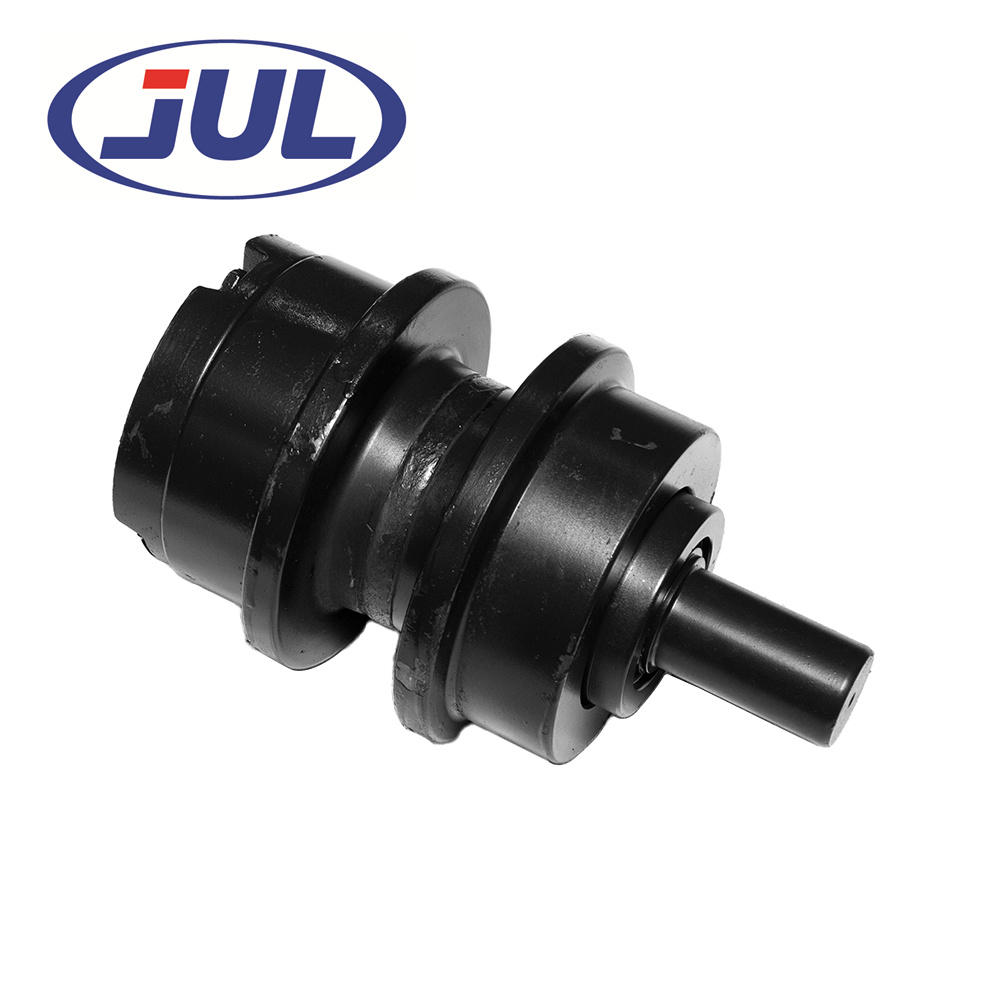
بكرات الناقل (or Top Rollers): These smaller rollers support the weight of the upper section of the track chain, preventing it from sagging and maintaining proper tension. While they don't bear the full weight of the machine, they are still critical for smooth operation. Exploring different Caterpillar carrier roller options from a specialized supplier can be a cost-effective way to maintain system integrity.
Idlers and Tensioners: The idler is a large wheel at the front (or sometimes rear) of the track frame that guides the track chain onto the rollers. It is connected to a tensioning system (often a hydraulic cylinder) that allows the operator to maintain the correct track "sag" or tension. Proper tension is vital; a track that is too tight causes immense stress and accelerated wear on all components, while a track that is too loose can cause the track to come off the idler or sprocket ("de-tracking"). The idler's tread must be hardened to resist wear, and its internal bearing structure must be robust.
أسنان العجلة: This is the toothed, driven gear at the rear of the machine that engages with the track chain's bushings and propels the machine forward or backward. As the final drive component, it transfers all the engine's power to the track. The teeth of the sprocket must be precisely shaped and hardened to engage smoothly with the bushings. As we discussed, any mismatch in pitch between the sprocket and chain is a recipe for disaster.
Understanding this interplay clarifies why a systems approach to engineering is so important. A weakness in any one of these components can compromise the entire system. A great aftermarket engineer doesn't just design a good roller; they design a roller that works perfectly with their track chain, which is designed to engage perfectly with their sprocket, creating a symphony of durable, reliable motion.
تقييم مصداقية الموردين وأنظمة الدعم
A superior undercarriage part is the product of more than just good steel and smart design; it is the product of a trustworthy and competent organization. When you purchase a set of track chains or rollers, you are not just buying metal—you are entering into a relationship with the supplier. The quality of that relationship, the transparency of their operations, and the robustness of their support systems are just as important as the physical characteristics of the part itself. A cheap part from an unknown source with no support is a gamble. A fairly priced part from a reputable supplier with a strong warranty and accessible technical expertise is an investment. This third point of our checklist, لذلك, moves from the product to the provider. You must evaluate the character and capability of the company standing behind the part.
From Factory to Field: The Importance of a Transparent Supply Chain
Where do your parts actually come from? In today's globalized economy, this can be a surprisingly difficult question to answer. A company might have a sales office in your country but source its components from various factories around the world, with varying levels of quality control. A transparent and direct supply chain is a powerful indicator of a supplier's credibility.
A top-tier supplier is often vertically integrated, meaning they control multiple stages of the production process. They might not own the steel mill, but they will have direct control over the forging, machining, المعالجة الحرارية, and assembly of their components. This control allows them to enforce their quality standards at every step. They are not simply a "re-boxer" who buys parts on the open market and puts their name on them. They are a true manufacturer.
When vetting a supplier, ask about their manufacturing facilities. Where are they located? Do they own the factory, or do they use contractors? Can they provide virtual or even physical tours of their production line? A company that is proud of its manufacturing process will be open and transparent about it. They will be able to show you their CNC machining centers, their computer-controlled induction hardening stations, and their rigorous quality inspection labs. This transparency builds confidence and demonstrates a genuine commitment to quality.
بالإضافة إلى, consider their logistics and distribution network, especially in your region, whether it be Australia, جنوب شرق آسيا, or Russia. A reliable supply chain isn't just about manufacturing; it's about getting the right part to the right place at the right time. A supplier with established distribution centers in your region can significantly reduce shipping times and costs. They are more likely to have the specific parts for your machine in stock, minimizing your downtime. This logistical capability is a sign of a mature and well-run organization that understands the urgent needs of the heavy equipment industry (Coia, 2013).
طاولة 2: Supplier Evaluation Checklist
| Evaluation Area | Key Questions to Ask | Ideal Response / Positive Indicator | Red Flag / Negative Indicator |
|---|---|---|---|
| Manufacturing & جودة | Are you the manufacturer? Where are your factories? Are you ISO 9001 معتمد? | Direct manufacturer, transparent about facilities, current ISO 9001 شهادة. | Re-boxer/trader, evasive about origins, no quality certifications. |
| هندسة & تصميم | Are your parts forged or cast? Can you explain your heat treatment process? What design improvements have you made over OEM? | Forged high-stress parts, detailed explanation of deep hardening, clear examples of innovation (على سبيل المثال, الأختام). | All parts are cast, vague on heat treatment ("it's hardened"), parts are just "OEM-spec" copies. |
| ضمان & يدعم | What is the warranty period and what does it cover? Where do I go for a claim? Do you have technical support staff? | Clear, ضمان شامل (على سبيل المثال, 3000 hours/2 years), local or responsive claims process, accessible engineers. | Vague, pro-rata, or parts-only warranty; complex or international claims process; only salespeople available. |
| Regional Presence | Do you have a warehouse or distributor in my region (على سبيل المثال, أستراليا, الشرق الأوسط)? What is the typical lead time? | Established regional distribution center, stock on hand for common parts, short lead times. | Ships only from a central overseas warehouse, long and unpredictable lead times. |
| Reputation & History | How long have you been in business? Can you provide case studies or references from customers in my industry/region? | Long company history, positive and verifiable customer testimonials and case studies. | New company with no track record, unable or unwilling to provide references. |
| Product Range | Do you offer complete undercarriage systems or just individual parts? Do you supply other parts like buckets or rippers? | A comprehensive range of integrated undercarriage components and other GETs. | Limited, scattered selection of only the most popular, fast-moving parts. |
Warranty and Technical Support: Your Safety Net Against Premature Failure
No matter how good a manufacturer is, failures can still happen. The immense stresses placed on undercarriage components mean that there will always be a small but real possibility of a defect or a premature failure. What separates a great supplier from a poor one is how they handle these situations. A strong warranty and accessible technical support are your safety net, transforming a potential catastrophe into a manageable problem.
أولاً, examine the warranty itself. A confident manufacturer will back their products with a clear and comprehensive warranty. Look for the duration, typically expressed in both service hours and calendar months (على سبيل المثال, "3000 hours or 24 شهور, whichever comes first"). A longer warranty period is a direct signal of the manufacturer's confidence in their product's longevity.
أيضًا, scrutinize what the warranty covers. Does it cover just the replacement part, or does it also contribute to the labor costs of the repair? Does it cover "consequential damage"—for example, if a failed roller damages the track link, is the link also covered? A pro-rata warranty, which offers decreasing value as the part is used, is less desirable than a full replacement warranty. Read the fine print. Are there unreasonable conditions that could void the warranty, such as requiring exclusive use of that brand's parts across the entire machine?
Equally important is the warranty claim process. If a part fails on a job site in rural Australia, how do you file a claim? Do you have to ship the heavy, broken part back to a factory in another country at your own expense? A reputable supplier will have a streamlined process, often handled through their regional distributor. They will have clear procedures for inspection (often using photos and measurements) and will make a fair and timely decision.
Beyond the warranty, consider the availability of technical support. What happens when you have a question about installation, or when you notice an unusual wear pattern? Can you speak to someone who understands undercarriage systems, or are you stuck with a salesperson who only knows part numbers? A premium supplier of Caterpillar undercarriage aftermarket solutions will have experienced technicians or engineers on staff who can provide genuine advice. They can help you diagnose problems, recommend the correct parts for a specific application, and provide guidance on maintenance procedures. This expertise is an invaluable resource that adds significant value beyond the part itself.
القراءة بين السطور: Analyzing Customer Reviews and Case Studies
In the age of information, direct feedback from other users is a powerful tool. لكن, you must learn to analyze this feedback critically. Not all reviews are created equal, and a savvy buyer knows how to read between the lines.
Start by seeking out detailed testimonials and case studies, preferably from companies in your industry and region. A generic "Great parts, fast shipping!" review is less useful than a detailed account from a mining operator in Western Australia who documents achieving 4,000 service hours on a set of aftermarket track chains in highly abrasive conditions. A quality supplier will actively collect and publish these case studies. They are a form of proof, demonstrating their product's performance in a real-world context.
When reading reviews, look for patterns. A single negative review could be an anomaly, but if multiple customers from different regions report the same failure mode—for example, "the track pins came loose after 500 hours"—that is a significant red flag. على العكس من ذلك, if multiple users praise the supplier's excellent customer service in handling a warranty claim, that speaks volumes about the company's integrity.
Be wary of sources. Reviews on the supplier's own website are naturally going to be curated. Look for feedback on independent industry forums, social media groups for heavy equipment operators, or through your own professional network. Ask other fleet managers or owner-operators in your area what their experiences have been with different aftermarket brands. This word-of-mouth reputation is often the most honest and reliable indicator of a supplier's true quality and service level.
أخيراً, consider the supplier's response to negative feedback. Does a company that receives a public complaint ignore it? Or do they respond professionally, offering to investigate the issue and make it right? A supplier who engages constructively with criticism demonstrates accountability and a commitment to customer satisfaction. This public behavior can be a very telling glimpse into the company's culture.
Regional Expertise: Why a Supplier's Presence in Your Market Matters
The world of heavy equipment is not monolithic. The challenges faced by a machine in the humid, muddy conditions of Southeast Asia are vastly different from those in the rocky, arid Middle East or the frozen ground of a Russian winter. A supplier with genuine regional expertise and a physical presence in your market offers significant advantages.
A regional presence, whether through a company-owned branch or a dedicated, long-term distributor, means the supplier has "skin in the game" in your market. They are not a faceless entity on another continent; they are part of your local business community. This local presence usually translates into a better understanding of your specific operational challenges. They will know which track shoe designs work best in your local soil conditions. They will have experience with the common failure modes seen on machines in your area. They can provide advice that is tailored, specific, and immediately applicable.
This regional presence also has immense practical benefits. كما ذكر, it means better parts availability and shorter lead times. When a machine is down, waiting weeks for a part to clear customs is not an option. A local warehouse can often get you the part you need within a day. This logistical advantage alone can justify choosing a supplier with a strong regional network.
بالإضافة إلى, a local presence simplifies everything from sales to service. You can build a relationship with a local representative who speaks your language and understands your business. If a warranty issue arises, you have a local point of contact to help you resolve it. If you need urgent technical advice, you can speak to someone in your own time zone. This level of accessibility and support is incredibly valuable and is something that remote, internet-only suppliers can rarely match. When evaluating your options for Caterpillar undercarriage aftermarket solutions, place a high value on those suppliers who have invested in building a real presence in your corner of the world.
التكلفة الإجمالية للملكية (TCO) مقابل. سعر الشراء الأولي
Perhaps the single most important conceptual shift a fleet manager or owner-operator can make is to move from thinking about "price" to thinking about "cost." The initial purchase price of an undercarriage component is merely the tip of the iceberg. The true cost—the Total Cost of Ownership (TCO)—is a much larger and more complex figure that includes not only the purchase price but also the cost of installation, the expected lifespan of the part, its effect on other components, و, most critically, the cost of machine downtime. A cheap part that fails prematurely is often the most expensive part you can buy. This fourth point of our checklist is a call to embrace a TCO mindset. It requires discipline and a willingness to look beyond the immediate savings on an invoice, but it is the only rational way to manage the immense expense of undercarriage maintenance.
The Iceberg Analogy: Uncovering Hidden Undercarriage Costs
The iceberg is a perfect analogy for TCO. The visible part, floating above the water, is the purchase price. It's easy to see, easy to compare, and it's what most people focus on. But the vast, hidden mass of the iceberg below the waterline represents the other associated costs. It is this hidden mass that can sink your budget.
Let's break down what's below the surface. أولاً, there is the cost of installation labor. It takes a significant number of man-hours to remove an old undercarriage and install a new one. Let's say a complete undercarriage replacement costs you 40 hours of technician labor. If you buy a cheap set of track groups that lasts only 2,000 ساعات, you will incur that 40-hour labor cost twice in a 4,000-hour period. If you had instead purchased a premium aftermarket set that lasts 4,000 ساعات, you would only pay that labor cost once. The "savings" on the cheap parts are quickly eaten up by the extra labor.
ثانية, there is the cost of accelerated wear on other components. As we've discussed, a poor-quality track chain with an incorrect pitch can rapidly destroy a perfectly good, and very expensive, OEM sprocket. A poorly sealed roller that seizes can cause gouging and damage to the track links running over it. These "consequential damages" are a direct cost attributable to the low-quality part.
ثالث, and by far the largest hidden cost, is the cost of unscheduled downtime. When a machine goes down unexpectedly due to a failed undercarriage component, the costs multiply rapidly. You have the direct cost of the machine being unproductive—it's not earning revenue. You may have an operator who is being paid to wait. You might have other machines on the job site—trucks, loaders—that are now idled because the dozer or excavator is out of commission. You could face penalties for missing project deadlines. This cost of downtime can easily run into thousands or even tens of thousands of dollars per day. A single catastrophic failure of a cheap part can cost you more in downtime than the entire price of a premium OEM undercarriage. The TCO model forces you to quantify this risk and factor it into your decision.
Calculating TCO: A Practical Framework for Fleet Managers
Calculating a precise TCO can seem daunting, but even a simplified framework is far better than relying on purchase price alone. Let's create a basic model. You need to compare two options for a set of track groups: a low-tier option and a premium aftermarket option.
أولاً, gather your inputs for each option:
- ص: Purchase Price of the components.
- ل: Labor Cost for installation (Technician hours x Hourly rate).
- ح: Expected Lifespan in service hours (be realistic and use data from suppliers, دراسات الحالة, or your own experience).
- د: Cost of Downtime for one replacement cycle (Lost revenue/day x Days to repair). This is for unscheduled failure, so it's a risk factor.
الآن, we can calculate a "Cost Per Hour" for each option. The basic formula is: Cost Per Hour = (ص + ل) / ح
Let's use an example for a mid-size dozer:
الخيار أ: ما بعد البيع ذو الطبقة المنخفضة
- P = $12,000
- L = $3,200 (40 hours @ $80/hr)
- H = 2,500 ساعات (supplier claim, but your experience suggests it's optimistic)
- Cost Per Hour = ($12,000 + $3,200) / 2,500 hours = $6.08 كل ساعة
الخيار ب: قسط ما بعد البيع
- P = $18,000
- L = $3,200 (40 hours @ $80/hr)
- H = 4,500 ساعات (backed by warranty and case studies)
- Cost Per Hour = ($18,000 + $3,200) / 4,500 hours = $4.71 كل ساعة
In this scenario, even though the premium option had a 50% higher purchase price, its cost per hour of operation is over 22% lower. The "cheaper" option is actually more expensive in the long run.
الآن, let's factor in the risk of downtime. Let's say there's a 25% chance the low-tier parts will suffer a catastrophic failure before reaching their expected life, causing 3 days of downtime at a cost of $5,000 per day. The risk-adjusted cost is 0.25 x (3 x $5,000) = $3,750. If we add this to the low-tier option's cost over its life, the TCO becomes even worse. The premium part, with its higher quality control and better warranty, might have only a 5% chance of such a failure.
This type of analysis transforms the purchasing decision from an emotional one based on sticker shock to a rational, data-driven business decision. It provides a logical justification for investing in quality. As a manager, you can use this framework to defend your choice of high-quality Caterpillar undercarriage aftermarket solutions to senior management or clients.
The Impact of Downtime: How a Cheap Part Can Become Your Most Expensive
Let's humanize the cost of downtime. Imagine you are managing a road construction project in a remote area of Africa. You have a tight deadline. Your primary dozer, fitted with recently installed, low-cost track chains, suffers a failure. A track link cracks and the chain separates. The machine is immobilized in the middle of the project.
What happens next? The operator calls you. You have to dispatch a field service truck with at least two technicians. They may have to travel for hours to reach the site. They diagnose the problem, but you don't have a spare track chain on hand because you weren't expecting a failure so soon. You call the supplier, who is located in another country. It will take them two days to process the order and a week to ship the part by air freight, at a huge cost. Then it has to clear customs. Best case scenario, you get the part in 10 أيام.
For those 10 أيام, your entire project is crippled. The excavator that was feeding the crushers is idle. The trucks that were hauling material are parked. Your entire crew is either sent home or is being paid for unproductive time. Your project falls behind schedule, and you start facing late-completion penalties from your client. The total cost of this single failure—the air freight, the emergency technician call-out, the idled fleet, the contract penalties—could easily exceed $50,000. That amount could have purchased two sets of the highest-quality premium undercarriage available.
This is not a far-fetched scenario. It happens every day around the world. It is the brutal reality of what happens when a purchasing decision is based solely on the initial price tag. The true cost of a part is not what you pay for it, but what it costs you when it fails. A TCO mindset is, لذلك, a form of risk management. By investing in quality parts from reputable suppliers, you are buying reliability. You are buying predictability. You are buying insurance against the catastrophic cost of unscheduled downtime.
Balancing Quality and Budget: Finding the "Sweet Spot" in Aftermarket Solutions
Adopting a TCO mindset does not mean you must always buy the most expensive option available, which is often the OEM part. The goal is not to spend the most, but to achieve the lowest possible cost per hour. This is where premium aftermarket solutions find their "sweet spot."
OEM parts set the benchmark for quality and performance, but they come at a premium price, partly to cover the manufacturer's vast R&D and marketing overheads. Low-tier aftermarket parts offer a very low initial price but carry an unacceptably high risk of premature failure and a high TCO, as we have demonstrated.
The premium aftermarket occupies the valuable middle ground. These manufacturers have studied the OEM designs, understood the material science, and invested in modern, quality-controlled manufacturing. They may have even engineered improvements to the original design. Because they have a leaner corporate structure and focus specifically on high-wear parts, they can offer a product with performance that is close to, or sometimes even exceeds, OEM standards, but at a significantly lower purchase price (often 20-40% less).
This is the sweet spot. By choosing a premium aftermarket supplier, you can achieve a cost per hour that is often lower than both the OEM and the cheap aftermarket options. You get the long life and reliability you need to minimize downtime, but without the high initial capital outlay of buying from the dealer.
Finding this sweet spot requires doing the homework outlined in this checklist. You must research the materials and manufacturing (Point 1), evaluate the engineering intelligence (Point 2), and verify the supplier's credibility and support (Point 3). When you combine that due diligence with a rigorous TCO analysis (Point 4), you are in the strongest possible position to make a decision that is both financially prudent and operationally sound. You are no longer just buying parts; you are making a strategic investment in your fleet's productivity and your business's profitability.
الاختيار والصيانة الخاصة بالتطبيقات
The final piece of the puzzle involves recognizing two profound truths about undercarriage management. أولاً, not all job sites are created equal. The ideal undercarriage for a dozer working in soft, sandy soil is different from one working on hard, صخرة حادة. Selecting a part that is optimized for its specific application is a critical step toward maximizing its life. ثانية, an undercarriage's lifespan is not solely determined by the quality of its parts. It is the result of a symbiotic relationship between the quality of the parts and the quality of the maintenance they receive. A great set of parts can be destroyed by poor maintenance, while even mediocre parts can have their life extended through diligent care. This final point of our checklist is about creating a powerful synergy between smart selection and proactive maintenance.
Matching the Part to the Terrain: High-Impact vs. High-Abrasion Environments
Thinking about your machine's working environment is crucial. We can broadly classify most job sites into two categories: high-impact and high-abrasion.
High-Impact Environments: These are conditions involving large, hard objects that can strike the undercarriage. Common examples include demolition sites with broken concrete, quarries with large blasted rock (shot rock), or logging operations with stumps and boulders. In these environments, the primary risk is not gradual wear, but sudden fracture or bending. A track shoe can crack, a track link can be bent, or a roller flange can be broken off by a single impact event.
For high-impact applications, the toughness of the steel is paramount. This goes back to our discussion of material science and heat treatment. You need parts made from high-quality forged steel that have been properly tempered to absorb shock without fracturing. While surface hardness is still important, an overly hard and brittle part can be a liability here. You also might select specific components designed for this work. على سبيل المثال, "extreme service" or "super extreme service" track shoes are thicker and more robustly designed to resist bending and cracking. The choice of Caterpillar undercarriage aftermarket solutions must prioritize strength and impact resistance above all else.
High-Abrasion Environments: These are conditions involving small, hard particles that constantly grind away at the undercarriage components. Sandy soils, gravel operations, and many mining environments fall into this category. هنا, the primary enemy is gradual wear. The sand and grit form a lapping compound that slowly erodes the hardened surfaces of the track links, بكرات, العاطلون, والعجلات.
For high-abrasion applications, surface hardness and the depth of that hardness are the most important characteristics. You need parts with a deep, uniform case hardening that can withstand this constant grinding for as long as possible. Components with extra wear material, like the "hi-rail" track links we discussed earlier, can provide a significant life extension in these conditions. The material's ability to resist being worn away, its "abrasion resistance," is the key property to seek. This is where the quality of the heat treatment process really shows its value.
Many job sites, بالطبع, are a mixture of both impact and abrasion. The key is to analyze your primary operating conditions and discuss them with your parts supplier. A knowledgeable supplier can act as a consultant, helping you select the right combination of components—the right track shoe type, the right grade of track chain—to build an undercarriage system that is optimized for your world.
The Symbiotic Relationship Between Parts and Maintenance Practices
You can buy the best, most expensive undercarriage in the world, but if you fail to maintain it correctly, you will have wasted your money. على العكس من ذلك, a disciplined maintenance program can squeeze every last hour of life out of your components. The relationship is symbiotic; quality parts respond better to good maintenance, and good maintenance protects your investment in quality parts.
The most fundamental maintenance practice is regular cleaning. The undercarriage should be cleaned out as often as possible, ideally at the end of every shift. Packed mud, الحصى, and debris can cause a host of problems. It increases the weight of the undercarriage, robbing the machine of power. It can prevent rollers from turning, creating flat spots as the track drags over them. In freezing climates, يمكن للطين المعبأ أن يتجمد صلبًا طوال الليل, effectively seizing the entire undercarriage and putting immense strain on the drive motors and track pins when the operator tries to move the machine in the morning. A simple 15-minute pressure wash at the end of the day is one of the highest-return investments you can make in undercarriage life.
Another critical practice is maintaining proper track tension, أو "تبلد." A track that is too tight is one of the most common and destructive errors in undercarriage management. It dramatically increases the friction and load on the entire system, accelerating wear on pins, البطانات, أسنان العجلة, العاطلون, وبكرات. It's like driving your car with the parking brake partially engaged. A track that is too loose is also problematic, as it can wander and cause the machine to de-track. Every machine has a specific procedure and measurement for setting the correct sag. This should be checked regularly and adjusted as conditions change.
Operator technique also plays a massive role. An operator who understands how to minimize undercarriage wear can save you a fortune. This includes simple habits like minimizing high-speed reverse travel (which causes more wear on the reverse-drive side of the track bushings), making wide, gradual turns instead of sharp pivot turns, and trying to balance the amount of turning in each direction. Training operators on these best practices is a vital part of any comprehensive undercarriage management program.
Extending Undercarriage Life: Proactive Inspection and Care
The key to long undercarriage life is moving from a reactive ("fix it when it breaks") to a proactive ("manage the wear") mindset. This requires regular and systematic inspection. An experienced technician or operator can learn to "read" the wear patterns on an undercarriage and take action to maximize its life.
One of the most important proactive measures is managing the "wear life" of the pins and bushings on a sealed and lubricated track chain. As the machine works, the internal pin and bushing wear on one side. After a certain amount of wear (which can be measured), there is still significant life left on the other side. "دوران الدبوس والجلبة" is a maintenance procedure where the track chain is removed, and each pin and bushing is pressed out and rotated 180 درجات. This exposes a fresh, سطح غير ملبوس إلى العجلة المسننة, effectively resetting the wear clock and often doubling the life of the track chain for a fraction of the cost of a new one. Knowing when to perform this turn—not too early and not too late—is a critical skill.
Regular undercarriage measurement is the foundation of this proactive approach. استخدام أدوات الموجات فوق الصوتية والفرجار المتخصصة, a technician can measure the remaining wear on all the key components: ارتفاع السكك الحديدية رابط المسار, قطر مداس الأسطوانة, الملف الشخصي للأسنان ضرس, and so on. These measurements can be tracked over time to predict when components will reach their wear limits. This allows you to plan for replacements in an orderly fashion, scheduling the downtime rather than having it forced upon you. It also allows you to make smart decisions, like replacing a worn sprocket at the same time as the track chain to ensure the new components start their life together on an equal footing. Many premium aftermarket suppliers offer these undercarriage inspection services as part of their customer support.
حلول مخصصة: When Standard Aftermarket Parts Aren't Enough
For the vast majority of applications, a standard configuration from a quality aftermarket supplier will provide excellent performance and value. لكن, there are unique and extreme applications where a custom solution is required. This might be for a machine working in an ultra-corrosive environment like a salt mine, or a specialized machine like a pipeline layer that puts unusual stresses on its undercarriage.
في هذه الحالات, you need to partner with a supplier who has a deep engineering bench and a flexible manufacturing process. This is the ultimate test of a supplier's capability. Can they work with you to analyze your unique problem? Can they recommend a special alloy, a custom heat treatment specification, or a modified component design to address your challenge?
على سبيل المثال, for a machine working in a swamp, a supplier might recommend extra-wide "low ground pressure" (LGP) track shoes to increase flotation. They might also suggest a special coating for the components to improve corrosion resistance. For a machine working on a steep slope, they might recommend a specific grouser pattern to improve grip.
The ability to provide these custom solutions is a hallmark of a true engineering partner, not just a parts seller. It demonstrates a deep understanding of material science, application engineering, and customer needs. While you may not need a fully custom solution for your fleet, a supplier's ability to offer them is a powerful indicator of their overall technical competence and their commitment to solving customer problems. It's a final confirmation that you are dealing with an expert in the field of Caterpillar undercarriage aftermarket solutions.
الأسئلة المتداولة (التعليمات)
Are aftermarket Caterpillar undercarriage parts reliable?
The reliability of aftermarket parts varies dramatically. Premium aftermarket parts from reputable manufacturers who use high-quality alloy steels, proper forging and heat treatment processes, and innovative designs can be as reliable as, and sometimes more reliable than, OEM parts. على العكس من ذلك, low-tier parts from unknown sources often use inferior materials and processes, leading to premature failure and unreliability. The key is diligent supplier evaluation.
How can I tell if an aftermarket part is high-quality?
Look for several key indicators: the use of forged steel for high-stress components, transparent material specifications (look for alloys with manganese, الكروم, and boron), deep and uniform induction hardening, ISO 9001 certification for the manufacturer, a comprehensive warranty, and positive, detailed case studies from other users in your industry.
Will using aftermarket parts void my Caterpillar machine's warranty?
In many jurisdictions, such as the United States with the Magnuson-Moss Warranty Act, a manufacturer cannot void the entire machine warranty simply because you used an aftermarket part. They would have to prove that the specific aftermarket part caused the failure of the warranted OEM component. لكن, the failed aftermarket part itself and any damage it causes would not be covered by the Caterpillar warranty. It's best to use high-quality aftermarket parts with their own strong warranty.
What is the single biggest mistake people make with their undercarriage?
The most common and destructive mistake is running the tracks too tight. Over-tightening the tracks dramatically increases the load and friction on every single component in the system—pins, البطانات, الروابط, بكرات, العاطلون, and sprockets—leading to significantly accelerated wear and premature failure. Regularly checking and maintaining the proper track sag is the most effective maintenance practice for extending undercarriage life.
How much money can I really save with aftermarket undercarriage parts?
While the initial purchase price of premium aftermarket parts can be 20-40% lower than OEM, the real savings come from a lower Total Cost of Ownership (TCO). By providing a long service life comparable to OEM at a lower price point, premium aftermarket solutions can deliver the lowest cost-per-hour of operation, saving you money on parts, labor, و, الأهم من ذلك, costly machine downtime.
What does "pitch" mean and why is it important?
Pitch is the center-to-center distance from one track pin to the next. It is a critical dimension. If you install a new track chain whose pitch does not perfectly match the pitch of the existing sprocket, the chain's bushings will not seat correctly in the sprocket's teeth. This creates high-impact, grinding contact that will rapidly destroy both the new chain and the sprocket.
Should I replace the whole undercarriage at once or just the worn parts?
While it can be tempting to replace only the most worn components, it is often more cost-effective in the long run to replace components that wear together as a set. على سبيل المثال, a new track chain should always be installed with a new sprocket. Putting a new chain on a worn sprocket will cause the new chain to wear out very quickly. A proactive management approach using regular measurements helps plan these system-level replacements for maximum value.
خاتمة
Navigating the world of Caterpillar undercarriage aftermarket solutions is an endeavor that rewards diligence and a holistic perspective. The allure of a low initial price can be a powerful siren's call, but it often leads to the rocky shores of premature failure, excessive downtime, وفي النهاية, higher total costs. The truly astute approach, as we have explored, is one that transcends the sticker price and embraces a deeper form of inquiry.
It is a process that begins with an appreciation for the very substance of the components—the specific metallurgy and manufacturing processes that imbue steel with the strength to endure. It continues with a critical eye for engineering intelligence, favoring innovation and system compatibility over mere imitation. It demands a thorough evaluation of the supplier's character, seeking transparency, robust support, and a verifiable track record of success. Most profoundly, it requires a mental shift from purchase price to Total Cost of Ownership, a framework that illuminates the true financial impact of reliability and longevity.
By integrating these principles—by matching the right components to the right application and uniting them with a disciplined maintenance program—you transform a simple purchase into a strategic investment. You are no longer just a buyer of parts; you become a manager of assets, a mitigator of risk, and a driver of operational efficiency. The path to optimizing your fleet's performance and profitability lies not in finding the cheapest part, but in finding the best value, armed with the knowledge and framework to confidently identify it.
مراجع
ASME. (2020). Jacks, industrial rollers, air casters, and hydraulic gantries (ASME B30.1-2020). The American Society of Mechanical Engineers.
Coia, أ. (2013, أكتوبر 4). Caterpillar moves the earth for better distribution. Automotive Logistics. https://www.automotivelogistics.media/caterpillar-moves-the-earth-for-better-distribution/9431.article
Gwidon, س, & Wranik, ي. (2022). Analysis of the wear of undercarriage parts of a crawler chassis. Eksploatacja i Niezawodnosc–Maintenance and Reliability, 24(2), 332–340.
Pfestorf, ح., Weiss, واو, Matucha, ك. ح., & Wincierz, ص. (2011). Bearing materials. In Ullmann's Encyclopedia of Industrial Chemistry. Wiley-VCH.
شمس, ج., & Wang, ي. (2011). A review on recent research and development of wear-resistant metallic materials for mining applications in China. Advanced Materials Research, 287-290, 1888-1894. https://doi.org/10.4028/www.scientific.net/AMR.287-290.1888
Tata, ر. ص. (2011). Principles and use of ball & roller bearings (Course No: M06-024). Continuing Education and Development, Inc.
توتن, ز. ه. (إد.). (2006). Steel heat treatment handbook. CRC press.
Trafimczyk, ج., & Gierulski, دبليو. (2010). Analysis of the factors affecting the wear of caterpillar track chains. Journal of KONES, 17(4), 469-476.