
Abstrak
Ketahanan operasi dan kecekapan jentera berat Komatsu secara intrinsik dikaitkan dengan kualiti dan kesesuaian komponen penggantinya. Analisis komprehensif ini mengkaji faktor kritikal yang terlibat dalam memilih bahagian pulangan pelaburan yang tinggi untuk mesin Komatsu dalam 2025, bergerak melangkaui kos pendahuluan yang mudah kepada penilaian yang lebih holistik. Ia menyiasat konsep Jumlah Kos Pemilikan (Tco), yang menggabungkan sebahagian jangka hayat, masa henti mesin, dan perbelanjaan buruh ke dalam kalkulus perolehan. Wacana menyelidiki sains material dan variasi pembuatan antara tulen, aftermarket, dan pilihan yang dikilang semula, menjelaskan bagaimana metalurgi, menunaikan, dan teknik tuangan secara langsung mempengaruhi ketahanan komponen. Tambahan pula, ia menangani keperluan memadankan bahagian dengan persekitaran operasi tertentu, seperti keadaan yang melelas di lombong Australia atau suhu yang melampau di Rusia. Peranan kredibiliti pembekal, jaminan, dan sokongan logistik juga diteliti sebagai elemen penting dalam strategi bahagian yang kukuh. Panduan ini menyediakan rangka kerja berstruktur untuk pengurus armada dan pemilik-pengendali untuk membuat keputusan termaklum yang meningkatkan prestasi mesin dan mengurangkan perbelanjaan operasi jangka panjang.
Takeaways utama
- Nilai bahagian berdasarkan Jumlah Kos Pemilikan, bukan hanya harga pembelian awal.
- Teliti kualiti bahan dan proses pembuatan untuk ketahanan yang unggul.
- Pilih bahagian untuk mesin Komatsu yang direka khusus untuk keadaan kerja tempatan anda.
- Rakan kongsi dengan pembekal yang menawarkan jaminan yang teguh, sokongan yang boleh dipercayai, dan kredibiliti yang terbukti.
- Fahami faedah yang berbeza daripada tulen, aftermarket berkualiti tinggi, dan bahagian yang dikilang semula.
- Padankan komponen undercarriage dengan betul dengan rupa bumi untuk memanjangkan hayat peralatan anda.
- Periksa Ground Engaging Tools secara kerap untuk mengelakkan kerosakan yang mahal pada baldi dan senjata.
Jadual Kandungan
- Pemahaman Yang Lebih Dalam: Mengapa Strategi Alat Ganti Anda Penting
- Semak 1: Menilai Jumlah Kos Pemilikan (Tco), Bukan Sekadar Harga Pelekat
- Semak 2: Meneliti Sains Bahan dan Proses Pembuatan
- Semak 3: Memadankan Bahagian dengan Aplikasi dan Persekitaran
- Semak 4: Mengesahkan Kredibiliti Pembekal dan Sistem Sokongan
- Semak 5: Menavigasi Tulen vs. Pasaran selepas vs. Perbahasan Dikilang Semula
- Anatomi Uptime: Menyelam Dalam Komponen Komatsu Kritikal
- Soalan yang sering ditanya (Soalan Lazim)
- Pemikiran Akhir tentang Membina Daya Tahan
- Rujukan
Pemahaman Yang Lebih Dalam: Mengapa Strategi Alat Ganti Anda Penting
Apabila anda berdiri di hadapan sekeping peralatan Komatsu, sama ada penggali PC1250 yang menggerunkan yang diukir ke dalam bumi atau dozer D475A yang membentuk landskap, anda menyaksikan lebih daripada sekadar mesin. Anda sedang melihat ekosistem kompleks komponen yang saling berkaitan, masing-masing menjalankan peranan yang mencabar. Keutuhan ekosistem ini, dan dengan lanjutan, produktiviti dan keuntungan operasi anda, bergantung pada keputusan yang anda buat bukan semasa anda membeli mesin, tetapi setiap kali anda menggantikan bahagian. Memilih alat ganti untuk mesin Komatsu bukan sekadar tugas perolehan; ia adalah keputusan strategik yang bergema melalui keseluruhan operasi anda.
Fikirkan ia sebagai tubuh manusia. Seorang atlet bertaraf dunia tidak boleh beraksi pada kemuncak mereka jika mereka berlari dengan kasut usang atau mengisi tenaga dengan pemakanan yang tidak baik.. Begitu juga, mesin Komatsu anda, seorang atlet bertaraf dunia dalam bidang peralatan berat, tidak dapat menyampaikan prestasi legendanya jika ia dipasang dengan komponen substandard. Pam hidraulik yang gagal bukan hanya bahagian yang gagal; ia adalah rangkaian akibat—masa henti yang tidak dirancang, tarikh akhir terlepas, pengendali kecewa, dan mimpi ngeri logistik untuk mendapatkan komponen yang betul ke tapak terpencil, sama ada di Pedalaman Australia atau dataran luas Siberia.
Panduan ini diilhamkan daripada tempat empati kepada pemilik mesin, pengurus armada, dan pengendali di atas tanah. Ia mengakui tekanan yang besar untuk mengawal kos sambil memaksimumkan masa operasi. Ia menggerakkan perbualan melangkaui kesederhanaan menggoda dengan harga pelekat yang rendah dan menjadi lebih bernuansa, penerokaan nilai yang lebih jujur. Kami akan melalui sains ketara metalurgi, ekonomi praktikal Jumlah Kos Pemilikan (Tco), dan realiti geografi yang membentuk permintaan pada peralatan anda. Kami akan mempertimbangkan maksud memilih bahagian bukan hanya untuk mesin, tetapi untuk bumi tertentu ia akan bergerak, iklim yang akan dialaminya, dan perniagaan yang mesti disokongnya. Ini tentang membina daya tahan, satu komponen pada satu masa.
Semak 1: Menilai Jumlah Kos Pemilikan (Tco), Bukan Sekadar Harga Pelekat
Dalam dunia jentera berat, the initial price tag of a component is often a siren's call, memikat kita ke arah pilihan yang kelihatan paling menjimatkan. Ia adalah mudah, nombor nyata yang mudah untuk dibandingkan. Namun begitu, this initial cost represents only a fraction of the part's true financial impact over its lifespan. Metrik yang lebih mendalam dan benar ialah Jumlah Kos Pemilikan (Tco), konsep yang memerlukan kita melihat di luar urus niaga segera dan mempertimbangkan spektrum penuh kos yang berkaitan dengan bahagian daripada pembelian hingga pelupusan. Adopting a TCO mindset is the first and perhaps most significant check in developing a high-ROI parts strategy for your Komatsu fleet.
The Hidden Costs of a "Bargain"
Let's construct a mental model. Imagine you need to replace the track shoes on a Komatsu PC400 excavator working in a quarry in South Korea. You have two options. Option A is a set of track shoes from an unverified supplier, priced at 30% less than Option B, which comes from a reputable aftermarket manufacturer. The initial savings from Option A seem compelling. But what happens next?
Option A's track shoes, made from a lower-grade steel alloy with inconsistent heat treatment, begin to show significant wear after just 1,500 Jam. The grousers are rounded, reducing traction and machine efficiency. One shoe cracks under the strain of moving over blasted rock. Sekarang, the machine must be pulled from the production line. The hidden costs begin to surface:
- Kos Masa Henti: The excavator is now idle. If this machine moves 200 cubic meters of material per hour and your operation's profit is $5 per cubic meter, that is a loss of $1,000 for every hour it is not working. A full day of downtime for the replacement could mean an $8,000 loss in revenue.
- Labor Cost: Your skilled technicians must now spend another day removing the failed track group and installing a new set. Their wages, faedah, and the opportunity cost of them not performing other preventative maintenance tasks add up.
- Collateral Damage: A prematurely failing part can cause a domino effect. A broken track shoe could potentially damage the track roller, pemalas, or even the final drive, turning a seemingly small problem into a catastrophic and expensive failure.
- Kos Penggantian (Again): You are now forced to buy another set of track shoes, effectively doubling your initial parts cost. The "bargain" has vanished.
Pilihan B, the higher-priced set, was manufactured with a specific boron steel alloy and underwent a rigorous "through-hardening" proses. These shoes perform reliably for 4,000 hours before needing replacement during a scheduled maintenance window, incurring zero unplanned downtime. When you calculate the TCO, the "more expensive" Option B is demonstrably the more economical choice.
Calculating a Simplified TCO
While a full TCO analysis can be complex, a simplified version can be incredibly illuminating. Consider this framework when evaluating parts for Komatsu machines:
TCO = harga pembelian awal + (Labor Cost for Installation x Number of Replacements) + (Downtime Cost per Hour x Hours of Unplanned Downtime) – Nilai Salvage/Jualan Semula
Let's apply this to our track shoe example over a 4,000-hour period.
| Faktor Kos | Pilihan A (Low-Quality) | Pilihan B (High-Quality) |
|---|---|---|
| Harga Permulaan | $7,000 | $10,000 |
| Lifespan | 1,500 Jam | 4,000 Jam |
| Penggantian dalam 4,000 jam | ~2.6 (rounded to 3 installs) | 1 install |
| Labor Cost per Install | $1,200 (8 hours x $150/hr) | $1,200 (8 hours x $150/hr) |
| Total Labor Cost | $3,600 | $1,200 |
| Unplanned Downtime | 16 Jam (8 hrs/failure x 2 failures) | 0 Jam |
| Kos Masa Henti | $16,000 (16 hrs x $1,000/hr) | $0 |
| Total Cost | $7,000 + $3,600 + $16,000 = $26,600 | $10,000 + $1,200 + $0 = $11,200 |
This simplified table makes the true cost starkly clear. Awal $3,000 savings from the cheaper part resulted in an additional $15,400 in total costs over the life of the higher-quality part. This is the power of TCO analysis. It transforms your perspective from a cost-cutter to a value-investor in your own fleet's productivity.
Extending TCO to Other Components
This line of reasoning applies to all wear parts for Komatsu machines.
- Bucket Teeth: A cheap tooth that loses its edge quickly or snaps requires more frequent replacement and increases fuel burn as the machine works harder to penetrate material. Berkualiti tinggi, wear-resistant bucket teeth maintain their profile longer, ensuring optimal penetration and cycle times.
- Hydraulic Filters: A low-quality filter might fail to capture fine contaminants, leading to premature wear on expensive pumps and valves, resulting in a repair bill that is thousands of times the cost of a premium filter.
- Undercarriage Rollers: A roller with inadequate seals will lose its lubrication, seize, and create flat spots on your track links, accelerating the wear of the entire track group.
Thinking in terms of TCO is a discipline. It requires a shift in mindset and a commitment to tracking performance. But it is the foundational check for anyone serious about managing a fleet of heavy equipment for maximum profitability and reliability. Before you ask "How much does it cost?", train yourself to ask "What is the total cost to own and operate this part over its entire life?"
Semak 2: Meneliti Sains Bahan dan Proses Pembuatan
The second critical check in our pursuit of high-ROI parts for Komatsu machines takes us from the accountant's ledger into the world of the metallurgical engineer. The physical properties of a component—its strength, hardness, and toughness—are not accidental. They are the direct result of the raw materials chosen and the manufacturing processes employed. Understanding the basics of these elements empowers you to ask discerning questions and to distinguish a genuinely robust part from an imitation that only looks the part. A part's ability to withstand the immense forces and abrasive environments it faces is written in its very atomic structure.
The Language of Steel: More Than Just Iron and Carbon
When a supplier states a part is made of "steel," it is an almost meaningless declaration. It is like a chef saying a dish is made of "meat." The crucial details lie in the specific type and grade. The performance of undercarriage components, baldi, and Ground Engaging Tools (Dapatkan) is largely dictated by the steel alloys used.
Think of a steel alloy as a base recipe of iron and carbon, with specific "spices"—other elements—added to achieve desired characteristics. For heavy equipment parts, one of the most important of these elements is Boron (B). When added to steel in very small, controlled amounts (often as little as 0.003%), boron dramatically increases the steel's Hardenability. Ini bermakna semasa proses rawatan haba, the hardness can penetrate deeper into the core of the material, rather than just forming a thin, brittle skin. A "through-hardened" part, rich in boron, will wear down evenly and predictably, maintaining its structural integrity, whereas a "case-hardened" or low-alloy part will wear through its hard outer layer quickly, exposing the soft core to rapid degradation and failure.
Another key element is Mangan (Mn), which also improves hardenability and contributes to strength and wear resistance. When you see material specifications like "23MnB" or "35MnB," it is a signal that the manufacturer is using a specialized boron steel alloy designed for high-wear, high-impact applications. It is a language that speaks of durability.
Memalsukan vs. Pemutus: The Shape of Strength
Once the correct alloy is selected, it must be formed into the shape of the final part. The two most common methods for heavy wear parts are forging and casting.
Menempa: Imagine a blacksmith hammering a piece of red-hot metal. Forging is the modern, industrial equivalent. A piece of steel (a billet) is heated and then shaped by immense compressive forces, either from a hammer or a press. This process refines the internal grain structure of the steel, aligning the grains with the shape of the part. This creates a continuous, unbroken grain flow, resulting in exceptional tensile strength, rintangan keletihan, dan kesan ketangguhan. Forging is the superior method for parts that experience high-impact and cyclical loads, such as undercarriage track links and certain types of bucket teeth.
Pemutus: Dalam proses ini, molten steel is poured into a mold of the desired shape and allowed to cool and solidify. Casting is excellent for creating complex shapes that would be difficult or impossible to forge, such as many types of bucket adapters and ripper shanks. While a well-executed casting from a high-quality alloy can be very strong, the grain structure is typically more random and less dense than a forged part, which can make it more susceptible to cracking under extreme impact.
Neither method is universally "better"; they are suited for different purposes. The key is that the manufacturer uses the appropriate method for the part's intended function. A reputable supplier will be transparent about their manufacturing processes.
The Magic of Heat Treatment
A correctly alloyed and formed part is still not ready for the field. Final, and arguably most critical, stage is heat treatment. This is a carefully controlled process of heating and cooling that transforms the steel's internal crystalline structure to optimize its mechanical properties.
The most common process is Quenching and Tempering (Q&T).
- Austenitizing: Bahagian itu dipanaskan pada suhu yang sangat tinggi (Mis., 850-950° C.), causing the iron crystals to change into a structure called austenite, which can dissolve a lot of carbon.
- Pelindapkejutan: The part is then rapidly cooled by plunging it into a liquid, typically water, minyak, atau penyelesaian polimer. This rapid cooling traps the carbon atoms within the iron crystals, forcing them into a very hard, brittle structure called martensite. Keberkesanan penyingkiran, and how deep the hardness penetrates, is where the alloy's hardenability (thanks to boron and manganese) becomes so important.
- Pembiakan: The quenched part is now extremely hard but also brittle, seperti kaca. Tempering involves reheating the part to a lower temperature (Mis., 200-600° C.) dan memegangnya untuk masa tertentu. This process relieves internal stresses and allows some of the martensite to transform into softer, tougher structures. The tempering temperature is a delicate balance: a higher temperature yields more toughness but less hardness, while a lower temperature retains more hardness but less toughness.
The goal is to achieve the perfect balance for the part's function. A bucket tooth needs extreme surface hardness (measured on the Rockwell C scale, often HRC 50-55) untuk menahan lelasan, while a track link needs immense core toughness to resist snapping under the machine's weight and impact. A failure in the heat treatment process—incorrect temperatures, quench times, or inconsistent controls—can lead to parts that are too soft and wear out quickly, or too brittle and fracture unexpectedly. This is often where low-cost manufacturers cut corners, resulting in parts that are outwardly identical but functionally inferior.
When you invest in parts for Komatsu machines, you are investing in the material science and process control behind them. You are paying for the expertise that knows the precise alloy, forging method, and Q&T recipe to produce a part that will endure.
Semak 3: Memadankan Bahagian dengan Aplikasi dan Persekitaran
A Komatsu machine is a global citizen, operating in every conceivable climate and terrain. A D65EX dozer might spend its life pushing frozen earth in the Russian Far East, while another pushes highly abrasive sand in the deserts of the UAE. A PC210 excavator in a Sumatran jungle navigates soft, waterlogged soils, while its counterpart in a South African platinum mine contends with hard, sharp rock. The third check for a high-ROI parts strategy is the empathetic recognition that "one size does not fit all." The optimal part is not just one that fits the machine model, but one that is engineered for the specific challenges of its working environment.
The Undercarriage: Your Machine's Footprint on the World
The undercarriage is where the machine meets the earth, and it is the system most profoundly affected by ground conditions. Ia boleh mengambil kira sehingga 50% of a machine's total maintenance costs, so making the right choices here is paramount.
Consider the track shoes, the most direct point of contact. A standard triple-grouser shoe, like those commonly found on excavators, is a fantastic all-rounder for mixed soil and rock conditions. Ketiga-tiga grousers (the protruding ribs) provide excellent traction and turning ability without being overly aggressive.
Namun begitu, what if your excavator is working on a land-reclamation project in a coastal area of Southeast Asia, constantly on soft mud or swampy ground? A standard shoe will sink, churn the ground, and waste fuel as the machine struggles for traction. Di sini, a swamp shoe (or Low Ground Pressure shoe) is the correct choice. These shoes are significantly wider and often have a flatter, modified grouser design, as discussed by experts at gfmparts.com. They function like snowshoes, distributing the machine's immense weight over a larger area, reducing the ground pressure (PSI or kPa) and allowing the machine to "float" on top of the soft surface. Using swamp shoes in this environment can dramatically increase mobility, mengurangkan penggunaan bahan api, and prevent the machine from becoming bogged down.
Sebaliknya, using those same wide swamp shoes in a hard-rock quarry in Australia would be a costly mistake. The wide, thin shoe would be prone to bending and cracking, and the minimal grousers would offer poor traction on the hard surfaces. For this application, a narrower, tugas berat double-grouser shoe or a specialized rock shoe is more appropriate. These are thicker and more robust to handle the high-impact loading.
This principle extends to the entire undercarriage system. An undercarriage operating in highly abrasive sand (like in many parts of the Middle East) will experience accelerated wear on pins, bushings, dan penggelek. In this case, opting for a system with enhanced seals, like Komatsu's heavy-duty or sealed and lubricated track (Garam), becomes a wise investment. The superior seals prevent abrasive particles from entering the internal pin and bushing area, which is the primary cause of "track stretch" and premature wear.
Jadual: Track Shoe Selection by Terrain and Region
| Terrain Type | Recommended Shoe | Ciri -ciri utama | Common Regions/Industries | Example Komatsu Models |
|---|---|---|---|---|
| Soft Soil, Lumpur, Paya | Paya / LGP Shoe | Wide, flat profile, modified grousers. Tekanan tanah yang rendah. | Asia Tenggara (Palm Oil Plantations), Rusia (Tundra), Coastal Reclamation | PC200, PC300 with LGP setup |
| Mixed Soil, Kotoran, Clay | Triple-Grouser (Standard) | Good balance of traction, turning, and flotation. serba boleh. | General Construction (Worldwide), pertanian | PC210, PC360, D61, D85 |
| Rock, Quarry, Perobohan | Double-Grouser / Rock Shoe | Narrower, thicker, more robust. High impact resistance. | Australia (perlombongan), South Africa (perlombongan), Penggalian | PC490, PC800, D155, D275 |
| Paved Surfaces, Asphalt | Rubber Pad / Kasut rata | Smooth surface to prevent damage. Can be bolt-on pads or continuous tracks. | Urban Construction, Road Work | PC35MR, PC55MR, some Pavers |
Attachments and GET: The Business End of the Machine
The same logic of matching the tool to the task applies with even greater force to attachments and Ground Engaging Tools (Dapatkan). Using the wrong bucket is not just inefficient; it can place undue stress on the boom, lengan, and hydraulic system.
- For soft digging (topsoil, pasir): A wide, general-duty bucket with a large capacity is ideal. It moves more material with each pass, maximizing productivity.
- For compact soil and clay: A heavy-duty (HD) bucket is required. It features thicker plating, reinforced side cutters, and stronger welds to handle the higher breakout forces.
- For hard rock and quarry work: A severe-duty or extreme-duty (XD) rock bucket is non-negotiable. These are built from the highest-strength, abrasion-resistant steel (like AR450 or AR500). They feature a V-shaped or spade-nose cutting edge to concentrate penetration force, thicker lip shrouds, wing shrouds, and a heavily reinforced structure. Using a general-duty bucket in a quarry is a recipe for catastrophic failure. Komatsu themselves offer a range of buckets for different applications, daripada pembinaan kepada perlombongan, as seen on .
The choice of bucket teeth is a microcosm of this entire principle.
- Chisel Teeth: A general-purpose choice for good penetration and longevity in soil and clay.
- Tiger Teeth: A long, sharp, pointed tooth designed for maximum penetration in tightly compacted or frozen ground. Namun begitu, they are more prone to breaking in high-impact rock applications.
- Twin Tiger Teeth: Offer aggressive penetration like a single tiger but with more strength and a smoother trench bottom.
- Gigi pahat batu: A heavily reinforced, blunt tooth designed for high impact and prying in rock, prioritizing durability over sharpness.
Making the right choice requires an empathetic understanding of the operator's daily challenges and the physical demands of the job site. It is about asking: "What is the material? What are the impact levels? What is the primary goal—penetration, capacity, or durability?" By aligning your parts for Komatsu machines with the answers to these questions, you transition from simply replacing parts to strategically equipping your machine for success.
Semak 4: Mengesahkan Kredibiliti Pembekal dan Sistem Sokongan
In our journey to secure high-ROI parts for Komatsu machines, we have delved into the economics of TCO and the science of materials. Sekarang, we arrive at a check that is fundamentally about human relationships and trust: the credibility of your supplier. A part is only as good as the company that stands behind it. In a global marketplace filled with a dizzying array of options, from the official Original Equipment Manufacturer (OEM) dealer to countless online vendors, the ability to discern a trustworthy partner from a mere seller is a crucial skill. A credible supplier does not just sell you a component; they provide a support system that underpins your machine's uptime.
Beyond the Transaction: What Defines a Quality Supplier?
A supplier is more than a warehouse and a shipping label. A true partner in your operation's success exhibits a series of verifiable qualities. When evaluating a potential supplier, whether in Australia, Rusia, atau Timur Tengah, consider it a due diligence process.
Technical Expertise and Transparency: A credible supplier employs people who understand the machinery. They should be able to discuss not just part numbers, but applications. Can they explain the difference in steel grades between two types of cutting edges? Can they recommend the right undercarriage configuration for your specific ground conditions? This expertise is a sign that they are invested in your performance, not just their sales volume. Look for suppliers who, suka imaraengineeringsupplies.com, position themselves as a team of professionals dedicated to solving equipment problems. Transparency about manufacturing processes, material origins, and quality control procedures is also a hallmark of a confident, high-quality supplier.
A Robust Warranty and Fair Claims Process: A warranty is a supplier's statement of confidence in their own product. A flimsy or vaguely worded warranty is a red flag. A strong warranty, particularly on high-value items like undercarriage components or hydraulic pumps, should be clear, comprehensive, and outline a straightforward process for making a claim. Ask potential suppliers about their claims process. How do they handle a potential failure? A partner will work with you to diagnose the problem, not against you to deny responsibility. They understand that their reputation is built on how they respond when things go wrong.
Logistical Capability and Parts Availability: A fantastic part is useless if you cannot get it when you need it. This is especially true for operations in remote locations, which are common in the mining and resource sectors of Australia, Afrika, and Russia. A credible supplier must have a sophisticated logistics network. Do they have distribution centers in your region? What are their typical lead times for common wear parts versus special-order items? Can they handle the complexities of international shipping and customs clearance to your location? A deep inventory of common parts for Komatsu machines is a sign of a serious, well-capitalized operation that is committed to minimizing your downtime. A diverse catalog of Komponen bawah tanah berkualiti tinggi is a good indicator of a specialized and reliable supplier.
Kebolehkesanan dan Kawalan Kualiti: How does the supplier ensure the quality of their parts? Ask about their quality control (QC) proses. Do they perform their own testing on batches of parts? This can include hardness testing (with a Rockwell tester), dimensional checks (with calipers and gauges), and even destructive testing to verify material strength. Each part should have some form of traceability, often through batch numbers or serial codes, that allows it to be tracked back to its manufacturing date and material batch. This accountability is essential for identifying and rectifying any potential quality issues.
Market Reputation and Longevity: While not a perfect metric, a company's history can be revealing. Sudah berapa lama mereka berniaga? Can they provide references or case studies from customers in your industry or region? A long-standing positive reputation in the heavy equipment community is earned, not bought. It is built over years of delivering reliable products and providing dependable service.
Choosing a supplier is like choosing a specialist doctor for your health. You would not choose a doctor based solely on who is cheapest. You would look for expertise, reputasi, and a sense of trust. Apply the same rigor when choosing the source for the parts that form the lifeblood of your Komatsu machinery.
Semak 5: Menavigasi Tulen vs. Pasaran selepas vs. Perbahasan Dikilang Semula
The final check on our list addresses one of the most persistent and debated topics in the maintenance of heavy equipment: Should you use genuine OEM parts, aftermarket parts, or remanufactured components? There is no single correct answer for every situation. Each category has its own distinct profile of costs, faedah, and risks. A truly strategic approach involves understanding these profiles and intelligently deploying each type of part where it makes the most sense for your operation, bajet, and risk tolerance.
Understanding the Categories
Pertama, let's establish clear definitions, as the terms are often used loosely.
- Genuine OEM (Pengilang peralatan asal) bahagian: These are parts made by or for Komatsu and are sold through their official dealer network. They are, by definition, the same as the parts installed on your machine when it left the factory. Komatsu emphasizes that their genuine parts are designed to work as a complete system, memastikan prestasi optimum dan kebolehpercayaan ().
- Bahagian selepas pasaran: These are parts made by companies other than the OEM. The quality in this category varies enormously. It ranges from aftermarket berkualiti tinggi bahagian, produced by reputable manufacturers who may even be OEM suppliers for other brands and who often aim to meet or exceed OEM specifications, all the way down to low-quality, counterfeit parts that are reverse-engineered with inferior materials and processes.
- Remanufactured (Reman) bahagian: These are used OEM parts that have been completely disassembled, cleaned, diperiksa, and rebuilt to factory specifications, with any worn or damaged components being replaced with new ones. Komatsu itself offers a comprehensive Reman program, promoting it as a cost-effective and environmentally friendly option that delivers OEM quality and warranty.
Analisis perbandingan
Untuk membuat keputusan yang tepat, we need to compare these options across several key factors. The following table provides a framework for this comparison.
| Faktor | Genuine OEM Parts | High-Quality Aftermarket Parts | Low-Quality Aftermarket Parts | Remanufactured (Reman) bahagian |
|---|---|---|---|---|
| Kos Permulaan | Tertinggi | Sederhana hingga tinggi (20-40% less than OEM) | Terendah (50%+ less than OEM) | Sederhana (40-60% of OEM new price) |
| Kualiti & Sesuai | Guaranteed to meet original specs and fit perfectly. | Often meets or exceeds OEM specs. Fit is generally excellent. | Highly variable. Poor fit, inconsistent materials. | Rebuilt to OEM specs using genuine parts. Excellent quality and fit. |
| Prestasi | Designed for optimal performance within the machine's system. | Can offer equivalent or sometimes specialized (Mis., more aggressive GET) prestasi. | Often leads to reduced efficiency, Pakaian pramatang, and potential for collateral damage. | Performance is typically identical to a new genuine part. |
| Waranti | Typically a strong, comprehensive warranty backed by the OEM. | Varies by supplier but reputable ones offer competitive warranties. | Minimal or non-existent warranty. "As is" sales are common. | Usually comes with the same or a very similar warranty as a new genuine part. |
| Ketersediaan | Generally good for current models through the dealer network, but can be slow or expensive for older machines. | Excellent availability for a wide range of current and older models from multiple sources. | Availability is sporadic and unreliable. | Good availability for major components (engines, penghantaran, pam) through the OEM Reman program. |
| Ideal Use Case | Critical components on new or under-warranty machines where reliability is paramount (Mis., engine internals, Pemacu Akhir). | High-wear items on out-of-warranty machines (Mis., kereta bawah tanah, Dapatkan, penapis) where TCO is the main driver. | Not recommended for any application on production machinery. | Cost-effective replacement of major components (engines, pam) to quickly get a machine back to work with OEM reliability. |
Developing a Hybrid Strategy
The most sophisticated fleet managers do not adhere dogmatically to a single parts category. Sebaliknya, they employ a hybrid, or "blended," strategy based on a component's criticality.
For the "Heart and Brain": For the most critical, high-consequence components like engine internals, transmission parts, Pemacu Akhir, and complex electronics, the argument for using Genuine OEM or OEM Reman parts is strongest. The engineering tolerances are incredibly fine, and the cost of failure is catastrophic. The premium paid for the guaranteed quality and system compatibility of a genuine part is a sound insurance policy against massive repair bills and extended downtime.
For the "Bones and Muscle": For high-wear systems like the undercarriage and Ground Engaging Tools (Dapatkan), the case for high-quality aftermarket parts becomes very compelling. These parts are designed to be consumed. Reputable aftermarket suppliers specialize in these areas and often invest heavily in material science to produce parts that can outperform the original in specific applications. By focusing on TCO (as discussed in Check 1) and partnering with a credible supplier (Semak 4), you can achieve significant cost savings without compromising reliability.
The Reman Advantage: The Komatsu Reman program offers a "best of both worlds" scenario for major components. When a hydraulic pump or an engine fails, a Reman component can be swapped in quickly, meminimumkan downtime. You get the quality, jaminan, and peace of mind of a genuine part at a fraction of the cost of a new one, all while making an environmentally responsible choice by participating in a circular economy.
The debate is not a simple choice between "good" and "bad." It is a nuanced, strategic exercise. It requires you to ask: What is this part's function? What is the consequence of its failure? What is my budget and risk appetite? By answering these questions honestly, you can intelligently mix and match genuine, aftermarket, and remanufactured parts for Komatsu machines to create a resilient, cost-effective, and highly productive fleet.
Anatomi Uptime: Menyelam Dalam Komponen Komatsu Kritikal
Having established a strategic framework for selecting parts, let's now apply this thinking to the specific, hard-working systems of a Komatsu machine. Understanding the function and common failure points of these core components will further refine your ability to make high-ROI decisions. We will focus on the three areas that bear the brunt of the machine's labor: The Undercarriage, the attachments, and the Ground Engaging Tools (Dapatkan).
The Undercarriage: The Foundation of Movement
As we touched upon earlier, the undercarriage is a complex and costly system. It is a testament to engineering, designed to support and propel a machine weighing many tons over unforgiving terrain. Let's break down its key wear components.
Rangkaian Jejak (or Links): This is the backbone of the track group. Each chain is composed of links, pin, dan sesendal. The primary wear point is internal, between the pin and bushing. Seperti yang mereka pakai, the distance between them (the "pitch") bertambah, causing the chain to "stretch." This is why sealed and lubricated track (Garam) designs are so important; they keep abrasives out and lubrication in, drastically slowing this internal wear. When choosing a track chain, the quality of the steel forging and the precision of the heat treatment on the links, pin, and bushings are the most critical factors for longevity. A wide selection of undercarriage parts for various models, from smaller excavators to large dozers, is available from specialized suppliers like .
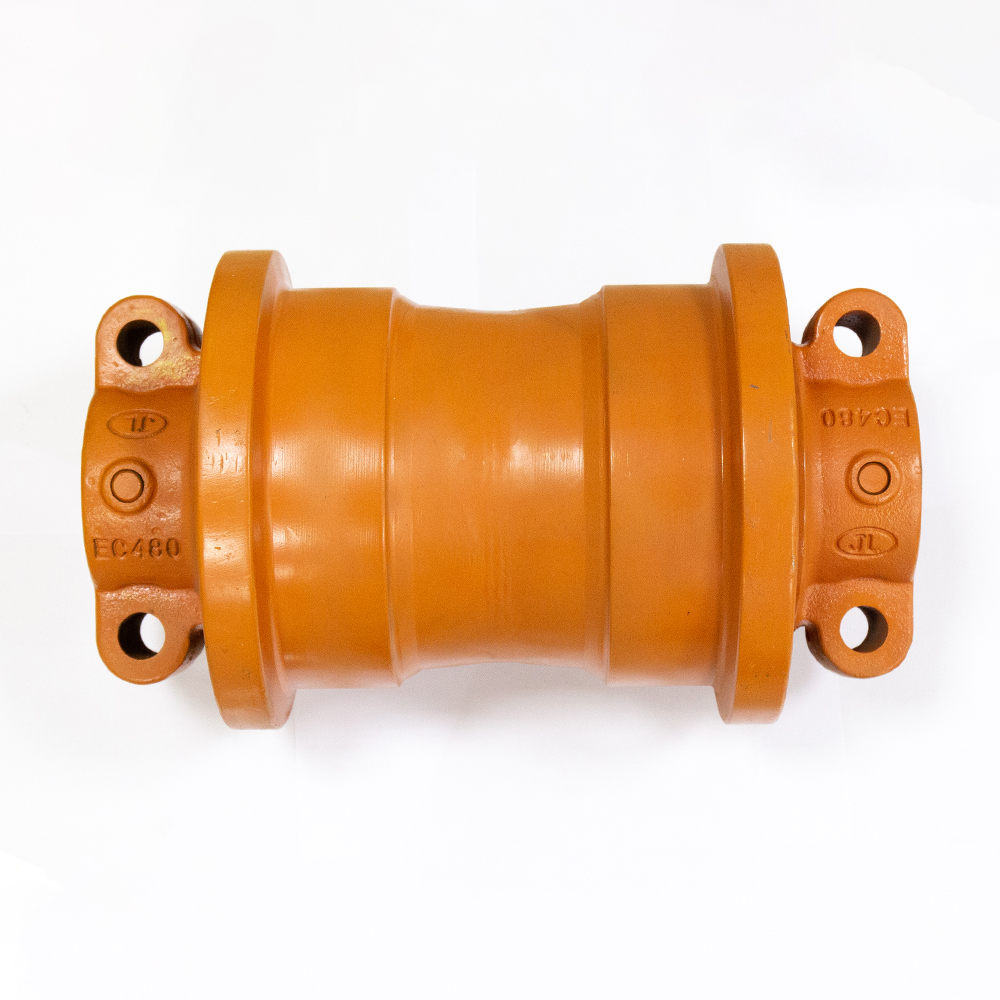
Penggelek Trek: These wheels run along the track chain, bearing the machine's weight. They must withstand constant rotation under immense load. The quality of a roller is determined by its shell (the outer body), the shaft, and especially its seals. Failed seals lead to loss of lubrication and rapid failure, which can then cause damage to the track links themselves. Look for rollers with high-quality duo-cone seals and shells that have been properly through-hardened.
Idler dan sprocket: The idler is the large wheel at the front of the track frame that guides the track, while the sprocket is the toothed wheel at the rear that is driven by the final drive to propel the track. Both must be made from wear-resistant cast steel. As the sprocket teeth wear, they become "hooked," which accelerates bushing wear. As the idler's running surface wears, it can lead to improper track guiding. These components should be monitored and typically replaced along with the track chains to ensure the entire system wears evenly.
Attachments: The Tools of the Trade
The versatility of a Komatsu excavator or wheel loader comes from its ability to use a wide array of attachments. The quality of these attachments directly impacts productivity.
baldi: As we have discussed, buckets are not a single entity. They are specialized tools. Beyond the general-duty, tugas berat, and severe-duty rock buckets, there are other specialized types:
- Ditch Cleaning Buckets: Wide, shallow buckets with a smooth cutting edge, perfect for grading and handling soft materials.
- Trenching Buckets: Narrow buckets designed to dig trenches of a specific width for utilities or pipelines.
- Skeleton Buckets: These have ribbed bottoms, allowing smaller particles like soil and water to fall through while retaining larger rocks—ideal for sorting material on site. The steel quality (look for AR-rated plates), weld penetration, and reinforcement design on high-stress areas (like the corners and side cutters) are the defining features of a durable bucket.
Hydraulic Breakers (Hammers): These attachments are used for demolition and breaking oversized rock. They are incredibly high-stress tools. The quality of the main body casting, the piston's metallurgy and heat treatment, and the durability of the tool point (chisel or moil) are critical. A low-quality breaker is a constant source of frustration, with frequent seal blowouts and low impact energy.
Rippers: A single or multi-shank ripper on a dozer is designed to fracture hardpan or rock before excavation. The shank itself must be made of high-tensile forged steel to resist bending and snapping. The replaceable ripper tip bears the brunt of the wear and must be cast from a high-hardness, high-impact alloy.
Alat Penglibatan Tanah (Dapatkan): The Point of Attack
GET are the consumable wear parts attached to buckets and rippers. They are designed to be sacrificed to protect the more expensive attachment. The selection of GET is a constant balance of wear life, penetration, dan kos.
Teeth and Adapters: The adapter is welded to the bucket lip, and the tooth is attached to the adapter, usually with a pin and retainer system. This allows for quick replacement of the tooth in the field. The bond between tooth and adapter is a high-stress point. A poor-fitting system will have "slop," leading to accelerated wear on both the tooth and the adapter, and can even result in the pin breaking and the tooth being lost. The quality of the casting and the precision of the locking mechanism are paramount. Many suppliers, suka , offer a wide variety of tooth systems to fit different machines and applications.
Cutting Edges and End Bits: These are the replaceable blades bolted to the bottom of dozer blades and the edges of loader buckets. They must be made from through-hardened boron steel to provide a long, even wear life. A common mistake is to buy a cheap, low-alloy cutting edge that wears out in the middle, creating a "frown" that reduces dozing efficiency and requires the entire blade to be replaced prematurely. High-quality edges are often reversible, allowing you to flip them over and use the second side, dengan berkesan menggandakan kehidupan mereka.
By understanding the specific demands on each of these core components, you can apply the five checks with greater precision. You can ask a potential supplier not just if they have a track roller for a PC200, but about the Rockwell hardness of the roller shell and the type of seals it uses. This level of informed inquiry is what separates a passive buyer from a strategic partner in your machine's health.
Soalan yang sering ditanya (Soalan Lazim)
How can I identify a high-quality aftermarket part from a low-quality one?
Identifying quality requires a multi-faceted approach. Pertama, look at the supplier's reputation, jaminan, and technical transparency, as detailed in Check 4. Physically, inspect the part for signs of quality manufacturing. Cari bersih, precise welds on fabricated parts like buckets. On cast parts like bucket teeth, check for a smooth finish without excessive pitting or porosity. For machined parts, look for clean, sharp edges and consistent finishes. Ask the supplier for material specifications; a reputable source will proudly share details about the steel alloys (Mis., boron steel) and heat treatment processes (Mis., through-hardening) they use. A low price combined with a vague or non-existent warranty is the most significant red flag.
Is it ever a good idea to use non-genuine parts on a machine that is still under warranty?
Using non-genuine parts on a machine while it is still under the manufacturer's warranty is a risky proposition and generally not recommended for critical systems. If a non-genuine part is found to be the cause of a failure, Komatsu or any OEM will likely deny the warranty claim for the resulting damage. Sebagai contoh, if a cheap aftermarket oil filter disintegrates and causes engine damage, the engine repair will not be covered. For high-wear items not directly linked to the powertrain, like bucket teeth or cutting edges, the risk is lower. Namun begitu, the safest policy during the warranty period is to use genuine OEM or OEM-approved parts to ensure full warranty protection.
How do I know when to replace undercarriage components?
Undercarriage wear should be measured and tracked, not just visually estimated. A technician can use specialized tools like ultrasonic measurement devices and calipers to measure key dimensions: track pin and bushing external wear, track link height, roller tread diameter, and sprocket tooth profile. Comparing these measurements to the OEM's wear tables (usually provided in the service manual) will tell you the percentage of wear on each component. Sebagai peraturan umum, it is most cost-effective to replace components as a system. Sebagai contoh, replacing pins and bushings should be done before they wear to the point of damaging the track links and sprocket teeth. Aim to replace components when they reach around 100-120% of their "allowable wear" limit to avoid in-field failures.
What impact does the operator have on the lifespan of parts for Komatsu machines?
The operator has a tremendous impact on part lifespan. A licin, skilled operator who avoids shock loads, excessive high-speed tracking in reverse, and unnecessary spinning of the tracks can significantly extend the life of the undercarriage and powertrain. Proper operating techniques, such as digging from the front of the idlers rather than over the side, reduce stress on track rollers and the swing mechanism. Membuat luas, gentle turns instead of sharp, counter-rotating pivots drastically reduces wear on track links and shoes. Operator training is one of the most effective investments you can make in reducing your long-term parts and maintenance costs.
Are remanufactured parts as reliable as new parts?
High-quality remanufactured parts, especially those from the OEM's own program like Komatsu Reman, are exceptionally reliable. These are not simply "repaired" or "rebuilt" bahagian. The process involves completely disassembling the component (the "core"), thoroughly cleaning and inspecting every piece, and replacing all wear items—seals, gaskets, bearings, and any other part that does not meet strict OEM specifications—with new genuine parts. The component is then reassembled and tested to the same standards as a brand-new part. The result is a component that offers the same performance and is backed by the same warranty as new, but at a significantly lower cost.
Pemikiran Akhir tentang Membina Daya Tahan
The journey through the intricate world of parts for Komatsu machines brings us to a simple, yet profound, realization: the choices we make in the workshop are as consequential as the strategies we plan in the boardroom. The health of a multi-million dollar fleet is not maintained through grand gestures, but through the cumulative wisdom of small, daily decisions. It is in the choice of a through-hardened cutting edge over a brittle imitation, the selection of a high-quality aftermarket undercarriage that respects the principles of TCO, and the trust placed in a supplier who is a partner in your uptime.
Setiap bahagian, from the smallest bolt to a complete engine, is a thread in the fabric of your operation's resilience. A weak thread compromises the entire cloth. By embracing a philosophy of value over price, of science over speculation, and of partnership over mere transaction, you are not just maintaining machines. You are fortifying your business against the unpredictable challenges of the field, ensuring that your Komatsu equipment can continue to do what it was built for: to powerfully and reliably shape the world around us. This informed approach is the ultimate expression of respect for the machine, for the people who operate it, and for the enterprise it sustains.
Rujukan
Bunyip Equipment. (2025). Bucket teeth and wear parts. Bunyip Equipment.
FJDynamics. (2025, Mungkin 22). Atas 10 parts of excavator you should know in 2025. FJDynamics. https://www.fjdynamics.com/blog/industry-insights-65/parts-of-excavator-563
Bahagian GFM. (2025, Mac 4). Excavator track shoe type analysis: Composition, design principle and selection guide. Bahagian GFM. https://gfmparts.com/excavator-track-shoe-type-analysis/
Imara Engineering Supplies. (2024, April 10). Komatsu heavy equipment parts: A comprehensive guide. Imara Engineering Supplies. https://imaraengineeringsupplies.com/blogs/news/komatsu-heavy-equipment-parts?srsltid=AfmBOopsZGq0x6wy4vjr75ynMDqUJtyJhejpzXT1dzNbfrlEOWZkPXhv
Komatsu. (2025). Attachments. Komatsu Ltd..
Komatsu. (2025). bahagian. Komatsu Southern Africa.