
Abstract
De aanschaf van onderdelen voor zware bouwmachines vertegenwoordigt een aanzienlijke operationele en financiële overweging voor elke onderneming. Deze analyse onderzoekt de vijf meest voorkomende en financieel schadelijke fouten die worden gemaakt bij de inkoop van onderdelen voor Volvo-machines. Het onderzoekt de complexe relatie tussen de initiële componentkosten, operationele uitgaven op de lange termijn, en het overkoepelende concept van Total Cost of Ownership (Totale eigendomskosten). De discussie strekt zich uit tot de kritische evaluatie van de geloofwaardigheid van leveranciers als bolwerk tegen de verspreiding van nagemaakte of ondermaatse componenten. Een gedetailleerd onderzoek naar de noodzaak van nauwkeurige compatibiliteit tussen onderdelen en machines, vooral binnen ingewikkelde systemen zoals het onderstel, wordt gepresenteerd. Het document biedt ook een genuanceerd onderscheid tussen echt, Originele fabrikant van apparatuur (OEM), en aftermarket-onderdelen, het bieden van een strategisch raamwerk voor selectie. Eindelijk, het pleit voor een paradigmaverschuiving van reactief herstel naar proactief, voorspellend onderhoud, met het argument dat een dergelijke strategie van fundamenteel belang is voor het maximaliseren van de levensduur van apparatuur, operationele uptime, en rendement op investeringen voor eigenaren op diverse mondiale markten.
Belangrijke afhaalrestaurants
- Evalueer de totale eigendomskosten, niet alleen de initiële aankoopprijs.
- Controleer leveranciers grondig om het gebruik van namaakcomponenten te voorkomen.
- Garandeer exacte compatibiliteit tussen onderdelen en machines met behulp van serienummers.
- Strategisch hoogwaardige aftermarket-onderdelen voor Volvo-machines aanschaffen om de kosten in evenwicht te brengen met de prestaties.
- Pas proactieve onderhoudsschema's toe om op de behoeften te anticiperen en de levensduur van componenten te verlengen.
- Begrijp de materiaalwetenschap achter slijtageonderdelen voor geïnformeerde aankopen.
Inhoudsopgave
- Invoering: De grote inzet bij de componentselectie voor Volvo-bouwmachines
- Fout 1: Prioriteit geven aan de initiële prijs boven de totale eigendomskosten (Totale eigendomskosten)
- Fout 2: Het negeren van leveranciersverificatie en authenticiteit van onderdelen
- Fout 3: Het negeren van de precieze compatibiliteit tussen onderdelen en machines
- Fout 4: Het verkeerd begrijpen van de echte vs. OEM vs. Aftermarket-spectrum
- Fout 5: Een reactief ‘Fix-It-When-It-Breaks’-beleid aannemen" Benadering
- Veelgestelde vragen (Veelgestelde vragen)
- Conclusie
- Referenties
Invoering: De grote inzet bij de componentselectie voor Volvo-bouwmachines
Volvo Construction Equipment heeft een wereldwijde reputatie opgebouwd op het gebied van robuuste techniek, betrouwbaar, en technologisch geavanceerde machines. Van de formidabele graafmachines die funderingen uithakken in de zich snel ontwikkelende stedelijke centra van Zuidoost-Azië tot de krachtige wielladers die actief zijn in de uitgestrekte mijnlandschappen van Australië, deze geel-grijze machines zijn symbolen van productiviteit. De essentie van hun waarde, Echter, ligt niet alleen bij de eerste aankoop van de machine zelf. In plaats van, het wordt gerealiseerd door duizenden uren ononderbroken, efficiënte werking. De voortdurende prestaties van deze machines zijn onlosmakelijk verbonden met de kwaliteit van de componenten waaruit ze bestaan. De selectie van vervangende onderdelen voor Volvo-machines, daarom, is geen alledaagse inkooptaak; it is a high-stakes strategic decision with profound implications for a project's profitability, veiligheid, en tijdlijn.
Het maken van een slecht geïnformeerde keuze kan een waterval van negatieve gevolgen veroorzaken. Een enkel voortijdig defect van een ogenschijnlijk klein onderdeel, zoals een looprol of een baktand, kan een machine van miljoenen dollars tot stilstand brengen. De directe kosten van het vervangende onderdeel vallen in het niet bij de astronomische kosten van ongeplande stilstand. Deze kosten omvatten inactieve arbeid, boetes voor projecten, potentieel verlies van contracten, plus de logistieke kosten van noodreparaties. Verder, een ondermaats onderdeel kan versnelde slijtage aan aangrenzende onderdelen veroorzaken, duurdere componenten, het initiëren van een domino-effect van storingen in een systeem. Bijvoorbeeld, een slecht vervaardigd tandwiel kan systematisch een hele rupsketting vernietigen, Een probleem van honderd dollar transformeren in een catastrofe van tienduizend dollar.
De wereldmarkt voor onderdelen van zwaar materieel is complex, bevolkt door een spectrum aan leveranciers die alles aanbieden, van originele Volvo-artikelen tot een verbijsterende reeks aftermarket-alternatieven. Voor apparatuurmanagers in regio's als Rusland, het Midden-Oosten, of Afrika, het navigeren door dit landschap brengt unieke uitdagingen met zich mee, inclusief lange toeleveringsketens, variabele kwaliteitsnormen, plus de aanhoudende dreiging van namaakgoederen. Een empathisch begrip van deze uitdagingen vereist dat we verder gaan dan een simpele prijsvergelijking. Het vereist een diepere, meer filosofisch onderzoek naar de aard van waarde zelf. Wat zijn de werkelijke kosten van een onderdeel? Het is niet alleen het nummer op een factuur, maar de som van de prestaties ervan, zijn levensduur, de impact ervan op de machine als geïntegreerd systeem, en de bijdrage ervan aan de algehele economische levensduur van het actief. In de volgende discussie worden de vijf meest voorkomende en kostbare fouten in dit aanbestedingsproces ontleed, duidelijk aanbieden, gestructureerd raamwerk om eigenaren en exploitanten in staat te stellen keuzes te maken die hun investeringen veiligstellen en hun operationele momentum behouden.
Fout 1: Prioriteit geven aan de initiële prijs boven de totale eigendomskosten (Totale eigendomskosten)
Een van de meest verleidelijke en uiteindelijk schadelijke fouten bij aanbestedingen is de fixatie op de initiële aankoopprijs van een onderdeel. In een wereld van krappe budgetten en concurrerende biedingen, de aantrekkingskracht van een besparing vooraf is krachtig. Een offerte voor een emmer die twintig procent goedkoper is dan die van de concurrentie lijkt een eenvoudige financiële overwinning. Dit perspectief, Echter, is diep bijziend. Het houdt geen rekening met de totale economische levensduur van het onderdeel en zijn rol binnen het grotere ecosysteem van de machine. The true measure of a part's value is its Total Cost of Ownership (Totale eigendomskosten), een holistisch concept dat niet alleen de initiële kosten omvat, maar ook alle daaropvolgende kosten die in de loop van de tijd met het gebruik ervan gepaard gaan. Neglecting TCO in favor of a low sticker price is akin to choosing a building's foundation based on the cheapest concrete available, zonder rekening te houden met het draagvermogen of de veerkracht ervan tegen omgevingsstress. De initiële besparingen zijn vaak een luchtspiegeling, veel grotere uitgaven verbergend.
De illusie van vooraf sparen
De aantrekkingskracht van lage initiële kosten is geworteld in eenvoud, tastbare maatstaf die gemakkelijk te rapporteren en te rechtvaardigen is. Nog, de realiteit van het gebruik van zware apparatuur is dat goedkopere onderdelen vaak worden vervaardigd met inferieure materialen of minder nauwkeurige technische toleranties. Een staallegering van lagere kwaliteit in een ripperschacht kan op het moment van aankoop geld besparen, maar het zal sneller verslijten, breuk onder hoge spanning, of slagen er niet in om effectief harde grond binnen te dringen, reducing the machine's overall productivity. Denk eens aan de onderwagen van een Volvo graafmachine, een systeem van in elkaar grijpende componenten die worden blootgesteld aan enorme spanning en slijtage. Een set rupskettingen die met een grote korting is gekocht, kan gemaakt zijn van staal dat niet de juiste warmtebehandeling heeft ondergaan. Hoewel visueel identiek aan een alternatief van hogere kwaliteit, deze ketens zullen sneller uitrekken. De verhoogde "toonhoogte" (de afstand tussen de pincentra) zal niet langer perfect uitgelijnd zijn met de tanden van de tandwielen, leidend tot een vermaling, springactie die de slijtage van zowel de ketting als het tandwiel versnelt.
Het resultaat is een vicieuze cirkel van vervanging. De "goedkope" onderdeel mislukt voortijdig, waardoor niet alleen een nieuwe aankoop noodzakelijk is, maar ook een nieuwe ronde van arbeidskosten en, meest schadelijk, een nieuwe periode van machine-uitval. Eén enkele storing kan ook bijkomende schade veroorzaken. Stel je een ondermaatse hydraulische slang voor die barst onder druk. De kosten van de slang zelf zijn minimaal. De werkelijke kosten omvatten het verlies van dure hydraulische vloeistof, de kans op milieuverontreiniging, het risico op letsel voor het personeel, de arbeid om de slang te vervangen en het systeem te ontluchten, plus de uren of dagen dat de machine buiten gebruik is. De aanvankelijke besparing op de slang wordt dus zinloos gemaakt door de verstrekkende gevolgen van het falen ervan. Dit cascade-effect benadrukt dat een component niet op zichzelf kan worden bekeken. Elk onderdeel is een burger in de mechanische samenleving van de machine, en het falen van één kan een onnodige last op alle anderen leggen.
Berekening van de werkelijke kosten: Een TCO-framework
Om voorbij de illusie van besparingen vooraf te komen, een meer gedisciplineerd, analytische aanpak is vereist. Het Total Cost of Ownership-raamwerk biedt een gestructureerde methode voor het evalueren van de volledige financiële impact van een componentkeuze. De basisformule is een krachtig denkmiddel:
TCO = Initiële aankoopprijs + (Onderhoudskosten + Reparatiekosten) + Kosten van stilstand – Restwaarde/wederverkoopwaarde
Let's apply a hypothetical, maar toch realistisch, scenario. Een wagenparkbeheerder voor een bouwbedrijf in Korea moet de rupsgroepen van een Volvo EC480E graafmachine vervangen. Ze hebben twee opties:
- Optie A: Voordelige onderwagenonderdelen. Initiële prijs: $15,000. Verwachte levensduur: 2,500 uur.
- Optie B: Hoogwaardige aftermarket-onderwagenonderdelen. Initiële prijs: $22,000. Verwachte levensduur: 5,000 uur.
Een eenvoudige prijsvergelijking doet Optie A superieur lijken. Een TCO-analyse voorbij 5,000 operationele uren, Echter, onthult een ander verhaal.
| Kostenfactor | Optie A: Goedkope onderdelen | Optie B: Hoogwaardige aftermarket | Analyse |
|---|---|---|---|
| Initiële prijs | $15,000 | $22,000 | Optie B is 47% vooraf duurder. |
| Vervangingen binnen 5,000 uur | 1 (bij 2,500 uur) | 0 | Optie A vereist een volledige vervangingscyclus. |
| Kosten van vervangend onderdeel | $15,000 | $0 | De tweede aankoop voor optie A verdubbelt de onderdeelkosten. |
| Arbeid voor vervanging | 2 evenementen x 16 uur x $ 75/uur = $2,400 | 1 evenement x 16 uur x $ 75/uur = $1,200 | Optie A vereist twee afzonderlijke installatiegebeurtenissen. |
| Kosten voor downtime | 2 evenementen x 16 uur x $ 500/uur = $16,000 | 1 evenement x 16 uur x $ 500/uur = $8,000 | Downtime is een grote verborgen kostenpost. |
| Totale kosten voorbij 5,000 uur | $48,400 | $31,200 | Optie B levert een werkelijke besparing op van $17,200. |
Deze tabel illustreert op treffende wijze het TCO-principe. De initiaal $7,000 De besparing die Optie A biedt, verdampt en verandert in een $17,200 verlies over de gemeten operationele levensduur. Uit de berekening blijkt dat hoe ‘goedkoper" optie is, in werkelijkheid, meer dan 50% op de langere termijn duurder. Het raamwerk dwingt een perspectiefverschuiving af van ‘Wat kost het om te kopen?" tot "Wat kost het om te bezitten en te exploiteren?".
De verborgen kosten van downtime in wereldwijde activiteiten
De bovenstaande TCO-berekening maakt gebruik van downtimekosten van $500 per uur, een figuur die abstract kan lijken. Voor operators op de grond, die kosten zijn pijnlijk concreet. In de olie- en gasvelden van het Midden-Oosten, een project voor het uitgraven van een pijpleiding verloopt volgens een flinterdun schema. If an excavator's bucket fails due to a cracked weld on a cheap replacement, het hele pijplegpersoneel zou gedwongen kunnen worden stil te staan. De dagelijkse kosten van dat inactieve team, gecombineerd met contractuele boetes voor vertragingen, kan in de tienduizenden dollars lopen. Een uur stilstand is nooit zomaar een uur stille machine; het is een uur verloren vooruitgang, een uur betaalde, maar onproductieve arbeid, en een uur dichter bij een gemiste deadline.
Denk eens aan een houtkapoperatie in een afgelegen deel van Zuidoost-Azië tijdens het regenseizoen. Het venster voor het winnen van hout is kort. If a forwarder's main hydraulic pump, vervangen door een goedkoper alternatief, mislukt, de machine kan kilometers ver van een begaanbare weg stranden. De logistieke uitdaging om een monteur en de juiste onderdelen voor Volvo-machines naar die locatie te krijgen is enorm. De downtime wordt niet gemeten in uren, maar in dagen of zelfs weken. Gedurende die periode, quota worden gemist, en inkomsten verloren gaan. De werkelijke kosten van die pompstoring zijn niet de aankoopprijs, maar de waarde van het hout dat niet is geoogst. Deze scenario's onderstrepen het toegenomen belang van betrouwbaarheid bij afgelegen of tijdgevoelige operaties. In dergelijke contexten, de premie die betaald wordt voor een duurzaam product, Een betrouwbaar onderdeel is geen kostenpost; het is een verzekeringspolis tegen catastrofale operationele mislukkingen. Als u onderdelen kiest op basis van de TCO, kiest u voor voorspelbaarheid boven onzekerheid en kiest u voor winstgevendheid op de lange termijn boven een vluchtigheid, illusoire besparing.
Fout 2: Het negeren van leveranciersverificatie en authenticiteit van onderdelen
Op de wereldmarkt voor onderdelen van zware machines, niet alle leveranciers zijn gelijk geschapen. Het digitale tijdperk heeft het gemakkelijker dan ooit gemaakt om onderdelen van over de hele wereld te verkrijgen, maar het heeft ook de deur geopend voor gewetenloze verkopers om namaakproducten en producten van mindere kwaliteit op de markt te brengen. Vertrouwen stellen in een niet-doorgelichte leverancier is een grote gok. De gevolgen reiken verder dan financieel verlies en omvatten ernstige veiligheidsrisico's en langdurige schade aan waardevolle apparatuur. Een zorgvuldige en systematische aanpak van leveranciersverificatie is geen bureaucratische rompslomp; het is een fundamentele oefening in risicobeheer. It involves looking past the glossy online catalog and professional-looking website to scrutinize the supplier's credentials, reputatie, en de controleerbare kwaliteit van hun producten. Bij dit proces gaat het erom ervoor te zorgen dat de onderdelen voor Volvo-machines die u koopt authentiek zijn, voldoen aan strenge productienormen, plus worden ondersteund door een legitiem bedrijf.
De alomtegenwoordige dreiging van nagemaakte en ondermaatse onderdelen
Het probleem van namaakonderdelen is een alomtegenwoordige en verraderlijke bedreiging in de bouw- en mijnbouwsector. Deze zijn niet louter ‘algemeen’" onderdelen; het zijn componenten die opzettelijk zijn ontworpen om te misleiden, vaak verpakt in dozen die echte branding nabootsen, compleet met valse logo's en onderdeelnummers. Het bedrog kan opmerkelijk geavanceerd zijn. Een namaaklager kan er aan de buitenkant identiek uitzien als een origineel lager, maar aan de binnenkant, het kan zijn gemaakt van inferieur staal met onjuiste spelingen, voorbestemd om vast te lopen en te falen onder belasting. Deze storing kan een versnellingsbak of eindaandrijving vernielen, wat leidt tot reparaties die tienduizenden dollars kosten.
Ondermaatse onderdelen vertegenwoordigen een gerelateerd onderdeel, al is het net iets anders, Gevaar. Dit zijn misschien geen directe vervalsingen, maar worden geproduceerd door fabrikanten die bezuinigen op materialen en processen om de kosten te verlagen. Een bakbevestiging kan aan elkaar worden gelast met behulp van onjuiste technieken of zonder het hogesterktestaal voor te verwarmen, het creëren van zwakke punten in de HAZ (Door hitte beïnvloede zone) die gevoelig zijn voor scheuren onder de belasting van het graven. Een beitel voor bouwmachines die uit een verkeerde staallegering is gesmeed, zal snel bot worden of zelfs versplinteren als hij op steen slaat, die een aanzienlijk veiligheidsrisico vormen door rondvliegende metaalfragmenten. Het gevaar is dat deze gebreken vaak onzichtbaar zijn voor het blote oog. Het onderdeel kan correct worden geïnstalleerd en zelfs een korte periode functioneren voordat de inherente zwakte tot een plotselinge storing leidt, catastrofale mislukking. Daarom staan de identiteit en integriteit van de leverancier voorop. Een gerenommeerde leverancier fungeert als poortwachter van de kwaliteit, ervoor te zorgen dat de componenten die zij verkopen volgens nauwkeurige specificaties zijn vervaardigd.
Een checklist voor het doorlichten van uw onderdelenleverancier
Hoe, Dan, Kan een kritische koper een betrouwbare partner scheiden van een potentiële aansprakelijkheid?? Het vergt een methodisch onderzoek, een vorm van due diligence. Zie het als het inhuren van een cruciale medewerker voor uw bedrijf. Je zou niemand aannemen zonder hun referenties en CV te controleren; dezelfde nauwkeurigheid moet gelden voor uw onderdelenleverancier.
Hier vindt u een praktische checklist voor het doorlichten van potentiële leveranciers:
- Zoek naar certificeringen en traceerbaarheid: Vraag of de leverancier of zijn productiepartners ISO zijn 9001 gecertificeerd. Deze certificering geeft aan dat wordt voldaan aan een wereldwijde standaard voor kwaliteitsmanagementsystemen. Een gerenommeerde leverancier moet in staat zijn om materiële traceerbaarheidsrapporten of conformiteitscertificaten voor hun producten te verstrekken, waaruit de herkomst en kwaliteit van het gebruikte staal blijkt.
- Onderzoek hun fysieke aanwezigheid: Heeft de leverancier een verifieerbaar fysiek adres?, magazijn, en kantoor? Gebruik online kaarthulpmiddelen om hun locatie te bekijken. Een bedrijf dat uitsluitend vanuit een postbus of woonadres opereert, zou een belangrijke waarschuwing moeten zijn. Legitieme bedrijven beschikken over tastbare activa en infrastructuur.
- Onderzoek hun online reputatie en geschiedenis: Zoek naar onafhankelijke beoordelingen, casestudies, of getuigenissen. Hoe lang zijn ze al actief?? Een lange geschiedenis in de branche duidt vaak op een staat van dienst op het gebied van betrouwbaarheid. Wees op uw hoede voor leveranciers zonder geschiedenis of met een overvloed aan generieke geneesmiddelen, overdreven positieve recensies die niet authentiek lijken.
- Informeer naar garantie- en retourbeleid: Een leverancier die achter zijn product staat, zal een duidelijk antwoord bieden, uitgebreide garantie. Vraag schriftelijk naar het garantiebeleid. Hoe gaan zij om met een claim?? Een vage of onbestaande garantie duidt op een gebrek aan vertrouwen in hun eigen producten.
- Test hun technische kennis: Betrek hun verkoop- of ondersteuningspersoneel bij specifieke technische vragen. Vraag naar de Brinell-hardheidsgraad van een bakrand, de specifieke staalsoort die in hun ripperschachten wordt gebruikt, of het warmtebehandelingsproces voor hun tandwielen. Een deskundig team duidt op een bedrijf dat investeert in de technische aspecten van hun producten, niet alleen in verhuisdozen. Een leverancier die deze vragen niet kan beantwoorden, kan eenvoudigweg een wederverkoper zijn zonder echt inzicht te hebben in wat hij verkoopt.
- Referenties opvragen: Vraag om contactgegevens van enkele van hun vaste klanten, bij voorkeur in een regio of branche vergelijkbaar met de jouwe. Rechtstreeks met een andere eigenaar van apparatuur praten over hun ervaringen kan van onschatbare waarde zijn, onbevooroordeeld inzicht.
Materiaalkunde begrijpen: Waarom staalkwaliteit belangrijk is
De kern van elk duurzaam slijtageonderdeel is het materiaal waaruit het is gemaakt. Voor onderdelen zoals emmers, messen, rippers, en onderstelonderdelen, het specifieke type staal en de behandeling ervan zijn geen kleine details; het zijn de belangrijkste bepalende factoren voor prestaties en levensduur. Een gerenommeerde leverancier begrijpt dit niet alleen, maar is ook transparant over de materialen die zij gebruiken.
De sleutel wordt vaak gevonden in hoge sterkte, slijtvaste staallegeringen. Veel hoogwaardige grondgereedschappen (KRIJGEN), Bijvoorbeeld, zijn gemaakt van boorstaal. Borium is een microlegeringselement; zelfs in kleine hoeveelheden (Bijv., 20-40 delen per miljoen), het verhoogt dramatisch de "hardbaarheid"." van het staal. Dit betekent dat tijdens het warmtebehandelingsproces, de hardheid kan vanaf het oppervlak dieper in het materiaal doordringen.
Het warmtebehandelingsproces zelf, meestal met afschrikken en temperen, is net zo belangrijk.
- Afschrikken: Het onderdeel wordt tot een zeer hoge temperatuur verwarmd (boven 800°C) en vervolgens snel afgekoeld in water, olie, of lucht. This process locks the steel's crystal structure into a very hard state known as martensite.
- Temperen: Een ongetemperd martensitisch staal is extreem hard maar ook erg bros. Bij tempereren wordt het onderdeel gedurende een bepaalde periode op een lagere temperatuur verwarmd. Dit proces verlicht interne spanningen en vermindert broosheid, resulterend in een eindproduct dat een optimale balans van hardheid bezit (voor slijtvastheid) en taaiheid (voor slagvastheid).
Een ondermaats onderdeel kan gemaakt zijn van eenvoudig koolstofstaal, of het kan van een goede legering zijn gemaakt, maar een onjuiste warmtebehandeling hebben ondergaan. Het zou alleen ‘case-hardened’ kunnen zijn," met een dun laagje hardheid op het oppervlak dat snel wegslijt, waardoor de zachte kern eronder bloot komt te liggen. Of het kan worden uitgedoofd, maar niet getemperd, waardoor het bij de eerste ernstige botsing als glas kan breken. Wanneer u een leverancier onderzoekt, je toetst impliciet hun begrip en controle van deze metallurgische processen. Als u kiest voor een leverancier die gedetailleerde specificaties kan verstrekken over de materiaalsamenstelling en warmtebehandeling, kiest u voor een partner die zich inzet voor de fundamentele principes van duurzaamheid.
Fout 3: Het negeren van de precieze compatibiliteit tussen onderdelen en machines
In de ingewikkelde wereld van zware machines, het concept van ‘dichtbij genoeg’" is een recept voor mislukking. De veronderstelling dat een onderdeel dat voor een specifiek model van een Volvo-machine is ontworpen, op elke machine van datzelfde model past, is een veel voorkomende maar gevaarlijke oversimplificatie. Fabrikanten verfijnen voortdurend hun ontwerpen, wat leidt tot subtiele maar significante variaties in componenten, zelfs binnen dezelfde modellijn. Deze wijzigingen zijn vaak gekoppeld aan specifieke serienummerreeksen of productiejaren. Het negeren van deze fijne details en het niet garanderen van de exacte compatibiliteit tussen onderdelen en machines kan tot een groot aantal problemen leiden, variërend van installatieproblemen tot verminderde prestaties en de versnelde vernietiging van complete mechanische systemen. Het streven naar precisie bij de identificatie van onderdelen is geen pedanterie; het is een fundamentele vereiste voor het behoud van de operationele integriteit en levensduur van de apparatuur.
Buiten het modelnummer: De nuances van serienummers en productiejaren
Een apparatuurmanager weet misschien dat hij een nieuwe eindaandrijving nodig heeft voor zijn "Volvo EC220D"." graafmachine. Echter, tijdens de productielevensduur van de EC220D, Mogelijk heeft Volvo hydraulische motoren van verschillende fabrikanten betrokken, of ze hebben mogelijk de overbrengingsverhoudingen of montageboutpatronen bijgewerkt om de prestaties te verbeteren. Een eindaandrijving bedoeld voor een vroeg productiemodel past of functioneert mogelijk niet correct in een later model, ondanks dat beide het label "EC220D."
This is where the machine's Product Identification Number (PIN), vaak het serienummer genoemd, onmisbaar wordt. The PIN is the machine's unique identity card. Het bevat gecodeerde informatie over de specifieke configuratie ervan, productiedatum, en de exacte stuklijst die bij de montage is gebruikt. Bij het bestellen van cruciale onderdelen voor Volvo-machines, het verstrekken van de volledige pincode aan een deskundige leverancier is de meest betrouwbare manier om te garanderen dat u het juiste onderdeel ontvangt. Een professionele onderdelenleverancier gebruikt de pincode om toegang te krijgen tot de specifieke elektronische onderdelencatalogus voor die specifieke machine, het elimineren van giswerk. Dat kunnen ze zien bij machines na een bepaald serienummer, bijvoorbeeld, de spoorversteller is bijgewerkt, waarvoor een andere afdichtingsset nodig is. Attempting to order the part without the PIN is like a doctor writing a prescription without knowing the patient's specific medical history or allergies—the potential for a negative outcome is high.
Het domino-effect van slechte montage in onderwagensystemen
De gevolgen van een slechte montage worden misschien wel het meest levendig geïllustreerd in het onderstelsysteem. Een onderstel is niet zomaar een verzameling onderdelen; het is een complex, gesynchroniseerd systeem waarbij elk onderdeel met bijna perfecte precisie met de anderen moet communiceren. The total cost of a machine's undercarriage can represent up to 50% van het totale onderhoudsbudget gedurende zijn levensduur, dus fouten hier zijn bijzonder kostbaar.
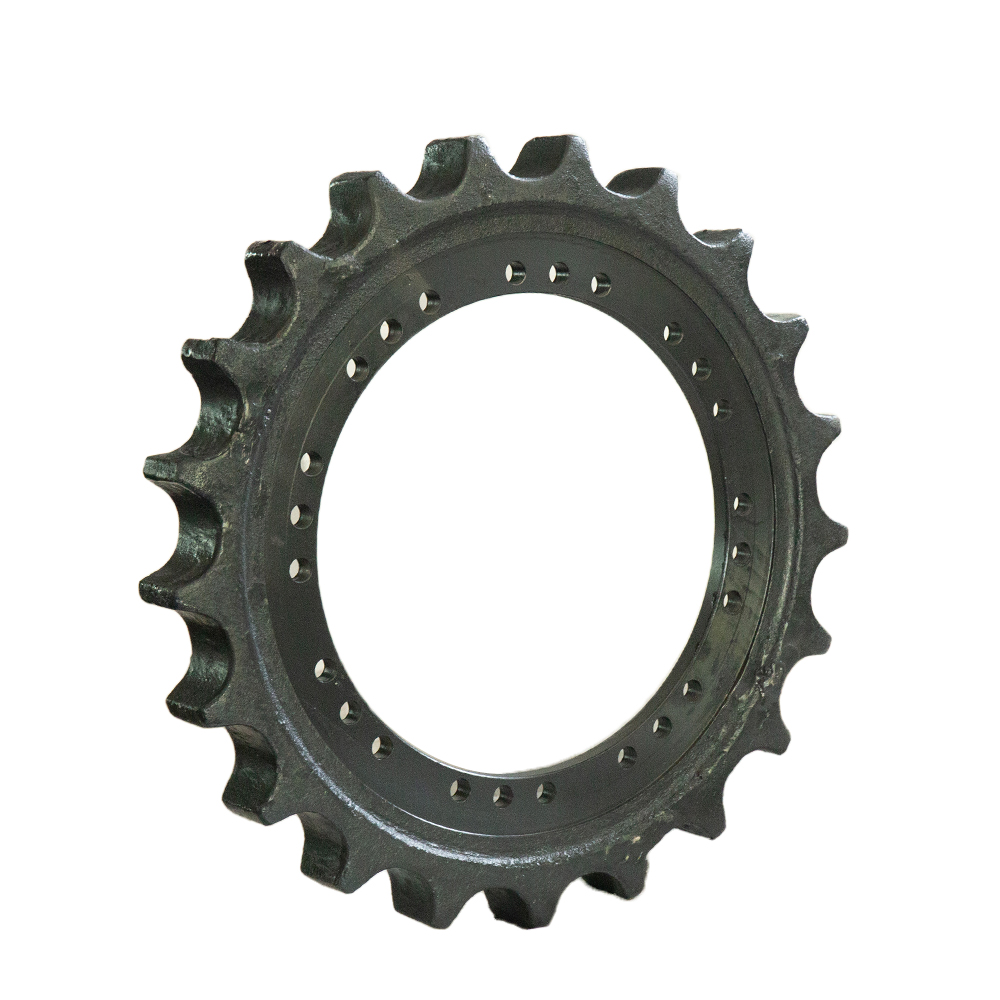
Let's consider the crucial interaction between the track chain and the sprocket. De afstand tussen het midden van elke pin in de rupsketting wordt de "pitch" genoemd." Een nieuw tandwiel wordt vervaardigd met tanden die perfect geprofileerd zijn om in de bussen van een nieuwe ketting met een specifieke steek te passen. Naarmate de ketting slijt, de interne pinnen en bussen verslijten, waardoor de toonhoogte langer wordt of "uitrekt"." Tegelijkertijd, de tandwieltanden verslijten door deze interactie.
Nu, stel je voor dat je een nieuwe installeert, hoogwaardige rupsketting op een oude, zwaar versleten tandwiel. De versleten tandwieltanden, die dun en ‘verslaafd’ zijn geworden," will not properly engage the new chain's bushings. Ze zullen hun krachten op de verkeerde gebieden concentreren, waardoor de nieuwe ketting in een drastisch versneld tempo verslijt. Omgekeerd, het installeren van een nieuw tandwiel met een niet-overeenkomende of slecht vervaardigde ketting kan net zo destructief zijn. Als een vervangende ketting van lage kwaliteit vanaf het begin een inconsistente of onjuiste spoed heeft, het zal onmiddellijk de tanden van het nieuwe tandwiel beschadigen.
Een heel specifiek voorbeeld is de Volvo tandwielrand, dat is de tand, geschroefde ring die de ketting aandrijft. Als een vervangende velg een enigszins onjuiste diameter van het boutpatroon of tandprofiel heeft, het kan tijdens de installatie op zijn plaats worden gedrukt. Onder belasting, Echter, de minieme verkeerde uitlijning zal ongelijkmatige spanning op de bouten veroorzaken, waardoor ze mogelijk afbreken. Subtieler, de onjuiste tandaangrijping zal een schurende werking veroorzaken die schadelijke trillingen door de gehele eindaandrijving stuurt, mogelijk schadelijk voor de dure lagers en tandwielen erin. De initiële besparing op een slecht passend onderdeel wordt tenietgedaan door de kosten van de bijkomende schade die het toebrengt. Het onderstel functioneert als een enkel onderstel, duur systeem, en het introduceren van een enkel niet-conform onderdeel is als het introduceren van een virus in een gezond organisme.
Decoderen van onderdeelnummers en schema's
Om deze compatibiliteitsproblemen te voorkomen, Eigenaren van apparatuur en monteurs moeten bedreven worden in het gebruik van de beschikbare hulpmiddelen voor de identificatie van onderdelen. The primary tools are the machine's parts manual and the electronic parts catalogs (EPC's) geleverd door fabrikanten en gerenommeerde leveranciers.
Het onderdeelnummer lokaliseren: De onderdelenhandleiding, in fysieke of digitale vorm, is the machine's bible. Het bevat exploded-view-diagrammen van elk systeem op de machine. Deze diagrammen zijn van onschatbare waarde. They show how components are assembled and assign a reference number to each individual piece. By locating the visual representation of the needed part in the diagram, you can find its corresponding part number in the accompanying list. It is vital to pay attention to notes in the catalog that specify changes based on serial numbers (Bijv., "For machines PIN XXXXX and up").
Using Exploded-View Diagrams: These diagrams do more than just help identify a part number. They reveal the relationship between components. When replacing a failed part, a careful study of the diagram might show related seals, o-rings, or gaskets that should always be replaced at the same time. Bijvoorbeeld, replacing a water pump without also replacing its gasket is asking for a leak. The diagram provides a visual checklist to ensure a complete and professional repair.
Cross-Referencing and Verification: Once you have a part number, a professional supplier can use it to confirm the fitment and offer alternatives. They can cross-reference the genuine Volvo part number to a high-quality aftermarket equivalent. They can also use their expertise to ask clarifying questions. Bijvoorbeeld, if you order a part for a hydraulic cylinder, they might ask you to measure the rod or bore diameter to confirm, as there might be multiple options for your machine's PIN. This collaborative verification process between the customer and the supplier is a final, crucial check to prevent the costly mistake of ordering the wrong part. It transforms the transaction from a simple purchase into a problem-solving partnership.
Fout 4: Het verkeerd begrijpen van de echte vs. OEM vs. Aftermarket-spectrum
The market for heavy equipment components is not a simple binary of "good" and "bad" onderdelen. It is a nuanced spectrum with several tiers of quality, price, and sourcing. At one end are Genuine parts, at the other is a vast and varied world of aftermarket options, and somewhere in between lies the category of OEM. A profound misunderstanding of the distinctions between these categories is a frequent source of poor purchasing decisions. Choosing the right type of part for the right application is a strategic act that requires a clear-eyed assessment of risk, begroting, and the specific role the component plays. Simply defaulting to the most expensive (Oprecht) or the cheapest (aftermarket) option without careful consideration can lead to either unnecessary expenditure or unacceptable risk. A sophisticated approach involves leveraging the entire spectrum to optimize the cost and reliability of your fleet.
Defining the Tiers: Oprecht, OEM, and Aftermarket
To make intelligent choices, one must first speak the language of parts sourcing with precision. The terms are often used interchangeably, but they have distinct meanings.
Originele onderdelen: These are components sold directly by the equipment manufacturer, in this case, Volvo. They come in a Volvo-branded box and are the exact same parts used to assemble the machine at the factory. They offer a guarantee of perfect fit, materiële kwaliteit, en prestaties. This guarantee comes at a premium price, which reflects not only the quality of the part but also the cost of Volvo's extensive global distribution network, branding, research, and development. They are the benchmark for quality.
OEM (Originele fabrikant van apparatuur) Onderdelen: This is one of the most misunderstood terms. An OEM part is a component made by the very same company that supplies the genuine part to Volvo. Bijvoorbeeld, Volvo does not manufacture its own bearings, pistons, or turbochargers. They design the specifications and then contract with a specialized company—let's say Bosch for fuel injectors or SKF for bearings—to produce them. The parts sent to the Volvo factory are put in a Volvo box and become "Genuine." The very same parts, made on the same production line to the same standards, that Bosch or SKF sell through their own distribution channels are "OEM" onderdelen. They offer genuine-level quality without the equipment manufacturer's brand markup, representing a significant value proposition. The challenge is identifying the correct OEM supplier for a specific component.
Aftermarket -onderdelen: This is the broadest and most varied category. An aftermarket part is any part produced by any company that is not the OEM supplier. The quality within the aftermarket world exists on a vast scale. At one end, you have highly reputable companies that specialize in specific component categories, such as undercarriage or ground-engaging tools. These companies may reverse-engineer the genuine part and then use their specialized expertise to make improvements, perhaps using a more advanced steel alloy or a more robust design. Their products can meet or even exceed genuine specifications. These are the "high-quality aftermarket" leveranciers. At the other end of the spectrum are manufacturers producing low-cost, low-quality parts with inferior materials and poor quality control. The key is that "aftermarket" is not a synonym for "inferior"; it is simply a designation of origin. Discernment is required to separate the high-quality aftermarket from the low-quality options.
A Comparative Analysis for Strategic Sourcing
Choosing between these tiers involves trading off several factors. The following table provides a framework for this strategic decision-making process, helping to clarify the pros and cons of each category for parts for Volvo machines.
| Functie | Oprecht (Volvo Branded) | OEM (Originele fabrikant van apparatuur) | Hoogwaardige aftermarket |
|---|---|---|---|
| Prijs | Hoogste | Gematigd (20-40% less than Genuine) | Variable (Vaak 40-60% less than Genuine) |
| Kwaliteit | Benchmark standard, guaranteed | Identical to Genuine quality | Can meet or exceed Genuine standards |
| Fit & Functie | Guaranteed perfect fit | Identical to Genuine fit | Designed to match Genuine fit; high-quality suppliers guarantee it |
| Garantie | Typically backed by the full Volvo network | Backed by the OEM manufacturer (Bijv., Bosch, SKF) | Backed by the aftermarket supplier; can be very comprehensive |
| Beschikbaarheid | Generally good through official dealers | Can be harder to source; requires identifying the OEM | Excellent for common wear parts from specialized suppliers |
| Bron | Official Volvo dealer network | Independent parts distributors, OEM's own network | Specialized aftermarket suppliers and distributors |
This comparison reveals that there is no single "best" choice for every situation. The optimal decision is context-dependent.
When to Choose Each Type: A Practical Guide
The art of expert parts sourcing lies in knowing when to deploy each type of part to achieve the best balance of cost, prestatie, and risk management.
Choose Genuine Parts When:
- The machine is still under its factory warranty. Using non-genuine parts during the warranty period can potentially void coverage for related failures.
- The part is a highly complex, safety-critical electronic component, like an Engine Control Unit (ECU). The proprietary software and intricate calibration of these components make the genuine option the safest bet.
- The cost of failure is astronomically high and absolute certainty is required, such as for internal engine or transmission components on a primary production machine.
Choose OEM Parts When:
- The machine is out of warranty, and you are looking for genuine-level quality without the genuine price tag.
- You can positively identify the OEM supplier for the component you need. This is common for items like filters, belts, turbochargers, and fuel system components.
- You are performing a major repair or rebuild and want to maintain the original factory performance characteristics at a more reasonable cost.
Choose High-Quality Aftermarket Parts When:
- You are replacing high-wear components. This is the sweet spot for reputable aftermarket suppliers. Items like undercarriage parts (rollen, leeglopers, rupsbanden), emmers, tanden, cutting edges, and other ground-engaging tools are consumed through normal use. A high-quality aftermarket supplier specializing in a quality Volvo undercarriage can offer products made from superior wear-resistant steel at a fraction of the genuine price. The TCO savings in this category are often immense.
- You are looking for an improved or heavy-duty version of a standard part. Aftermarket companies often innovate, offering, Bijvoorbeeld, a bucket with extra reinforcement for severe rock applications or a ripper shank with a more aggressive profile for better penetration.
- The machine is older, and genuine or OEM parts are becoming difficult to find or prohibitively expensive. A strong aftermarket can keep older, yet still productive, machines running economically.
By understanding this spectrum, a fleet manager can create a blended sourcing strategy. They might use genuine parts for a sensitive engine sensor, OEM filters for routine service, and high-quality aftermarket undercarriage components for a track replacement, thereby optimizing the entire maintenance budget without compromising the reliability of their parts for Volvo machines.
Fout 5: Een reactief ‘Fix-It-When-It-Breaks’-beleid aannemen" Benadering
The most traditional—and arguably the most costly—approach to maintenance is to wait for something to fail before taking action. This "fix-it-when-it-breaks" philosophy, also known as reactive maintenance, treats heavy machinery like a household appliance. It functions until it doesn't, and only then is attention paid. For complex, capital-intensive assets like Volvo construction equipment, this is a deeply flawed strategy. It cedes control of the maintenance schedule to chance, guaranteeing that failures will occur at the most inconvenient times, leading to maximum disruption and expense. A more enlightened and economically sound approach is to shift from a reactive to a proactive and even predictive mindset. This involves regular inspections, planned maintenance based on operational data, and a conscious effort to extend component life through proper operation. It is the difference between being a passive victim of mechanical failure and an active manager of asset health.
The Power of Proactive Undercarriage Inspection
As previously discussed, the undercarriage of a tracked machine is one of its most expensive wear systems. It is also a system that provides clear, visible signals of its health long before a catastrophic failure occurs. A proactive approach begins with simple, routine visual inspections that can be performed by the operator in just a few minutes at the start of each day. This is not a complex technical task; it is a habit of disciplined observation.
A basic daily walk-around inspection should include:
- Checking Track Sag: The tension of the track chain is vital. A track that is too tight accelerates wear on all components. A track that is too loose can cause the machine to "throw a track," leading to significant downtime. The operator's manual specifies the correct amount of sag, which can be checked quickly with a tape measure.
- Inspecting for Leaks: Look at the track rollers, leeglopers, en eindaandrijvingen. Any sign of oil leakage indicates a failing seal. A seal is an inexpensive part, but if it fails completely, the component will lose its lubrication, leading to the rapid destruction of the expensive internal bearings and shafts. Catching a leak early turns a thousand-dollar repair into a fifty-dollar one.
- Examining Sprocket Teeth: The teeth on the drive sprocket provide a clear history of wear. As they wear, they become thinner and develop a "hooked" or pointed shape. A severely worn sprocket will damage a new track chain. Observing the wear pattern helps in planning the replacement of both the sprocket and chain together to maximize the life of the new system. A phenomenon known as "scalloping," where the tooth surface between the tips becomes concave, is another clear indicator that the sprocket is nearing the end of its service life.
- Measuring Bushing and Tread Wear: More advanced inspections, which can be done weekly or monthly by a maintenance technician, involve using specialized tools to measure the wear on track bushings and the height of the grousers (treads) on the track pads. This data can be tracked over time to accurately predict when the undercarriage will reach the end of its functional life, allowing for planned replacement during scheduled downtime rather than in the middle of a critical job.
Implementing a Predictive Maintenance Schedule
Proactive maintenance evolves into predictive maintenance when it starts using data to forecast failures. Modern Volvo machines are equipped with sophisticated telematics systems, like Volvo's CareTrack, which continuously monitor thousands of data points, from engine temperature and hydraulic pressure to fuel consumption and fault codes. This stream of data is a powerful tool for predicting the need for replacement parts for Volvo machines.
Instead of changing a hydraulic filter every 500 uur (a traditional, preventative schedule), a predictive system might analyze the pressure differential across the filter. As the filter becomes clogged, the pressure drop increases. The system can send an alert when the pressure drop reaches a predetermined threshold, indicating that the filter is nearing the end of its effective life and needs to be changed. This ensures the filter is used for its full functional life without ever being pushed to the point of failure.
For operations without advanced telematics, a similar logic can be applied manually. By keeping detailed logs of part replacements and operating hours, a manager can establish a historical baseline for the lifespan of various components on their specific job sites. If, Bijvoorbeeld, the bucket teeth on a wheel loader working in a highly abrasive sand pit consistently last for 150 uur, a replacement can be scheduled at the 140-hour mark. This simple data-driven approach prevents the loss of productivity that occurs when teeth wear down completely and also prevents "over-maintaining" the machine by replacing parts that still have functional life remaining. A key part of a predictive schedule is also smart inventory management. Knowing that you will need a new set of undercarriage parts in approximately three months allows you to order them with standard shipping, avoiding the exorbitant costs of air freight for a multi-ton shipment.
The Role of Operator Training in Part Longevity
The final pillar of a proactive maintenance philosophy is recognizing the profound impact of the machine operator. The person at the controls is not just a driver; they are the primary custodian of the machine's mechanical health on a day-to-day basis. How they operate the machine can either drastically shorten or significantly extend the life of its components, particularly the undercarriage and ground-engaging tools.
Effective operator training should emphasize techniques that minimize stress on the machine:
- Minimize Counter-Rotation: Spinning the machine on the spot with one track going forward and the other in reverse places immense torsional stress on the track frames and undercarriage components. Encouraging operators to make wider, more gradual "Y" turns reduces this stress.
- Limit High-Speed Reverse Travel: Track chains are designed to primarily pull load in the forward direction. Extensive high-speed operation in reverse causes accelerated wear on the reverse-drive side of the sprocket teeth and track bushings.
- Alternate Turning Direction: Consistently turning in only one direction will cause one side of the undercarriage to wear out much faster than the other. Training operators to alternate their turning patterns helps to even out the wear.
- Work Up and Down Slopes, Not Across Them: Operating sideways on a slope (side-hilling) places continuous, heavy loads on the downhill side's track rollers, leeglopers, and track frame, wat leidt tot voortijdig falen.
- Use the Right Digging Technique: Using the bucket or a chisel for construction machinery to pry or twist at rock places enormous side-loads on the boom, stok, and bucket pins and bushings, leading to rapid wear. Proper technique involves using the machine's hydraulic power in a straight line as much as possible.
By investing in operator training, a company invests in the longevity of its parts. An operator who understands the mechanical consequences of their actions is an invaluable partner in the effort to control maintenance costs and maximize machine uptime. The shift from a reactive to a proactive and predictive maintenance culture is a shift in philosophy—from viewing maintenance as an expense to be avoided to seeing it as an investment in reliability to be embraced.
Veelgestelde vragen (Veelgestelde vragen)
How can I verify if an aftermarket part meets quality standards? To verify quality, request technical specifications from the supplier, such as the type of steel used (Bijv., boron steel), its hardness rating (Bijv., HB400, HB500), and details about the heat treatment process. Ask for certifications like ISO 9001 and inquire about their warranty policy. A reputable supplier will be transparent with this information.
Is using aftermarket parts going to void my Volvo machine's warranty? During the base warranty period, manufacturers can require the use of genuine parts for repairs to be covered under warranty. If a failure is proven to be caused by a defective aftermarket part, the manufacturer may deny the warranty claim for that specific failure. Echter, using a high-quality aftermarket part, such as an oil filter or a bucket tooth, does not automatically void the entire machine warranty. It is best to check the specific terms of your warranty agreement.
What is the most common part to fail first on a Volvo excavator undercarriage? While it depends heavily on operating conditions, the sprockets and the track chain bushings are often among the first components to show significant wear. The sprocket teeth engage directly with the chain bushings on every rotation, making this a high-friction, high-impact interface. Proactive monitoring of sprocket tooth shape and track chain "stretch" is key.
How important is the heat treatment of a bucket or ripper? Heat treatment is exceptionally important. It is the process that gives a component its ideal balance of surface hardness (voor slijtvastheid) and core toughness (to resist impact and prevent shattering). A bucket made from excellent steel but with improper heat treatment can be either too soft (wearing out quickly) or too brittle (cracking under load).
Can I use parts from a different machine model if they look similar? Dit wordt sterk afgeraden. Even if a part looks visually identical, there can be minute differences in dimensions, material specifications, or tolerances that are not apparent. Using an incorrect part can lead to poor fitment, compromised performance, and cascading damage to other components. Always use the machine's specific serial number (PIN) to identify the exact correct part.
What's the best way to reduce shipping costs for heavy parts to regions like Africa or Australia? The best strategy is to plan ahead. Proactive and predictive maintenance allows you to forecast your need for heavy items like undercarriage components or a new bucket months in advance. This enables you to order them via ocean freight, which is dramatically cheaper than air freight. Consolidating orders with a supplier can also reduce the per-item shipping cost.
How do I find the correct part number for my specific Volvo machine? The most reliable method is to use your machine's unique Product Identification Number (PIN) or serial number. Provide this number to a qualified parts supplier. They can use it to access the precise electronic parts catalog for your machine, which eliminates guesswork and ensures you receive a component that is guaranteed to fit and function correctly.
Conclusie
The process of sourcing and procuring parts for Volvo machines transcends simple transactional purchasing; it is an integral component of strategic asset management. The examination of the five common mistakes—prioritizing initial price, neglecting supplier diligence, ignoring compatibility, misunderstanding the parts spectrum, and remaining in a reactive maintenance posture—reveals a clear path toward greater operational efficiency and financial prudence. The adoption of a Total Cost of Ownership perspective provides a rational framework for decision-making, compelling a focus on long-term value over short-term savings. Op dezelfde manier, a rigorous supplier vetting process acts as a crucial defense against the risks of substandard and counterfeit components that threaten both safety and equipment health.
Precision in part identification, guided by the machine's specific serial number, ensures the seamless integration of new components, preserving the intricate harmony of the machine's systems. A nuanced understanding of the genuine, OEM, and high-quality aftermarket tiers empowers managers to develop a flexible, cost-effective sourcing strategy tailored to the specific application and age of the equipment. Eindelijk, the philosophical shift from a reactive to a proactive and predictive maintenance culture, supported by diligent inspections and operator training, transforms maintenance from an unpredictable expense into a manageable investment in reliability. By internalizing these principles, owners and operators of Volvo equipment in diverse and demanding markets can better protect their investments, minimize costly downtime, and ultimately enhance the productivity and profitability of their operations.
Referenties
Artizono. (2024, juni 28). Different types of sprockets explained. Artizono. https://artizono.com/sprockets-types/
EquipmentShare. (2023, november 21). A guide to sprockets in construction equipment: Types, functions, onderhoud, en meer. https://shop.equipmentshare.com/blogs/parts-in-depth/sprockets?srsltid=AfmBOoqpB5y88EUJg-nC98o5U9jGYeWv2JQ2VD9-M8LF7rO57LWRL6Oq
Magnum Industrial. (2024, april 4). Tandwielen: The ultimate guide. https://www.magnumindustrial.com/learning-center/sprockets-ultimate-guide/
PDFCofee. (2021, December 27). Tandwielen. https://pdfcoffee.com/sprockets-3-pdf-free.html