
เชิงนามธรรม
ความล้มเหลวก่อนกำหนดของช่วงล่างของเครื่องจักรกลหนักถือเป็นภาระด้านการดำเนินงานและการเงินที่สำคัญในอุตสาหกรรมต่างๆ เช่น การก่อสร้าง, การทำเหมืองแร่, และป่าไม้. การวิเคราะห์นี้จะตรวจสอบสาเหตุหลักของการสึกหรอแบบเร่งในโซ่และลูกกลิ้งของราง, which constitute a major portion of a machine's maintenance costs. มันวางตัวว่าเป็นแนวทางที่อิงระบบ, มีพื้นฐานมาจากความเข้าใจในด้านวัสดุศาสตร์และไตรโบโลยี, จำเป็นต่อการบรรเทาปัญหาเหล่านี้. การสอบสวนมุ่งเน้นไปที่โหมดความล้มเหลวหลักห้าโหมด: การสึกหรอแบบเสียดสี, ผลกระทบต่อความเสียหาย, การสึกหรอของกาว (โกรธ), การกัดกร่อน, และสึกหรอจากการไม่ตรงแนว. สำหรับแต่ละโหมด, มีการสำรวจกลไกทางกายภาพหรือเคมีที่ซ่อนอยู่, ตามด้วยการอภิปรายเกี่ยวกับแนวทางแก้ไขที่เกี่ยวข้องในการเลือกใช้วัสดุ, การออกแบบส่วนประกอบ, และการบำบัดความร้อน. วัตถุประสงค์คือเพื่อให้เจ้าของอุปกรณ์และผู้ปฏิบัติงานมีกรอบการทำงานโดยละเอียดสำหรับการเลือกโซ่และลูกกลิ้งรางที่ทนทานต่อการสึกหรอที่เหมาะสม. โดยการจับคู่ข้อกำหนดส่วนประกอบกับสภาพแวดล้อมการทำงานเฉพาะ, เป็นที่ถกเถียงกันอยู่ว่าอายุของช่วงล่างสามารถยืดออกไปได้อย่างมาก, นำไปสู่การหยุดทำงานที่ลดลงและต้นทุนรวมในการเป็นเจ้าของลดลง.
ประเด็นสำคัญ
- จับคู่คุณสมบัติของวัสดุ เช่น ความแข็งและความเหนียว ให้เข้ากับสภาพแวดล้อมการทำงานเฉพาะของคุณเพื่อป้องกันความล้มเหลว.
- ทำความเข้าใจโหมดความล้มเหลวหลักห้าโหมด—การเสียดสี, ผลกระทบ, การยึดเกาะ, การกัดกร่อน, และการวางแนวที่ไม่ตรง—เพื่อวินิจฉัยปัญหา.
- รางที่ปิดผนึกและหล่อลื่นบำรุงรักษาอย่างเหมาะสม (เกลือ) โซ่ช่วยลดการสึกหรอของพินและบุชชิ่งภายในได้อย่างมาก.
- ตรวจสอบและทำความสะอาดส่วนประกอบช่วงล่างอย่างสม่ำเสมอ, โดยเฉพาะในสภาวะที่เปียกหรือมีการกัดกร่อน, เพื่อยืดอายุของพวกเขา.
- การลงทุนในโซ่และลูกกลิ้งตีนตะขาบคุณภาพสูงที่ทนทานต่อการสึกหรอช่วยลดต้นทุนการดำเนินงานและการหยุดทำงานในระยะยาว.
- ให้พิจารณาโครงรถเป็นระบบที่บูรณาการกันเสมอ; ชิ้นส่วนที่ไม่ตรงกันอาจทำให้เกิดการสึกหรอเร็วขึ้น.
- ใช้กำหนดการบำรุงรักษาเชิงรุกและติดตามการวัดการสึกหรอเพื่อคาดการณ์และวางแผนการเปลี่ยนทดแทน.
สารบัญ
- การแนะนำ: ต้นทุนที่มองไม่เห็นของการสึกหรอของช่วงล่าง
- โหมดความล้มเหลว #1: ต่อสู้กับการสึกหรอจากการเสียดสีในภูมิประเทศที่เป็นทรายและเป็นกรวด
- โหมดความล้มเหลว #2: การป้องกันความเสียหายที่เกี่ยวข้องกับแรงกระแทกในพื้นดินที่เป็นหินและไม่สม่ำเสมอ
- โหมดความล้มเหลว #3: การลดการสึกหรอและการครูดของกาวในสถานการณ์ที่มีโหลดสูง
- โหมดความล้มเหลว #4: ต้านทานการกัดกร่อนในสภาพแวดล้อมที่เปียกและอุดมด้วยสารเคมี
- โหมดความล้มเหลว #5: จัดการกับการวางแนวที่ไม่ตรงและรูปแบบการสึกหรอที่ไม่สม่ำเสมอ
- A Buyer's Guide to Selecting Wear-Resistant Components in 2025
- การบำรุงรักษาและการตรวจสอบขั้นสูงเพื่อยืดอายุช่วงล่าง
- คำถามที่พบบ่อย (คำถามที่พบบ่อย)
- บทสรุป
- การอ้างอิง
การแนะนำ: ต้นทุนที่มองไม่เห็นของการสึกหรอของช่วงล่าง
เมื่อคุณดูรถดันดินหรือรถขุดที่ทรงพลัง, สายตาของคุณมักจะถูกดึงดูดไปที่ถังขนาดใหญ่, เครื่องยนต์อันทรงพลัง, or the operator's cab. ยัง, the foundation of that machine's mobility and stability—its undercarriage—often goes unnoticed until something goes wrong. Think of the undercarriage as the machine's entire musculoskeletal system. สามารถรับน้ำหนักตัวเครื่องได้เต็มที่, plus any load it's carrying, และเป็นส่วนคงที่, การสัมผัสกับพื้นอย่างรุนแรง. ระบบโซ่ติดตามนี้, ลูกกลิ้ง, คนเกียจคร้าน, และเฟืองสามารถบัญชีได้ถึง 50% of a machine's total maintenance costs over its lifetime. เมื่อมันล้มเหลวก่อนเวลาอันควร, ผลที่ตามมาจะกระเพื่อมเกินกว่าต้นทุนธรรมดาของชิ้นส่วนทดแทน.
การทำความเข้าใจช่วงล่างในฐานะระบบ
It's a common mistake to view the undercarriage as a collection of individual parts. ลูกกลิ้งตีนตะขาบไม่ได้เป็นเพียงลูกกลิ้ง; ลิงค์แทร็กไม่ใช่แค่ลิงค์. แทน, ลองจินตนาการถึงวงออเคสตราที่ได้รับการปรับแต่งอย่างประณีต. เครื่องดนตรีแต่ละชิ้นจะต้องสอดคล้องกับเครื่องดนตรีอื่นๆ เพื่อให้เสียงเพลงถูกต้อง. ช่วงล่างก็เหมือนกันทุกประการ. เฟืองขับโซ่ติดตาม, ซึ่งประกอบด้วยลิงก์ที่เชื่อมโยงถึงกันหลายสิบลิงก์, หมุด, และบูช. โซ่นี้ขี่บนชุดลูกกลิ้งตีนตะขาบและลูกกลิ้งตัวพา, ถูกนำทางที่ด้านหน้าโดยชุดคนขี้เกียจ. แต่ละส่วนประกอบได้รับการออกแบบให้ทำงานร่วมกับส่วนประกอบอื่นๆ. หากมีการสึกหรอส่วนหนึ่ง, ขนาดไม่ถูกต้อง, หรือมีคุณภาพต่ำ, มันสร้างเอฟเฟกต์โดมิโน, สร้างความเครียดเกินควรให้กับส่วนประกอบอื่นๆ ในระบบ. เช่น, a worn sprocket with a changed tooth profile will no longer engage perfectly with the track chain's bushings, ทำให้เกิดการสึกหรอเร็วขึ้นทั้งสองส่วน. นี้ "ไม่ตรงกัน" การสึกหรอเป็นสาเหตุหลักของความล้มเหลวก่อนเวลาอันควร. ดังนั้น, ทำความเข้าใจและดูแลรักษาช่วงล่างให้สมบูรณ์, ระบบบูรณาการเป็นก้าวแรกสู่การมีอายุยืนยาว.
เหตุใดความล้มเหลวก่อนกำหนดจึงเป็นมากกว่าแค่ชิ้นส่วนที่แตกหัก
ลูกกลิ้งที่ล้มเหลวเพียงตัวเดียวอาจดูเหมือนเป็นปัญหาเล็กน้อย. คุณเปลี่ยนมันและกลับไปทำงาน, ขวา? ความจริงนั้นซับซ้อนกว่ามาก. ส่วนที่ล้มเหลวนั้นมักเป็นอาการของปัญหาที่ใหญ่กว่า. มันเป็นข้อบกพร่องจากการผลิตหรือเปล่า? หรือตกเป็นเหยื่อของส่วนประกอบอื่นที่สึกหรอ, สภาพแวดล้อมการทำงานที่รุนแรง, หรือขั้นตอนการบำรุงรักษาที่ไม่เหมาะสม? การเพิกเฉยต่อต้นตอก็เหมือนกับการซ่อมหลังคารั่วโดยหาต้นตอของน้ำไม่เจอ; you're just waiting for the next failure. ความล้มเหลวก่อนกำหนดทำให้เกิดการหยุดทำงานโดยไม่ได้วางแผนไว้, a project manager's worst nightmare. มันรบกวนกำหนดการ, ดึงช่างเทคนิคออกจากการบำรุงรักษาตามปกติ, และอาจนำไปสู่อันตรายด้านความปลอดภัยในไซต์งานได้. ต้นทุนที่แท้จริงไม่ใช่แค่เพียงส่วนหนึ่งเท่านั้น, แต่ชั่วโมงแห่งผลผลิตที่สูญเสียไป, บทลงโทษตามสัญญาที่อาจเกิดขึ้น, และการสึกหรอแบบเรียงซ้อนอาจส่งผลต่อส่วนที่เหลือของโครงรถแล้ว.
ผลกระทบทางเศรษฐกิจ: หยุดทำงาน, ซ่อมแซม, และสูญเสียผลผลิต
Let's put this into perspective. รถดันดินขนาดใหญ่ที่ทำงานในเหมืองในรัฐเวสเทิร์นออสเตรเลียหรือสถานที่ก่อสร้างในเมืองที่กำลังพัฒนาอย่างรวดเร็วในเอเชียตะวันออกเฉียงใต้สามารถสร้างรายได้หลายพันดอลลาร์ต่อชั่วโมง. หากเครื่องนั้นหยุดทำงานหนึ่งวันเพื่อรออะไหล่หรือช่างเครื่อง, การสูญเสียทางการเงินมีนัยสำคัญ. พิจารณาสถานการณ์ที่ห่วงโซ่การติดตามล้มเหลวในเครื่องขุดเส้นทางวิกฤต. เครื่องหยุดทำงาน. รถบรรทุกที่กำลังบรรทุกอยู่ตอนนี้ไม่ได้ใช้งาน. กระบวนการทำงานทั้งหมดของไซต์หยุดชะงัก. “ต้นทุนที่ตามมาเหล่านี้”" often dwarf the actual repair bill. This is why investing in high-quality, wear-resistant track chains and rollers is not an expense; it is an insurance policy against catastrophic financial loss. By choosing components designed to withstand the specific challenges of your worksite, you are actively choosing to maximize uptime and protect your bottom line.
โหมดความล้มเหลว #1: ต่อสู้กับการสึกหรอจากการเสียดสีในภูมิประเทศที่เป็นทรายและเป็นกรวด
Imagine walking on a sandy beach. With every step, your feet sink slightly, and the sand shifts. ตอนนี้, imagine a 50-ton excavator doing the same thing, day in and day out, but on a surface made of sharp, gritty particles. This is the reality of abrasive wear, the silent grinder of heavy machinery undercarriages. It is perhaps the most common wear type, prevalent in environments from the deserts of the Middle East to the quarries of Africa.
The Science of Abrasion: อนุภาคละเอียดบดขยี้ส่วนประกอบของคุณอย่างไร
ที่แกนกลางของมัน, การขัดถูเป็นกระบวนการสึกหรอทางกล. คิดว่ามันเหมือนกับการใช้กระดาษทราย. มีสองรูปแบบหลักที่เราต้องพิจารณา. ประการแรกคือการเสียดสีสองร่าง, ที่ไหนพื้นผิวหนึ่ง (เหมือนหินแหลมคม) เลื่อนเข้าหาและตัดวัสดุออกจากส่วนประกอบของคุณ. ประการที่สอง, และมักจะร้ายกาจกว่า, คือรอยถลอกสามตัว. สิ่งนี้เกิดขึ้นเมื่อมีขนาดเล็ก, อนุภาคแข็ง (เหมือนทราย, ขบ, หรือเศษหินละเอียด) ติดอยู่ระหว่างพื้นผิวที่เคลื่อนไหวสองแห่ง—เช่น, ระหว่างหมุดแทร็กและบุชชิ่ง, หรือระหว่างลูกกลิ้งกับรางเชื่อม. อนุภาคที่ติดอยู่เหล่านี้ทำหน้าที่เหมือนเครื่องมือตัดเล็กๆ, เซาะร่อง, เกา, และค่อย ๆ บดเหล็กออก.
ประสิทธิภาพของการ "บด" นี้" ขึ้นอยู่กับคุณสมบัติของอนุภาคที่มีฤทธิ์กัดกร่อน. ยิ่งอนุภาคมีความแข็งมากขึ้น (เช่น, ทรายควอทซ์นั้นแข็งมาก), ยิ่งสร้างความเสียหายมากเท่าไร. ยิ่งอนุภาคมีความคมมากขึ้น, ยิ่งมันตัดมากเท่าไร. เมื่ออนุภาคเหล่านี้ถูกผสมเป็นสารละลายกับน้ำ, สถานการณ์ยิ่งแย่ลงไปอีก, เนื่องจากสามารถสูบสารละลายเข้าไปในรอยแยกเล็กๆ ของช่วงล่างได้, รับประกันการสัมผัสสูงสุดและการสึกหรอสูงสุด.
โซลูชั่นด้านวัสดุ: เหล็กความแข็งสูงและการรักษาความร้อนขั้นสูง
ดังนั้น, เราจะต่อสู้กับการบดขยี้อย่างไม่หยุดยั้งนี้ได้อย่างไร? อาวุธหลักคือความแข็ง. ในความหมายง่ายๆ, วัสดุที่แข็งกว่าจะทนต่อการขีดข่วนหรือเยื้องจากวัสดุอื่นได้ดีกว่า. หากเหล็กของลูกกลิ้งตีนตะขาบของคุณแข็งกว่าอนุภาคที่มีฤทธิ์กัดกร่อนที่พบเจอ, อนุภาคจะถูกบดขยี้หรือเคลื่อนย้ายไปด้านข้างโดยสร้างความเสียหายให้กับลูกกลิ้งน้อยที่สุด. ด้วยเหตุนี้การเลือกใช้เหล็กและการอบชุบด้วยความร้อนจึงมีความสำคัญอย่างยิ่ง.
ผู้ผลิตโซ่และลูกกลิ้งรางที่ทนทานต่อการสึกหรอคุณภาพสูงใช้โลหะผสมเหล็กโบรอนชนิดพิเศษ. โบรอน, แม้ในปริมาณเล็กน้อย, เพิ่ม "ความแข็งตัว" ได้อย่างมาก" ของเหล็ก. ซึ่งหมายความว่าในระหว่างกระบวนการบำบัดความร้อน, สามารถสร้างชั้นความแข็งที่ลึกและสม่ำเสมอได้. โดยทั่วไปกระบวนการนี้จะเกี่ยวข้องกับการทำความร้อนส่วนประกอบให้มีอุณหภูมิที่สูงมาก (กระบวนการที่เรียกว่าออสเทนไนซ์) แล้วจึงทำให้เย็นลงอย่างรวดเร็ว (ดับ). This locks the steel's crystal structure into a very hard state known as martensite. ตามนี้ครับ, กระบวนการแบ่งเบาบรรเทาใช้เพื่อลดความเปราะบางเล็กน้อยและเพิ่มความเหนียว. เป้าหมายคือการสร้างส่วนประกอบที่มี "เคสด้านนอกที่แข็งมาก" เพื่อต้านทานการเสียดสี, ในขณะที่ยังคงความนุ่มนวลเอาไว้, แกน "ภายใน" ที่แข็งแกร่งยิ่งขึ้น" เพื่อดูดซับแรงกระแทกและป้องกันการแตกร้าว.
| กลไกการสึกหรอ | สาเหตุหลัก | คุณสมบัติของวัสดุในอุดมคติ | โซลูชันวัสดุ/การออกแบบทั่วไป |
|---|---|---|---|
| การสึกหรอแบบมีฤทธิ์กัดกร่อน | อนุภาคแข็ง (ทราย, ขบ) grinding against surfaces. | High Hardness | Boron alloy steel with deep induction hardening. |
| Impact Wear | Sudden, high-force loads from rocks or uneven ground. | High Toughness | Through-hardened or dual-hardness steel; reinforced roller flanges. |
| Adhesive Wear | Micro-welding and tearing between unlubricated metal surfaces under high load. | Low Friction/Slipperiness | Sealed and Lubricated Track (เกลือ) โซ่; specialized surface coatings. |
| Corrosive Wear | Chemical reaction with moisture, salts, or acids. | Corrosion Resistance | Higher chromium content in steel alloys; robust seal systems. |
Selecting the Right Track Chains and Rollers for High-Abrasion Environments
When you are specifying parts for a machine that will live in a sandy or gritty environment, your primary question to a supplier should be about surface hardness, typically measured on the Rockwell C scale (HRC). For rollers and idlers, ควรมองหาความแข็งผิวในช่วง HRC 50-60. สิ่งใดที่น้อยก็จะเสื่อมสภาพก่อนเวลาอันควร.
ความสำคัญเท่าเทียมกันคือความลึกของความแข็งนี้. ส่วนประกอบราคาถูกอาจมีชั้นแข็งบางมากซึ่งจะสึกหรอเร็ว, เผยให้เห็นแกนอ่อนที่อยู่ด้านล่าง. ก็เหมือนดินสอที่มีไส้ดินสอเพียงปลายเล็กๆ. ส่วนประกอบที่มีคุณภาพก็จะมีความลึก, ความลึกของกรณีที่มีประสิทธิภาพ, ทำให้มั่นใจได้ว่าจะรักษาความต้านทานต่อการสึกหรอได้เป็นระยะเวลานานขึ้นมาก. สำหรับลิงค์แทร็ก, ซึ่งต้องเผชิญกับทั้งการเสียดสีและแรงดึงสูง, ความแข็งลดลงเล็กน้อย (รอบเหล็กแผ่นรีดร้อน 45-50) มักใช้เพื่อสร้างสมดุลระหว่างความต้านทานการสึกหรอกับความเหนียวที่จำเป็นเพื่อป้องกันการแตกหัก. Caterpillar's Heavy Duty Extended Life (HDXL) โครงด้านล่างเป็นตัวอย่างที่สำคัญของระบบที่ได้รับการออกแบบทางวิศวกรรมด้วยวัสดุที่สึกหรอเป็นพิเศษและโปรไฟล์ความแข็งที่ได้รับการปรับปรุงโดยเฉพาะสำหรับการใช้งานที่มีการเสียดสีสูง (หนอนผีเสื้อ, 2025).
กรณีศึกษา: A Quarry Operation in Australia
Consider a granite quarry operating near Perth, ออสเตรเลีย. The environment is a brutal combination of hard, sharp granite dust and high-impact loading. เริ่มแรก, the quarry used standard aftermarket rollers on their primary excavators and experienced an average roller lifespan of only 1,500 ชั่วโมง, leading to frequent, costly downtime. After a consultation, they switched to a set of premium track rollers specifically designed for high-abrasion and high-impact conditions. These new rollers were made from a high-boron steel alloy and featured a deeper induction hardening profile. The result? The average lifespan of the rollers increased to over 4,000 ชั่วโมง. While the initial purchase price was higher, the reduction in downtime and labor costs resulted in a 40% ลดต้นทุนการเป็นเจ้าของช่วงล่างตลอดระยะเวลาสองปี. This demonstrates the tangible value of matching the component's material properties to the specific challenges of the job.
โหมดความล้มเหลว #2: การป้องกันความเสียหายที่เกี่ยวข้องกับแรงกระแทกในพื้นดินที่เป็นหินและไม่สม่ำเสมอ
หากเกิดการเสียดสีช้า, บดความตาย, ผลกระทบเกิดขึ้นอย่างกะทันหัน, ภัยพิบัติครั้งใหญ่. พนักงานควบคุมรถทุกคนที่เคยขับเครื่องจักรที่ถูกติดตามข้ามทุ่งหินหรือทิ้งเครื่องจักรลงจากหิ้งจะรู้ดีว่าอาการสะเทือนใจที่ทำให้หัวใจหยุดเต้น. เหตุการณ์พลังงานสูงเหล่านี้ส่งคลื่นกระแทกขนาดใหญ่ผ่านช่วงล่าง, และหากส่วนประกอบไม่ได้รับการออกแบบมาให้รองรับ, ผลลัพธ์ที่ได้คือหน้าแปลนลูกกลิ้งบิ่น, ลิงก์แทร็กที่แคร็ก, หรือโครงโค้งงอ. ความล้มเหลวประเภทนี้เป็นเรื่องปกติในการรื้อถอน, การขุดในพื้นที่ฮาร์ดร็อค เช่น เทือกเขาอูราลของรัสเซีย, และเข้าสู่ระบบที่สูงชัน, ภูมิประเทศที่ไม่เรียบ.
ฟิสิกส์ของผลกระทบ: เครื่องรวมความเครียดและกลศาสตร์การแตกหัก
เพื่อทำความเข้าใจความล้มเหลวของผลกระทบ, เราต้องคิดถึงความแข็งแกร่ง, ไม่ใช่แค่ความแข็งเท่านั้น. ในขณะที่ความแข็งช่วยให้วัสดุต้านทานการขีดข่วนได้, ความเหนียวคือความสามารถในการดูดซับพลังงานและทำให้เสียรูปโดยไม่แตกหัก. แผ่นเซรามิกนั้นแข็งมาก, แต่มีความเหนียวต่ำ—ดรอปเลย, และมันก็แตกสลาย. ค้อนยางจะนุ่มกว่ามาก, แต่มีความแข็งแรงสูง คุณสามารถตีคอนกรีตได้ทั้งวัน, and it won't break.
เมื่อหน้าแปลนลูกกลิ้งตีนตะขาบชนกับก้อนหิน, กองกำลังมุ่งความสนใจไปที่พื้นที่เล็กๆ. มุมแหลมคมใดๆ, ข้อบกพร่องในการหล่อ, หรือแม้แต่รอยขีดข่วนบนส่วนประกอบก็สามารถทำหน้าที่เป็น "ตัวสร้างความเครียด"" หรือ "ความเครียดที่เพิ่มขึ้น" ลองนึกถึงการที่กระดาษฉีกขาดง่ายเมื่อคุณทำรอยเล็กๆ ที่ขอบ. These stress risers multiply the force at a microscopic level, initiating a tiny crack. With each subsequent impact, that crack can grow until it leads to complete fracture. This is the domain of fracture mechanics, the study of how cracks propagate through materials.
The Importance of Toughness vs. Hardness in Component Design
This presents a fundamental challenge for engineers. The properties that make a steel hard (like a very rigid crystal structure) often make it more brittle and less tough. The properties that make it tough (like the ability for its crystal structure to deform and absorb energy) can make it softer. The art of designing wear-resistant track chains and rollers for high-impact environments lies in finding the perfect balance.
ซึ่งสามารถทำได้โดยการผสมผสานระหว่างการเลือกโลหะผสมและการอบชุบด้วยความร้อนที่ซับซ้อน. ตัวอย่างเช่น, ลูกกลิ้งตีนตะขาบอาจ "ผ่านการชุบแข็งแล้ว"" ถึงระดับความแข็งปานกลาง (เช่น, HRC 45) ไปจนถึงแกนกลางของมัน. ซึ่งให้ความแข็งแรงโดยรวมที่ดีและมีความทนทานเป็นเลิศในการต้านทานการแตกร้าวภายใต้แรงกระแทก. อีกทางหนึ่ง, การออกแบบขั้นสูงบางแบบใช้ "ความแข็งแบบคู่"" การบำบัดความร้อน, โดยที่บริเวณหน้าแปลนที่รับแรงกระแทกได้มากที่สุดจะถูกคงความนุ่มนวลและแข็งแกร่งขึ้นเล็กน้อย, ในขณะที่เส้นทางกลิ้งที่สัมผัสกับโซ่ติดตามนั้นทนทานต่อการสึกหรอจากการเสียดสีได้ยากขึ้น. แนวทางที่ได้รับการปรับแต่งนี้มอบสิ่งที่ดีที่สุดของทั้งสองโลก.
คุณสมบัติการออกแบบของลูกกลิ้งและโซ่ทนแรงกระแทก
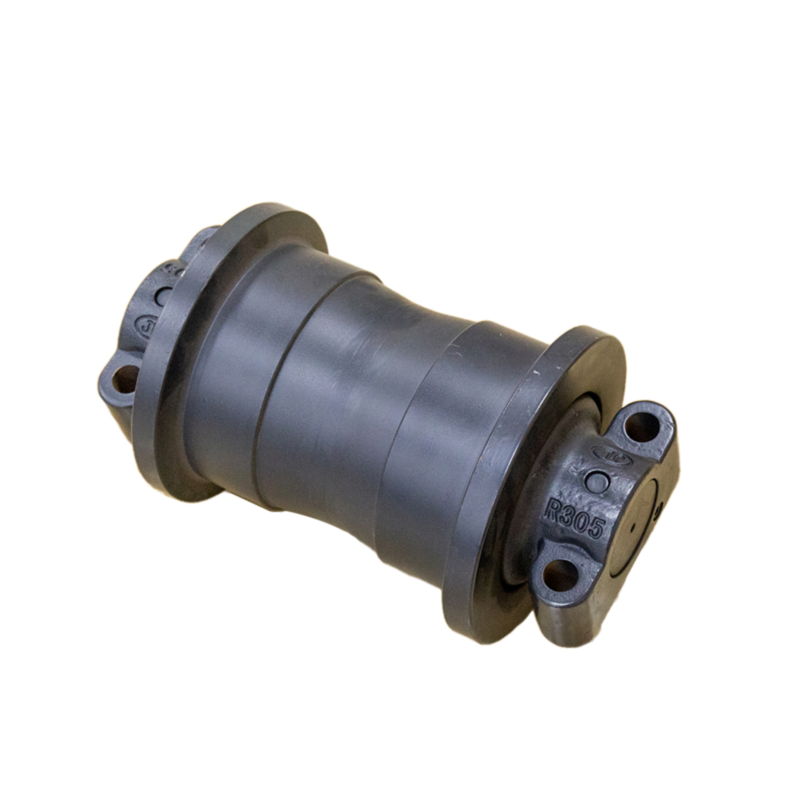
เกินกว่าวัสดุ, การออกแบบทางกายภาพของส่วนประกอบมีบทบาทอย่างมาก. ดูที่หน้าแปลนของลูกกลิ้งตีนตะขาบ. ลูกกลิ้งที่ออกแบบให้รับแรงกระแทกสูงจะมีความหนามากกว่า, more robust flange profile with generous radii (rounded corners) at the base. These rounded corners help to distribute stress over a wider area, avoiding the dangerous stress concentrations that can lead to cracks. You can see the basic structure of these rollers in many interactive diagrams (hrparts.com).
For track chains, the links themselves are designed with added material in critical stress areas. The "pin bosses," the areas where the pins connect the links, are particularly vulnerable. มีคุณภาพสูง, impact-resistant links will have a beefier design in this area to prevent the link from stretching or cracking under high shock loads. The fit and finish are also paramount; a smoothly forged surface is far more resistant to fatigue cracking than a rough-cast one with surface imperfections.
Operational Best Practices to Minimize Impact Loads
While quality components are the foundation, the operator is the final line of defense against impact damage. An experienced operator can dramatically extend undercarriage life through technique. This includes:
- Avoiding high-speed travel in reverse: Machines are designed to absorb impact better when moving forward, as the idler and track spring assembly can cushion the blow.
- Minimizing counter-rotation: Spinning the machine in place puts enormous twisting forces on the track frames and rollers.
- ทำให้กว้าง, gradual turns: Sharp, aggressive turns scrape the sides of the track links and roller flanges, causing unnecessary wear and stress.
- Planning the path: A good operator will scan the ground ahead and choose a path that avoids the largest rocks and sharpest drops.
- Controlling descent on slopes: Instead of letting gravity take over, the operator should use the machine's power to control the speed down a hill, minimizing shocks.
Training operators on these simple, wear-reducing techniques can provide a return on investment that is just as significant as buying premium parts.
โหมดความล้มเหลว #3: การลดการสึกหรอและการครูดของกาวในสถานการณ์ที่มีโหลดสูง
We have discussed the external threats of abrasion and impact. ตอนนี้, let's turn our attention to an internal enemy: การสึกหรอของกาว, often called scuffing or galling. This type of wear occurs between two metal surfaces in direct, sliding contact under high pressure, without adequate lubrication. It is a major concern for the internal components of a track chain—the pin and the bushing.
What is Galling? The Micro-Welding Phenomenon
Imagine two clean, flat steel blocks. If you press them together with immense force and then try to slide one across the other, what happens? At a microscopic level, the peaks (or "asperities") on the two surfaces come into contact. The immense pressure at these tiny points generates enough heat to cause the metal to momentarily fuse together, creating a microscopic "cold weld." As the sliding motion continues, this weld is immediately torn apart. When it tears, a fragment of metal might be ripped from one surface and transferred to the other, or it might break off as a loose wear particle. This process of welding and tearing, repeated millions of times, is galling. It leads to a rapid increase in friction, severe surface damage, และในที่สุด, seizure of the joint. In a track chain, this manifests as a "frozen" link that no longer articulates properly, causing the chain to jump off the sprocket.
The Role of Lubrication: Sealed and Lubricated Track (เกลือ) โซ่
The most effective way to combat adhesive wear is to prevent the two metal surfaces from ever touching. This is the job of a lubricant. The vast majority of modern heavy equipment uses Sealed and Lubricated Track (เกลือ) โซ่. The concept is brilliantly simple yet revolutionary. Each joint in the track chain—where a pin rotates inside a bushing—is designed as a sealed reservoir containing a special, heavy-grade oil.
A series of polyurethane or nitrile seals at each end of the bushing keeps the oil in and, just as importantly, keeps abrasives like dirt and water out. This oil creates a hydrodynamic film, a thin, high-pressure layer of lubricant that separates the pin from the bushing. As long as this seal remains intact and the oil film is present, direct metal-to-metal contact is prevented, and internal adhesive wear is virtually eliminated. This allows the internal components to last dramatically longer, often matching the lifespan of the external parts of the chain. The development of SALT technology was one of the single greatest advancements in extending undercarriage life.
Surface Engineering: Coatings and Finishes that Reduce Friction
Even with lubrication, extreme pressures can sometimes momentarily break down the oil film. To provide an extra layer of protection, manufacturers employ advanced surface engineering techniques. The surfaces of pins and bushings are often polished to a mirror-like finish. A smoother surface has fewer high peaks (asperities), reducing the chances of micro-welding.
In some premium applications, components may receive special surface treatments or coatings. Processes like phosphating create a thin, crystalline layer on the steel that helps to retain oil and provides a sacrificial, anti-galling surface during the initial break-in period. These small details, often invisible to the naked eye, make a significant difference in the component's ability to withstand the extreme pressures found inside a track joint.
Choosing Components for High-Tension Applications (เช่น, dozing, ripping)
Certain applications place enormous tension on the track chain. A dozer pushing a full blade of material or an excavator using a ripper attachment to break up rock creates immense pulling forces. This high tension translates directly into higher pressure within the pin and bushing joints. In these scenarios, the quality of your SALT system is paramount.
When selecting chains for high-load applications, you should inquire about the seal design and material. Are they using a multi-part seal (เช่น, a load ring and a toric ring) that provides better pressure distribution and sealing capability? What is the temperature rating of the seal material? A seal that becomes hard and brittle in the cold of a Russian winter or soft and weak in the heat of a Middle Eastern summer will fail quickly. Investing in a chain with a robust, high-performance sealing system is critical for preventing internal wear and ensuring you get the full, designed life out of your track chain.
โหมดความล้มเหลว #4: ต้านทานการกัดกร่อนในสภาพแวดล้อมที่เปียกและอุดมด้วยสารเคมี
Metal's oldest enemy is corrosion. From the moment steel is made, it wants to revert to its natural, more stable state: iron oxide, หรือสนิม. This process is greatly accelerated by the presence of water, and even more so by salts, acids, or other chemicals. For machinery operating in coastal areas, dredging operations, waste management facilities, or certain types of mines, corrosion is not a secondary concern; it is a primary mode of failure.
The Chemistry of Corrosion: Rust and Beyond
Corrosion is an electrochemical process. It requires an anode (a site where the metal gives up electrons), a cathode (a site where the electrons are accepted), and an electrolyte (a medium, like water, that can conduct ions). A piece of steel in a wet environment creates millions of these tiny electrochemical cells on its surface. The iron atoms at the anode dissolve, releasing electrons that travel through the metal to the cathode, where they react with oxygen and water. The dissolved iron ions then react with the hydroxide ions formed at the cathode to create iron hydroxide, which quickly converts to the familiar reddish-brown, flaky substance we call rust.
Rust is not just an aesthetic problem. It is physically larger than the steel it replaces, which can cause parts to seize. ที่สำคัญกว่านั้น, it is weak and porous. A rusted surface cannot bear a load and wears away easily, exposing fresh steel underneath to continue the cycle of corrosion. This combination of chemical attack and mechanical wear is known as corrosive wear, and it can be incredibly destructive.
Material Selection for Corrosion Resistance: Alloy Composition
Standard carbon steel has very little inherent resistance to corrosion. The primary way to improve this is by adding other elements to create an alloy. The most famous of these is chromium, the key ingredient in stainless steel. Chromium forms an incredibly thin, invisible, and non-reactive layer of chromium oxide on the surface. This "passive layer" is self-healing; if it gets scratched, the exposed chromium immediately reacts with oxygen to reform the protective barrier.
While full stainless steel undercarriages are generally too expensive and not hard enough for most applications, manufacturers of wear-resistant components do carefully control the alloy composition to enhance corrosion resistance. Small additions of elements like chromium and nickel can improve the steel's ability to withstand corrosive attack without compromising the hardness and toughness needed for wear resistance.
| Component Type | OEM (ผู้ผลิตอุปกรณ์ดั้งเดิม) | หลังการขายคุณภาพสูง |
|---|---|---|
| ค่าใช้จ่าย | Highest initial price. | Lower initial price (15-40% less). |
| วัสดุ & R&ดี | Extensive R&ดี, proprietary steel alloys and heat treatments. Full traceability. | Often uses comparable steel grades (เช่น, 40MnB), relies on reverse-engineering. |
| การรับประกัน & สนับสนุน | Comprehensive warranty backed by a global dealer network. | Warranty varies by supplier; support is through the seller. |
| System Integration | Designed as a perfectly matched system with all other machine components. | Designed to meet or exceed OEM specifications for fit and function. |
| ความพร้อมใช้งาน | Primarily through authorized dealers; may have lead times for specific parts. | Widely available from various suppliers, often with better stock levels. |
| Best For | New machines under warranty; users prioritizing brand assurance above all. | Post-warranty machines; budget-conscious fleets; experienced owners. |
Protective Coatings and Seal Integrity
Since we can't always rely on the base metal alone, protective coatings are another line of defense. A high-quality paint or epoxy coating on the non-wear surfaces of track frames, คนเกียจคร้าน, and rollers provides a physical barrier against the electrolyte (น้ำ). For this to be effective, the surface preparation must be perfect, and the coating must be thick and durable enough to resist chipping and scratching.
อย่างไรก็ตาม, the most critical defense in a corrosive environment is the integrity of the seals. We discussed the SALT system in the context of preventing internal adhesive wear. In a wet environment, its role in preventing corrosive wear is just as vital. If a seal fails and corrosive fluid enters the pin and bushing joint, it will not only wash away the lubricant but also aggressively attack the highly polished internal surfaces. This leads to a rapid and catastrophic failure of the joint. ดังนั้น, in wet or chemical-rich applications, the specification and regular inspection of the track chain seals are of the utmost importance.
Maintenance in Corrosive Conditions: Cleaning and Inspection Protocols
In a corrosive environment, maintenance practices must be adapted. The most important practice is regular cleaning. Allowing mud, เศษซาก, and corrosive materials to pack around the undercarriage creates a poultice that holds moisture against the steel, dramatically accelerating corrosion. At the end of each shift, the undercarriage should be thoroughly washed down with fresh water to remove these contaminants.
During cleaning, a visual inspection should be performed. Look for areas where the paint is chipped or peeling, and touch them up promptly. Pay close attention to the track chain seals. Look for any signs of leakage (streaks of oil) หรือความเสียหาย. A single compromised seal can condemn an entire track chain if not addressed. Regular inspection and a commitment to cleanliness can add hundreds, if not thousands, of hours to the life of an undercarriage operating in a hostile, corrosive world.
โหมดความล้มเหลว #5: จัดการกับการวางแนวที่ไม่ตรงและรูปแบบการสึกหรอที่ไม่สม่ำเสมอ
Our final failure mode is one of mechanical precision. The undercarriage is a geometric system. The rollers must be parallel, the idler must be aligned with the track frame, and the sprocket must be in the same plane as the chain. When this geometry is compromised, a condition known as misalignment occurs. This forces components to interact at incorrect angles, leading to bizarre and accelerated wear patterns that can be confusing to diagnose if you don't know what to look for.
The Kinematics of a Poorly Aligned Undercarriage
Think about driving a car with a bad wheel alignment. The tires wear out unevenly on the edges, and the car might pull to one side. The same principles apply to a tracked machine, but the forces are much higher. If a track frame is bent, or an idler is misaligned, the track chain will be forced to ride against the side of the idler flange or the roller flanges. This side-loading creates a powerful grinding action. You might see one side of the rollers wearing down much faster than the other, or the sides of the track links becoming scalloped and thin.
This not only wears out the sides of the components but also puts immense twisting forces on the track chain itself. The seals in the SALT joints are not designed to handle these high side loads, and misalignment can lead to premature seal failure, allowing dirt in and oil out.
The Role of Idlers and Sprockets in Maintaining Alignment
The components at the front and back of the track group—the idler and the sprocket—are the primary guides for the chain. The front idler, mounted in a yoke, is responsible for setting the track tension and guiding the chain onto the rollers. If the idler's mounting is worn or damaged, it can wobble or tilt, feeding the chain into the system at an angle.
The rear sprocket provides the driving force. Worn sprocket teeth can allow the chain to "climb," creating a slapping motion that sends shockwaves through the system. More critically, if the sprocket is worn unevenly, it can push the chain to one side, causing it to scrape against the track guards and frame. Maintaining these two components in good condition is fundamental to maintaining the alignment of the entire system.
Diagnosing Misalignment: Visual Cues and Measurement Techniques
An experienced technician can often spot misalignment just by looking at the wear patterns. Key things to look for include:
- One-sided wear: Are the roller flanges or track link sides worn significantly more on the inboard or outboard side?
- Scuffing or polishing: Are there bright, polished streaks on the sides of components where they shouldn't be rubbing?
- Uneven sprocket wear: Are the tips of the sprocket teeth worn into a sharp, hooked profile on one side?
- Flange wear: Are the idler and roller flanges wearing thin or becoming sharp on one edge?
For a more precise diagnosis, technicians can use a straight edge or string line to check the alignment of the rollers relative to each other and to the track frame. Measuring the distance between the track frames at the front and rear can also reveal if the frame is bent or "toed-in" or "toed-out."
How Quality Rollers and Chains Tolerate Minor Misalignment
No system is perfect, and even a well-maintained machine will experience some minor flexing and misalignment under heavy load. This is another area where the quality of the components makes a difference. High-quality wear-resistant track chains and rollers are manufactured to very tight dimensional tolerances. This precision ensures that they fit together perfectly from the start, minimizing any built-in misalignment. นอกจากนี้, the robust design of the flanges on quality rollers and the overall strength of quality track links mean they are better able to withstand the side loads generated by minor misalignment without failing prematurely. While they are not a substitute for proper frame and alignment repair, superior components provide a larger margin of error, helping to protect the undercarriage from the inevitable stresses of hard work.
A Buyer's Guide to Selecting Wear-Resistant Components in 2025
Navigating the market for undercarriage parts can be daunting. You are faced with a wide spectrum of options, from Original Equipment Manufacturer (OEM) parts to a vast array of aftermarket suppliers, each claiming to offer the best performance and value. As we stand in 2025, with global supply chains more complex than ever, making an informed decision requires a clear understanding of what you are buying.
OEM vs. หลังการขายคุณภาพสูง: A Cost-Benefit Analysis
The most common dilemma facing an equipment owner is whether to stick with OEM parts or explore the aftermarket. Let's break down the arguments.
OEM parts, supplied by the machine's original manufacturer like Caterpillar or Komatsu, offer the highest level of assurance. They are the result of millions of dollars in research and development and are designed as an integral part of the machine's total system (หนอนผีเสื้อ, 2025). The metallurgy, การบำบัดความร้อน, and dimensional tolerances are precisely controlled to work in perfect harmony with the rest of the machine. This is particularly important for new machines still under warranty. The downside is, predictably, ค่าใช้จ่าย. OEM parts carry a significant price premium.
High-quality aftermarket parts, ในทางกลับกัน, offer a compelling value proposition. Reputable aftermarket manufacturers invest heavily in reverse-engineering OEM parts and often use comparable materials and manufacturing processes. Their goal is to provide a product that meets or exceeds OEM specifications for fit, form, and function, but at a substantially lower price point, often 15-40% less. For owners of post-warranty machines or managers of large, mixed fleets, these savings can be substantial. The key word here is "high-quality." The aftermarket is vast, and it includes suppliers of inferior parts that can cause more harm than good. The challenge is to identify the reliable aftermarket partners who stand behind their products. Many suppliers like Equipment-X offer a wide range of both OEM and aftermarket options ().
Deciphering Technical Specifications: สิ่งที่ต้องมองหา
When you are comparing components, you need to look beyond the price tag and ask for technical specifications. This is how you separate the quality suppliers from the rest. Key parameters include:
- Material Grade: Ask for the specific steel alloy being used. Look for boron steels (like 23MnB or 35MnB) for parts requiring high hardness.
- ความแข็ง (HRC): Request the target surface hardness and the core hardness. ตามที่ได้หารือกัน, rollers should have a high surface hardness (HRC 50+) เพื่อต้านทานการเสียดสี, while the core should be tougher (รอบเหล็กแผ่นรีดร้อน 30-40).
- Case Depth: This is a measure of how deep the hardened layer extends into the part. A greater case depth means longer wear life. Ask for the "effective case depth."
- กระบวนการผลิต: Are the parts forged or cast? Forging generally produces a stronger, more fatigue-resistant component than casting.
- Seal Material: For SALT chains, what is the seal made from? Is it polyurethane or nitrile? What are its temperature and wear resistance properties?
A reputable supplier will be able and willing to provide you with this information. If a supplier is evasive or cannot answer these questions, it is a significant red flag.
The Importance of System-Matching: Why Components Must Work Together
We've returned to our central theme: the undercarriage is a system. When you replace a component, you must ensure it will work with the existing parts. The most critical relationship is "pitch." Pitch is the distance from the center of one track pin to the center of the next. As a track chain wears, its pitch increases or "stretches" because the pins and bushings wear down. A new sprocket is designed to match the pitch of a new chain. If you put a new sprocket on a heavily worn, stretched chain, the mismatch will be severe, and the new sprocket will wear out in a fraction of its normal lifespan. This is why it is often recommended to replace the track chains and sprockets as a set. ในทำนองเดียวกัน, ensure the roller and idler profiles match the track link design of your chain. A reputable supplier of ส่วนประกอบช่วงล่างคุณภาพสูง can help you ensure you are getting a properly matched set of parts for your specific machine.
A Checklist for Evaluating Track Rollers Before Purchase
Before you commit to a purchase, use this simple checklist:
- Request the Technical Data Sheet: Does it specify the steel grade, hardness levels (surface and core), and case depth?
- Examine the Finish: Does the roller have a smooth, well-machined finish, free of rough casting marks or sharp edges?
- Check the Flange Design: For high-impact applications, does it have a thick, reinforced flange profile?
- Inquire About the Warranty: ระยะเวลาการรับประกันคืออะไร, and what does it cover? A supplier who is confident in their product will offer a solid warranty.
- Ask for References: Can the supplier provide testimonials or case studies from customers in your region or industry?
By being a diligent and informed buyer, you can navigate the market with confidence and select components that will deliver true, long-term value.
การบำรุงรักษาและการตรวจสอบขั้นสูงเพื่อยืดอายุช่วงล่าง
Purchasing the right wear-resistant track chains and rollers is only half the battle. To extract the maximum possible value from that investment, you must pair it with a smart, proactive maintenance strategy. The old model of "run to failure"—using a part until it breaks and then replacing it—is incredibly inefficient and costly. The modern approach focuses on monitoring, prediction, and planning.
The Principles of Proactive Maintenance
Proactive maintenance is about shifting your mindset from reactive repair to preventative care. It involves a few key activities:
- การทำความสะอาดเป็นประจำ: ตามที่ได้กล่าวไปแล้ว, this is the single most effective maintenance task. A clean undercarriage is easier to inspect and runs cooler, and it prevents the corrosive poultice effect of packed-in mud.
- Routine Inspection: This should be part of the operator's daily walk-around. Look for loose hardware, oil leaks from rollers or seals, and any obvious signs of abnormal wear.
- Track Tension Management: This is absolutely vital. A track that is too tight dramatically increases the load on all components, accelerating wear on pins, บูช, เฟือง, และคนเกียจคร้าน. It also consumes more horsepower, เผาผลาญเชื้อเพลิงมากขึ้น. รางที่หลวมเกินไปอาจทำให้เครื่อง "โยนรางได้" and can lead to slapping and impact damage. The correct tension (or "sag") is specified in the operator's manual and should be checked regularly, especially when working conditions change.
- Component Rotation and Swaps: ในบางกรณี, wear can be evened out by swapping components. ตัวอย่างเช่น, if you consistently work on a side slope, the downhill side of the undercarriage will wear faster. Swapping the left and right track groups halfway through their life can help to even out the wear and extend the overall life of the system.
Implementing a Custom Track Service (CTS) Program
For larger fleets, a more structured approach is needed. This is where a Custom Track Service (CTS) or a similar undercarriage management program comes in. This service, often offered by dealers or specialized third parties, involves a technician visiting your site at regular intervals (เช่น, every 250 หรือ 500 ชั่วโมง) to professionally measure and record the wear on all your undercarriage components.
Using specialized ultrasonic tools and calipers, the technician will measure things like roller diameters, track link heights, and the external wear on pins and bushings. This data is then entered into a software program that tracks the wear rate of each component and compares it to established benchmarks. The output is a detailed report that not only shows the current state of your undercarriage but also predicts its future wear. It can tell you, ตัวอย่างเช่น, that your track rollers have approximately 800 hours of life remaining, or that your pins and bushings will need to be turned at the 4,000-hour mark. This predictive capability is invaluable. It allows you to schedule downtime for repairs at a time that is convenient for your operation, order parts in advance to ensure they are on hand, and budget for future maintenance costs with a high degree of accuracy.
The Future: IoT Sensors and Predictive Wear Analysis
The next evolution of undercarriage management is already here. The Internet of Things (IoT) is bringing a new level of intelligence to heavy machinery. Manufacturers are beginning to embed sensors directly into undercarriage components. Imagine a track roller with a built-in temperature sensor that can alert you to a failing bearing before it seizes, or a track pin with a strain gauge that can measure the tension in the chain in real-time.
This data can be streamed wirelessly to a central platform, where artificial intelligence (AI) and machine learning algorithms can analyze it. The AI can learn the unique wear patterns of each machine based on its specific application, operator, and environment. It can then generate incredibly accurate predictions about component life and even provide real-time feedback to the operator on how their technique is affecting wear rates. This move from periodic measurement to continuous, real-time monitoring represents the ultimate form of proactive maintenance, promising to further reduce downtime and optimize the life cycle of every single component.
คำถามที่พบบ่อย (คำถามที่พบบ่อย)
How do I know when to replace my track chains and rollers?
The best way is through a professional undercarriage inspection program (like CTS) that uses ultrasonic tools to measure wear against manufacturer specifications. สายตา, key indicators include sprocket teeth becoming sharp and hooked, roller flanges wearing thin, and track links showing significant scraping or scalloping. Another sign is when the track chain has "stretched" to the point that the track adjuster is at its maximum extension and can no longer maintain proper tension.
What's the difference between a single and double flange roller?
Track rollers come in two main types. A single flange roller has a flange on only one side (typically the outboard side), while a double flange roller has flanges on both sides. They are used in an alternating pattern on the track frame. The double flange rollers provide the primary guidance for the track chain, keeping it centered, while the single flange rollers support the load in between. This arrangement prevents the track chain from being pinched and allows it to flex as it goes around the sprocket and idler.
Can I mix and match OEM and aftermarket undercarriage parts?
While it is possible, it should be done with caution. The most important factor is to ensure the components are dimensionally compatible, especially the pitch of the track chain and sprocket. Mixing parts from different manufacturers can sometimes lead to mismatched wear rates. It is generally safest to replace components in matched sets from a single, reputable supplier, whether that is the OEM or a trusted aftermarket source.
How does operating technique affect undercarriage life?
Operator technique is one of the biggest factors in undercarriage longevity. Aggressive habits like high-speed travel (especially in reverse), sharp turns, constant operation on side slopes, and unnecessary spinning will dramatically accelerate wear. แบบเรียบ, skilled operator who plans their movements can easily double the life of an undercarriage compared to a reckless one.
What are the main benefits of using sealed and lubricated tracks (เกลือ)?
SALT chains provide a sealed, internal oil reservoir for each pin and bushing joint. This prevents direct metal-to-metal contact, virtually eliminating internal adhesive wear ("pin and bushing wear"). This allows the internal components to last much longer, often enabling a "pin and bushing turn" where the worn parts can be rotated 180 degrees to a new wear surface, เพิ่มชีวิตของพวกเขาเป็นสองเท่าอย่างมีประสิทธิภาพ. They also keep abrasives out, which is critical in sandy or dirty conditions.
บทสรุป
The undercarriage of a tracked machine is a masterpiece of mechanical engineering, designed to withstand some of the harshest conditions on Earth. ยัง, it is not invincible. Its longevity is a direct result of a partnership between the manufacturer, the parts supplier, and the machine owner. The journey to maximizing undercarriage life begins with a deep appreciation for it as an integrated system, where each component's performance is intimately linked to the others. By understanding the primary failure modes—abrasion, ผลกระทบ, การยึดเกาะ, การกัดกร่อน, and misalignment—you gain the power to diagnose problems and make intelligent choices.
การลงทุนในคุณภาพสูง, wear-resistant track chains and rollers, whether from an OEM or a reputable aftermarket supplier, is a strategic decision that pays dividends through reduced downtime, increased productivity, and a lower total cost of ownership. This investment, อย่างไรก็ตาม, must be protected by a commitment to proactive maintenance, diligent inspection, and skilled operation. By embracing this holistic approach, you transform undercarriage maintenance from a reactive expense into a proactive strategy for operational excellence and financial success.
การอ้างอิง
หนอนผีเสื้อ. (2025). Cat® undercarriage for large dozers. Retrieved from
Equipment-X. (2025). Mini excavator parts – OEM & aftermarket components. Retrieved from
ชม&R Parts. (2023). Interactive excavator parts diagram: Search and learn about excavators. Retrieved from https://www.hrparts.com/blog/post/excavator-parts-diagram-interactive
KQD Machine. (2025). Detailed analysis of excavator hydraulic cylinders. Retrieved from https://www.kqdmachine.com/info/detailed-analysis-of-excavator-hydraulic-cylin-102920309.html
สสส. (2025). Bucket design. Retrieved from
XCMG. (2025). XE700D mining excavator. Retrieved from