
Soyut
Ağır makine alt takımlarının zamanından önce arızalanması, inşaat gibi sektörlerde önemli bir operasyonel ve mali yük teşkil eder, madencilik, ve ormancılık. Bu analiz, palet zincirleri ve makaralardaki hızlı aşınmanın temel nedenlerini inceliyor, which constitute a major portion of a machine's maintenance costs. Sistem temelli bir yaklaşımın olduğunu öne sürüyor, Malzeme bilimi ve triboloji anlayışına dayalı, bu sorunları azaltmak için gerekli. Araştırma beş temel arıza moduna odaklanıyor: aşındırıcı aşınma, darbe hasarı, yapışkan aşınma (sinir bozucu), korozyon, ve yanlış hizalamadan kaynaklanan aşınma. Her mod için, altta yatan fiziksel veya kimyasal mekanizmalar araştırılır, ardından malzeme seçiminde karşılık gelen çözümlerin tartışılması, bileşen tasarımı, ve ısı işlemi. Amaç, ekipman sahiplerine ve operatörlerine, aşınmaya dayanıklı uygun palet zincirleri ve makaralarının seçimi için ayrıntılı bir çerçeve sağlamaktır.. Bileşen özelliklerini belirli operasyonel ortamlarla eşleştirerek, alt takım ömrünün önemli ölçüde uzatılabileceği iddia ediliyor, arıza sürelerinin azalmasına ve toplam sahip olma maliyetinin düşmesine yol açar.
Kilit çıkarımlar
- Arızaları önlemek için sertlik ve tokluk gibi malzeme özelliklerini özel çalışma ortamınıza göre eşleştirin.
- Beş ana arıza modunu anlayın: aşınma, darbe, yapışma, korozyon, ve yanlış hizalama—sorunları teşhis etmek için.
- Uygun şekilde bakımı yapılan sızdırmaz ve yağlanmış palet (TUZ) zincirler iç pim ve burç aşınmasını önemli ölçüde azaltır.
- Alt takım bileşenlerini düzenli olarak inceleyin ve temizleyin, özellikle ıslak veya aşındırıcı koşullarda, hayatlarını uzatmak için.
- Yüksek kaliteli, aşınmaya dayanıklı palet zincirlerine ve makaralara yatırım yapmak, uzun vadeli işletme maliyetlerini ve arıza sürelerini azaltır.
- Alt takımı her zaman entegre bir sistem olarak düşünün; uyumsuz parçalar daha hızlı aşınmaya neden olabilir.
- Değiştirmeleri tahmin etmek ve planlamak için proaktif bir bakım programı kullanın ve aşınma ölçümlerini takip edin.
İçindekiler
- giriiş: Alt Takım Aşınmasının Görünmeyen Maliyeti
- Arıza Modu #1: Kumlu ve Kumlu Arazilerde Aşındırıcı Aşınmayla Mücadele
- Arıza Modu #2: Kayalık ve Engebeli Zeminlerde Darbeye Bağlı Hasarın Önlenmesi
- Arıza Modu #3: Yüksek Yük Senaryolarında Yapışkan Aşınmayı ve Parçalanmayı Azaltma
- Arıza Modu #4: Islak ve Kimyasal Açıdan Zengin Ortamlarda Korozif Saldırıya Direnç
- Arıza Modu #5: Yanlış Hizalama ve Düzensiz Aşınma Modellerinin Ele Alınması
- A Buyer's Guide to Selecting Wear-Resistant Components in 2025
- Daha Uzun Alt Takım Ömrü için Gelişmiş Bakım ve İzleme
- Sık sorulan sorular (SSS)
- Çözüm
- Referanslar
giriiş: Alt Takım Aşınmasının Görünmeyen Maliyeti
Güçlü bir dozer veya ekskavatöre baktığınızda, gözlerin çoğu zaman devasa kovaya çekilir, güçlü motor, or the operator's cab. Henüz, the foundation of that machine's mobility and stability—its undercarriage—often goes unnoticed until something goes wrong. Think of the undercarriage as the machine's entire musculoskeletal system. Makinenin tüm ağırlığını taşıyor, plus any load it's carrying, ve bu sabit kısım, yerle acımasız temas. Bu palet zinciri sistemi, silindirler, aylaklar, ve dişliler en fazla 50% of a machine's total maintenance costs over its lifetime. Erken başarısız olduğunda, sonuçlar, basit bir yedek parça maliyetinin çok ötesinde dalgalanıyor.
Alt Takımı Bir Sistem Olarak Anlamak
It's a common mistake to view the undercarriage as a collection of individual parts. Bir palet silindiri sadece bir silindir değildir; parça bağlantısı yalnızca bir bağlantı değildir. Yerine, İnce ayarlanmış bir orkestra hayal edin. Müziğin doğru ses çıkarması için her enstrümanın diğerleriyle uyum içinde olması gerekir. Alt takım tamamen aynı. Zincir dişlisi palet zincirini tahrik eder, onlarca birbirine bağlı bağlantıdan oluşan, iğneler, ve burçlar. Bu zincir bir dizi palet makarası ve taşıyıcı makaranın üzerinden geçiyor, avara düzeneği tarafından önden yönlendirilir. Her bileşen diğerleriyle uyum içinde çalışacak şekilde tasarlanmıştır. Bir parçası aşınmışsa, yanlış boyutlandırılmış, veya kalitesiz, domino etkisi yaratıyor, sistemdeki diğer tüm bileşenlere aşırı stres uygulanması. Örneğin, a worn sprocket with a changed tooth profile will no longer engage perfectly with the track chain's bushings, her iki parçada da daha hızlı aşınmaya neden olur. Bu "uyumsuz" aşınma, erken arızanın birincil nedenidir. Öyleyse, Alt takımın tam bir bütün olarak anlaşılması ve bakımı, entegre sistem uzun ömürlülüğe doğru ilk adımdır.
Erken Arıza Neden Kırık Bir Parçadan Daha Fazlasıdır?
Tek bir başarısız silindir küçük bir sorun gibi görünebilir. Onu değiştirip işe geri dönersin, Sağ? Gerçek çok daha karmaşık. Başarısız olan kısım genellikle daha büyük bir sorunun belirtisidir. Üretim hatası mıydı? Yoksa aşınmış başka bir bileşenin kurbanı mıydı, zorlu bir çalışma ortamı, veya uygunsuz bir bakım rutini? Temel nedeni göz ardı etmek, suyun kaynağını bulmadan sızdıran bir çatıyı onarmaya benzer; you're just waiting for the next failure. Erken arıza, planlanmamış aksama süresine neden olur, a project manager's worst nightmare. Programları bozuyor, Teknisyenleri rutin bakımdan uzaklaştırır, ve hatta çalışma sahasında güvenlik tehlikelerine bile yol açabilir. Gerçek maliyet yalnızca parçanın kendisi değildir, ancak saatlerce süren üretkenlik kaybı, olası sözleşme cezaları, ve alt takımın geri kalanında zaten oluşmuş olan kademeli aşınma.
Ekonomik Etki: Arıza süresi, Onarımlar, ve Verimlilik Kaybı
Let's put this into perspective. Batı Avustralya'daki bir madende veya Güneydoğu Asya'nın hızla gelişen şehirlerindeki bir inşaat sahasında çalışan büyük bir dozer, saatte binlerce dolar gelir elde edebilir.. Eğer makine bir gün boyunca arızalıysa, bir parçayı ya da tamirciyi bekliyorsa, maddi kayıp büyük. Kritik yol ekskavatöründe palet zincirinin arızalandığı bir senaryoyu düşünün. Makine çalışmayı durduruyor. Yüklenen kamyonlar artık boşta duruyor. Sitenin tüm iş akışı durma noktasına geliyor. Bu "sonuçsal maliyetler" çoğu zaman gerçek onarım faturasını gölgede bırakır. Bu nedenle yüksek kaliteye yatırım yapın, aşınmaya dayanıklı palet zincirleri ve makaralar masraf değildir; felaket niteliğindeki mali kayıplara karşı bir sigorta poliçesidir. Çalışma sahanızın belirli zorluklarına dayanacak şekilde tasarlanmış bileşenleri seçerek, aktif olarak çalışma süresini en üst düzeye çıkarmayı ve kârınızı korumayı seçiyorsunuz.
Arıza Modu #1: Kumlu ve Kumlu Arazilerde Aşındırıcı Aşınmayla Mücadele
Kumsalda yürüdüğünüzü hayal edin. Her adımda, ayakların hafifçe batıyor, ve kumlar yer değiştiriyor. Şimdi, 50 tonluk bir ekskavatörün aynı şeyi yaptığını hayal edin, her gün ve her gün, ama keskin bir yüzeyde, cesur parçacıklar. Aşındırıcı aşınmanın gerçeği budur, ağır makine alt takımlarının sessiz öğütücüsü. Belki de en yaygın aşınma türüdür, Orta Doğu'nun çöllerinden Afrika'nın taş ocaklarına kadar ortamlarda yaygındır.
Aşınma Bilimi: İnce Parçacıklar Bileşenlerinizi Nasıl Öğütür?
Özünde, Aşınma mekanik bir aşınma sürecidir. Zımpara kağıdı kullanmak gibi düşünün. Göz önünde bulundurmamız gereken iki ana form var. Birincisi iki cisim aşınması, nerede bir yüzey (keskin bir kaya gibi) bileşeninize doğru kayar ve malzemeyi keser. İkinci, ve çoğu zaman daha sinsi, üç cisim aşınmasıdır. Bu küçük olduğunda ortaya çıkar, sert parçacıklar (kum gibi, kum, veya ince kaya parçaları) örneğin iki hareketli yüzey arasında sıkışıp kalmak, palet pimi ve burç arasında, veya silindir ile palet bağlantısı arasında. Bu sıkışan parçacıklar küçük kesici aletler gibi davranır, oyma, tırmalamak, ve çeliği yavaşça taşlayarak.
Bu "öğütmenin" etkinliği" aşındırıcı parçacıkların özelliklerine bağlıdır. Parçacık ne kadar sertse (Örn., kuvars kumu çok serttir), ne kadar çok zarar verirse. Parçacık ne kadar keskinse, ne kadar çok keserse. Bu parçacıklar su ile bir bulamaç haline karıştırıldığında, durum daha da kötüleşiyor, Bulamaç alt takımın her küçük aralığına pompalanabildiğinden, Maksimum temas ve maksimum aşınmanın sağlanması.
Malzeme Çözümleri: Yüksek Sertlikte Çelik ve Gelişmiş Isıl İşlemler
Bu yüzden, bu amansız eziyete karşı nasıl mücadele edeceğiz? Birincil silah sertliktir. Basit anlamda, Daha sert bir malzeme başka biri tarafından çizilmeye veya girintilenmeye karşı daha dayanıklıdır. Palet makaranızın çeliği karşılaştığı aşındırıcı parçacıklardan önemli ölçüde daha sertse, Parçacıklar silindire minimum düzeyde zarar vererek ezilecek veya kenara taşınacaktır. Bu nedenle çeliğin seçimi ve ardından gelen ısıl işlem çok önemlidir..
Yüksek kaliteli, aşınmaya dayanıklı palet zincirleri ve makaraları üreticileri, özel bor çeliği alaşımları kullanıyor. Bor, çok küçük miktarlarda bile, "sertleşebilirliği" önemli ölçüde artırır" çelik. Bu, ısıl işlem sürecinde, derin ve düzgün bir sertlik katmanı elde edilebilir. İşlem tipik olarak bileşenin çok yüksek bir sıcaklığa ısıtılmasını içerir (östenitleme adı verilen bir işlem) ve ardından hızla soğutuyoruz (söndürme). This locks the steel's crystal structure into a very hard state known as martensite. Bunu takiben, Kırılganlığı biraz azaltmak ve tokluğu arttırmak için bir temperleme işlemi kullanılır. Amaç çok sert bir dış kasaya sahip bir bileşen yaratmaktır." aşınmaya direnmek, daha yumuşak olmasını sağlarken, daha sert iç "çekirdek"" şoku absorbe etmek ve çatlamayı önlemek için.
| Aşınma Mekanizması | Birincil Neden | İdeal Malzeme Özelliği | Ortak Malzeme/Tasarım Çözümü |
|---|---|---|---|
| Aşındırıcı aşınma | Sert parçacıklar (kum, kum) yüzeylere karşı taşlama. | Yüksek Sertlik | Derin indüksiyonla sertleştirmeli bor alaşımlı çelik. |
| Darbe Aşınması | Birden, kayalardan veya engebeli zeminden kaynaklanan yüksek kuvvetli yükler. | Yüksek Tokluk | Tamamen sertleştirilmiş veya çift sertlikli çelik; güçlendirilmiş makaralı flanşlar. |
| Yapışkan Aşınma | Yüksek yük altında yağlanmamış metal yüzeyler arasında mikro kaynak ve yırtılma. | Düşük Sürtünme/Kayganlık | Sızdırmaz ve Yağlanmış Ray (TUZ) zincirler; özel yüzey kaplamaları. |
| Korozif Aşınma | Nemle kimyasal reaksiyon, tuzlar, veya asitler. | Korozyon Direnci | Çelik alaşımlarında daha yüksek krom içeriği; sağlam conta sistemleri. |
Yüksek Aşınma Ortamları için Doğru Palet Zincirlerini ve Makaralarını Seçmek
Kumlu veya kumlu bir ortamda çalışacak bir makine için parçaları belirlerken, Bir tedarikçiye soracağınız öncelikli soru yüzey sertliği hakkında olmalıdır, tipik olarak Rockwell C ölçeğinde ölçülür (HRC). Silindirler ve avaralar için, HRC aralığında bir yüzey sertliği aramalısınız 50-60. Daha azı olan her şey zamanından önce yıpranacaktır.
Bu sertliğin derinliği de aynı derecede önemlidir. Ucuz bir bileşen, çabuk aşınan çok ince, sertleştirilmiş bir katmana sahip olabilir., altındaki yumuşak çekirdeği açığa çıkarıyor. Bu sadece küçük bir kurşun ucu olan bir kalem gibi. Kaliteli bir bileşenin derin bir etkisi olacaktır., etkili vaka derinliği, aşınma direncini çok daha uzun süre korumasını sağlar. Parça bağlantıları için, hem aşınma hem de yüksek çekme gerilmeleriyle karşı karşıya olan, biraz daha düşük sertlik (sıcak rulo civarında 45-50) kırılmayı önlemek için aşınma direncini gerekli sağlamlıkla dengelemek için sıklıkla kullanılır. Caterpillar's Heavy Duty Extended Life (HDXL) alt takım, özellikle yüksek aşınma uygulamaları için ekstra aşınma malzemesi ve optimize edilmiş sertlik profilleri ile tasarlanmış bir sistemin başlıca örneğidir (Tırtıl, 2025).
Örnek Olay İncelemesi: Avustralya'da Bir Taş Ocağı Operasyonu
Perth yakınlarında faaliyet gösteren bir granit ocağını düşünün, Avustralya. Çevre, sert koşulların acımasız bir birleşimidir., keskin granit tozu ve yüksek darbeli yükleme. İlk olarak, taş ocağı, ana ekskavatörlerinde standart satış sonrası silindirler kullanıyordu ve ortalama silindir ömrü yalnızca 1,500 saat, sık olmasına neden oluyor, maliyetli kesinti. Bir istişarede bulunduktan sonra, bir diziye geçtiler birinci sınıf palet makaraları yüksek aşınma ve yüksek darbe koşulları için özel olarak tasarlanmıştır. Bu yeni silindirler yüksek borlu çelik alaşımdan yapılmıştı ve daha derin bir indüksiyonla sertleştirme profiline sahipti. Sonuç? Silindirlerin ortalama ömrü 1000'in üzerine çıktı 4,000 saat. İlk satın alma fiyatı daha yüksek olmasına rağmen, arıza süresinde ve işçilik maliyetlerinde azalma, 40% iki yıllık bir süre içinde alt takımın toplam sahip olma maliyetinde azalma. This demonstrates the tangible value of matching the component's material properties to the specific challenges of the job.
Arıza Modu #2: Kayalık ve Engebeli Zeminlerde Darbeye Bağlı Hasarın Önlenmesi
Aşınma yavaşsa, öğütme ölümü, etki ani, yıkıcı darbe. Paletli bir makineyi kayaların bulunduğu bir alanın üzerinden geçiren veya makineyi bir çıkıntıdan aşağıya düşüren her operatör, bu kalp durduran sarsıntıyı bilir.. Bu yüksek enerjili olaylar alt takıma devasa şok dalgaları gönderiyor, ve eğer bileşenler bunları idare edecek şekilde tasarlanmadıysa, sonuç yontulmuş silindir flanşları olabilir, kırık parça bağlantıları, veya bükülmüş çerçeveler. Bu tür başarısızlık yıkımda yaygındır, Rus Uralları gibi sert kayalık bölgelerde madencilik, ve dik bir zeminde oturum açmak, engebeli arazi.
Etki Fiziği: Gerilme Yoğunlaştırıcılar ve Kırılma Mekaniği
Darbe başarısızlığını anlamak, dayanıklılık hakkında düşünmemiz gerekiyor, sadece sertlik değil. Sertlik bir malzemenin çizilmeye karşı direnç göstermesine yardımcı olurken, dayanıklılık, enerjiyi absorbe etme ve kırılmadan deforme olma yeteneğidir. Seramik plaka çok serttir, ama dayanıklılığı düşük; bırak onu, ve parçalanıyor. Lastik tokmak çok daha yumuşaktır, ancak dayanıklılığı yüksektir; bütün gün betona vurabilirsiniz, and it won't break.
Palet makarası flanşı bir kayaya çarptığında, kuvvet çok küçük bir alana yoğunlaşmıştır. Herhangi bir keskin köşe, döküm kusurları, hatta bileşen üzerindeki çizikler bile "stres yoğunlaştırıcı" görevi görebilir" veya "stres artırıcı."" Kenarına küçük bir çentik açtığınızda bir kağıt parçasının nasıl kolayca yırtıldığını düşünün. Bu stres yükselticiler kuvveti mikroskobik düzeyde çoğaltır, küçük bir çatlak başlatıyorum. Sonraki her darbede, bu çatlak tamamen kırılmaya yol açana kadar büyüyebilir. Bu kırılma mekaniğinin alanıdır, çatlakların malzemeler boyunca nasıl yayıldığının incelenmesi.
Dayanıklılığın Önemi vs. Bileşen Tasarımında Sertlik
Bu, mühendisler için temel bir zorluk teşkil ediyor. Çeliği sert yapan özellikler (çok katı bir kristal yapı gibi) genellikle daha kırılgan ve daha az sert hale getirir. Onu zorlaştıran özellikler (kristal yapısının enerjiyi deforme etme ve absorbe etme yeteneği gibi) daha yumuşak hale getirebiliriz. Yüksek darbeli ortamlar için aşınmaya dayanıklı palet zincirleri ve makaraları tasarlama sanatı, mükemmel dengeyi bulmada yatmaktadır.
Bu, alaşım seçimi ve gelişmiş ısıl işlemin birleşimiyle elde edilir.. Örneğin, bir palet makarası "tamamen sertleştirilmiş" olabilir" orta sertlik seviyesine kadar (Örn., HRC 45) özüne kadar. Bu, darbe altında çatlamaya direnmek için iyi bir genel güç ve mükemmel dayanıklılık sağlar. Alternatif olarak, bazı gelişmiş tasarımlarda "çift sertlik" kullanılır" ısıl işlem, en fazla darbeyi gören flanş alanlarının biraz daha yumuşak ve daha sert tutulduğu yer, palet zincirine temas eden yuvarlanma yolunun aşındırıcı aşınmaya karşı direnci daha da zorlaşırken. Bu özel yaklaşım her iki dünyanın da en iyisini sağlar.
Darbeye Dayanıklı Makara ve Zincirlerin Tasarım Özellikleri
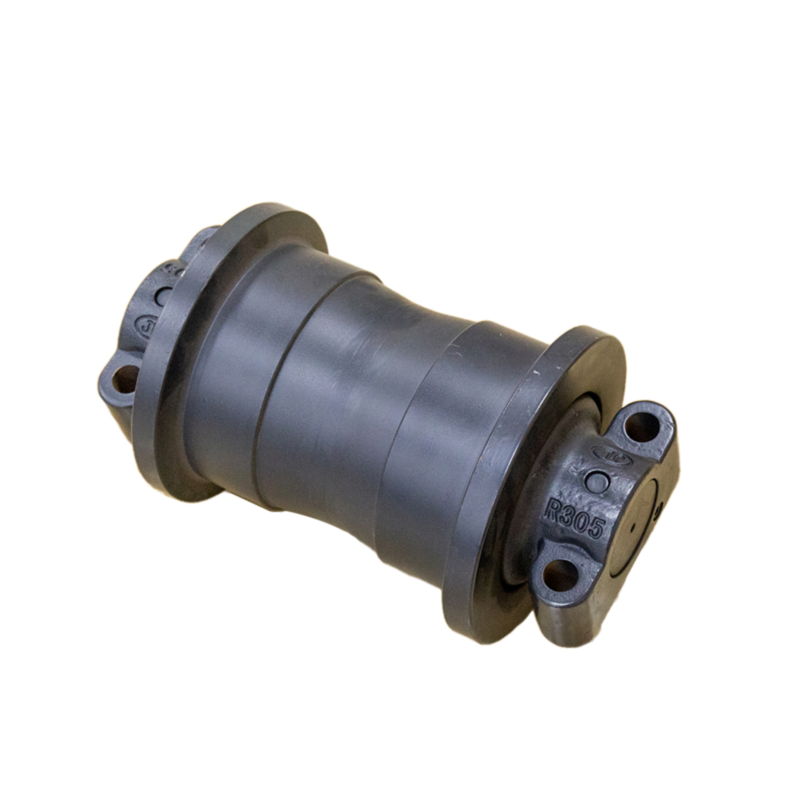
Malzemelerin ötesinde, bileşenin fiziksel tasarımı büyük bir rol oynar. Palet makarasının flanşına bakın. Yüksek darbe için tasarlanmış bir silindirin kalınlığı daha kalın olacaktır., cömert yarıçaplara sahip daha sağlam flanş profili (yuvarlatılmış köşeler) üssünde. Bu yuvarlatılmış köşeler stresin daha geniş bir alana dağıtılmasına yardımcı olur, Çatlaklara yol açabilecek tehlikeli stres konsantrasyonlarından kaçınmak. Bu silindirlerin temel yapısını birçok etkileşimli diyagramda görebilirsiniz. (hrparts.com).
Palet zincirleri için, bağlantıların kendisi kritik stres alanlarında ilave malzeme ile tasarlanmıştır. "pin patronları," pimlerin bağlantıları bağladığı alanlar, özellikle savunmasızlar. Yüksek kalite, Darbeye dayanıklı bağlantılar, yüksek şok yükleri altında bağlantının esnemesini veya çatlamasını önlemek için bu alanda daha güçlü bir tasarıma sahip olacaktır.. Uyum ve bitiş de çok önemlidir; Pürüzsüz bir şekilde dövülmüş bir yüzey, yorulma çatlamasına karşı, yüzey kusurları olan kaba dökümden çok daha dayanıklıdır.
Darbe Yüklerini En Aza İndirmek İçin En İyi Operasyonel Uygulamalar
Kaliteli bileşenler temel olsa da, operatör darbe hasarına karşı son savunma hattıdır. Deneyimli bir operatör teknik sayesinde alt takım ömrünü önemli ölçüde uzatabilir. Bu şunları içerir::
- Ters yönde yüksek hızlı sürüşün önlenmesi: Makineler ileri doğru hareket ederken darbeyi daha iyi emecek şekilde tasarlanmıştır, avara ve palet yayı tertibatı darbeyi tamponlayabildiğinden.
- Karşı dönüşün en aza indirilmesi: Makineyi yerinde döndürmek, palet çerçeveleri ve silindirleri üzerinde çok büyük bükme kuvvetleri oluşturur.
- Geniş yapma, kademeli dönüşler: Keskin, agresif dönüşler palet bağlantılarının ve makaralı flanşların yanlarını çizer, gereksiz aşınma ve strese neden olmak.
- Yolu planlama: A good operator will scan the ground ahead and choose a path that avoids the largest rocks and sharpest drops.
- Controlling descent on slopes: Instead of letting gravity take over, the operator should use the machine's power to control the speed down a hill, minimizing shocks.
Training operators on these simple, wear-reducing techniques can provide a return on investment that is just as significant as buying premium parts.
Arıza Modu #3: Yüksek Yük Senaryolarında Yapışkan Aşınmayı ve Parçalanmayı Azaltma
We have discussed the external threats of abrasion and impact. Şimdi, let's turn our attention to an internal enemy: yapışkan aşınma, often called scuffing or galling. This type of wear occurs between two metal surfaces in direct, sliding contact under high pressure, without adequate lubrication. It is a major concern for the internal components of a track chain—the pin and the bushing.
What is Galling? The Micro-Welding Phenomenon
Imagine two clean, flat steel blocks. If you press them together with immense force and then try to slide one across the other, what happens? At a microscopic level, the peaks (or "asperities") on the two surfaces come into contact. The immense pressure at these tiny points generates enough heat to cause the metal to momentarily fuse together, creating a microscopic "cold weld." As the sliding motion continues, this weld is immediately torn apart. When it tears, a fragment of metal might be ripped from one surface and transferred to the other, or it might break off as a loose wear particle. This process of welding and tearing, repeated millions of times, is galling. It leads to a rapid increase in friction, severe surface damage, ve nihayetinde, seizure of the joint. In a track chain, this manifests as a "frozen" link that no longer articulates properly, causing the chain to jump off the sprocket.
The Role of Lubrication: Sızdırmaz ve Yağlanmış Ray (TUZ) Zincirler
The most effective way to combat adhesive wear is to prevent the two metal surfaces from ever touching. This is the job of a lubricant. The vast majority of modern heavy equipment uses Sealed and Lubricated Track (TUZ) zincirler. The concept is brilliantly simple yet revolutionary. Each joint in the track chain—where a pin rotates inside a bushing—is designed as a sealed reservoir containing a special, heavy-grade oil.
A series of polyurethane or nitrile seals at each end of the bushing keeps the oil in and, just as importantly, keeps abrasives like dirt and water out. This oil creates a hydrodynamic film, a thin, high-pressure layer of lubricant that separates the pin from the bushing. As long as this seal remains intact and the oil film is present, direct metal-to-metal contact is prevented, and internal adhesive wear is virtually eliminated. This allows the internal components to last dramatically longer, often matching the lifespan of the external parts of the chain. The development of SALT technology was one of the single greatest advancements in extending undercarriage life.
Surface Engineering: Coatings and Finishes that Reduce Friction
Even with lubrication, extreme pressures can sometimes momentarily break down the oil film. To provide an extra layer of protection, manufacturers employ advanced surface engineering techniques. The surfaces of pins and bushings are often polished to a mirror-like finish. A smoother surface has fewer high peaks (asperities), reducing the chances of micro-welding.
In some premium applications, components may receive special surface treatments or coatings. Processes like phosphating create a thin, crystalline layer on the steel that helps to retain oil and provides a sacrificial, anti-galling surface during the initial break-in period. These small details, often invisible to the naked eye, make a significant difference in the component's ability to withstand the extreme pressures found inside a track joint.
Choosing Components for High-Tension Applications (Örn., dozing, ripping)
Certain applications place enormous tension on the track chain. A dozer pushing a full blade of material or an excavator using a ripper attachment to break up rock creates immense pulling forces. This high tension translates directly into higher pressure within the pin and bushing joints. In these scenarios, the quality of your SALT system is paramount.
When selecting chains for high-load applications, you should inquire about the seal design and material. Are they using a multi-part seal (Örn., a load ring and a toric ring) that provides better pressure distribution and sealing capability? What is the temperature rating of the seal material? A seal that becomes hard and brittle in the cold of a Russian winter or soft and weak in the heat of a Middle Eastern summer will fail quickly. Investing in a chain with a robust, high-performance sealing system is critical for preventing internal wear and ensuring you get the full, designed life out of your track chain.
Arıza Modu #4: Islak ve Kimyasal Açıdan Zengin Ortamlarda Korozif Saldırıya Direnç
Metal's oldest enemy is corrosion. From the moment steel is made, it wants to revert to its natural, more stable state: iron oxide, or rust. This process is greatly accelerated by the presence of water, and even more so by salts, asitler, or other chemicals. For machinery operating in coastal areas, dredging operations, waste management facilities, or certain types of mines, corrosion is not a secondary concern; it is a primary mode of failure.
The Chemistry of Corrosion: Rust and Beyond
Corrosion is an electrochemical process. It requires an anode (a site where the metal gives up electrons), a cathode (a site where the electrons are accepted), and an electrolyte (a medium, like water, that can conduct ions). A piece of steel in a wet environment creates millions of these tiny electrochemical cells on its surface. The iron atoms at the anode dissolve, releasing electrons that travel through the metal to the cathode, where they react with oxygen and water. The dissolved iron ions then react with the hydroxide ions formed at the cathode to create iron hydroxide, which quickly converts to the familiar reddish-brown, flaky substance we call rust.
Rust is not just an aesthetic problem. It is physically larger than the steel it replaces, which can cause parts to seize. Daha da önemlisi, it is weak and porous. A rusted surface cannot bear a load and wears away easily, exposing fresh steel underneath to continue the cycle of corrosion. This combination of chemical attack and mechanical wear is known as corrosive wear, and it can be incredibly destructive.
Material Selection for Corrosion Resistance: Alloy Composition
Standard carbon steel has very little inherent resistance to corrosion. The primary way to improve this is by adding other elements to create an alloy. The most famous of these is chromium, the key ingredient in stainless steel. Chromium forms an incredibly thin, invisible, and non-reactive layer of chromium oxide on the surface. This "passive layer" is self-healing; if it gets scratched, the exposed chromium immediately reacts with oxygen to reform the protective barrier.
While full stainless steel undercarriages are generally too expensive and not hard enough for most applications, manufacturers of wear-resistant components do carefully control the alloy composition to enhance corrosion resistance. Small additions of elements like chromium and nickel can improve the steel's ability to withstand corrosive attack without compromising the hardness and toughness needed for wear resistance.
| Component Type | OEM (Orijinal Ekipman Üreticisi) | Yüksek Kaliteli Satış Sonrası |
|---|---|---|
| Maliyet | Highest initial price. | Lower initial price (15-40% az). |
| Malzeme & R&D | Extensive R&D, proprietary steel alloys and heat treatments. Full traceability. | Often uses comparable steel grades (Örn., 40MnB), relies on reverse-engineering. |
| Garanti & Destek | Küresel bayi ağı tarafından desteklenen kapsamlı garanti. | Warranty varies by supplier; support is through the seller. |
| System Integration | Designed as a perfectly matched system with all other machine components. | Designed to meet or exceed OEM specifications for fit and function. |
| Kullanılabilirlik | Primarily through authorized dealers; may have lead times for specific parts. | Widely available from various suppliers, often with better stock levels. |
| Best For | New machines under warranty; users prioritizing brand assurance above all. | Post-warranty machines; budget-conscious fleets; experienced owners. |
Protective Coatings and Seal Integrity
Since we can't always rely on the base metal alone, protective coatings are another line of defense. A high-quality paint or epoxy coating on the non-wear surfaces of track frames, aylaklar, and rollers provides a physical barrier against the electrolyte (su). For this to be effective, the surface preparation must be perfect, and the coating must be thick and durable enough to resist chipping and scratching.
Fakat, the most critical defense in a corrosive environment is the integrity of the seals. We discussed the SALT system in the context of preventing internal adhesive wear. In a wet environment, its role in preventing corrosive wear is just as vital. If a seal fails and corrosive fluid enters the pin and bushing joint, it will not only wash away the lubricant but also aggressively attack the highly polished internal surfaces. This leads to a rapid and catastrophic failure of the joint. Öyleyse, in wet or chemical-rich applications, the specification and regular inspection of the track chain seals are of the utmost importance.
Maintenance in Corrosive Conditions: Cleaning and Inspection Protocols
In a corrosive environment, maintenance practices must be adapted. The most important practice is regular cleaning. Allowing mud, enkaz, and corrosive materials to pack around the undercarriage creates a poultice that holds moisture against the steel, dramatically accelerating corrosion. Her vardiya sonunda, the undercarriage should be thoroughly washed down with fresh water to remove these contaminants.
During cleaning, a visual inspection should be performed. Look for areas where the paint is chipped or peeling, and touch them up promptly. Pay close attention to the track chain seals. Look for any signs of leakage (streaks of oil) veya hasar. A single compromised seal can condemn an entire track chain if not addressed. Regular inspection and a commitment to cleanliness can add hundreds, if not thousands, of hours to the life of an undercarriage operating in a hostile, corrosive world.
Arıza Modu #5: Yanlış Hizalama ve Düzensiz Aşınma Modellerinin Ele Alınması
Our final failure mode is one of mechanical precision. The undercarriage is a geometric system. The rollers must be parallel, the idler must be aligned with the track frame, and the sprocket must be in the same plane as the chain. When this geometry is compromised, a condition known as misalignment occurs. This forces components to interact at incorrect angles, leading to bizarre and accelerated wear patterns that can be confusing to diagnose if you don't know what to look for.
The Kinematics of a Poorly Aligned Undercarriage
Think about driving a car with a bad wheel alignment. The tires wear out unevenly on the edges, and the car might pull to one side. The same principles apply to a tracked machine, but the forces are much higher. If a track frame is bent, or an idler is misaligned, the track chain will be forced to ride against the side of the idler flange or the roller flanges. This side-loading creates a powerful grinding action. You might see one side of the rollers wearing down much faster than the other, or the sides of the track links becoming scalloped and thin.
This not only wears out the sides of the components but also puts immense twisting forces on the track chain itself. The seals in the SALT joints are not designed to handle these high side loads, and misalignment can lead to premature seal failure, allowing dirt in and oil out.
The Role of Idlers and Sprockets in Maintaining Alignment
The components at the front and back of the track group—the idler and the sprocket—are the primary guides for the chain. The front idler, mounted in a yoke, is responsible for setting the track tension and guiding the chain onto the rollers. If the idler's mounting is worn or damaged, it can wobble or tilt, feeding the chain into the system at an angle.
The rear sprocket provides the driving force. Worn sprocket teeth can allow the chain to "climb," creating a slapping motion that sends shockwaves through the system. More critically, if the sprocket is worn unevenly, it can push the chain to one side, causing it to scrape against the track guards and frame. Maintaining these two components in good condition is fundamental to maintaining the alignment of the entire system.
Diagnosing Misalignment: Visual Cues and Measurement Techniques
An experienced technician can often spot misalignment just by looking at the wear patterns. Key things to look for include:
- One-sided wear: Are the roller flanges or track link sides worn significantly more on the inboard or outboard side?
- Scuffing or polishing: Are there bright, polished streaks on the sides of components where they shouldn't be rubbing?
- Uneven sprocket wear: Are the tips of the sprocket teeth worn into a sharp, hooked profile on one side?
- Flange wear: Are the idler and roller flanges wearing thin or becoming sharp on one edge?
For a more precise diagnosis, technicians can use a straight edge or string line to check the alignment of the rollers relative to each other and to the track frame. Measuring the distance between the track frames at the front and rear can also reveal if the frame is bent or "toed-in" or "toed-out."
How Quality Rollers and Chains Tolerate Minor Misalignment
No system is perfect, and even a well-maintained machine will experience some minor flexing and misalignment under heavy load. This is another area where the quality of the components makes a difference. High-quality wear-resistant track chains and rollers are manufactured to very tight dimensional tolerances. This precision ensures that they fit together perfectly from the start, minimizing any built-in misalignment. Üstelik, the robust design of the flanges on quality rollers and the overall strength of quality track links mean they are better able to withstand the side loads generated by minor misalignment without failing prematurely. While they are not a substitute for proper frame and alignment repair, superior components provide a larger margin of error, helping to protect the undercarriage from the inevitable stresses of hard work.
A Buyer's Guide to Selecting Wear-Resistant Components in 2025
Navigating the market for undercarriage parts can be daunting. You are faced with a wide spectrum of options, from Original Equipment Manufacturer (OEM) parts to a vast array of aftermarket suppliers, each claiming to offer the best performance and value. As we stand in 2025, with global supply chains more complex than ever, making an informed decision requires a clear understanding of what you are buying.
OEM VS. Yüksek Kaliteli Satış Sonrası: Maliyet-Fayda Analizi
The most common dilemma facing an equipment owner is whether to stick with OEM parts or explore the aftermarket. Let's break down the arguments.
OEM parçalar, supplied by the machine's original manufacturer like Caterpillar or Komatsu, offer the highest level of assurance. They are the result of millions of dollars in research and development and are designed as an integral part of the machine's total system (Tırtıl, 2025). The metallurgy, ısıl işlem, and dimensional tolerances are precisely controlled to work in perfect harmony with the rest of the machine. This is particularly important for new machines still under warranty. The downside is, predictably, maliyet. OEM parts carry a significant price premium.
High-quality aftermarket parts, diğer taraftan, offer a compelling value proposition. Reputable aftermarket manufacturers invest heavily in reverse-engineering OEM parts and often use comparable materials and manufacturing processes. Their goal is to provide a product that meets or exceeds OEM specifications for fit, form, and function, but at a substantially lower price point, sıklıkla 15-40% az. For owners of post-warranty machines or managers of large, mixed fleets, these savings can be substantial. The key word here is "high-quality." The aftermarket is vast, and it includes suppliers of inferior parts that can cause more harm than good. The challenge is to identify the reliable aftermarket partners who stand behind their products. Many suppliers like Equipment-X offer a wide range of both OEM and aftermarket options ().
Deciphering Technical Specifications: Nelere Bakılmalı?
When you are comparing components, you need to look beyond the price tag and ask for technical specifications. This is how you separate the quality suppliers from the rest. Key parameters include:
- Material Grade: Ask for the specific steel alloy being used. Look for boron steels (like 23MnB or 35MnB) for parts requiring high hardness.
- Sertlik (HRC): Request the target surface hardness and the core hardness. Tartışıldığı gibi, rollers should have a high surface hardness (HRC 50+) aşınmaya direnmek, while the core should be tougher (sıcak rulo civarında 30-40).
- Case Depth: This is a measure of how deep the hardened layer extends into the part. A greater case depth means longer wear life. Ask for the "effective case depth."
- Üretim Süreci: Are the parts forged or cast? Forging generally produces a stronger, more fatigue-resistant component than casting.
- Mühür Malzemesi: For SALT chains, what is the seal made from? Is it polyurethane or nitrile? What are its temperature and wear resistance properties?
A reputable supplier will be able and willing to provide you with this information. If a supplier is evasive or cannot answer these questions, it is a significant red flag.
The Importance of System-Matching: Why Components Must Work Together
We've returned to our central theme: the undercarriage is a system. Bir bileşeni değiştirdiğinizde, you must ensure it will work with the existing parts. The most critical relationship is "pitch." Pitch is the distance from the center of one track pin to the center of the next. As a track chain wears, its pitch increases or "stretches" because the pins and bushings wear down. A new sprocket is designed to match the pitch of a new chain. If you put a new sprocket on a heavily worn, stretched chain, the mismatch will be severe, and the new sprocket will wear out in a fraction of its normal lifespan. This is why it is often recommended to replace the track chains and sprockets as a set. Benzer şekilde, ensure the roller and idler profiles match the track link design of your chain. A reputable supplier of yüksek kaliteli alt takım bileşenleri can help you ensure you are getting a properly matched set of parts for your specific machine.
A Checklist for Evaluating Track Rollers Before Purchase
Before you commit to a purchase, use this simple checklist:
- Request the Technical Data Sheet: Does it specify the steel grade, hardness levels (surface and core), and case depth?
- Examine the Finish: Does the roller have a smooth, well-machined finish, free of rough casting marks or sharp edges?
- Check the Flange Design: Yüksek etkili uygulamalar için, does it have a thick, reinforced flange profile?
- Inquire About the Warranty: Garanti süresi nedir, and what does it cover? A supplier who is confident in their product will offer a solid warranty.
- Ask for References: Can the supplier provide testimonials or case studies from customers in your region or industry?
By being a diligent and informed buyer, you can navigate the market with confidence and select components that will deliver true, long-term value.
Daha Uzun Alt Takım Ömrü için Gelişmiş Bakım ve İzleme
Purchasing the right wear-resistant track chains and rollers is only half the battle. To extract the maximum possible value from that investment, you must pair it with a smart, proactive maintenance strategy. The old model of "run to failure"—using a part until it breaks and then replacing it—is incredibly inefficient and costly. The modern approach focuses on monitoring, prediction, and planning.
The Principles of Proactive Maintenance
Proactive maintenance is about shifting your mindset from reactive repair to preventative care. It involves a few key activities:
- Düzenli Temizlik: Belirtildiği gibi, this is the single most effective maintenance task. A clean undercarriage is easier to inspect and runs cooler, and it prevents the corrosive poultice effect of packed-in mud.
- Routine Inspection: This should be part of the operator's daily walk-around. Look for loose hardware, oil leaks from rollers or seals, and any obvious signs of abnormal wear.
- Track Tension Management: This is absolutely vital. A track that is too tight dramatically increases the load on all components, Pimlerde aşınmanın hızlanması, burçlar, dişliler, ve aylaklar. It also consumes more horsepower, daha fazla yakıt yakmak. Çok gevşek bir palet makinenin "bir palet fırlatmasına" neden olabilir." and can lead to slapping and impact damage. The correct tension (or "sag") is specified in the operator's manual and should be checked regularly, especially when working conditions change.
- Component Rotation and Swaps: Bazı durumlarda, wear can be evened out by swapping components. Örneğin, if you consistently work on a side slope, the downhill side of the undercarriage will wear faster. Swapping the left and right track groups halfway through their life can help to even out the wear and extend the overall life of the system.
Implementing a Custom Track Service (CTS) Program
For larger fleets, a more structured approach is needed. This is where a Custom Track Service (CTS) or a similar undercarriage management program comes in. This service, often offered by dealers or specialized third parties, involves a technician visiting your site at regular intervals (Örn., every 250 veya 500 saat) to professionally measure and record the wear on all your undercarriage components.
Özel ultrasonik aletler ve pergellerin kullanılması, the technician will measure things like roller diameters, track link heights, and the external wear on pins and bushings. This data is then entered into a software program that tracks the wear rate of each component and compares it to established benchmarks. The output is a detailed report that not only shows the current state of your undercarriage but also predicts its future wear. It can tell you, Örneğin, that your track rollers have approximately 800 hours of life remaining, or that your pins and bushings will need to be turned at the 4,000-hour mark. This predictive capability is invaluable. It allows you to schedule downtime for repairs at a time that is convenient for your operation, order parts in advance to ensure they are on hand, and budget for future maintenance costs with a high degree of accuracy.
Gelecek: IoT Sensors and Predictive Wear Analysis
The next evolution of undercarriage management is already here. The Internet of Things (IoT) is bringing a new level of intelligence to heavy machinery. Manufacturers are beginning to embed sensors directly into undercarriage components. Imagine a track roller with a built-in temperature sensor that can alert you to a failing bearing before it seizes, or a track pin with a strain gauge that can measure the tension in the chain in real-time.
This data can be streamed wirelessly to a central platform, where artificial intelligence (AI) and machine learning algorithms can analyze it. The AI can learn the unique wear patterns of each machine based on its specific application, operator, and environment. It can then generate incredibly accurate predictions about component life and even provide real-time feedback to the operator on how their technique is affecting wear rates. This move from periodic measurement to continuous, real-time monitoring represents the ultimate form of proactive maintenance, promising to further reduce downtime and optimize the life cycle of every single component.
Sık sorulan sorular (SSS)
How do I know when to replace my track chains and rollers?
The best way is through a professional undercarriage inspection program (like CTS) that uses ultrasonic tools to measure wear against manufacturer specifications. Görsel olarak, key indicators include sprocket teeth becoming sharp and hooked, roller flanges wearing thin, and track links showing significant scraping or scalloping. Another sign is when the track chain has "stretched" to the point that the track adjuster is at its maximum extension and can no longer maintain proper tension.
What's the difference between a single and double flange roller?
Track rollers come in two main types. A single flange roller has a flange on only one side (typically the outboard side), while a double flange roller has flanges on both sides. They are used in an alternating pattern on the track frame. The double flange rollers provide the primary guidance for the track chain, keeping it centered, while the single flange rollers support the load in between. This arrangement prevents the track chain from being pinched and allows it to flex as it goes around the sprocket and idler.
Can I mix and match OEM and aftermarket undercarriage parts?
While it is possible, it should be done with caution. The most important factor is to ensure the components are dimensionally compatible, especially the pitch of the track chain and sprocket. Mixing parts from different manufacturers can sometimes lead to mismatched wear rates. It is generally safest to replace components in matched sets from a single, reputable supplier, whether that is the OEM or a trusted aftermarket source.
How does operating technique affect undercarriage life?
Operator technique is one of the biggest factors in undercarriage longevity. Aggressive habits like high-speed travel (especially in reverse), sharp turns, constant operation on side slopes, and unnecessary spinning will dramatically accelerate wear. Pürüzsüz, skilled operator who plans their movements can easily double the life of an undercarriage compared to a reckless one.
What are the main benefits of using sealed and lubricated tracks (TUZ)?
SALT chains provide a sealed, internal oil reservoir for each pin and bushing joint. This prevents direct metal-to-metal contact, virtually eliminating internal adhesive wear ("pin and bushing wear"). This allows the internal components to last much longer, often enabling a "pin and bushing turn" where the worn parts can be rotated 180 degrees to a new wear surface, effectively doubling their life. They also keep abrasives out, which is critical in sandy or dirty conditions.
Çözüm
The undercarriage of a tracked machine is a masterpiece of mechanical engineering, designed to withstand some of the harshest conditions on Earth. Henüz, it is not invincible. Its longevity is a direct result of a partnership between the manufacturer, the parts supplier, and the machine owner. The journey to maximizing undercarriage life begins with a deep appreciation for it as an integrated system, where each component's performance is intimately linked to the others. By understanding the primary failure modes—abrasion, darbe, yapışma, korozyon, and misalignment—you gain the power to diagnose problems and make intelligent choices.
Yüksek kaliteye yatırım yapmak, wear-resistant track chains and rollers, whether from an OEM or a reputable aftermarket supplier, is a strategic decision that pays dividends through reduced downtime, increased productivity, and a lower total cost of ownership. This investment, Yine de, must be protected by a commitment to proactive maintenance, özenli muayene, and skilled operation. By embracing this holistic approach, you transform undercarriage maintenance from a reactive expense into a proactive strategy for operational excellence and financial success.
Referanslar
Tırtıl. (2025). Cat® undercarriage for large dozers. Retrieved from
Equipment-X. (2025). Mini excavator parts – OEM & aftermarket components. Retrieved from
H&R Parts. (2023). Interactive excavator parts diagram: Search and learn about excavators. Retrieved from https://www.hrparts.com/blog/post/excavator-parts-diagram-interactive
KQD Machine. (2025). Detailed analysis of excavator hydraulic cylinders. Retrieved from https://www.kqdmachine.com/info/detailed-analysis-of-excavator-hydraulic-cylin-102920309.html
SSAB. (2025). Bucket design. Retrieved from
XCMG. (2025). XE700D mining excavator. Retrieved from