
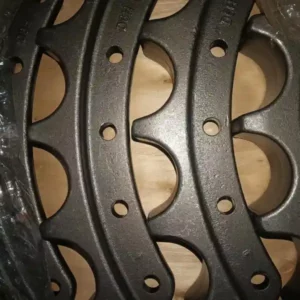
چکیده
The operational longevity and economic efficiency of heavy construction machinery are profoundly influenced by the integrity of the undercarriage system, با کفش های آهنگ که نمایانگر مؤلفه ای از اهمیت مهم است. These elements are the direct interface between a multi-ton machine and the often-hostile ground, subjecting them to intense abrasive wear, high-impact loads, and flexural stresses. The selection of appropriate high wear track shoes is therefore not a trivial procurement decision but a complex analytical exercise. It demands a nuanced understanding of metallurgical properties, manufacturing methodologies, application-specific geometries, and the profound impact of operational practices. This article examines the multifaceted considerations integral to choosing the correct track shoes. It presents a systematic framework for evaluating ground conditions, علم مواد, component dimensions, operator influence, و پروتکل های نگهداری. با اتخاذ این دیدگاه کل نگر, مدیران و اپراتورهای تجهیزات می توانند به طور قابل توجهی خرابی زودرس زیر شاسی را کاهش دهند, کاهش هزینه های عملیاتی بلند مدت, و در دسترس بودن و بهره وری ماشین را در محیط های مختلف جهانی به حداکثر برسانید.
غذای اصلی
- نوع و عرض کفش مخصوص مسیر را مستقیماً با شرایط زمین اولیه خود مطابقت دهید.
- برای استحکام بالاتر و مقاومت در برابر سایش، فولاد بور سخت شده را در اولویت قرار دهید.
- از باریک ترین کفش ممکن استفاده کنید که شناورسازی کافی برای کار فراهم می کند.
- آموزش صحیح اپراتور به میزان قابل توجهی سایش غیرعادی قطعات زیرین را کاهش می دهد.
- برنامه بازرسی منظمی را اجرا کنید تا زودتر ساییده شود.
- بدانید که قیمت اولیه خرید تنها بخشی از کل هزینه مالکیت است.
- A holistic maintenance view of the entire undercarriage system is necessary for longevity.
فهرست مطالب
- Deconstructing the Terrain: Matching Shoe Type to Ground Conditions
- The Science of Substance: Understanding Material Composition and Manufacturing
- The Geometry of Performance: Shoe Width, Pitch, and Profile Considerations
- Operational Discipline: The Human Factor in Extending Track Shoe Life
- A Holistic Maintenance Philosophy: بازرسی, ترمیم کردن, and Replacement
- سوالات متداول (پرسش)
- نتیجه
- منابع
Deconstructing the Terrain: Matching Shoe Type to Ground Conditions
The dialogue between a machine and the earth it traverses is mediated by the track shoe. It is a language of pressure, friction, و تأثیر. To select a track shoe without first conducting a rigorous analysis of the ground conditions is akin to choosing a tire for a vehicle without knowing if it will be driven on a racetrack or a muddy field. The ground is not a uniform, passive surface; it is an active agent that dictates the terms of engagement. The character of the soil, سنگ, or aggregate—its abrasiveness, moisture content, and cohesiveness—fundamentally determines the rate and nature of wear on all undercarriage components, especially the shoes. An error in this initial assessment can precipitate a cascade of costly failures, turning a productive asset into a stationary liability. از این رو, the first principle in the rational selection of high wear track shoes is a deep, empirical understanding of the environment in which the machine will live and work.
The Primacy of Ground Conditions: A Foundational Analysis
Every job site possesses a unique geological signature. The wind-blown sands of the Arabian Peninsula are composed of hard, sharp quartz particles that act as a relentless abrasive, grinding away steel with surprising speed. The lateritic soils of Western Australia, rich in iron and aluminum oxides, can be deceptively hard and abrasive, particularly when dry. در مقابل, the peaty, saturated grounds of Southeast Asian construction sites present a challenge not of abrasion, but of flotation and traction. A machine that sinks becomes immobile, its power useless. The frozen tundra of Siberia introduces another variable: low-temperature brittleness, where impact loads that might be absorbed in temperate climates can cause catastrophic fractures.
A proper analysis begins with classifying the terrain. Is it high-impact, like a quarry floor littered with blasted rock? Is it high-abrasion, like a sandy desert? Or is it low-traction, like a muddy swamp? اغلب, it is a combination. مثلا, excavation work might involve removing soft topsoil (requiring flotation) to reach abrasive bedrock below (requiring wear resistance). The operator must consider the percentage of time the machine will spend in each condition. This analysis should not be a casual observation but a deliberate evaluation, perhaps involving soil sampling or consultation with geotechnical reports. The economic consequence of this evaluation is direct and significant. Choosing a shoe optimized for high-impact rock when the machine spends 90% of its time on soft soil leads to unnecessary ground disturbance, excessive fuel consumption, and premature wear on the entire drivetrain as the grousers churn the earth inefficiently.
Soft Ground Operations: The Case for Single Grouser Shoes
In conditions of soft soil, گل و لای, or clay, the primary challenge is achieving sufficient traction to propel the machine forward without it becoming mired. This is where the single grouser track shoe demonstrates its inherent superiority. A grouser is the protruding bar or profile on the outer surface of the shoe that penetrates the ground. The single grouser design features one dominant, tall protuberance running across the shoe's width.
Think of it as a paddle. Its tall, sharp profile allows it to dig deep into the soft material, providing a large surface area to push against. This results in maximum tractive effort. The large space between the single grousers on adjacent shoes also facilitates self-cleaning. As the track chain goes around the sprocket and idler, the bending action helps to shed mud and debris that would otherwise pack between the shoes. Packed material is a serious problem; it effectively transforms the carefully designed track system into a smooth, tractionless belt, while also increasing track tension and accelerating wear on all moving parts. The single grouser's ability to penetrate and clean makes it the standard choice for bulldozers and other machines whose primary function is to push large loads in a relatively straight line on yielding surfaces. The deep penetration offers excellent grip, maximizing the machine's pushing power.
Hard and Rocky Surfaces: Why Double and Triple Grouser Shoes Excel
When the operating environment shifts to hard, سنگی, or mixed surfaces, the logic of the single grouser shoe begins to break down. قد بلند, aggressive single grouser cannot penetrate hard rock. در عوض, the entire weight of the machine becomes concentrated on the narrow tip of the grouser. This creates immense point-loading, which not only accelerates the wear of the grouser itself but also subjects the track shoe to severe bending stresses. The shoe can flex and eventually crack. علاوه بر این, a machine operating on single grousers on a hard surface will experience a rough, vibrating ride, which is fatiguing for the operator and transmits shock loads throughout the machine.
This is the domain of the double and triple grouser track shoe. Instead of one tall grouser, the load is distributed across two or three shorter, less aggressive grousers.
Double Grouser Shoes: These offer a compromise between the traction of a single grouser and the turning ability and smoother ride of a triple grouser. They have more contact area with the ground than a single grouser, which reduces the bending stress on the shoe and provides better wear life on abrasive or hard surfaces. They are a common choice for crawler loaders and excavators that need a balance of traction and maneuverability.
Triple Grouser Shoes: These are the most common type of track shoe found on excavators and are considered the "standard" shoe for general-purpose use. The three (or sometimes more) grousers are shorter and provide a larger contact area with the ground. This significantly reduces ground pressure, minimizes surface disturbance, and offers a much smoother ride. The key advantage of the triple grouser is its superior turning capability. When a tracked machine turns, the shoes must pivot and slide against the ground. The lower profile of the triple grouser reduces the amount of resistance, or "scrubbing," during a turn. This lessens the lateral stress on the entire undercarriage, from the shoe itself to the pins, بوش, و لینک ها. For a machine like an excavator, which is constantly pivoting and repositioning, this is a profound advantage in extending the life of its undercarriage parts.
Specialized Applications: تخت, Rubber, and Swamp Shoes
Beyond the common grouser types, a range of specialized shoes exists for specific, demanding applications.
Flat Shoes: همانطور که از نامش پیداست, these shoes have no grousers. They are used on hard, flat surfaces like concrete or asphalt where traction is not an issue, اما آسیب سطحی یک نگرانی عمده است. عملیات سنگفرش یا کاربردهای صنعتی در داخل انبارهای بزرگ اغلب از کفش های تخت برای جلوگیری از تخریب سطح کار استفاده می کنند..
کفش لاستیکی (یا پدهای لاستیکی): برای محافظت حتی بیشتر از سطح, لنت های لاستیکی را می توان روی یک کفش استاندارد سه گانه پیچ کرد, یا خود کفش می تواند یک بلوک لاستیکی جامد باشد که به یک قاب فولادی متصل شده است. اینها در ساخت و ساز شهری همه جا وجود دارند, جایی که یک بیل مکانیکی ممکن است نیاز به عبور از جاده های عمومی یا کار روی سنگفرش های تزئینی داشته باشد. آنها از سطح عالی محافظت می کنند و نویز را کاهش می دهند, اما در محیط های تخریب یا سنگلاخ مستعد بریدگی و تکه تکه شدن هستند.
کفش مردابی (یا کفش های کم فشار زمین): در شرایط شدید زمین نرم, مانند باتلاق ها, مرداب ها, یا عملیات لایروبی, کفش های استاندارد ممکن است سطح کافی برای جلوگیری از غرق شدن دستگاه را نداشته باشند. کفش های باتلاقی معمولاً بسیار پهن هستند, گاهی اوقات مثلثی یا ذوزنقه ای شکل, to maximize the contact area and distribute the machine's weight. این اصل شناور همان چیزی است که توسط کفش های برفی استفاده می شود. با افزایش سطح, فشار در هر اینچ مربع (PSI) کاهش می یابد, به ماشین اجازه می دهد تا "شناور شود" بالای زمین ناپایدار. اینها بسیار تخصصی هستند و در هر سختی خیلی سریع فرسوده می شوند, سطح ساینده.
تحلیل تطبیقی طرح های گروسر
برای تصمیم گیری آگاهانه, تجسم مبادلات ذاتی در هر طراحی مفید است. انتخاب هرگز برای یافتن یک "کامل" نیست" کفش, اما مناسب ترین کفش برای یک مجموعه معین از اولویت های عملیاتی است.
| نوع کفش | کاربرد اولیه | کشش | قابلیت چرخش | پوشیدن روی سطوح سخت | اختلال در زمین |
|---|---|---|---|---|---|
| گروسر مجرد | خاک نرم, گل و لای, نیازهای کشش بالا (بولدوزرها) | عالی | بیچاره | بیچاره | بالا |
| بقالی دو نفره | خاک های مخلوط, نیاز به کشش متوسط / چرخش | خوب | متوسط | متوسط | متوسط |
| پرورش دهندگان سه گانه | هدف کلی, سطوح سخت, چرخش مکرر | متوسط | عالی | عالی | کم |
| کفش تخت | سطوح سنگفرش شده (آسفالت, بتن) | بیچاره | عالی | عالی | خیلی کم |
| کفش مرداب | زمین بسیار نرم (مرداب ها, باتلاق ها) | متوسط | بیچاره | خیلی ضعیف | کم (به دلیل شناورسازی) |
The Science of Substance: Understanding Material Composition and Manufacturing
هنگامی که هندسه صحیح کفش مسیر توسط شرایط زمین مشخص شد, تمرکز باید به کیفیت ذاتی خود کفش معطوف شود. از چه ساخته شده است, و چگونه ساخته شد? دو کفش مخصوص مسیر می توانند با چشم غیر مسلح یکسان به نظر برسند، اما عملکرد آنها در زمین کاملاً متفاوت است. یکی ممکن است هزاران ساعت خدمات قابل اعتماد ارائه دهد, در حالی که دیگری پیش از موعد شکست می خورد, شکستگی تحت بار یا فرسودگی با سرعت ناامیدکننده. این تفاوت از دید پنهان است, در سطح میکروسکوپی, در شیمی فولاد و فرآیندهای حرارتی که طی کرده است. درک اصول متالورژی و تولید یک تمرین آکادمیک نیست; این یک ضرورت عملی برای هر کسی است که از کفشهای شیک استفاده میکند یا آن را مشخص میکند. این توانایی تشخیص کیفیت واقعی از یک شباهت ظاهری است, تمایزی که پیامدهای مالی زیادی دارد.
نقش متالورژی: فراتر از فولاد ساده
اصطلاح "فولاد" یک توصیف گسترده برای آلیاژ آهن و کربن است. با این حال, ویژگی های عملکرد فولاد را می توان به طور چشمگیری با افزودن مقادیر کمی از عناصر دیگر و با اعمال گرما تغییر داد.. فولادی که برای کفشهای شیار بالا استفاده میشود، یک ماده پیچیده است, به دقت مهندسی شده تا دو ویژگی رقیب را متعادل کند: سختی و چقرمگی.
- سختی is the material's resistance to scratching, سایش, و تورفتگی. یک سطح سخت تر بهتر در برابر اثر سنگ زنی شن مقاومت می کند, شن, و سنگ.
- سختی is the material's ability to absorb energy and deform without fracturing. A tough material can withstand the sudden shock loads of hitting a rock or dropping the machine's bucket.
این دو خاصیت غالباً در تضاد هستند. یک ماده بسیار سخت, مثل شیشه, اغلب بسیار شکننده است (سخت نیست). یک ماده بسیار سخت, مثل مس نرم, خیلی سخت نیست. هنر متالورژیست ایجاد یک آلیاژ فولاد و فرآیند عملیات حرارتی است که هر دو را بهینه می کند. این امر معمولاً از طریق استفاده از فولادهای آلیاژی حاصل می شود. برای کفش های شیک پوشی بالا, مهمترین عنصر آلیاژی بور است.
فولاد بور و کوئنچینگ: قلب دوام
بور یک عنصر قابل توجه است. When added to steel in minuscule amounts—often less than 0.003%—it has an outsized effect on the steel's "hardenability." Hardenability is not hardness itself, but the ability of the steel to be hardened to a significant depth during heat treatment.
The key heat treatment process is called quenching and tempering.
- آستنیته کردن: اولین, the steel track shoe is heated to a very high temperature, typically around 850-950°C. At this temperature, the iron and carbon atoms arrange themselves into a specific crystal structure called austenite.
- خاموش کردن: The red-hot shoe is then rapidly cooled, usually by plunging it into a bath of water, روغن, or polymer solution. This sudden cooling does not give the atoms time to rearrange themselves back into their slower-cooled structures. در عوض, they are trapped in a highly stressed, ساختار کریستالی سوزنی به نام مارتنزیت. مارتنزیت بسیار سخت و قوی است, که دقیقا همان چیزی است که برای مقاومت در برابر سایش لازم است. وجود بور به این ساختار مارتنزیتی سخت اجازه می دهد تا نه تنها در سطح مستقیم شکل بگیرد, اما در اعماق هسته کفش پیست. این به عنوان "سخت شدن از طریق" شناخته می شود." یک کفش سخت شده سختی خود را حتی با فرسوده شدن سطح حفظ می کند, طول عمر بسیار طولانی تری نسبت به کفشی که فقط با بدنه سفت شده است" یا "سطح سخت شده."
- معتدل کردن: پس از خاموش کردن, فولاد بسیار سخت اما شکننده و پر از تنش های داخلی است. برای بازگرداندن مقداری سختی, کفش دوباره تا دمای بسیار پایینتری گرم میشود (به عنوان مثال, 200-500درجه سانتی گراد) و برای یک زمان مشخص برگزار می شود. این فرآیند, معتدل نامیده می شود, تنش های داخلی را تسکین می دهد و امکان بازآرایی جزئی ساختار کریستالی را فراهم می کند. سختی را کمی کاهش می دهد اما چقرمگی را به میزان قابل توجهی افزایش می دهد, منجر به محصول نهایی می شود که هم در برابر سایش بسیار مقاوم است و هم به اندازه کافی انعطاف پذیر است که در برابر ضربه های شدید بدون ترک خوردگی مقاومت کند.. یک کفش ردیاب فولادی بور که به درستی کوئنچ شده و تمپر شده باشد، استاندارد طلایی برای کاربردهای سخت است..
جعل در مقابل. ریخته گری: بررسی فرآیندهای تولید
دو روش اصلی برای شکل دادن یک کفش پیست به شکل نهایی آن وجود دارد: ریخته گری و آهنگری.
ریخته گری شامل ریختن فولاد مذاب در قالبی به شکل کفشک است. این یک فرآیند نسبتا ارزان است که می تواند به راحتی اشکال پیچیده ایجاد کند. با این حال, همانطور که فلز در قالب سرد و جامد می شود, می تواند درشت ایجاد کند, ساختار دانه غیر یکنواخت. خطر تخلخل نیز وجود دارد (حباب های ریز) یا سایر عیوب داخلی, که می تواند به نقطه شروع ترک های تحت تنش تبدیل شود.
آهنگری با یک شمش فولادی جامد شروع می شود که گرم می شود و سپس با فشار بسیار زیاد چکش یا پرس شکل می گیرد.. این فرآیند تأثیر عمیقی بر ساختار داخلی فولاد دارد. فشار شدید باعث می شود دانه های فولاد با شکل قطعه هماهنگ شوند, ایجاد پیوسته, جریان دانه جهت دار. به تفاوت بین یک تکه تخته خرده چوب فکر کنید (مانند ریخته گری) و یک تکه چوب جامد با بلند, دانه پیوسته (مثل آهنگری). قسمت آهنگری به طور کلی متراکم تر است, قوی تر, و در برابر ضربه و خستگی مقاوم تر است. آهنگری فرآیند گرانتری است, اما برای انتقادی, برنامه های کاربردی با استرس بالا, اغلب یک برتر تولید می کند, بخش قابل اعتماد تر. Most high-quality track shoes for demanding environments are forged to ensure maximum strength and toughness.
Surface Hardness versus Core Toughness: A Delicate Balance
The ideal high wear track shoe is not uniformly hard throughout. همانطور که بحث شد, extreme hardness often comes with brittleness. The ideal state is a component with an extremely hard outer surface to resist abrasion, supported by a slightly softer, tougher core that can absorb shock and prevent the part from snapping in two. The through-hardening capability imparted by boron steel, combined with a precisely controlled quenching and tempering process, allows manufacturers to achieve this differential hardness profile.
The surface hardness is typically measured on the Rockwell C scale (HRC). A high-quality track shoe might have a surface hardness of 45-55 HRC, در حالی که سختی هسته ممکن است چند نقطه کمتر باشد. این گرادیان عمدی است. مورد سخت "" سایش را کنترل می کند, در حالی که سخت «هسته" بار را اداره می کند. هنگام ارزیابی تامین کننده, منطقی است که در مورد مشخصات سختی هدف آنها و نحوه دستیابی و تأیید آنها سؤال شود. یک تولید کننده معتبر کنترل دقیقی بر فرآیندهای عملیات حرارتی خود خواهد داشت و می تواند داده هایی را در مورد مشخصات سختی محصولات خود ارائه دهد.. این توجه به جزئیات مشخصه یک تامین کننده با کیفیت است, مانند کسانی که تعادل پیچیده مورد نیاز برای دوام را درک می کنند اجزای زیرانداز.
ارزیابی کیفیت تولید کننده: به دنبال چه چیزی باشید
با توجه به اینکه مهم ترین ویژگی های یک کفش پیست نامرئی است, خریدار چگونه می تواند آگاهانه انتخاب کند? باید به دنبال پروکسی های با کیفیت بود.
- مشخصات مواد: Does the manufacturer explicitly state the material used (به عنوان مثال, 23MnB, 25MnB, 35MnB – all common boron steel grades)? Vague descriptions like "high-strength steel" are a red flag.
- Heat Treatment Process: A quality manufacturer will be proud of their heat treatment capabilities. Look for information about their quenching and tempering processes. Do they talk about "through-hardening"?
- Manufacturing Method: Is the part forged or cast? While good castings exist, forging is generally a sign of a premium product intended for severe duty.
- قابلیت ردیابی و کنترل کیفیت: Can the manufacturer provide quality control documentation? Do they have lot numbers or serial numbers on their parts that allow for traceability back to a specific production batch? This is a sign of a mature and accountable manufacturing process.
- Reputation and Warranty: A company with a long history and a strong warranty is putting its own financial health behind the quality of its products. Learning about a potential supplier's history and commitment to quality, which is often found on pages like an درباره ما section, می تواند بسیار آشکار کننده باشد.
Choosing a track shoe is an act of trust in the manufacturer's unseen processes. By asking the right questions and looking for these indicators of quality, a buyer can significantly improve the odds of acquiring a product that will deliver true long-term value.
The Geometry of Performance: Shoe Width, Pitch, and Profile Considerations
The physical dimensions of a track shoe—its width, its pitch, and the specific shape of its profile—are not arbitrary features. They are carefully engineered parameters that have a direct and measurable impact on machine performance, بهره وری سوخت, and the longevity of the entire undercarriage system. Selecting the correct geometry requires a departure from simplistic assumptions and an embrace of a more nuanced, systems-level thinking. It involves balancing the need for support on soft ground (شناورسازی) with the need for maneuverability and durability on hard ground. An incorrect choice in this domain can lead to a host of problems, from excessive soil disturbance to catastrophic stress on track links and pins.
The "Wider is Better" Fallacy: Understanding Flotation vs. Maneuverability
There is a common and intuitive assumption among some equipment owners and operators that a wider track shoe is always better. The logic seems simple: a wider shoe provides a larger footprint, which should reduce ground pressure and make the machine more stable. While this is true to a point, this belief is a dangerous oversimplification. It fails to account for the significant downsides of using a shoe that is wider than necessary.
Imagine walking on soft snow. A pair of wide snowshoes (high flotation) ارزشمند است, distributing your weight so you don't sink. در حال حاضر, imagine trying to walk through a dense, rocky forest with those same snowshoes. They would be clumsy, constantly getting caught on obstacles, and requiring immense effort to turn. The same principle applies to construction machinery.
A wider shoe increases the machine's flotation, which is its ability to stay on top of soft, yielding surfaces. This is measured in pounds per square inch (PSI) or kilopascals (kPa) of ground pressure. For work in swamps or on very loose sand, a wide, low-ground-pressure shoe is indispensable.
با این حال, on firm or rocky ground, that extra width becomes a significant liability. The wider the shoe, the more effort is required to turn the machine. During a turn, the outer edge of the shoe has to travel farther than the inner edge, causing the shoe to scrub and pivot against the ground. A wider shoe increases this scrubbing action, generating immense leverage and lateral stress that is transferred directly into the track pins, بوش, و لینک ها. This twisting force is a primary driver of a wear pattern known as "pin and bushing wear." علاوه بر این, the unsupported portion of a wide shoe that overhangs the track link is more susceptible to bending and cracking if it encounters a rock or stump.
The Principle of "As Narrow as Possible, As Wide as Necessary"
The guiding principle for selecting track shoe width, از این رو, should be to use the narrowest shoe that provides adequate flotation for the machine to perform its job without becoming bogged down. This principle optimizes the trade-off between flotation and durability.
- Benefits of a Narrower Shoe:
- Easier Turning: Less stress on pins and bushings during turns.
- Less Wear: Reduced scrubbing action on hard surfaces.
- Better Maneuverability: The machine feels more agile and responsive.
- Increased Durability: Less leverage on the shoe, reducing the risk of bending or cracking.
- Improved Packing Resistance: In sticky materials, a narrower track has less room for mud to accumulate.
To apply this principle, an operator or fleet manager must have an honest assessment of their typical working conditions. If a machine spends 80% of its life on hard-packed dirt or rock and only 20% in soft mud, it should be equipped with a narrower shoe appropriate for the hard ground. For the occasional muddy section, operational techniques (like laying down mats or taking a different route) are a better solution than compromising the machine's undercarriage health for the majority of its working life.
A Decision Matrix for Shoe Sizing
The following table provides a general framework for thinking about shoe width. The specific recommendations will vary based on the machine's weight and model, but the underlying logic remains constant.
| Ground Condition | Primary Requirement | Recommended Shoe Width | Rationale |
|---|---|---|---|
| Hard Rock, معدن | ماندگاری, Maneuverability | Narrow | Minimizes turning stress and risk of shoe bending/cracking. |
| Packed Soil, Gravel | General Purpose | Standard/Narrow | Balances wear life and turning ability. Standard OEM width is often optimal. |
| Mixed Soft/Hard | Versatility | استاندارد | A compromise. Avoids the major penalties of very wide or very narrow shoes. |
| Soft Clay, خاک | Flotation, کشش | Standard/Wide | Width should be sufficient to prevent sinking but no wider. |
| Loose Sand | High Flotation | عریض | Maximizes surface area to stay on top of the non-cohesive material. |
| مرداب, Marsh | Extreme Flotation | Extra-Wide (LGP) | Necessary to reduce ground pressure below the soil's bearing capacity. |
Track Pitch and its Relationship with the Entire Undercarriage System
Track pitch is the distance from the center of one track pin to the center of the next. It is a fundamental dimension of the entire undercarriage system. The track pitch must precisely match the pitch of the sprocket teeth that drive the chain and the geometry of the track rollers and idlers that support it.
When selecting replacement high wear track shoes, it is absolutely imperative that the pitch of the new shoes matches the pitch of the existing track chain. Using a shoe with an incorrect pitch is not possible; the bolt holes simply will not align with the track links. با این حال, this highlights a deeper concept: the undercarriage is a system of interlocking, interdependent parts. The wear on one component directly affects the wear on all others.
As pins and bushings wear, the track pitch effectively lengthens. This "pitch extension" causes the track chain to ride higher and higher on the sprocket teeth, accelerating wear on the tips of the teeth. برعکس, as the sprocket teeth wear, they become thinner and change their profile, which can accelerate bushing wear. The track shoes, پیوندها, پین ها, بوش, غلطک ها, بیکارها, and sprockets are all designed to wear together as a cohesive system. Attempting to replace just one component in a heavily worn system (به عنوان مثال, putting new shoes on a stretched-out chain) can often accelerate the wear of the new part and the remaining old parts. A holistic view is needed, which is why sourcing a full range of compatible undercarriage products from a single, reliable supplier can be advantageous.
The Impact of Shoe Shape on Turning and Scrubbing Wear
Beyond a simple classification of single, double, or triple grouser, the specific profile of the shoe and grouser matters. Some manufacturers offer shoes with "clipped" or "beveled" corners. This small modification can have a noticeable effect on turning. By removing the sharp corner of the shoe, there is less material to dig into the ground during a pivot, reducing turning resistance and the associated scrubbing forces. This is particularly beneficial for machines that do a lot of spot-turning, like excavators.
به همین ترتیب, the height and sharpness of the grouser profile contribute to the wear dynamic. A brand-new, sharp grouser provides maximum traction but also creates maximum stress when turning on hard surfaces. As the grouser wears down, its height decreases, and its tip becomes more rounded. This actually reduces turning stress but also reduces traction. Understanding this life cycle is part of managing the undercarriage. There is a point where the grouser is so worn that it no longer provides adequate traction, and the shoe must be replaced or re-grousered. This decision point should be based on performance requirements, not just visual appearance.
Operational Discipline: The Human Factor in Extending Track Shoe Life
In the complex equation of undercarriage longevity, there is a variable that often outweighs metallurgy and geometry combined: the machine operator. An operator who is skilled, disciplined, and mindful of mechanical sympathy can dramatically extend the life of a set of high wear track shoes and the entire undercarriage. برعکس, an aggressive or careless operator can destroy the same components in a fraction of their expected lifespan. The forces generated by a multi-ton piece of construction machinery are immense. How those forces are applied—smoothly and thoughtfully, or abruptly and carelessly—makes all the difference. Investing in operator training and fostering a culture of mechanical preservation is one of the highest-return investments a fleet manager can make. It transforms a major expense into a manageable cost.
Operator Technique: The Unseen Force on Undercarriage Wear
The levers and pedals inside the cab are direct inputs into the wear rate of the undercarriage. Smooth, gradual inputs are always preferable to sudden, jerky movements.
Smooth Acceleration and Deceleration: Jackrabbit starts and slamming stops send shock loads through the entire drivetrain, from the engine to the final drives and into the track chain. This stresses pins, بوش, and the track shoe-to-link connections. A gentle application of power allows the track to engage the ground and build momentum smoothly.
Minimizing Unnecessary Movement: An efficient operator plans their movements. Instead of constantly shuttling back and forth, they position the machine optimally to minimize the total distance traveled. برای بیل مکانیکی, this means setting up within a swing radius that allows it to dig and load trucks without constantly repositioning the undercarriage. Every meter traveled is a meter of wear. Reducing travel, especially on abrasive surfaces, directly translates to longer undercarriage life.
Working Up and Down Slopes: Whenever possible, operators should be trained to drive straight up or straight down a slope, rather than traversing it sideways. Traversing a slope places a continuous, heavy side-load on the downhill track rollers, بیکارها, and track chain. This accelerates wear on the sides of these components. Working up and down the slope keeps the load distributed more evenly. When working on a side slope is unavoidable, the operator should try to alternate the direction of work periodically to even out the wear.
The Hidden Costs of High-Speed Reverse Operation
Most tracked machines are designed for their primary work to be done moving forward. The track chain, پین ها, and bushings are engineered with this in mind. The bushing is designed to rotate against the sprocket tooth under load in the forward direction.
Operating in reverse at high speed is one of the most damaging things an operator can do to an undercarriage. During reverse operation, the load is concentrated on the reverse-drive side of the bushing, a smaller contact area that is not optimized for high loads. This causes a much higher rate of wear on both the bushing and the sprocket. Some studies suggest that high-speed reverse operation can cause as much as three to four times the wear rate of forward travel.
Operators should be trained to minimize reverse travel distance and to always use a lower speed when moving in reverse. If a long repositioning move is required, it is often better to make a wide, sweeping turn and travel forward rather than simply backing up the entire distance. This simple piece of operational discipline can save thousands of dollars in premature undercarriage repair over the life of a machine.
Turning Techniques: Minimizing Lateral Stress on Track Links and Shoes
Turning a tracked machine is inherently a high-stress maneuver. One track slows down or reverses while the other maintains or increases speed, forcing the machine to pivot. This creates the scrubbing and lateral forces discussed earlier. با این حال, the way an operator turns can greatly influence the magnitude of these forces.
Spot Pivots (Counter-Rotation): This is the most aggressive type of turn, where one track moves forward and the other reverses, causing the machine to spin in place. در حالی که گاهی اوقات در محله های تنگ ضروری است, در صورت امکان باید از آن اجتناب کرد. It generates the maximum amount of ground disturbance and places the highest possible stress on the track shoes and links.
Gradual Turns: A much gentler method is to make wider, more gradual turns, like driving a car around a curve. This reduces the speed differential between the tracks and minimizes the amount of scrubbing. Operators should be encouraged to plan their work to allow for these wider turns.
Three-Point Turns: When a sharp change in direction is needed, executing a three-point turn (forward, back, forward) is often less stressful on the undercarriage than a single, aggressive spot pivot. Each individual movement is less severe.
The choice of track shoe type interacts strongly with turning technique. A machine with single grouser shoes will experience immense resistance to turning on hard ground, and an operator who frequently spot-pivots such a machine will cause rapid and destructive wear.
The Importance of Site Maintenance and Debris Management
The operator's responsibility extends beyond the machine itself to the environment it works in. A poorly maintained job site is a minefield for undercarriages.
Keeping the Work Area Clean: Allowing rocks, demolition debris (like rebar), or other sharp objects to litter the work area is a direct invitation for damage. A track shoe can be bent or cracked by a single encounter with a large rock. Steel debris can get caught in the track chain, causing catastrophic damage. Operators should be encouraged to use the machine's bucket or blade to clear a clean, smooth path for themselves.
Managing Mud and Packing: در مرطوب, sticky conditions, material can pack into the track chain. As this packed material is carried around the sprocket, it can become incredibly dense and hard, effectively tightening the track chain. This "over-tensioning" puts a massive load on all moving components and can literally push the track apart. Operators should make it a habit to periodically "walk out" the tracks (alternately moving forward and reverse) to try and shed packed material. At the end of a shift, they should take the time to properly clean the undercarriage with a spade or pressure washer. A few minutes of cleaning can prevent thousands of dollars in repairs.
Training and Incentivizing Operators for Undercarriage Preservation
Recognizing the operator as a key player in undercarriage management is the first step. The next is to provide them with the knowledge and motivation to act on it.
- Training Programs: Formal training should be a part of any new operator's onboarding. This should not just cover how to make the machine dig or push, but also the "why" behind best practices for undercarriage care. Using visual aids to show how reverse operation wears bushings or how side-loading affects rollers can be very effective.
- Incentive Programs: Some companies have successfully implemented programs that reward operators or crews for achieving better-than-average undercarriage life. This could be a bonus or other form of recognition. It aligns the operator's financial interests with the company's goal of cost reduction and creates a culture where everyone takes ownership of machine health.
در نهایت, the human element is not a problem to be eliminated but a resource to be cultivated. A well-trained and motivated operator is the best defense against premature failure of even the highest quality high wear track shoes.
A Holistic Maintenance Philosophy: بازرسی, ترمیم کردن, and Replacement
The final pillar supporting the long and productive life of a track system is a philosophy of proactive, systematic maintenance. It is a mindset that rejects the "run to failure" approach, which inevitably leads to catastrophic breakdowns, unscheduled downtime, and exorbitant repair costs. در عوض, it embraces a regimen of regular inspection, informed measurement, and strategic intervention. This holistic philosophy understands that the undercarriage is a complex ecosystem of wear parts. The health of the high wear track shoes is inextricably linked to the condition of the pins, بوش, پیوندها, غلطک ها, و چرخ دنده ها. Effective maintenance, از این رو, is not about focusing on a single part in isolation but about managing the entire system's life cycle to achieve the lowest possible cost per hour of operation.
Establishing a Proactive Inspection Regimen
The foundation of any maintenance program is frequent and consistent inspection. Wear happens gradually, and small problems, if caught early, can be corrected before they cascade into major failures. An operator should be trained to perform a brief walk-around inspection at the beginning of every shift. This is not a time-consuming task, but a quick visual and tactile check.
Daily Walk-Around: اپراتور باید به دنبال علائم آشکار مشکل باشد:
- Loose or missing hardware: Are all the track shoe bolts tight? A loose shoe can damage the track link and eventually break free.
- Obvious cracks or breaks: Check the track shoes, especially around the bolt holes and at the base of the grousers.
- Heavy packing: Is the undercarriage clean, or is it packed with mud, سنگ, or debris?
- Abnormal oil leaks: Check around the final drives, غلطک ها, and idlers for any sign of leaking lubricant, which indicates a seal failure.
- تنش آهنگ (Sag): Visually check the track sag between the carrier roller and the idler. While not a precise measurement, an experienced operator can spot a track that is obviously too tight or too loose.
Periodic Detailed Inspections: In addition to the daily check, a more thorough inspection should be scheduled at regular service intervals (به عنوان مثال, every 250 یا 500 ساعت ها). This should be performed by a trained technician. This inspection involves cleaning the undercarriage and using specialized tools to measure the wear on various components.
Measuring Wear: Tools and Techniques for Accurate Assessment
Relying on visual appearance alone to judge wear can be deceptive. What looks "worn out" might still have significant service life remaining, and what looks "okay" might be on the verge of a critical wear limit. Accurate measurement is key to making cost-effective decisions.
- Ultrasonic Thickness Gauge: This tool can measure the remaining material thickness on track shoes and links without having to remove them from the machine. It is invaluable for tracking the wear rate of the shoe body.
- Calipers and Depth Gauges: These are used to measure the height of the grousers on the track shoes, the outside diameter of the track bushings, and the height of the track links.
- Track Pitch Measurement: To measure pitch extension (stretch), a specific procedure is used, often involving putting tension on the track and measuring the distance over a set number of links (به عنوان مثال, 4 پیوندها). This measurement is compared to the new specification and the manufacturer's wear limits.
These measurements should not be one-off events. They should be recorded in a log for each machine. By plotting the measurements over time, a fleet manager can establish a wear rate for each machine in its specific application. This data is incredibly powerful. It allows for predictive maintenance, مدیر را قادر میسازد تا زمان رسیدن قطعات به محدودیتهای سایش خود را پیشبینی کند و به طور فعال برنامهریزی تعمیرات یا تعویض را انجام دهد., جلوگیری از شکست در میدان. سازندگان معتبر تجهیزات و تامین کنندگان قطعات، نمودارهای سایش دقیق و مشخصاتی را ارائه می دهند که «جدید» را تعریف می کند" ابعاد و "100% فرسوده" محدودیت برای تمام قطعات زیرانداز.
اقتصاد بازسازی و بازسازی مجدد
همانطور که کفش های پیست می پوشند, خرطوم ها کوتاه تر می شوند, کاهش کشش. با این حال, بدنه اصلی کفش ممکن است هنوز عمر قابل توجهی داشته باشد. در چنین مواردی, بازسازی کفش می تواند یک گزینه مقرون به صرفه باشد.
دوباره گروسینگ: این شامل جوش دادن استوک میلههای جدید بر روی گیرههای فرسوده کفشهای مسیر موجود است.. This restores the shoe's original height and traction capabilities for a fraction of the cost of a new shoe. This process is particularly common for dozers, where traction is paramount. The economics of re-grousing depend on the cost of labor, the cost of the grouser bar, and the remaining life in the shoe body and the rest of the undercarriage. It makes little sense to put a newly re-grousered shoe back onto a track chain with worn-out pins and bushings.
Pin and Bushing Turn: Another common mid-life maintenance procedure is the "pin and bushing turn." In a traditional track chain, wear occurs primarily on one side of the pin and one side of the bushing. Before they reach their wear limit, the track chain can be disassembled, and the pins and bushings can be rotated 180 degrees to present a new, unworn surface to the sprocket. This can effectively double the life of these components and significantly extend the life of the entire track system.
Knowing When to Replace: The Point of Diminishing Returns
All components eventually reach a point where repair is no longer economical or safe. The measurement data gathered during inspections is what informs this decision. Continuing to run components past their 100% wear limit is a false economy.
- Risk of Failure: A worn-out component is more likely to fail catastrophically. A broken track chain on a remote job site can lead to days of downtime and a complex, expensive recovery operation.
- Accelerated Wear of Mating Parts: Running a stretched chain on a good sprocket will quickly destroy the sprocket. Running worn rollers can cause damage to the track links. The cost of replacing the entire system later will be much higher than the cost of a timely, planned replacement of the worn-out group of components.
- ایمنی: A failed undercarriage component can lead to a loss of machine control, creating a serious safety hazard for the operator and anyone nearby.
The goal is to replace the components when they have delivered the maximum amount of their useful life, but before they risk causing a major failure or collateral damage. This is the essence of managing to the lowest total cost of ownership, not just the lowest initial purchase price.
Integrating Shoe Maintenance with Total Undercarriage Care
The central theme of this holistic philosophy is integration. The decision to repair or replace high wear track shoes should never be made in a vacuum. It must be considered in the context of the entire undercarriage system's condition. If the shoes are 75% worn, but the pins and bushings are 90% worn, it makes little sense to invest in re-grousing the shoes. A better strategy would be to run the entire system to its wear limit and then perform a complete undercarriage replacement.
برعکس, if a set of high-quality, high wear track shoes is being installed, it is the perfect time to ensure the rest of the system is in good condition to give those new shoes the best possible chance at a long life. This systems-level approach, which considers how all the different heavy machinery parts interact, is the hallmark of a sophisticated and cost-effective maintenance program. It moves beyond simply reacting to breakdowns and into the realm of strategically managing a valuable asset.
سوالات متداول (پرسش)
What is the main cause of premature track shoe failure?
The most common cause is a mismatch between the track shoe type and the application. Using single grouser shoes on hard rock, برای مثال, creates immense bending stress and impact loads that can lead to cracking. به همین ترتیب, using an unnecessarily wide shoe on hard ground generates high turning forces that accelerate wear on the entire undercarriage and can cause the shoe itself to bend or break.
How often should I inspect my track shoes?
A visual inspection should be part of the operator's daily walk-around check, looking for loose bolts, ترک ها, or heavy debris packing. A more detailed inspection, involving cleaning and measurement with tools like calipers or ultrasonic gauges, should be performed by a technician at every regular service interval, typically every 250 به 500 operating hours, to track wear rates accurately.
Can I use different types of track shoes on the same machine?
به شدت دلسرد می شود. Mixing shoe types (به عنوان مثال, half single grousers and half triple grousers) on the same track chain will create an imbalance. The different grouser heights and profiles will cause uneven loading, a rough ride, and unpredictable traction. This puts abnormal stress on all undercarriage components and can accelerate wear. Always use a complete, matched set of shoes.
Are more expensive high wear track shoes always better?
نه لزوما, but there is often a strong correlation between price and quality. The cost is driven by the quality of the steel alloy (به عنوان مثال, فولاد بور), the manufacturing process (forging is more expensive than casting), and the precision of the heat treatment. A cheaper, lower-quality shoe may save money upfront but will likely wear out much faster or fail prematurely, leading to higher lifetime costs due to more frequent replacements and increased machine downtime. The key is to seek the best value, not the lowest price.
What is "track scalloping" and how can I prevent it?
Track scalloping is a wave-like wear pattern that can appear on the surface of track links. It is typically caused by running the machine with worn-out track rollers. As the rollers wear, they develop flat spots or lose their roundness, and this uneven surface imparts a corresponding wear pattern onto the track links as they pass over. The best way to prevent it is through regular inspection and measurement of the rollers and replacing them before they reach their wear limits.
How does machine weight affect track shoe selection?
Machine weight is a fundamental factor. It determines the base ground pressure that the track shoes must manage. A heavier machine requires a larger total track footprint to achieve the same ground pressure (PSI یا kPa) as a lighter machine. When selecting a shoe width, the goal is to provide enough surface area to support the machine's weight in the given soil conditions without being excessively wide. Manufacturer recommendations for shoe width are always specific to a machine's weight class.
Is it okay to weld on track shoes for repair?
Welding can be a valid repair method, but it must be done correctly. Re-grousing, which is welding new bar stock onto worn grousers, is a common and accepted practice. با این حال, attempting to repair cracks in the body of a heat-treated track shoe is very risky. The intense heat from welding can ruin the original heat treatment, creating soft spots and brittle zones that may lead to a catastrophic failure right next to the repair. Any weld repair on a structural component should only be undertaken by a skilled welder following a specific, approved procedure.
نتیجه
The selection and management of high wear track shoes is a discipline that marries geological observation with material science, and mechanical engineering with operational diligence. It demonstrates that in the world of heavy machinery, there are no small details. A component as seemingly straightforward as a track shoe is, in reality, a crucible where decisions about material, geometry, and operation are tested by the unforgiving physics of friction and impact. A simplistic approach, focused solely on initial price or guided by outdated rules of thumb, is a direct path to diminished productivity and inflated operating costs.
A more enlightened approach, as we have explored, views the track shoe not as a commodity but as a critical investment in the machine's uptime and efficiency. It begins with a thoughtful examination of the ground itself, acknowledging the earth as an active partner in the wear process. It insists on a deeper inquiry into the substance of the shoe—its metallurgical DNA and the thermal history that imbues it with strength and resilience. It respects the elegant geometry of a well-designed undercarriage, understanding that width and profile are not matters of preference but of performance. Most profoundly, it recognizes the immense power of the human operator and the maintenance technician to act as stewards of the machine's mechanical health. By embracing this holistic, knowledge-based framework, fleet managers and operators can move beyond the cycle of premature failure and reactive repair, instead achieving a state of optimized performance, دوام افزایش یافته, and true long-term economic value.
منابع
کرم ابریشم. (2018). Caterpillar undercarriage guide (15th ed.). Caterpillar Inc.
Joseph, تی. جف. (2010). Undercarriage management and crawler tractor undercarriage developments. Journal of the Southern African Institute of Mining and Metallurgy, 110(10), 573-579. Retrieved from
کوماتسو. (n.d.). Undercarriage handbook. Komatsu America Corp.
کومار, اس., & Panneerselvam, ک. (2017). A review on wear and tribological characteristics of steel. Journal of Materials Science & Surface Engineering, 5(2), 795-801.
Llewellyn, د. T., & Hudd, آر. جف. (1998). Steels: Metallurgy and applications (3rd ed.). باترورث-هاینمن. https://doi.org/10.1016/B978-0-7506-3757-3.X5000-0
Mousavi, م. الف, & Bodin, آ. (2020). Wear of excavator track shoes in abrasive rock. Wear, 458-459, 203429.
Society of Automotive Engineers. (2012). Undercarriage test procedure (SAE J313). SAE International.
توتن, جف. E. (اد.). (2006). Steel heat treatment handbook (2ویرایش). CRC press.