
Tóm tắt
Khung gầm của máy móc xây dựng hạng nặng tiêu tốn một khoản chi phí vận hành đáng kể cho người vận hành đội xe, often accounting for up to half of a machine's total maintenance budget. Do đó, việc quản lý hiệu quả các thành phần này không chỉ đơn thuần là nhiệm vụ kỹ thuật mà còn là một chiến lược tài chính quan trọng.. Tài liệu này xem xét những thách thức nhiều mặt trong việc bảo trì và mua sắm khung gầm cho các đội xe phân tán trên toàn cầu. Nó đề xuất một hệ thống, khuôn khổ năm bước được thiết kế để giảm thiểu chi phí và nâng cao tuổi thọ của thiết bị. Cách tiếp cận này tích hợp sự hiểu biết thấu đáo về giải phẫu thành phần và các nhu cầu cụ thể của ứng dụng với việc tìm nguồn cung ứng chiến lược các bộ phận, nhấn mạnh tổng chi phí sở hữu so với giá ban đầu. Hơn nữa, nó trình bày chi tiết việc thực hiện các quy trình bảo trì chủ động và trau dồi các phương pháp thực hành tốt nhất cho người vận hành. Cuối cùng, nó khám phá vai trò của phân tích dữ liệu hiện đại và viễn thông trong việc chuyển đổi từ sửa chữa phản ứng sang quản lý đội xe dự đoán. Hướng dẫn toàn diện này cung cấp cho người vận hành đội xe một phương pháp khả thi để tối ưu hóa hiệu suất và hiệu quả kinh tế của các bộ phận gầm xe của họ.
Key Takeaways
- Phát triển một cuộc kiểm tra trên toàn đội xe để kết hợp các bộ phận của khung gầm với địa hình và mức độ tác động cụ thể.
- Đánh giá nhà cung cấp dựa trên tổng chi phí sở hữu, không chỉ là giá phần ban đầu.
- Thực hiện quy trình vệ sinh nghiêm ngặt hàng ngày và theo dõi thói quen kiểm tra độ căng để tránh mài mòn nhanh.
- Đào tạo người vận hành về kỹ thuật giảm thiểu áp lực lên hệ thống gầm xe trong quá trình vận hành.
- Sử dụng dữ liệu viễn thông để dự báo việc bảo trì các bộ phận bánh đáp cho người vận hành đội xe và giảm thời gian ngừng hoạt động.
Mục lục
- Bước chân 1: Đánh giá cơ bản và hiểu nhu cầu của đội xe của bạn
- Bước chân 2: Tìm nguồn cung ứng chiến lược và lựa chọn các bộ phận khung gầm
- Bước chân 3: Thực hiện quy trình kiểm tra và bảo trì chủ động
- Bước chân 4: Nuôi dưỡng sự xuất sắc của nhà điều hành và các phương pháp thực hành tốt nhất
- Bước chân 5: Tận dụng công nghệ và dữ liệu để giảm chi phí dài hạn
- Câu hỏi thường gặp (Câu hỏi thường gặp)
- Phần kết luận
- Tài liệu tham khảo
Bước chân 1: Đánh giá cơ bản và hiểu nhu cầu của đội xe của bạn
The journey toward mastering the lifecycle of your fleet's undercarriages begins not with a wrench, nhưng với một thời gian suy ngẫm và phân tích cẩn thận. Nếu coi gầm xe chỉ là một bộ sưu tập kim loại có thể thay thế được là bỏ qua bản chất của nó là một bộ phận phức tạp., dynamic system—the very foundation upon which your machine's productivity rests. Dành cho người khai thác đội tàu, đặc biệt là những người có tài sản trải dài trên các địa hình đa dạng và đòi hỏi khắt khe của các khu vực như Úc, Nga, hoặc Trung Đông, một cách tiếp cận hời hợt để quản lý khung gầm gây ra chi phí không bền vững và làm tê liệt thời gian ngừng hoạt động. Bước đầu tiên, Vì vậy, là xây dựng một chiều sâu, sự hiểu biết cơ bản về cả bản thân máy móc và môi trường độc đáo mà nó hoạt động. Điều này liên quan đến việc mổ xẻ giải phẫu của khung gầm để đánh giá sự tương tác giữa các bộ phận của nó, conducting a rigorous audit of your fleet's current condition, Và, quan trọng nhất, phát triển một chiến lược đa sắc thái để kết hợp đúng thành phần với đúng công việc.
Giải phẫu của khung gầm: Một hệ thống của các hệ thống
Trước khi người ta có thể chẩn đoán bệnh hoặc kê đơn thuốc, đầu tiên người ta phải hiểu cơ thể. Nguyên tắc tương tự cũng áp dụng cho máy móc hạng nặng tạo thành xương sống cho hoạt động của bạn. Gầm máy xúc hoặc máy ủi không phải là một thực thể đơn lẻ mà là một tổ hợp phức tạp của các bộ phận, mỗi người có một vai trò cụ thể, và mỗi cái đều có mối quan hệ cộng sinh với những cái khác. Sự thất bại của một bộ phận luôn đẩy nhanh sự sụp đổ của các bộ phận lân cận. Hãy để chúng tôi, sau đó, hãy dành chút thời gian để dạo qua hệ sinh thái cơ khí này.
Hãy tưởng tượng toàn bộ tổ hợp đường ray như một hệ thống đầu máy khép kín. Các chuỗi theo dõi, hoặc lắp ráp liên kết theo dõi, phục vụ như cột sống của nó. Đó là một chuỗi liên kết với nhau, liên kết thép cứng, ghim, và ống lót tạo thành một linh hoạt, vòng lặp liên tục. This chain is the conduit through which the machine's driving force is transmitted to the ground. Sự mài mòn bên trong giữa các chốt và ống lót là nguyên nhân chính gây ra hiện tượng "độ giãn của đường ray"." hoặc mở rộng cao độ, một chỉ báo hao mòn nghiêm trọng mà chúng ta sẽ khám phá sau.
Bắt vít vào chuỗi này là theo dõi giày, còn được gọi là miếng đệm theo dõi hoặc quần lót. Đây là những bộ phận tiếp xúc trực tiếp với trái đất. Chúng cung cấp lực kéo, hoặc nắm chặt, cần thiết để cỗ máy tự di chuyển và sức nổi cần thiết để phân phối trọng lượng to lớn của nó, ngăn không cho nó chìm xuống đất mềm. Như chúng ta sẽ thấy, thiết kế của đế giày—chiều rộng cũng như số lượng và hình dạng của quần lót—có lẽ là lựa chọn quan trọng nhất trong việc điều chỉnh máy phù hợp với môi trường làm việc cụ thể của nó. (Bộ phận GFM, 2025).
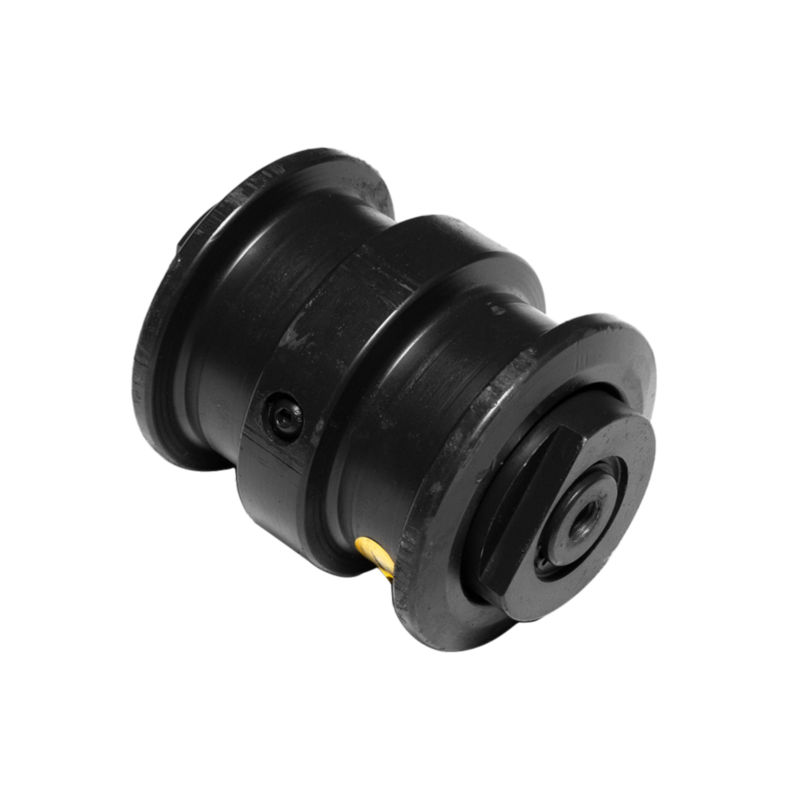
Supporting the machine's weight and guiding the track chain are the con lăn. Có hai loại. Con lăn theo dõi, hoặc con lăn đáy, are mounted to the bottom of the track frame and bear the machine's weight directly onto the track chain. Chúng là chân của cỗ máy, liên tục chịu áp lực lớn. Con lăn vận chuyển, hoặc con lăn hàng đầu, được gắn trên đầu khung đường ray. Công việc của họ là đỡ trọng lượng của chính xích xích, preventing it from sagging excessively and maintaining its alignment. A failure in any of these rollers, often signaled by an oil leak, can lead to a cascade of wear issues throughout the system (Origin Machinery, 2024).
Ở phía trước khung đường ray, you will find the người lười biếng. The idler's primary purpose is to guide the track chain back around toward the rollers and to serve as the mechanism for adjusting track tension. It is not a driven component but a free-spinning wheel that, along with its recoil spring assembly, absorbs and dampens shock loads encountered at the front of the track system.
Cuối cùng, at the rear, is the bánh xích. This is the-toothed wheel that is turned by the machine's final drive motor. The sprocket's teeth engage with the bushings of the track chain, transferring the engine's power to the track and driving the machine forward or backward. It is the engine's handshake with the ground. The wear on its teeth must perfectly match the wear on the track chain's bushings for efficient power transfer.
Hiểu được sự tương tác này là bước đầu tiên đối với bất kỳ nhà điều hành đội tàu nào. Bánh xích mòn sẽ phá hủy xích mới. Một con lăn bị thu giữ sẽ mài các điểm phẳng vào các liên kết đường ray. Độ căng đường ray không chính xác sẽ tác động lực rất lớn lên người chạy không tải, con lăn, và ổ đĩa cuối cùng. Đó là một hệ thống khép kín trong đó sức khỏe của một thành phần gắn bó chặt chẽ với sức khỏe của tất cả mọi người..
Tiến hành kiểm tra khung gầm trên toàn đội tàu
With a firm grasp of the undercarriage's anatomy, hành động hợp lý tiếp theo là thực hiện đánh giá sức khỏe toàn diện trên toàn bộ đội xe của bạn. Đây không phải là một kiểm tra trực quan đơn giản; đó là một bài tập thu thập dữ liệu sẽ tạo thành nền tảng cho toàn bộ chiến lược quản lý của bạn. Mục tiêu là tạo ra một "hồ sơ hao mòn" chi tiết" cho mỗi máy, điều này sẽ cho phép bạn chuyển từ trạng thái phản ứng "sửa nó khi nó bị hỏng" mô hình chủ động, dự đoán.
Cuộc kiểm toán của bạn nên bắt đầu bằng việc lưu giữ hồ sơ tỉ mỉ. Đối với mỗi máy, bạn cần biết nhãn hiệu của nó, người mẫu, tuổi, và tổng số giờ hoạt động. Quan trọng hơn, bạn cần theo dõi số giờ trên gầm xe hiện tại của nó. Nếu không có dữ liệu cơ bản này, mọi nỗ lực phân tích vòng đời đều vô ích.
Tiếp theo là kiểm tra thực tế, cần được chuẩn hóa trên toàn bộ nhóm của bạn để đảm bảo dữ liệu nhất quán. Điều này liên quan đến nhiều thứ hơn là chỉ tìm kiếm những chỗ bị hỏng rõ ràng. Bạn cần đo độ mòn. Using specialized tools like ultrasonic thickness gauges and depth gauges, your technicians should measure key wear points:
- Track Chain Pitch: Measure the distance over a set number of links to determine the extent of internal pin and bushing wear, or "stretch."
- Roller Tread Diameter: Measure the remaining diameter of the track and carrier rollers to gauge their wear life.
- Bushing External Diameter: Measure the wear on the outside of the track chain bushings.
- Sprocket Tooth Profile: Use a gauge to check the wear pattern on the sprocket teeth.
- Track Shoe Grouser Height: Measure the height of the grousers to determine the remaining traction.
This data should be logged against the machine's undercarriage hours. Theo thời gian, this will allow you to plot a wear curve for each machine in its specific application. Bạn sẽ bắt đầu thấy các mẫu. Máy ủi làm việc trên cát silic có độ mài mòn cao của mỏ Tây Úc sẽ có đặc tính mài mòn khác với máy đào đào ở nơi ẩm ướt., đất giàu sét của một công trường xây dựng ở Đông Nam Á. Dữ liệu này là công cụ mạnh mẽ nhất của bạn. Nó cho phép bạn dự báo khi nào các thành phần sẽ hết tuổi thọ sử dụng, cho phép bạn lên lịch thời gian ngừng hoạt động và đặt hàng trước các bộ phận, chuyển việc bảo trì từ tình trạng khẩn cấp thành kế hoạch, hoạt động kiểm soát chi phí.
Kết hợp khung gầm với ứng dụng và địa hình
Phần cuối cùng của bước nền tảng này là đánh giá nghiêm túc xem máy móc của bạn có được trang bị phù hợp cho nhiệm vụ của chúng hay không. Một sai lầm phổ biến là chấp nhận cấu hình khung gầm tiêu chuẩn mà máy được cung cấp.. Đối với một lượng lớn, diverse fleet, this one-size-fits-all approach is a recipe for excessive cost. The selection of the right undercarriage parts for fleet operators is an exercise in engineering judgment, balancing traction, tuyển nổi, hao mòn điện trở, and cost.
The most significant choice here is the track shoe. The goal is to use the narrowest shoe possible that still provides adequate flotation for the ground conditions. Tại sao? Because wider shoes increase turning resistance, placing greater stress and torsional load on the entire undercarriage system, from the pins and bushings to the track frame itself. A wider shoe also has more surface area in contact with the ground, increasing the rate of wear in abrasive conditions.
The type of grouser is equally important.
- Giày Grouser đơn: Offer the highest penetration and traction. They are ideal for applications on rock or hard-packed ground where maximum grip is needed.
- Giày Grouser đôi: Provide less penetration but better turning ability and are a good all-around choice for many excavator applications where the machine needs to maneuver frequently. They offer a good balance between traction and low ground disturbance.
- Giày ba lỗ: The most common type on excavators, these offer the best maneuverability and the least ground disturbance, making them suitable for finished surfaces or softer ground. Tuy nhiên, their traction is lower than single or double grouser designs. Bộ phận GFM provides a good analysis of these types.
- Swamp or Flat Shoes: These are very wide shoes with minimal or no grousers, designed to maximize flotation in extremely soft, marshy conditions, giống như những gì được tìm thấy ở các vùng Đông Nam Á hoặc trong các dự án cải tạo vùng đất ngập nước.
Bảng bên dưới cung cấp hướng dẫn đơn giản để kết hợp các loại giày thể thao với các môi trường hoạt động đa dạng mà đội tàu của bạn có thể gặp phải.
| Địa hình/Ứng dụng | Thử thách chính | Giày chạy bộ được đề xuất | Cơ sở lý luận |
|---|---|---|---|
| Lớp băng vĩnh cửu Siberia (Nga) | Lực kéo thấp, Mặt đất đóng băng | Cá mú đơn, Độ cứng cao | Cần có sự thâm nhập tối đa để giữ băng giá, bề mặt cứng. Thép phải được chế tạo để chống lại sự trở nên giòn ở nhiệt độ cực lạnh.. |
| Mỏ quặng sắt Úc | Độ mài mòn cao | Cá mú đơn, Hợp kim chống mài mòn cao | Bản chất mài mòn của đá và đất đòi hỏi vật liệu cứng nhất có thể để làm chậm quá trình mài mòn. Lực kéo cao cũng cần thiết. |
| Cồn cát Trung Đông | Tuyển nổi thấp, Độ mài mòn cao | Grouser rộng ba hoặc giày phẳng | Cần giày rộng để phân bổ trọng lượng và chống chìm. Cát mịn có tính mài mòn cao, so material hardness is still a factor. |
| Southeast Asian Palm Plantations | Soft, Muddy Soil, đóng gói | Double or Triple Grouser (Swamp Pads in extreme cases) | The priority is flotation and minimizing ground disturbance. The design must also shed mud to prevent "packing." |
| Korean Urban Demolition | Mixed Debris, Concrete | Cửa hàng tạp hóa đôi, High Impact Resistance | Shoes must resist impact from rebar and concrete chunks. Good maneuverability is also key in confined spaces. |
| African Alluvial Mining | Wet, Slippery Clay & Sỏi | Cửa hàng tạp hóa đôi | A balance is needed to provide traction in slippery conditions without excessively digging into and disturbing the valuable ground layer. |
By completing this three-part foundational assessment—understanding the anatomy, auditing your fleet, and matching components to the application—you transform your approach to undercarriage management. You are no longer a passive recipient of maintenance costs but an active strategist, laying the groundwork for a more efficient, đáng tin cậy, and profitable fleet operation.
Bước chân 2: Tìm nguồn cung ứng chiến lược và lựa chọn các bộ phận khung gầm
Having established a deep understanding of your fleet's operational demands and the current state of your equipment, the second step in our systematic approach concerns the procurement of replacement parts. This is a domain fraught with complexity, where the apparent wisdom of choosing the lowest-priced option can often lead to a cascade of higher long-term expenses. For the discerning fleet operator, sourcing is not merely a transaction; it is a strategic decision that has profound implications for machine uptime, chi phí lao động, and overall project profitability. This step requires a careful deliberation between Original Equipment Manufacturer (OEM) và các bộ phận hậu mãi, đi sâu hơn vào khoa học vật liệu xác định thành phần chất lượng, và phát triển mối quan hệ hợp tác bền chặt với các nhà cung cấp có thể đóng vai trò là đồng minh trong sự thành công trong hoạt động của bạn.
OEM so với. Cân nhắc hậu mãi
Cuộc tranh luận giữa OEM và các bộ phận hậu mãi là một vấn đề lâu năm trong ngành công nghiệp thiết bị nặng. Phân tích tài chính thuần túy, chỉ tập trung vào giá mua ban đầu, hầu như sẽ luôn ưu tiên các lựa chọn hậu mãi. Tuy nhiên, đây là một quan điểm đơn giản đến mức nguy hiểm. Một góc nhìn sáng suốt hơn, dựa trên khái niệm Tổng chi phí sở hữu (TCO), là cần thiết.
OEM parts are manufactured or specified by the machine's original producer, như Komatsu hay Caterpillar. Họ là, theo định nghĩa, sự kết hợp hoàn hảo cho máy, được thiết kế để hoạt động hài hòa với các thành phần OEM khác. The manufacturer's reputation is tied to their performance, and they typically come with a comprehensive warranty and the backing of an extensive dealer and support network. The primary drawback, tất nhiên rồi, is their premium price.
Aftermarket parts, Mặt khác, are produced by third-party companies. The quality in this segment of the market varies enormously. At one end of the spectrum are manufacturers who reverse-engineer OEM parts and produce them using inferior materials and less stringent quality control, leading to premature failure. At the other end are reputable companies that invest heavily in research and development, often producing parts that meet or even exceed OEM specifications in terms of material composition and durability. These top-tier aftermarket suppliers, such as those found on platforms like Bunyip Equipment or through specialized providers, can offer a compelling value proposition: OEM-level quality at a more competitive price point.
The strategic choice for a fleet operator is not a binary "always OEM" or "always aftermarket" rule. Thay vì, it is about risk management. For a brand new machine under warranty, using OEM parts is often a requirement to keep the warranty valid. For older machines, or for non-critical components, a high-quality aftermarket part from a trusted supplier can represent a significant and intelligent cost saving. The key is to do your due diligence. Demand technical specifications, material-testing reports, and case studies from any potential aftermarket supplier. A refusal to provide this data is a significant red flag.
The following table offers a framework for this deliberation, moving beyond price to a more holistic comparison.
| Nhân tố | Nhà sản xuất thiết bị gốc (OEM) | Quality Aftermarket Supplier |
|---|---|---|
| Chi phí ban đầu | Cao | Moderate to Low |
| Chất lượng & Phù hợp | Guaranteed to meet original specifications and fit perfectly. | Can meet or exceed OEM specs, but requires careful vetting. Fit is generally good from reputable suppliers. |
| Khoa học vật liệu | Proprietary alloys and heat treatments developed by the OEM. | Often use industry-standard high-strength steels. Top suppliers invest in their own material R&D. |
| Sự bảo đảm | Comprehensive, backed by a large dealer network. | Khác nhau tùy theo nhà cung cấp. The best offer competitive warranties, but the claims process may differ. |
| Có sẵn | Generally good, but can be subject to OEM supply chain disruptions. | Can be excellent, with some suppliers specializing in rapid delivery for common wear parts. |
| Technical Support | Extensive support available through the dealer network. | Varies. The best suppliers have knowledgeable staff who can advise on part selection and application. |
Decoding Material Science and Manufacturing Processes
To truly make an informed sourcing decision, a fleet operator must become, to some degree, a student of metallurgy. The longevity of an undercarriage component is not a matter of chance; it is a direct result of the steel's composition and the way it has been processed. Understanding the basics can help you cut through marketing jargon and ask suppliers the right questions.
The primary material for undercarriage parts is steel, nhưng không phải tất cả thép đều được tạo ra như nhau. The addition of alloying elements dramatically changes its properties.
- Carbon: The fundamental hardening agent in steel. Higher carbon content allows for greater hardness but can also increase brittleness.
- Mangan: Improves hardenability and contributes to strength and wear resistance.
- crom: A key element for increasing hardness, sự dẻo dai, and resistance to corrosion and abrasion.
- Boron: Added in very small amounts, boron significantly increases the hardenability of steel, allowing a deep and uniform hardness to be achieved through heat treatment. This is a hallmark of high-quality undercarriage steel.
These elements, Tuy nhiên, are only part of the story. The manufacturing process is what unlocks their potential.
- Rèn vs. Đúc: Forging involves shaping the steel under immense pressure, which aligns the grain structure of the metal, resulting in superior strength, sự dẻo dai, và khả năng chống mỏi. Đúc, which involves pouring molten metal into a mold, is a less expensive process but can result in a weaker, more porous internal structure. For high-stress components like track links, forging is the superior method.
- Xử lý nhiệt: This is arguably the most critical step. It involves carefully controlled cycles of heating and cooling to alter the steel's microstructure and achieve the desired balance of hardness and toughness. Một quy trình quan trọng đối với các bộ phận của bánh xe là làm cứng cảm ứng. Kỹ thuật này sử dụng dòng điện để làm nóng lớp bề mặt của linh kiện (giống như ray của đường ray hoặc mặt của con lăn) trước khi nó nhanh chóng bị dập tắt (làm mát). Kết quả là một phần có độ cứng cực kỳ cao, bề mặt chống mài mòn và cứng hơn, lõi dẻo hơn. Bề mặt cứng chống mài mòn, trong khi lõi cứng giúp bộ phận không bị nứt khi va chạm. The depth and uniformity of this hardened layer are direct indicators of a part's quality.
Khi bạn đánh giá một nhà cung cấp, hỏi họ về thông số kỹ thuật vật liệu của họ. Họ có sử dụng thép boron không? Quá trình xử lý nhiệt của họ là gì? What is the specified case depth and hardness (measured in Rockwell HRC) of their wear surfaces? A quality supplier will have this information readily available and will be proud to share it. These are the details that separate a part that lasts 4,000 hours from one that fails at 2,000, and this is where true cost savings are found.
Building Supplier Partnerships for Fleet Operators
For a fleet operator, a parts supplier should be more than just a vendor. They should be a strategic partner. The ideal supplier relationship is not based on a series of one-off transactions but on a long-term collaboration aimed at improving your fleet's efficiency.
What does a true supplier partnership look like for undercarriage parts for fleet operators?
- Chuyên môn kỹ thuật: The supplier's team should have deep product knowledge. They should be able to act as consultants, helping you analyze your wear data and recommending the optimal high-quality excavator attachments and components for your specific applications, rather than just selling you what's on the shelf.
- Inventory Management: A good partner will work with you to understand your fleet's needs and consumption rates. They can help you set up a managed inventory system, ensuring that you have the common wear parts you need on hand without tying up excessive capital in your own stock. Some may even offer consignment stock programs for high-volume customers.
- Logistical Reach: For fleets operating in diverse and remote locations, the supplier's ability to deliver parts efficiently is paramount. Evaluate their logistical network. Can they ship cost-effectively to your sites in the Australian Outback, the Russian Far East, or rural Africa?
- Problem Resolution: How does the supplier handle warranty claims or incorrect parts? A true partner will have a clear, efficient process and will work with you to resolve issues quickly, minimizing your downtime.
By shifting your mindset from simply buying parts to strategically sourcing solutions, you take a monumental step toward controlling your undercarriage costs. It involves a more rigorous initial evaluation, but the long-term payoff in reduced downtime, lower labor costs, and extended component life is one of the most significant financial levers a fleet operator can pull.
Bước chân 3: Thực hiện quy trình kiểm tra và bảo trì chủ động
The finest, most expensive undercarriage parts in the world will fail prematurely if they are not maintained with diligence and care. After establishing a foundation of knowledge and a strategic sourcing plan, the third step is to institutionalize a culture of proactive maintenance. This means moving away from a philosophy of repair and toward a philosophy of prevention. The majority of undercarriage wear is not inevitable; it is the accelerated result of neglect. Dành cho người khai thác đội tàu, a disciplined and consistently applied maintenance protocol is the most direct path to extending component life and slashing the per-hour cost of operation. This protocol is built on three pillars: the simple yet powerful daily walk-around, the mastery of correct track tension, the often-underestimated art of cleaning, and the use of more advanced inspection techniques to see what the naked eye cannot.
The Power of the Daily Walk-Around
The most effective maintenance tool in your arsenal is the trained and observant eye of your machine operator. The daily pre-start inspection, or walk-around, là tuyến phòng thủ đầu tiên chống lại sự thất bại thảm hại. It is a ritual that should be non-negotiable for every machine, every single day. What seems like a simple five-minute check can identify small problems before they evolve into major, downtime-inducing events.
Operators must be trained to look for specific warning signs. This is not a casual stroll around the machine; it is a focused diagnostic routine.
- Check for Leaks: The operator should carefully inspect each track roller, Con lăn vận chuyển, and idler for any sign of oil leakage. A leak is a definitive sign that a seal has failed. Once the oil is gone, the internal bearings will quickly destroy themselves, leading to a seized roller. A seized roller will not turn, and as the track chain is dragged across it, it will create a flat spot on the roller and cause severe, abnormal wear to the track links themselves.
- Inspect Hardware: Are there any loose or missing bolts on the track shoes? A loose shoe can become detached, and a missing shoe creates an imbalance in the track chain that puts stress on the adjacent links and pins.
- Look for Abnormal Wear: The operator, who is with the machine all day, is best positioned to notice changes. Are there any new, shiny metal-on-metal wear spots? Is there "scalloping" on the track links, where the rollers are digging in? Are the edges of the idler or sprocket teeth becoming sharp or hooked? These are all visual cues of developing problems.
- Assess Track Tension (Sag): While a precise measurement is a more involved task, a visual check of track sag can quickly identify a major issue. Does the track look unusually tight or excessively loose? We will explore this in more detail, but the daily visual check is a critical first pass.
- Examine the General Condition: Is there any cracking on the track shoes? Is there significant damage to the rubber on a rubber-tracked machine? Is a steel track at risk of "de-tracking" (coming off the rollers and idler)?
This daily ritual transforms the operator from a mere user into a custodian of the asset. Creating a simple, laminated checklist to be kept in the cab can help standardize this process and ensure no steps are missed. It is the cheapest and most effective form of undercarriage insurance a fleet can have.
Mastering Track Tension: The Golden Rule of Undercarriage Life
If there is a single "golden rule" for undercarriage maintenance, it is this: ensure correct track tension at all times. It is the most critical adjustment that determines the wear rate of the entire system. The forces involved are immense, and a small error in tension can have an outsized impact on component life.
Think of a bicycle chain. If it is too tight, it is difficult to pedal, and it puts enormous strain on the sprockets and the bearings in the crank. If it is too loose, it can fall off. The principle is the same for a 40-ton excavator, but the consequences are far more expensive.
- Track Too Tight: A track that is tensioned too tightly dramatically increases the friction between the track chain's internal pins and bushings. It also creates a massive, constant load on the idlers, con lăn, và bánh xích. This accelerated wear can reduce the life of your undercarriage by as much as 50%. Nó giống như việc bạn lái xe với phanh tay chỉ được gài một phần. Hệ thống liên tục đấu tranh chống lại chính nó, toả nhiệt và làm mòn kim loại.
- Theo dõi quá lỏng lẻo: Đường ray quá lỏng sẽ bị võng và va vào các con lăn vận chuyển, gây thiệt hại. Phê phán hơn, nó có thể làm cho răng bánh xích bị lệch hoặc lệch với ống lót đường ray, dẫn đến hao mòn nghiêm trọng trên cả hai. Trong trường hợp xấu nhất, đường ray lỏng lẻo có thể rơi ra khỏi con lăn hoặc con lăn, một sự kiện được gọi là "hủy theo dõi." Đây là sự kiện ngừng hoạt động đáng kể thường cần một máy khác giúp nâng và thiết lập lại đường đua, và nó có nguy cơ cao làm hỏng các thành phần khác trong quá trình.
Vì thế, "đúng" là gì" căng thẳng? Nó không phải là một giá trị cố định. Nó được xác định bằng cách đo "độ võng" của đường đua tại một điểm cụ thể. The procedure is straightforward:
- Operate the machine to let any packed-in mud or debris fall out.
- Park the machine on a level surface.
- Place a straight edge or string line across the top of the track, from the idler to the top carrier roller.
- Measure the distance from the straight edge down to the lowest point of sag in the track chain.
- Compare this measurement to the manufacturer's specification in the machine's operator manual. This specification is crucial and can vary significantly between models.
The tension is adjusted via a grease-filled cylinder connected to the idler. Pumping grease in pushes the idler forward, thắt chặt đường ray. Releasing grease allows the idler to move back, loosening it.
Critically, the correct tension also depends on the working conditions. In "packing" điều kiện, such as wet clay or snow, vật liệu có thể tích tụ giữa bánh xích và xích xích. Vật liệu này thắt chặt đường ray một cách hiệu quả khi nó quay. Trong những điều kiện này, thường cần phải chạy đường ray lỏng hơn một chút so với thông số kỹ thuật tiêu chuẩn để điều chỉnh sự tích tụ này và ngăn ngừa lực căng quá mức.. Điều này đòi hỏi người vận hành có kiến thức và văn hóa bảo trì linh hoạt..
Nghệ thuật làm sạch gầm xe
Làm sạch gầm xe không phải là một bài tập thẩm mỹ; đó là một nhiệm vụ bảo trì cơ bản. Sự tích tụ bùn, bụi bẩn, và các mảnh vụn là kẻ thù chính của cuộc sống dưới gầm xe vì nhiều lý do.
- mài mòn: Hỗn hợp đất và nước tạo ra bùn mài mòn tác động vào mọi bộ phận chuyển động. Nó hoạt động giống như một hỗn hợp nghiền, tăng tốc độ mòn của chân, sứ xuyên, con lăn, và những kẻ lười biếng.
- Tăng cân và căng thẳng: Caked-on mud can add hundreds, or even thousands, of kilograms to the weight of the undercarriage. This adds unnecessary strain to the entire powertrain and increases fuel consumption.
- Component Seizure: Debris can become lodged between moving parts, causing them to seize. A rock lodged next to a roller can prevent it from turning, leading to the rapid wear described earlier.
- Frozen Debris: In cold climates, like those in Russia or parts of Korea, mud and water that is not cleaned out can freeze overnight. This frozen mass can prevent rollers from turning, place extreme tension on the track, and can even damage seals as the machine attempts to move.
A thorough cleaning with a pressure washer or a simple shovel at the end of every shift should be standard practice. Special attention should be paid to cleaning around the rollers, người lười biếng, và bánh xích, as these are the areas where debris is most likely to cause problems. This simple act of "housekeeping" can add hundreds of hours to the life of your undercarriage components.
Advanced Inspection Techniques: Moving Beyond the Visual
While the daily walk-around is essential, a comprehensive maintenance program also incorporates more detailed, periodic inspections. This is where you leverage the data from your initial audit and track the progression of wear over time.
This involves using the same specialized measurement tools from the audit phase to track wear at regular intervals (VÍ DỤ., every 250 hoặc 500 giờ). By logging these measurements against a component's service hours, you can create a predictive model. Ví dụ, you might find that a certain model of track roller, in a specific application, loses 1mm of diameter every 150 giờ. If the manufacturer's discard-or-rebuild dimension is 10mm of wear, you can accurately predict that the roller will need attention at approximately 1,500 giờ.
This data-driven approach, as championed by industry leaders in fleet management, allows you to schedule maintenance proactively. You can order the necessary reliable undercarriage components in advance, schedule the repair for a planned downtime window, and avoid the massive costs associated with an unexpected, in-field failure. It is the very essence of professional fleet management, transforming maintenance from a reactive firefight into a controlled, có thể dự đoán được, and cost-effective process.
Bước chân 4: Nuôi dưỡng sự xuất sắc của nhà điều hành và các phương pháp thực hành tốt nhất
Of all the factors that influence the lifespan of undercarriage parts, none is more significant, yet more variable, than the machine operator. An experienced, conscientious operator can double the life of an undercarriage compared to a careless or untrained one. The forces exerted on these components are a direct consequence of how the machine is maneuvered. Vì thế, the fourth step in our comprehensive strategy is to focus on the human element. Cultivating a culture of operator excellence is not a "soft" kỹ năng; it is a hard-nosed financial imperative. This involves a deep education on how specific operating habits translate directly into mechanical wear, the development of a formal training program to instill best practices, and the empowerment of the operator to act as the primary guardian of the machine's health.
How Operating Habits Impact Undercarriage Wear
To the untrained eye, an excavator or dozer at work is simply moving dirt. To the trained fleet manager, it is a continuous series of high-stress events for the undercarriage. Operators must be taught to see their actions through the lens of mechanical physics. Every turn, every climb, and every movement has a cost.
- Minimizing High-Speed and Reverse Travel: Heavy equipment undercarriages are designed primarily for high-torque, low-speed work. Extensive travel, especially at high speeds, generates significant heat and friction, accelerating wear on all moving parts. Reverse travel is even more damaging. The track pins are designed to rotate against the bushings primarily in the forward direction. Operating in reverse for extended periods causes the pin to work on the "wrong" side of the bushing, leading to a much faster rate of wear. The rule of thumb is that reverse travel can cause up to three times the wear of forward travel. Operators should be trained to plan their work area to minimize unnecessary movement and to prioritize forward travel.
- Alternating Turning Directions: Most operators have a dominant turning direction, just as people are right- or left-handed. Consistently turning in the same direction will cause one side of the undercarriage to wear much faster than the other. This leads to an imbalanced machine and the inefficient situation of having to replace an entire undercarriage set when one side still has significant life remaining. Operators should be encouraged to consciously alternate their turning directions throughout the day to promote even wear.
- Working Up and Down Slopes: Whenever possible, machines should be driven straight up or straight down a slope, not traversed sideways across it. Working across a slope, or "side-hilling," shifts the machine's entire weight onto the downhill side's rollers, người lười biếng, và theo dõi các liên kết, causing severe and uneven wear. It also places immense side-loading on the track chain, which it is not designed to handle, increasing the risk of de-tracking.
- Limiting Counter-Rotation and Pivot Turns: The most stressful maneuver for an undercarriage is a sharp, counter-rotating turn where one track moves forward and the other reverses. This "pivot turn" creates immense torsional stress on the track frame and pushes large amounts of soil and rock into the undercarriage components, acting as a grinding agent. A less stressful alternative is to make wider, "three-point" lần lượt, which are gentler on the entire system.
- Using the Correct Track Shoe Width: As discussed in Step 1, using a track shoe that is wider than necessary for the ground conditions increases the load on the entire undercarriage during turns. It also increases the likelihood of the shoes bending or cracking if they encounter rocks or stumps. Operators should be part of the conversation about machine setup and understand the performance trade-offs of different shoe widths.
Developing an Operator Training Program
Knowledge of these best practices is useless if it is not systematically transferred to your operators. A formal training program is an investment that pays for itself many times over in reduced parts consumption and increased machine availability.
This program should not be a one-time event for new hires. It should be a continuous process of education and reinforcement.
- Classroom and Simulator Training: Begin with the theory. Use diagrams and videos to explain the anatomy of the undercarriage and the physics of wear. Simulators are an excellent, low-risk environment to demonstrate the difference between good and bad operating habits.
- In-Cab Coaching: The most effective training happens in the real world. Have your most experienced operators or a dedicated trainer ride along with other operators, providing real-time feedback and coaching.
- Incentivization: Tie operator performance to tangible rewards. Track undercarriage cost-per-hour for each operator's machine. Operators who consistently demonstrate low wear rates could be rewarded with bonuses or other recognition. This creates a culture where taking care of the equipment is a valued and rewarded part of the job.
- Utilizing Telematics Data: Modern fleet management systems can track a wealth of data on operator behavior, including travel speed, time spent in reverse, and the frequency of sharp turns. Use this data not as a punitive tool, but as a coaching aid. Show operators their own data and use it to have constructive conversations about areas for improvement.
The Operator as the First Line of Defense
Cuối cùng, it is essential to empower your operators. They are not simply steering the machine; they are in the most intimate contact with it for eight to twelve hours a day. They can hear and feel subtle changes that a technician checking the machine once a week will miss.
Foster an environment where operators feel comfortable and encouraged to report any potential issues immediately, without fear of blame. An operator who reports a slight squeak from a roller or a change in the machine's turning behavior is not complaining; they are providing you with invaluable, early-stage diagnostic information. This allows your maintenance team to investigate a small issue before it becomes a large, expensive failure.
This requires a shift in mindset for some managers. The operator's cab must be seen as the primary data collection center for machine health. By investing in their training, listening to their feedback, and valuing their expertise, you transform your operators from a variable cost factor into your most valuable asset in the fight against high undercarriage costs.
Bước chân 5: Tận dụng công nghệ và dữ liệu để giảm chi phí dài hạn
In the contemporary landscape of heavy industry, the management of a fleet is no longer solely a matter of mechanical aptitude and logistical planning. The final and most forward-looking step in our five-part strategy is the systematic integration of technology and data analytics. For the modern fleet operator, intuition and experience, while valuable, must be augmented by the empirical rigor of data. This step involves harnessing the power of telematics to monitor machine health and operator performance, exploring the next generation of undercarriage management systems, Và, quan trọng nhất, adopting the Total Cost of Ownership (TCO) as the ultimate metric for decision-making. This data-driven approach allows you to move beyond the day-to-day and make long-term strategic decisions that fundamentally lower the cost structure of your entire operation.
The Role of Telematics and Fleet Management Software
Most modern heavy equipment is equipped with a telematics system, a "black box" that continuously collects and transmits a vast stream of data about the machine's operation. For many, this technology is underutilized, seen merely as a tool for tracking location and engine hours. Its true power, Tuy nhiên,lies in its ability to provide deep insights into the factors that drive undercarriage wear.
Fleet management software aggregates this data, allowing you to analyze trends across your entire fleet. The key data points for undercarriage management include:
- Giờ hoạt động: The most basic metric, used to schedule routine inspections and maintenance.
- Travel Time vs. Working Time: A machine that spends a high percentage of its time "tramming" or traveling will experience much faster undercarriage wear. Analyzing this ratio can reveal inefficiencies in site layout or work planning.
- Travel Speed and Distance: Tracking average and maximum travel speeds can identify operators who are consistently operating the machine too fast, generating excessive heat and wear.
- Percentage of Time in Reverse: As noted, reverse operation is highly detrimental. This metric provides a clear, quantifiable measure of an operator habit that needs correction.
- Turning Behavior: Advanced systems can even identify the frequency and severity of turns, flagging operators who rely heavily on stressful pivot turns.
- Mã lỗi: The system logs any diagnostic trouble codes generated by the machine, providing an early warning of developing mechanical or hydraulic issues that could impact the undercarriage.
By analyzing this data, you can move from a time-based maintenance schedule (VÍ DỤ., "inspect every 500 hours") to a condition-and-use-based schedule. A machine that travels 10 kilometers a day in abrasive rock will require far more frequent undercarriage attention than one that sits stationary digging a trench, even if their engine hours are identical. Telematics provides the data to make this distinction, allowing you to allocate your maintenance resources more intelligently and efficiently.
Undercarriage Management Systems: A Glimpse into the Future
The evolution of machine technology is moving toward ever-more integrated and intelligent systems. While not yet standard across the industry in 2025, dedicated undercarriage management systems are emerging, representing the next frontier in cost control. These systems build upon standard telematics by incorporating sensors directly into the undercarriage.
Imagine a system where sensors on the track rollers monitor their temperature and vibration in real-time. An algorithm could detect the tell-tale signature of a failing seal or a dry bearing long before it becomes an audible or visible problem, sending an alert directly to the fleet manager's dashboard. Consider a system that uses ultrasonic sensors to actively measure the distance between track links, providing a real-time readout of track stretch and automatically flagging when it exceeds the allowable limit.
Hơn nữa, precision guidance systems, chẳng hạn như , contribute indirectly but significantly to undercarriage life. By guiding the operator to the exact dig depth and grade on the first pass, these systems eliminate the need for re-work and unnecessary machine movement. Less travel means less wear. More precise operation means less time spent maneuvering and repositioning. As FJDynamics (2025) points out, these systems make operations more efficient and accurate, which has a direct, positive impact on the wear and tear of all machine components, including the undercarriage.
Calculating Total Cost of Ownership (TCO): The Ultimate Metric
The single most important conceptual shift for any fleet operator is to move away from purchase-price-based decision making and embrace Total Cost of Ownership (TCO). The cheapest part is rarely the one that costs the least. The TCO framework provides a more holistic and accurate measure of a component's true economic impact.
A simplified TCO calculation for an undercarriage component or set would look something like this:
TCO = (Initial Part Cost + Installation Labor Cost + Lost Revenue from Downtime) / Total Service Hours
Let's consider a practical example. You need to replace the track chains on a 30-ton excavator.
- Lựa chọn A (Low-Price Aftermarket): Initial Cost = $8,000. The parts are of lower quality and last for 3,000 giờ.
- Lựa chọn B (Hậu mãi chất lượng cao): Initial Cost = $12,000. These are well-made parts from a reputable supplier and last for 5,000 giờ.
Let's assume the labor to change the tracks is $2,000 and the lost revenue from the machine being down for the change-out is $3,000 (totaling $5,000 in associated costs per replacement).
TCO for Option A:
- Để có được 15,000 hours of life, you need 5 Thay thế.
- Total Part Cost = 5 x $8,000 = $40,000
- Total Associated Costs = 5 x $5,000 = $25,000
- Total Spend = $65,000
- TCO per hour = $65,000 / 15,000 hours = $4.33/hour
TCO for Option B:
- Để có được 15,000 hours of life, you need 3 Thay thế.
- Total Part Cost = 3 x $12,000 = $36,000
- Total Associated Costs = 3 x $5,000 = $15,000
- Total Spend = $51,000
- TCO per hour = $51,000 / 15,000 hours = $3.40/hour
In this realistic scenario, the part that was 50% more expensive upfront actually results in a 21% lower total cost of ownership. Đây là sức mạnh của phân tích TCO. It forces you to consider the entire lifecycle of the part and makes the value of quality and durability mathematically clear.
By embracing technology to gather data and using that data to perform rigorous TCO calculations, you complete the strategic circle. You are no longer just managing parts; you are managing assets and optimizing financial returns. This fifth and final step is what separates the good fleet managers from the great ones, ensuring that the fleet is not just a collection of working machines, but a finely tuned engine of profitability.
Câu hỏi thường gặp (Câu hỏi thường gặp)
How often should I replace my undercarriage parts?
There is no single answer based on hours alone. Replacement frequency depends entirely on the machine's application, the abrasiveness of the material it works in, and operator habits. The best practice is to conduct regular (VÍ DỤ., every 250-500 giờ) measurements of key wear points like track chain pitch, roller diameter, and bushing diameter. You should replace components when they reach the "discard" or "rebuild" dimensions specified by the manufacturer. Using fleet management software to track these wear rates will allow you to predict replacement intervals for your specific operation.
What is the single biggest mistake operators make that wears out undercarriages?
Excessive or high-speed travel in reverse is arguably the most damaging common habit. Undercarriage track pins and bushings are designed to primarily wear in the forward direction. Operating in reverse for extended periods causes the pin to work against the "non-wear" side of the bushing, which can accelerate wear by up to three times. Training operators to plan their work to minimize reverse travel is a huge cost-saving measure.
Are rubber tracks a viable option for my fleet?
Rubber tracks are an excellent choice for mini-excavators, compact track loaders, and other smaller machines, especially when working on finished surfaces like asphalt or concrete where steel tracks would cause damage. They offer lower noise, less vibration, and faster travel speeds. Tuy nhiên, they are not suitable for larger machines (typically over 8-10 tấn) or for working in sharp rock and abrasive demolition debris, where they are prone to cutting and rapid wear.
Can I mix and match undercarriage parts from different brands?
This is generally not recommended. The undercarriage is a system of parts designed to wear together at a compatible rate. Ví dụ, the hardness of a sprocket's steel is matched to the hardness of the track chain's bushings. Using a harder sprocket from one brand with a softer chain from another could cause the sprocket to rapidly destroy the chain. While it might seem cost-effective to replace only the most worn part with the cheapest available option, this often leads to a cascade of premature failures in other components. For optimal life, it is best to stick with a complete system from a single, Nhà sản xuất có uy tín, whether OEM or a quality aftermarket supplier.
What is "track scalloping" and how can I prevent it?
Track scalloping refers to a wave-like wear pattern that can appear on the links of the track chain. It is typically caused by a track roller that is seized or not turning properly. As the track chain is dragged over the stationary roller, the roller grinds a "scoop" or "scallop" into each link that passes over it. The best prevention is diligent daily inspection. Operators should be trained to look for any rollers that are not turning with the track or are leaking oil, which is a sign of impending seal failure. Addressing a single faulty roller immediately can prevent the costly premature replacement of an entire track chain.
How does climate affect undercarriage maintenance?
Climate has a significant impact. In cold regions like Russia, mud and debris that are not cleaned from the undercarriage can freeze overnight. This frozen mass can seize rollers, prevent the track from flexing properly, and put extreme strain on the final drives when the operator tries to move the machine. In hot, dry, and sandy climates like the Middle East, the fine, abrasive sand penetrates every joint, acting as a grinding compound that accelerates wear on pins, sứ xuyên, và con dấu. In both cases, diligent daily cleaning is the most important countermeasure.
Phần kết luận
The stewardship of a fleet's undercarriage is a complex but manageable challenge. It demands a perspective that transcends the workshop floor and enters the realm of strategic asset management. As we have explored through this five-step guide, achieving control over what is often the largest single maintenance expense is not about finding a single magic bullet. Hơn là, it is about the disciplined and consistent application of a holistic philosophy. It begins with a deep, analytical understanding of your machines and their working environments. It flows into a strategic sourcing process that prioritizes long-term value, grounded in material science, over short-term price. This foundation is then built upon through a culture of proactive maintenance, where daily inspections and correct procedures become ingrained habits. This culture must be championed by skilled, well-trained operators who understand their role as custodians of the equipment. Cuối cùng, the entire process is refined and optimized by leveraging data and technology, allowing for predictive insights and decisions based on the rigorous logic of Total Cost of Ownership. For the fleet operator navigating the competitive global landscape of 2025, mastering the undercarriage is not just about saving money on parts; it is a fundamental strategy for maximizing uptime, đảm bảo độ tin cậy, and driving the overall profitability of the enterprise.
Tài liệu tham khảo
FJDynamics. (2025, Có thể 22). Đứng đầu 10 parts of excavator you should know in 2025. https://www.fjdynamics.com/blog/industry-insights-65/parts-of-excavator-563
Bộ phận GFM. (2025, Bước đều 4). Excavator track shoe type analysis: Composition, design principle and selection guide. https://gfmparts.com/excavator-track-shoe-type-analysis/
Jiangsu Origin Machinery Co., Công ty TNHH. (2024, August 27). Maintenance of excavator undercarriage parts. https://www.originmachinery.com/news/maintenance-of-excavator-undercarriage-parts-268215.html
Komatsu. (2025, Tháng tư 10). Tệp đính kèm.
AMT Equipment Parts. (2025, Có thể 13). Gầm xe – sâu bướm – Máy xúc.
Bunyip Equipment. (2025, September 1). Bucket teeth and wear parts. https://www.bunyipequipment.com.au/bucket-teeth-wear-parts/
Wear Parts Australia. (2022, September 6). Excavator teeth.