
Abstracto
La selección de un fabricante de piezas para miniexcavadoras representa una decisión estratégica importante para los gestores de flotas y los propietarios-operadores., con implicaciones directas para el tiempo de actividad operativo, rentabilidad a largo plazo, y seguridad del sitio de trabajo. Este documento examina el proceso multifacético de investigación y elección de un proveedor para componentes críticos como piezas del tren de rodaje., cubos, rippers, y cinceles. Va más allá del análisis de costos superficial para proponer un enfoque estructurado., seven-question framework designed to probe a manufacturer's core competencies. La investigación profundiza en los matices de la ciencia de los materiales y la metalurgia., El rigor de los sistemas de fabricación y control de calidad., y la profundidad de las capacidades de investigación y desarrollo. Explora más a fondo los aspectos prácticos de la compatibilidad de piezas., Las complejidades de la logística de la cadena de suministro global., la verificación de afirmaciones de desempeño a través de evidencia empírica, y la naturaleza indispensable de un sólido soporte técnico posventa. Al abordar sistemáticamente estas áreas, Los compradores pueden desarrollar una comprensión holística de un proveedor potencial., permitiéndoles forjar asociaciones que mejoren la longevidad de las máquinas y ofrezcan valor sostenido en entornos operativos diversos y exigentes en todo el mundo..
Control de llave
- Evaluate a manufacturer's metallurgical expertise and material sourcing transparency.
- Examinar los protocolos de control de calidad desde la materia prima hasta la inspección final..
- Assess a supplier's commitment to research, desarrollo, e innovación de productos.
- Verifique los métodos utilizados para garantizar la compatibilidad de las piezas y el ajuste preciso..
- Elija un fabricante de piezas para miniexcavadoras con una sólida estrategia logística global.
- Exigir evidencia empírica de desempeño a través de estudios de casos y testimonios regionales..
- Dar prioridad a los socios que ofrecen soporte técnico integral y garantías justas.
Tabla de contenido
- 1. ¿Cuál es su experiencia metalúrgica y en abastecimiento de materiales??
- 2. ¿Puede detallar sus procesos de fabricación y protocolos de control de calidad??
- 3. ¿Cuál es el alcance de su investigación?, Desarrollo, y capacidades de ingeniería?
- 4. ¿Cómo se garantiza la compatibilidad y el ajuste de las piezas entre diferentes marcas y modelos??
- 5. ¿Cuál es su estrategia global de logística y cadena de suministro?, Especialmente para mi región?
- 6. ¿Puede proporcionar pruebas de rendimiento y durabilidad a través de estudios de casos y testimonios??
- 7. ¿Qué nivel de soporte posventa y experiencia técnica ofrece??
- Preguntas frecuentes (Preguntas frecuentes)
- Conclusión
- Referencias
1. ¿Cuál es su experiencia metalúrgica y en abastecimiento de materiales??
La conversación con cualquier posible fabricante de piezas para miniexcavadoras no debe comenzar con el precio., pero con la sustancia misma de los propios componentes.: el acero. La durabilidad de un cubo, la resistencia de un destripador, y la vida útil de un tren de aterrizaje no son cuestión de azar; son resultados directos de decisiones deliberadas tomadas mucho antes de la primera soldadura o corte.. Preguntar sobre el abastecimiento de materiales es investigar la filosofía fundamental del fabricante.. ¿Están construyendo para la longevidad?, ¿O simplemente se están ensamblando a un precio determinado?? Esta pregunta descubre el carácter del proveedor y proporciona la primera, El indicador más revelador de la calidad que puede esperar.. La fluidez de un fabricante en el lenguaje de la metalurgia es un reflejo directo de su compromiso con la integridad de su producto y, por extensión, al éxito de sus operaciones.
La importancia fundamental de las materias primas
Imagine dos enlaces de vías de aspecto idéntico. Uno está forjado a partir de un material con alto contenido de carbono., acero aleado al boro. El otro está hecho de un genérico., acero al carbono de baja calidad. A simple vista, son indistinguibles. Todavía, en el abrasivo, entorno de alto impacto de un sitio de construcción, sus destinos son muy diferentes. El primero podría soportar miles de horas de servicio., mientras que el segundo puede fallar prematuramente, causando un tiempo de inactividad catastrófico. Por eso es primordial el debate sobre las materias primas..
Primero debemos entender que "el acero" no es un monolito. Es una familia de aleaciones., cada uno con una receta específica de hierro, carbón, y otros elementos diseñados para producir propiedades particulares. Para los componentes de maquinaria de construcción., las propiedades más buscadas son la dureza, tenacidad, y resistencia al desgaste.
Dureza Es la capacidad del material para resistir las indentaciones y la abrasión de la superficie.. Para piezas como dientes y bordes cortantes del cucharón, que están en constante contacto con materiales abrasivos como arena, grava, y roca, la alta dureza superficial no es negociable. Esto suele lograrse utilizando aceros con mayor contenido de carbono y aleaciones específicas como cromo y molibdeno., que luego son sometidos a un tratamiento térmico.
Tenacidad is the material's ability to absorb energy and deform without fracturing. Piense en el vástago de un destripador que se encuentra con una roca escondida.. Un material frágil se rompería, pero un material resistente absorberá el impacto.. A menudo existe un equilibrio entre dureza y tenacidad.; un material muy duro puede ser quebradizo. El arte de la metalurgia radica en encontrar el equilibrio óptimo para cada aplicación específica.. Para componentes estructurales, La tenacidad a menudo se prioriza sobre la dureza extrema..
Resistencia al desgaste Es la capacidad más amplia de resistir la pérdida de material por acción mecánica.. Es función de la dureza., tenacidad, and the material's microstructure. El acero al boro es una opción popular para herramientas de corte y piezas del tren de rodaje por esta misma razón.. La adición de una minúscula cantidad de boro. (tan poco como 0.001%) Puede aumentar dramáticamente la templabilidad del acero., permitiendo lograr una dureza profunda y uniforme durante el tratamiento térmico, lo que se traduce directamente en una vida útil más larga (susto & Donado, 2017).
Cuando se relaciona con un posible fabricante de piezas de miniexcavadora, tus preguntas deben ser específicas. No acepte "acero de alta calidad"." como respuesta. Pregunte por los grados de acero específicos utilizados para sus cucharones., sus zapatos deportivos, y sus holgazanes. Preguntar por qué se eligió ese grado en particular.. Un proveedor informado podrá explicar su justificación., conectando las propiedades del acero (P.EJ., el contenido de carbono, la presencia de manganeso o boro) a las demandas funcionales de la pieza. Este nivel de transparencia es la primera señal de un socio confiable.
Comprensión de la metalurgia en la fabricación de componentes
Obtener la materia prima adecuada es sólo el primer capítulo de la historia. La posterior transformación de ese acero en bruto en un producto duradero, El componente confiable es una narrativa de calor., presión, y precisión. Este es el ámbito de la metalurgia en la práctica., abarcando procesos como la forja, fundición, y tratamiento térmico. Comprender los conceptos básicos de estas técnicas le permitirá hacer preguntas más profundas y distinguir entre un fabricante centrado en la calidad y otro centrado en el volumen..
Consideremos forja. Imagínese a un herrero martillando un trozo de hierro candente.. Eso es forjar en su forma más elemental.. En la fabricación moderna, prensas o martillos masivos dan forma al acero en la forma deseada. El beneficio clave de la forja es que refina la estructura del grano del acero.. La fuerza mecánica alinea los granos., eliminando los vacíos internos y creando un más denso, más fuerte, y pieza más resistente a la fatiga. Componentes que soportan un alto impacto y estrés cíclico, como eslabones de cadena y bielas, son los principales candidatos para la forja. Cuando hablas con un fabricante, preguntar cuáles de sus componentes están forjados. Su respuesta revela su inversión en la creación de piezas con una integridad interna superior..
El siguiente es fundición, el proceso de verter metal fundido en un molde. La fundición permite la creación de formas complejas que serían difíciles o imposibles de forjar o mecanizar.. Piezas como ruedas dentadas, con sus intrincados perfiles dentales, a menudo son emitidos. La calidad de una pieza fundida depende de la pureza del metal fundido., el diseño del molde, y el proceso de enfriamiento. Un modelo mal ejecutado puede provocar porosidad. (pequeñas burbujas internas) o grietas por contracción, Creando puntos débiles que pueden conducir a fallas bajo carga.. Un fabricante competente utilizará técnicas avanzadas como la desgasificación al vacío para eliminar las impurezas del acero fundido y el llenado del molde simulado por computadora para garantizar una solidez., fundición uniforme.
Quizás el proceso más crítico y a menudo mal entendido es tratamiento térmico. Aquí es donde se libera el verdadero potencial de la aleación de acero.. It is a carefully controlled sequence of heating and cooling that alters the steel's microstructure to achieve the desired balance of hardness and toughness.
- Temple: Esto implica calentar el acero a una temperatura alta y luego enfriarlo rápidamente. (a menudo en agua, aceite, o una solución de polímero). Este proceso crea una microestructura muy dura pero frágil conocida como martensita..
- Templado: Luego, la parte enfriada se recalienta a una temperatura más baja y se mantiene durante un tiempo específico.. Este proceso alivia las tensiones internas y reduce la fragilidad., aumentando la dureza de la pieza.
La precisión del proceso de tratamiento térmico lo es todo.. Una pieza que no se calienta a la temperatura correcta., no se enfrió lo suficientemente rápido, o no templado adecuadamente no cumplirá con sus especificaciones de rendimiento. Los fabricantes avanzados utilizan el calentamiento por inducción controlado por computadora para aplicar calor con una precisión increíble en áreas específicas, por ejemplo, endurecer solo los dientes de una rueda dentada o la superficie del carril de un eslabón de vía, dejando el núcleo más resistente y dúctil para absorber los impactos.. Pregunte a un fabricante sobre sus capacidades de tratamiento térmico.. ¿Utilizan endurecimiento por inducción?? ¿Cómo controlan la velocidad de enfriamiento y las temperaturas de revenido?? Su capacidad para hablar en detalle sobre estos procesos es un fuerte indicador de su profundidad técnica..
Preguntas que debe plantearse sobre la certificación y la trazabilidad de materiales
Confianza, pero verificar. This old adage is the guiding principle when evaluating a manufacturer's claims about their materials. Una declaración de uso de "acero al boro" No tiene sentido sin un sistema que lo demuestre.. Aquí es donde la certificación y la trazabilidad se vuelven fundamentales para su consulta.. Estos sistemas proporcionan un objetivo, rastro auditable desde el proveedor de materia prima hasta la pieza terminada en el piso de su taller.
La primera línea de verificación es la Informe de prueba de materiales (MTR), a veces llamado Certificado de prueba de fábrica. Este es un documento de garantía de calidad proporcionado por la acería que certifica la composición química y las propiedades físicas de un lote específico de acero.. Cuando un fabricante recibe un envío de acero en bruto, debe ir acompañado de un MTR. Este informe es como un certificado de nacimiento para el acero., detallando su composición química exacta (el porcentaje de carbono, manganeso, silicio, boro, etc.) y los resultados de las pruebas mecánicas. (como resistencia a la tracción y dureza) realizado en el molino.
Su pregunta al fabricante debe ser directa.: "¿Mantiene MTR para todas las materias primas entrantes?, ¿Y se puede vincular una serie de producción específica de piezas a su MTR original??"
Esto lleva al concepto de trazabilidad. Un fabricante con un sistema de calidad robusto, como uno certificado según ISO 9001 estándares, Tendrá procedimientos para rastrear materiales durante todo el proceso de producción.. Esto significa que un lote específico de cucharones de excavadora, por ejemplo, se puede rastrear hasta la bobina o placa de acero exacta de la que se cortó, y a su vez, to that steel's MTR. Esta trazabilidad no es sólo para garantizar la calidad.; es tu póliza de seguro. Si ocurre una falla prematura en el campo, un fabricante con trazabilidad puede investigar la causa raíz. ¿Fue una desviación en la química del acero de ese lote específico?? ¿Hubo algún problema durante el tratamiento térmico de esa producción?? Sin trazabilidad, cualquier análisis de fallas es meras conjeturas.
Además, preguntar sobre sus capacidades de prueba internas. Mientras que el MTR proporciona datos de la acería, Un fabricante verdaderamente diligente realizará sus propias pruebas de verificación en los materiales entrantes.. Esto podría implicar el uso de un espectrómetro para confirmar la composición química o realizar pruebas de dureza.. Este control redundante demuestra un profundo compromiso con la calidad., ya que protege su proceso de producción (y a sus clientes) de cualquier posible falla de calidad por parte del proveedor de materia prima.. Preguntar "¿Cuál es su proceso para validar la calidad de las materias primas entrantes?"?" puede ser muy revelador. Una respuesta segura detallará su equipo de laboratorio interno y sus protocolos de prueba., while a hesitant one might suggest they are simply taking their supplier's word for it.
Estudio de caso: El costo del acero inferior en un destripador
Fundamentar estos conceptos en la cruda realidad del lugar de trabajo., Consideremos un escenario. Una pequeña empresa contratista de la región de Pilbara, en Australia Occidental, consigue un contrato para realizar trabajos de excavación de zanjas en un nuevo sitio de exploración minera.. El terreno es notoriamente duro, compuesto de laterita y piedra de hierro. Disponen de una flota de miniexcavadoras de 10 toneladas. Para ahorrar en costes iniciales, obtienen varios desgarradores nuevos de un proveedor que ofrece un descuento significativo. The supplier's documentation is sparse, simplemente indicando que los desgarradores están hechos de "alta resistencia, acero resistente al desgaste."
Durante las primeras cuarenta horas de funcionamiento, los desgarradores funcionan adecuadamente. Sin embargo, durante la segunda semana, uno de los operadores golpea una bolsa de roca particularmente densa. En lugar de liberar la roca, el vástago del desgarrador se rompe limpiamente aproximadamente hasta la mitad. El fracaso es frágil, sin signos de flexión o deformación. La máquina ya está fuera de servicio.. El reemplazo más cercano está en Perth., a dos días en coche.
Let's calculate the real cost of this "cheaper" parte:
- Costo del tiempo de inactividad: la maquina, con su operador, tiene una tarifa facturable de aproximadamente AUD $150 por hora. El fallo se produjo a primera hora del día.. Let's assume 7 Horas de trabajo perdidas el primer día., más el completo 8 horas el segundo día mientras se espera el reemplazo. That's 15 horas de inactividad, totalizando AUD $2,250 en ingresos perdidos.
- Costo de reemplazo: Un destripador de primera calidad de un fabricante de renombre habría costado AUD $1,200. El "más barato" uno era AUD $800. Ahora tienen que comprar el destripador premium de todos modos., más pago por transporte expreso desde Perth, agregando otro AUD $300. El coste total de reposición es AUD. $1,500.
- Costos laborales: El operador está inactivo pero todavía hay que pagarle. A AUD $45/hora, that's another AUD $675 para el 15 horas de inactividad.
- Daño reputacional: El proyecto se retrasa un día, tensar la relación con el contratista principal. Este costo intangible puede afectar futuras oportunidades de contrato..
El costo total tangible del fracaso de un producto "barato"" ripper es AUD $4,425 ($2,250 + $1,500 + $675). El ahorro inicial de AUD $400 ha resultado en una pérdida neta de más de AUD $4,000. El análisis metalúrgico posterior de la pieza fallida probablemente revelaría un acero de menor calidad con una tenacidad insuficiente o un proceso de tratamiento térmico defectuoso que la hizo excesivamente frágil.. Este caso ilustra una verdad fundamental: en maquinaria pesada, El precio de compra de un componente es una de las partes menos significativas de su costo total de propiedad.. El verdadero coste se revela en el rendimiento., longevidad, y la evitación del fracaso. tu inicial, Un interrogatorio riguroso a un fabricante de piezas de miniexcavadora sobre sus materiales y metalurgia es la herramienta más eficaz que tiene para evitar lecciones tan costosas..
2. ¿Puede detallar sus procesos de fabricación y protocolos de control de calidad??
Una vez establecida la integridad de las materias primas, el foco debe centrarse en su transformación. Un montón de certificados, El acero al boro de alta calidad tiene poco valor si los procesos de fabricación posteriores son imprecisos o los controles de calidad son laxos.. Esta línea de preguntas explora el corazón operativo del fabricante de piezas para miniexcavadoras.. Busca comprender el recorrido de un componente desde una losa de acero en bruto hasta un acabado., pieza pintada lista para su envío. A manufacturer's ability to articulate their processes with clarity and detail—from the sophistication of their machinery to the rigor of their inspection checkpoints—is a direct measure of their professionalism and the reliability of their output. Separa a los artesanos de la industria de los simples ensambladores..
Del acero en bruto a la pieza terminada: Un análisis profundo del proceso
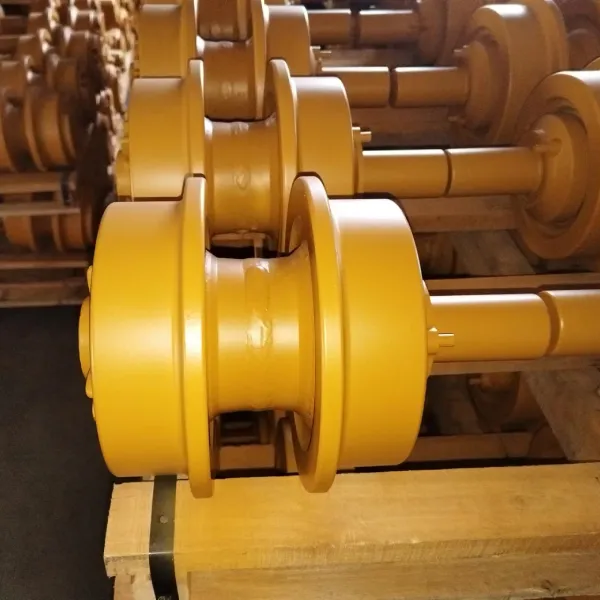
Para apreciar verdaderamente la diferencia en la calidad de fabricación, Ayuda a visualizar la vida de un solo componente.. Let's take a common but critical item: a track roller for a mini excavator's undercarriage. Esta pieza soporta todo el peso de la máquina., rodando a lo largo de la cadena bajo inmensa presión y en condiciones altamente abrasivas. Su creación es un esfuerzo de varias etapas..
El proceso comienza con corte. Una gran barra redonda de acero especificado. (tal vez un 40Cr o una aleación similar) se corta en "espacios en blanco" individuales" de la longitud correcta. Un fabricante de precisión utilizará una sierra de cinta automatizada con tolerancias finas para garantizar que cada pieza en bruto sea uniforme en peso y tamaño., que es el primer paso hacia un producto final equilibrado.
Luego viene forja. La pieza en bruto se calienta a una temperatura precisa. (a menudo alrededor de 1200°C) y colocado en un dado. Luego, una poderosa prensa le da al acero caliente la forma aproximada de un rodillo guía.. Como se discutió anteriormente, Este proceso de forja no se trata sólo de dar forma.; it's about refining the internal grain structure of the steel, impartir una fuerza y resistencia a la fatiga que una pieza fundida o mecanizada a partir de una barra nunca podría lograr.
después de forjar, el rodillo sufre mecanizado en bruto. Aquí, se elimina el exceso de material, y se establecen las dimensiones básicas. A esto le sigue un paso crucial: tratamiento térmico. Para un rodillo guía, Este es a menudo un proceso sofisticado de endurecimiento por inducción.. The roller shell's running surface is heated by an electromagnetic field and then rapidly quenched. Esto crea una situación extremadamente dura., Capa exterior resistente al desgaste y al mismo tiempo deja el núcleo interior del rodillo más resistente y dúctil para absorber cargas de impacto sin agrietarse.. The depth and uniformity of this hardened layer are critical for the roller's lifespan.
Después del tratamiento térmico, la parte entra terminar el mecanizado. Aquí es donde la final, Se cortan dimensiones críticas.. Usando control numérico por computadora de última generación (CNC) tornos y molinos, Los orificios de los cojinetes y las superficies de sellado están mecanizados con tolerancias medidas en micras. (milésimas de milímetro). La precisión aquí es primordial.; Una superficie de sellado mal mecanizada provocará fugas de aceite y fallos prematuros de los rodamientos., que es un destino común para los rodillos inferiores.
Finalmente, asamblea. La carcasa del rodillo está equipada con juntas de alta calidad., casquillos, y un eje central. Está lleno de un grado específico de aceite lubricante y sellado. Un fabricante preocupado por la calidad realizará una prueba de estanqueidad en cada rodillo., a menudo presurizando la unidad ensamblada y sumergiéndola en agua para buscar burbujas reveladoras. El último paso es pintar., que no es sólo por motivos estéticos sino que también proporciona una capa crucial de protección contra la corrosión..
Cuando le pides a un fabricante que detalle este proceso, escuche los detalles. ¿Mencionan el mecanizado CNC?? ¿Hablan de endurecimiento por inducción y profundidad de la caja?? ¿Actuan? 100% Pruebas de fugas en componentes sellados.? Cuanto más detallada y segura sea su explicación, más probable es que dominen el arte de fabricar.
El papel de los puntos de control de calidad
Un proceso de fabricación robusto es aquel que está entrelazado con una verificación constante.. La calidad no es algo que se inspecciona en la pieza al final.; está integrado en cada etapa. Un importante fabricante de piezas para miniexcavadoras opera según este principio., establecer una serie de controles de calidad (control de calidad) Puertas en toda la línea de producción..
Inspección de material entrante: As we've covered, Este es el primer y más importante punto de control.. Implica verificar el MTR y, a menudo, realizar pruebas espectroscópicas o de dureza independientes en el acero en bruto.. Ningún material debe ingresar al piso de producción sin pasar esta puerta..
Inspección en proceso: Este no es un solo evento, sino una serie continua de controles. después de forjar, Se puede cortar una muestra de piezas y grabarlas para inspeccionar el flujo de grano.. Después del mecanizado, Las dimensiones críticas se verifican utilizando instrumentos calibrados como calibradores., micrómetros, y máquinas de medición de coordenadas (CMM). A CMM is a highly advanced device that can measure a part's geometry with incredible accuracy, comparándolo con el plano digital original.
Verificación del tratamiento térmico: Este es un punto de control que merece su propia atención.. Después del tratamiento térmico, Las piezas deben probarse para garantizar que el proceso haya sido exitoso.. Esto implica comprobar la dureza de la superficie. (usando un probador de dureza Rockwell o Brinell) y, para componentes críticos, la "profundidad de la caja": el espesor de la capa endurecida. Esto se puede hacer cortando una pieza de muestra., pulirlo, y medir la capa endurecida bajo un microscopio.
Pruebas no destructivas (NDT): Para componentes de alta tensión como soldaduras de cangilones o vástagos de desgarrador., la inspección visual no es suficiente. Los métodos END se utilizan para encontrar defectos invisibles a simple vista.. Pruebas de partículas magnéticas (MPT), Por ejemplo, Puede revelar grietas superficiales y cercanas a la superficie en materiales ferromagnéticos.. Pruebas ultrasónicas (Utah) Utiliza ondas sonoras para detectar defectos internos como porosidad en piezas fundidas o fusión incompleta en soldaduras.. El uso de END es un sello distintivo de un fabricante dedicado a prevenir fallas en el campo.
Asamblea Final & Pruebas funcionales: Antes de pintar y embalar una pieza, una inspección final confirma que todos los componentes están presentes y correctamente ensamblados. Para conjuntos como rodillos inferiores o mandos finales., Esto incluye pruebas funcionales como la prueba de fugas mencionada anteriormente o la verificación del par de rotación para garantizar que los rodamientos estén instalados correctamente..
Cuando entrevistas a un fabricante, Pídales que planifiquen sus puntos de control de calidad para un producto específico., como un cucharón de excavadora de servicio pesado. donde inspeccionan? ¿Qué miden?? ¿Qué instrumentos utilizan?? ¿Qué sucede cuando se descubre que una pieza no es conforme?? Sus respuestas pintarán una imagen clara de su cultura de calidad..
Comparación de filosofías de fabricación: OEM frente a. Mercado de accesorios
El mundo de las piezas de maquinaria se divide a grandes rasgos en Fabricantes de Equipos Originales. (OEM) repuestos y repuestos. Sin embargo, el "mercado de repuestos" la categoría es amplia, desde proveedores que rivalizan con la calidad del OEM hasta aquellos que producen componentes peligrosamente deficientes. Comprender estas distinciones es clave para tomar una decisión informada. Un fabricante de posventa de alta calidad ofrece una propuesta de valor convincente, a menudo ofrecen calidad de nivel OEM sin el precio asociado.
Aquí hay una tabla para aclarar las diferencias filosóficas y prácticas.:
| Característica | Fabricante OEM | Fabricante de posventa de alta calidad | Fabricante de posventa de baja calidad |
|---|---|---|---|
| Especificación de materiales | Sigue estricto, estándares patentados desarrollados a través de una extensa R&D. | Su objetivo es igualar o superar las especificaciones OEM., A menudo se utilizan aleaciones de alta calidad estándar de la industria.. Transparente sobre la elección de materiales. | A menudo vago o engañoso. Puede usar más barato, sustitutos del acero de menor calidad para reducir costos, lo que lleva a una pobre resistencia al desgaste y fragilidad.. |
| R&D Inversión | muy alto. Diseña piezas al mismo tiempo que la propia máquina.. | Moderado a alto. Se centra en la ingeniería inversa., análisis de materiales, y mejora de procesos. Puede innovar en diseños OEM. | Mínimo a ninguno. Centrado principalmente en la replicación simple mediante copia visual., sin comprensión de la ingeniería subyacente. |
| Proceso de fabricación | Altamente automatizado y controlado por procesos. Importante inversión en maquinaria de primer nivel (P.EJ., CNC, robótica). | Emplea técnicas de fabricación modernas., incluyendo mecanizado CNC y tratamiento térmico controlado. Se centra en la coherencia del proceso.. | A menudo depende de personas mayores., maquinaria manual menos precisa. Puede omitir o ejecutar mal pasos críticos como el tratamiento térmico.. |
| Control de calidad | Extremadamente riguroso, Control de calidad multietapa integrado en toda la línea de producción. Uso extensivo de CMM, NDT, y análisis de laboratorio. | Riguroso, a menudo certificado según ISO 9001. Emplea un sistema de puntos de control de calidad., inspección en proceso, y prueba final. | Inconsistente, a menudo se limita a una comprobación visual básica al final. Carece de trazabilidad e instrumentación de medición adecuada.. |
| Punto de precio | más alto, reflejando el nombre de la marca, R&D costos, y gastos generales de la red de distribuidores. | Competitivo, Ofrece ahorros significativos en comparación con OEM sin comprometer la calidad del núcleo.. Representa un alto valor. | Más bajo, logrado cortando esquinas en los materiales, procesos, y control de calidad. Representa alto riesgo. |
| Garantía & Apoyo | Garantía integral respaldada por una red global de distribuidores. | A menudo ofrece una garantía comparable a la del OEM., con un proceso de reclamos claro. El soporte suele ser directo del fabricante.. | La garantía suele ser limitada, inexistente, o tiene letra pequeña prohibitiva. El soporte es mínimo. |
Su objetivo como comprador es encontrar un proveedor firmemente en esa columna del medio.: un fabricante de piezas de repuesto para miniexcavadoras de alta calidad que ha invertido en los materiales, procesos, y sistemas de calidad para ofrecer un rendimiento confiable y un valor genuino.
Certificaciones de decodificación: ¿Qué ISO? 9001 Realmente significa
en tu busqueda, Con frecuencia encontrará la "ISO 9001" proceso de dar un título. A menudo se presenta como un distintivo de calidad., pero es vital entender lo que representa. ISO 9001 no es una certificación de producto; it is a certification of a company's Sistema de Gestión de Calidad (sistema de gestión de la calidad).
Piénsalo de esta manera: ISO 9001 no garantiza que cada pieza que produce una empresa sea perfecta. En cambio, certifica que la empresa tiene un bien documentado, coherente, y sistema auditable para la gestión de la calidad.. Este sistema incluye procedimientos para:
- Control de documentos y registros..
- Gestionar recursos, incluyendo personal y equipo.
- Todo el proceso de realización del producto., desde el diseño hasta la entrega.
- Medición, análisis, y mejora, incluyendo el manejo de productos no conformes, realización de auditorías internas, e implementar acciones correctivas.
Entonces, ¿Por qué es una ISO? 9001 la certificación es un signo positivo? Porque indica que el fabricante se toma en serio el control del proceso.. Demuestra que tienen definidos sus procedimientos., entrenó a su gente, y tener un mecanismo para identificar y solucionar problemas. Una empresa que ha pasado por el riguroso proceso de lograr y mantener ISO. 9001 Es mucho menos probable que la certificación tenga efectos caóticos., procesos de producción inconsistentes que uno que no tiene (Abisourour et al., 2021). Es un fuerte indicador de profesionalismo y compromiso con resultados repetibles..
Sin embargo, es solo una pieza del rompecabezas. Te dice que tienen un sistema.. Sus preguntas detalladas sobre sus procesos específicos de fabricación y control de calidad le indican qué tan bien ejecutan ese sistema.. La combinación de un sistema de gestión de la calidad certificado y la capacidad de responder con confianza a sus preguntas técnicas profundas es el poderoso doble golpe que está buscando en un fabricante de repuestos para miniexcavadoras de primer nivel..
3. ¿Cuál es el alcance de su investigación?, Desarrollo, y capacidades de ingeniería?
La capacidad de replicar con precisión una pieza es la expectativa básica de cualquier fabricante de repuestos.. Sin embargo, los proveedores verdaderamente excepcionales, los que se convierten en socios estratégicos a largo plazo, no te detengas en la replicación. Poseen una profunda curiosidad por la ingeniería y una sólida capacidad de investigación y desarrollo. (R&D). This capability transforms them from mere copyists into innovators who understand the why behind a part's design, no sólo el qué. Inquiring into a manufacturer's R&Los esfuerzos de D son sondear su núcleo intelectual.. Revela si están siguiendo pasivamente el mercado o trabajando activamente para avanzar en él., Resolviendo problemas del mundo real para clientes que operan en condiciones desafiantes desde el suelo helado de Siberia hasta las arenas abrasivas del Medio Oriente..
Más allá de la replicación: El valor de la ingeniería interna
Un fabricante de baja calidad podría adquirir una pieza OEM, medirlo con calibradores, y crear una copia. Un fabricante de alta calidad con un equipo de ingeniería interno aborda la tarea desde una perspectiva completamente diferente.. Su objetivo no es sólo replicar la forma, sino entender la función y, donde sea posible, para mejorarlo. Este proceso a menudo se llama ingeniería inversa.
Comienza con la adquisición de datos.. En lugar de simples mediciones manuales, una empresa de ingeniería utilizará un escáner láser 3D o una máquina de medición de coordenadas (MMC) para crear un modelo digital de alta precisión de la pieza original. Este plano digital es mucho más preciso y detallado que cualquier dibujo 2D..
Pero el verdadero trabajo de ingeniería ocurre a continuación.. El modelo digital se importa a la Ingeniería Asistida por Computador (CAE) software. Aquí, los ingenieros pueden realizar Análisis de elementos finitos (FEA). Esta es una poderosa herramienta computacional que les permite simular cómo se comportará la pieza bajo tensiones del mundo real.. Pueden aplicar cargas virtuales, presiones, y vibraciones al modelo digital para ver dónde se concentra el estrés. Piense en ello como una prueba de estrés virtual que puede revelar los puntos débiles ocultos de un diseño..
¿Por qué es esto importante?? Un OEM podría diseñar una pieza para que sea "lo suficientemente buena"." para una amplia gama de condiciones promedio. Sin embargo, Un análisis FEA podría revelar que bajo las condiciones específicas de alto estrés de, Por ejemplo, constante rotura de roca con un cincel, una cierta área del portaherramientas es propensa a agrietarse por fatiga. Un fabricante de posventa dirigido por ingeniería puede utilizar esta información para mejorar el diseño.. Podrían agregar un refuerzo, aumentar el radio de una esquina interna afilada para distribuir la tensión de manera más uniforme, o seleccione una aleación de acero más resistente para ese componente específico. No están simplemente copiando la parte.; están resolviendo un problema.
Cuando hablas con un proveedor potencial, pregunte si tienen un departamento de ingeniería interno. ¿Utilizan software para modelado 3D y FEA?? ¿Pueden proporcionar un ejemplo de cómo su análisis de ingeniería condujo a una mejora del producto?? Un fabricante que pueda compartir esta historia está demostrando un nivel de sofisticación que va mucho más allá de la simple imitación.. Están demostrando que piensan como solucionadores de problemas..
Innovación en piezas de desgaste: Adaptarse a las demandas modernas
El mundo de la construcción y la excavación no es estático. Nuevas técnicas, máquinas más potentes, y las aplicaciones cada vez más exigentes requieren que las piezas de desgaste también evolucionen. Un fabricante atrapado en una mentalidad puramente replicativa siempre estará un paso por detrás, producing parts for yesterday's challenges. Un fabricante de piezas para miniexcavadoras con visión de futuro y con una sólida R&El enfoque D está constantemente mirando hacia adelante..
Consideremos la evolución de la cucharón de excavadora. Un cucharón de excavación estándar es una herramienta versátil, pero no es óptimo para todas las tareas. Un fabricante innovador ofrecerá una amplia gama de cucharas especializadas, cada uno diseñado y diseñado para un propósito específico:
- Cucharones para rocas de servicio pesado: Estos no son sólo cucharones estándar fabricados con placa más gruesa.. Están diseñados con un perfil diferente. (a menudo en forma de V) para una mejor penetración en la roca. Presentan un uso extensivo de acero de alta abrasión. (como AR450 o AR500) en todas las superficies de desgaste, cortadores laterales reforzados, y protectores de labios robustos para proteger el borde de ataque.
- Cubos de esqueleto: Se utiliza para separar rocas del suelo en un sitio de demolición o en una cantera.. la r&D aquí se centra en el espaciado de las costillas.. demasiado ancho, y pierdes material valioso; demasiado estrecho, y el balde se atasca constantemente. Se requieren análisis de ingeniería y pruebas de campo para encontrar la geometría óptima para diferentes tipos de materiales..
- Cucharones para zanjas: Estos cucharones estrechos requieren un diseño cuidadoso para garantizar que tengan la fuerza para excavar en condiciones difíciles sin el ancho para proporcionarla.. The engineering challenge is in the structural design of the bucket's "ears" y percha, donde se concentra toda la fuerza.
- Cucharones inclinables: Estos complejos accesorios hidráulicos requieren una combinación de experiencia en ingeniería mecánica e hidráulica para garantizar que sean potentes y confiables..
La innovación también ocurre a nivel micro., en el Herramientas de corte al suelo (CONSEGUIR)—los dientes, adaptadores, y bordes cortantes. R&D en esta área está fuertemente enfocada a la metalurgia.. Los fabricantes experimentan constantemente con nuevas aleaciones de acero y perfiles de tratamiento térmico para crear dientes que ofrezcan un mejor equilibrio de dureza. (para usar) y dureza (para resistencia al impacto). Podrían desarrollar nuevos sistemas de bloqueo que hagan que el cambio de dientes sea más rápido y seguro para los operadores en el campo..
Pregúntele a un proveedor potencial: "¿Qué nuevos productos o mejoras de productos ha introducido en los últimos dos años??" Their answer will tell you if they are an active participant in the industry's evolution or a passive observer. Busque un proveedor cuyo catalogo de repuestos disponibles muestra una diversidad pensada más allá de los simples artículos de reemplazo estándar.
El circuito de retroalimentación: Cómo la experiencia del cliente impulsa la mejora del producto
La R más valiosa&El recurso D para cualquier fabricante no está en un laboratorio.; it's on the job sites of their customers. Las experiencias diarias de los operadores en Corea, Australia, Rusia, y África son un tesoro de datos sobre cómo funcionan y fallan las piezas en el mundo real.. Un fabricante verdaderamente excelente tiene un sistema formal para capturar, analizando, y actuar en base a esta retroalimentación.
Este es el concepto de la bucle de retroalimentación del cliente. Funciona así:
- Recopilación de datos: El fabricante busca activamente comentarios.. Esto puede ser a través de su equipo de ventas., líneas de soporte técnico, proceso de reclamaciones de garantía, o realizando visitas periódicas a los sitios de los clientes. They don't wait for complaints; preguntan proactivamente, "¿Cómo se desempeña la pieza?? ¿Qué desafíos estás enfrentando??"
- Análisis: la retroalimentación, especialmente en lo que respecta a fallas o desgaste prematuro, no es solo manejado por un agente de servicio al cliente. Se envía directamente al departamento de ingeniería.. Es posible que se solicite la devolución de una pieza fallida para realizar un análisis de falla completo, incluyendo pruebas metalúrgicas y exámenes microscópicos., para determinar la causa raíz.
- Acción: Los conocimientos adquiridos a partir de este análisis se utilizan luego para impulsar un cambio real.. Si un modelo específico de zapata muestra un desgaste acelerado en los suelos abrasivos de una región en particular, Los ingenieros podrían decidir cambiar la especificación del acero o modificar el perfil de tratamiento térmico para esa pieza.. Si los clientes informan dificultades para instalar un determinado sello, Los ingenieros podrían rediseñar la pieza o crear una guía de instalación más detallada..
- Comunicación: El circuito se cierra cuando el fabricante se comunica con la base de clientes.. Esto podría realizarse a través de un boletín técnico que explique la mejora o simplemente convirtiendo el producto mejorado en el nuevo estándar..
Este proceso transforma la relación cliente-proveedor de una simple transacción a una asociación.. El fabricante no sólo vende acero; están vendiendo una solución que mejora continuamente. Al investigar a un proveedor, Pídales que describan su proceso para manejar un informe de falla de campo.. quien se involucra? ¿Qué análisis se hace?? ¿Pueden dar un ejemplo de una mejora del producto que haya sido resultado directo de los comentarios de los clientes?? Un fabricante que adopta este circuito de retroalimentación es aquel que está comprometido con el éxito a largo plazo de sus clientes.. Entienden que su propio éxito está intrínsecamente ligado al rendimiento y la durabilidad de sus productos en los entornos diversos y exigentes en los que se ponen a prueba..
4. ¿Cómo se garantiza la compatibilidad y el ajuste de las piezas entre diferentes marcas y modelos??
en un mundo ideal, cada pieza encajaría perfectamente en su lugar, cada vez. En la compleja realidad de la maquinaria pesada, logrando este "ajuste perfecto"" Es un importante desafío logístico y de ingeniería.. El mercado de las miniexcavadoras está especialmente fragmentado, con decenas de fabricantes (como kubota, Yanmar, Gato montés, Rodillo guía Caterpillar, Komatsu, Hitachi, y doosan) cada uno produce numerosos modelos con especificaciones únicas que pueden cambiar de un año de producción al siguiente. Para un fabricante de repuestos para miniexcavadoras del mercado de accesorios, Garantizar el ajuste no es una cuestión baladí.; Es una competencia central que separa a los proveedores confiables de las fuentes de frustración y tiempo de inactividad.. Esta pregunta prueba la precisión de sus datos., el rigor de sus procesos, y la fuerza de su garantía.
El desafío de un mercado fragmentado
Para comprender la magnitud del desafío, Considere el tren de aterrizaje de una sola miniexcavadora de 5 toneladas.. Es un sistema complejo de componentes entrelazados.: docenas de eslabones de vía que forman la cadena, múltiples rodillos inferiores y rodillos superiores, una rueda guía delantera, y una rueda dentada trasera. Ahora, Imagine que las especificaciones para el paso de la cadena de oruga (la distancia de un pin al siguiente), el diámetro de los rodillos, el orificio de la rueda loca, y el perfil de los dientes de la rueda dentada pueden variar ligeramente entre una máquina fabricada por la marca A y una fabricada por la marca B., incluso si están en la misma categoría de peso. Peor, La marca A podría cambiar el diseño de su rueda dentada entre sus 2023 modelo y su 2025 modelo.
Un fabricante que intenta servir al mercado global debe lidiar con esta enorme matriz de variaciones.. Una cadena de oruga que se adapta a un Kubota KX057-4 no se ajustará a un Yanmar ViO55-6A. Un pasador de articulación del cucharón para un Bobcat E50 puede tener un milímetro de diámetro diferente al de un Cat 305. Estas pequeñas desviaciones son la diferencia entre una instalación sin problemas y un problema costoso.. Una pieza mal ajustada puede provocar:
- Fallo de instalación: The part simply won't go on, lo que lleva a un tiempo de inactividad inmediato mientras se obtiene la pieza correcta. Esto es especialmente doloroso para los clientes en ubicaciones remotas., como sitios mineros en África u operaciones agrícolas en el sudeste asiático, donde el envío puede tardar semanas.
- Desgaste acelerado: Una rueda dentada con un perfil de diente ligeramente incorrecto podría engancharse incorrectamente con los bujes de la cadena de oruga.. Si bien puede parecer que funciona inicialmente, este desajuste causará una rápida, desgaste destructivo tanto de la nueva rueda dentada como de la cadena de oruga existente, convertir el reemplazo de un solo componente en una reconstrucción completa del tren de rodaje.
- Fallo catastrófico: Un pasador o perno mal ajustado puede crear concentraciones de tensión imprevistas., lo que lleva a una fractura repentina de un componente bajo carga, lo que supone un grave riesgo para la seguridad.
Por eso es inaceptable un enfoque casual de la compatibilidad.. Un fabricante no puede confiar simplemente en catálogos antiguos o comparaciones visuales. Deben tratar el ajuste como una disciplina de precisión..
Aprovechamiento de los datos OEM y la medición de precisión
Entonces, ¿Cómo puede un fabricante de primer nivel superar este desafío?? Construyen una "biblioteca de accesorios," una base de datos amplia y meticulosamente mantenida de especificaciones OEM. Esto no es algo que se pueda comprar en el mercado.; Es un activo estratégico construido a lo largo de años de arduo trabajo..
La base de esta biblioteca es adquisición de datos. El proceso para una pieza nueva podría verse así:
- Adquirir la pieza OEM: El fabricante obtiene un componente OEM genuino para el modelo de máquina específico que desea respaldar..
- 3Escaneo digital: La pieza se escanea mediante un escáner láser 3D de alta resolución.. Este método sin contacto captura la geometría externa completa de la pieza., creando una "nube de puntos" de millones de puntos de datos.
- Medición de MMC: Para puntos de interfaz críticos, como los orificios de los rodamientos, agujeros de alfiler, superficies de montaje, y dientes de engranaje: una máquina de medición de coordenadas (MMC) se utiliza. The CMM's tactile probe can measure these features with sub-micron accuracy, capturar las dimensiones precisas y las tolerancias geométricas (como concentricidad y perpendicularidad) que un escáner láser podría pasar por alto.
- Crea el "oro" Modelo CAD: Los datos de escaneo y las mediciones de la CMM se combinan para crear un diseño asistido por computadora en 3D de alta precisión. (CANALLA) modelo. This is the manufacturer's "golden" referencia, el maestro digital con el que se compararán todas las piezas de producción.
Este enfoque basado en datos es fundamentalmente diferente de la simple copia.. Capta la intención de diseño de los ingenieros originales.. The manufacturer's engineering team will maintain this database, actualizándolo constantemente a medida que se lanzan nuevos modelos de máquinas. Cuando solicita un desgarrador para su miniexcavadora específica, no están simplemente sacando una pieza genérica del estante. They are matching your machine's make, modelo, y número de serie en su base de datos para garantizar que el soporte de montaje, dimensiones del pasador, y las conexiones hidráulicas coinciden exactamente.
Pregúntele a un proveedor potencial: "¿Cómo se obtienen los datos dimensionales de las piezas que fabricamos?? ¿Qué tecnología utilizas para medir y verificar estas dimensiones??" Busque respuestas que incluyan términos como "escaneo 3D," "CMM," y "base de datos de modelos CAD"."
La "garantía de ajuste": Qué buscar en una garantía
Un fabricante que confía en sus datos y sus tolerancias de producción respaldará su producto con una garantía de ajuste clara e inequívoca.. This guarantee is one of the most powerful indicators of a supplier's quality and customer focus. Sin embargo, no todas las garantías son iguales. Esto es lo que debe buscar en la letra pequeña:
- Claridad: La política debe ser simple.. Debe indicar que si la pieza no se ajusta a la máquina especificada para la que se vendió, el fabricante rectificará la situación.
- Alcance del remedio: ¿Qué promete hacer el fabricante?? Una buena garantía ofrecerá un reembolso completo o, más importante, un envío acelerado de la pieza correcta a su cargo. Las mejores pólizas pueden incluso ofrecer algún tipo de compensación por el tiempo de inactividad causado por su error., aunque esto es menos común.
- Cobertura de costos: ¿Quién paga el envío?? Una garantía sólida indicará que el fabricante cubre el costo de envío de devolución de la pieza incorrecta y el costo de envío de la pieza nueva.. Esta es una consideración importante para los clientes internacionales., donde los costos de envío pueden ser sustanciales.
- Simplicidad del proceso: ¿Cómo se hace un reclamo?? Debería ser un proceso sencillo que implique ponerse en contacto con su soporte técnico., Proporcionando los detalles de la máquina y fotos del problema de instalación.. Un complicado, El proceso de varios pasos con exceso de papeleo es una señal de alerta..
La existencia de una sólida garantía de instalación le dice dos cosas. Primero, Demuestra que el fabricante ha invertido mucho en sus datos y control de calidad., porque tienen confianza financiera en que los problemas de instalación serán raros. Segundo, se nota que respetan a sus clientes' tiempo y negocios, y estamos preparados para asumir la responsabilidad cuando ocurre un error. Le quita el riesgo de recibir una pieza incorrecta, el comprador, volver a ellos, el fabricante.
Una segunda tabla comparativa: Factores de riesgo de instalación
Para resumir los diferenciadores clave, consider this table when evaluating a potential supplier's approach to compatibility:
| Factor | Fabricante de bajo riesgo | Fabricante de alto riesgo |
|---|---|---|
| Fuente de datos | Base de datos meticulosamente mantenida creada a partir del escaneo de piezas OEM (3D) y medición CMM. | Se basa en catálogos obsoletos, copia visual de fotos, o medidas simples a mano. |
| Ingeniería | Equipo de ingeniería interno que crea y verifica modelos CAD detallados para cada pieza.. | No hay ingeniería dedicada para el montaje.. La producción se basa en dibujos simples o copias físicas.. |
| Tolerancias de producción | Estrechamente controlado mediante mecanizado CNC y calibración regular del equipo.. | Tolerancias flojas debido a procesos manuales o maquinaria mal mantenida., lo que lleva a una variación entre partes. |
| Verificación | Las piezas de producción se controlan periódicamente con respecto a los "golden" Modelo CAD utilizando CMM o accesorios de precisión. | La inspección se limita a indicadores básicos de pasa/no pasa o controles visuales., si sucede en absoluto. |
| Garantía de instalación | Claro, integral, y amigable con el cliente. Cubre los costos de envío de devolución y reemplazo.. | Impreciso, lleno de exclusiones, o inexistente. El comprador asume el riesgo y el coste de una pieza incorrecta.. |
| Apoyo técnico | Dotado de técnicos expertos que pueden solucionar problemas de instalación según los números de serie y las especificaciones de la máquina.. | Manejado por personal de ventas que carece de conocimientos técnicos profundos y no puede brindar soporte efectivo.. |
Al final, a manufacturer's approach to fitment is a proxy for their overall attention to detail. Una empresa que es meticulosa a la hora de garantizar que una pieza encaje probablemente también lo será con la calidad de su acero., la precisión de su tratamiento térmico, y la integridad de sus soldaduras.
5. ¿Cuál es su estrategia global de logística y cadena de suministro?, Especialmente para mi región?
Un componente perfectamente fabricado no sirve de nada si no puede entregarse en el lugar de trabajo a tiempo., confiable, y rentable. Para las empresas que operan en mercados geográficamente diversos y a menudo desafiantes, desde las vastas extensiones del interior de Australia hasta los bulliciosos puertos del sudeste asiático o las remotas zonas industriales de Rusia, la logística no es una idea de último momento.. Es un elemento central de la propuesta de valor.. Cuando le pregunta a un fabricante de piezas de miniexcavadora sobre su cadena de suministro, está evaluando su capacidad para operar a escala global. Usted está evaluando su comprensión de las realidades regionales y su preparación para ser un socio confiable., no sólo una fábrica lejana.
Desde la fábrica hasta el lugar de trabajo: Navegando por el envío global
El viaje de una pieza pesada de acero, como un cucharón de excavadora o un conjunto de orugas del tren de aterrizaje, desde una fábrica en Asia hasta un cliente en Medio Oriente es un ballet complejo de transporte, documentación, y regulación. Un fabricante sofisticado comprende y gestiona esta complejidad en nombre de sus clientes..
El principal medio de transporte para este tipo de mercancías pesadas es transporte marítimo. Es el método más económico., pero requiere una planificación cuidadosa. Un fabricante debe tener relaciones sólidas con los transportistas y las líneas navieras para asegurar espacio en los buques y negociar tarifas competitivas.. Deberían poder proporcionarle estimaciones claras de los tiempos de tránsito hasta el puerto más cercano..
Para necesidades más urgentes, carga aérea es una opción, pero tiene un costo significativamente mayor. Un buen proveedor puede proporcionar cotizaciones para ambos., permitiéndole tomar una decisión informada basada en la urgencia de su necesidad versus el costo.
Más allá del transporte en sí se encuentra el laberinto de aduanas y documentacion. Cada país tiene su propio conjunto de reglas para las importaciones., incluyendo los documentos requeridos (como el conocimiento de embarque, Factura comercial, y lista de embalaje), derechos de importación, e impuestos (como IVA o GST). Un proveedor global experimentado tendrá un departamento de exportación experto en preparar esta documentación con precisión.. Los errores en el papeleo pueden provocar retrasos prolongados y costosos en la aduana. También deberían poder proporcionar el HS correcto. (Sistema Armonizado) códigos para sus productos, que son esenciales para la clasificación aduanera y el cálculo de derechos. Pregúntales: "¿Qué apoyo brindan para el despacho de aduana en mi país??" Su respuesta revelará su nivel de experiencia internacional..
La importancia de los centros de distribución regionales
Para un cliente en Dubai o Singapur, a manufacturer's promise of "fast shipping" No tiene sentido si las piezas deben viajar primero durante cuatro semanas en un barco desde una sola fábrica en el noreste de Asia.. El tiempo de entrega (el tiempo total desde que se realiza un pedido hasta la recepción de la mercancía) es un factor crítico para administrar su inventario y responder a fallas inesperadas de la máquina..
Esta es la razón por la que los fabricantes más visionarios adoptan una modelo de cubo y radios para su distribucion. En lugar de enviar cada pedido individual directamente desde la fábrica (el modelo de conversación con el cliente), Establecen centros de distribución regionales o almacenes en ubicaciones estratégicas. (los centros). Por ejemplo:
- Un centro en Dubái (Zona franca de Jebel Ali) podría servir eficientemente a todo el Medio Oriente y partes de África.
- Un centro en Singapur o Malasia (Puerto Klang) podría reducir drásticamente los plazos de entrega para los florecientes mercados de la construcción en todo el Sudeste Asiático (Indonesia, Tailandia, Vietnam).
- Un centro europeo, tal vez en Rotterdam o Amberes, podría servir a Rusia, los países de la CEI, y el norte de África.
- una presencia en Australia (P.EJ., Perth o Brisbane) would be a massive advantage for serving the continent's sprawling mining and construction sectors.
Almacenando piezas de gran volumen en estos centros regionales, un fabricante puede reducir los plazos de entrega de semanas a días. Un pedido de un cliente en Qatar podría cumplirse desde el centro de Dubái en 2-3 días, en vez de 3-4 semanas desde la fábrica. Esto tiene un profundo impacto en su negocio.. Le permite operar con un inventario más eficiente., liberar flujo de caja. Significa que una máquina caída puede volver a funcionar en cuestión de días., no semanas, ahorrando miles en ingresos perdidos.
Al investigar a un proveedor, esta es una pregunta poderosa: "¿Tiene algún socio de almacenamiento o distribución ubicado en o cerca de mi región??" Un "si" Esta pregunta puede ser una ventaja competitiva significativa y una razón de peso para asociarse con ese fabricante..
Envasado y Conservación: Proteger la inversión
Un rodillo inferior que llega oxidado o un cucharón abollado por moverse en un contenedor es una entrega fallida., independientemente de lo bien que haya sido fabricado. La etapa final del proceso de producción, el embalaje, es un paso de calidad fundamental., especialmente para mercancías que emprenden un largo y arduo viaje a través del océano.
Las piezas pesadas de acero presentan desafíos de embalaje únicos. son densos, a menudo tienen bordes afilados, y son susceptibles tanto al daño físico como a la corrosión.. Un fabricante de piezas para miniexcavadoras centrado en la calidad tendrá un protocolo de embalaje detallado:
- Protección contra la corrosión: Las piezas de acero que viajan por mar están expuestas a una humedad, ambiente salado durante semanas. Pintarlos no siempre es suficiente. Los proveedores de calidad aplicarán una capa de aceite o cera antioxidante.. Para terminar, superficies sin pintar como orificios de rodamientos, podrían usar VCI (Inhibidor de corrosión por vapor) papel o bolsas, que emiten un vapor inofensivo que crea una capa molecular protectora en la superficie del metal.
- Protección física: Las piezas individuales deben protegerse contra golpes entre sí.. Los componentes pequeños pueden estar empaquetados individualmente.. Los artículos más grandes, como rodillos y ruedas guía, deben tener protectores en las superficies mecanizadas..
- Embalaje y paletizado: Luego, las piezas se embalan de forma segura en cajas de madera hechas a medida o se sujetan a palés de alta resistencia.. El objetivo es crear una sólida, bloque estable que no se moverá ni se romperá durante el manejo o en mares agitados. La madera utilizada para estas cajas a menudo debe fumigarse y certificarse según la NIMF. 15 estándares para cumplir con las regulaciones internacionales de cuarentena: otro detalle que un exportador experimentado manejará automáticamente.
Look at a manufacturer's product photos. ¿Muestran piezas cuidadosamente dispuestas en materiales resistentes?, cajas bien construidas? ¿O simplemente están apilados sin apretar sobre una plataforma?? Solicite fotos de cómo se empaquetan sus productos para exportación.. Es un pequeño detalle que dice mucho de su profesionalidad y respeto por el producto que estás adquiriendo..
Entendiendo los Incoterms: ¿Quién es responsable de qué??
Cuando recibe una cotización de precio de un proveedor internacional, irá acompañado de un código de tres letras como "FOB," "CIF," o "EXW." Estos son Incoterms, un conjunto de reglas mundialmente reconocidas que definen las responsabilidades del vendedor y del comprador en una transacción internacional. Comprenderlos es vital para conocer el costo total en destino y sus riesgos..
- EXW (Ex fábrica): Este término impone a usted la máxima responsabilidad., el comprador. El precio cotizado es simplemente el precio de los productos en la puerta de fábrica.. Usted es responsable de organizar y pagar todo lo demás.: transporte desde la fábrica, aduanas de exportación, transporte marítimo, seguro, aduanas de importación, y entrega final. Esta opción le brinda control pero también requiere una importante experiencia en logística..
- ENGAÑAR (Gratis a bordo): Este es uno de los términos más comunes.. El fabricante es responsable de todos los costos y procesos para cargar las mercancías en el barco en el puerto de origen designado.. A partir de ese momento, usted es responsable del transporte marítimo, seguro, y todos los costos y riesgos posteriores.
- CIF (Costo, Seguro, y Flete): Con CIF, el fabricante asume más responsabilidad. Ellos organizan y pagan el costo de los bienes., El transporte marítimo hasta el puerto de destino., y el seguro para cubrir las mercancías durante el tránsito. Your responsibility begins when the goods arrive at your country's port. Debes encargarte del despacho de aduanas., derechos de importación, y transporte desde el puerto hasta su ubicación.
Un buen fabricante será flexible y podrá cotizarle precios basados en diferentes Incoterms.. También deberían poder explicar claramente qué significa cada término para usted.. Este enfoque educativo demuestra que no sólo están intentando realizar una venta., pero estamos tratando de construir una relación comercial transparente y comprensible.. Le permite calcular con precisión su costo total de descarga y evitar gastos sorpresa., que es la base de una asociación de suministro saludable y sostenible.
6. ¿Puede proporcionar pruebas de rendimiento y durabilidad a través de estudios de casos y testimonios??
Las reclamaciones son fáciles de hacer. "Durable," "de larga duración," y "alto rendimiento" son palabras que fluyen libremente en los folletos de marketing. Pero para el comprador exigente de repuestos para equipos pesados, estas palabras son huecas sin pruebas. La sexta pregunta crucial que debe hacerle a un posible fabricante de repuestos para miniexcavadoras es buscar evidencia tangible de que sus productos funcionan como se anuncia en el implacable laboratorio del mundo real.. Esta investigación traslada la conversación del ámbito teórico de las especificaciones y procesos al ámbito práctico de los resultados.. Exige que el fabricante fundamente sus afirmaciones con datos, historias, y referencias que sean relevantes para su contexto operativo específico.
Más allá de las afirmaciones de marketing: La necesidad de pruebas
En cualquier industria, Hay una brecha entre lo que se promete y lo que se cumple.. En el mundo de la maquinaria de construcción., esa brecha se puede medir en miles de dólares de gastos no planificados y pérdida de productividad. Su tarea como comprador es cerrar esa brecha con información antes de comprometer su capital.. Debe cultivar un escepticismo saludable hacia el lenguaje de marketing sin fundamento y, en su lugar, adoptar un enfoque basado en evidencia..
Piensa en ti mismo como un investigador.. El fabricante argumenta que su producto, ya sea un cubo, un destripador, o un conjunto de componentes del tren de rodaje, es una inversión inteligente. Tu trabajo es contrainterrogar sus pruebas.. Esta evidencia puede tomar varias formas., pero siempre debe ser específico y verificable. Una declaración vaga como "nuestras piezas duran más" no es evidencia. Un informe documentado que demuestre que sus enlaces de seguimiento lograron 4,500 horas de funcionamiento en arena de sílice abrasiva antes de necesitar reemplazo, while a competitor's product lasted only 3,000 horas en las mismas condiciones, es evidencia. Es su derecho y su responsabilidad solicitar este nivel de prueba..
Análisis de un estudio de caso significativo
Un estudio de caso bien construido es una de las formas de evidencia más poderosas que un fabricante puede proporcionar.. Es una narrativa de performance., una historia con un comienzo (el problema), un medio (la solución), y un final (el resultado). Sin embargo, No todos los estudios de caso son iguales.. Aquí se explica cómo analizar un estudio de caso para determinar su valor.:
El contexto es clave: Un estudio de caso significativo comenzará estableciendo el escenario en detalle..
- Máquina: ¿Cuál era la marca y modelo exacto de la miniexcavadora?? (P.EJ., una oruga 308 CR)
- Solicitud: ¿Qué estaba haciendo la máquina?? (P.EJ., zanjas, demolición, movimiento de tierras a granel, rompiendo rocas).
- Condiciones de funcionamiento: Este es el elemento más importante.. ¿El ambiente era muy abrasivo? (P.EJ., cantera de arena y grava en los Emiratos Árabes Unidos)? ¿Fue de alto impacto? (P.EJ., Demolición de hormigón armado en Seúl)? ¿Fue de bajo impacto pero altamente corrosivo? (P.EJ., trabajando en pantanos en Indonesia)? Las condiciones dictan los patrones de desgaste y los modos de falla..
- Ubicación: Conocer la ubicación geográfica le ayuda a evaluar su relevancia para sus propias operaciones..
La comparación: Un estudio de caso es más poderoso cuando incluye una comparación directa.. Esto podría ser un "antes y después"" guión, comparing the performance of the manufacturer's part against the part it replaced (which could be an OEM part or a competitor's aftermarket part). La métrica de comparación debe ser clara.. Para piezas de desgaste, la métrica universal es costo por hora.
- Costo por hora = (Precio de compra de la pieza) / (Horas totales de servicio logradas)
Los datos: Los resultados deben presentarse con datos cuantificables., no sólo descripciones cualitativas.
- Vida útil: cuantas horas duro la parte? This should be measured using the machine's hour meter.
- Intervenciones de mantenimiento: Were there any unexpected maintenance needs during the part's life?
- Medidas: Para piezas de desgaste, Un buen estudio de caso podría incluir mediciones de desgaste tomadas a intervalos establecidos., mostrando la tasa de pérdida de material a lo largo del tiempo.
Let's imagine a case study for a set of bucket teeth. Un estudio de caso débil diría: "Un cliente en Australia utilizó nuestros dientes y quedó muy satisfecho con su larga vida útil." Un estudio de caso sólido afirmaría: "Una operación minera de oro cerca de Kalgoorlie, Australia Occidental, instaló nuestros dientes de la serie X-400 en su excavadora de 8 toneladas utilizada para limpiar abrasivos, sobrecarga rica en cuarzo. Los dientes OEM anteriores tenían una vida útil promedio de 350 horas a un costo de $80 por diente, resultando en un costo por hora de $0.23. Nuestros dientes X-400, en condiciones idénticas, alcanzó una vida útil promedio de 500 horas. A un precio de compra de $90 por diente, nuestro costo por hora fue $0.18. Esto representa un 22% Reducción de los costes operativos de los dientes del cucharón." Este nivel de detalle es creíble., irresistible, y le permite realizar su propio análisis.
El valor de los testimonios regionales específicos
Si bien los estudios de caso proporcionan datos concretos, Los testimonios ofrecen una perspectiva humana.. Hablan de los aspectos cualitativos de una relación con un proveedor.: facilidad de instalación, servicio al cliente, y satisfacción general. Sin embargo, al igual que con los estudios de caso, La relevancia de un testimonio depende en gran medida de su contexto..
Para una empresa constructora en Johannesburgo, Sudáfrica, una reseña entusiasta de un contratista en Noruega tiene un valor limitado. Sus entornos operativos: el clima, condiciones del suelo, practicas laborales, y las realidades de la cadena de suministro, son completamente diferentes. Lo que esa empresa sudafricana necesita es escuchar a otra empresa que opere a gran altura., condiciones rocosas del Highveld.
Un astuto fabricante mundial de piezas para miniexcavadoras lo entiende. No tendrán simplemente un "Testimonios" genérico" página en su sitio web. Podrán brindarle referencias o testimonios de clientes en su región específica..
- si estas en Rusia, ¿Quieres saber de alguien que haya utilizado las piezas de su tren de aterrizaje durante un invierno siberiano?.
- Si estas en el Medio Oriente, Quiere un testimonio de una empresa que pueda dar fe de cómo los sellos y los componentes hidráulicos resisten temperaturas extremas y finas., polvo abrasivo.
- si estas en Sudeste Asiático, ¿Quieres saber cómo resisten sus pinturas y revestimientos la corrosión de un ambiente caliente?, húmedo, y atmósfera cargada de sal.
Cuando pides testimonios, ser específico: "¿Pueden proporcionarme una referencia o un testimonio de un cliente en mi país?, o en un país con un entorno operativo similar?" Un fabricante con una base de clientes global profunda y diversa podrá cumplir con esta solicitud.. Su capacidad para hacerlo es una prueba contundente de que sus productos no solo están diseñados en un laboratorio, sino que han demostrado funcionar en los variados y exigentes lugares de trabajo del mundo..
Cómo detectar un testimonio falso o de bajo valor
En la era digital, es fácil fabricar críticas positivas. Como comprador inteligente, debes aprender a reconocer los signos de comentarios no auténticos o de bajo valor.
- Lenguaje demasiado genérico: Frases como "Gran producto, envío rápido!" o "Cinco estrellas, muy recomendable!" sin ningún detalle específico suelen ser signos de reseñas falsas o de poco esfuerzo.
- Falta de detalles verificables: Los testimonios auténticos suelen incluir detalles. La persona podría mencionar su tipo de máquina., el trabajo que estaban haciendo, o una característica particular de la parte que apreciaron. A menudo nombran su empresa y ubicación.. Un testimonio de "John S." es mucho menos creíble que uno de "John Smith, Administrador del sitio, ABCConstrucción, Perth, WASHINGTON."
- "Foto de archivo" Onda: Be wary of testimonials accompanied by generic stock photos of excavators rather than real pictures from the customer's job site.
- Exclusivamente Positivo: Una colección nada más que impecable., Las reseñas de cinco estrellas pueden resultar sospechosas.. Las experiencias reales de los productos tienen matices. A credible manufacturer might even share a story about how they resolved a customer's problem, que puede ser más poderoso que una simple reseña entusiasta.
Su búsqueda de pruebas es un paso fundamental de diligencia debida. Le protege de promesas de marketing infladas y fundamenta su decisión en la base del rendimiento del mundo real.. Un fabricante que de manera voluntaria y transparente proporciona estudios de casos detallados y testimonios relevantes es un fabricante que confía en su producto y respeta su necesidad de pruebas verificables..
7. ¿Qué nivel de soporte posventa y experiencia técnica ofrece??
La relación con un fabricante de piezas de miniexcavadora no debe terminar cuando se procesa su pago o cuando el envío llega a su puerto.. La entrega del componente marca el comienzo de una nueva, fase a largo plazo de la asociación. The quality of this post-purchase relationship is defined by the manufacturer's after-sales support and technical assistance. This final question probes the supplier's commitment to your success long after the initial transaction. Explora sus políticas de garantía., la accesibilidad y conocimiento de su equipo técnico, y los recursos que proporcionan para garantizar que sus productos se utilicen correctamente y ofrezcan el máximo valor.. Un fabricante superior ve la venta como el comienzo de una colaboración, no es la conclusión de un trato.
La asociación comienza después de la venta
Imagina este escenario: un nuevo, Llega la transmisión final del mercado de accesorios para una miniexcavadora que está parada en un trabajo crítico. Su mecánico comienza la instalación pero descubre que los accesorios de la manguera hidráulica son ligeramente diferentes a los de la unidad anterior.. El manual de instalación está mal traducido., documento de una sola página. La máquina pierde dinero cada hora que permanece inactiva. llamas al proveedor. Ahora, Te enfrentas a una coyuntura crítica que revela el verdadero carácter del fabricante..
- Escenario A (Mal apoyo): Se le dirige a un centro de llamadas genérico.. El agente no entiende qué es un disco final y sólo puede leer un guión.. Prometen que alguien te devolverá la llamada. Pasan horas o días.
- Escenario B (Excelente soporte): Está conectado directamente a un departamento de soporte técnico.. La persona en la línea es un técnico o ingeniero experimentado.. usted explica el problema, providing the machine's model and serial number. Inmediatamente reconocen el problema., explicando que para ese rango de números de serie específico, se requiere un adaptador, que habían incluido en el envío. Guían a tu mecánico hasta el pequeño, pieza embolsada por separado, y en cuestión de minutos, la instalación está nuevamente en marcha.
Ésta es la diferencia entre un simple proveedor y un verdadero socio. Un socio comprende que su responsabilidad se extiende a garantizar que la pieza se instale correctamente y funcione como se espera.. Han invertido en una infraestructura de soporte para resolver problemas de manera rápida y eficiente porque entienden que su tiempo de actividad es su máxima medida de éxito..
Evaluación del conocimiento técnico del equipo de soporte
La eficacia de un sistema de soporte posventa depende enteramente del conocimiento y el empoderamiento de su gente.. Al investigar a un posible fabricante de piezas de miniexcavadora, es necesario evaluar la profundidad de su banco técnico.
Un diferenciador clave es la separación de ventas y soporte técnico.. Mientras que un vendedor es experto en precios y logística, rara vez están equipados para diagnosticar un problema mecánico o hidráulico complejo. Un fabricante líder mantiene un equipo de soporte técnico dedicado compuesto por personas con experiencia práctica.: ex mecánicos, técnicos de servicio de campo, o ingenieros.
Cuando tenga una pregunta técnica, ya sea antes o después de una compra, debe tener una línea directa con estos expertos.. Su función no es venderte algo., pero para resolver tu problema. Deberían poder:
- Responda preguntas detalladas sobre instalación.
- Ayuda a solucionar un problema de rendimiento (P.EJ., "¿Por qué mi nuevo cubo no se curva con toda su fuerza??").
- Ayudar en el análisis de fallas., Comprender los patrones de desgaste para ofrecer consejos sobre cómo extender la vida útil de los componentes..
- Proporcionar especificaciones técnicas que pueden no estar en el catálogo general., como valores de precarga de rodamientos o ajustes de presión hidráulica.
Una forma sencilla de probar esto es llamar al fabricante con una pregunta técnica hipotética antes de realizar un pedido.. Por ejemplo: "Estoy considerando su cincel para mi Doosan DX63-3. ¿Cuál es la presión de funcionamiento recomendada?, y cuales son las señales de que el acumulador necesita recargarse?" La calidad de la respuesta que recibe: su precisión., claridad, y la confianza con la que se entrega: le dirá todo lo que necesita saber sobre su compromiso con la excelencia técnica..
Políticas de garantía: La letra pequeña importa
A warranty is a manufacturer's written promise about the quality of their product. Es una forma de seguro para ti., el comprador. Sin embargo, el valor de ese seguro está determinado enteramente por los términos y condiciones: la "letra pequeña"." Una "garantía de 12 meses" El banner puede ocultar una multitud de exclusiones que lo hacen casi inútil..
Al evaluar una póliza de garantía, busca las respuestas a estas preguntas:
- ¿Cuál es el período de garantía?? ¿Se mide en meses?, años, o horas de servicio? Para piezas de desgaste, Una garantía basada en horas suele ser más relevante que una basada en el tiempo..
- Qué está cubierto? ¿La garantía cubre sólo "defectos de materiales y mano de obra"?? Esta es una limitación estándar y razonable.. Tenga cuidado con las garantías que tienen largas listas de exclusiones específicas.
- Lo que no está cubierto? Presta mucha atención a las exclusiones.. Las exclusiones comunes y justas incluyen la instalación incorrecta, falta de mantenimiento de rutina, sobrecarga de aplicaciones (Usar la pieza más allá de sus límites de diseño.), y desgaste normal. Las exclusiones injustas pueden ser demasiado amplias, como "nulo si se usa en condiciones abrasivas," lo que descalificaría la mayor parte del uso en el mundo real de una excavadora.
- Cual es el remedio? Si una pieza falla bajo garantía, ¿Qué hará el fabricante?? ¿Repararán la pieza?, reemplazarlo, u ofrecer un crédito? Una buena garantía proporciona una pieza de repuesto..
- ¿Están cubiertos los costos indirectos?? Este es un gran diferenciador. Una garantía estándar solo cubrirá el costo de la pieza en sí.. Excluirá explícitamente el coste de la mano de obra para retirar la pieza antigua e instalar la nueva., El costo del tiempo de inactividad de la máquina., y cualquier daño que la pieza defectuosa haya podido causar a otros componentes. Si bien la cobertura total de daños consecuentes es poco común fuera de las garantías OEM, Algunos fabricantes de posventa de primer nivel pueden ofrecer una contribución a los costos laborales como señal de buena voluntad..
- ¿Qué es el proceso de reclamación?? ¿Es sencillo?? Típicamente, Debería implicar ponerse en contacto con el equipo de soporte técnico., proporcionando prueba de compra, the machine's service hours, y evidencia del fracaso (fotos, vídeos, o, a veces, devolver la pieza para su inspección.). Un proceso que requiere excesiva burocracia es una señal de alerta.
Un transparente, justo, y una política de garantía de fácil comprensión es una señal de que un fabricante respalda su producto con integridad..
Soporte proactivo: Guías de instalación, Vídeos, y formación
Los mejores fabricantes no se limitan a esperar a que tengas un problema. Proporcionan recursos de forma proactiva para evitar que ocurran problemas en primer lugar.. Esto demuestra una cultura profundamente arraigada de éxito del cliente.. Este apoyo proactivo puede adoptar muchas formas.:
- Manuales de instalación detallados: No solo una hoja, pero un completo, Guía bien escrita con diagramas claros o fotografías para cada paso importante.. Para componentes complejos, esto podría incluir especificaciones de torque para pernos y puntas para asentar los sellos correctamente.
- Tutoriales en vídeo: In today's visual world, un vídeo breve que muestra el procedimiento correcto para cambiar un rodillo del tren de rodaje o reemplazar los dientes del cucharón puede ser mucho más eficaz que un manual escrito. Un fabricante que invierte en la creación de una biblioteca de estos vídeos está invirtiendo en sus clientes.' éxito.
- Boletines Técnicos: Cuando se realiza una mejora o se identifica un problema común, Un fabricante proactivo emitirá un boletín técnico a su red de distribuidores y a sus clientes., proporcionando información valiosa.
- Recomendaciones de mantenimiento: Más allá de simplemente vender la pieza, Proporcionan orientación sobre cómo mantenerlo para lograr la vida útil más larga posible.. Esto podría incluir información sobre el tensado adecuado de las orugas para prolongar la vida útil del tren de rodaje o consejos sobre técnicas de soldadura para reparar un cucharón..
This library of resources is a powerful indicator of a manufacturer's maturity and expertise. Demuestra que han acumulado una gran cantidad de conocimientos y están comprometidos a compartirlos en beneficio de sus clientes.. Cuando eliges un proveedor, no solo estás comprando sus piezas; también estás obteniendo acceso a su ecosistema de conocimiento y soporte.. Elegir un fabricante con un rico ecosistema de soporte proactivo es un movimiento estratégico que rinde dividendos en costos de mantenimiento reducidos., mayor tiempo de actividad, y un equipo más capacitado.
Preguntas frecuentes (Preguntas frecuentes)
Q1: ¿Cuál es la principal diferencia entre las piezas de miniexcavadora OEM y de posventa de alta calidad?? Las principales diferencias radican en el precio y, a veces, innovación. OEM (Fabricante de equipos originales) parts are made by or for the machine's brand and guarantee perfect fitment, pero ven al precio más alto. Las piezas de repuesto de alta calidad son producidas por fabricantes externos cuyo objetivo es cumplir o superar las especificaciones OEM en cuanto a materiales., adaptar, y rendimiento, pero a un precio más competitivo. En algunos casos, estos fabricantes innovan en el diseño original, ofreciendo mejoras basadas en datos de campo de una amplia gama de aplicaciones.
Q2: ¿Cómo puedo estar seguro de que una pieza de repuesto se ajustará a mi modelo específico de miniexcavadora?? Un fabricante de repuestos de buena reputación garantiza el ajuste mediante un riguroso proceso de ingeniería inversa.. Utilizan escáneres láser 3D y MMC (Máquinas de medición de coordenadas) para crear modelos digitales precisos de las piezas originales OEM. Mantienen una amplia base de datos que compara los números de piezas con las marcas de las máquinas., modelos, y rangos de números de serie. Always provide your machine's full details when ordering and ask about their fitment guarantee, que debería cubrir los costos de reemplazo y envío si ocurre un error.
Q3: ¿La parte más barata suele ser la peor opción?? En el ámbito de las piezas de maquinaria pesada, un precio excepcionalmente bajo es casi siempre una señal de alerta. Estos ahorros generalmente se logran comprometiendo factores críticos.: utilizando acero de menor calidad, saltándose pasos de fabricación esenciales como el tratamiento térmico adecuado, o tener un control de calidad inexistente. Los ahorros iniciales a menudo se borran rápidamente debido a fallas prematuras., lo que lleva a un costoso tiempo de inactividad, costos laborales adicionales, y posibles daños a otros componentes. El mejor valor se encuentra en piezas que ofrecen un bajo costo total de propiedad., no es el precio de compra más bajo.
Q4: ¿Qué significa ISO? 9001 certificación Hábleme de un fabricante de piezas de miniexcavadora? ISO 9001 La certificación indica que el fabricante tiene un Sistema de Gestión de Calidad documentado y auditado. (sistema de gestión de la calidad). No certifica la calidad del producto en sí., sino más bien los procesos que la empresa utiliza para producirlo y entregarlo.. Es una señal positiva de que el fabricante apuesta por la coherencia., control de procesos, y mejora continua. Significa que tienen sistemas de trazabilidad., manipulación de productos no conformes, e implementar acciones correctivas, lo que reduce la probabilidad de problemas de calidad aleatorios.
Q5: ¿Qué importancia tiene el país de origen de las piezas de miniexcavadora?? The country of origin is less important than the manufacturer's specific quality systems, elecciones materiales, y capacidades de ingeniería. La fabricación de alta y baja calidad se puede encontrar en casi cualquier país.. En lugar de centrarse en el "Made in" etiqueta, focus on the manufacturer's transparency, su experiencia técnica, su inversión en maquinaria moderna (como CNC y CMM), y su capacidad para proporcionar pruebas verificables de desempeño a través de estudios de casos y garantías sólidas..
Q6: ¿Cuáles son las piezas de desgaste más comunes en el tren de rodaje de una miniexcavadora?? El tren de aterrizaje es un sistema de componentes móviles que experimenta el mayor desgaste.. Las piezas que se reemplazan con más frecuencia son las ruedas dentadas. (que conducen la pista), las cadenas de seguimiento (compuesto de enlaces, patas, y casquillos), los rodillos de la pista (which support the machine's weight on the track), y los rodillos delanteros (que guían la vía y mantienen la tensión). La tasa de desgaste depende en gran medida de la aplicación., técnica del operador, y condiciones del terreno.
Conclusión
Navegar por el mercado global de componentes para miniexcavadoras requiere una mentalidad que trascienda el simple acto de comprar. Es un ejercicio de abastecimiento estratégico., donde el objetivo no es encontrar la pieza más barata, sino identificar al socio más valioso. El marco de siete preguntas descritas en esta guía proporciona un camino lógico para esta investigación.. Fomenta un cambio de enfoque desde el precio de un cucharón o un desgarrador al carácter fundamental del fabricante que lo produce..
Indagando en los matices de la metalurgia, usted evalúa su compromiso con una base de calidad. Examinando los procesos de fabricación y el control de calidad., mides su dedicación a la precisión y la consistencia. Sondeando su R&Capacidades D revela su capacidad de innovación y resolución de problemas. Cuestionando su enfoque hacia el ajuste., logística, y el soporte posventa ilumina su comprensión de sus realidades operativas. Finalmente, Exigir evidencia empírica del desempeño garantiza que su decisión se base en hechos., no sólo prosa de marketing.
Al final, selecting a mini excavator parts manufacturer is an investment in your own fleet's reliability and profitability. Una asociación con un proveedor que pueda responder estas preguntas con confianza y transparencia es una asociación que generará retornos mucho más allá del costo inicial de un componente.. Ofrece un tiempo de inactividad reducido, rendimiento mejorado de la máquina, y la tranquilidad que brinda saber que su equipo está respaldado por una base de excelencia en ingeniería y soporte inquebrantable..
Referencias
Abisourour, A., Gracias, A., acatar, METRO. r., & Sghir, La. (2021). El impacto de ISO 9001 sistema de gestión de calidad sobre el desempeño operativo. Revista Internacional de Calidad & Gestión de confiabilidad, 38(1), 183–204. https://doi.org/10.1108/IJQRM-11-2019-0358
Maquinaria Juli. (Dakota del Norte.). ¿Qué es un rodillo de seguimiento?? Recuperado en junio. 10, 2025, de https://www.julimachinery.com/what-is-a-track-roller/
susto, I., & Donado, METRO. La. (2017). La influencia de diferentes métodos de tratamiento térmico sobre las propiedades mecánicas y el comportamiento al desgaste de un acero al boro.. Pruebas de materiales, 59(5), 455-460. https://doi.org/10.3139/120.111022
Kumar, S., & phromatado, PAG. (2005). Desarrollo de nuevos productos: un estudio empírico de los efectos de la estrategia de innovación, Aprendizaje organizacional y condiciones del mercado.. Revista de Gestión de Ingeniería y Tecnología, 22(4), 350-353.
Elogio, H. (2016). Desarrollo de nuevos productos en la industria de procesos.: Un estudio de los efectos del proyecto., firme, y características del mercado. Revista de Gestión de Ingeniería y Tecnología, 41, 30-46.
rane, S. B., & थक्कर, S. V. (2021). Un enfoque integrado para la gestión de riesgos en una cadena de suministro global de ingeniería pesada. Revista de ingeniería, Diseño y Tecnología, 19(1), 193-219. https://doi.org/10.1108/JEDT-01-2020-0015
sarma, D. K., & Kumar, R. (2020). Análisis de fallas de un diente de cuchara de excavadora.. Análisis de fallas de ingeniería, 118, 104886.
Suer, GRAMO. A., Arikan, F., & más viejo, C. (2011). Un enfoque basado en lógica difusa para el diseño de sistemas de fabricación celular.. Computadoras & Ingeniería Industrial, 61(4), 932-940.
tenía que ser, PAG., Clemente, METRO., & petrik, j. (2014). Uso del método de elementos finitos para optimizar el proceso de excavación.. Ingeniería de procedimientos, 96, 464-468.
zhang, y., Liu, J., & Chen, H. (2019). Un estudio sobre la resistencia al desgaste de los dientes de cucharas de excavadoras basado en un diseño biónico. Revista de ingeniería biónica, 16(2), 336-346. https://doi.org/10.1007/s42235-019-0027-6