
추상적인
건설 중장비의 하부 구성품은 차량 운영자에게 상당한 운영 비용을 의미합니다., often accounting for up to half of a machine's total maintenance budget. 따라서 이러한 구성 요소의 효과적인 관리는 단순한 기술 작업이 아니라 중요한 재무 전략입니다.. 이 문서에서는 전 세계에 분산된 차량에 대한 차대 유지 관리 및 조달과 관련된 다양한 과제를 검토합니다.. 체계적인 제안을 해드립니다, 비용을 절감하고 장비 수명을 향상시키기 위해 설계된 5단계 프레임워크. 이 접근 방식은 부품의 전략적 소싱과 함께 부품 구조 및 응용 분야별 요구 사항에 대한 철저한 이해를 통합합니다., 초기 가격보다 총 소유 비용을 강조. 뿐만 아니라, 사전 유지 관리 프로토콜의 구현과 운영자 모범 사례 배양에 대해 자세히 설명합니다.. 마지막으로, 대응 수리에서 예측 차량 관리로 전환하는 데 있어 최신 데이터 분석 및 텔레매틱스의 역할을 탐구합니다.. 이 포괄적인 가이드는 차량 운영자에게 차대 부품의 성능과 경제적 효율성을 최적화하기 위한 실행 가능한 방법론을 제공합니다..
주요 테이크 아웃
- 차대 구성 요소를 특정 지형 및 충격 수준에 일치시키는 차량 전체 감사를 개발합니다..
- 총 소유 비용을 기준으로 공급업체를 평가합니다., 초기 부품 가격뿐만 아니라.
- 마모가 가속화되는 것을 방지하기 위해 매일 엄격한 청소를 실시하고 장력 점검 루틴을 추적하세요..
- 작동 중 차대 시스템에 가해지는 스트레스를 최소화하는 기술에 대해 운전자를 교육합니다..
- 텔레매틱스 데이터를 사용하여 차량 운영자를 위한 차대 부품의 유지 관리를 예측하고 가동 중지 시간을 줄입니다..
목차
- 단계 1: 기본 평가 및 차량 요구 사항 이해
- 단계 2: 차대 부품의 전략적 소싱 및 선택
- 단계 3: 사전 예방적 유지 관리 및 검사 프로토콜 구현
- 단계 4: 운영자의 우수성 및 모범 사례 육성
- 단계 5: 장기적인 비용 절감을 위한 기술 및 데이터 활용
- 자주 묻는 질문 (FAQ)
- 결론
- 참조
단계 1: 기본 평가 및 차량 요구 사항 이해
The journey toward mastering the lifecycle of your fleet's undercarriages begins not with a wrench, 그러나 신중한 반성과 분석의 기간을 거쳐. 차대를 교체 가능한 금속의 단순한 집합체로 취급하는 것은 복합체로서의 본질을 간과하는 것입니다., dynamic system—the very foundation upon which your machine's productivity rests. 차량 운영자용, 특히 호주와 같이 다양하고 까다로운 지역에 자산이 분산된 기업, 러시아 제국, 아니면 중동, 차대 관리에 대한 피상적인 접근 방식으로 인해 지속 불가능한 비용이 발생하고 심각한 가동 중지 시간이 발생합니다.. 첫 번째 단계, 그러므로, 깊은 곳을 세우는 것입니다, 기계 자체와 기계가 수고하는 고유한 환경에 대한 기본적인 이해. 여기에는 부품의 상호 작용을 이해하기 위해 하부 구조의 해부학적 구조를 해부하는 작업이 포함됩니다., conducting a rigorous audit of your fleet's current condition, 그리고, 가장 중요한 것은, 올바른 구성 요소를 올바른 작업에 연결하기 위한 미묘한 전략 개발.
차대 해부학: 시스템의 시스템
질병을 진단하거나 치료법을 처방하기 전에, 먼저 몸을 이해해야 한다. 운영의 중추를 형성하는 중장비에도 동일한 원칙이 적용됩니다.. 굴삭기 또는 도저 하부 구조는 단일 개체가 아니라 구성 요소의 복잡한 조립체입니다., 각각 특정 역할을 가지고 있음, 그리고 각각은 다른 사람들과 공생 관계를 맺고 있습니다.. 한 부분의 고장은 항상 이웃 부분의 소멸을 가속화합니다.. 우리를 보자, 그 다음에, 잠시 시간을 내어 이 기계적 생태계를 살펴보세요..
전체 선로 조립을 독립된 기관차 시스템으로 상상해 보십시오.. 그만큼 트랙 체인, 또는 트랙 링크 어셈블리, 척추 역할을 한다. 일련의 상호 연결된 것입니다., 강화 강철 링크, 다리, 그리고 유연성을 형성하는 부싱, 연속 루프. This chain is the conduit through which the machine's driving force is transmitted to the ground. 핀과 부싱 사이의 내부 마모는 트랙 "스트레치"의 주요 동인입니다." 또는 피치 확장, 나중에 살펴볼 중요한 마모 지표.
이 체인에 볼트로 고정되어 있습니다. 트랙 슈즈, 트랙 패드 또는 그라우저라고도 함. 지면과 직접 접촉하는 부품입니다.. 그들은 견인력을 제공합니다, 또는 그립, 기계가 스스로 추진하는 데 필요하며, 기계의 엄청난 무게를 분산시키는 데 필요한 부양력도 필요합니다., 연약한 땅에 가라앉는 것을 방지. 우리가 볼 수 있듯이, 트랙 슈의 디자인(너비, 그라우저 수 및 모양)은 아마도 기계를 특정 작업 환경에 적응시키는 데 가장 중요한 선택일 것입니다. (GFM 부품, 2025).
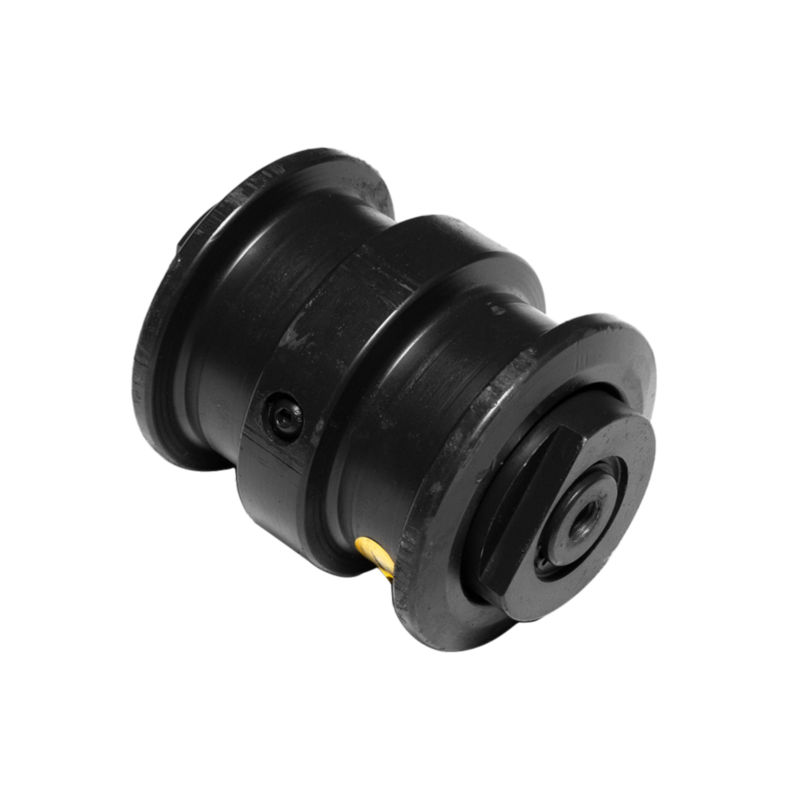
Supporting the machine's weight and guiding the track chain are the 롤러. 두 가지 유형이 있습니다. 트랙 롤러, 또는 하단 롤러, are mounted to the bottom of the track frame and bear the machine's weight directly onto the track chain. They are the feet of the machine, constantly under immense pressure. 캐리어 롤러, or top rollers, are mounted on the top of the track frame. Their job is to support the weight of the track chain itself, preventing it from sagging excessively and maintaining its alignment. A failure in any of these rollers, often signaled by an oil leak, can lead to a cascade of wear issues throughout the system (Origin Machinery, 2024).
트랙 프레임의 전면에, you will find the 유동 바퀴. The idler's primary purpose is to guide the track chain back around toward the rollers and to serve as the mechanism for adjusting track tension. It is not a driven component but a free-spinning wheel that, along with its recoil spring assembly, absorbs and dampens shock loads encountered at the front of the track system.
마지막으로, at the rear, is the 스프로켓. This is the-toothed wheel that is turned by the machine's final drive motor. The sprocket's teeth engage with the bushings of the track chain, transferring the engine's power to the track and driving the machine forward or backward. It is the engine's handshake with the ground. The wear on its teeth must perfectly match the wear on the track chain's bushings for efficient power transfer.
Understanding this interplay is the first step for any fleet operator. A worn sprocket will destroy a new chain. A seized roller will grind flat spots into the track links. Incorrect track tension will exert immense force on idlers, 롤러, 그리고 최종 드라이브. It is a closed system where the health of one component is inextricably linked to the health of all.
Conducting a Fleet-Wide Undercarriage Audit
With a firm grasp of the undercarriage's anatomy, the next logical action is to perform a comprehensive health assessment across your entire fleet. This is not a simple visual check; it is a data-gathering exercise that will form the bedrock of your entire management strategy. The goal is to create a detailed "wear profile" for each machine, which will allow you to move from a reactive "fix it when it breaks" model to a proactive, predictive one.
Your audit should begin with meticulous record-keeping. For each machine, you need to know its make, 모델, age, and total operating hours. 더 중요한 것은, you need to track the hours on its current undercarriage. Without this baseline data, any attempt at lifecycle analysis is futile.
Next comes the physical inspection, which should be standardized across your fleet to ensure consistent data. This involves more than just looking for obvious breakages. You need to measure wear. Using specialized tools like ultrasonic thickness gauges and depth gauges, your technicians should measure key wear points:
- Track Chain Pitch: Measure the distance over a set number of links to determine the extent of internal pin and bushing wear, or "stretch."
- Roller Tread Diameter: Measure the remaining diameter of the track and carrier rollers to gauge their wear life.
- Bushing External Diameter: Measure the wear on the outside of the track chain bushings.
- Sprocket Tooth Profile: Use a gauge to check the wear pattern on the sprocket teeth.
- Track Shoe Grouser Height: Measure the height of the grousers to determine the remaining traction.
This data should be logged against the machine's undercarriage hours. 시간이 지남에 따라, this will allow you to plot a wear curve for each machine in its specific application. You will begin to see patterns. A dozer working in the highly abrasive silica sands of a Western Australian mine will show a different wear profile than an excavator digging in the wet, clay-rich soils of a Southeast Asian construction site. This data is your most powerful tool. It allows you to forecast when components will reach the end of their serviceable life, enabling you to schedule downtime and order parts in advance, transforming maintenance from an emergency into a planned, cost-controlled activity.
Matching Undercarriage to Application and Terrain
The final piece of this foundational step is to critically evaluate whether your machines are properly equipped for their tasks. A common mistake is to accept the standard undercarriage configuration that a machine is delivered with. For a large, diverse fleet, this one-size-fits-all approach is a recipe for excessive cost. The selection of the right undercarriage parts for fleet operators is an exercise in engineering judgment, balancing traction, flotation, 내마모성, 그리고 비용.
The most significant choice here is the track shoe. The goal is to use the narrowest shoe possible that still provides adequate flotation for the ground conditions. Why? Because wider shoes increase turning resistance, placing greater stress and torsional load on the entire undercarriage system, from the pins and bushings to the track frame itself. A wider shoe also has more surface area in contact with the ground, increasing the rate of wear in abrasive conditions.
The type of grouser is equally important.
- Single Grouser Shoes: Offer the highest penetration and traction. They are ideal for applications on rock or hard-packed ground where maximum grip is needed.
- Double Grouser Shoes: Provide less penetration but better turning ability and are a good all-around choice for many excavator applications where the machine needs to maneuver frequently. They offer a good balance between traction and low ground disturbance.
- Triple Grouser Shoes: The most common type on excavators, these offer the best maneuverability and the least ground disturbance, making them suitable for finished surfaces or softer ground. 하지만, their traction is lower than single or double grouser designs. GFM 부품 provides a good analysis of these types.
- Swamp or Flat Shoes: These are very wide shoes with minimal or no grousers, designed to maximize flotation in extremely soft, marshy conditions, like those found in parts of Southeast Asia or in wetland reclamation projects.
The table below provides a simplified guide for matching track shoe types to the diverse operational environments your fleet might encounter.
| Terrain/Application | 주요 과제 | Recommended Track Shoe | Rationale |
|---|---|---|---|
| Siberian Permafrost (러시아 제국) | Low Traction, Frozen Ground | 단일 그라우저, 높은 경도 | Maximum penetration is needed to grip icy, hard surfaces. The steel must be formulated to resist becoming brittle in extreme cold. |
| Australian Iron Ore Mines | 높은 마모 | 단일 그라우저, High Abrasion-Resistant Alloy | The abrasive nature of the rock and soil requires the hardest possible material to slow wear. High traction is also needed. |
| Middle Eastern Sand Dunes | Low Flotation, 높은 마모 | Wide Triple Grouser or Flat Shoe | Wide shoes are needed to distribute weight and prevent sinking. The fine sand is highly abrasive, so material hardness is still a factor. |
| Southeast Asian Palm Plantations | Soft, Muddy Soil, 포장 | Double or Triple Grouser (Swamp Pads in extreme cases) | The priority is flotation and minimizing ground disturbance. The design must also shed mud to prevent "packing." |
| Korean Urban Demolition | Mixed Debris, Concrete | 더블 식료품점, High Impact Resistance | Shoes must resist impact from rebar and concrete chunks. Good maneuverability is also key in confined spaces. |
| African Alluvial Mining | Wet, Slippery Clay & Gravel | 더블 식료품점 | A balance is needed to provide traction in slippery conditions without excessively digging into and disturbing the valuable ground layer. |
By completing this three-part foundational assessment—understanding the anatomy, auditing your fleet, and matching components to the application—you transform your approach to undercarriage management. You are no longer a passive recipient of maintenance costs but an active strategist, laying the groundwork for a more efficient, 믿을 수 있는, and profitable fleet operation.
단계 2: 차대 부품의 전략적 소싱 및 선택
Having established a deep understanding of your fleet's operational demands and the current state of your equipment, the second step in our systematic approach concerns the procurement of replacement parts. This is a domain fraught with complexity, where the apparent wisdom of choosing the lowest-priced option can often lead to a cascade of higher long-term expenses. For the discerning fleet operator, sourcing is not merely a transaction; it is a strategic decision that has profound implications for machine uptime, labor costs, 및 전반적인 프로젝트 수익성. This step requires a careful deliberation between Original Equipment Manufacturer (OEM) 그리고 애프터마켓 부품, a deeper dive into the material science that defines a quality component, and the cultivation of robust partnerships with suppliers who can function as allies in your operational success.
The OEM vs. Aftermarket Deliberation
The debate between OEM and aftermarket parts is a perennial one in the heavy equipment industry. A purely financial analysis, focused solely on the initial purchase price, will almost always favor aftermarket options. 하지만, this is a dangerously simplistic view. A more enlightened perspective, grounded in the concept of Total Cost of Ownership (TCO), 필요하다.
OEM parts are manufactured or specified by the machine's original producer, like Komatsu or Caterpillar. 그들은, 정의에 따르면, a perfect match for the machine, designed to work in harmony with the other OEM components. The manufacturer's reputation is tied to their performance, and they typically come with a comprehensive warranty and the backing of an extensive dealer and support network. The primary drawback, 물론, is their premium price.
Aftermarket parts, 반면에, are produced by third-party companies. The quality in this segment of the market varies enormously. At one end of the spectrum are manufacturers who reverse-engineer OEM parts and produce them using inferior materials and less stringent quality control, 조기 실패로 이어짐. At the other end are reputable companies that invest heavily in research and development, often producing parts that meet or even exceed OEM specifications in terms of material composition and durability. These top-tier aftermarket suppliers, such as those found on platforms like Bunyip 장비 or through specialized providers, can offer a compelling value proposition: OEM-level quality at a more competitive price point.
The strategic choice for a fleet operator is not a binary "always OEM" or "always aftermarket" rule. 대신에, it is about risk management. For a brand new machine under warranty, using OEM parts is often a requirement to keep the warranty valid. For older machines, or for non-critical components, a high-quality aftermarket part from a trusted supplier can represent a significant and intelligent cost saving. The key is to do your due diligence. Demand technical specifications, material-testing reports, and case studies from any potential aftermarket supplier. A refusal to provide this data is a significant red flag.
The following table offers a framework for this deliberation, moving beyond price to a more holistic comparison.
| 요인 | 원래 장비 제조업체 (OEM) | Quality Aftermarket Supplier |
|---|---|---|
| 초기비용 | 높은 | Moderate to Low |
| 품질 & 맞다 | Guaranteed to meet original specifications and fit perfectly. | Can meet or exceed OEM specs, but requires careful vetting. Fit is generally good from reputable suppliers. |
| 재료 과학 | Proprietary alloys and heat treatments developed by the OEM. | Often use industry-standard high-strength steels. Top suppliers invest in their own material R&디. |
| 보증 | 포괄적인, backed by a large dealer network. | Varies by supplier. The best offer competitive warranties, but the claims process may differ. |
| 유효성 | Generally good, but can be subject to OEM supply chain disruptions. | Can be excellent, with some suppliers specializing in rapid delivery for common wear parts. |
| 기술지원 | Extensive support available through the dealer network. | 다양함. The best suppliers have knowledgeable staff who can advise on part selection and application. |
Decoding Material Science and Manufacturing Processes
To truly make an informed sourcing decision, a fleet operator must become, to some degree, a student of metallurgy. The longevity of an undercarriage component is not a matter of chance; it is a direct result of the steel's composition and the way it has been processed. Understanding the basics can help you cut through marketing jargon and ask suppliers the right questions.
The primary material for undercarriage parts is steel, 하지만 모든 강철이 동일하게 만들어지는 것은 아닙니다. The addition of alloying elements dramatically changes its properties.
- 탄소: The fundamental hardening agent in steel. Higher carbon content allows for greater hardness but can also increase brittleness.
- 망간: Improves hardenability and contributes to strength and wear resistance.
- 크롬: 경도를 높이는 핵심 요소, 인성, and resistance to corrosion and abrasion.
- 붕소: Added in very small amounts, boron significantly increases the hardenability of steel, allowing a deep and uniform hardness to be achieved through heat treatment. This is a hallmark of high-quality undercarriage steel.
These elements, 하지만, are only part of the story. The manufacturing process is what unlocks their potential.
- 단조 대. 주조: Forging involves shaping the steel under immense pressure, which aligns the grain structure of the metal, resulting in superior strength, 인성, 및 피로 저항. 주조, which involves pouring molten metal into a mold, is a less expensive process but can result in a weaker, more porous internal structure. For high-stress components like track links, forging is the superior method.
- 열처리: This is arguably the most critical step. It involves carefully controlled cycles of heating and cooling to alter the steel's microstructure and achieve the desired balance of hardness and toughness. A key process for undercarriage parts is induction hardening. This technique uses an electric current to heat only the surface layer of a component (like the rail of a track link or the tread of a roller) before it is rapidly quenched (cooled). The result is a part with an extremely hard, wear-resistant surface and a tougher, 더 연성 코어. The hard surface resists abrasion, while the tough core prevents the part from cracking under impact. The depth and uniformity of this hardened layer are direct indicators of a part's quality.
When you evaluate a supplier, ask them about their material specifications. Do they use boron steel? What is their heat treatment process? What is the specified case depth and hardness (measured in Rockwell HRC) of their wear surfaces? A quality supplier will have this information readily available and will be proud to share it. These are the details that separate a part that lasts 4,000 hours from one that fails at 2,000, and this is where true cost savings are found.
Building Supplier Partnerships for Fleet Operators
For a fleet operator, a parts supplier should be more than just a vendor. They should be a strategic partner. The ideal supplier relationship is not based on a series of one-off transactions but on a long-term collaboration aimed at improving your fleet's efficiency.
What does a true supplier partnership look like for undercarriage parts for fleet operators?
- 기술 전문 지식: The supplier's team should have deep product knowledge. They should be able to act as consultants, helping you analyze your wear data and recommending the optimal high-quality excavator attachments and components for your specific applications, rather than just selling you what's on the shelf.
- Inventory Management: A good partner will work with you to understand your fleet's needs and consumption rates. They can help you set up a managed inventory system, ensuring that you have the common wear parts you need on hand without tying up excessive capital in your own stock. Some may even offer consignment stock programs for high-volume customers.
- Logistical Reach: For fleets operating in diverse and remote locations, the supplier's ability to deliver parts efficiently is paramount. Evaluate their logistical network. Can they ship cost-effectively to your sites in the Australian Outback, the Russian Far East, or rural Africa?
- Problem Resolution: How does the supplier handle warranty claims or incorrect parts? A true partner will have a clear, efficient process and will work with you to resolve issues quickly, minimizing your downtime.
By shifting your mindset from simply buying parts to strategically sourcing solutions, you take a monumental step toward controlling your undercarriage costs. It involves a more rigorous initial evaluation, but the long-term payoff in reduced downtime, 인건비 절감, and extended component life is one of the most significant financial levers a fleet operator can pull.
단계 3: 사전 예방적 유지 관리 및 검사 프로토콜 구현
The finest, most expensive undercarriage parts in the world will fail prematurely if they are not maintained with diligence and care. After establishing a foundation of knowledge and a strategic sourcing plan, the third step is to institutionalize a culture of proactive maintenance. This means moving away from a philosophy of repair and toward a philosophy of prevention. The majority of undercarriage wear is not inevitable; it is the accelerated result of neglect. 차량 운영자용, a disciplined and consistently applied maintenance protocol is the most direct path to extending component life and slashing the per-hour cost of operation. This protocol is built on three pillars: the simple yet powerful daily walk-around, the mastery of correct track tension, the often-underestimated art of cleaning, and the use of more advanced inspection techniques to see what the naked eye cannot.
The Power of the Daily Walk-Around
The most effective maintenance tool in your arsenal is the trained and observant eye of your machine operator. The daily pre-start inspection, or walk-around, 치명적인 실패에 대한 첫 번째 방어선입니다.. It is a ritual that should be non-negotiable for every machine, every single day. What seems like a simple five-minute check can identify small problems before they evolve into major, downtime-inducing events.
Operators must be trained to look for specific warning signs. This is not a casual stroll around the machine; it is a focused diagnostic routine.
- Check for Leaks: The operator should carefully inspect each track roller, 캐리어 롤러, and idler for any sign of oil leakage. A leak is a definitive sign that a seal has failed. Once the oil is gone, the internal bearings will quickly destroy themselves, leading to a seized roller. A seized roller will not turn, and as the track chain is dragged across it, it will create a flat spot on the roller and cause severe, abnormal wear to the track links themselves.
- Inspect Hardware: Are there any loose or missing bolts on the track shoes? A loose shoe can become detached, and a missing shoe creates an imbalance in the track chain that puts stress on the adjacent links and pins.
- Look for Abnormal Wear: The operator, who is with the machine all day, is best positioned to notice changes. Are there any new, shiny metal-on-metal wear spots? Is there "scalloping" on the track links, where the rollers are digging in? Are the edges of the idler or sprocket teeth becoming sharp or hooked? These are all visual cues of developing problems.
- Assess Track Tension (처짐): While a precise measurement is a more involved task, a visual check of track sag can quickly identify a major issue. Does the track look unusually tight or excessively loose? We will explore this in more detail, but the daily visual check is a critical first pass.
- Examine the General Condition: Is there any cracking on the track shoes? Is there significant damage to the rubber on a rubber-tracked machine? Is a steel track at risk of "de-tracking" (coming off the rollers and idler)?
This daily ritual transforms the operator from a mere user into a custodian of the asset. Creating a simple, laminated checklist to be kept in the cab can help standardize this process and ensure no steps are missed. It is the cheapest and most effective form of undercarriage insurance a fleet can have.
Mastering Track Tension: The Golden Rule of Undercarriage Life
If there is a single "golden rule" for undercarriage maintenance, it is this: ensure correct track tension at all times. It is the most critical adjustment that determines the wear rate of the entire system. The forces involved are immense, and a small error in tension can have an outsized impact on component life.
Think of a bicycle chain. 너무 빡빡한 경우, it is difficult to pedal, and it puts enormous strain on the sprockets and the bearings in the crank. If it is too loose, it can fall off. The principle is the same for a 40-ton excavator, but the consequences are far more expensive.
- Track Too Tight: A track that is tensioned too tightly dramatically increases the friction between the track chain's internal pins and bushings. It also creates a massive, constant load on the idlers, 롤러, 그리고 스프로킷. This accelerated wear can reduce the life of your undercarriage by as much as 50%. It is like driving your car with the parking brake partially engaged. The system is constantly fighting against itself, generating heat and wearing away metal.
- Track Too Loose: A track that is too loose will sag and slap against the carrier rollers, 피해를 입히다. 더 비판적으로, it can cause the sprocket teeth to jump or misalign with the track bushings, leading to severe wear on both. In the worst-case scenario, a loose track can come off the idler or rollers, an event known as "de-tracking." This is a significant downtime event that often requires another machine to help lift and reset the track, and it carries a high risk of damaging other components in the process.
그래서, what is "correct" tension? It is not a fixed value. It is defined by measuring the "sag" of the track at a specific point. The procedure is straightforward:
- Operate the machine to let any packed-in mud or debris fall out.
- Park the machine on a level surface.
- Place a straight edge or string line across the top of the track, from the idler to the top carrier roller.
- Measure the distance from the straight edge down to the lowest point of sag in the track chain.
- Compare this measurement to the manufacturer's specification in the machine's operator manual. This specification is crucial and can vary significantly between models.
The tension is adjusted via a grease-filled cylinder connected to the idler. Pumping grease in pushes the idler forward, 트랙을 강화하다. Releasing grease allows the idler to move back, loosening it.
Critically, the correct tension also depends on the working conditions. In "packing" conditions, such as wet clay or snow, material can build up between the sprocket and the track chain. This material effectively tightens the track as it rotates. 이러한 조건에서는, it is often necessary to run the tracks slightly looser than the standard specification to accommodate this buildup and prevent excessive tension. This requires a knowledgeable operator and a flexible maintenance culture.
The Art of Undercarriage Cleaning
Cleaning the undercarriage is not an aesthetic exercise; it is a fundamental maintenance task. The accumulation of mud, 흙, and debris is a primary enemy of undercarriage life for several reasons.
- Abrasive Grinding: A mixture of soil and water creates an abrasive slurry that works its way into every moving part. It acts like a grinding paste, accelerating the wear of pins, 부싱, 롤러, 그리고 아이들러.
- Increased Weight and Strain: Caked-on mud can add hundreds, or even thousands, of kilograms to the weight of the undercarriage. This adds unnecessary strain to the entire powertrain and increases fuel consumption.
- Component Seizure: Debris can become lodged between moving parts, causing them to seize. A rock lodged next to a roller can prevent it from turning, leading to the rapid wear described earlier.
- Frozen Debris: In cold climates, like those in Russia or parts of Korea, mud and water that is not cleaned out can freeze overnight. This frozen mass can prevent rollers from turning, place extreme tension on the track, and can even damage seals as the machine attempts to move.
A thorough cleaning with a pressure washer or a simple shovel at the end of every shift should be standard practice. Special attention should be paid to cleaning around the rollers, 아이들러, 그리고 스프로킷, as these are the areas where debris is most likely to cause problems. This simple act of "housekeeping" can add hundreds of hours to the life of your undercarriage components.
Advanced Inspection Techniques: Moving Beyond the Visual
While the daily walk-around is essential, a comprehensive maintenance program also incorporates more detailed, periodic inspections. This is where you leverage the data from your initial audit and track the progression of wear over time.
This involves using the same specialized measurement tools from the audit phase to track wear at regular intervals (예를 들어, 모든 250 또는 500 시간). By logging these measurements against a component's service hours, you can create a predictive model. 예를 들어, you might find that a certain model of track roller, in a specific application, loses 1mm of diameter every 150 시간. If the manufacturer's discard-or-rebuild dimension is 10mm of wear, you can accurately predict that the roller will need attention at approximately 1,500 시간.
이 데이터 기반 접근 방식은, as championed by industry leaders in fleet management, allows you to schedule maintenance proactively. You can order the necessary reliable undercarriage components in advance, schedule the repair for a planned downtime window, and avoid the massive costs associated with an unexpected, in-field failure. It is the very essence of professional fleet management, transforming maintenance from a reactive firefight into a controlled, predictable, and cost-effective process.
단계 4: 운영자의 우수성 및 모범 사례 육성
Of all the factors that influence the lifespan of undercarriage parts, none is more significant, yet more variable, than the machine operator. An experienced, conscientious operator can double the life of an undercarriage compared to a careless or untrained one. The forces exerted on these components are a direct consequence of how the machine is maneuvered. 그러므로, the fourth step in our comprehensive strategy is to focus on the human element. Cultivating a culture of operator excellence is not a "soft" skill; it is a hard-nosed financial imperative. This involves a deep education on how specific operating habits translate directly into mechanical wear, the development of a formal training program to instill best practices, and the empowerment of the operator to act as the primary guardian of the machine's health.
How Operating Habits Impact Undercarriage Wear
To the untrained eye, an excavator or dozer at work is simply moving dirt. To the trained fleet manager, it is a continuous series of high-stress events for the undercarriage. Operators must be taught to see their actions through the lens of mechanical physics. Every turn, every climb, and every movement has a cost.
- Minimizing High-Speed and Reverse Travel: Heavy equipment undercarriages are designed primarily for high-torque, low-speed work. Extensive travel, especially at high speeds, generates significant heat and friction, accelerating wear on all moving parts. Reverse travel is even more damaging. The track pins are designed to rotate against the bushings primarily in the forward direction. Operating in reverse for extended periods causes the pin to work on the "wrong" side of the bushing, leading to a much faster rate of wear. The rule of thumb is that reverse travel can cause up to three times the wear of forward travel. Operators should be trained to plan their work area to minimize unnecessary movement and to prioritize forward travel.
- Alternating Turning Directions: Most operators have a dominant turning direction, just as people are right- or left-handed. Consistently turning in the same direction will cause one side of the undercarriage to wear much faster than the other. This leads to an imbalanced machine and the inefficient situation of having to replace an entire undercarriage set when one side still has significant life remaining. Operators should be encouraged to consciously alternate their turning directions throughout the day to promote even wear.
- Working Up and Down Slopes: 가능할 때마다, machines should be driven straight up or straight down a slope, not traversed sideways across it. Working across a slope, or "side-hilling," shifts the machine's entire weight onto the downhill side's rollers, 아이들러, 링크 추적, causing severe and uneven wear. It also places immense side-loading on the track chain, which it is not designed to handle, increasing the risk of de-tracking.
- Limiting Counter-Rotation and Pivot Turns: The most stressful maneuver for an undercarriage is a sharp, counter-rotating turn where one track moves forward and the other reverses. This "pivot turn" creates immense torsional stress on the track frame and pushes large amounts of soil and rock into the undercarriage components, acting as a grinding agent. A less stressful alternative is to make wider, "three-point" 회전, which are gentler on the entire system.
- Using the Correct Track Shoe Width: As discussed in Step 1, using a track shoe that is wider than necessary for the ground conditions increases the load on the entire undercarriage during turns. It also increases the likelihood of the shoes bending or cracking if they encounter rocks or stumps. Operators should be part of the conversation about machine setup and understand the performance trade-offs of different shoe widths.
Developing an Operator Training Program
Knowledge of these best practices is useless if it is not systematically transferred to your operators. A formal training program is an investment that pays for itself many times over in reduced parts consumption and increased machine availability.
This program should not be a one-time event for new hires. It should be a continuous process of education and reinforcement.
- Classroom and Simulator Training: Begin with the theory. Use diagrams and videos to explain the anatomy of the undercarriage and the physics of wear. Simulators are an excellent, low-risk environment to demonstrate the difference between good and bad operating habits.
- In-Cab Coaching: The most effective training happens in the real world. Have your most experienced operators or a dedicated trainer ride along with other operators, providing real-time feedback and coaching.
- Incentivization: Tie operator performance to tangible rewards. Track undercarriage cost-per-hour for each operator's machine. Operators who consistently demonstrate low wear rates could be rewarded with bonuses or other recognition. This creates a culture where taking care of the equipment is a valued and rewarded part of the job.
- Utilizing Telematics Data: Modern fleet management systems can track a wealth of data on operator behavior, including travel speed, time spent in reverse, and the frequency of sharp turns. Use this data not as a punitive tool, but as a coaching aid. Show operators their own data and use it to have constructive conversations about areas for improvement.
The Operator as the First Line of Defense
마지막으로, it is essential to empower your operators. They are not simply steering the machine; they are in the most intimate contact with it for eight to twelve hours a day. They can hear and feel subtle changes that a technician checking the machine once a week will miss.
Foster an environment where operators feel comfortable and encouraged to report any potential issues immediately, without fear of blame. An operator who reports a slight squeak from a roller or a change in the machine's turning behavior is not complaining; they are providing you with invaluable, early-stage diagnostic information. This allows your maintenance team to investigate a small issue before it becomes a large, expensive failure.
This requires a shift in mindset for some managers. The operator's cab must be seen as the primary data collection center for machine health. By investing in their training, listening to their feedback, and valuing their expertise, you transform your operators from a variable cost factor into your most valuable asset in the fight against high undercarriage costs.
단계 5: 장기적인 비용 절감을 위한 기술 및 데이터 활용
In the contemporary landscape of heavy industry, the management of a fleet is no longer solely a matter of mechanical aptitude and logistical planning. The final and most forward-looking step in our five-part strategy is the systematic integration of technology and data analytics. For the modern fleet operator, intuition and experience, while valuable, must be augmented by the empirical rigor of data. This step involves harnessing the power of telematics to monitor machine health and operator performance, exploring the next generation of undercarriage management systems, 그리고, 가장 중요한 것은, adopting the Total Cost of Ownership (TCO) as the ultimate metric for decision-making. This data-driven approach allows you to move beyond the day-to-day and make long-term strategic decisions that fundamentally lower the cost structure of your entire operation.
The Role of Telematics and Fleet Management Software
Most modern heavy equipment is equipped with a telematics system, a "black box" that continuously collects and transmits a vast stream of data about the machine's operation. For many, this technology is underutilized, seen merely as a tool for tracking location and engine hours. Its true power, 하지만,lies in its ability to provide deep insights into the factors that drive undercarriage wear.
Fleet management software aggregates this data, allowing you to analyze trends across your entire fleet. The key data points for undercarriage management include:
- 영업시간: The most basic metric, used to schedule routine inspections and maintenance.
- Travel Time vs. Working Time: A machine that spends a high percentage of its time "tramming" or traveling will experience much faster undercarriage wear. Analyzing this ratio can reveal inefficiencies in site layout or work planning.
- Travel Speed and Distance: Tracking average and maximum travel speeds can identify operators who are consistently operating the machine too fast, generating excessive heat and wear.
- Percentage of Time in Reverse: As noted, reverse operation is highly detrimental. This metric provides a clear, quantifiable measure of an operator habit that needs correction.
- Turning Behavior: Advanced systems can even identify the frequency and severity of turns, flagging operators who rely heavily on stressful pivot turns.
- Fault Codes: The system logs any diagnostic trouble codes generated by the machine, providing an early warning of developing mechanical or hydraulic issues that could impact the undercarriage.
By analyzing this data, you can move from a time-based maintenance schedule (예를 들어, "inspect every 500 hours") to a condition-and-use-based schedule. A machine that travels 10 kilometers a day in abrasive rock will require far more frequent undercarriage attention than one that sits stationary digging a trench, even if their engine hours are identical. Telematics provides the data to make this distinction, allowing you to allocate your maintenance resources more intelligently and efficiently.
Undercarriage Management Systems: A Glimpse into the Future
The evolution of machine technology is moving toward ever-more integrated and intelligent systems. While not yet standard across the industry in 2025, dedicated undercarriage management systems are emerging, representing the next frontier in cost control. These systems build upon standard telematics by incorporating sensors directly into the undercarriage.
Imagine a system where sensors on the track rollers monitor their temperature and vibration in real-time. An algorithm could detect the tell-tale signature of a failing seal or a dry bearing long before it becomes an audible or visible problem, sending an alert directly to the fleet manager's dashboard. Consider a system that uses ultrasonic sensors to actively measure the distance between track links, providing a real-time readout of track stretch and automatically flagging when it exceeds the allowable limit.
뿐만 아니라, precision guidance systems, ~와 같은 , contribute indirectly but significantly to undercarriage life. By guiding the operator to the exact dig depth and grade on the first pass, these systems eliminate the need for re-work and unnecessary machine movement. Less travel means less wear. More precise operation means less time spent maneuvering and repositioning. As FJDynamics (2025) points out, these systems make operations more efficient and accurate, which has a direct, positive impact on the wear and tear of all machine components, including the undercarriage.
Calculating Total Cost of Ownership (TCO): The Ultimate Metric
The single most important conceptual shift for any fleet operator is to move away from purchase-price-based decision making and embrace Total Cost of Ownership (TCO). The cheapest part is rarely the one that costs the least. The TCO framework provides a more holistic and accurate measure of a component's true economic impact.
A simplified TCO calculation for an undercarriage component or set would look something like this:
TCO = (Initial Part Cost + 설치 인건비 + Lost Revenue from Downtime) / 총 서비스 시간
Let's consider a practical example. You need to replace the track chains on a 30-ton excavator.
- 옵션 A (Low-Price Aftermarket): Initial Cost = $8,000. The parts are of lower quality and last for 3,000 시간.
- 옵션 B (고품질 애프터마켓): Initial Cost = $12,000. These are well-made parts from a reputable supplier and last for 5,000 시간.
Let's assume the labor to change the tracks is $2,000 and the lost revenue from the machine being down for the change-out is $3,000 (totaling $5,000 in associated costs per replacement).
TCO for Option A:
- 얻으려면 15,000 hours of life, you need 5 replacements.
- Total Part Cost = 5 엑스 $8,000 = $40,000
- Total Associated Costs = 5 엑스 $5,000 = $25,000
- Total Spend = $65,000
- TCO per hour = $65,000 / 15,000 hours = $4.33/hour
TCO for Option B:
- 얻으려면 15,000 hours of life, you need 3 replacements.
- Total Part Cost = 3 엑스 $12,000 = $36,000
- Total Associated Costs = 3 엑스 $5,000 = $15,000
- Total Spend = $51,000
- TCO per hour = $51,000 / 15,000 hours = $3.40/hour
In this realistic scenario, the part that was 50% more expensive upfront actually results in a 21% 총 소유 비용 절감. 이것이 TCO 분석의 힘이다. It forces you to consider the entire lifecycle of the part and makes the value of quality and durability mathematically clear.
By embracing technology to gather data and using that data to perform rigorous TCO calculations, you complete the strategic circle. You are no longer just managing parts; you are managing assets and optimizing financial returns. This fifth and final step is what separates the good fleet managers from the great ones, ensuring that the fleet is not just a collection of working machines, but a finely tuned engine of profitability.
자주 묻는 질문 (FAQ)
How often should I replace my undercarriage parts?
There is no single answer based on hours alone. Replacement frequency depends entirely on the machine's application, the abrasiveness of the material it works in, and operator habits. The best practice is to conduct regular (예를 들어, 모든 250-500 시간) measurements of key wear points like track chain pitch, roller diameter, and bushing diameter. You should replace components when they reach the "discard" or "rebuild" dimensions specified by the manufacturer. Using fleet management software to track these wear rates will allow you to predict replacement intervals for your specific operation.
What is the single biggest mistake operators make that wears out undercarriages?
Excessive or high-speed travel in reverse is arguably the most damaging common habit. Undercarriage track pins and bushings are designed to primarily wear in the forward direction. Operating in reverse for extended periods causes the pin to work against the "non-wear" side of the bushing, which can accelerate wear by up to three times. Training operators to plan their work to minimize reverse travel is a huge cost-saving measure.
Are rubber tracks a viable option for my fleet?
Rubber tracks are an excellent choice for mini-excavators, compact track loaders, and other smaller machines, especially when working on finished surfaces like asphalt or concrete where steel tracks would cause damage. They offer lower noise, less vibration, and faster travel speeds. 하지만, they are not suitable for larger machines (typically over 8-10 톤) or for working in sharp rock and abrasive demolition debris, where they are prone to cutting and rapid wear.
Can I mix and match undercarriage parts from different brands?
This is generally not recommended. The undercarriage is a system of parts designed to wear together at a compatible rate. 예를 들어, the hardness of a sprocket's steel is matched to the hardness of the track chain's bushings. Using a harder sprocket from one brand with a softer chain from another could cause the sprocket to rapidly destroy the chain. While it might seem cost-effective to replace only the most worn part with the cheapest available option, this often leads to a cascade of premature failures in other components. For optimal life, it is best to stick with a complete system from a single, 평판이 좋은 제조업체, whether OEM or a quality aftermarket supplier.
What is "track scalloping" and how can I prevent it?
Track scalloping refers to a wave-like wear pattern that can appear on the links of the track chain. It is typically caused by a track roller that is seized or not turning properly. As the track chain is dragged over the stationary roller, the roller grinds a "scoop" or "scallop" into each link that passes over it. The best prevention is diligent daily inspection. Operators should be trained to look for any rollers that are not turning with the track or are leaking oil, which is a sign of impending seal failure. Addressing a single faulty roller immediately can prevent the costly premature replacement of an entire track chain.
How does climate affect undercarriage maintenance?
Climate has a significant impact. In cold regions like Russia, mud and debris that are not cleaned from the undercarriage can freeze overnight. This frozen mass can seize rollers, prevent the track from flexing properly, and put extreme strain on the final drives when the operator tries to move the machine. In hot, dry, and sandy climates like the Middle East, the fine, abrasive sand penetrates every joint, acting as a grinding compound that accelerates wear on pins, 부싱, 그리고 물개. In both cases, diligent daily cleaning is the most important countermeasure.
결론
The stewardship of a fleet's undercarriage is a complex but manageable challenge. It demands a perspective that transcends the workshop floor and enters the realm of strategic asset management. As we have explored through this five-step guide, achieving control over what is often the largest single maintenance expense is not about finding a single magic bullet. 꽤, it is about the disciplined and consistent application of a holistic philosophy. It begins with a deep, analytical understanding of your machines and their working environments. It flows into a strategic sourcing process that prioritizes long-term value, grounded in material science, over short-term price. This foundation is then built upon through a culture of proactive maintenance, where daily inspections and correct procedures become ingrained habits. This culture must be championed by skilled, well-trained operators who understand their role as custodians of the equipment. 마지막으로, the entire process is refined and optimized by leveraging data and technology, allowing for predictive insights and decisions based on the rigorous logic of Total Cost of Ownership. For the fleet operator navigating the competitive global landscape of 2025, mastering the undercarriage is not just about saving money on parts; it is a fundamental strategy for maximizing uptime, 신뢰성 보장, and driving the overall profitability of the enterprise.
참조
FJ다이나믹스. (2025, 5월 22). 맨 위 10 당신이 알아야 할 굴삭기의 부품 2025. https://www.fjdynamics.com/blog/industry-insights-65/parts-of-excavator-563
GFM 부품. (2025, 3월 4). 굴삭기 트랙슈 유형 분석: 구성, 디자인 원리 및 선택 가이드. https://gfmparts.com/excavator-track-shoe-type-analysis/
Jiangsu Origin Machinery Co., 주식회사. (2024, August 27). Maintenance of excavator undercarriage parts. https://www.originmachinery.com/news/maintenance-of-excavator-undercarriage-parts-268215.html
고마츠. (2025, 4월 10). 첨부파일.
AMT Equipment Parts. (2025, 5월 13). 하부 구조 – 무한 궤도 – 굴착기.
Bunyip 장비. (2025, 구월 1). 버킷 치아 및 마모 부품. https://www.bunyipequipment.com.au/bucket-teeth-wear-parts/
Wear Parts Australia. (2022, 구월 6). Excavator teeth.