
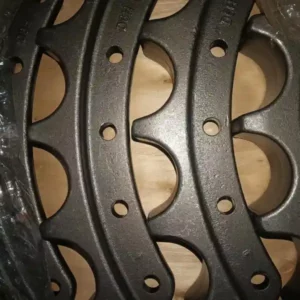
Abstrait
La longévité opérationnelle et l'efficacité économique des engins de construction lourds sont profondément influencées par la durabilité des composants de leur train de roulement.. Cet article fournit un examen complet des chaussures de piste à usages élevés, un élément essentiel pour atténuer les contraintes abrasives et liées aux impacts rencontrées dans les environnements de travail exigeants. Il déconstruit le processus de sélection en cinq facteurs critiques: composition des matériaux et métallurgie, conception à crampons et ses implications fonctionnelles, protocoles de qualité et d’assurance de fabrication, l’alignement du choix des composants avec des contextes opérationnels spécifiques, et une évaluation globale du coût du cycle de vie. En explorant les principes scientifiques derrière la résistance à l'usure, y compris le rôle des alliages d'acier au bore et des procédés de traitement thermique, le guide vise à responsabiliser les gestionnaires de flotte, propriétaires exploitants, et spécialistes des achats. Il fournit le cadre analytique nécessaire pour prendre des décisions éclairées qui réduisent les temps d'arrêt des machines., coût total de possession réduit, et améliorer la productivité dans des secteurs tels que l'exploitation minière, construction, et la foresterie sur divers marchés mondiaux.
Plats clés à retenir
- Évaluer la métallurgie de l'acier; L'acier au bore trempé à cœur offre une durabilité supérieure.
- Correspond à un design plus grand (célibataire, double, tripler) à vos conditions de terrain spécifiques.
- Vérifier la qualité du fabricant grâce à des certifications comme ISO 9001 et protocoles de tests.
- Analysez votre environnement opérationnel pour sélectionner les chaussures de piste à haute usure optimales.
- Calculer le coût total de possession (Coût total de possession), pas seulement le prix d'achat initial.
- Tenir compte des compétences des opérateurs et des pratiques de maintenance pour maximiser la durée de vie des composants.
- Inspectez régulièrement l'ensemble du système de train de roulement pour détecter tout signe d'usure inégale..
Table des matières
- Le rôle fondamental des patins de chenille dans les machines lourdes
- Facteur 1: Déconstruire la composition des matériaux et la métallurgie
- Facteur 2: Conception des crampons et son impact sur la traction et la durée de vie
- Facteur 3: Examen de la qualité et de l'assurance de la fabrication
- Facteur 4: Aligner la sélection des patins de chenille avec le contexte opérationnel
- Facteur 5: Une vision globale du coût du cycle de vie et de la maintenance
- Questions fréquemment posées (FAQ)
- Conclusion
- Références
Le rôle fondamental des patins de chenille dans les machines lourdes
L'immense puissance et les capacités des engins de construction modernes, des excavatrices imposantes aux bulldozers implacables, often lead us to focus on the engine's roar or the bucket's capacity. Encore, la capacité de ces machines à traduire la puissance du moteur en travail productif repose littéralement sur le terrain. Le système de train de roulement est le héros méconnu des équipements lourds, a complex assembly of moving parts that bears the machine's entire weight and propels it across the most unforgiving terrains imaginable. C'est un système où chaque composant doit fonctionner en harmonie, et à l'interface même entre la machine et la terre se trouvent les patins de chenille. Ce ne sont pas de simples plaques d'acier; they are meticulously engineered components that dictate a machine's traction, la stabilité, et, finalement, son efficacité opérationnelle. Comprendre leur rôle est la première étape vers l'appréciation des profondes implications économiques et de performance de la sélection du bon type., en particulier dans les environnements à forte usure.
Comprendre le système de train de roulement: Une symphonie de composants
Comprendre l’importance des chaussures de course à forte usure, il faut d'abord visualiser le train de roulement comme un système intégré, un écosystème mécanique où la santé d’une pièce affecte directement toutes les autres. Imaginez une boucle continue de chaussures de piste reliées, connue sous le nom de chaîne de pistes ou groupe de pistes, formant une ceinture flexible mais extrêmement solide. Cette courroie est entraînée par un pignon denté, which engages with the track chain's bushings to provide propulsion. A l'extrémité opposée, une roue folle guide la chaîne et, avec un régleur de voie, maintient la bonne tension. Supporting the machine's weight and distributing it along the track chain are the track rollers (en bas) et rouleaux porteurs (au sommet).
Chacun de ces pièces de train de roulement est dans un état constant d’interaction dynamique. Les dents du pignon s'usent contre les bagues de chenille. Les rouleaux s'usent contre les maillons de chenille. Les chaussures de piste elles-mêmes s'usent sur le sol. Un déséquilibre ou une défaillance prématurée d’un seul composant, comme une chaussure de piste usée, peut déclencher une cascade d’usure accélérée dans l’ensemble du système. Par exemple, une barre de crampon usée sur un patin de chenille réduit la traction, obliger l'opérateur à utiliser plus de puissance, ce qui à son tour augmente la tension et l'usure des pignons et des maillons de chenille. Cette interdépendance systémique montre pourquoi une approche fragmentaire ou de réduction des coûts en matière de maintenance des trains de roulement est souvent une fausse économie.. Le patin de piste est le point de contact principal, l'avant-garde qui affronte de front les forces abrasives et d'impact du chantier.
Pourquoi les chaussures de piste standard ne sont pas à la hauteur dans les environnements abrasifs
Tous les chantiers ne sont pas égaux. Un bulldozer travaillant en soft, un sol limoneux est confronté à un ensemble de défis très différents de ceux d'une excavatrice cassant de la roche dans une carrière de granit ou d'une machine travaillant dans les sables bitumineux de l'Alberta, une région connue pour son terrain très abrasif. Les patins de chenille standard sont généralement fabriqués en acier au carbone avec un niveau de dureté modéré., suffisant pour les applications à usage général. Ils offrent une base de performance et de durabilité parfaitement adaptée à une partie importante des tâches de construction et de terrassement.. Cependant, lorsque ces composants standards sont placés dans ce que l'industrie appelle « à haute abrasion" ou "à fort impact" environnements, leur durée de vie peut être considérablement raccourcie et souvent de manière imprévisible.
L'usure abrasive se produit lorsque des particules dures, comme le sable, gravier, ou de la pierre concassée, are forced against the track shoe's surface, agissant comme une lime grossière qui meule l'acier. Ce processus est implacable. À chaque rotation de la piste, un nouveau matériau abrasif est introduit. Dans des environnements riches en matériaux comme le quartz, granit, ou minerai de fer, le taux de perte matérielle peut être étonnant. L'acier standard n'a tout simplement pas la dureté requise pour résister à ce récurage constant. Usure par impact, d'autre part, implique des répétitions, contact violent avec du dur, surfaces inflexibles comme le substrat rocheux ou les gros rochers. Cela peut conduire à un écaillage, fissuration, voire rupture catastrophique du patin de chenille si le matériau est trop cassant et manque de ténacité. Les chaussures de piste à forte usure sont spécialement conçues pour lutter contre ces deux menaces grâce à une métallurgie avancée et des processus de fabrication supérieurs..
L’impératif économique d’investir dans des chaussures de piste à forte usure
La décision d’investir dans le premium, les chaussures de course à forte usure sont fondamentalement économiques, ancré dans le concept de Coût Total de Possession (Coût total de possession). Le prix d'achat initial d'un ensemble de chaussures de piste à forte usure sera invariablement plus élevé que celui de leurs homologues standard.. Ce coût initial peut être dissuasif pour les opérations soucieuses de leur budget. Cependant, une analyse plus sophistiquée révèle un argument financier convaincant. Le véritable coût d'un composant de train de roulement n'est pas son prix d'achat mais la somme de son prix d'achat., les frais d'entretien qui y sont associés, et, le plus critique, le coût du temps d'arrêt encouru en cas de panne.
Considérons une grande excavatrice minière. L'entretien du train de roulement peut représenter jusqu'à 50% of the machine's total repair budget over its lifetime (chenille, 2018). Si un ensemble de chaussures de piste standard s'use 2,000 heures dans une application abrasive, pendant qu'un ensemble de chaussures très résistantes dure 3,500 heures, le calcul opérationnel change radicalement. La durée de vie prolongée des chaussures à forte usure signifie moins de cycles de remplacement. Chaque cycle de remplacement implique non seulement le coût des nouvelles pièces mais également les heures de main-d'œuvre pour l'installation et, crucialement, les heures ou les jours pendant lesquels la machine est hors service. Dans un environnement à forte production comme une mine ou un projet d’infrastructure majeur, la perte de revenus due à une seule journée d'arrêt peut facilement dépasser le coût total du train de roulement lui-même. En prolongeant l'intervalle d'entretien et en réduisant la fréquence des pannes imprévues, les chaussures de piste à forte usure contribuent directement à un calendrier de maintenance plus prévisible, des coûts de main d'œuvre réduits, et, le plus important, disponibilité et productivité optimisées des machines. Ce changement de perspective, de la vision des chaussures de piste comme un produit jetable à leur vision comme un investissement stratégique dans la disponibilité opérationnelle, est au cœur de la gestion moderne de la flotte.
Facteur 1: Déconstruire la composition des matériaux et la métallurgie
La distinction entre une chaussure de piste standard et une chaussure de piste à forte usure n'est pas qu'une simple étiquette.; c'est une différence profonde forgée au creuset de la science des matériaux. La capacité d'un patin de chenille à résister aux coups incessants de la terre abrasive et aux chocs violents est déterminée., au niveau le plus fondamental, par l'acier à partir duquel il est fabriqué et comment cet acier a été traité. Pour choisir le bon composant, il faut regarder au-delà de la surface et comprendre les principes métallurgiques qui régissent la dureté, dureté, et résistance à l'usure. C'est un monde d'alliages, traitements thermiques, et microstructures, où de petits changements dans la chimie ou le processus peuvent entraîner des différences monumentales dans les performances sur le terrain. Pour tout professionnel gérant du matériel lourd, une culture de base dans le langage de la métallurgie n'est pas un exercice académique mais un outil pratique pour prendre des décisions financières et opérationnelles judicieuses..
Le fondement de la durabilité: Alliages d'acier au bore
Au cœur de la plupart des chaussures de piste très résistantes modernes se trouve une classe spécifique de matériaux.: acier allié de bore. Depuis des décennies, les aciers au carbone et les aciers au manganèse étaient les principaux composants d'usure. Cependant, la recherche d'une durée de vie plus longue et de meilleures performances a conduit les métallurgistes à explorer les effets des micro-alliages, la pratique consistant à ajouter de très petites quantités d'éléments spécifiques pour obtenir des changements significatifs dans les propriétés des matériaux. Le bore s'est avéré être un ajout particulièrement puissant. Lorsqu'il est ajouté à l'acier en quantités infimes, généralement dans la gamme de 0.0005% à 0.003%, boron has an outsized effect on the steel's hardenability (Grange et al., 1977).
Qu'est-ce que la trempabilité? C'est une mesure de la profondeur à laquelle un acier peut être durci pendant le processus de traitement thermique.. Imaginez que vous essayez de faire cuire une miche de pain très épaisse; it's difficult to get the center fully cooked without burning the crust. De la même manière, avec un morceau d'acier épais comme un patin de piste, il est difficile de parvenir à une cohérence, structure dure tout au long. Boron atoms migrate to the grain boundaries within the steel's crystalline structure. Pendant le refroidissement rapide (éteinte) phase de traitement thermique, ces atomes de bore agissent comme des barrages routiers, ralentir la formation de microstructures plus molles et permettre le dur souhaité, la structure martensitique se forme à des vitesses de refroidissement beaucoup plus lentes. Cela signifie qu'une section épaisse peut être « durcie à cœur »" à une bien plus grande profondeur, ou même tout au long, plutôt que d'avoir simplement un mince "boîtier" durci" à l'extérieur. Un patin de chenille entièrement durci conserve ses propriétés de résistance à l'usure même lorsque le matériau de surface est progressivement abrasé., offrant une durée de vie constante et prévisible. C'est le principal avantage qu'offrent les aciers au bore pour les composants tels que les patins de chenille à forte usure..
Le processus de traitement thermique: Forger la dureté et la ténacité
Un patin de chenille moulé ou forgé, même à partir du meilleur alliage d'acier au bore, est incomplet. Son potentiel de durabilité est libéré grâce à un processus thermique soigneusement contrôlé appelé traitement thermique.. Ce processus est une danse délicate de chauffage et de refroidissement, designed to manipulate the steel's internal microstructure to achieve a desired balance of properties. Les deux propriétés les plus importantes d'un patin de chenille sont la dureté et la ténacité..
Hardness is the material's ability to resist abrasion and indentation. La ténacité est sa capacité à absorber l'énergie et à se déformer sans se fracturer, ce qui est vital pour résister aux impacts. Souvent, ces deux propriétés existent dans un compromis; rendre un acier plus dur peut le rendre plus cassant (moins dur). Le but du traitement thermique est de trouver l’équilibre optimal pour l’application envisagée. Le processus typique comprend deux étapes principales:
Austénitisation et trempe: La chaussure de piste est chauffée à une température élevée (généralement au-dessus de 850°C) jusqu'à ce que sa structure interne se transforme en une phase appelée austénite. Il est maintenu à cette température pour garantir que l'ensemble du composant est chauffé uniformément.. Alors, il est rapidement refroidi, ou "éteint," généralement dans l'eau, huile, ou une solution de polymère. Ce refroidissement rapide emprisonne les atomes de carbone dans le réseau cristallin de fer., forçant la formation d'un très dur, microstructure fragile appelée martensite. L'efficacité de la trempe, influencé par la teneur en bore, détermine la profondeur à laquelle la dureté pénètre dans la chaussure.
Tremper: Le trempé, l'acier martensitique est trop fragile pour une utilisation pratique. Un impact violent pourrait le faire éclater. Pour remédier à cela, la chaussure de piste est réchauffée à une température beaucoup plus basse (Par exemple, 200-500°C) et détenu pendant une durée précise. Ce processus de trempe permet un réarrangement contrôlé de la microstructure, soulager les contraintes internes et augmenter la ductilité et la ténacité. Le compromis est une légère réduction de la dureté maximale. La température de revenu est une variable critique; une température de revenu plus élevée entraîne une plus grande ténacité mais une dureté plus faible, tandis qu'une température plus basse conserve plus de dureté au détriment de la ténacité. Les fabricants de chaussures de piste à forte usure affinent ce processus pour créer un composant suffisamment dur pour lutter contre l'abrasion, mais suffisamment résistant pour résister aux impacts inévitables d'un chantier de construction..
Comprendre les indices de dureté (Rockwell, Brinell) et leurs implications
En comparant les chaussures de piste, les fabricants fournissent souvent une spécification de dureté. Ce numéro n'est pas qu'un simple jargon marketing; it is a quantifiable measure of the material's resistance to permanent indentation, qui sert d'indicateur principal de sa résistance à l'usure. Deux échelles courantes sont utilisées: l'indice de dureté Brinell (HB ou HBW) et l'échelle de dureté Rockwell (généralement l'échelle C, ou HRC).
Dureté Brinell (HBW): Ce test consiste à appuyer fort sur, pénétrateur sphérique (généralement un 10 Bille de carbure de tungstène de mm) into the material's surface with a specific load for a set amount of time. Le diamètre de l'indentation résultante est mesuré, et la valeur HBW est calculée. Le test Brinell est utile car il mesure la dureté sur une surface relativement grande, offrant une bonne valeur moyenne moins sensible aux petites variations locales du matériau. Pour les chaussures de piste à forte usure, vous verrez souvent des valeurs dans la plage de 400-550 HBW.
Dureté Rockwell (HRC): Ce test utilise un pénétrateur à cône de diamant et mesure la profondeur de pénétration sous une charge donnée.. C'est un test plus rapide et crée une indentation beaucoup plus petite, ce qui le rend adapté pour tester la dureté d'un point très spécifique. Les valeurs HRC sont souvent utilisées pour le contrôle qualité lors de la fabrication. Une valeur de 50 HRC est à peu près équivalent à 480 HBW.
Que signifient ces chiffres pour vous? Un indice de dureté plus élevé indique généralement une meilleure résistance à l’usure abrasive. Un patin de chenille avec une dureté de surface de 500 HBW va, toutes choses étant égales par ailleurs, durent beaucoup plus longtemps dans des conditions sablonneuses ou graveleuses que celles avec une dureté de 350 HBW. Cependant, il est également important de se renseigner sur le profil de dureté. La dureté spécifiée est-elle uniquement à la surface (cémenté), or is it consistent through a significant portion of the shoe's cross-section (trempé à coeur)? Un sabot en acier au bore trempé à cœur avec une dureté à cœur encore importante (Par exemple, sur 400 HBW) offrira une durée de vie beaucoup plus prévisible et plus longue qu'une chaussure cémentée dont le noyau mou sera exposé une fois la fine couche dure usée.
Analyse comparative des matériaux courants des chaussures de piste
Pour prendre une décision éclairée, il est utile de comparer les différents matériaux couramment utilisés pour les chaussures de piste. Le tableau suivant donne un aperçu simplifié de leurs caractéristiques.
| Type de matériau | Dureté typique (HBW) | Caractéristiques clés | Idéal pour |
|---|---|---|---|
| Acier au carbone (Standard) | 250 – 350 | Coût le plus bas, durée de vie modérée, bonne ténacité. | Utilisation générale dans les sols à faible abrasion comme le limon et l'argile. |
| Acier au manganèse (Hadfield) | 200 (tel que moulé) -> 500+ (écroui) | Excellente ténacité, durcit sous des impacts répétés. | Applications à fort impact comme les carrières de roche, mais pauvre en abrasion élevée sans impact. |
| Acier au bore trempé à coeur | 440 – 520 | Excellent équilibre entre dureté élevée et bonne ténacité, usure constante. | Environnements à forte abrasion et à impact modéré (sable, gravier, rock mixte). |
| Acier trempé différentiellement | Varie (Par exemple, 500+ en surface, 350 en noyau) | Surface d'usure très dure avec un revêtement plus résistant, noyau plus ductile. | Applications nécessitant une résistance extrême à l’usure des surfaces avec un risque d’impact élevé. |
Ce tableau illustre les compromis fondamentaux. Alors que l'acier au manganèse est légendaire pour sa capacité à durcir sous le martèlement d'un concasseur de roche, il fonctionne mal dans des conditions purement abrasives comme le sable, where there isn't enough impact to trigger the hardening mechanism. L'acier au carbone standard est un bon choix économique pour les travaux peu exigeants. But for the challenging environments faced by many operators in Australia's mines or on infrastructure projects in the Middle East, l'alliage d'acier au bore trempé à cœur représente la solution la plus polyvalente et la plus rentable pour les patins de piste à forte usure.
Le rôle des éléments d'alliage: Chrome, Manganèse, et Molybdène
Alors que le bore est l'acteur principal dans l'amélioration de la trempabilité, d'autres éléments d'alliage sont ajoutés à la "recette" de l'acier" pour affiner davantage ses propriétés. Considérez-les comme des personnages secondaires essentiels à l'intrigue.. Chacun apporte une contribution unique à la performance finale de la chaussure de piste.
Manganèse (MN): Outre son rôle dans les fameux aciers au manganèse Hadfield, le manganèse est un élément d'alliage fondamental dans presque tous les aciers résistants à l'usure. En plus petites quantités (typiquement 0.5% à 1.5%), il contribue à la résistance et à la dureté. Il joue également un rôle essentiel au cours du processus de fabrication de l'acier lui-même., acting as a deoxidizer and improving the steel's response to heat treatment. Cela aide à augmenter la trempabilité, travaillant de concert avec le bore pour assurer un profil de dureté profond et uniforme.
Chrome (Croisement): Le chrome est un agent puissant pour augmenter à la fois la dureté et la résistance à la corrosion.. Lorsqu'il est ajouté à l'acier, il forme des composés de carbure très durs (carbures de chrome). These carbides are dispersed throughout the steel's microstructure and act like tiny, particules de céramique incorporées, offrant une résistance exceptionnelle à l’usure abrasive. Chromium also significantly improves the steel's ability to resist oxidation and scaling at the high temperatures used during heat treatment, conduisant à une meilleure finition de surface et à des propriétés plus cohérentes. De nombreux aciers d'usure haute performance contiennent du chrome en quantités allant de 0.5% à plus 2.0%.
Molybdène (MO): Le molybdène est un élément particulièrement précieux pour les composants à section lourde comme les patins de piste.. Il est extrêmement efficace pour augmenter la trempabilité, encore plus que le manganèse ou le chrome à certains égards. Son principal avantage est sa capacité à prévenir la fragilisation du tempérament., un phénomène par lequel l'acier peut devenir cassant s'il est refroidi trop lentement après le processus de revenu. En ajoutant du molybdène, les fabricants peuvent produire des chaussures de piste qui sont non seulement dures, mais qui conservent également leur ténacité après traitement thermique. Le molybdène améliore également la résistance de l'acier à des températures élevées, ce qui peut être un facteur en cas de, opération lourde.
La combinaison précise de ces éléments est un secret bien gardé de tout fabricant réputé.. La synergie entre le bore pour un durcissement en profondeur, chrome pour la résistance à l'abrasion, et du molybdène pour la robustesse créent un alliage sophistiqué spécialement conçu pour lutter contre les forces destructrices rencontrées par les composants du train de roulement. Un acheteur potentiel doit se sentir habilité à interroger un fournisseur sur la philosophie générale d'alliage de ses produits.. Une entreprise qui comprend et peut articuler le rôle de ces éléments a plus de chances d'être un producteur de produits de haute qualité., fiable pièces de machines de construction.
Facteur 2: Conception des crampons et son impact sur la traction et la durée de vie
Si la métallurgie est l'âme d'une chaussure de piste à forte usure, alors sa forme physique - en particulier la conception de ses crampons - est son corps. Les crampons sont les barres ou profils saillants sur la surface extérieure du patin de chenille.. Leur fonction première est de pénétrer dans le sol et d'assurer la traction, ou effort de traction, nécessaire pour propulser la machine et résister aux dérapages latéraux. Cependant, la conception du crampon fait plus que simplement saisir la terre; it profoundly influences the shoe's wear rate, the machine's stability, le niveau de remuement du sol, et même la contrainte exercée sur l'ensemble du système de train de roulement. Choosing the correct grouser design is not a matter of aesthetics but a critical operational decision that requires a thoughtful assessment of the machine's primary application and the ground conditions it will face. Un mauvais choix peut entraîner de mauvaises performances, usure accélérée, et une augmentation des coûts d'exploitation.
Célibataire, Double, et Triple Grousers: Faire correspondre la conception à l'application
La différenciation la plus courante dans la conception des chaussures de piste est le nombre de crampons par chaussure.. Le choix entre célibataire, double, ou des chaussures à triple crampon sont la première et la plus importante décision pour adapter la chaussure au travail.
Un seul râleur (SG): Comme son nom l'indique, cette conception comporte un seul, grand, et barre de crampon agressive traversant la chaussure. Cette conception offre le plus haut niveau de pénétration dans le sol et la traction maximale possible.. Le profil haut agit comme une pagaie, creuser profondément dans le sol, ce qui en fait le choix idéal pour les applications où une immense traction sur la barre d'attelage est requise, comme le bulldozer de matériaux lourds ou le déchirement de sols durs. Cependant, cette conception agressive s'accompagne de compromis. The high profile concentrates the machine's weight onto a smaller surface area, augmentant la pression au sol et provoquant une perturbation importante du sol. Les crampons hauts créent également une conduite plus difficile et induisent des contraintes d'impact élevées lors des virages ou des déplacements sur des surfaces dures., ce qui peut accélérer l'usure des autres pièces du train de roulement. Les patins à simple arête sont le domaine des bulldozers et autres machines axés sur les applications à forte traction..
Producteurs triples (TG): C'est la conception la plus courante et la plus polyvalente, trouvé sur la grande majorité des pelles hydrauliques et de nombreux chargeurs et bulldozers à usage général. Il comporte trois plus courtes, des râleurs moins agressifs. The increased number of grousers and their lower profile distribute the machine's weight over a much larger contact area. Cela se traduit par une pression au sol plus faible, moins de perturbation du sol, et une conduite nettement plus douce. Le profil plus bas rend également les virages beaucoup plus faciles et moins stressants pour le train de roulement., car la chaussure peut pivoter plus facilement au lieu d'être "verrouillée" dans le sol. Alors qu'une chaussure à triple crampon offre moins de traction absolue qu'une chaussure à simple crampon, il fournit plus que suffisant pour la plupart des fouilles, chargement, et applications itinérantes. Son principal avantage est la maniabilité et la réduction de l'usure lors des virages., ce qui est une action constante pour les excavateurs.
Double épicier (DG): La chaussure à double crampon occupe un juste milieu entre les modèles simples et triples.. Avec deux râleurs, il offre une meilleure traction et une meilleure pénétration qu'un sabot à triple crampon, mais avec moins de perturbation du sol et une meilleure maniabilité qu'un sabot à simple crampon. Cela en fait un choix populaire pour les chargeuses sur chenilles et les bulldozers travaillant dans des conditions variées où un équilibre entre traction et capacité de virage est requis.. Ils fonctionnent bien dans les matériaux mous ou lâches où une adhérence supplémentaire est nécessaire sans l'agression extrême d'un seul crampon..
The choice is a function of the machine's primary movement. Un bulldozer avance et recule principalement, maximiser le besoin de traction. Une excavatrice pivote et tourne constamment pendant le creusement et le chargement, donner la priorité à la maniabilité et à la réduction du stress en virage.
Guide d'application de conception Grouser
Le tableau suivant fournit un guide de référence rapide pour vous aider à aligner la conception des crampons avec les applications courantes et les conditions du sol..
| Type de râleur | Machine principale | État du sol dominant | Avantages clés | Inconvénients clés |
|---|---|---|---|---|
| Un seul râleur | Bulldozers, Écranlettes | Sol compacté, osciller, pentes raides | Traction maximale, pénétration profonde | Forte perturbation du sol, contrainte de tournage élevée, trajet difficile |
| Double épicier | Chargeuses sur chenilles, Bulldozers | Sol meuble, granulat en vrac, sols mixtes | Bon équilibre entre traction et maniabilité | Perturbation modérée du sol, moins de traction que SG |
| Producteurs triples | Excavatrices, Bulldozers polyvalents | La plupart des conditions, terrain ferme, surfaces finies | Faible pression au sol, excellente maniabilité, conduite en douceur | Traction inférieure à celle du SG/DG, peut être rempli de boue |
| Plat / Après le tétras | Pavés, Fraiseuses | Chaussée, béton, surfaces sensibles | Aucun dommage superficiel, flottaison maximale | Pratiquement aucune traction sur les surfaces non pavées |
| Marais / Tampon LGP | Toute machine en terrain meuble | Boue, marais, toundra, sol très mou | Flottation extrême, pression au sol très faible | Mauvaises performances sur sol dur, faible traction |
La géométrie de l'adhérence: Hauteur des arêtes, Pas, et angle
Au-delà du simple décompte des râleurs, la géométrie spécifique du profil de l'arête joue un rôle subtil mais important dans les performances et l'usure. Engineers and manufacturers manipulate these dimensions to fine-tune a shoe's behavior.
Hauteur des arêtes: C'est la caractéristique géométrique la plus évidente. Une arête plus haute offre plus de traction mais s'use également plus rapidement et augmente la résistance en virage. Comme un râleur s'use, sa hauteur diminue, and the machine's tractive performance gradually degrades. Un opérateur peut remarquer que les chenilles commencent à glisser dans des situations où elles tenaient fermement.. Ceci est un indicateur clair de l’usure des crampons. Pour les chaussures de piste à forte usure, les fabricants commencent souvent avec une arête plus haute que la norme, en acier trempé à cœur, pour offrir une durée de vie utile plus longue avant qu'il ne s'use à une hauteur inefficace.
Plus grand pas: Il s'agit de la distance entre le centre d'un crampon et le centre du suivant sur une chaussure à plusieurs crampons.. Un terrain plus large peut permettre un meilleur nettoyage de la boue et des débris, qui autrement peuvent se tasser entre les crampons et transformer efficacement une chaussure à triple crampon en une chaussure plate recouverte de boue sans traction. Cependant, un pas trop large réduit le nombre de crampons en contact avec le sol à tout moment, ce qui peut compromettre la stabilité.
Angle et forme du crampon: Les bords d'attaque et de fuite du crampon sont souvent inclinés. Cela peut aider à perdre du matériel et peut influencer la façon dont la chaussure s'use. Certaines conceptions intègrent un « relief de boue" des pétoncles ou des encoches à la base du crampon pour aider à empêcher le matériau de s'entasser. La forme de la pointe de la crampe peut également varier, d'un coup, profil angulaire pour pénétrer dans un sol dur à profil plus arrondi pour réduire les dommages à la surface. Ces détails font partie du langage de conception exclusif de différents fabricants, chacun cherchant à optimiser les performances en fonction de ses recherches et des commentaires des clients.
Conceptions spécialisées: Tampons de marais, Poinçonné au centre, et chaussures plates
Alors que le single, double, et les conceptions à triple arête couvrent la majorité des applications, certains environnements exigent des solutions hautement spécialisées.
Tampons de marais (ou faible pression au sol – chaussures LGP): En extrêmement doux, marécageux, ou des conditions marécageuses, l'objectif principal n'est pas la traction mais la flottaison, empêchant la machine lourde de couler. Les marais sont très larges, chaussures de piste plates ou presque plates, parfois avec un ou deux râles très bas. Leur caractéristique déterminante est leur largeur supplémentaire, ce qui augmente considérablement la surface de la piste, distributing the machine's weight and lowering the ground pressure to a minimum. Ils sont indispensables pour les travaux en zones humides, sur les projets de dragage, ou dans des écosystèmes sensibles.
Chaussures perforées au centre: Dans des environnements à forte concentration de fines, roche pointue ou autres débris, le matériau peut se coincer entre le patin de chenille et la dent du pignon pendant la rotation. Ce phénomène, connu sous le nom d'« emballage," peut provoquer une tension extrême dans la chaîne de chenille, conduisant à une usure accélérée des bagues et des pignons et même à faire sauter la chenille du pignon fou. Une chaussure perforée au centre a un trou trapézoïdal au centre, ce qui permet à ce matériau piégé d'être expulsé, soulager la pression et protéger le train de roulement. Ils sont courants dans les applications forestières (où les débris de bois sont un problème) et dans certains types d'exploitation minière.
Chaussures plates: Pour les machines qui doivent fonctionner sur des surfaces finies comme l'asphalte ou le béton, comme des finisseurs de route ou des fraiseuses, toute forme de râleur causerait des dommages inacceptables. Les patins plats offrent une surface de contact complètement lisse, maximiser la flottation et éliminer les cicatrices de surface. Ils offrent une traction minimale sur les surfaces non pavées et sont uniquement destinés à des spécialistes., applications sur route ou à proximité de la route. Certaines chaussures plates sont disponibles avec des patins en caoutchouc boulonnés pour protéger davantage les surfaces délicates et réduire les vibrations..
Comprendre cette diversité de conception souligne un point critique: le meilleur" le patin de chenille est toujours relatif à l'application. Un opérateur dans les régions gorgées d’eau de l’Asie du Sud-Est pourrait trouver les marécages indispensables, alors qu'un entrepreneur dans les déserts rocheux du Moyen-Orient les considérerait comme inutiles. Un fournisseur compétent doit être capable de guider un client à travers ces options, s'assurer que la conception choisie est parfaitement adaptée à leur réalité opérationnelle.
Facteur 3: Examen de la qualité et de l'assurance de la fabrication
Une formule métallurgique supérieure et une conception optimale des crampons n'ont aucun sens si le patin de chenille n'est pas fabriqué selon des normes rigoureuses.. Le processus de transformation de l'acier brut en un produit fini, un composant fiable comporte de nombreux pièges potentiels. Incohérences dans le casting, contrôle incorrect du traitement thermique, ou un manque de contrôles de qualité rigoureux peut entraîner une défaillance prématurée du produit., mettant en péril non seulement l'investissement dans la pièce elle-même, mais également la sécurité et la productivité de l'ensemble de l'opération. Par conséquent, un acheteur averti doit devenir un étudiant des processus de fabrication et un détective de l'assurance qualité. Le choix d'un fournisseur ne concerne pas seulement le produit qu'il vend; il s'agit de faire confiance au processus par lequel ils le créent. Cela nécessite de rechercher des preuves tangibles de la qualité, comme les certifications, protocoles de test, et une approche transparente de leur philosophie de fabrication.
De la fonderie au forgeage: Une histoire de deux processus
La grande majorité des patins de chenille sont produits à l'aide de l'une des deux principales techniques de formage des métaux.: fonderie ou forgeage. Chaque méthode a son propre ensemble d’avantages et de défis, and understanding the difference can provide insight into a product's potential quality.
Fonderie: Il s'agit de la méthode la plus courante pour produire des chaussures de piste en raison de son efficacité et de sa capacité à créer des formes complexes.. Le processus consiste à faire fondre l'alliage d'acier et à le verser dans un moule en forme de produit final.. Une fois le métal solidifié, le moule est retiré, et la coulée brute passe à la finition et au traitement thermique. La qualité d'une pièce moulée dépend fortement de la maîtrise de l'ensemble du processus. Les défauts potentiels incluent la porosité (de minuscules bulles de gaz emprisonnées dans le métal), cavités de retrait (vides formés lorsque le métal refroidit et se contracte), et inclusions (impuretés dans l'acier). Un fabricant de premier plan utilise des techniques avancées telles que le dégazage sous vide pour éliminer les gaz de l'acier en fusion et des conceptions de moules sophistiquées avec des « colonnes montantes »." qui alimente le métal en fusion pour compenser le retrait. Même si un processus de coulée mal contrôlé peut produire une pièce faible et peu fiable, une pièce moulée bien exécutée par une fonderie de premier plan peut produire un produit de haute qualité, chaussure de piste durable.
Forgeage: Ce processus consiste à prendre une billette d'acier solide et à lui donner la forme souhaitée en utilisant une immense pression., soit à partir d'une presse puissante, soit d'une série de coups de marteau. Le forgeage est généralement effectué à des températures élevées où l'acier est malléable.. Le principal avantage du forgeage est que le processus affine la structure des grains de l'acier.. Le travail mécanique du métal aligne le flux des grains avec la forme de la pièce, éliminant le risque de porosité et résultant en un composant d'une résistance exceptionnelle, ductilité, et résistance à la fatigue. Le forgeage est généralement un processus plus coûteux et moins flexible que le moulage., surtout pour les formes complexes. Pour cette raison, il est souvent réservé aux composants très sollicités. Bien que moins courant pour les chaussures de piste standard, certains composants haut de gamme ou spécialisés à forte usure peuvent être forgés pour atteindre le plus haut niveau absolu de propriétés mécaniques.
Lors de l'évaluation d'un fournisseur, il est raisonnable de s'interroger sur leur méthode de fabrication. Un fournisseur qui peut expliquer en toute confiance les contrôles de son processus de coulée ou pourquoi il choisit de forger un composant particulier démontre une compréhension plus profonde et un engagement envers la qualité..
L’importance de l’ISO 9001 et autres certifications de qualité
Sur un marché mondial, comment un acheteur en Australie ou en Russie peut-il avoir confiance dans la qualité d'un composant fabriqué à des milliers de kilomètres? One of the most reliable indicators of a manufacturer's commitment to quality is third-party certification, avec ISO 9001 étant la norme internationale la plus reconnue.
ISO 9001 n'est pas une norme de produit; c'est une norme de processus. Un ISO 9001 la certification ne garantit pas qu'une chaussure de piste spécifique est impeccable. Plutôt, il certifie que le fabricant a mis en place un système complet de gestion de la qualité (SGQ). Ce système de gestion de la qualité dicte la manière dont l'entreprise gère tout, de l'approvisionnement en matières premières aux processus de production., formation des employés, étalonnage de l'équipement, suivi des défauts, et retours clients. Comme indiqué dans les discussions de l'industrie, la mise en œuvre de telles normes est cruciale pour garantir la qualité (julihuang.en.made-in-china.com).
Cela signifie pour l'acheteur qu'une entreprise certifiée ISO 9001 a:
- Processus documentés: Ils ont des procédures clairement définies et écrites pour toutes les opérations critiques, assurer la cohérence.
- Un focus sur l’amélioration continue: La norme exige que l'entreprise surveille constamment ses processus et recherche des moyens de les améliorer..
- Traçabilité: Ils doivent être capables de retracer un produit fini tout au long du processus de production jusqu'au lot spécifique de matières premières utilisé.. Ceci est inestimable en cas d’enquête sur un défaut.
- Audits réguliers: Pour conserver leur certification, la société est soumise à des audits réguliers par un organisme indépendant, organisme accrédité.
Voir un ISO 9001 certificate on a supplier's website or in their documentation is a powerful sign that they take quality seriously. Cela signifie une discipline, approche systématique de la fabrication qui réduit considérablement la probabilité que des produits incohérents ou défectueux parviennent au client. Quiconque cherche à se procurer des pièces de machines fiables doit considérer cette certification comme une condition préalable..
Contrôles non destructifs (CND) Méthodes de contrôle qualité
Même avec les meilleurs processus, des défauts peuvent survenir. La marque d'un fabricant de qualité supérieure est sa capacité à détecter ces défauts avant que le produit ne quitte l'usine.. Ceci est accompli grâce à une gamme de tests non destructifs (CND) méthodes, lequel, comme son nom l'indique, allow for the inspection of a component's internal and external integrity without damaging it. Les méthodes CND courantes utilisées pour les chaussures de piste à forte usure comprennent:
Inspection des particules magnétiques (MPI): Cette méthode est utilisée pour détecter les fissures en surface et proches de la surface dans les matériaux ferromagnétiques comme l'acier.. Le patin de piste est magnétisé, et de fines particules de fer sont appliquées à sa surface. Si une fissure est présente, cela perturberait le champ magnétique, provoquant la collecte de particules de fer au niveau de la fissure, le rendant clairement visible sous un éclairage spécial. C'est un contrôle indispensable après traitement thermique, car la trempe peut parfois provoquer des fissures en surface.
Tests par ultrasons (Utah): Cette technique utilise des ondes sonores à haute fréquence pour détecter les défauts internes. Un transducteur envoie une impulsion sonore dans le patin de chenille. Le son traverse le matériau et se reflète sur le mur du fond ou sur tout défaut interne (comme un vide ou une inclusion). En analysant le timing et l'amplitude des ondes sonores réfléchies, un technicien qualifié peut identifier l'emplacement, taille, et nature des défauts internes qui seraient impossibles à voir de l'extérieur. Il s'agit d'un test critique pour garantir la solidité interne d'une pièce moulée..
Test de dureté: Comme discuté précédemment, essais de dureté réguliers (en utilisant les méthodes Brinell ou Rockwell) à divers endroits de la chaussure se trouve une forme de CND qui vérifie que le processus de traitement thermique a réussi et que le matériau répond aux spécifications requises en matière de résistance à l'usure.
Un fabricant qui discute ouvertement de son utilisation du MPI et de l'UT démontre son engagement à expédier un produit « propre »." produit, exempt des défauts cachés qui provoquent des pannes inattendues sur le terrain.
Identifier un fournisseur réputé: Au-delà de la brochure
In today's digital age, n'importe quelle entreprise peut créer un site Web sur papier glacé avec des affirmations impressionnantes. The challenge for the buyer is to see through the marketing and assess the supplier's true substance. Un fournisseur réputé de composants à forte usure, comme l'équipe que vous pouvez découvrir sur notre page d'informations sur l'entreprise, présentera généralement plusieurs traits clés:
- Profondeur technique: Ils fournissent des spécifications détaillées du produit, pas seulement de vagues promesses de « haute qualité »." Ils peuvent discuter des qualités des matériaux, plages de dureté, et la justification de leurs conceptions râleurs. Les informations qu'ils fournissent doivent être claires et vérifiables, un principe qui s'applique à tout bon marketing de produit (upcounsel.com).
- Transparence: Ils sont ouverts sur leurs processus de fabrication et leurs certifications de qualité. Ils acceptent les questions techniques et peuvent même fournir des rapports de tests ou des certificats de matériaux pour leurs produits.
- Expérience de l'industrie: Ils ont une expérience éprouvée dans l’industrie de l’équipement lourd. Ils comprennent les applications et peuvent offrir des conseils avisés sur la sélection des produits.. Témoignages clients, études de cas, et une longue histoire d'exploitation sont des indicateurs positifs.
- Assistance complète: Ils offrent plus qu'une simple pièce dans une boîte. Ils fournissent un support applicatif, support de garantie, et un service client réactif. Ils considèrent la transaction non pas comme une vente ponctuelle mais comme le début d'un partenariat à long terme..
Finalement, le choix d’un fournisseur est un exercice de gestion des risques. En scrutant leurs processus de fabrication, vérifier leurs certifications de qualité, et évaluer leur transparence globale et leur expertise, un acheteur peut atténuer considérablement le risque d'acquérir des composants de qualité inférieure et nouer une relation avec un partenaire dédié à sa réussite opérationnelle.
Facteur 4: Aligner la sélection des patins de chenille avec le contexte opérationnel
Le plus méticuleusement conçu, une chaussure de piste à forte usure parfaitement fabriquée peut encore tomber en panne prématurément si elle n'est pas fondamentalement adaptée à son environnement de travail. Le monde n'est pas une surface uniforme; c'est une tapisserie de géologies diverses, climats, et topographies. Une chaussure de piste qui excelle dans un environnement peut être totalement inadaptée à un autre. Par conséquent, le quatrième facteur critique dans le processus de sélection est le contexte. Cela nécessite un changement de perspective, passant de l’examen du composant isolément à l’analyse de l’écosystème dans lequel il fonctionnera.. Cette analyse implique une considération approfondie des conditions du sol, le type et le poids spécifiques de la machine, les habitudes de l'opérateur, et même le climat régional. Une sélection vraiment optimale est une sélection holistique, où les caractéristiques du patin de chenille sont délibérément alignées sur les exigences spécifiques du travail.
Conditions du sol et du sol: Du pergélisol sibérien à la Terre rouge australienne
L'interaction entre l'acier du patin de chenille et le sol qu'il traverse est le principal facteur d'usure.. La composition géologique du sol est le facteur contextuel le plus important. Différentes régions présentent des défis uniques:
Russie et régions du Nord (Pergélisol et terrain rocheux): Dans des régions comme la Sibérie, les opérateurs sont confrontés à un double défi. En hiver, le sol est gelé, créer un environnement à fort impact semblable au travail sur le béton. Le sol gelé est également très abrasif. Un patin de piste nécessite ici une excellente combinaison de dureté de surface élevée pour résister à l'abrasion et d'une superbe ténacité de noyau pour résister aux sollicitations constantes., impacts secs sans fissures. Alors que le sol dégèle en été, ça peut devenir épais, boue collante, où la conception des crampons devient essentielle pour la traction et le nettoyage.
Australie (Abrasif et Hard Rock): Le continent australien, en particulier dans les régions minières d'Australie occidentale, est célèbre pour sa "terre rouge," qui est riche en minerai de fer hautement abrasif et en d’autres minéraux durs comme la bauxite et le quartz. Cet environnement est moins une question d’impact que d’acharnement, abrasion par meulage. Ici, la principale exigence est la dureté maximale du matériau. Un acier au bore trempé à cœur avec une teneur élevée en chrome pour former des carbures durs serait un choix idéal pour maximiser la durée de vie dans ces conditions..
Moyen-Orient (Sable et calcaire): Les vastes déserts du Moyen-Orient présentent un scénario classique de forte abrasion. Sable, composé en grande partie de particules de quartz, est exceptionnellement abrasif. Les patins de chenille utilisés ici nécessitent avant tout une dureté élevée. Cependant, la région contient également d'importants gisements de calcaire plus mou mais toujours abrasif. L'amende, La nature poussiéreuse de l'environnement impose également une grande importance à la qualité des joints du train de roulement afin d'empêcher les particules abrasives de pénétrer et de détruire les composants internes tels que les axes et les bagues..
Asie du Sud-Est (Sols argileux humides et latéritiques): Dans les climats tropicaux de l'Asie du Sud-Est, le sol est souvent humide, sol argileux ou latéritique lourd. Même si ce n'est pas aussi dur que le granit, ces sols peuvent être extrêmement collants. Le défi ici concerne moins l’abrasion que le « emballage »." Le matériau obstrue l'espace entre les crampons et les paquets dans le pignon, transformer le train de roulement en un poids lourd, désordre inefficace. Pour ces conditions, la conception à crampons, en particulier, des caractéristiques telles que des trous de dégagement de boue et un pas plus large sont souvent plus importantes que la dureté absolue du matériau.
Un fournisseur mondial doit comprendre ces nuances régionales. Fournir une solution « taille unique »" la solution est une recette pour l'insatisfaction des clients.
Poids de la machine et application: Bulldozers vs. Excavatrices
Le type de machine et sa fonction principale imposent des contraintes différentes sur le train de roulement. Une pelle minière de 100 tonnes et un bulldozer de 20 tonnes peuvent travailler sur le même site, mais ils nécessitent des considérations différentes en matière de chaussures de piste.
Poids de la machine: Le poids brut en ordre de marche de la machine détermine directement la charge que chaque patin de chenille doit supporter. Les machines plus lourdes nécessitent des patins plus larges pour maintenir une pression au sol et une flottaison acceptables.. The thickness and structural integrity of the shoe's base plate must also be sufficient to support this weight without bending or flexing, ce qui peut provoquer le desserrage des boulons de chenille. Un patin de chenille conçu pour une machine de 30 tonnes se déformera simplement et échouera s'il est installé sur une machine de 70 tonnes..
Application (Pousser contre. Creusement):
- Bulldozers: A dozer's primary function is to generate high drawbar pull to push material. Cela nécessite une traction maximale. Comme indiqué, cela conduit à une préférence pour les chaussures agressives à simple crampon. The machine's movement is predominantly forward and backward, les contraintes élevées associées au virage sont donc moins fréquentes par rapport à une pelle hydraulique.
- Excavatrices: An excavator's life is one of constant pivoting and repositioning. Ça creuse, oscillations, décharges, et se repositionne dans un cycle continu. Pour une excavatrice, la maniabilité est primordiale. La contrainte de rotation élevée générée par des, des crampons pénétrant profondément détruiraient rapidement le train d'atterrissage. C'est pourquoi la grande majorité des pelles sont équipées de patins à triple arête., qui permettent à la machine de tourner avec beaucoup moins de résistance et de stress. La traction fournie par un triple arête est plus que suffisante pour que la machine se repositionne et gravisse des pentes modérées.
Lors de la sélection d'un patin de piste, it is not enough to know the machine's model number. One must also know the machine's weight configuration (Par exemple, a-t-il été équipé de contrepoids supplémentaires ou d'accessoires plus lourds comme un gros marteau hydraulique?) et ses principales tâches quotidiennes.
Habitudes des opérateurs et leur influence sur l'usure du train de roulement
La technologie la plus avancée des chaussures de piste peut être mise en échec par de mauvaises pratiques opérationnelles.. L'élément humain est un puissant, souvent sous-estimé, facteur dans la durée de vie du train de roulement. Un bien formé, un opérateur consciencieux peut prolonger considérablement la durée de vie des composants du train de roulement, tandis qu'un opérateur agressif ou non formé peut les détruire en une fraction de leur durée de vie prévue. Les principaux comportements influencés par l'opérateur comprennent:
- Fonctionnement excessif à grande vitesse, Surtout à l'envers: Les machines sur chenilles sont conçues pour fonctionner à basse vitesse, travail à couple élevé. Fonctionnement à des vitesses élevées, surtout en marche arrière, accélère considérablement l'usure de l'interface entre les dents du pignon et les bagues de chenille. Le sens inverse est le côté non menant de la bague., et l'usure est souvent 2-3 fois plus rapide.
- Virage agressif: Pointu, "le pouvoir tourne" où une chenille est verrouillée ou en contre-rotation tandis que l'autre est à pleine puissance, cela crée d'immenses charges latérales sur les patins de chenille, liens, et des rouleaux. Cela peut conduire à des chaussures pliées, boulons de chenille cassés, et usure accélérée des brides des rouleaux. Les opérateurs devraient être formés pour élargir, virages plus progressifs autant que possible.
- Fonctionnement constant sur les pentes latérales: Working continuously on a side slope shifts the machine's weight to the downhill side of the undercarriage. Cela conduit à une rapidité, usure inégale des brides des rouleaux, suivre les côtés du lien, et les côtés des crampons. Les opérateurs doivent être encouragés à travailler en ligne droite sur une pente chaque fois que le travail le permet..
- Défaut de nettoyer le train de roulement: Autoriser la boue, gravier, ou des débris à emballer dans le train de roulement ajoutent du poids, augmente la tension, et peut provoquer une usure abrasive sévère sur tous les composants mobiles. Nettoyage régulier, surtout à la fin d'un quart de travail, est une pratique de maintenance simple mais très efficace.
While a component supplier cannot control a customer's operators, ils peuvent jouer un rôle éducatif. Fournir des informations sur les meilleures pratiques opérationnelles dans le cadre du processus de vente et d'assistance ajoute de la valeur et aide le client à obtenir le retour sur investissement maximal possible dans des chaussures de piste à forte usure..
Considérations climatiques: Chaleur extrême au Moyen-Orient vs. Humidité en Asie du Sud-Est
Le climat plus large peut également influencer la sélection et la maintenance des composants.
- Chaleur extrême: Dans les températures estivales torrides du Moyen-Orient ou de certaines régions d’Afrique, l'ensemble du système hydraulique et mécanique d'une machine chauffe plus. While steel's properties are generally stable at these ambient temperatures, les lubrifiants contenus dans les joints de chaîne de chenille scellés et lubrifiés peuvent se dégrader plus rapidement. Des joints de haute qualité capables de résister à la chaleur et d’empêcher la pénétration de poussière sont essentiels.
- Froid extrême: Comme mentionné avec le pergélisol, le froid extrême rend l’acier plus cassant. Un matériau de chaussure de piste doit avoir une excellente ténacité à basse température (souvent vérifié par un test appelé test d'impact Charpy V-notch) pour éviter la fracturation dans des conditions inférieures à zéro.
- Humidité et salinité élevées: Dans les régions côtières ou tropicales avec une humidité élevée et du sel dans l'air (comme une grande partie de l'Asie du Sud-Est), la corrosion devient une préoccupation plus importante. Même s'il est peu probable que l'acier massif d'un patin de chenille rouille, la corrosion peut attaquer les boulons de chenille, ce qui les rend difficiles à retirer, et peut dégrader les surfaces d'autres composants. Une peinture ou un revêtement de bonne qualité sur les surfaces non usées de la chaussure peut fournir une couche de protection précieuse..
En prenant cette approche globale, approche contextuelle, on passe du simple achat d’une pièce à la recherche stratégique d’une solution. It is a process of matching a specific component's strengths to a specific operational challenge, s'assurer que l'investissement réalisé dans un ensemble de chaussures de piste à forte usure donne tout son potentiel sur le terrain.
Facteur 5: Une vision globale du coût du cycle de vie et de la maintenance
La finale, et peut-être le plus crucial, Le facteur déterminant dans la sélection de chaussures de piste à forte usure est l'adoption d'une approche à long terme, une perspective holistique qui s'étend bien au-delà de l'achat initial. Cela implique un changement d'état d'esprit, passant de « Quelle est la pièce la moins chère que je puisse acheter aujourd'hui ??" à "Quelle est la solution la plus rentable sur toute la durée de vie du composant?" Cette approche nécessite une compréhension du coût total de possession (Coût total de possession), la mise en œuvre de stratégies de maintenance proactives, une appréciation de la relation symbiotique entre tous les composants du train de roulement, et un cadre clair pour prendre des décisions de réparation ou de remplacement. C'est ce point de vue financier et opérationnel global qui différencie véritablement les gestionnaires de flotte avisés de ceux qui sont perpétuellement pris dans un cycle réactif de pannes et de réparations..
Calculer le coût total de possession (Coût total de possession)
Le concept de TCO est la pierre angulaire de l'approvisionnement stratégique pour tout actif à forte intensité de capital, y compris les pièces de machinerie lourde. Il fournit une image plus précise du coût réel d'un composant en prenant en compte toutes les dépenses associées tout au long de sa durée de vie.. La formule, dans sa forme la plus simple, est:
TCO = Prix d'achat initial + Coûts d'installation + Coûts d'entretien + Coûts des temps d'arrêt – Valeur résiduelle/de revente
Let's break this down in the context of track shoes:
- Prix d'achat initial: C'est le coût le plus visible, le numéro sur la facture. Une chaussure de piste à forte usure aura un prix d'achat plus élevé qu'une chaussure standard.
- Coûts d'installation: C'est le coût de la main d'œuvre nécessaire pour retirer les anciennes chaussures et installer le nouvel ensemble.. Ce coût est engagé à chaque cycle de remplacement.
- Coûts d'entretien: Cela comprend le coût des inspections de routine, tension des chenilles, et toutes réparations, comme ressouder une barre plus grande (bien que cela soit moins courant avec les chaussures complètement durcies).
- Coûts des temps d'arrêt: C’est le coût le plus important et souvent négligé. Il représente la perte de revenus ou de productivité pour chaque heure pendant laquelle la machine est hors service en raison d'un problème lié aux patins de chenille.. Pour une machine de production clé, cela peut représenter des milliers de dollars par heure.
- Valeur résiduelle/de revente: Pour les composants comme les chaussures de piste, ceci est généralement négligeable et souvent considéré comme la valeur de la ferraille du vieil acier.
Imaginez deux scénarios pour un bulldozer dans un environnement abrasif:
- Scénario A (Chaussures standards): Prix = $8,000. Vie = 2,000 heures. Temps d'arrêt pour remplacement = 16 heures.
- Scénario B (Chaussures haute tenue): Prix = $12,000. Vie = 4,000 heures. Temps d'arrêt pour remplacement = 16 heures.
Sur 4,000 heures d'ouverture, Le scénario A nécessite deux jeux de chaussures et deux événements de remplacement. Le coût est (2 x $8,000) + (2 x Coût d'installation/d'arrêt). Le scénario B ne nécessite qu'un seul jeu de chaussures et un seul événement de remplacement, avec un coût de $12,000 + (1 x Coût d'installation/d'arrêt). Avant même de quantifier l'immense coût du supplément 16 heures d'arrêt, la chaussure à forte usure s'avère déjà être le choix le plus économique. Il réduit la fréquence des installations coûteuses et des temps d'arrêt., conduisant à un coût par heure de fonctionnement inférieur. Ce calcul du TCO est la justification financière définitive pour investir dans des composants premium.
Stratégies de maintenance proactives pour prolonger la durée de vie des patins de chenille
L’achat de chaussures de course très résistantes ne représente que la moitié de la bataille; l'autre moitié est combattue quotidiennement sur le terrain grâce à des efforts, maintenance proactive. Ces pratiques ne sont ni complexes ni coûteuses, mais ils nécessitent de la discipline et de la cohérence.
- Inspections quotidiennes: L'opérateur doit effectuer une brève inspection générale au début de chaque quart de travail.. Cela inclut la recherche de boulons de chenille desserrés ou manquants, fissures visibles dans les chaussures, et tout signe d'usure anormale ou inégale. Attraper un boulon desserré et le serrer peut empêcher le trou du boulon de s'allonger., sauver la chaussure de la ruine.
- Maintenir une bonne tension de chenille (Affaissement): C'est l'une des tâches de maintenance les plus critiques. Une chenille trop serrée augmente considérablement la friction et la charge entre les broches, bagues, patin à roulettes, et pignons, provoquant une usure rapide dans tout le système. Une piste trop lâche peut provoquer un "saut" de la piste" le pignon ou le pignon fou, entraînant des dégâts importants. The correct procedure for checking and adjusting track sag is detailed in the machine's operation and maintenance manual and should be followed religiously. L'affaissement requis peut varier en fonction des conditions de travail (Par exemple, plus d'affaissement est nécessaire lorsque l'on travaille dans la boue ou l'argile pour permettre l'emballage).
- Nettoyage régulier du train de roulement: Comme mentionné précédemment, enlever la saleté incrustée, boue, et le rock est essentiel. Un train de roulement emballé est un poids lourd, train de roulement inefficace qui exerce une pression constante sur toutes ses pièces.
- Gestion stratégique du matériel de piste: Les boulons et écrous qui maintiennent les patins de chenille aux maillons de chenille sont également des composants essentiels.. Ils doivent être serrés selon les spécifications correctes à l'aide d'une clé dynamométrique calibrée.. Un serrage excessif peut étirer le boulon et provoquer sa défaillance, tandis qu'un serrage insuffisant permettra à la chaussure de se desserrer. De nombreux programmes d'entretien recommandent de remplacer les boulons et les écrous de la chenille chaque fois que les patins sont remplacés pour garantir un ajustement sûr..
L'interaction avec d'autres composants du train de roulement (Patin à roulettes, oisifs, Pignons)
Il est impossible de gérer l’usure des chaussures de piste de manière isolée. Le train de roulement est un système, et l'usure de chaque composant est interconnectée. Un gestionnaire de flotte avisé surveille l'usure de l'ensemble du système dans son ensemble.
- Pignons et bagues: Le pignon entraîne la machine en s'engageant dans les bagues de chenille. À mesure que ces composants s'usent, leur pitch (la distance entre les points de contact) changements. Un pignon usé sur une nouvelle chaîne de chenille (ou vice versa) crée un décalage de pas qui accélère rapidement l'usure du composant le plus récent. Pour cette raison, il est souvent recommandé de "tourner" les axes et bagues de chenille 180 degrés à mi-chemin de leur vie pour présenter une nouvelle surface d'usure au pignon. De nombreuses organisations remplacent également les pignons en même temps que les chaînes de chenille..
- Rouleaux et liens: The track rollers support the machine's weight and transfer it to the track links. À mesure que les rouleaux et les maillons s'usent, la piste commence à serpenter et à pétonder, entraînant des charges inégales et une usure accélérée des bords des patins de chenille.
- Roues folles et guides de chenille: Les rouleaux guident la chenille à l'avant du train de roulement. Des galets de tension ou des guides de chenille usés peuvent permettre à la chenille de dévier, provoquant une charge latérale et une usure sur les faces intérieures et extérieures des maillons de chenille et des galets.
En raison de cette interaction, de nombreuses opérations gèrent le train de roulement comme une seule unité, prévoir de remplacer plusieurs composants, tels que les chaînes de chenille, pignons, et des chaussures - en même temps. Cela garantit que toutes les pièces sont "correspondantes" en termes d'usure et travailler ensemble efficacement. Investir dans des chaussures de piste à forte usure est plus judicieux lorsqu'il s'inscrit dans une stratégie globale visant à maintenir la santé de l'ensemble du système de train de roulement.. Une gamme complète de ces éléments intégrés solutions de train de roulement peut fournir un guichet unique pour de telles refontes systémiques.
Quand réparer, Reconstruire, ou Remplacer: Un cadre décisionnel
Comme les chaussures de piste s'usent, un point de décision est atteint: devraient-ils être réparés, reconstruit, ou remplacé entièrement?
- Réparation: Cela fait généralement référence à des correctifs mineurs, comme resserrer ou remplacer quelques boulons. Cela fait partie de l'entretien courant.
- Reconstruire (Regarnir): Il s'agit de souder de nouvelles barres d'acier sur les crampons usés pour leur redonner leur hauteur et leur traction.. C'était une pratique très courante dans le passé. Cependant, avec patins modernes en acier au bore trempé à cœur, le regarnissage n'est souvent pas recommandé. La chaleur intense du processus de soudage peut détruire le traitement thermique soigneusement conçu de la chaussure., créant des points faibles et des contraintes internes qui conduisent à une défaillance rapide. Pour chaussures durcies à cœur, la philosophie est de "les user et les jeter," car leur valeur découle de l’intégrité de leur traitement thermique d’origine.
- Remplacer: Il s’agit du plan d’action le plus courant pour les chaussures de piste modernes à forte usure une fois qu’elles atteignent la fin de leur durée de vie.. La « fin de vie" est généralement défini par une limite d'usure spécifique, comme lorsque la hauteur des crampons s'est usée jusqu'à 25% de sa hauteur d'origine, or when the shoe's base plate begins to show signs of structural wear. Utiliser des outils de mesure spécialisés, les techniciens de maintenance peuvent suivre l'usure au fil du temps et prédire quand un remplacement sera nécessaire, permettant des temps d'arrêt planifiés plutôt que des pannes inattendues.
En adoptant ce long terme, approche basée sur les données en matière de coûts et de maintenance, le choix d'une chaussure de piste à forte usure se transforme d'un simple achat en une décision stratégique qui sous-tend la fiabilité, productivité, et la rentabilité de l'ensemble de l'opération de terrassement.
Questions fréquemment posées (FAQ)
Combien de temps doivent durer les chaussures de course à forte usure?
La durée de vie des chaussures de piste à forte usure varie considérablement en fonction de l'application., matériau broyé, compétence de l'opérateur, et entretien. Dans des conditions modérément abrasives, un ensemble de qualité pourrait durer 3,000-5,000 heures. Dans des environnements extrêmement abrasifs comme les carrières de granit ou le sable, cela pourrait être réduit à 1,500-2,500 heures. L’essentiel est qu’ils durent beaucoup plus longtemps – souvent 50-100% plus longtemps que les chaussures standards dans les mêmes conditions.
Puis-je utiliser des patins d'un autre modèle de machine?
Ceci est fortement déconseillé. Les patins de piste sont conçus pour un lien de piste spécifique, pas, et poids de la machine. L'utilisation d'une chaussure incorrecte peut entraîner un mauvais ajustement, matériel lâche, et défaillance catastrophique de la chaîne de chenilles. Cela peut également créer des risques pour la sécurité. Always use shoes specifically designed and verified for your machine's make and model.
What's the difference between OEM and aftermarket track shoes?
FEO (Fabricant d'équipement d'origine) parts are made by or for the machine's brand (Par exemple, chenille, Komatsu). Les pièces de rechange de haute qualité sont produites par des sociétés indépendantes spécialisées dans les composants d'usure.. Un fournisseur de pièces de rechange réputé peut souvent fournir des pièces de qualité égale, voire supérieure., en particulier dans les formulations spécialisées à haute tenue, souvent à un prix plus compétitif. La clé est de choisir un produit éprouvé, fournisseur de pièces de rechange de haute qualité, pas seulement l'option la moins chère.
Comment le virage affecte-t-il l'usure des patins de piste?
Tourner est l'une des actions les plus stressantes pour un train de roulement. Cela crée d'immenses charges latérales qui raclent les côtés des crampons et exercent une pression sur les maillons de chenille et les rouleaux.. Agressif, les virages serrés sont ceux qui causent le plus d'usure. Plus le râleur est large et haut, plus le stress est généré lors d'un virage. C'est pourquoi les excavatrices, qui tourne constamment, utiliser des chaussures à triple crampon plus discrètes.
Quels sont les signes indiquant que mes chaussures de piste doivent être remplacées?
Les signes clés incluent: crampons usés au point que la machine perd de la traction; la plaque de patin de chenille elle-même se plie ou se fissure; les boulons de chenille se desserrent constamment, indiquant des trous de boulons usés; ou la base de la chaussure est usée au point de présenter un risque structurel. La plupart des fabricants fournissent des limites d'usure spécifiques et des directives de mesure.
Un prix plus élevé est-il toujours le signe d'une meilleure qualité?
Pas toujours, mais il y a une forte corrélation. Les alliages avancés d'acier au bore, processus de traitement thermique précis, et le contrôle qualité rigoureux requis pour les véritables chaussures de piste à forte usure coûte cher. Les options à prix extrêmement bas font souvent des économies sur la qualité des matériaux ou le traitement thermique., ce qui donne un produit qui s'use rapidement et dont le coût total de possession est beaucoup plus élevé en raison des remplacements fréquents et des temps d'arrêt..
Conclusion
Le choix de patins de chenille à usure élevée est une décision qui résonne dans tous les aspects de l'exploitation de machines lourdes.. Il s’agit d’un exercice qui transcende le simple acte d’achat d’une pièce de rechange et entre dans le domaine de la gestion stratégique des actifs.. Comme nous l'avons exploré, le cheminement vers un choix optimal est un cheminement multidisciplinaire, exigeant une appréciation des subtilités de la métallurgie, la logique mécanique de la conception de Grouser, un œil critique sur l’intégrité de la fabrication, et une compréhension approfondie du contexte opérationnel spécifique. Les principes fondamentaux de la science des matériaux, où les alliages de bore et les traitements thermiques contrôlés forgent un équilibre entre dureté et ténacité, constituent la base même de la durabilité. Ceci est complété par la géométrie fonctionnelle du crampon, which must be thoughtfully matched to the machine's primary function and the ground it engages.
Cependant, même la conception la plus avancée est aussi bonne que le contrôle de qualité qui sous-tend sa création. La recherche d'un fournisseur fiable est une recherche de preuves de discipline de processus, se manifeste par des certifications comme ISO 9001 et un engagement envers les tests non destructifs. Cette approche analytique doit ensuite être ancrée dans les réalités pratiques du chantier : les sables abrasifs du Moyen-Orient., le hard rock d'Australie, ou les argiles détrempées d'Asie du Sud-Est exigent chacune une solution sur mesure. Enfin, en adoptant une vision globale du coût total de possession, nous allons au-delà de la simplicité trompeuse du prix initial. Cette perspective révèle qu'investir dans la longévité, grâce à des composants de qualité supérieure et une maintenance proactive, est le moyen le plus direct de réduire les temps d'arrêt coûteux, améliorer la productivité, et assurer la santé financière de l'opération. Le patin de chenille n'est pas simplement l'endroit où la machine rencontre la terre; c'est là que se rencontrent une ingénierie solide et une prise de décision éclairée pour former la base du succès opérationnel.
Références
chenille. (2018). Manuel de performances Caterpillar (Edition 48). Caterpillar Inc..
Granges, R. UN., Hribal, H. P., & Porter, L. F. (1977). Dureté de la martensite revenue dans les aciers au carbone et faiblement alliés. Transactions métallurgiques A, 8(11), 1775–1785. https://doi.org/10.1007/BF02646882
Moore, M. UN. (1974). Un examen de l’usure abrasive à deux corps. Porter, 27(1), 1-17. https://doi.org/10.1016/0043-1648(74)90127-1
Soleil, Y., & Wang, Oui. (2011). Une revue des avancées des matériaux résistants à l’usure. Journal de l'Université de technologie de Wuhan-Mater. Sci. Éd., 26, 370–378. https://doi.org/10.1007/s11595-011-0226-5
Tournée, UN., Les missions, W. Z., & Variole, R. (2007). Effet du traitement thermique sur le comportement à l'usure abrasive d'un acier Hadfield. Porter, 263(1-6), 137-140.