
Teiste
Tá éifeachtúlacht oibríochtúil agus inmharthanacht eacnamaíoch innealra tógála troma ag brath go mór ar shláine a gcóras fo -iompair. Soláthraíonn an doiciméad seo scrúdú cuimsitheach ar na critéir roghnúcháin do chodanna slabhra rianta agus rian bróg rian, Comhpháirteanna a chruthaíonn an nasc soghluaisteachta agus cobhsaíochta do thochaltóirí agus do ollscartairí. Nascleanúint sé cúinsí casta na heolaíochta ábhartha, lena n -áirítear comhdhéanamh cóimhiotal cruach agus teicnící hardening ardleibhéil, atá bunaithe ar fhriotaíocht agus marthanacht a chaitheamh. Síneann an anailís ar mhoirfeolaíocht fheidhmeach bróga rian, Measúnú a dhéanamh ar an tionchar a bhíonn ag dearaí grouser difriúla ar tharraingt agus ar snámh ar fud tír -raon geolaíochta agus oibríochtúla éagsúla. Ina theannta sin, Scrúdaíonn an dioscúrsa meicníochtaí inmheánacha na slabhraí rianta, ag díriú ar róil na mbioráin, bustaí, agus rónta chun caitheamh inmheánach a mhaolú. Bunaítear creat comparáideach chun an monaróir trealaimh bunaidh a mheas (OEM) comhpháirteanna iarmhargaidh i gcoinne, Ag bogadh thar an gcostas tosaigh go costas iomlán úinéireachta níos iomlánaíoch (TCO) anailís. Déanann an doiciméad na toisí teicniúla seo a shintéisiú, Creat intleachtúil láidir a thairiscint d'úinéirí, oibreoirí, agus bainisteoirí soláthair chun cinntí tuisceana a dhéanamh, rud a fheabhsaíonn fad saoil an mheaisín agus feidhmíocht oibríochtúil a bharrfheabhsú i 2025.
Eochair -earraí beir leat
- Match material hardness and toughness to your specific job site's abrasion and impact levels.
- Roghnaigh Cineál agus Leithead Bróg Grouser bunaithe ar choinníollacha talún chun tarraingt agus snámh a bharrfheabhsú.
- Tosaíocht a thabhairt do rian séalaithe agus bealaithe (Cuir ar fáil) Slabhraí do shaol comhpháirte i bhfad níos faide.
- Anailís a dhéanamh ar chostas iomlán na húinéireachta, Ní hamháin an praghas tosaigh ar chodanna slabhra rianta agus ar chodanna bróg rian.
- Sceideal dian cothabhála a chur i bhfeidhm, ag díriú ar theannas agus glaineacht rianta ceart.
- A thuiscint go bhfuil tionchar díreach agus substaintiúil ag teicníc na n -oibreoirí ar rátaí caitheamh fo -iompair.
- Comhpháirtí le soláthróir eolasach ar féidir leis tacaíocht theicniúil agus dearbhú cáilíochta a sholáthar.
Tábla na nÁbhar
- Anatamaíocht bhunaidh na gcóras tearcghluaiste
- Mórdhíoltóir 1: Próisis Comhdhéanamh Ábhar agus Próisis Déantúsaíochta
- Mórdhíoltóir 2: Dearadh Grouser agus a thionchar ar an tír -raon
- Mórdhíoltóir 3: Ról criticiúil na mbioráin, Tonn, agus rónta
- Mórdhíoltóir 4: Comhshaol oibriúcháin agus éilimh a bhaineann go sonrach le hiarratais
- Mórdhíoltóir 5: An OEM, Fíor, agus díospóireacht iarmhargaidh
- Mórdhíoltóir 6: Diagnóisic ard agus monatóireacht a chaitheamh
- Mórdhíoltóir 7: Cothabháil cheart, Deisiú, agus nósanna imeachta suiteála
- Ceisteanna coitianta (Ceisteanna CCanna)
- Conclúid
- Tagairtí
Anatamaíocht bhunaidh na gcóras tearcghluaiste
Chun an dúshlán a bhaineann leis na comhpháirteanna cearta a roghnú go fírinneach, Caithfidh duine tuiscint phearsanta a fhorbairt ar an gcóras ina iomláine ar dtús. Think of a heavy machine's undercarriage not as a collection of brute-force parts, Ach mar choimpléasc, cnámharlach altaithe. Is córas lóistín é a aistríonn cumhacht ollmhór innill go gluaiseacht rialaithe ar fud na ndromchlaí is neamhfhorbartha ar an Domhan. Tá cuspóir ag gach píosa, and every interaction between parts dictates the machine's performance, A saolré, agus ar deireadh thiar, A brabúsacht. Is iad na codanna slabhra rianta agus na codanna bróg rian croí agus anam an chórais seo, An comhéadan díreach idir meaisín 50-tonna agus an talamh a fhéachann sé le máistreacht a dhéanamh. Ní hamháin go bhfuil teip anseo ar theip ar chomhpháirt; Is caillteanas tubaisteach soghluaisteachta é. Sula féidir linn a roghnú go ciallmhar, Ní mór dúinn a thuiscint go domhain ar dtús.
Demystifying an slabhra rianta: The Machine's Backbone
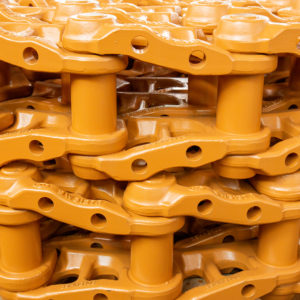
Samhlaigh dhá chomhthreomhar, Slabhraí rothar tromshaothair, scálaithe suas go céim ollmhór. Is é seo croílár slabhra rianta. Ní singil é, lúb monolithic na cruach. In ionad, Is sraith de naisc idirnasctha í atá le chéile go cúramach, bioráin, agus bushings. Gach deighleog, nó "nasc," is masterpiece de chruach brionnaithe é, Tá sé deartha chun pivot i gcoinne a chomharsana. An "PIN" Feidhmíonn sé mar an biorán hinge, slat cruach cruaite a cheadaíonn don chomhpháirt a chur in iúl. An "Bushing" is sorcóir log é a oireann thar an mbiorán, ag soláthar mór, Dromchla Caith Íobartach. Cruthaíonn an tionól iomlán solúbtha, powerful loop that engages with the machine's drive sprocket to propel it forward or backward.
Déanann an slabhra rianta níos mó ná cumhacht a tharchur. Iompraíonn sé meáchan iomlán an mheaisín, Dáilte trí na rollóirí rianta. Treoraíonn sé an meaisín, é a choinneáil ar chosán díreach nó ligean dó casadh. Caithfidh teannas leanúnach a bheith air, Ualaí turraing ó charraigeacha a bhualadh, agus meilt gan staonadh na n -ábhar scríobach. Cinneann sláine gach bioráin aonair agus bushing sláine an tslabhra iomláin. Nuair a chloiseann tú innealtóirí ag labhairt faoi "pháirc," Tá siad ag tagairt don achar beacht ó lár bioráin amháin go lár an chéad cheann eile. De réir mar a chaitheann an slabhra, Méadaíonn an pháirc seo, fadú caolchúiseach a bhfuil iarmhairtí tromchúiseacha aige ar an gcaoi a n -idirghníomhaíonn an slabhra le codanna eile ar iompar, go háirithe na sprockets. Tá slabhra rianta, mar sin, ionstraim bheachtais, In ainneoin a chuma gharbh.
An bróg rian a thuiscint: The Machine's Footprint
Más é an slabhra rianta an cnámharlach, Is é an bróg rian an chos. Bolted go díreach ar dhromchla seachtrach na naisc slabhra rianta, Is iad seo na comhpháirteanna a dhéanann teagmháil dhíreach leis an talamh. Is cosúil go bhfuil a bhfeidhm simplí: Dromchla a sholáthar don mheaisín chun scíth a ligean agus tarraingt a ghiniúint. Ach fós féin, Tá an réaltacht i bhfad níos mó ná sin. Is cothromaíocht íogair de phrionsabail fhisiciúla iomaíocha é dearadh bróg rian. It must be wide enough to distribute the machine's weight, ag cruthú brú íseal talún chun "snámh" Thar ithreacha boga - prionsabal ar a dtugtar snámhacht. Smaoinigh ar an difríocht idir iarracht a dhéanamh siúl ar shneachta domhain le buataisí rialta i gcomparáid le bróga sneachta. Scaipeann na bróga sneachta do mheáchan thar limistéar níos mó, cosc a chur ort dul go tóin poill. Déanann bróg rian leathan an rud céanna le haghaidh tochaltóir trom ar láib.
Ag an am céanna, Caithfidh gnéithe a bheith ag greim ar an talamh chun greim a chur ar an mbróg rian chun greim a sholáthar, nó tarraingt. Tugtar "grousers ar na gnéithe seo" nó "barraí grouser." Is iad na easnacha ardaithe cruach atá chomh sainiúil sin de rian. An airde, cruth, agus socraíonn líon na ngruaiteoirí seo cé chomh héifeachtach is féidir leis an meaisín a bhrú nó a tharraingt. Is féidir leis an iomarca airde grouser ar charraig chrua a bheith ina chúis leis an meaisín turas a dhéanamh ar leideanna na ngréasán, as a dtiocfaidh éagobhsaíocht agus creathadh ard. Is beag airde grouser i láib bhog mar thoradh ar na rianta ag sníomh gan úsáid. Dá bhrí sin, ní ábhar an "láidre is láidre a roghnú an bróg rianta ceart" amháin, Ach an ceann a roghnú leis an gcéimseata cheart do thasc agus don chomhshaol ar leith.
An caidreamh siombóiseach: Conas a oibríonn slabhraí agus bróga le chéile
Ní féidir machnamh a dhéanamh ar an slabhra rian ina aonar ón bróg rian, nó vice versa. Is singil iad, aonad feidhmeach. Na boltaí bróg rian ar an nasc slabhra, é a threisiú agus an dromchla a bhaineann leis an talamh a sholáthar. Soláthraíonn an slabhra an struchtúr altach a cheadaíonn don tsraith bróga comhréidh a bheith leanúnach, cosán solúbtha timpeall na rollóirí, díomhaoin, agus sprocket. Bíonn tionchar díreach ag an rogha bróg ar shaol an tslabhra. Mar shampla, ag baint úsáide as bróg atá ró-leathan i dtionchar ard, rocky environment increases the mechanical leverage on the chain's joints. Nuair a chasann nó a fheidhmíonn an meaisín ar thalamh míchothrom, Is féidir le himeall seachtrach na bróg leathan strus ollmhór a fháil, a aistrítear ansin go díreach chuig na bioráin agus na bushings, ag luasghéarú a gcuid caitheamh.
Coincheap é seo ar a dtugtar “riail an bhróg." Deir sé gur cheart an bróg is cúinge is féidir a úsáid i gcónaí a sholáthraíonn snámhacht leordhóthanach don phost. Ag dul níos leithne ná mar is gá cuireann sé meáchan, méaduithe brú ar an undercarriage ar fad, agus ardaíonn sé ídiú breosla. Is comhbhabhtáil innealtóireachta clasaiceach é. Oibríonn an slabhra rian agus na codanna bróg rian i íogair, cothromaíocht siombóiseach. Caithfear iad a roghnú le chéile, mar chóras, le tuiscint iomlán ar conas a rachaidh dearadh cuid amháin i bhfeidhm ar fheidhmíocht agus ar fhad saoil an chuid eile. Is comhpháirtíocht mheicniúil í ina gcuireann droch-rogha i réimse amháin isteach ar an iomlán.
Stair Achomair: Éabhlóid an Tiomáint Rianaithe
Ní aireagán nua-aimseartha é an coincheap de rian leanúnach. Is féidir a lineage intleachtúil a rianú siar go dtí an 18ú haois. ach, tháinig na chéad fheithiclí rianaithe fíorphraiticiúil agus rathúla tráchtála chun cinn go luath sa 20ú haois, ceannródaithe ag cuideachtaí cosúil le Holt Manufacturing, réamhtheachtaí do Caterpillar. Bhí na córais luatha seo buntábhachtach, go minic dá ngairtear "tirim" slabhraí. Is éard a bhí iontu ná bioráin shimplí agus naisc gan aon séalaithe, rud a chiallaíonn go bhféadfadh ábhair scríobacha mar ghaineamh agus grean dul isteach go héasca sna hailt. Bhí an ráta caitheamh réalteolaíoch, agus focharráistí de dhíth tairiseach, cothabháil agus athsholáthar costasach.
Ba é an nuálaíocht aonair is suntasaí i stair an slabhra rian ná forbairt an Rian Séalaithe agus Bealaithe (Cuir ar fáil) i lár an 20ú haois. Ionchorpraíodh an dearadh réabhlóideach seo beag, rónta éifeachtacha ag gach ceann den bushing. Dearadh na rónta seo chun taiscumar ola a choinneáil taobh istigh den bhioráin agus den alt bushing agus ag an am céanna ábhar salaithe scríobach a choinneáil amach. Ba é an toradh ná laghdú suntasach ar chaitheamh inmheánach. Go tobann, an “pitch" den slabhra fós comhsheasmhach ar feadh i bhfad níos faide, agus d’fhéadfaí saolré an chórais fhocharráiste ar fad a thomhas i mílte uair an chloig seachas na céadta. An nuálaíocht seo, níos mó ná aon cheann eile, déanta nua-aimseartha, ollscartairí agus tochailteoirí ard-capall indéanta ó thaobh an gheilleagair de. D'athraigh sé an slabhra rian ó shimplí, brute-bhfeidhm a chomhdhéanann í isteach i sofaisticiúla, comhpháirteach meicniúil séalaithe, ag leagan an bhunsraith le haghaidh na ndearthaí ardleibhéil a fheicimid iontu 2025.
Mórdhíoltóir 1: Próisis Comhdhéanamh Ábhar agus Próisis Déantúsaíochta
At the very core of a component's ability to withstand the brutal reality of an earthmoving operation lies its material DNA. An rogha cruach, an modh a fhoirmiú, agus ní mionsonraí iad na cóireálacha teirmeacha a dhéantar air; is iad na cinnteoirí bunúsacha dá shaol seirbhíse. Teip ní hamháin ar dhearadh é nasc rianta a bhriseann faoi thionchar nó cos-bhróg a chaitheann mar ghallúnach i gceann cúpla seachtain, ach de mhiotaleolaíocht. Chun slabhra rian durable agus páirteanna bróg rian a roghnú, caithfidh duine a bheith ina mhac léinn san eolaíocht ábhair, ag tuiscint na ndifríochtaí caolchúiseacha ach as cuimse a scarann comhpháirt préimhe ó theip roimh am.
Croí na Marthanachta: Cóimhiotail Cruach agus Teicnící Cruite
Ní hé an cruach a úsáidtear le haghaidh comhpháirteanna fo-charbóin an meascán simplí iarainn-charbóin a d’fhéadfadh duine a shamhlú. Is cóimhiotal sofaisticiúla é, oideas cúramach crafted ina bhfuil gnéithe cosúil le mangainéis, cróimiam, moluibdín, agus cuirtear bórón isteach i gcainníochtaí beachta. Mangainéis, mar shampla, Is príomh-chomhábhar é a mhéadaíonn hardenability an chruach go suntasach. Ciallaíonn sé seo go bhfuil ar múchadh (fuaraithe tapa), is féidir ciseal cruas níos doimhne agus níos comhionann a bhaint amach. bórón, fiú amháin i méideanna lúide-codanna in aghaidh an milliún-tá éifeacht chumhachtach ar hardenability, ag ligean d'úsáid cóimhiotail nach bhfuil chomh daor céanna agus fós ag baint amach airíonna níos fearr (Cillic, 2021). Oibríonn na heilimintí cóimhiotail seo trí struchtúr criostalach an chruach a athrú de réir mar a fhuaraíonn sé, ag cruthú struchtúr mín martensitic atá thar a bheith crua agus resistant a chaitheamh scríobach.
Cruas, cén dóigh faoin spéir a ...?, níl ann ach taobh amháin den bhoinn. Is minic go mbíonn ábhar atá thar a bheith crua an-bhriste freisin, cosúil le gloine. D'fhéadfadh sé seasamh in aghaidh scratching, ach beidh sé shatter faoi thionchar géar. Teastaíonn "diana" ón bhfocharráiste - an cumas fuinneamh a ionsú agus dífhoirmiú gan scoilteadh. Seo nuair a thagann cóireálacha teirmeacha chun bheith ina bhfoirm ealaíne. An próiseas "trí-chruaite" is éard atá i gceist leis an gcomhpháirt iomlán a théamh go teocht chriticiúil agus ansin é a múchadh, ina dhiaidh sin "tempering" próiseas (aththéamh go teocht níos ísle). Maolaíonn tempering strus inmheánach agus cuireann sé toughness, cothromaíocht a chruthú idir cruas (Le haghaidh friotaíocht a chaitheamh) agus toughness (le haghaidh friotaíocht tionchair). Cur chuige níos spriocdhírithe is ea “hardening ionduchtúcháin," i gcás nach bhfuil ach na dromchlaí caitheamh ar leith, cosúil leis an iarnród de nasc rian nó an tolladh de bushing, a théitear go tapa ag réimse leictreamaighnéadach agus ansin múchtar iad. Cruthaíonn sé seo cás seachtrach thar a bheith deacair" agus é ag fágáil an chroí” istigh" den chomhpháirt níos déine agus níos insínte chun ualaí turrainge a ionsú. Is éard atá i nasc rian níos fearr ná ceann ina bhfuil doimhneacht an cháis agus an croí-chruas optamaithe go foirfe dá fheidhm atá beartaithe.
Gaibhniú vs. Réitigh: Anailís Chomparáideach ar Neart agus Costas
Tá an chaoi a ndéantar comhpháirt a mhúnlú as cruach amh díreach chomh tábhachtach leis an cruach féin. Is iad an dá mhodh is mó chun naisc rian agus bróga a tháirgeadh ná réitigh agus brionnú. I gcaitheamh, déantar cruach leáite a dhoirteadh isteach i múnla den chruth atá ag teastáil agus ligtear dó solidify. Is próiseas réasúnta neamhchostasach é, oiriúnach go maith le haghaidh cruthanna casta. ach, mar a fhuaraíonn an miotal, cruthaíonn sé struchtúr criostalach le réasúnta mór, gráin atá dírithe go randamach. Uaireanta is féidir le porosity inmheánach nó neamhréireachtaí a bheith mar thoradh air seo a d'fhéadfadh a bheith ina phointí teipthe faoi ardstrus.
Gaibhniú, i gcodarsnacht, Baineann sé seo le billet soladach cruach a thógáil agus é a mhúnlú faoi bhrú ollmhór ag baint úsáide as casúr nó preas. Ní leáíonn an próiseas seo an cruach. In ionad, fórsaí sé struchtúr gráin inmheánach na miotail a ailíniú le cruth na coda. Smaoinigh air cosúil le taos kneading; déanann an próiseas an struchtúr gráin a scagadh, é a dhéanamh níos míne agus níos comhionainne. Tugann an sreabhadh gráin leanúnach seo neart teanntachta níos fearr do chomhpháirteanna brionnaithe, friotaíocht tuirse, agus toughness tionchair i gcomparáid lena gcomhghleacaithe teilgthe. Is lú an seans go scoiltfidh nasc rian brionnaithe faoi na hualaí turrainge arís agus arís eile a bhíonn i gcairéal creagach. Costas atá sa chomhbhabhtáil. Tá an uirlis le haghaidh brionnú costasach, agus tá an próiseas i gcoitinne níos moille ná réitigh. Le blianta fada, rinne sé seo préimh a chruthú, rogha ardchostas. ach, de réir mar a tháinig teicneolaíochtaí déantúsaíochta domhanda chun cinn, tá an bhearna costais cúngaithe, páirteanna focharranna brionnaithe d'ardchaighdeán a dhéanamh níos inrochtana. Le haghaidh focharráiste fíor-láidir, go háirithe le haghaidh meaisíní os a chionn 30 tonna ag feidhmiú i gcoinníollacha tromchúiseacha, Is minic gurb iad slabhra rian brionnaithe agus páirteanna bróg rian an infheistíocht fhadtéarmach is stuama.
| Gné | Gaibhniú | Réitigh |
|---|---|---|
| Struchtúr Gráin | Go breá, éide, agus treoch | Níos géire, neamhthreorach, d'fhéadfadh a bheith scagach |
| Neart Teanntachta | Sármhaith | Maith |
| Toughness Tionchair | Ar fheabhas | Cothrom le Maith |
| Friotaíocht Tuirse | Sármhaith | Maith |
| Castacht Cruth | Teoranta do chruthanna nach bhfuil chomh casta | Den scoth le haghaidh cruthanna casta |
| Costas Déantúsaíochta | Costas uirlisithe tosaigh agus próisis níos airde | Costas uirlisithe agus próisis níos ísle |
| Úsáid tipiciúla | Comhpháirteanna ard-strus (naisc rian, bioráin) | Comhpháirteanna le céimseata casta (sproicéid) |
Ról Bórón agus Eilimintí Cóimhiotalacha Eile
Let's delve deeper into the microscopic world of steel. Tá eilimintí cóimhiotalaithe cosúil le cócaire a chuireann spíosraí le bun-oideas. Tugann gach ceann acu tréith uathúil. Mar a luadh, is gníomhaire cruaithe láidir é bórón. A adaimh, a bheith an-bheag, diffuse into the grain boundaries of the steel's crystalline lattice, go héifeachtach moilliú síos an claochlú ó austenít go ferrite níos boige agus pearlite le linn fuaraithe. Tugann sé seo níos mó ama don struchtúr crua martensitic inmhianaithe a fhoirmiú, fiú i gcodanna thicker de chomhpháirt. Is é an toradh níos doimhne, próifíl cruas níos comhsheasmhaí.
Is imreoir ríthábhachtach eile é cróimiam. Ní hamháin go méadaíonn sé hardenability ach cuireann sé go mór le friotaíocht creimeadh, fachtóir a ndéantar dearmad air go minic. Le haghaidh meaisíní a oibríonn i bhfliuch, seile, nó timpeallachtaí aigéadacha, cosúil leo siúd i réigiúin chósta nó feidhmeanna mianadóireachta áirithe, is féidir le cion cróimiam níos airde díghrádú na gcomhpháirteanna a mhoilliú go mór. Oibríonn moluibdín i sineirgíocht le cróimiam, feabhas a chur ar an toughness ag teochtaí arda agus feabhas a chur ar fhriotaíocht in aghaidh "brabús teochta," feiniméan inar féidir le cruach éirí brittle tar éis é a choinneáil ag teochtaí áirithe. Is príomhghné eile é nicil le haghaidh toughness, go háirithe ag teochtaí ísle. I gcás innealra atá i ndán do gheimhreadh reoite na Rúise nó Thuaisceart na hÁise, beidh rianshlabhra le cion nicil níos airde i bhfad níos resistant do bhriseadh brittle i gcoinníollacha fo-nialais. Soláthraí eolach, cosúil leis an bhfoireann ag Juli Innealra, understands these metallurgical nuances and can help match the specific alloy composition of their undercarriage parts to the unique environmental challenges of a customer's region.
Cóireálacha Dromchla: Carburizing, Nítriding, agus a dTionchar ar Shaol Caithimh
Níos faide ná airíonna mórchóir na cruach, is féidir le cóireálacha dromchla chun cinn ciseal breise cosanta a sholáthar in aghaidh caitheamh. Ní bratuithe cosúil le péint iad seo; is próisis iad a scaipeann eilimintí isteach ar dhromchla an chruach, ag athrú a cheimic agus a n-airíonna go bunúsach. “Carburizing" is próiseas ina bhfuil comhpháirt, cosúil le bushing, a théitear in atmaisféar saibhir carbóin. Idirleata adaimh charbóin isteach sa dromchla, ag cruthú “case" le cion carbóin an-ard. Nuair a mhúchadh an cás seo, bíonn sé thar a bheith deacair, le luachanna cruas níos mó ná 60 ar scála Rockwell C. Tá an dromchla crua seo thar a bheith frithsheasmhach don mheilt, caitheamh scríobach a tharlaíonn idir an bioráin agus an bushing.
“Nítriding" próiseas cosúil leis ach úsáideann nítrigin in ionad carbóin. De ghnáth déantar é ag teochtaí níos ísle ná carburizing, rud a fhágann go bhfuil níos lú saobhadh ar an gcuid. Tá dromchla nítrided thar a bheith crua freisin agus cuireann sé friotaíocht den scoth ar chaitheamh agus tuirse. Tá cuid de na bioráin rian is forbartha agus bushings ar an margadh i 2025 úsáid a bhaint as meascán de na teicníochtaí seo - a trí-cruaite, croí diana déanta as cruach cóimhiotal bórón, a carburaítear nó a nítrídítear ansin ar a dhromchla chun an meascán deiridh den taobh amuigh caitheamh-dhíonach agus taobh istigh turraing-dhíonach a chruthú. Nuair a bhíonn slabhra rian agus páirteanna bróg rian á meas, is fiú fiosrú a dhéanamh faoi na cóireálacha dromchla chun cinn seo. Léiríonn siad infheistíocht shuntasach i ndéantúsaíocht ach íocann siad díbhinní suntasacha i bhfoirm saol seirbhíse leathnaithe, go háirithe i bhfeidhmchláir ard-abrasion cosúil le gaineamh nó eibhir.
Mórdhíoltóir 2: Dearadh Grouser agus a thionchar ar an tír -raon
An bróg rian, lena grousers sainiúla, is the machine's direct handshake with the earth. Is uirlis rannpháirtíochta é, agus mar aon uirlis, ní mór a fhoirm a mheaitseáil go fíorálainn lena fheidhm. Is éard atá i gceist leis an bróg rian mícheart a roghnú ná scriú a thiomáint le casúr; seans go bhfaighidh tú isteach é sa deireadh, ach beidh an próiseas neamhéifeachtach, millteach, agus ar deireadh thiar frustrachas. Céimseata an bhróg riain - a leithead, líon a cearca, and their shape—dictates the machine's ability to generate traction, a chobhsaíocht ar fhánaí, a thionchar ar dhromchla na talún, agus fiú an ráta a chaitheann an córas focharráiste ar fad amach. Má dhéantar breithniú tuisceanach ar dhearadh cearcóg, bogtar an próiseas roghnúcháin ó cheannach simplí go dtí cinneadh oibríochta straitéiseach.
Aonair, Dúbailte, Triarach: An Comhaireamh Barra Cearrbhachais Ceart a Roghnú
Is é líon na grousers ar bróg rian an tréith is láithreach agus is sainiúla. An rogha idir ceann amháin, dúbailte, nó tá bróg cearca thriarach bunúsach, tiomáinte go hiomlán ag cur i bhfeidhm príomhúil an mheaisín.
A bróg cearca fraoigh gnéithe amháin ard, barra cearca fraoigh ag rith trasna a leithead. Soláthraíonn an dearadh seo an treá uasta agus is féidir isteach sa talamh. Is é an rogha bróg é d'iarratais a dteastaíonn tarraingt mhór agus tarraingt barra tarraingthe uathu, cosúil le ollscartaire ag sracadh cré pacáilte crua nó ag dreapadh gráid ghéar. Soláthraíonn an treá domhain ancaire, rud a ligeann don mheaisín a chumhacht iomlán a chur i bhfeidhm gan duillín rian. ach, Tagann an ionsaitheacht seo le míbhuntáistí. Cruthaíonn an brú dírithe ar bharra aonair ardtionchar nuair a bhíonn tú ag taisteal thar dhromchlaí crua mar charraig, as a dtiocfaidh turas garbh agus strus ard ar an bhfocharráiste. Ina theannta sin, is deacair casadh a dhéanamh de bharr treá domhain na talún. Caithfidh an meaisín oibriú i bhfad níos deacra chun pivot, a chuireann dlús le caitheamh ar gach comhpháirt stiúrtha agus is féidir leis an dromchla talún a stróiceadh.
A bróg cearca triarach is é an mhalairt polar agus an cineál is coitianta a fhaightear ar thochaltóirí. Le trí cearca fraoigh níos giorra, tá níos mó achar dromchla ag an bróg i dteagmháil leis an talamh ag aon am ar leith. Soláthraíonn sé seo feidhmíocht mhaith uile-thimpeall, cothromaíocht tarraingt a thairiscint, snámhachta, agus maneuverability. Laghdaíonn airde íochtair na cearca dul isteach sa talamh, rud a fhágann go bhfuil casadh i bhfad níos éasca agus níos rianúla. Tá sé seo ríthábhachtach do thochaltóir, atá de shíor á athshuíomh féin agus é ag tochailt. Soláthraíonn an dearadh cearcóg triple turas níos míne agus níos lú creathadh nuair a bhíonn tú ag taisteal, caitheamh ar an bhfocharráiste a laghdú agus compord an oibreora a fheabhsú.
A bróg grouser dúbailte áitíonn an talamh lár. Cuireann sé tarraingt agus treá níos fearr ar fáil ná cearca fraoigh ach níl sé chomh ionsaitheach agus is fusa é a chasadh ná cearca fraoigh amháin.. Mar sin is rogha an-choitianta é d’aghaidh lódairí riain agus do dozers a bhfuil gá acu le comhréiteach idir cumhacht brú líne dhíreach agus inaistritheacht.. The choice is a direct reflection of the machine's job. Dozer a chaitheann 90% dá n-am ag brú ábhar i líne dhíreach bainfidh sé leas as grousers aonair. Tochaltóir a bhíonn de shíor ag tochailt, ag luascadh, agus mairfidh athshuíomh níos faide, saol níos táirgiúla ar chearca triaracha.
| Cineál grouser | Feidhmchlár Príomhúil | Tarraingt | Inaistritheacht | Suaitheadh Talún |
|---|---|---|---|---|
| Cearrbhachas Aonair | Dozers, Sipir (Tarraingt Barra Arda) | Uasmhéid | bocht | Ard |
| Grósaer dúbailte | Loaders Track, Dozers (Solúbthacht) | Ard | Measartha | Measartha |
| Saothróirí Triple | Tochailteoirí (Uile-Aidhm) | Maith | Ar fheabhas | Íseal |
| Swamp (Brú Talún Íseal) | Láibe Bog, Marshland | Íseal (Tá snámhacht eochair) | Maith | An-Íseal |
| Pad Rubair | Asfalt, Coincréite, Dromchlaí Críochnaithe | Measartha | Ar fheabhas | Íosráta / Dada |
| Chopper / Féin-ghlanadh | Láithreáin líonta talún, Láimhseáil Dramhaíola, Cré Greamaitheach | Maith | Maith | Ard (Deartha chun ábhar a bhriseadh suas) |
Bróga Speisialaithe: Pads Swamp, Pads Rubair, agus Bróga Chopper
Níos faide ná na cumraíochtaí caighdeánacha, tá saol iontach de bhróga riain speisialaithe ann, gach ceann acu deartha chun fadhb chomhshaoil uathúil a réiteach. pads swamp, ar a dtugtar freisin Brú Talún Íseal (LGP) bróga, Is sampla foirfe iad. Tá na bróga seo thar a bheith leathan, uaireanta ag breathnú beagnach cosúil le pleancanna cruach. Níl a n-aidhm tarraingt ard sa chiall traidisiúnta, ach snámhachta uasta. By dramatically increasing the surface area of the machine's footprint, laghdaíonn siad brú na talún go pointe inar féidir le meaisín ollmhór oibriú go bog, talamh sáithithe - cosúil le swamps, riasca, nó láithreáin dreidireachta — gan dul faoi.
Ar an taobh eile den speictream atá pillíní rubair. Is féidir iad seo a bheith ina n-eochairbhearta atá ceangailte de bhróg chruach chaighdeánach nó ina "ródlíne" iomlán" bróg ina bhfuil an rubar nasctha go díreach le croí cruach. Is é an cuspóir atá leo ná ligean do mheaisín rianaithe trom oibriú ar dhromchlaí íogaire cosúil le asfalt, coincréit, nó limistéir tírdhreachtaithe gan damáiste a dhéanamh. Tá siad fíor-riachtanach le haghaidh tógála uirbeach, obair bóthair, agus aon láithreán fostaíochta ina bhfuil sé mar thosaíocht ag caomhnú an dromchla reatha. Cé go dtugann siad níos lú tarraingt ná cearca cruach, go háirithe i gcoinníollacha fliucha nó láibeacha, cuireann siad ciúin, turas íseal-chreathadh agus cosaint dromchla gan mheaitseáil.
Leagan suimiúil eile is ea an " chopper" nó bróg féin-ghlanadh. Is minic a fhaightear iad seo ar mheaisíní a oibríonn i líonadh talún nó a bhfuil ábhair an-greamaitheacha cosúil le cré. Gné siad gearrtha amach sa phláta bróg agus uaireanta bíonn siad níos ionsaithí, dearadh cearca fraoigh. Is é cuspóir na ngnéithe seo ná ábhar a bhriseadh suas agus a dhíbirt a chuirfeadh isteach san fhocharráiste murach sin. Is fadhb thromchúiseach é pacáil ábhair; cuireann sé meáchan ollmhór, méaduithe teannas rian go leibhéil contúirteacha, agus is féidir leis na rianta a urghabháil, as a dtagann teip thubaisteach. Is réiteach saintógtha é bróga chopper ar an bhfadhb sonrach agus millteach seo.
Fisic an Tarraingthe: Mar a théann Airde agus Cruth Grouser i bhfeidhm ar Fheidhmíocht
Staidéar ar mheicnic ithreach is ea an t-idirghníomhú idir cearca fraoigh agus an talamh. Nuair a théann cearca fraoigh isteach san ithir, cruthaíonn sé eitleán lomadh. An tarraingt, nó iarracht tharraingeach, that can be generated is a function of the soil's shear strength and the surface area of that shear plane. Cruthaíonn cearcóg níos airde eitleán lomadh níos doimhne, mar sin méadaítear an acmhainneacht le haghaidh tarraingt. Sin é an fáth go bhfuil cearca fraoigh aonair chomh héifeachtach sin in ithreacha comhtháite.
ach, athraíonn an scéal go dian, dromchlaí neamhtreáite mar charraig nó gairbhéal dlúthaithe. An áit seo, is dliteanas é cearcóg ard. Críochnaíonn an meaisín ag marcaíocht ar leideanna géara na grousers, laghdú suntasach ar an limistéar teagmhála leis an talamh. Tagann éagobhsaíocht as seo, creathadh ard, agus lódáil dhian phointe ar bharr na cearca fraoigh agus ar dhromchla na carraige. Sna coinníollacha seo, níos ísle, tá próifíl níos leithne grouser níos fearr, toisc go n-uasmhéadaíonn sé an limistéar teagmhála agus go mbraitheann sé ar fhrithchuimilt seachas ar neart lomadh le haghaidh greim.
Tá cruth na cearca fraoigh tábhachtach freisin. Tá an chuid is mó de na cearca fraoigh trapezoidal, a sholáthraíonn cothromaíocht mhaith de neart agus treá. D’fhéadfadh roinnt bróga speisialaithe próifíl níos cuartha nó dronuilleach a úsáid chun airíonna féinghlanta a fheabhsú nó chun greim níos fearr a sholáthar agus iad ag casadh. Is é an rud is tábhachtaí ná nach bhfuil aon rud is fearr go huilíoch" mó. Is feidhm dhíreach é an dearadh is fearr d'airíonna geoiteicniúla an ábhair a mbeidh an meaisín ag obair air.
Leithead Bróg a Chomhoiriúnú le Coinníollacha Talún: Snámhacht vs. Inaistritheacht
Tá baint againn le "riail na mbróg": bain úsáid as an bróg is cúinge a sholáthraíonn snámhacht leordhóthanach. Let's formalize this with some physics. Ground pressure is calculated as the machine's weight divided by the total contact area of its tracks. Ag 20-ton (44,000 lb) d'fhéadfadh go mbeadh brú talún thart ar thochaltóir le bróga caighdeánacha 600mm 6.5 PSI. Má tá an meaisín céanna sin feistithe le bróga 800mm níos leithne, méadaíonn an limistéar teagmhála, agus d'fhéadfadh an brú talún titim go dtí thart 5.0 PSI. Is é an difríocht seo a ligeann don mheaisín oibriú ar thalamh níos boige gan a bheith bogtha.
Ach níl an tairbhe seo saor in aisce. Feidhmíonn an bróg níos leithne mar luamhán níos faide. Agus an meaisín ag casadh nó ag taisteal thar tír-raon míchothrom, tá na struis méadaithe. Cuireann meáchan breise na bróga níos leithne freisin le táimhe an chórais, a éilíonn níos mó fuinnimh chun gluaiseacht agus brú níos mó a chur ar na bioráin agus busings an slabhra rian. An baol “rian a chaitheamh" (derailment) méaduithe freisin le bróga níos leithne, go háirithe nuair a bhíonn tú ag obair ar fhánaí nó ag casadh go géar. Dá bhrí sin, Is gníomh cothromaíochta ríthábhachtach é roghnú leithead bróg. Ní mór measúnú cruinn a dhéanamh ar ghnáthchoinníollacha talún shuíomh an phoist. Más rud é go mbeidh an meaisín a chaitheamh an chuid is mó dá chuid ama ar ghnólacht, talamh cobhsaí, is é bróg caighdeánach an rogha is eacnamaí agus is iontaofa go meicniúil. Ach amháin nuair a bhíonn coinníollacha bog mar an norm, ní an eisceacht, ar cheart bróga LGP níos leithne a chur san áireamh. This single decision has a cascading effect on the entire cost and reliability of the machine's undercarriage system.
Mórdhíoltóir 3: Ról criticiúil na mbioráin, Tonn, agus rónta
Má tá na naisc rian agus bróga an infheicthe, armúr seachtrach an fhocharráiste, ansin na bioráin, bustaí, agus is rónta a chuid inmheánach, orgáin ríthábhachtacha. I bhfolach ón radharc, éascaíonn na comhpháirteanna seo gach gluaiseacht, ionsú gach turraing, and bear the full brunt of the system's internal wear. An mall, Is é díghrádú meilt na n-alt inmheánach seo an príomhfhachtóir a shocraíonn saolré slabhra rian. Ní teip sa domhan ceilte seo de réir a chéile; is minic a bhíonn sé tobann agus iomlán, meaisín iltonna a thabhairt chun stop a mheilt. Dá bhrí sin, ní hamháin eolas teicniúil é tuiscint ar dhearadh agus ar fheidhm na gcomhpháirteanna beaga ach cumhachtacha seo; is é an eochair do thuar, ag bainistiú, agus síneadh a chur le saol do mhír chaitheamh is costasaí.
Rian Séalaithe agus Bealaithe (Cuir ar fáil) vs. Slabhraí Lubricated Grease
Chun genius na slabhraí rian nua-aimseartha a thuiscint, ní mór dúinn a thuiscint ar dtús cad a tháinig roimhe. Luath" tirim" tionóil shimplí bioráin agus naisc a bhí sna slabhraí rian. Le gach in iúl, salachar, gaineamh, agus bheadh grit isteach sa chomhpháirteach, forming a grinding paste that rapidly wore away both the pin and the inside of the link's bore. Bhí an ráta caitheamh chomh hard sin gur tomhaiseadh saol an fhocharráiste i gceann cúpla céad uair an chloig.
Ba é an "grease-lubricated" an chéad fheabhsú mór" slabhra. Sa dearadh seo, druileáladh an bioráin le cainéal, ag ligean ramhar a phumpáil isteach sa chomhpháirteach chun lubrication a sholáthar agus, níos tábhachtaí fós, chun ábhar salaithe a shruthlú. Ba fheabhsú é seo, ach bhí sé ag teastáil go laethúil, cothabháil dúthrachtach. Mura ndéantar dearmad ar ramhar fiú d’alt amháin d’fhéadfadh sé go gclisfeadh sé go tapa.
Ba é an fíor-réabhlóid teacht an Rian Séalaithe agus Bealaithe (Cuir ar fáil) córas. I slabhra SALT, tá an comhpháirteach idir an bioráin agus an bushing cosanta ag péire rónta sofaisticiúla. Tá na rónta seo deartha chun dhá fheidhm a chomhlíonadh ag an am céanna: coinníonn siad taiscumar ola leachtach séalaithe go buan taobh istigh den chomhpháirteach, agus cuireann siad cosc ar aon éillithe seachtracha dul isteach. Dá bhrí sin, déantar an bioráin agus an tor a shnámh i nglantán i gcónaí, scannán bealaithe ola. Cuireann sé seo deireadh leis an miotal-ar-miotal, meilt grit-insileadh a scrios slabhraí níos sine. Níl an laghdú ar chaitheamh inmheánach incriminteach; is feabhsú ord méadaíochta é. Is féidir le slabhra SALT na mílte uair an chloig a mhaireann le cothabháil íosta, rud a fhágann gurb é an caighdeán gan aighneas é do bheagnach gach tochaltóir agus ollscartaire. Nuair a fhoinsiú páirteanna undercarriage ard-chaighdeán, Tá a chinntiú go bhfuil siad deartha do chóras SALT ar cheann de na seiceálacha is bunúsaí ar cháilíocht agus ar nua-aimsearthacht.
Anatamaíocht na Bioráin agus Comhpháirteach Toir
Let's dissect this critical joint. An "PIN" is soladach, slat sorcóireach déanta as cruach an-chruaite. Téann sé trí na foircinn idirghlasála de dhá nasc rianta cóngaracha. An "Bushing" is log, sorcóir cruach cruaite a luíonn thar an bioráin. Suíonn an bushing laistigh den tolladh an "inmheánach" nasc rian, cé go bhfuil an bioráin preas-feistithe i foircinn an "seachtrach" nasc rian. Dealraíonn sé seo casta, ach tá an socrú cliste. Nuair a lúbann an slabhra, rothlaíonn an bioráin taobh istigh den bushing. Tá an caitheamh deartha chun go dtarlóidh idir trastomhas seachtrach an bhioráin agus trastomhas istigh an bushing.
Is rogha deartha ríthábhachtach é seo. Díríonn sé an caitheamh inmheánach ar dhá cheann ar leith, comhpháirteanna in-athsholáthair. De réir mar a oibríonn an slabhra, caitheann an t-alt leanúnach faoi ualach ollmhór go mall an t-ábhar ar an bioráin agus busing. This wear is what causes the chain's "pitch" a mhéadú, nó “stráice." The chain isn't actually stretching; Cruthaítear méid beag bídeach de shúgradh breise mar gheall ar an gcaillteanas ábhartha i ngach ceann de na mórán hailt, a chuireann suas thar fhad an slabhra. Is é an fadú páirce seo an príomhthomhas a úsáidtear chun leibhéal caitheamh rianshlabhra a chinneadh. Cinntíonn córas dea-dheartha go gcaitheann an bioráin agus an bushing ag ráta intuartha, ag ligean do chothabháil phleanáilte sula gcaitheann siad tríd agus ina chúis le teip thubaisteach ar an nasc féin.
Rónta Polúireatán: Laochra Neamhluaite na Fad saoil
Is é an séala an chomhpháirt a dhéanann an córas SALT iomlán indéanta. Ní o-fáinní rubair simplí iad seo. Is comhpháirt ardteicneolaíochta é séala rian nua-aimseartha, go minic comhdhéanta de dhá chuid: fáinne ualach "rubar athléimneach" agus fáinne róin “polaurethane marthanach." Feidhmíonn an fáinne ualach cosúil le earrach, ag brú an fáinne séala go daingean i gcoinne aghaidheanna snasta an bushing agus an nasc. Déantar an fáinne róin féin ó ghrád speisialta polúireatán, ábhar a roghnaíodh mar gheall ar a chruas dochreidte, friotaíocht abrasion, agus friotaíocht in aghaidh ola agus teasa.
Tá céimseata an tséala ríthábhachtach. Caithfidh sé a bheith in ann freastal ar mhéid beag gluaiseachta aiseach agus mí-ailínithe gan a shéala a chailleadh. Caithfidh sé a bhrú séalaithe a choinneáil thar raon teochta leathan, ó fhuacht maidin gheimhridh tosaithe go dtí an teas ard a ghintear trí oibriú leanúnach. An dearadh dhá pháirt, go minic ar a dtugtar “duo-cone" nó “toric" séala, cruthaíonn sé séala labyrinth an-iontaofa atá thar a bheith éifeachtach ina dhá thasc ola a choinneáil isteach agus salachar amach. Cáilíocht an beag bídeach seo, go minic-dearmad comhpháirt ríthábhachtach. Mar thoradh ar mhainneachtain róin roimh am go gcailltear ola ón gcomhpháirteach. Nuair atá an ola imithe, téann an t-alt ar ais go héifeachtach le bheith ina "tirim" comhpháirteach, agus scriosfaidh an bioráin agus an bushing iad féin i gcodán dá saolré ionchais. Nuair a bhíonn slabhra rian agus páirteanna bróg rian á meas, tá cáilíocht agus dearadh na rónta ina tháscaire díreach ar chaighdeán foriomlán an slabhra.
Tuiscint ar Pháirc agus a Éifeacht ar Chaitheamh agus Rannpháirtíocht Sproicéad
“Páirc" is é an fad lár-go-lár idir dhá bhioráin chóngaracha i rianshlabhra. Nuair a bhíonn slabhra nua, déantar an toise seo de réir sonraíocht an-bheacht, mar shampla, 216 mm. This pitch is designed to perfectly match the distance between the teeth on the machine's drive sprocket. De réir mar a rothlaíonn an sprocket, a fiacla gabháil leis an busings an slabhra, ag brú an mheaisín ar aghaidh. Tá an oiriúnach snug agus éifeachtach, leis an ualach a dháileadh go cothrom.
ach, mar a tharlaíonn caitheamh inmheánach ar na bioráin agus bushings, tosaíonn páirc éifeachtach an tslabhra a mhéadú. Fiú méid minuscule de chaitheamh i ngach ceann de na 40+ cuireann joints ar slabhra suas. Slabhra atá 50% caite b’fhéidir go mbeadh páirc a bhfuil “stretched" le 3-4 mm. Anois, nuair a dhéanann an slabhra fadaithe seo iarracht timfhilleadh ar an sprocket, ní ailíníonn na fiacla go foirfe leis na toir a thuilleadh. Rachaidh an fiacail sprocket ag gabháil leis an bpreas níos airde ar a dhromchla, agus de réir mar a rothlaíonn an sprocket, sleamhnóidh sé nó “scrobarnach" síos an bushing. Cuireann an gníomh scrobarnach seo dlús mór le caitheamh ar an taobh amuigh den bhrú agus ar fhiacla an sprocket.. Sin é an fáth go bhfeicfidh tú go minic sprockets le "fiacail fiaigh" nó patrún caitheamh biorach ar mheaisíní le slabhraí caite. Is comhartha inspioráideach é den easaontas páirce. Tá bainistiú agus monatóireacht ar fhadú páirce mar bhunchloch na bainistíochta fo-charranna gairmiúla. Ceadaíonn sé idirghabhálacha pleanáilte, cosúil le “bioráin agus cas bushing," i bhfad sula dtosaíonn na comhpháirteanna mímheaitseála ag scrios a chéile ar ráta luathaithe.
Mórdhíoltóir 4: Comhshaol oibriúcháin agus éilimh a bhaineann go sonrach le hiarratais
A machine's undercarriage does not exist in a vacuum. Tá sé i tairiseach, idirphlé foréigneach lena timpeallacht. Comhdhéanamh geolaíoch na talún, an cion taise, comhdhéanamh ceimiceach na hithreach, agus tá an teocht chomhthimpeallach ar fad ag déanamh iarracht ionsaí a dhéanamh ar chruach an tslabhra rian agus páirteanna bróg a rianú. Focharráiste a sholáthraíonn 5,000 d'fhéadfadh uaireanta de shaol seirbhíse i loam ghainmheach a scrios go hiomlán i 1,500 uair an chloig i gcairéal eibhir. Ní cleachtadh acadúil é dúshláin shonracha na timpeallachta oibriúcháin a aithint agus a chainníochtú; is réamhriachtanas bunúsach é chun roghnú comhpháirte atá costéifeachtach a dhéanamh. A roghnú go ciallmhar, caithfidh duine a bheith ina anailísí fóiréinseach ar shuíomh an phoist.
Ard-thionchar vs. Timpeallachtaí Ard-Abrasion: Scéal faoi Dhá Chaitheamh Patrún
Ní chruthaítear gach caitheamh comhionann. Tá sé ríthábhachtach idirdhealú a dhéanamh idir dhá phríomh-mhodh scriosta: tionchar agus abrasion.
A ard-thionchar timpeallacht tréithrithe ag crua, dromchlaí gan toradh, carraigeacha móra go hiondúil, cloch pléasctha, nó smionagar scartála. Sna coinníollacha seo, ní mheilt mall an ábhair é an modh teip ceannasach. In ionad, tá sé briste, scoilteadh, agus spalling. Nuair a slams bróg rian síos ar phíosa géar eibhir, tá an fórsa ollmhór dírithe ar limistéar beag. D'fhéadfadh sé seo a chur faoi deara an grouser a sliseanna, an bhróg a lúbadh nó a scoilteadh, nó an turraing a tharchur tríd an slabhra, ag cur strus ollmhór ar na bioráin agus na naisc. Do na timpeallachtaí seo, is é an mhaoin ábhartha is inmhianaithe déineacht. Caithfidh an cruach a bheith in ann an fuinneamh turraing seo a ionsú agus a dhífhoirmiú beagán gan scoilteadh. Cruach trí-chruaite le cruas dromchla beagán níos ísle ach crua, sáróidh croí insínte comhpháirt thar a bheith crua ach brittle i gcairéal ardtionchair.
A ard-abrasion timpeallacht, ar an láimh eile, atá sainmhínithe ag láithreacht beag, crua, cáithníní géara, cosúil le gaineamh, grit, nó gairbhéal mín. An áit seo, Is é an meicníocht chaitheamh príomhúil gníomh leanúnach scratching agus gouging a meileann go mall ar shiúl na dromchlaí na gcomhpháirteanna. Smaoinigh air mar rud atá á ionsaí i gcónaí ag páirín. Pacáistí an gaineamh isteach sa undercarriage, oibríonn sé a bhealach idir páirteanna gluaisteacha, agus sciúrann sé an cruach gan staonadh. Sna coinníollacha seo, is é an mhaoin ábhartha is inmhianaithe cruas. Dromchla an-chrua, mar sin cruthaithe ag hardening ionduchtaithe nó carburizing, beidh sé i bhfad níos resistant don chaitheamh scríobach seo. Coimeádfaidh nasc rian le cruas ard dromchla airde a iarnróid ar feadh níos faide, agus beidh bushing cruaite níos fearr i gcoinne an mheilt ó ithir ghainmheach. Tá meascán de thionchar agus scríobadh i gceist i bhformhór na suíomhanna poist, ach tá ceann amháin ceannasach de ghnáth. Is é an mheicníocht chaitheamh ceannasach a aithint i gceart an chéad chéim i dtreo comhpháirt a roghnú a bhfuil na hairíonna ceart mhiotaleolaíochta aige.
An Dúshlán Creimneach: Salainn, Aigéadach, agus Coinníollacha Fliucha
Ní hé an caitheamh meicniúil an t-aon namhaid. Ionsaí ceimiceach, nó creimeadh, Is féidir a bheith chomh potent, más insidious, fórsa scriosta. Tá meaisíní atá ag feidhmiú i gceantair chósta nochta i gcónaí do spraeáil salainn agus ithir salanda, rud a luathaíonn go mór an próiseas meirge. Ní ceist chosmaideach amháin é meirge; is é cruach láidir a thiontú ina lag, ocsaíd iarainn flaky. Claonann sé dromchla na gcomhpháirteanna, ag cruthú risers struis is féidir go dtiocfadh scoilteanna tuirse. Is féidir leis páirteanna gluaisteacha a urghabháil freisin, cosúil leis an meicníocht rian-coigeartóir.
Mar an gcéanna, is féidir le hithreacha an-aigéadacha nó alcaileach a bheith i dtimpeallachtaí tionsclaíocha nó mianadóireachta áirithe. Is féidir leis na ceimiceáin seo ionsaí ionsaitheach a dhéanamh ar chruach an fhocharráiste, go háirithe má tá bratuithe cosanta caite. Féadann coinníollacha fliucha neamhurchóideacha fiú luas a chur le caitheamh. Is féidir le huisce feidhmiú mar bhealaidh do cháithníní scríobacha, ag cruthú sciodar is féidir a phumpáil isteach sna scáintí is doichte fiú, luasghéarú ar chaitheamh. Is féidir leis an ramhar a chosnaíonn pointí maighdeog seachtracha a ní freisin.
Maidir leis na timpeallachtaí creimneach seo, éiríonn roghnú ábhar ríthábhachtach arís. Tugann steels le céatadán níos airde cróimiam agus nicil friotaíocht creimeadh níos fearr ó dhúchas. D'fhéadfadh bratuithe speisialta nó cóireálacha dromchla a bheith i gcuid de na codanna slabhra rian préimhe agus na bróga rian atá deartha chun bacainn a chur ar ionsaí ceimiceacha. Agus páirteanna á roghnú le haghaidh meaisín a oibreoidh i dtimpeallacht chreimneach ar a dtugtar, ní leor é a fhiafraí faoi chruas agus déine; one must also inquire about the alloy's resistance to corrosion.
Teocht Foircní: Ó Shio Sibéire go Teas an Mheán-Oirthir
Tá tionchar as cuimse ag an teocht oibriúcháin chomhthimpeallach ar fheidhmíocht agus ar iontaofacht na gcomhpháirteanna fo-charrtha. I bhfuar mhór geimhreadh Sibéire nó tuaisceart Cheanada, áit ar féidir leis na teochtaí titim faoi -40°C, is é an príomhábhar imní briseadh brittle. Ag na teochtaí ísle seo, is féidir le déine na cruach laghdú go mór. Is féidir le cóimhiotal cruach atá breá diana agus athléimneach ag teocht an tseomra éirí chomh brittle le gloine nuair a bhíonn sé reoite. D'fhéadfadh tionchar ó charraig reoite a ionsúitear de ghnáth gan cheist a bheith ina chúis le briseadh go tubaisteach do nasc fuar rian. Chun seo a chomhrac, ní mór páirteanna focharranna atá ceaptha do réigiúin fuar-aimsire a dhéanamh as cóimhiotail chruach speisialta, go minic le cion nicil níos airde, atá ceaptha go sonrach chun a gcuid déine a choinneáil ag teochtaí ísle. Déantar tástáil freisin ar cháilíocht na rónta sa slabhra SALT go dtí a theorainn, toisc gur féidir leis na comhpháirteanna rubair agus polúireatán éirí righin agus níos lú comhlíontach, méadú ar an mbaol sceite.
Os a choinne sin, i teas scorching an Mheán-Oirthear nó codanna den Afraic, nuair is féidir le teochtaí comhthimpeallacha dul thar 50°C, tá an dúshlán difriúil. Is é an príomhábhar imní an slaodacht agus sláine an bhealaithe taobh istigh de na hailt séalaithe. Teochtaí oibriúcháin arda, in éineacht leis an teas a ghintear go hinmheánach trí shreabhadh an tslabhra, is féidir leis an ola sna hailt SALT a tanaí amach, ag laghdú a éifeachtúlacht bealaithe. Cuirtear na rónta faoi strus ollmhór teirmeach freisin, ar féidir leo a n-aosú a luathú agus teip roimh am a bheith mar thoradh orthu. Sna haeráidí te seo, ag baint úsáide as slabhraí rian líonadh le caighdeán ard, is féidir le bealaí sintéiseacha ard-slaodachta atá deartha chun a n-airíonna a chothabháil ag teochtaí ardaithe saol na bioráin agus na toir a leathnú go suntasach.
Cás-Staidéar: Roghnú Focharranna do Chairéal san Astráil vs. Tionscadal píblíne sa Rúis
Chun na smaointe seo a shintéisiú, let's consider two hypothetical scenarios.
Cás 1: Cairéal eibhir in Iarthar na hAstráile. Tá an timpeallacht te, tirim, agus ard-thionchar agus ard-abrasion. Is meascán de ghéar é an talamh, eibhir blasted agus deannaigh scríobach. Le haghaidh dozer mór ag obair anseo, is é an tsonraíocht idéalach undercarriage:
- Bróga Track: Cearrbhachas singil le haghaidh tarraingt uasta ar bhinsí míchothroma, ach gan a bheith ró-ard chun éagobhsaíocht a sheachaint. Caithfidh siad a bheith déanta as trí-cruaite, cóimhiotal ard-dughness chun seasamh in aghaidh scoilteadh ó thionchar.
- Slabhraí rianta: Naisc brionnaithe le haghaidh neart uasta agus friotaíocht tuirse. Na naisc, rollóirí, agus ba cheart go mbeadh cruas ionduchtaithe domhain ag idlers ar a gcuid dromchlaí caitheamh chun an deannach scríobach a chomhrac. Ba chóir go mbeadh na bioráin agus na toir den chaighdeán is airde, le croí daingean agus dromchla carburraithe trom. Tógtar an córas iomlán chun tosaíocht a thabhairt do fhriotaíocht tionchair agus cruas dromchla.
Cás 2: Tionscadal tógála píblíne sa tSibéir, An Rúis. Is éard atá i gceist leis an timpeallacht ná taisteal fad-achair thar tír-raon éagsúil, lena n-áirítear tundra reoite, muscaig (portach), agus ithir carraigeach, sa gheimhreadh teocht atá comhsheasmhach i bhfad faoi bhun an reo. Le haghaidh píopa leagan tochailteora anseo, bheadh an tsonraíocht idéalach:
- Bróga Track: Leathan, LGP cearcóg triple (Brú Talún Íseal) bróga. Is é an leithead le haghaidh snámhachta ar an muskeg bog, agus ceadaíonn an dearadh triarach cearcóg do inaistritheacht níos fearr agus turas níos míne le linn taistil.
- Slabhraí rianta: Caithfidh an cóimhiotal cruach do na comhpháirteanna go léir a bheith ina ard-nicil, ghrád íseal-teocht chun briseadh brittle a chosc. Ní mór na rónta a shonrú le haghaidh fuar mhór, a gcuid solúbthachta a choinneáil chun caillteanas ola a chosc. Ba cheart go mbeadh an ola laistigh de na hailt SALT ina shintéiseach íseal-slaodachta nach ramhóidh agus nach dteipfidh air a lubricate ar thosaithe fuar. Dírítear anseo ar chruas ísealteochta agus ar shnámhacht.
Léiríonn an dá shampla seo nach bhfuil aon cheann amháin “is fearr" sraith slabhra rian agus páirteanna bróg rian. The optimal choice is a carefully reasoned response to the specific challenges posed by the machine's intended work and environment.
Mórdhíoltóir 5: An OEM, Fíor, agus díospóireacht iarmhargaidh
Ceann de na roghanna is conspóidí agus is suntasaí ó thaobh airgeadais de atá le sárú ag úinéir an mheaisín ná an cinneadh maidir le cá háit le páirteanna focharráiste athsholáthair a aimsiú.. Tá an margadh roinnte go ginearálta i dtrí chatagóir: Monaróir Trealaimh Bunaidh (OEM), Fíor, agus Iarmhargadh. Le blianta fada, léiríodh an rogha mar chomhbhabhtáil shimplí idir cáilíocht OEM agus praghas iarmhargadh. ach, tírdhreach déantúsaíochta domhanda na 2025 tá sé i bhfad níos casta agus níos nuance. Tuiscint shofaisticiúil ar na catagóirí seo, in éineacht le fócas ar Chostas Iomlán Úinéireachta (TCO), riachtanach chun an díospóireacht seo a stiúradh go cliste agus go brabúsach.
Na Téarmaí a Shainmhíniú: OEM, Fíor, agus Páirteanna Iarmhargadh
Is é soiléireacht na téarmaíochta an chéad chéim.
- Monaróir Trealaimh Bunaidh (OEM) Páirtmhar: Is comhpháirteanna iad seo a tháirgtear ag monaróir an mheaisín féin nó a tháirgtear dó (e.g., Bolb, Komatsu, Volvo). They are sold in packaging bearing the machine manufacturer's brand. Nuair a chuirtear meaisín le chéile sa mhonarcha, tá sé tógtha le páirteanna OEM. The primary assurance here is that the part is guaranteed to meet the machine manufacturer's original design specifications and quality control standards.
- Fíor -chodanna: Is féidir leis an téarma seo a bheith mearbhall. Go minic, úsáidtear é go hidirmhalartaithe le OEM. ach, féadfaidh sé tagairt a dhéanamh freisin do chodanna a rinne an mhonarcha céanna a sholáthraíonn an OEM, but sold in the component manufacturer's own packaging rather than the machine brand's. Mar shampla, d'fhéadfadh cuideachta cosúil le Berco slabhraí rianta a mhonarú le haghaidh mórbhranda meaisíní (OEM) agus freisin an slabhra comhionann a dhíol faoina bhranda Berco féin (Fíor). Tá an chuid mar an gcéanna go fisiciúil, ach tá an slabhra soláthair agus an brandáil difriúil.
- Páirteanna Iarmhargadh: Is é seo an catagóir is leithne. Áiríonn sé aon chuid a mhonaraigh cuideachta nach soláthraí bunaidh an trealaimh í. Tá an t-iarmhargadh ollmhór, ó mhonaróirí a bhfuil ardmheas orthu a bhfuil taithí na mblianta acu san innealtóireacht go dtí na cinn bheaga, táirgeoirí ar chostas íseal. An caighdeán, ábhair, agus is féidir le hinnealtóireacht páirteanna iarmhargadh a bheith éagsúil go mór, ó chomhpháirteanna a chomhlíonann nó fiú a sháraíonn sonraíochtaí OEM go dtí na cinn atá contúirteach faoi bhun an chaighdeáin.
An nóisean simplíoch go bhfuil "OEM is fearr i gcónaí" agus “is comhréiteach contúirteach i gcónaí é iarmhargadh" is ceann as dáta é. Is é fírinne an scéil go bhfuil go leor cuideachtaí iarmhargadh creidiúnacha tar éis infheistíocht mhór a dhéanamh in innealtóireacht droim ar ais, eolaíocht ábhair, agus rialú cáilíochta. Féadfaidh siad na soláthraithe cruach céanna a úsáid, na tithe gaibhnithe céanna, agus na háiseanna cóireála teasa céanna leis na OEManna. Is é an dúshlán don cheannaitheoir ná idirdhealú a dhéanamh idir na soláthróirí iarmhargadh ardcháilíochta seo agus na soláthraithe ísealcháilíochta.
Dearcadh Nua ar Chaighdeán: Nuair a sháraíonn nó a sháraíonn iarmhargadh Caighdeáin OEM
Conas is féidir le cuid iarmhargadh a bheith chomh maith, b'fhéidir, nó níos fearr fós ná, cuid OEM? Tá roinnt bealaí ann. Ar dtús, díríonn monaróir iarmhargadh tiomnaithe ar raon sonrach táirgí amháin, cosúil le páirteanna undercarriage. Féadfaidh saineolas domhain a bheith mar thoradh ar an speisialtóireacht seo. Féadfaidh siad modh teipe coitianta a aithint i ndearadh OEM agus réiteach a innealtóireacht. Mar shampla, d'fhéadfadh siad cóimhiotal níos fearr a úsáid, próifíl cruaithe níos doimhne, nó dearadh róin níos láidre le haghaidh feidhmchlár ardchaitheamh ar leith. Níl siad srianta ag an dearadh bunaidh agus is féidir leo a bheith nuálaíoch chun fadhbanna sa saol fíor a breathnaíodh sa réimse a réiteach.
Dara, tá an slabhra soláthair domhanda do chomhpháirteanna troma idirnasctha. Líon na dteilgcheártaí agus na gcrannóga ar domhan atá in ann ardcháilíocht a tháirgeadh, tá comhpháirteanna cruach ar scála mór teoranta. Níl sé neamhchoitianta go mbeadh OEM agus cuideachta iarmhargadh ardleibhéil ag fáil a gcuid gaibhneachta nó teilgin amh ón soláthraí céanna. Tagann an difríocht i gcáilíocht síos go dtí an meaisínithe ina dhiaidh sin, cóireáil teasa, agus próisis rialaithe cáilíochta. Déanfaidh cuideachta iarmhargadh creidiúnach infheistíocht ina saotharlanna miotalóireachta féin, trealamh tástála ultrasonaic, agus meaisíní tomhais a chomhordú (CMM) a chinntiú go gcomhlíonann a tháirgí críochnaithe caighdeáin dhian. Is céim mhaith é foghlaim faoi sholáthraí féideartha; cuideachta atá trédhearcach faoina próisis déantúsaíochta agus rialaithe cáilíochta, cosúil leis an eolas atá ar fáil nuair a fhoghlaimíonn tú fúinn, is comhartha dearfach é. Níl siad ag díol ach cuid; tá muinín acu as a gcuid innealtóireachta.
Anailís Costas-Tairbhe: Costas Iomlán na hÚinéireachta (TCO) vs. Praghas Ceannacháin Tosaigh
Is é an botún is coitianta maidir le comhpháirteanna undercarriage a cheannach ná díriú ar an bpraghas ceannaigh tosaigh amháin. D'fhéadfadh go mbeadh sraith bróga rian iarmhargadh 30% níos saoire ná an coibhéis OEM, atá cosúil le coigilt suntasach. ach, má chaitheann na bróga níos saoire sin amach i 2,000 uair an chloig, cé go mbeadh na bróga OEM caite 3,500 uair an chloig, geilleagar bréagach a bhí sa chinneadh.
Is é an bealach ceart chun an rogha a mheas ná an Costas Iomlán Úinéireachta a ríomh (TCO), a chuirtear in iúl go hiondúil mar chostas in aghaidh na huaire oibríochta. Tá an fhoirmle simplí:
TCO = (Praghas Ceannacháin Tosaigh + Costas Saothair Suiteála) / Uaireanta Seirbhíse a Baineadh Amach
Let's run an example.
- Slabhra OEM: $10,000 praghas + $1,000 suiteáil = $11,000 iomlán. A bhaint amach 4,000 uaireanta seirbhíse.
- TCO = $11,000 / 4,000 uair an chloig = $2.75 in aghaidh na huaire.
- Slabhra Iarmhargadh ar Chostas Íseal: $7,000 praghas + $1,000 suiteáil = $8,000 iomlán. A bhaint amach 2,000 uaireanta seirbhíse.
- TCO = $8,000 / 2,000 uair an chloig = $4.00 in aghaidh na huaire.
Sa chás seo, an “níos saoire" slabhra i ndáiríre 45% níos costasaí a rith. This calculation doesn't even include the cost of the additional downtime required for the extra change-out, ná an caitheamh luathaithe b'fhéidir gurbh é an slabhra caite roimh am ba chúis leis na sprockets agus na rollóirí. Cuid iarmhargadh ardchaighdeáin, ar an láimh eile, d'fhéadfadh TCO a thairiscint atá iomaíoch leis an OEM nó níos fearr fós. Mar shampla:
- Slabhra Iarmhargadh Ardchaighdeáin: $8,500 praghas + $1,000 suiteáil = $9,500 iomlán. A bhaint amach 3,800 uaireanta seirbhíse.
- TCO = $9,500 / 3,800 uair an chloig = $2.50 in aghaidh na huaire.
Is é seo an sprioc: chun an comhpháirt a sheachadann an costas is ísle in aghaidh na huaire a fháil. Éilíonn sé seo coimeád taifead díograiseach agus comhpháirtíocht le soláthraí atá in ann sonraí iontaofa a sholáthar ar shaol seirbhíse ionchais a slabhra riain agus páirteanna bróg a rianú i d'iarratas ar leith.
Barántas agus Tacaíocht Soláthraí: An Luach Ceilte
Tá cuid níos mó ná píosa cruach amháin; tagann sé le gealltanas. Is léiriú díreach é an bharántas a thairgeann an soláthraí ar a muinín as a dtáirge. Is táscaire cumhachtach cáilíochta é barántas cuimsitheach a chlúdaíonn ní hamháin an chuid féin ach freisin damáiste iarmhartach féideartha i gcás teip roimh am..
Thar an bharántas, tá tacaíocht theicniúil agus saineolas an tsoláthraí thar a bheith luachmhar. Ní ghlacann soláthraí maith ach d'ordú. Cuireann siad ceisteanna. Cén meaisín a bhfuil sé le haghaidh? Cad é do phríomhiarratas? Cad iad na coinníollacha talún atá agat?? Feidhmíonn siad mar chomhairleoirí, ag cabhrú leat an chumraíocht chomhpháirt is fearr a roghnú do do chuid riachtanas. Is féidir leo feasacháin theicniúla a sholáthar, cairteacha a chaitheamh, agus treoirlínte suiteála. Féadfaidh siad cabhrú leat fadhb chaitheamh a dhiagnóiseadh agus réiteach a mholadh. Athraíonn an leibhéal comhpháirtíochta seo idirbheart simplí go caidreamh fadtéarmach atá dírithe ar do chostais oibriúcháin a laghdú. Nuair a roghnaíonn tú idir OEM agus iarmhargadh, is minic go mbíonn cáilíocht an tsoláthraí ina athróg níos tábhachtaí ná an lipéad ar an mbosca.
Mórdhíoltóir 6: Diagnóisic ard agus monatóireacht a chaitheamh
Is córas é focharráiste atá ag meath i gcónaí. Ón chéad uair an chloig oibríochta, cuireann fórsaí an tionchair agus an scríobadh tús lena gcuid oibre gan staonadh. Chun costas an mheathlaithe seo a bhainistiú, caithfidh duine a bheith in ann a ruthag a thomhas agus a thuar go cruinn. Níl ort ach comhpháirteanna a rith go dtí go dteipeann orthu an straitéis is costasaí is féidir, as a dtagann teipeanna tubaisteach, downtime fairsing, agus damáiste do chodanna gaolmhara. Bainistíocht ghairmiúil undercarriage i 2025 is disciplín réamhghníomhach é, teicnící iniúchta traidisiúnta a chumasc le teicneolaíocht dhiagnóiseach nua-aimseartha. Baineann sé le caitheamh a athrú ó bhagairt nach féidir a thuar go ceann inláimhsithe, costas intuartha.
Ealaín na hAmharciniúchta: Léamh na Comharthaí Caithimh
I bhfad sula dtabharfar amach aon uirlisí speisialaithe, is féidir le súil oilte saibhreas eolais a bhailiú ó chigireacht shimplí siúil timpeall. Ní sracfhéachaint ócáideach é seo ach scrúdú córasach ar an gcóras iomlán focharráiste. Cad ba chóir duine a lorg?
- Scalloping ar Rollóirí: An bhfuil na rollóirí rian ag caitheamh go cothrom trasna a ndromchla, nó an bhfuil siad ag forbairt “scalloped" nó próifíl cuasach? This can indicate a problem with the roller's internal bearings or improper track alignment.
- Fiacla Sprocket Pointe: Mar a pléadh, fiacla sprocket atá ag caitheamh go géar, Is comhartha clasaiceach de shlabhra le páirc fhada iad cruth pointeáilte. It's a clear signal that the chain and sprockets are no longer meshing correctly and are destroying each other.
- Comhpháirteanna Sceitheadh: Cuardaigh le haghaidh comharthaí sceitheadh ola ar fud na rollóirí rian, díomhaoin, nó ó fhoircinn na bioráin rian. Léiríonn sceitheadh teip róin, is pianbhreith báis don chomhpháirt mura dtugtar aghaidh uirthi.
- Bróga Scáinte nó Lúbtha: Déan iniúchadh cúramach ar gach bróg rian le haghaidh scoilteanna, go háirithe timpeall na bpoll bolt, agus le haghaidh aon chomharthaí de lúbadh. Is féidir le bróg briste amháin gabháil ar an meaisín nó ar chodanna focharranna eile, ag déanamh damáiste ollmhór.
- Ionracas Crua-earraí: An bhfuil na boltaí bróg rian go léir daingean? Is féidir le bolt scaoilte a bheith mar thoradh ar an bróg a bheith scaoilte, is féidir damáiste a dhéanamh do na poill bolt sa nasc rian, comhpháirt i bhfad níos costasaí le hathsholáthar.
Is scil bhunúsach é an t-amharciniúchadh seo. Ní chosnaíonn sé ach cúpla nóiméad ama agus is féidir leis na rabhaidh is luaithe a thabhairt maidir le fadhbanna a fhorbairt, a cheadaíonn idirghabháil sula n-éiríonn siad criticiúil.
Tomhas Ultrasonach agus Tástáil Neamh-millteach Eile (NDT) Modhanna
Chun bogadh ó bhreathnóireacht cháilíochtúil go sonraí cainníochtúla, úsáideann teicneoirí uirlisí speisialaithe. Is é an ceann is coitianta agus is cumhachtaí díobh seo an uirlis tomhais chaitheamh ultrasonaic. Oibríonn an gléas seo ar an bprionsabal céanna le ultrafhuaime leighis. Cuirtear taiscéalaí ar dhromchla caitheamh comhpháirte, cosúil le bushing rian nó sorcóir. Seolann sé tonn fuaime ard-minicíochta tríd an ábhar. Téann an tonn chuig balla cúil na coda agus frithchaitheamh siar go dtí an taiscéalaí. Trí an t-am beacht a thógann sé ar an macalla seo filleadh a thomhas, agus a fhios agam an luas fuaime i cruach, is féidir leis an uirlis an tiús atá fágtha den chuid a ríomh le cruinneas dochreidte, go minic go dtí laistigh de chodán de milliméadar.
Tá an teicneolaíocht seo claochlaitheach. In ionad buille faoi thuairim a dhéanamh ar an méid beatha atá fágtha i bushing, a technician can measure its wall thickness and compare it to the manufacturer's specifications for a new part. Trí na tomhais seo a rianú le himeacht ama, is féidir an ráta caitheamh cruinn a ríomh (e.g., milliméadar in aghaidh an 100 uair an chloig) agus a thuar go cruinn cathain a shroichfidh an comhpháirt a theorainn chaitheamh. Ligeann sé seo do chothabháil a sceidealú le haghaidh am áisiúil, seachas a bheith faoi stiúir teip gan choinne. Modhanna NDT eile, amhail iniúchadh ar cháithníní maighnéadacha nó tástáil treáiteach ruaime, is féidir é a úsáid freisin chun scoilteanna dromchla a sheiceáil ar chomhpháirteanna ríthábhachtacha amhail naisc agus díomhaoin, go háirithe tar éis imeacht ardtionchair aithnid.
Tá an 100% Caith Riail Saoil: Pleanáil le haghaidh Casadh Bioráin agus Toise
Úsáidtear na sonraí a bhailítear ó thomhais chaitheamh chun na comhpháirteanna a bhainistiú de réir rialacha seanbhunaithe caitheamh aimsire. The most important of these concerns the track chain's pins and bushings. Tarlaíonn an caitheamh i seicheamh intuartha. Ar dtús, bogann an meaisín ar aghaidh an chuid is mó den am, mar sin tarlaíonn an caitheamh ar an bushing ar thaobh amháin - an taobh a théann i dteagmháil leis an fiacail sprocket. Tarlaíonn an caitheamh ar an bioráin freisin ar thaobh amháin.
An "100% saol a chaitheamh" Ní marc an pointe teip. Is é an pointe ag a bhfuil an caitheamh inmheánach ar an bioráin agus bushing bainte amach ar leith, teorainn réamhshocraithe (e.g., arna dtomhas ag fadú tuinairde nó tástáil ultrasonaic). Ag an bpointe seo, níl na comhpháirteanna caite amach; tá siad caite go simplí ar thaobh amháin. Seo an áit a chasann an “bioráin agus bushing" thagann isteach. Baintear an slabhra rian as an meaisín agus tógtar chuig ceardlann é le preas hiodrálacha mór. Tá gach bioráin agus bushing brúite as na naisc, rothlaithe 180 céimeanna, agus brúite ar ais i.
Is é an toradh go bhfuil úr, cuirtear dromchla neamhchaite i láthair na gcriosanna teagmhála ardchaitheamh anois. Is féidir leis an nós imeachta aonair seo saol an traicshlabhra a dhúbailt beagnach ar feadh codán de chostas ceann nua. ach, Is é an t-am gach rud. Má dhéantar an cas ró-dhéanach - má cheadaítear na comhpháirteanna a chaitheamh níos faide ná an 100% teorainn - d'fhéadfaí sláine struchtúrach an bhalla tor a chur i mbaol, agus ní bheidh an cas éifeachtach. Féadfaidh an bioráin fiú a chaitheamh tríd an mballa bushing, ag scrios an nasc. Is é tomhas réamhghníomhach an t-aon bhealach chun é seo a chinntiú, déantar nós imeachta coigilte costais ag an tráth is fearr is féidir.
Teileamaitice agus Cothabháil Thuarthach i 2025: Tá an Todhchaí Anois
Is í an teorainn is déanaí i mbainistíocht tearciompartha comhtháthú na teileamaitice agus an anailísíocht thuarthach. Tá córais teileamaitice feistithe ag go leor meaisíní nua-aimseartha a thuairiscíonn raon leathan sonraí ar ais don úinéir nó don déileálaí, lena n-áirítear uaireanta oibríochta, Tomhaltas breosla, agus cóid locht. I 2025, tá ardchórais ag tosú ar shonraí a bhaineann go sonrach le tearciompar a ionchorprú.
Samhlaigh braiteoirí leabaithe laistigh den fhocharráiste atá in ann creathadh a thomhas, teocht, agus fiú teannas a rianú i bhfíor-am. Na sonraí seo, combined with the machine's GPS data (ar féidir a léiriú cé mhéad ama a chaitear ag casadh vs. ag taisteal díreach, nó ag obair ar fhána), is féidir iad a chothú in algartam cothabhála réamh-mheasta. Foghlaimíonn an córas na patrúin caitheamh sonracha don mheaisín sin ina chur i bhfeidhm uathúil. In ionad a bheith ag brath go hiomlán ar thomhais láimhe tréimhsiúla, is féidir leis an gcóras leanúnach a ghiniúint, meastachán fíor-ama ar chaitheamh. It could send an alert to a fleet manager's phone stating, "Excavator 12's left-hand track chain is projected to reach its 100% teorainn chaitheamh i 150 uaireanta oibriúcháin. Mholadh sceidealú bioráin agus cas bushing." Is é seo an Soitheach naofa cothabhála: ag bogadh ó sceideal imoibríoch nó fiú réamhghníomhach go sceideal fíorthuarthach, i gcás ina ndéantar cothabháil ag an nóiméad deireanach is féidir sula gcailltear éifeachtacht nó sula ndéantar damáiste. Agus é fós ina teicneolaíocht atá ag teacht chun cinn, tugann sé an bealach do thodhchaí ina mbeidh smacht níos fearr fós ar chostais fo-iompartha.
Mórdhíoltóir 7: Cothabháil cheart, Deisiú, agus nósanna imeachta suiteála
Fiú an chaighdeán is airde, is féidir le slabhra rian is foirfe roghnaithe agus páirteanna bróg rian a saol a ghearradh gearr go tragóideach trí chothabháil agus suiteáil míchuí. Ní "oiriúnach agus dearmad a dhéanamh" é an córas focharráiste" comhpháirt. Éilíonn sé rialta, aird smachtaithe. Tá tionchar díreach ag cleachtais an oibreora sa chábán agus ag an teicneoir sa réimse, intomhaiste, agus tionchar as cuimse ar cé chomh fada agus a mhairfidh na comhpháirteanna costasacha seo. Is é an ceann deiridh máistreacht a fháil ar na nósanna imeachta bunúsacha seo, agus b'fhéidir is tábhachtaí, píosa den bhfreagra chun an costas iomlán úinéireachta is ísle is féidir a bhaint amach.
An Cairdinéal peaca: Teannas Rian Míchuí agus a Iarmhairtí
Má tá aon earráid chothabhála amháin ann atá freagrach as níos mó teipeanna focharranna roimh am ná aon cheann eile, is teannas rian míchuí é. Soláthraíonn gach monaróir nós imeachta sonrach chun an rian a thomhas agus a shocrú "sag." Ní uimhir threallach í seo. Is sonraíocht a ríomhtar go cúramach í atá deartha chun ligean don fhocharr oibriú leis an strus íosta is féidir.
Rian atá ró-dhaingean faoi shíor, teannas ollmhór. Cruthaíonn an teannas seo ualach mór frithchuimilte idir na bioráin agus na bushings, agus idir na ráillí nasc agus na rollóirí agus na díomhaoine. Tá sé cosúil le carr a thiomáint agus an coscán páirceála ag gabháil go páirteach. Gineann an cuimilte seo teas, robs an meaisín de horsepower (tomhaltas breosla a mhéadú), agus luasghéaraíonn sé go mór ráta caitheamh gach aon pháirt ghluaiste sa chóras. Is féidir le rian nach bhfuil ach beagán ró-daingean saol an fhocharráiste a ghearradh ina dhá leath.
Rian atá ró -scaoilte, agus go ginearálta níos lú millteach ná ceann atá ró-dhaingean, tugann sé a sraith fadhbanna féin. Déanfaidh slabhra scaoilte flap agus fuip timpeall, ag cruthú turas éagobhsaí agus garbh. Níos dáiríre, is féidir go dteipeann air dul i ngleic leis na fiacla sprocket i gceart, is cúis le sciorradh agus caitheamh luathaithe. Is é an chontúirt is mó a bhaineann le rian scaoilte ná ráillí, nó “rian a chaitheamh." Nuair a thagann an slabhra as an rollóirí agus idlers, féadfaidh sé damáiste tubaisteach a dhéanamh, idlers lúbadh, rollóirí a bhriseadh, agus uaireanta fiú scoilteadh an fráma rian is mó. Bíonn uaireanta oibre contúirteacha agus deacra mar thoradh air freisin chun an slabhra trom a chur ar ais arís. Ba chóir go mbeadh seiceáil agus a choigeartú teannas rian laethúil nó, ar a laghad, dóiteán seachtainiúil. Tá an nós imeachta simplí, de ghnáth baineann sé le ramhar a phumpáil isteach i sorcóir coigeartaithe hiodrálach nó é a scaoileadh as, agus íocann sé díbhinní ollmhóra i saol na gcomhpháirteanna.
Cleachtais is Fearr le haghaidh Suiteáil: Sonraíochtaí Casmhóiminte agus Ailíniú
Nuair a shuiteáiltear sraith nua de slabhra rian agus páirteanna bróg rian, ní mór an nós imeachta a dhéanamh faoi chúram máinlia, ní brúidiúil gabha. Gach bolt, go háirithe na boltaí bróg rian a cheangail na bróga chuig na naisc, tá sonraíocht chasmhóiminte ar leith aige. Tá an tsonraíocht seo deartha chun an bolt a shíneadh beagán, ag cruthú an fórsa clampála ceart chun an comhpháirteach a shealbhú go daingean. Má dhéantar na boltaí faoi chasmhóiminte, ligfidh an bróg oibriú scaoilte, is féidir damáiste a dhéanamh do na poill bolt agus teip mar thoradh air. Is féidir le ró-chasmhóimint an bolt a shíneadh thar a phointe toraidh, é a lagú go buan agus é a dhéanamh dóchúil go léimfidh sé faoi ualach. Níl sé roghnach úsáid a bhaint as eochair chasmhóiminte calabraithe i gceart; is bunriachtanas é de shuiteáil ghairmiúil.
Is fachtóir ríthábhachtach eile é ailíniú. Ní mór na idlers agus rollóirí a ailíniú i gceart leis an fráma rian. Cuirfidh mí-ailíniú faoi deara go n-imeoidh an slabhra cam, ag cur taobh-ualaí troma ar na ráillí nasc agus ar na flanges sorcóir, as a dtiocfaidh patrún caitheamh ar leith ar a dtugtar “flanging." Ní hamháin go gcaitheann sé seo na comhpháirteanna roimh am ach méadaíonn sé an baol díráille freisin.
An "cas": An Saol a Shíneadh trí Phionnaí Rothlacha agus Toisí
As we've discussed, is cloch choirnéil de bhainistíocht fo-charráiste eacnamaíoch é an bioráin agus cas an chuasáin. Is próiseas é a éilíonn trealamh speisialaithe - preas rian hiodrálach mór - agus ba cheart go ndéanfadh ceardlann cáilithe é. Is ar shonraí a bheidh an cinneadh cathain is ceart an seal a dhéanamh, bunaithe ar na tomhais chaitheamh a glacadh sa réimse. Ach tá an luach ollmhór. Le haghaidh garbh 15-20% de chostas slabhra rian nua, is féidir leis an nós imeachta seo breise a sheachadadh 60-80% den saol. Tá sé ar cheann de na torthaí is fearr ar infheistíocht atá ar fáil i gcothabháil trealaimh throm. Is earráid shuntasach airgeadais é neamhaird a dhéanamh den deis seo agus an slabhra a rith chun scriosta.
Atógáil vs. Athchur: Ríomh Eacnamaíoch
Tá go leor comhpháirteanna focharranna deartha le bheith in-athdhéanta. Rian rollóirí agus idlers, mar shampla, is minic gur féidir a gcuid sliogán caite a thógáil ar ais suas le próisis táthúcháin uathoibrithe agus ansin iad a athmheabhrú go dtí a mbunphróifíl mhonarcha. Uaireanta is féidir imeall nua a bheith ag sproicéad caite" nó “deighleog" táthaithe nó bolted ar, shábháil an costas a chur in ionad an tionól mol ar fad.
Is é an cinneadh a atógáil versus athsholáthair, uair eile, ríomh TCO. Ní mór costas an atógáil a chur i gcomparáid le costas na coda athsholáthair nua, agus go criticiúil, saol seirbhíse ionchais na comhpháirte atógtha i gcomparáid leis an gceann nua. Atógáil ard-chaighdeán, a dhéanann siopa creidiúnach ag baint úsáide as na hábhair inchaite táthúcháin agus nósanna imeachta ceart, is féidir le saol seirbhíse a sholáthar go minic 70-90% de chuid nua amháin 40-60% den chostas. Is féidir leis seo a bheith ina bheart an-éifeachtach chun costais a shábháil. ach, is cur amú airgid é atógáil ar dhroch-chaighdeán a theipeann air roimh am. Is é an rud is tábhachtaí ná oibriú le comhpháirtí iontaofa a bhfuil a cháilíocht atógáil cruthaithe agus baránta.
An Tábhacht a bhaineann le Focharráiste Glan
Seans gur fánach é seo, ceist tís, ach nach bhfuil sé. Ag ceadú láib, cré, carraig, nó smionagar a phacáil isteach sa undercarriage thar a bheith millteach. Tá roinnt éifeachtaí diúltacha ag an ábhar pacáilte seo:
- Méaduithe Teannas: De réir mar a líonann an spás idir na rollóirí agus timpeall an sprocket le smionagar pacáilte crua, teannann sé go héifeachtach an rian, ag cruthú na fadhbanna go léir a bhaineann le ró-theannas.
- Cuireann Meáchan: Caked-on mud can add hundreds or even thousands of kilograms to the machine's weight, ídiú breosla a mhéadú agus brú ar gach comhpháirt.
- Cúiseanna Caith Scrábacha: Coinníonn an t-ábhar pacáilte cáithníní scríobacha i gcoinne na gcomhpháirteanna atá ag gluaiseacht, luasghéarú ar chaitheamh.
- Seithí Fadhbanna: Is féidir le sraith de láib triomaithe sceitheanna a cheilt, boltaí scaoilte, agus scoilteanna, cosc orthu a bheith faoi deara le linn iniúchtaí amhairc.
Ba cheart go mbeadh sé de nós ag oibreoirí an focharráiste a ghlanadh amach ag deireadh gach seala, go háirithe nuair a bhíonn tú ag obair i gcoinníollacha greamaitheacha nó pacála. Ní hamháin go bhfuil sé i gceist an meaisín a choinneáil ag breathnú go maith ach sluasaid nó brú-bhrú a úsáid chun an tógáil a bhaint; is tasc cothabhála bunúsach é a leathnaíonn go díreach saol an slabhra rian agus páirteanna bróg rian.
Ceisteanna coitianta (Ceisteanna CCanna)
Cé chomh minic is cóir dom mo rianshlabhra agus páirteanna bróg a rianú? Moltar siúlóid amhairc laethúil chun saincheisteanna soiléire cosúil le boltaí scaoilte a fheiceáil, sceitheanna, nó damáiste infheicthe. A níos críochnúla, ba cheart tomhas cainníochtúil caitheamh ag baint úsáide as uirlisí ultrasonaic a dhéanamh mar chuid de chlár cothabhála coisctheach sceidealta, go hiondúil gach 250 chuig 500 uaireanta oibriúcháin, ag brath ar dhéine an iarratais.
Cad is cúis le “snaking" i slabhra rian? “Snagadh" is é an ghluaiseacht taobh le taobh de rianshlabhra mar a ritheann sé, is féidir go dtiocfadh caitheamh míchothrom ar flanges sorcóir agus idler. Is minic a dhéantar é de bharr bioráin caite agus hailt bushing a d'fhorbair súgradh cliathánach iomarcach. De réir mar a éiríonn na hailt scaoilte, ní choinníonn siad na naisc in ailíniú docht a thuilleadh, ag ligean don slabhra iomlán fánaíocht.
An féidir liom brandaí éagsúla comhpháirteanna focharráiste a mheascadh agus a mheaitseáil? Cé gur féidir uaireanta, ní mholtar go ginearálta é. D'fhéadfadh go mbeadh éagsúlachtaí beaga ag monaróirí éagsúla ina gcuid toisí, lamháltais, agus sonraíochtaí cruas ábhair. D'fhéadfadh droch-oiriúnach a bheith mar thoradh ar shlabhra rian ó bhranda amháin a mheascadh le sprocket ó bhranda eile, caitheamh luathaithe, agus díospóidí baránta féideartha. Le haghaidh feidhmíochta is fearr, is fearr iomlán a úsáid, córas comhoiriúnaithe ó amháin, soláthraí agus cáil.
Cad é an difríocht idir slabhra rian caighdeánach agus slabhra tromshaothair? Déantar slabhra rian tromshaothair a innealtóireacht le haghaidh feidhmeanna níos déine. Is gnách go mbíonn na difríochtaí idir an t-ábhar agus na toisí. D'fhéadfadh naisc rianta a bheith ann le níos mó ábhar (airde iarnróid níos airde), bioráin trastomhas níos mó agus bushings, agus próisis chóireála teasa feabhsaithe chun neart níos mó agus friotaíocht caitheamh a sholáthar i gcomparáid le slabhra caighdeánach.
Conas a théann teicníc oibriúcháin i bhfeidhm ar shaol an fhocharráiste? Is fachtóir ollmhór é teicníc oibritheora. Nósanna cosúil le leathan a dhéanamh, casadh de réir a chéile in ionad géar, casadh maighdeog; taisteal ardluais a íoslaghdú, go háirithe i droim ar ais; agus is féidir le sníomh na rianta gan ghá a laghdú go mór caitheamh agus saolré na gcomhpháirteanna go léir a leathnú. Is féidir le hoibreoir oilte a chóireáil an undercarriage le comhbhá meicniúil cuideachta a shábháil na mílte dollar ar chostais athsholáthair.
An bhfuil pillíní rian rubair ina rogha maith do mo thochaltóir? Is rogha iontach iad pillíní rubair má oibríonn an meaisín go minic ar dhromchlaí críochnaithe mar asfalt nó coincréit nuair is ábhar imní é damáiste. Soláthraíonn siad cosaint mhaith agus turas réidh. ach, cuireann siad níos lú tarraingt ná cearca cruach, go bhfuil siad níos so-ghabhálaí i leith damáiste ó charraigeacha géara, agus tá costas níos airde acu in aghaidh na huaire i gcoinníollacha scríobach. Braitheann an rogha go hiomlán ar an ngá atá le cosaint dromchla a chothromú i gcoinne an éilimh ar tharraingt agus marthanacht.
Cén fáth a bhfuil teannas rian ceart chomh ríthábhachtach? D’fhéadfaí a áitiú gurb é teannas rian ceart an coigeartú cothabhála is tábhachtaí. Cruthaíonn rian atá ró-daingean cuimilte agus ualach ollmhór ar fud an chórais, ag luasghéarú go mór ar chaitheamh ar bhioráin, bustaí, rollóirí, agus sprockets. Is féidir le rian atá ró-scaoilte a bheith ina chúis le ráillí agus damáiste rian. Is é an beart aonair is éifeachtaí is féidir leat a dhéanamh chun saol an fhocharráiste a uasmhéadú a sheiceáil agus a chothabháil..
Conclúid
Is disciplín casta ach masterable é roghnú agus bainistíocht slabhra rian agus páirteanna bróg rian. Teastaíonn imeacht ón smaointeoireacht shimplíoch atá dírithe ar an bpraghas tosaigh agus glacadh le smaoineamh níos iomlánaíoch, cur chuige intleachtúil dírithe ar Chostas Iomlán na hÚinéireachta. Éilíonn sé léirthuiscint as subtleties na heolaíochta ábhair, tuiscint nua ar fhisic an tarraingt agus an chaitheamh, agus tiomantas disciplínithe do chothabháil réamhghníomhach. Ní tairiseach uilíoch é an rogha is fearr ach réiteach saincheaptha, a carefully reasoned response to the unique symphony of challenges presented by the machine's application, a timpeallacht oibriúcháin, agus scil an oibreora. Trí breathnú ar an undercarriage mar iomlán, córas idirnasctha agus trí chomhpháirtíocht le soláthraithe eolacha ar féidir leo ní hamháin páirteanna a sholáthar ach saineolas freisin, is féidir le húinéirí innealra a gcostas cothabhála is mó a thiontú ina chostas bainistithe, intuartha, agus infheistíocht optamaithe, ag cinntiú go bhfanann a dtrealamh táirgiúil agus brabúsach ar feadh na mblianta atá le teacht.
Tagairtí
Bolb. (2018). Treoir do undercarriage bolb (13ú eag.). Caterpillar Inc.
Cillic, O. (2021). Éifeachtaí bórón ar chruatanacht agus iompar caitheamh bioráin buicéad tochailteora agus bushings. Tástáil Ábhar, 63(4), 361–368. https://doi.org/10.1515/mt-2020-0056
Komatsu. (n.d.). Faoi ghluaisteán & treoir seirbhíse. Eolas faoin gComhlacht Ainm na Cuideachta Komatsu America Corp. Aisghabhadh ó
Verma, R. K., & Ranna, R. S. (2021). Léirmheas cuimsitheach ar chaitheamh fiacla tochailteora. Journal of Engineering Tribology, 235(11), 2211-2230. https://doi.org/10.1177/13506501211006526
Is fiú, D. (2019). Bainistíocht fo-iompair. Digger Worth's Heavy Equipment Field Guide. Aisghabhadh ó