
Resumo
A integridade operacional e a longevidade das máquinas de construção Hitachi estão intrinsecamente ligadas à qualidade dos seus componentes constituintes. Esta análise fornece uma estrutura abrangente para a seleção de peças de reposição de alta qualidade para máquinas Hitachi, com foco específico em sistemas de material rodante, baldes, e ferramentas de penetração no solo, como escarificadores e cinzéis. Examina os critérios críticos para avaliação, começando com a ciência dos materiais da fabricação de componentes, incluindo a composição do aço e os méritos comparativos de forjamento versus fundição, juntamente com o papel fundamental dos processos de tratamento térmico. O discurso se estende à compatibilidade mecânica e especificidade de design das peças do material rodante, enfatizando uma abordagem baseada em sistemas para garantir uma operação harmoniosa. Avançar, explora o design funcional de acessórios como caçambas e escarificadores, correlacionando seus atributos estruturais com demandas específicas de aplicações em diversos ambientes globais, das areias abrasivas do Médio Oriente aos terrenos congelados da Rússia. O guia também aborda os aspectos práticos da aquisição, verificação de fornecedor, e a importância de um suporte pós-venda robusto e disposições de garantia. Finalmente, it underscores the operator's role in proactive maintenance as a means of maximizing the service life of these critical components.
Takeaways -chave
- Examine o tipo de aço e o tratamento térmico das peças para garantir dureza e durabilidade superiores.
- Avalie peças de reposição para máquinas Hitachi para confirmar que atendem às especificações precisas de projeto do OEM.
- Selecione acessórios como caçambas e escarificadores com base nas condições e materiais específicos do local de trabalho.
- Faça parceria com fornecedores que oferecem verificação de qualidade transparente e forte suporte de garantia.
- Implemente um cronograma consistente de inspeção e manutenção para evitar falhas prematuras dos componentes.
- Entenda que os componentes do material rodante funcionam como um sistema; substitua as peças relacionadas juntas.
- Considere o custo total de propriedade, incluindo tempo de inatividade, não apenas o preço de compra inicial.
Índice
- Verificar 1: Uma investigação profunda sobre a composição de materiais e métodos de fabricação
- Verificar 2: Uma avaliação baseada em sistemas de compatibilidade de material rodante
- Verificar 3: Avaliando Anexos para Excelência Específica da Aplicação
- Verificar 4: Verificando a credibilidade do fornecedor e o suporte pós-compra
- Verificar 5: The Operator's Role in Proactive Maintenance and Inspection
- Perguntas frequentes (Perguntas frequentes)
- Uma consideração final sobre valor e longevidade
- Referências
Verificar 1: Uma investigação profunda sobre a composição de materiais e métodos de fabricação
Quando começamos a considerar o mundo físico da maquinaria pesada, é fácil ficar preocupado com o tamanho e o poder. An excavator's arm, capaz de levantar toneladas de terra, parece operar apenas com base em princípios de força bruta. Ainda, esta percepção é uma simplificação profunda. The machine's resilience, sua capacidade de suportar milhares de horas de trabalho penoso, não surge do tamanho, mas do silêncio, quase invisível, integridade de suas partes individuais. A seleção de peças de reposição para máquinas Hitachi, portanto, não é um simples ato de aquisição; é um exercício de compreensão da própria essência da resistência do material e do projeto de engenharia. Requer uma mudança de perspectiva, passando de ver uma peça como um mero objeto para compreendê-la como um produto de características específicas., processos deliberados que lhe conferem a capacidade de suportar imenso estresse.
A importância fundamental da qualidade do aço
No coração de qualquer componente durável de maquinaria de construção está o aço a partir do qual é formado. Mas dizer que uma peça é “feita de aço" é tão descritivo quanto dizer que um livro é “feito de papel”." O caráter do aço – sua liga específica e pureza – é o primeiro e mais fundamental determinante de seu desempenho futuro. Para componentes de alto desgaste, como dentes de caçamba, Ripper Shanks, e links de material rodante, os fabricantes normalmente recorrem a ligas de aço especializadas.
Think of it as preparing a recipe for a high-performance athlete's meal. Você não usaria apenas quaisquer ingredientes; você selecionaria alguns específicos por suas propriedades nutricionais. De forma similar, metalúrgicos adicionam elementos como carbono, manganês, cromo, e boro em ferro para criar ligas de aço com as características desejadas. Aço de alto carbono, por exemplo, oferece excelente dureza, que é vital para resistir ao desgaste abrasivo. No entanto, alto teor de carbono também pode tornar o aço mais quebradiço. Para neutralizar isso, elements like manganese are added to improve toughness—the material's ability to absorb energy and deform without fracturing. O aço ao boro é outra escolha comum, especialmente para ferramentas de penetração no solo. Uma quantidade minúscula de boro pode aumentar significativamente a "endurecibilidade" do aço, permitindo que uma dureza mais profunda e uniforme seja alcançada durante o tratamento térmico. Ao adquirir peças para máquinas Hitachi, uma pergunta crucial a fazer a um fornecedor potencial não é apenas se se trata de aço, mas que tipo de aço e com que especificação é produzido. A reputable manufacturer will be transparent about their use of alloys like 35MnB or 40Cr, providing a basis for trust and a tangible indicator of quality.
Forjando vs.. Fundição: A Tale of Two Methods
Once the proper steel alloy is selected, the raw material must be shaped into its final form, such as a track roller or a bucket adapter. The two most prevalent methods for this are casting and forging. Embora ambos possam produzir peças funcionais, they yield profoundly different internal structures, which directly impacts strength and longevity.
Casting involves heating the metal to a molten state and pouring it into a mold. It is a versatile and cost-effective method for creating complex shapes. No entanto, à medida que o metal fundido esfria e solidifica, its internal grain structure is largely uniform and non-directional. This can sometimes leave it susceptible to porosity or internal voids if the process is not perfectly controlled, creating potential points of weakness.
Forjamento, em contraste, involves heating the steel to a malleable, but not molten, state and shaping it under immense pressure using hammers or presses. Imagine a blacksmith working a piece of iron. The repeated blows do not just change the shape; they refine the internal grain structure of the metal, alinhando -o com os contornos da parte. This process eliminates voids and creates a dense, continuous grain flow that enhances the part's tensile strength, fatigue resistance, and overall toughness. For components subjected to high-impact and cyclical loads—like track links and drive sprockets—a forged part will almost always offer superior performance and a longer service life compared to a cast equivalent.
| Recurso | Forjamento | Fundição |
|---|---|---|
| Processo | Shaping solid metal under pressure | Pouring molten metal into a mold |
| Estrutura de grãos | Refined, directional, and dense | Non-directional, potentially porous |
| Strength | Resistência superior à tração e à fadiga | Generally lower than forged parts |
| Complexity | Best for simpler, high-stress shapes | Excellent for complex, intricate shapes |
| Custo | Higher tooling and production cost | Lower tooling and production cost |
| Uso Comum | Rastrear links, connecting rods, rodas dentadas | Bucket adapters, complex housings, some idlers |
Tratamento térmico: The Unseen Architect of Durability
If the steel alloy is the recipe and forging is the shaping, então o tratamento térmico é o final, crucial cooking process. A forged track link made from the finest boron steel is still relatively soft and would wear out quickly without proper heat treatment. This process involves a precisely controlled cycle of heating and cooling to alter the steel's microstructure, optimizing its mechanical properties.
The most common method is "quenching and tempering." The part is heated to a specific, very high temperature, causando uma mudança em sua estrutura cristalina. Em seguida, é rapidamente resfriado, ou "extinguido," in a medium like oil or water. This rapid cooling freezes the desirable high-temperature structure in place, resulting in extreme hardness. No entanto, a part that is only quenched is often too brittle for practical use. It would be like a piece of glass—very hard, but prone to shattering under impact.
To resolve this, the part undergoes a second stage of heating called "tempering." It is heated to a lower temperature for a set period, which relieves internal stresses and imparts toughness, reducing brittleness while retaining most of the hardness. The art and science of heat treatment lie in achieving the perfect balance between hardness (para resistência ao desgaste) e resistência (para resistência ao impacto). A poorly heat-treated part may be too soft and wear prematurely, or too brittle and fail catastrophically. When evaluating high-quality Hitachi track rollers, por exemplo, it is the unseen quality of the heat treatment that ultimately dictates its performance in the field.
Verificar 2: Uma avaliação baseada em sistemas de compatibilidade de material rodante
The undercarriage of a tracked machine like a Hitachi excavator is one of the most mechanically complex and costly systems on the entire vehicle. It can account for up to 50% of the machine's total maintenance costs over its lifetime. A common but costly mistake is to view its components—track chains, rolos, rodas dentadas, and idlers—as independent parts. Na realidade, they form a single, interconnected system, a mechanical symphony where each part's performance is intimately tied to the condition of its neighbors. Introducing a new, high-quality component into a system of worn parts is like asking a professional dancer to perform with partners who are out of step; the result is not just a poor performance, but accelerated wear and potential damage to the new part itself.
The Symphony of the Undercarriage: A Systems Approach
Imagine the track chain as the central rhythm of this symphony. The sprocket provides the driving beat, transferring power from the final drive to the chain's bushings. Os rolos, both top and bottom, act as the supporting orchestra, carrying the immense weight of the machine and guiding the chain. The idler and its recoil spring assembly at the front of the track frame provide the tension, keeping the chain properly aligned and absorbing shocks.
Agora, consider what happens when one element is out of tune. A worn sprocket, por exemplo, will have its teeth sharpened and thinned. When a new track chain is installed, the new, round bushings will not mesh correctly with the worn sprocket teeth. This mismatch creates a concentration of force on a small area of the bushing, rapidly accelerating its wear and nullifying the investment in the new chain (Zaayman, 2017). De forma similar, rollers with flat spots or worn flanges will fail to support the track link correctly, leading to uneven wear on the links and potential de-tracking. The core principle is one of "matched wear." For optimal performance and cost-effectiveness, undercarriage components should be managed and replaced as a cohesive set.
Decoding Track Roller Specifications for Hitachi Models
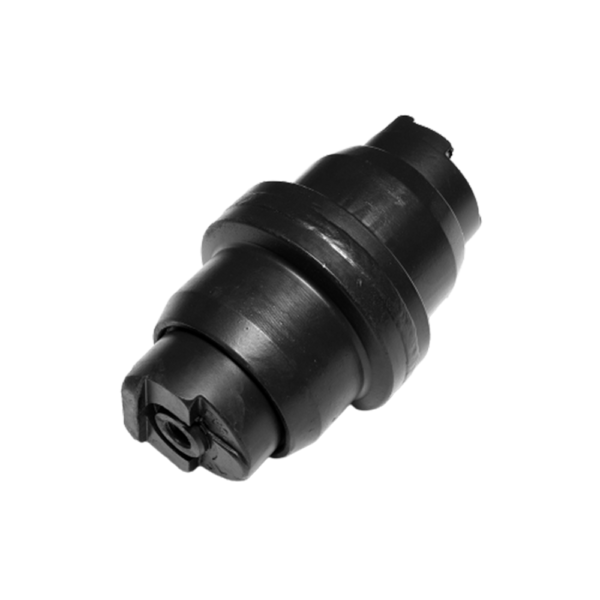
Track rollers are the load-bearers of the undercarriage system. They support the machine's weight and guide the track chain, operating under conditions of extreme pressure and constant contamination. When selecting replacements, several design features demand close attention.
First is the distinction between single-flange and double-flange rollers. These are strategically placed along the track frame to guide the chain and prevent it from "walking" off the rollers. Replacing a double-flange roller with a single-flange one (or vice versa) will compromise the guiding mechanism and can lead to serious damage.
Segundo, the quality of the seals is paramount. A roller's internal bearings are protected from dirt, umidade, and debris by a set of seals, often duo-cone seals. The effectiveness of these seals directly determines the life of the roller (Montes, 2025). A failed seal allows abrasive materials to enter the bearing, while the essential lubricating oil escapes. This leads to rapid bearing failure and a seized roller, which will then be dragged along by the chain, creating a flat spot that damages the track links. The materials used in the seals and the precision of their mating surfaces are hallmarks of a quality roller.
Finalmente, as discussed previously, the shell of the roller must be properly heat-treated to provide a deep, hardened wear surface. This allows it to resist the abrasive action of the track chain under load. A shallow or inconsistent hardness layer will wear away quickly, leading to a premature loss of the roller's diameter and compromising the entire system's geometry.
| Componente | Common Wear Indicator | Consequence of Neglect | Ação recomendada |
|---|---|---|---|
| Roda dentada | Teeth become pointed or "hooked" | Rapidly wears out new track chain bushings | Replace with the track chain |
| Track Chain | "Stretching" (increased pitch) | Poor engagement with sprocket and idler | Measure pitch; replace when beyond spec |
| Rolos de esteira | Worn flanges, flat spots, oil leaks | Uneven link wear, potential de-tracking | Inspect for leaks and measure diameter |
| ociosos | Worn center flange or tread surface | Poor track alignment, accelerated link wear | Measure wear surfaces; check for leaks |
| sapatas de pista | Worn grousers (barras de tração) | Loss of traction and machine productivity | Replace when grouser height is minimal |
rodas dentadas, ociosos, and Chains: Ensuring a Perfect Mesh
The relationship between the sprocket, preguiçoso, and track chain is the most dynamic in the undercarriage. The sprocket's job is to engage the track bushing with perfect precision, converting the final drive's torque into linear motion. À medida que a corrente se desgasta, the distance between each pin and bushing, known as the "pitch," aumenta. This is often referred to as "chain stretch," though the metal itself is not stretching. Em vez de, the internal wear between the pins and bushings creates more play in the system.
A new sprocket is manufactured with a tooth profile designed to match the original pitch of the chain. As the chain pitch increases, the bushings ride higher up on the sprocket teeth, accelerating wear on both components. This is why it is almost universally recommended to replace sprockets and chains as a matched set. Installing a new chain on an old sprocket is a false economy that will only lead to the premature destruction of the chain.
The idler at the front of the track frame serves a dual purpose: it guides the chain onto the rollers and, through the recoil spring and track adjuster, maintains proper tension. A worn idler tread will not guide the chain properly, and worn flanges can cause damage to the track links. Proper track tension is also a critical factor that the operator can control. A track that is too tight dramatically increases the load on all components—pins, buchas, rodas dentadas, and idlers—leading to a rapid increase in wear. A track that is too loose can cause the track to slap against the top rollers or even de-track entirely during turns or on uneven ground. Regular checks and adjustments of track sag, according to the manufacturer's specifications for the specific operating conditions, are essential for maximizing the life of all undercarriage parts.
Verificar 3: Avaliando Anexos para Excelência Específica da Aplicação
While the undercarriage provides mobility, it is the attachments—the bucket, the ripper, the chisel—that perform the actual work. These are the tools that engage directly with the earth, pedra, e detritos, and their design has a profound impact on the machine's productivity, eficiência do combustível, and overall operating cost. Selecting the right attachment is not merely about finding one that fits the machine's coupler. It is about matching the tool's design, materials, and construction to the specific demands of the job at hand. A bucket designed for digging soft soil will fail quickly in a rock quarry, not because it is a "bad" balde, but because it is the wrong tool for the task. This demands an empathetic understanding of the machine's role and the environment in which it will labor.
Beyond Capacity: Bucket Design for Efficiency and Wear Resistance
The most obvious characteristic of a bucket is its volumetric capacity, measured in cubic meters or yards. While important for planning production, capacity is only one part of the story. The geometry of the bucket is equally significant. A wider bucket, por exemplo, is excellent for grading and finishing work but will face greater resistance when trying to penetrate hard, compacted ground. A narrower, more V-shaped bucket concentrates the machine's breakout force onto a smaller area, improving penetration in tough conditions.
The design of the bucket's cutting edge and side plates is also a critical area of differentiation. Uso geral (GP) buckets are a good all-around choice for a mix of soil, argila, and small gravel. Heavy-duty (HD) and severe-duty (SD) buckets are reinforced with thicker steel plates, additional wear strips on the bottom and sides, and often use a stronger, more abrasion-resistant grade of steel (like AR400 or AR500) in their construction.
Rock buckets represent the pinnacle of durability. They typically feature a spade-nose or V-shaped lip to maximize penetration force, thicker side plates often protected by cast shrouds, and a more robust internal structure to withstand the high-impact torsional forces of prying rock. When choosing a bucket, consider the primary material you will be moving. Using a lightweight GP bucket in a demolition or quarry application will lead to rapid structural failure, while using a heavy, overbuilt rock bucket to move topsoil will needlessly increase fuel consumption and reduce the machine's effective payload.
The Physics of Ripping: Ground Engagement Tool (PEGAR) Selection
Ground Engaging Tools (PEGAR) is the term for the wear parts attached to the bucket or ripper—the teeth, adaptadores, and side cutters. These are the sacrificial components designed to bear the brunt of the wear and tear, protecting the more expensive structure of the bucket or ripper shank. The selection of the right GET system can have a dramatic effect on performance.
The shape of the tooth is the first consideration.
- Standard/General Purpose Teeth: Offer a good balance of strength and penetration for general digging.
- Tiger/Penetration Teeth: Have a sharp, pointed design that excels at breaking into hardpan, frost, or tightly packed materials. No entanto, their thinner profile means they wear faster and have less material for impact resistance.
- Rock/Abrasion Teeth: Are shorter, bulkier, and have more "wear material" in their design. They are built for longevity in high-abrasion environments like sand and gravel, but offer less penetration capability.
The system used to attach the tooth to the adapter is also vital. Traditional pin-on systems are reliable but can be time-consuming to change. Modern hammerless systems use integrated locking mechanisms that allow for faster and safer replacement, reducing machine downtime. For a ripper, the GET consists of the ripper tooth (or boot) and the shank protector. The tooth must be able to withstand extreme impact forces upon initial contact with rock, while the shank protector shields the main ripper shank from abrasive wear as it is pulled through the material. Sourcing high-quality GET involves looking for parts made from high-hardness alloy steels that have been properly heat-treated to resist both fracture and abrasion.
Chisel and Ripper Shank Integrity: Resisting Extreme Forces
The ripper shank itself is a component subjected to some of the most intense forces in construction work. It must transmit the full pulling power of the machine into a single point to fracture rock or frozen ground. The integrity of a ripper shank comes from its material and cross-sectional design. They are typically made from high-strength, through-hardened alloy steel to resist bending and catastrophic failure.
A "chisel" is a type of tool, often used on hydraulic hammers or breakers, that functions similarly by concentrating force. Whether it is a moil point for concrete, a blunt tool for rock breaking, or a chisel for trenching, the metallurgical principles are the same. The tool must possess a very hard working tip to be effective, but also have a softer, tougher shank and striking end to absorb the piston's impact without shattering or damaging the hammer itself. This is achieved through differential heat treatment, where different parts of the tool are given different properties. When examining a replacement chisel or ripper shank, one should be wary of parts that appear to be uniformly heat-treated or are made from a generic, unspecified steel. A quality component will be the result of a sophisticated manufacturing process designed to balance hardness, resistência, and fatigue resistance in a single piece of steel.
Verificar 4: Verificando a credibilidade do fornecedor e o suporte pós-compra
In the global marketplace of 2025, sourcing parts for Hitachi machines is no longer confined to local dealers. A vast network of international suppliers offers a wide range of aftermarket options. While this provides opportunities for cost savings and broader selection, it also introduces a greater need for due diligence. The quality of a part is not just a function of its physical characteristics; it is also a reflection of the company that stands behind it. A supplier's credibility, transparency, and commitment to customer support are intangible but invaluable assets that protect your investment and ensure your peace of mind.
The Hallmarks of a Reputable Parts Supplier
How can one discern a trustworthy supplier from a transient seller of low-quality goods? The process is akin to conducting a background check, looking for consistent signs of professionalism and reliability.
Primeiro, a reputable supplier has a history and a physical presence. They are not an anonymous entity on a trading platform. Look for a company with a professional website, a verifiable physical address, and clear contact information. Companies that have been in business for many years have a reputation to uphold and a track record that can be investigated.
Segundo, transparency in manufacturing and quality control is a powerful indicator. A confident supplier is not afraid to discuss where their parts are made and what standards they are held to. They may provide information about the specific steel alloys used, the manufacturing methods (forging vs. fundição), and the details of their heat treatment processes. Some may even offer quality certifications, como ISO 9001, which demonstrates a commitment to a documented and consistent quality management system. Be skeptical of suppliers who are vague about these details or who rely solely on claims of "high quality" without providing any supporting evidence.
Terceiro, consider their market presence and expertise. A supplier that specializes in undercarriage parts or ground-engaging tools for specific brands like Hitachi will likely have a deeper knowledge base than a generalist who sells everything from engine filters to light bulbs. Their focus allows them to understand the specific technical challenges and failure modes associated with those components, leading to better product development and more knowledgeable support.
Warranty as a Statement of Quality
Uma garantia é mais do que apenas um documento legal; it is a statement of the manufacturer's confidence in its own product. A supplier offering a minimal or non-existent warranty is implicitly communicating a lack of faith in the durability of their parts. Por outro lado, a comprehensive warranty that covers premature failure due to defects in materials or workmanship signals that the company has invested in quality control and is willing to stand behind its product.
When evaluating a warranty, read the fine print. Understand what is covered and for how long. Warranties are often based on hours of operation or a period of time, whichever comes first. Note any exclusions. Por exemplo, a warranty may be voided if the part is installed incorrectly or used in an application for which it was not designed. A good warranty is clear, fair, and straightforward. It reflects a partnership between the supplier and the customer, where both parties have responsibilities. The supplier is responsible for providing a defect-free part, and the customer is responsible for proper installation and operation.
Technical Support and Parts Availability in Your Region
The best part in the world is useless if you cannot get it when you need it, or if you cannot get help when you have a problem. Before committing to a purchase, especially from an international supplier, investigate their logistics and support capabilities for your specific region, whether it be the remote mining sites of Western Australia, the developing infrastructure projects in Southeast Asia, or the challenging climate of the Russian Federation.
Does the supplier have distribution centers or partnerships that can ensure reasonable shipping times to your location? A machine that is down for weeks waiting for a part from overseas represents a massive loss of revenue. Can they handle the customs and importation processes for your country efficiently?
Além disso, what level of technical support do they offer? If you have a question about installation or if a part fails prematurely, is there a knowledgeable person you can contact who speaks your language and understands your technical issue? Excellent post-purchase support demonstrates a long-term commitment to the customer, not just a short-term interest in making a single sale. This level of service is a defining characteristic that separates premier parts providers from mere distributors. The ability to consult with an expert on wear patterns or compatibility issues when maintaining your Hitachi undercarriage parts is an invaluable service that contributes directly to the efficiency and profitability of your operation.
Verificar 5: The Operator's Role in Proactive Maintenance and Inspection
We can source parts forged from the finest steel, manufactured to the tightest tolerances, and backed by the most comprehensive warranty, yet their ultimate lifespan is not determined in the factory. It is decided every day in the dirt, lama, and rock of the job site. The final and perhaps most critical check in ensuring the longevity of parts for Hitachi machines rests not with the supplier, but with the owner and operator. Proactive maintenance and diligent inspection are not chores to be endured; they are powerful strategies for managing costs, preventing catastrophic failures, and extracting the maximum value from every single component. A machine that is cared for will reward its owner with reliability and a longer productive life.
The Role of Regular Inspection in Extending Part Lifespan
The most effective maintenance tool is a trained and observant eye. A simple, consistent walk-around inspection performed at the beginning of every shift can reveal developing problems long before they become critical failures. This is not a complex technical procedure; it is a habit of careful observation.
- Material rodante: O operador deve procurar sinais óbvios de problema. Are there any loose or missing bolts on the track pads? Are there visible oil leaks from the rollers or idlers, indicated by wet streaks running down their sides? Are the track chains noticeably loose or tight? Look at the sprocket teeth; are they beginning to look sharp and pointed? This daily visual check, which takes only a few minutes, is the first line of defense against premature wear.
- Bucket and GET: Examine the bucket teeth. Are any of them broken, missing, or worn down to the adapter? A missing tooth exposes the adapter to rapid wear, a much more expensive component to replace. Check the welds on the bucket and look for any signs of cracking, especially around the areas where the adapter and lifting hooks are attached.
- General Machine: Listen to the machine as it operates. Unusual grinding, squealing, or popping sounds from the undercarriage can indicate a seized roller or a problem with the drive system. Feel for excessive vibration. These sensory inputs are valuable data that can signal a need for a closer look.
Understanding Wear Patterns as Diagnostic Tools
The way a component wears tells a story. Learning to read these stories allows an operator or mechanic to diagnose underlying problems, not just treat symptoms. Por exemplo, if the inside edges of the track links are showing accelerated wear, it may point to a misalignment issue with the idlers or rollers. If only one side of the sprocket teeth is wearing, it could indicate a problem with the track frame alignment itself.
On a bucket, if the corner teeth are wearing down much faster than the center teeth, it might suggest that the operator is using the corners to pry or "sweep" material, putting immense stress on the side of thebucket. This feedback can be used to refine operating techniques to promote more even wear and extend the life of the GET. Recognizing these patterns transforms maintenance from a reactive task (replacing what is broken) to a proactive one (understanding why it broke and preventing a recurrence). This diagnostic approach is fundamental to the principles of mechanized track maintenance (Zaayman, 2017).
Lubrificação e Limpeza: The Simple Habits that Save Fortunes
In the harsh world of heavy equipment, two of the simplest maintenance tasks—lubrication and cleaning—are also two of the most impactful.
Lubrificação: While many modern components like track rollers and idlers are "sealed for life," they are not invincible. The "life" of their internal bearings is entirely dependent on the integrity of the seals and the quality of the grease or oil within (Allmaier, 2022). For components that do require regular greasing, such as the bucket linkage pins, adhering to the manufacturer's recommended lubrication schedule is not optional. A single pin and bushing failure due to lack of grease can cause the entire linkage to become loose, placing eccentric loads on other pins and accelerating their wear exponentially. It can also lead to stress cracks in the excavator's boom and stick.
Limpeza: O material rodante, em particular, benefits immensely from regular cleaning. Lama compactada, pedras, and debris add significant weight to the undercarriage, increasing fuel consumption. Mais importante, this packed material prevents the components from interfacing correctly. Mud packed between the bushings and sprocket teeth accelerates wear. A rock jammed between the track chain and the idler can cause immense damage. Em climas gelados, mud that freezes overnight can turn the undercarriage into a solid block, placing extreme strain on the final drives and potentially breaking seals when the machine tries to move. Taking the time to clean out the undercarriage at the end of the day is not just about aesthetics; it is a critical maintenance procedure that reduces strain and allows for proper visual inspection.
Perguntas frequentes (Perguntas frequentes)
Are aftermarket parts for Hitachi machines as reliable as OEM parts?
The quality of aftermarket parts can vary significantly. High-quality aftermarket parts from reputable manufacturers can meet or even exceed OEM (Fabricante de equipamentos originais) specifications in terms of material, fit, e desempenho, often at a more competitive price. The key is to source them from a trusted supplier who is transparent about their manufacturing processes, qualidade dos materiais, and offers a solid warranty. Por outro lado, baixo custo, low-quality aftermarket parts can lead to premature failure and costly downtime.
How do I know when it's time to replace my machine's undercarriage?
Undercarriage replacement is typically determined by measuring key components against the manufacturer's wear specifications, not just by visual appearance. A specialized technician will measure the track chain "pitch" (the distance between pins) to check for stretch, the diameter of the rollers, and the wear on sprocket teeth and idler surfaces. A rule of thumb is to consider a full replacement when the track chain bushings are worn to the point of needing to be turned, as other components are likely nearing the end of their service life as well.
What is the main difference between a rock bucket and a general-purpose bucket?
A rock bucket is specifically engineered for high-impact and high-abrasion environments. It features a thicker shell made from higher-grade abrasion-resistant steel (Por exemplo, AR450), a V-shaped or spade-nose cutting edge for better penetration, and additional protective components like side shrouds and wear bars. A general-purpose (GP) bucket is lighter and designed for digging and moving less abrasive materials like soil, argila, e cascalho. Using a GP bucket in a rock application will lead to rapid damage and structural failure.
How does the operating climate in places like Russia or the Middle East affect part wear?
Extreme climates significantly impact wear. In the cold climates of Russia, frozen ground acts like rock, demanding higher penetration force and increasing stress on buckets, dentes, e estripadores. Frozen mud can cause immense strain on undercarriage components. In the hot, sandy environments of the Middle East, the fine, abrasive sand accelerates wear on all moving parts, particularly undercarriage components like seals, alfinetes, e buchas. This is known as abrasive wear and requires parts with high surface hardness.
Can I install a new track chain on my old sprockets?
É fortemente desencorajado. A worn sprocket has a changed tooth profile that will not mesh correctly with the new bushings of a new chain. This mismatch causes a concentration of force that rapidly wears down the new chain, drastically reducing its lifespan and negating your investment. For best results and the lowest long-term cost, sprockets and track chains should always be replaced as a matched set.
What does "through-hardened" mean for a part like a ripper shank?
"Through-hardened" means that the heat treatment process has achieved a consistent hardness not just on the surface but deep into the core of the part. This is critical for components like ripper shanks that are subjected to immense bending forces. A part that is only "case-hardened" (hard on the surface but soft in the core) would be prone to bending or snapping under the extreme stress of ripping rock.
Why is forging considered superior to casting for high-stress parts?
Forging refines the metal's internal grain structure, aligning it with the shape of the part and eliminating internal voids. This creates a denser, tougher component with superior resistance to impact and fatigue. Fundição, while excellent for complex shapes, results in a more random grain structure that can be less robust under the cyclical, high-impact loads experienced by parts like track links and sprockets.
Uma consideração final sobre valor e longevidade
In equipping and maintaining heavy machinery, the temptation to focus on the immediate, upfront cost of a component is a powerful one. Ainda, a deeper reflection reveals that the true cost of a part is not written on its price tag. It is written over thousands of hours of operation, in the productivity gained or lost, and in the downtime avoided or incurred. The selection of parts for Hitachi machines is an engagement with a philosophy of value, one that weighs the initial expense against the promise of endurance. Um link de trilha forjado, though more costly to produce than its cast counterpart, repays that investment through a longer service life and greater resistance to failure. A well-designed rock bucket, perfectly matched to its task, enhances the machine's efficiency, saving fuel and time with every cycle.
The principles outlined here—a deep inquiry into material science, a systems-based view of mechanical assemblies, a careful matching of tool to task, a diligent vetting of suppliers, and a disciplined approach to maintenance—are not merely technical guidelines. They represent a commitment to operational excellence. They foster a relationship with the machine that is based on understanding and care, rather than simple use and consumption. By embracing this perspective, we move beyond being mere purchasers of parts and become informed custodians of our equipment's capacity, ensuring that these powerful tools remain productive, confiável, and profitable for years to come.
Referências
Allmaier, H. (2022). Increase Service Life for Rail Wheel Bearings—A Review of Grease Lubrication for This Application. Lubricants, 10(3), 36. https://doi.org/10.3390/lubricants10030036
Camso. (2025). Construction tracks basics: 9 questions to master rubber tracks. https://camso.co/en/blog/best-practices/construction-track-basics
Monster Tires. (2024). Rubber Tracks Guide.
Montes, eu. (2025). A Thorough Explanation of Heavy Equipment Rollers. Fortis HD. https://www.fortishd.com/blogs/about-hd-equipment/a-thorough-explanation-of-heavy-equipment-rollers-purpose-types-and-wear-signs
Rolls Bearing. (2015). Rolos de esteira 101: Everything you need to know.
TFL Bearing. (2024). Basic Concepts of Rolling Bearings. https://tfl-bearing.com/page/Basic-Concepts-of-Rolling-Bearings
Zaayman, eu. (2017). The Basic Principles of Mechanised Track Maintenance (3terceira edição.). PMC Media House GmbH.