
Abstract
Premature failure of heavy machinery undercarriages represents a significant operational and financial burden in industries such as construction, mining, and forestry. This analysis examines the principal causes of accelerated wear in track chains and rollers, which constitute a major portion of a machine's maintenance costs. It posits that a systems-based approach, grounded in an understanding of material science and tribology, is necessary for mitigating these issues. The investigation focuses on five primary failure modes: abrasive wear, impact damage, adhesive wear (galling), corrosion, and wear from misalignment. For each mode, the underlying physical or chemical mechanisms are explored, followed by a discussion of corresponding solutions in material selection, component design, and heat treatment. The objective is to provide equipment owners and operators with a detailed framework for selecting appropriate wear-resistant track chains and rollers. By matching component specifications to specific operational environments, it is argued that undercarriage life can be significantly extended, leading to reduced downtime and lower total cost of ownership.
Key Takeaways
- Match material properties like hardness and toughness to your specific work environment to prevent failures.
- Understand the five main failure modes—abrasion, impact, adhesion, corrosion, and misalignment—to diagnose issues.
- Properly maintained sealed and lubricated track (SALT) chains significantly reduce internal pin and bushing wear.
- Regularly inspect and clean undercarriage components, especially in wet or corrosive conditions, to extend their life.
- Investing in high-quality wear-resistant track chains and rollers reduces long-term operating costs and downtime.
- Always consider the undercarriage as an integrated system; mismatched parts can cause accelerated wear.
- Use a proactive maintenance schedule and track wear measurements to predict and plan for replacements.
Table of Contents
- Introduction: The Unseen Cost of Undercarriage Wear
- Failure Mode #1: Combating Abrasive Wear in Sandy and Gritty Terrains
- Failure Mode #2: Preventing Impact-Related Damage in Rocky and Uneven Ground
- Failure Mode #3: Mitigating Adhesive Wear and Galling in High-Load Scenarios
- Failure Mode #4: Resisting Corrosive Attack in Wet and Chemical-Rich Environments
- Failure Mode #5: Addressing Misalignment and Uneven Wear Patterns
- A Buyer's Guide to Selecting Wear-Resistant Components in 2025
- Advanced Maintenance and Monitoring for Extended Undercarriage Life
- Frequently Asked Questions (FAQ)
- Conclusion
- References
Introduction: The Unseen Cost of Undercarriage Wear
When you look at a powerful dozer or excavator, your eyes are often drawn to the massive bucket, the powerful engine, or the operator's cab. Yet, the foundation of that machine's mobility and stability—its undercarriage—often goes unnoticed until something goes wrong. Think of the undercarriage as the machine's entire musculoskeletal system. It bears the full weight of the machine, plus any load it's carrying, and it’s the part in constant, brutal contact with the ground. This system of track chains, rollers, idlers, and sprockets can account for up to 50% of a machine's total maintenance costs over its lifetime. When it fails prematurely, the consequences ripple far beyond the simple cost of a replacement part.
Understanding the Undercarriage as a System
It's a common mistake to view the undercarriage as a collection of individual parts. A track roller is not just a roller; a track link is not just a link. Instead, imagine a finely tuned orchestra. Each instrument must be in harmony with the others for the music to sound right. The undercarriage is precisely the same. The sprocket drives the track chain, which is composed of dozens of interconnected links, pins, and bushings. This chain rides over a series of track rollers and carrier rollers, guided at the front by the idler assembly. Each component is designed to work in concert with the others. If one part is worn, improperly sized, or of inferior quality, it creates a domino effect, placing undue stress on every other component in the system. For instance, a worn sprocket with a changed tooth profile will no longer engage perfectly with the track chain's bushings, leading to accelerated wear on both parts. This "mismatched" wear is a primary driver of premature failure. Therefore, understanding and maintaining the undercarriage as a complete, integrated system is the first step toward longevity.
Why Premature Failure is More Than Just a Broken Part
A single failed roller might seem like a minor issue. You replace it and get back to work, right? The reality is far more complex. That failed part is often a symptom of a larger problem. Was it a manufacturing defect? Or was it the victim of another worn component, a harsh operating environment, or an improper maintenance routine? Ignoring the root cause is like patching a leaky roof without finding the source of the water; you're just waiting for the next failure. Premature failure introduces unplanned downtime, a project manager's worst nightmare. It disrupts schedules, pulls technicians away from routine maintenance, and can even lead to safety hazards on the job site. The true cost is not just the part itself, but the hours of lost productivity, potential contract penalties, and the cascading wear it may have already inflicted on the rest of the undercarriage.
The Economic Impact: Downtime, Repairs, and Lost Productivity
Let's put this into perspective. A large dozer working in a mine in Western Australia or a construction site in the rapidly developing cities of Southeast Asia can generate thousands of dollars in revenue per hour. If that machine is down for a day waiting for a part or a mechanic, the financial loss is substantial. Consider a scenario where a track chain fails on a critical-path excavator. The machine stops working. Trucks that were being loaded now sit idle. The entire workflow of the site grinds to a halt. These "consequential costs" often dwarf the actual repair bill. This is why investing in high-quality, wear-resistant track chains and rollers is not an expense; it is an insurance policy against catastrophic financial loss. By choosing components designed to withstand the specific challenges of your worksite, you are actively choosing to maximize uptime and protect your bottom line.
Failure Mode #1: Combating Abrasive Wear in Sandy and Gritty Terrains
Imagine walking on a sandy beach. With every step, your feet sink slightly, and the sand shifts. Now, imagine a 50-ton excavator doing the same thing, day in and day out, but on a surface made of sharp, gritty particles. This is the reality of abrasive wear, the silent grinder of heavy machinery undercarriages. It is perhaps the most common wear type, prevalent in environments from the deserts of the Middle East to the quarries of Africa.
The Science of Abrasion: How Fine Particles Grind Down Your Components
At its core, abrasion is a mechanical wearing-down process. Think of it like using sandpaper. There are two main forms we need to consider. The first is two-body abrasion, where one surface (like a sharp rock) slides against and cuts material from your component. The second, and often more insidious, is three-body abrasion. This occurs when small, hard particles (like sand, grit, or fine rock fragments) get caught between two moving surfaces—for example, between the track pin and bushing, or between the roller and the track link. These trapped particles act like tiny cutting tools, gouging, scratching, and slowly grinding away the steel.
The effectiveness of this "grinding" depends on the properties of the abrasive particles. The harder the particle (e.g., quartz sand is very hard), the more damage it does. The sharper the particle, the more it cuts. When these particles are mixed into a slurry with water, the situation becomes even worse, as the slurry can be pumped into every tiny crevice of the undercarriage, ensuring maximum contact and maximum wear.
Material Solutions: High-Hardness Steel and Advanced Heat Treatments
So, how do we fight back against this relentless grinding? The primary weapon is hardness. In a simple sense, a harder material is more resistant to being scratched or indented by another. If the steel of your track roller is significantly harder than the abrasive particles it encounters, the particles will be crushed or moved aside with minimal damage to the roller. This is why the selection of steel and its subsequent heat treatment are so fundamental.
Manufacturers of high-quality wear-resistant track chains and rollers use specialized boron steel alloys. Boron, even in tiny amounts, dramatically increases the "hardenability" of the steel. This means that during the heat treatment process, a deep and uniform layer of hardness can be achieved. The process typically involves heating the component to a very high temperature (a process called austenitizing) and then rapidly cooling it (quenching). This locks the steel's crystal structure into a very hard state known as martensite. Following this, a tempering process is used to slightly reduce the brittleness and increase toughness. The goal is to create a component with a very hard outer "case" to resist abrasion, while maintaining a softer, tougher inner "core" to absorb shock and prevent cracking.
| Wear Mechanism | Primary Cause | Ideal Material Property | Common Material/Design Solution |
|---|---|---|---|
| Abrasive Wear | Hard particles (sand, grit) grinding against surfaces. | High Hardness | Boron alloy steel with deep induction hardening. |
| Impact Wear | Sudden, high-force loads from rocks or uneven ground. | High Toughness | Through-hardened or dual-hardness steel; reinforced roller flanges. |
| Adhesive Wear | Micro-welding and tearing between unlubricated metal surfaces under high load. | Low Friction/Slipperiness | Sealed and Lubricated Track (SALT) chains; specialized surface coatings. |
| Corrosive Wear | Chemical reaction with moisture, salts, or acids. | Corrosion Resistance | Higher chromium content in steel alloys; robust seal systems. |
Selecting the Right Track Chains and Rollers for High-Abrasion Environments
When you are specifying parts for a machine that will live in a sandy or gritty environment, your primary question to a supplier should be about surface hardness, typically measured on the Rockwell C scale (HRC). For rollers and idlers, you should look for a surface hardness in the range of HRC 50-60. Anything less will wear out prematurely.
Equally important is the depth of this hardness. A cheap component might have a very thin hardened layer that wears away quickly, exposing the soft core underneath. This is like a pencil with only a tiny tip of lead. A quality component will have a deep, effective case depth, ensuring it maintains its wear resistance for a much longer period. For track links, which face both abrasion and high tensile stresses, a slightly lower hardness (around HRC 45-50) is often used to balance wear resistance with the necessary toughness to prevent breakage. Caterpillar's Heavy Duty Extended Life (HDXL) undercarriage is a prime example of a system engineered with extra wear material and optimized hardness profiles specifically for high-abrasion applications (Caterpillar, 2025).
Case Study: A Quarry Operation in Australia
Consider a granite quarry operating near Perth, Australia. The environment is a brutal combination of hard, sharp granite dust and high-impact loading. Initially, the quarry used standard aftermarket rollers on their primary excavators and experienced an average roller lifespan of only 1,500 hours, leading to frequent, costly downtime. After a consultation, they switched to a set of premium track rollers specifically designed for high-abrasion and high-impact conditions. These new rollers were made from a high-boron steel alloy and featured a deeper induction hardening profile. The result? The average lifespan of the rollers increased to over 4,000 hours. While the initial purchase price was higher, the reduction in downtime and labor costs resulted in a 40% decrease in the total cost of ownership for the undercarriage over a two-year period. This demonstrates the tangible value of matching the component's material properties to the specific challenges of the job.
Failure Mode #2: Preventing Impact-Related Damage in Rocky and Uneven Ground
If abrasion is a slow, grinding death, impact is a sudden, catastrophic blow. Every operator who has driven a tracked machine over a field of boulders or dropped the machine off a ledge knows that heart-stopping jolt. These high-energy events send massive shockwaves through the undercarriage, and if the components are not designed to handle them, the result can be chipped roller flanges, cracked track links, or bent frames. This type of failure is common in demolition, mining in hard rock areas like the Russian Urals, and logging on steep, uneven terrain.
The Physics of Impact: Stress Concentrators and Fracture Mechanics
To understand impact failure, we need to think about toughness, not just hardness. While hardness helps a material resist being scratched, toughness is its ability to absorb energy and deform without fracturing. A ceramic plate is very hard, but it has low toughness—drop it, and it shatters. A rubber mallet is much softer, but it has high toughness—you can hit it against concrete all day, and it won't break.
When a track roller flange smashes against a rock, the force is concentrated on a very small area. Any sharp corners, casting flaws, or even scratches on the component can act as a "stress concentrator" or "stress riser." Think of how a piece of paper tears easily once you make a small nick in the edge. These stress risers multiply the force at a microscopic level, initiating a tiny crack. With each subsequent impact, that crack can grow until it leads to complete fracture. This is the domain of fracture mechanics, the study of how cracks propagate through materials.
The Importance of Toughness vs. Hardness in Component Design
This presents a fundamental challenge for engineers. The properties that make a steel hard (like a very rigid crystal structure) often make it more brittle and less tough. The properties that make it tough (like the ability for its crystal structure to deform and absorb energy) can make it softer. The art of designing wear-resistant track chains and rollers for high-impact environments lies in finding the perfect balance.
This is achieved through a combination of alloy selection and sophisticated heat treatment. For example, a track roller might be "through-hardened" to a moderate hardness level (e.g., HRC 45) all the way to its core. This provides good overall strength and excellent toughness to resist cracking under impact. Alternatively, some advanced designs use "dual hardness" heat treatment, where the flange areas that see the most impact are kept slightly softer and tougher, while the rolling path that contacts the track chain is made harder to resist abrasive wear. This tailored approach provides the best of both worlds.
Design Features of Impact-Resistant Rollers and Chains
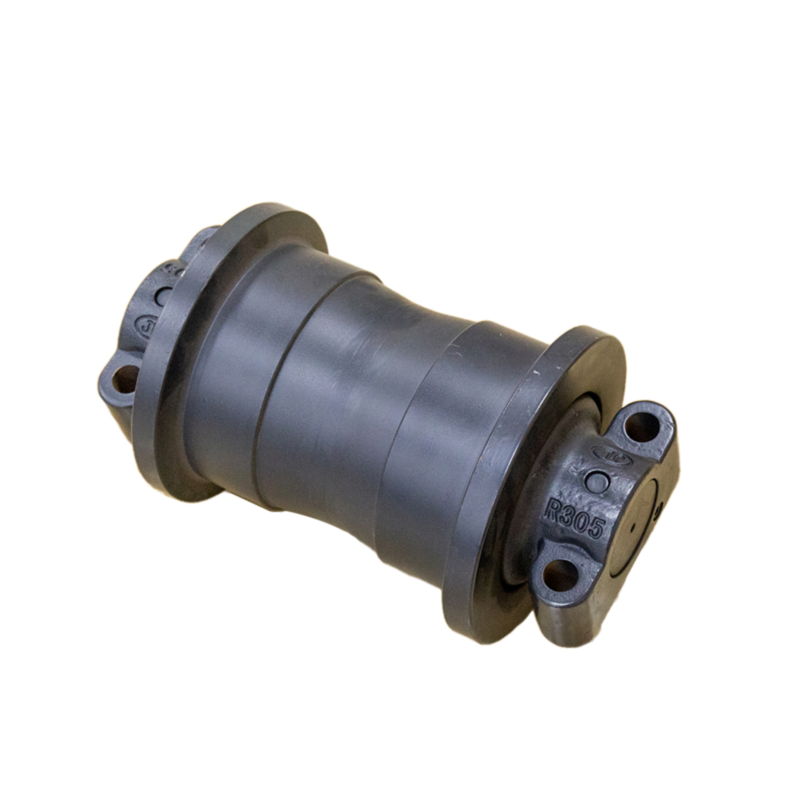
Beyond materials, the physical design of the component plays a huge role. Look at the flange of a track roller. A roller designed for high impact will have a thicker, more robust flange profile with generous radii (rounded corners) at the base. These rounded corners help to distribute stress over a wider area, avoiding the dangerous stress concentrations that can lead to cracks. You can see the basic structure of these rollers in many interactive diagrams (hrparts.com).
For track chains, the links themselves are designed with added material in critical stress areas. The "pin bosses," the areas where the pins connect the links, are particularly vulnerable. High-quality, impact-resistant links will have a beefier design in this area to prevent the link from stretching or cracking under high shock loads. The fit and finish are also paramount; a smoothly forged surface is far more resistant to fatigue cracking than a rough-cast one with surface imperfections.
Operational Best Practices to Minimize Impact Loads
While quality components are the foundation, the operator is the final line of defense against impact damage. An experienced operator can dramatically extend undercarriage life through technique. This includes:
- Avoiding high-speed travel in reverse: Machines are designed to absorb impact better when moving forward, as the idler and track spring assembly can cushion the blow.
- Minimizing counter-rotation: Spinning the machine in place puts enormous twisting forces on the track frames and rollers.
- Making wide, gradual turns: Sharp, aggressive turns scrape the sides of the track links and roller flanges, causing unnecessary wear and stress.
- Planning the path: A good operator will scan the ground ahead and choose a path that avoids the largest rocks and sharpest drops.
- Controlling descent on slopes: Instead of letting gravity take over, the operator should use the machine's power to control the speed down a hill, minimizing shocks.
Training operators on these simple, wear-reducing techniques can provide a return on investment that is just as significant as buying premium parts.
Failure Mode #3: Mitigating Adhesive Wear and Galling in High-Load Scenarios
We have discussed the external threats of abrasion and impact. Now, let's turn our attention to an internal enemy: adhesive wear, often called scuffing or galling. This type of wear occurs between two metal surfaces in direct, sliding contact under high pressure, without adequate lubrication. It is a major concern for the internal components of a track chain—the pin and the bushing.
What is Galling? The Micro-Welding Phenomenon
Imagine two clean, flat steel blocks. If you press them together with immense force and then try to slide one across the other, what happens? At a microscopic level, the peaks (or "asperities") on the two surfaces come into contact. The immense pressure at these tiny points generates enough heat to cause the metal to momentarily fuse together, creating a microscopic "cold weld." As the sliding motion continues, this weld is immediately torn apart. When it tears, a fragment of metal might be ripped from one surface and transferred to the other, or it might break off as a loose wear particle. This process of welding and tearing, repeated millions of times, is galling. It leads to a rapid increase in friction, severe surface damage, and ultimately, seizure of the joint. In a track chain, this manifests as a "frozen" link that no longer articulates properly, causing the chain to jump off the sprocket.
The Role of Lubrication: Sealed and Lubricated Track (SALT) Chains
The most effective way to combat adhesive wear is to prevent the two metal surfaces from ever touching. This is the job of a lubricant. The vast majority of modern heavy equipment uses Sealed and Lubricated Track (SALT) chains. The concept is brilliantly simple yet revolutionary. Each joint in the track chain—where a pin rotates inside a bushing—is designed as a sealed reservoir containing a special, heavy-grade oil.
A series of polyurethane or nitrile seals at each end of the bushing keeps the oil in and, just as importantly, keeps abrasives like dirt and water out. This oil creates a hydrodynamic film, a thin, high-pressure layer of lubricant that separates the pin from the bushing. As long as this seal remains intact and the oil film is present, direct metal-to-metal contact is prevented, and internal adhesive wear is virtually eliminated. This allows the internal components to last dramatically longer, often matching the lifespan of the external parts of the chain. The development of SALT technology was one of the single greatest advancements in extending undercarriage life.
Surface Engineering: Coatings and Finishes that Reduce Friction
Even with lubrication, extreme pressures can sometimes momentarily break down the oil film. To provide an extra layer of protection, manufacturers employ advanced surface engineering techniques. The surfaces of pins and bushings are often polished to a mirror-like finish. A smoother surface has fewer high peaks (asperities), reducing the chances of micro-welding.
In some premium applications, components may receive special surface treatments or coatings. Processes like phosphating create a thin, crystalline layer on the steel that helps to retain oil and provides a sacrificial, anti-galling surface during the initial break-in period. These small details, often invisible to the naked eye, make a significant difference in the component's ability to withstand the extreme pressures found inside a track joint.
Choosing Components for High-Tension Applications (e.g., dozing, ripping)
Certain applications place enormous tension on the track chain. A dozer pushing a full blade of material or an excavator using a ripper attachment to break up rock creates immense pulling forces. This high tension translates directly into higher pressure within the pin and bushing joints. In these scenarios, the quality of your SALT system is paramount.
When selecting chains for high-load applications, you should inquire about the seal design and material. Are they using a multi-part seal (e.g., a load ring and a toric ring) that provides better pressure distribution and sealing capability? What is the temperature rating of the seal material? A seal that becomes hard and brittle in the cold of a Russian winter or soft and weak in the heat of a Middle Eastern summer will fail quickly. Investing in a chain with a robust, high-performance sealing system is critical for preventing internal wear and ensuring you get the full, designed life out of your track chain.
Failure Mode #4: Resisting Corrosive Attack in Wet and Chemical-Rich Environments
Metal's oldest enemy is corrosion. From the moment steel is made, it wants to revert to its natural, more stable state: iron oxide, or rust. This process is greatly accelerated by the presence of water, and even more so by salts, acids, or other chemicals. For machinery operating in coastal areas, dredging operations, waste management facilities, or certain types of mines, corrosion is not a secondary concern; it is a primary mode of failure.
The Chemistry of Corrosion: Rust and Beyond
Corrosion is an electrochemical process. It requires an anode (a site where the metal gives up electrons), a cathode (a site where the electrons are accepted), and an electrolyte (a medium, like water, that can conduct ions). A piece of steel in a wet environment creates millions of these tiny electrochemical cells on its surface. The iron atoms at the anode dissolve, releasing electrons that travel through the metal to the cathode, where they react with oxygen and water. The dissolved iron ions then react with the hydroxide ions formed at the cathode to create iron hydroxide, which quickly converts to the familiar reddish-brown, flaky substance we call rust.
Rust is not just an aesthetic problem. It is physically larger than the steel it replaces, which can cause parts to seize. More importantly, it is weak and porous. A rusted surface cannot bear a load and wears away easily, exposing fresh steel underneath to continue the cycle of corrosion. This combination of chemical attack and mechanical wear is known as corrosive wear, and it can be incredibly destructive.
Material Selection for Corrosion Resistance: Alloy Composition
Standard carbon steel has very little inherent resistance to corrosion. The primary way to improve this is by adding other elements to create an alloy. The most famous of these is chromium, the key ingredient in stainless steel. Chromium forms an incredibly thin, invisible, and non-reactive layer of chromium oxide on the surface. This "passive layer" is self-healing; if it gets scratched, the exposed chromium immediately reacts with oxygen to reform the protective barrier.
While full stainless steel undercarriages are generally too expensive and not hard enough for most applications, manufacturers of wear-resistant components do carefully control the alloy composition to enhance corrosion resistance. Small additions of elements like chromium and nickel can improve the steel's ability to withstand corrosive attack without compromising the hardness and toughness needed for wear resistance.
| Component Type | OEM (Original Equipment Manufacturer) | High-Quality Aftermarket |
|---|---|---|
| Cost | Highest initial price. | Lower initial price (15-40% less). |
| Material & R&D | Extensive R&D, proprietary steel alloys and heat treatments. Full traceability. | Often uses comparable steel grades (e.g., 40MnB), relies on reverse-engineering. |
| Warranty & Support | Comprehensive warranty backed by a global dealer network. | Warranty varies by supplier; support is through the seller. |
| System Integration | Designed as a perfectly matched system with all other machine components. | Designed to meet or exceed OEM specifications for fit and function. |
| Availability | Primarily through authorized dealers; may have lead times for specific parts. | Widely available from various suppliers, often with better stock levels. |
| Best For | New machines under warranty; users prioritizing brand assurance above all. | Post-warranty machines; budget-conscious fleets; experienced owners. |
Protective Coatings and Seal Integrity
Since we can't always rely on the base metal alone, protective coatings are another line of defense. A high-quality paint or epoxy coating on the non-wear surfaces of track frames, idlers, and rollers provides a physical barrier against the electrolyte (water). For this to be effective, the surface preparation must be perfect, and the coating must be thick and durable enough to resist chipping and scratching.
However, the most critical defense in a corrosive environment is the integrity of the seals. We discussed the SALT system in the context of preventing internal adhesive wear. In a wet environment, its role in preventing corrosive wear is just as vital. If a seal fails and corrosive fluid enters the pin and bushing joint, it will not only wash away the lubricant but also aggressively attack the highly polished internal surfaces. This leads to a rapid and catastrophic failure of the joint. Therefore, in wet or chemical-rich applications, the specification and regular inspection of the track chain seals are of the utmost importance.
Maintenance in Corrosive Conditions: Cleaning and Inspection Protocols
In a corrosive environment, maintenance practices must be adapted. The most important practice is regular cleaning. Allowing mud, debris, and corrosive materials to pack around the undercarriage creates a poultice that holds moisture against the steel, dramatically accelerating corrosion. At the end of each shift, the undercarriage should be thoroughly washed down with fresh water to remove these contaminants.
During cleaning, a visual inspection should be performed. Look for areas where the paint is chipped or peeling, and touch them up promptly. Pay close attention to the track chain seals. Look for any signs of leakage (streaks of oil) or damage. A single compromised seal can condemn an entire track chain if not addressed. Regular inspection and a commitment to cleanliness can add hundreds, if not thousands, of hours to the life of an undercarriage operating in a hostile, corrosive world.
Failure Mode #5: Addressing Misalignment and Uneven Wear Patterns
Our final failure mode is one of mechanical precision. The undercarriage is a geometric system. The rollers must be parallel, the idler must be aligned with the track frame, and the sprocket must be in the same plane as the chain. When this geometry is compromised, a condition known as misalignment occurs. This forces components to interact at incorrect angles, leading to bizarre and accelerated wear patterns that can be confusing to diagnose if you don't know what to look for.
The Kinematics of a Poorly Aligned Undercarriage
Think about driving a car with a bad wheel alignment. The tires wear out unevenly on the edges, and the car might pull to one side. The same principles apply to a tracked machine, but the forces are much higher. If a track frame is bent, or an idler is misaligned, the track chain will be forced to ride against the side of the idler flange or the roller flanges. This side-loading creates a powerful grinding action. You might see one side of the rollers wearing down much faster than the other, or the sides of the track links becoming scalloped and thin.
This not only wears out the sides of the components but also puts immense twisting forces on the track chain itself. The seals in the SALT joints are not designed to handle these high side loads, and misalignment can lead to premature seal failure, allowing dirt in and oil out.
The Role of Idlers and Sprockets in Maintaining Alignment
The components at the front and back of the track group—the idler and the sprocket—are the primary guides for the chain. The front idler, mounted in a yoke, is responsible for setting the track tension and guiding the chain onto the rollers. If the idler's mounting is worn or damaged, it can wobble or tilt, feeding the chain into the system at an angle.
The rear sprocket provides the driving force. Worn sprocket teeth can allow the chain to "climb," creating a slapping motion that sends shockwaves through the system. More critically, if the sprocket is worn unevenly, it can push the chain to one side, causing it to scrape against the track guards and frame. Maintaining these two components in good condition is fundamental to maintaining the alignment of the entire system.
Diagnosing Misalignment: Visual Cues and Measurement Techniques
An experienced technician can often spot misalignment just by looking at the wear patterns. Key things to look for include:
- One-sided wear: Are the roller flanges or track link sides worn significantly more on the inboard or outboard side?
- Scuffing or polishing: Are there bright, polished streaks on the sides of components where they shouldn't be rubbing?
- Uneven sprocket wear: Are the tips of the sprocket teeth worn into a sharp, hooked profile on one side?
- Flange wear: Are the idler and roller flanges wearing thin or becoming sharp on one edge?
For a more precise diagnosis, technicians can use a straight edge or string line to check the alignment of the rollers relative to each other and to the track frame. Measuring the distance between the track frames at the front and rear can also reveal if the frame is bent or "toed-in" or "toed-out."
How Quality Rollers and Chains Tolerate Minor Misalignment
No system is perfect, and even a well-maintained machine will experience some minor flexing and misalignment under heavy load. This is another area where the quality of the components makes a difference. High-quality wear-resistant track chains and rollers are manufactured to very tight dimensional tolerances. This precision ensures that they fit together perfectly from the start, minimizing any built-in misalignment. Furthermore, the robust design of the flanges on quality rollers and the overall strength of quality track links mean they are better able to withstand the side loads generated by minor misalignment without failing prematurely. While they are not a substitute for proper frame and alignment repair, superior components provide a larger margin of error, helping to protect the undercarriage from the inevitable stresses of hard work.
A Buyer's Guide to Selecting Wear-Resistant Components in 2025
Navigating the market for undercarriage parts can be daunting. You are faced with a wide spectrum of options, from Original Equipment Manufacturer (OEM) parts to a vast array of aftermarket suppliers, each claiming to offer the best performance and value. As we stand in 2025, with global supply chains more complex than ever, making an informed decision requires a clear understanding of what you are buying.
OEM vs. High-Quality Aftermarket: A Cost-Benefit Analysis
The most common dilemma facing an equipment owner is whether to stick with OEM parts or explore the aftermarket. Let's break down the arguments.
OEM parts, supplied by the machine's original manufacturer like Caterpillar or Komatsu, offer the highest level of assurance. They are the result of millions of dollars in research and development and are designed as an integral part of the machine's total system (Caterpillar, 2025). The metallurgy, heat treatment, and dimensional tolerances are precisely controlled to work in perfect harmony with the rest of the machine. This is particularly important for new machines still under warranty. The downside is, predictably, cost. OEM parts carry a significant price premium.
High-quality aftermarket parts, on the other hand, offer a compelling value proposition. Reputable aftermarket manufacturers invest heavily in reverse-engineering OEM parts and often use comparable materials and manufacturing processes. Their goal is to provide a product that meets or exceeds OEM specifications for fit, form, and function, but at a substantially lower price point, often 15-40% less. For owners of post-warranty machines or managers of large, mixed fleets, these savings can be substantial. The key word here is "high-quality." The aftermarket is vast, and it includes suppliers of inferior parts that can cause more harm than good. The challenge is to identify the reliable aftermarket partners who stand behind their products. Many suppliers like Equipment-X offer a wide range of both OEM and aftermarket options ().
Deciphering Technical Specifications: What to Look For
When you are comparing components, you need to look beyond the price tag and ask for technical specifications. This is how you separate the quality suppliers from the rest. Key parameters include:
- Material Grade: Ask for the specific steel alloy being used. Look for boron steels (like 23MnB or 35MnB) for parts requiring high hardness.
- Hardness (HRC): Request the target surface hardness and the core hardness. As discussed, rollers should have a high surface hardness (HRC 50+) to resist abrasion, while the core should be tougher (around HRC 30-40).
- Case Depth: This is a measure of how deep the hardened layer extends into the part. A greater case depth means longer wear life. Ask for the "effective case depth."
- Manufacturing Process: Are the parts forged or cast? Forging generally produces a stronger, more fatigue-resistant component than casting.
- Seal Material: For SALT chains, what is the seal made from? Is it polyurethane or nitrile? What are its temperature and wear resistance properties?
A reputable supplier will be able and willing to provide you with this information. If a supplier is evasive or cannot answer these questions, it is a significant red flag.
The Importance of System-Matching: Why Components Must Work Together
We've returned to our central theme: the undercarriage is a system. When you replace a component, you must ensure it will work with the existing parts. The most critical relationship is "pitch." Pitch is the distance from the center of one track pin to the center of the next. As a track chain wears, its pitch increases or "stretches" because the pins and bushings wear down. A new sprocket is designed to match the pitch of a new chain. If you put a new sprocket on a heavily worn, stretched chain, the mismatch will be severe, and the new sprocket will wear out in a fraction of its normal lifespan. This is why it is often recommended to replace the track chains and sprockets as a set. Similarly, ensure the roller and idler profiles match the track link design of your chain. A reputable supplier of high-quality undercarriage components can help you ensure you are getting a properly matched set of parts for your specific machine.
A Checklist for Evaluating Track Rollers Before Purchase
Before you commit to a purchase, use this simple checklist:
- Request the Technical Data Sheet: Does it specify the steel grade, hardness levels (surface and core), and case depth?
- Examine the Finish: Does the roller have a smooth, well-machined finish, free of rough casting marks or sharp edges?
- Check the Flange Design: For high-impact applications, does it have a thick, reinforced flange profile?
- Inquire About the Warranty: What is the warranty period, and what does it cover? A supplier who is confident in their product will offer a solid warranty.
- Ask for References: Can the supplier provide testimonials or case studies from customers in your region or industry?
By being a diligent and informed buyer, you can navigate the market with confidence and select components that will deliver true, long-term value.
Advanced Maintenance and Monitoring for Extended Undercarriage Life
Purchasing the right wear-resistant track chains and rollers is only half the battle. To extract the maximum possible value from that investment, you must pair it with a smart, proactive maintenance strategy. The old model of "run to failure"—using a part until it breaks and then replacing it—is incredibly inefficient and costly. The modern approach focuses on monitoring, prediction, and planning.
The Principles of Proactive Maintenance
Proactive maintenance is about shifting your mindset from reactive repair to preventative care. It involves a few key activities:
- Regular Cleaning: As mentioned, this is the single most effective maintenance task. A clean undercarriage is easier to inspect and runs cooler, and it prevents the corrosive poultice effect of packed-in mud.
- Routine Inspection: This should be part of the operator's daily walk-around. Look for loose hardware, oil leaks from rollers or seals, and any obvious signs of abnormal wear.
- Track Tension Management: This is absolutely vital. A track that is too tight dramatically increases the load on all components, accelerating wear on pins, bushings, sprockets, and idlers. It also consumes more horsepower, burning more fuel. A track that is too loose can cause the machine to "throw a track" and can lead to slapping and impact damage. The correct tension (or "sag") is specified in the operator's manual and should be checked regularly, especially when working conditions change.
- Component Rotation and Swaps: In some cases, wear can be evened out by swapping components. For example, if you consistently work on a side slope, the downhill side of the undercarriage will wear faster. Swapping the left and right track groups halfway through their life can help to even out the wear and extend the overall life of the system.
Implementing a Custom Track Service (CTS) Program
For larger fleets, a more structured approach is needed. This is where a Custom Track Service (CTS) or a similar undercarriage management program comes in. This service, often offered by dealers or specialized third parties, involves a technician visiting your site at regular intervals (e.g., every 250 or 500 hours) to professionally measure and record the wear on all your undercarriage components.
Using specialized ultrasonic tools and calipers, the technician will measure things like roller diameters, track link heights, and the external wear on pins and bushings. This data is then entered into a software program that tracks the wear rate of each component and compares it to established benchmarks. The output is a detailed report that not only shows the current state of your undercarriage but also predicts its future wear. It can tell you, for example, that your track rollers have approximately 800 hours of life remaining, or that your pins and bushings will need to be turned at the 4,000-hour mark. This predictive capability is invaluable. It allows you to schedule downtime for repairs at a time that is convenient for your operation, order parts in advance to ensure they are on hand, and budget for future maintenance costs with a high degree of accuracy.
The Future: IoT Sensors and Predictive Wear Analysis
The next evolution of undercarriage management is already here. The Internet of Things (IoT) is bringing a new level of intelligence to heavy machinery. Manufacturers are beginning to embed sensors directly into undercarriage components. Imagine a track roller with a built-in temperature sensor that can alert you to a failing bearing before it seizes, or a track pin with a strain gauge that can measure the tension in the chain in real-time.
This data can be streamed wirelessly to a central platform, where artificial intelligence (AI) and machine learning algorithms can analyze it. The AI can learn the unique wear patterns of each machine based on its specific application, operator, and environment. It can then generate incredibly accurate predictions about component life and even provide real-time feedback to the operator on how their technique is affecting wear rates. This move from periodic measurement to continuous, real-time monitoring represents the ultimate form of proactive maintenance, promising to further reduce downtime and optimize the life cycle of every single component.
Frequently Asked Questions (FAQ)
How do I know when to replace my track chains and rollers?
The best way is through a professional undercarriage inspection program (like CTS) that uses ultrasonic tools to measure wear against manufacturer specifications. Visually, key indicators include sprocket teeth becoming sharp and hooked, roller flanges wearing thin, and track links showing significant scraping or scalloping. Another sign is when the track chain has "stretched" to the point that the track adjuster is at its maximum extension and can no longer maintain proper tension.
What's the difference between a single and double flange roller?
Track rollers come in two main types. A single flange roller has a flange on only one side (typically the outboard side), while a double flange roller has flanges on both sides. They are used in an alternating pattern on the track frame. The double flange rollers provide the primary guidance for the track chain, keeping it centered, while the single flange rollers support the load in between. This arrangement prevents the track chain from being pinched and allows it to flex as it goes around the sprocket and idler.
Can I mix and match OEM and aftermarket undercarriage parts?
While it is possible, it should be done with caution. The most important factor is to ensure the components are dimensionally compatible, especially the pitch of the track chain and sprocket. Mixing parts from different manufacturers can sometimes lead to mismatched wear rates. It is generally safest to replace components in matched sets from a single, reputable supplier, whether that is the OEM or a trusted aftermarket source.
How does operating technique affect undercarriage life?
Operator technique is one of the biggest factors in undercarriage longevity. Aggressive habits like high-speed travel (especially in reverse), sharp turns, constant operation on side slopes, and unnecessary spinning will dramatically accelerate wear. A smooth, skilled operator who plans their movements can easily double the life of an undercarriage compared to a reckless one.
What are the main benefits of using sealed and lubricated tracks (SALT)?
SALT chains provide a sealed, internal oil reservoir for each pin and bushing joint. This prevents direct metal-to-metal contact, virtually eliminating internal adhesive wear ("pin and bushing wear"). This allows the internal components to last much longer, often enabling a "pin and bushing turn" where the worn parts can be rotated 180 degrees to a new wear surface, effectively doubling their life. They also keep abrasives out, which is critical in sandy or dirty conditions.
Conclusion
The undercarriage of a tracked machine is a masterpiece of mechanical engineering, designed to withstand some of the harshest conditions on Earth. Yet, it is not invincible. Its longevity is a direct result of a partnership between the manufacturer, the parts supplier, and the machine owner. The journey to maximizing undercarriage life begins with a deep appreciation for it as an integrated system, where each component's performance is intimately linked to the others. By understanding the primary failure modes—abrasion, impact, adhesion, corrosion, and misalignment—you gain the power to diagnose problems and make intelligent choices.
Investing in high-quality, wear-resistant track chains and rollers, whether from an OEM or a reputable aftermarket supplier, is a strategic decision that pays dividends through reduced downtime, increased productivity, and a lower total cost of ownership. This investment, however, must be protected by a commitment to proactive maintenance, diligent inspection, and skilled operation. By embracing this holistic approach, you transform undercarriage maintenance from a reactive expense into a proactive strategy for operational excellence and financial success.
References
Caterpillar. (2025). Cat® undercarriage for large dozers. Retrieved from
Equipment-X. (2025). Mini excavator parts – OEM & aftermarket components. Retrieved from
H&R Parts. (2023). Interactive excavator parts diagram: Search and learn about excavators. Retrieved from https://www.hrparts.com/blog/post/excavator-parts-diagram-interactive
KQD Machine. (2025). Detailed analysis of excavator hydraulic cylinders. Retrieved from https://www.kqdmachine.com/info/detailed-analysis-of-excavator-hydraulic-cylin-102920309.html
SSAB. (2025). Bucket design. Retrieved from
XCMG. (2025). XE700D mining excavator. Retrieved from