
Abstrak
Sistem undercarriage pada excavator mewakili sebagian besar nilai total dan biaya pemeliharaan alat berat. Inti dari sistem ini adalah track roller, sebuah komponen yang bertugas memikul beban berat dari mesin konstruksi dan memandu rantai lintasan. Panduan ini memberikan pemeriksaan komprehensif terhadap track roller excavator 2025, bergerak melampaui deskripsi operasional sederhana untuk mengeksplorasi prinsip-prinsip fungsinya, pemeliharaan, dan umur panjang. Ini mempelajari ilmu material di balik konstruksi roller, fisika distribusi beban, dan tantangan tribologis dari lingkungan operasinya. Dengan menganalisis mode kegagalan umum melalui lensa diagnostik, teks ini menawarkan tujuh strategi profesional untuk operator dan manajer armada. Strategi ini mencakup protokol inspeksi proaktif, praktik pelumasan yang dioptimalkan, dan teknik operasional yang cermat yang dirancang untuk mengurangi keausan. Tujuannya adalah untuk memberdayakan pembaca dengan lebih dalam, pemahaman yang lebih holistik, mengubah pemeliharaan rutin dari daftar periksa prosedural menjadi praktik pelestarian aset yang canggih, sehingga meningkatkan waktu kerja alat berat dan efisiensi operasional.
Kunci takeaways
- Lakukan inspeksi keliling setiap hari untuk mengetahui tanda-tanda awal keausan atau kerusakan.
- Terapkan jadwal pelumasan yang ketat berdasarkan jam dan kondisi pengoperasian.
- Pahami perbedaan antara penempatan roller flensa tunggal dan ganda untuk perawatan yang benar.
- Optimalkan teknik pengoperasian, menghindari perjalanan berkecepatan tinggi yang berlebihan dan tikungan tajam.
- Bersihkan undercarriage dengan benar agar pemeriksaan setiap track roller dapat dilakukan secara akurat.
- Pilih roller pengganti berkualitas tinggi berdasarkan bahan dan proses produksi.
- Sesuaikan ketegangan track dengan benar untuk mencegah percepatan keausan pada roller dan komponen lainnya.
Daftar isi
- Tip 1: Memahami Anatomi dan Fungsi Track Roller
- Tip 2: Menguasai Protokol Inspeksi dan Pembersihan Reguler
- Tip 3: Menerapkan Strategi Pelumasan Proaktif
- Tip 4: Mengenali dan Mendiagnosis Mode Kegagalan Umum
- Tip 5: Mengoptimalkan Teknik Operasional untuk Mengurangi Keausan
- Tip 6: Memilih Track Roller Pengganti yang Tepat untuk Mesin Anda
- Tip 7: Mengintegrasikan Pemantauan Tingkat Lanjut dan Teknologi Masa Depan
Tip 1: Memahami Anatomi dan Fungsi Track Roller
Untuk benar-benar merawat mesin, pertama-tama kita harus mengembangkan pemahaman yang mendalam tentang bagian-bagian penyusunnya, tidak hanya sebagai objek statis tetapi sebagai partisipan dinamis dalam balet mekanis yang kompleks. Undercarriage ekskavator merupakan bukti gagasan ini. It is the machine’s foundation, its connection to the earth, and the source of its mobility. Within this robust system of sprockets, pemalas, dan rantai, the track roller plays a role of profound significance. It is a component of immense strength, yet its longevity is governed by principles of care and operational respect. Let us begin our exploration by dissecting this vital part, moving from its basic definition to the subtleties of its design and function.
What Exactly is a Track Roller?
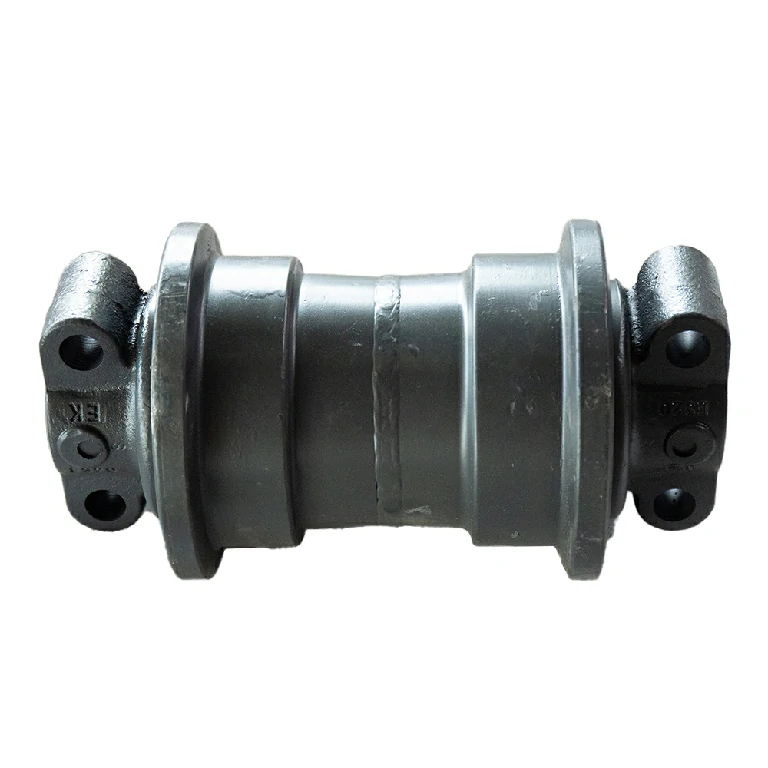
At its most fundamental level, a track roller, sometimes called a bottom roller or lower roller, is a wheel. But what a wheel it is. It does not roll freely across an open road; instead, its journey is a confined one, perpetually guiding and supporting the heavy, articulated track chain. Imagine a freight train. Roda gerbong kereta memikul beban yang sangat besar, tetapi mereka dipandu oleh jalur tetap dari rel kereta api. Track roller memiliki tujuan ganda yang serupa. Itu dipasang di bagian bawah rangka track ekskavator, dan tanggung jawab utamanya adalah menanggung seluruh beban operasional alat berat—yang bisa berkisar dari satu ton untuk ekskavator mini hingga lebih dari satu ton. 100 ton untuk mesin pertambangan besar—dan memindahkan beban tersebut melalui rantai lintasan ke tanah.
Serentak, profil roller yang beralur, dikenal sebagai flensa, terlibat dengan tautan trek. Keterlibatan ini memastikan rantai jejak tetap selaras, mencegahnya terlepas dari undercarriage saat alat berat bergerak, ternyata, atau bekerja pada permukaan yang tidak rata. Jadi, track roller bukan hanya roda pasif; itu adalah panduan aktif, pilar yang menahan beban, dan elemen penting untuk penggerak. Kesehatannya menentukan stabilitas, efisiensi, dan kelancaran pergerakan seluruh mesin. Tanpa roller yang berfungsi dengan baik, ekskavator akan menjadi tidak stabil, pergerakannya tidak menentu, dan seluruh sistem undercarriage akan berisiko mengalami kegagalan besar.
Komponen Inti: Melihat ke Dalam
Mengupas kembali cangkang baja yang mengeras pada track roller mengungkapkan keajaiban teknik yang dirancang untuk menahan kekuatan luar biasa dan lingkungan yang keras. Kesederhanaan eksteriornya memungkiri kompleksitas internal yang penting untuk kinerjanya.
Inti dari roller adalah batang, padat, pin baja mengeras yang berfungsi sebagai sumbu rotasi. Poros dipasang pada rangka track ekskavator dan menjadi tulang punggung struktural untuk keseluruhan perakitan.
Berputar di sekitar poros ini adalah badan rol atau kerang. Ini adalah bagian yang Anda lihat dari luar, komponen yang melakukan kontak langsung dengan rantai lintasan. Itu ditempa dari karbon tinggi, baja paduan boron, bahan yang dipilih karena ketangguhan dan ketahanannya yang luar biasa terhadap keausan abrasif. Proses pembuatannya bukanlah pengecoran sederhana; ini melibatkan penempaan untuk menciptakan struktur butiran yang memberikan kekuatan unggul, diikuti dengan proses perlakuan panas yang cermat. Proses ini mengeraskan permukaan luar untuk menahan keausan gerinda dari track link sekaligus menjadikan inti sedikit lebih lunak dan lebih ulet untuk menyerap beban kejut tanpa patah..
Di antara poros stasioner dan badan roller yang berputar terdapat bushing. Ini biasanya terbuat dari perunggu atau komposit bi-logam khusus. Bushing adalah permukaan bantalan yang dikorbankan, dirancang untuk menyediakan antarmuka gesekan rendah untuk rotasi. Kualitasnya adalah yang terpenting; bushing berkualitas buruk akan cepat aus, menyebabkan permainan berlebihan, ketidakselarasan, dan akhirnya kegagalan seluruh roller.
Melindungi lingkungan internal yang rapuh ini dari lumpur dunia luar, air, debu, dan puing-puing adalah kelompok segel. Ini mungkin bagian roller yang paling kritis dan canggih. Track roller modern menggunakan segel duo-kerucut, yang terdiri dari dua cincin segel logam yang tersusun halus dan ditahan secara konstan oleh dua cincin torik elastomer. Desain ini menciptakan segel kedap udara yang menjalankan dua fungsi secara bersamaan: itu membuat minyak pelumas internal tetap masuk, dan mencegah masuknya kontaminan eksternal. Kegagalan segel ini sering kali merupakan awal dari berakhirnya track roller.
Flensa Tunggal vs. Rol Flensa Ganda
Saat Anda memeriksa jalur track roller di sepanjang rangka track ekskavator, Anda mungkin melihat perbedaan halus pada bentuknya. Beberapa akan memiliki flensa, atau pelek terangkat, di kedua sisi, sementara yang lain hanya memiliki flensa di satu sisi. Ini bukan kecelakaan atau cacat produksi; ini adalah pilihan desain yang disengaja yang dikenal sebagai konfigurasi flensa tunggal dan flensa ganda. Penempatan dan pergantian kedua jenis roller ini dirancang untuk memberikan panduan optimal bagi rantai lintasan.
| Fitur | Roller Track Flange Tunggal | Roller Track Flensa Ganda |
|---|---|---|
| Desain | Dilengkapi satu flensa pemandu di sisi luar. | Dilengkapi dua flensa pemandu, satu di setiap sisi. |
| Posisi | Biasanya ditempatkan berdekatan dengan lug dan sproket pemandu track shoe. | Diganti dengan roller flensa tunggal di sepanjang rangka track. |
| Fungsi utama | Memberikan panduan lateral sambil memberikan sedikit fleksibilitas lintasan. | Memberikan panduan yang kaku, sepenuhnya menangkap tautan trek. |
| Aplikasi | Penting untuk memandu rantai di sekitar lekukan sproket/idler. | Membentuk yang utama “rel” untuk bagian lintasan yang lurus. |
| Pola Pakai | Keausan terkonsentrasi pada flensa tunggal. | Keausan dapat terjadi pada kedua flensa, terutama saat sering berbelok. |
Rol flensa ganda berfungsi seperti rel utama kereta api, dengan kedua flensanya menciptakan saluran dalam yang menyangga jalur lintasan dengan aman. Mereka menyediakan sumber panduan utama di sepanjang bagian lurus rangka lintasan. Diselingi di antara keduanya adalah rol flensa tunggal. Ini ditempatkan secara strategis agar sejajar dengan pin master dan bagian track link yang ditinggikan, memberikan bimbingan tanpa campur tangan. Pola bergantian ini—ganda, lajang, dobel, tunggal—menciptakan sistem yang aman dan fleksibel, memungkinkan rantai track menavigasi transisi di sekitar sproket dan idler tanpa terikat namun tetap sejajar dengan kuat selama perjalanan. Memahami perbedaan ini bukan hanya sekedar akademis; sangat penting untuk perakitan kembali yang benar dan untuk mendiagnosis pola keausan tertentu.
Perbedaan Antara Track Roller dan Carrier Roller
Kebingungan umum bagi mereka yang baru mengenal alat berat adalah perbedaan antara track roller dan roller pembawa. Keduanya “rol” dan bagian dari undercarriage, tetapi lokasi dan fungsinya sangat berbeda. Seperti yang telah kami tetapkan, track roller terletak di bagian bawah rangka track, menopang berat alat berat pada rantai track yang bersentuhan dengan tanah.
Itu rol pembawa, atau roller atas, terletak di sisi atas bingkai track. Tujuan utamanya adalah untuk menopang bobot rantai track itu sendiri saat kembali dari sproket ke idler depan. Ini mencegah jangka panjang, hamparan trek yang berat karena kendur secara berlebihan. Track yang kendur dapat mengenai rangka track, menciptakan getaran yang tidak diinginkan, dan berpotensi menyebabkan penghentian pelacakan. Rol pembawa tidak memikul sebagian berat mesin; bebannya terbatas pada rantai saja julimachinery.com. Akibatnya, roller pembawa jauh lebih kecil daripada roller track dan tidak dibuat untuk menahan beban tekan dan kejut yang sangat besar. Padahal keduanya penting untuk kesehatan undercarriage, peran mereka, dan oleh karena itu persyaratan pemeliharaan dan mode kegagalannya, pada dasarnya berbeda. Membingungkan keduanya dapat mengakibatkan pemesanan suku cadang yang salah dan penilaian pemeliharaan yang tidak tepat.
Tip 2: Menguasai Protokol Inspeksi dan Pembersihan Reguler
Hubungan antara operator dan mesinnya dibangun atas dasar observasi dan respons. Mesin mengomunikasikan kondisi kesehatannya melalui isyarat halus—suara baru, sedikit getaran, seberkas minyak. Operator yang rajin belajar membaca bahasa ini. Untuk undercarriage ekskavator, sebuah sistem yang memperhitungkan hingga 50% dari biaya pemeliharaan seumur hidup mesin, bahasa ini ditulis dalam pola pemakaian, keberadaan puing-puing, dan integritas komponen-komponennya. Menguasai cara pemeriksaan dan pembersihan yang disiplin bukanlah suatu tugas; ini adalah bentuk pengobatan pencegahan paling efektif dan ekonomis yang dapat Anda praktikkan untuk mesin konstruksi Anda.
Jalan-jalan Sehari-hari: Garis Pertahanan Pertama Anda
Sebelum mesin mati, sebelum pekerjaan hari itu dimulai, inspeksi jalan-jalan setiap hari harus menjadi ritual yang tidak dapat diganggu gugat. Ini bukan jalan santai tapi pemeriksaan terfokus. Untuk bagian bawah, ini berarti berjongkok dan memperhatikan track roller dari dekat. Anda cari apa?
Pertama, mencari yang sudah jelas: tanda-tanda kebocoran. Lapisan oli yang bercampur dengan debu dan kotoran di sekitar tutup ujung track roller merupakan tanda bahaya. Hal ini menunjukkan bahwa segel duo-kerucut telah rusak. Video ini sekarang hidup dalam waktu pinjaman. Pelumas bagian dalam keluar, dan kotoran serta air yang bersifat abrasif masuk ke dalamnya, dengan cepat menghancurkan busing dan poros internal.
Kedua, periksa apakah ada rol yang tidak berputar bebas. Anda sering dapat menemukannya dengan mencari yang berkilau, titik rata pada permukaan lari roller. Ini “bercak datar” terjadi ketika roller tersangkut dan terseret oleh rantai track alih-alih ikut berputar. Hal ini menciptakan gesekan yang sangat besar dan mempercepat keausan pada roller dan track link yang mahal.
Ketiga, mencari kerusakan struktural. Periksa flensa rol apakah terdapat serpihan yang signifikan, retak, atau berlebihan, keausan bermata pisau. Periksa baut yang menahan roller ke rangka track, memastikan mereka semua hadir dan tampil rapat. Keseluruhan proses ini mungkin hanya memakan waktu lima menit, but those five minutes can be the difference between catching a problem early and dealing with a major, work-stopping failure later.
Establishing a Formal Inspection Schedule
While the daily walk-around is essential for catching acute problems, a more formal, documented inspection process provides a long-term view of undercarriage health. This is particularly important for fleet managers in regions like Australia’s mining sector or large-scale construction projects in the Middle East, where machine uptime is paramount.
This formal inspection should be conducted at regular service intervals, perhaps every 250 atau 500 jam, and the findings should be recorded. This involves more than just a visual check. Ini mungkin melibatkan penggunaan alat khusus untuk mengukur keausan pada tapak roller dan flensa. Dengan melacak pengukuran ini dari waktu ke waktu, Anda dapat menetapkan tingkat keausan untuk setiap komponen. Data ini sangat kuat. Ini memungkinkan Anda beralih dari model pemeliharaan reaktif (memperbaiki sesuatu ketika rusak) ke yang prediktif. Anda dapat memperkirakan kapan satu set roller kemungkinan akan mencapai akhir masa pakainya dan menjadwalkan penggantiannya selama waktu henti yang direncanakan, daripada mengalami kegagalan tak terduga di tengah pekerjaan penting. Pendekatan berbasis data ini, diperjuangkan oleh banyak orang spesialis peralatan terkemuka, mengubah pemeliharaan dari biaya menjadi investasi strategis dalam keandalan.
Seni Membersihkan: Lebih Dari Sekadar Estetika
Di banyak lingkungan kerja, from the muddy agricultural fields of Southeast Asia to the dusty quarries of Africa, undercarriage ekskavator dengan cepat dipenuhi material. Sangat menggoda untuk melihat penumpukan ini sebagai konsekuensi normal dari pekerjaan, tapi itu adalah musuh diam-diam bagi track roller.
Bahan yang dikemas, terutama bila bersifat abrasif atau korosif, secara signifikan mempercepat keausan. Ini mengisi ruang antara komponen yang bergerak, menggiling cangkang roller, flensa, dan penjaga segel. Ketika material ini membeku di iklim yang lebih dingin seperti Rusia, itu bisa menjadi sekeras beton, memberikan tekanan yang sangat besar pada roller dan rantai track saat alat berat dihidupkan, berpotensi menyebabkan kerusakan langsung dan parah.
Lebih-lebih lagi, undercarriage yang kotor adalah undercarriage yang tidak dapat diperiksa. Anda tidak dapat melihat segel yang bocor, baut yang longgar, atau flensa yang retak jika disembunyikan di bawah lapisan lumpur kering yang tebal. Karena itu, pembersihan rutin merupakan prasyarat untuk inspeksi yang efektif. Menggunakan mesin cuci bertekanan atau sekop sederhana di akhir setiap hari kerja untuk membersihkan sebagian besar tumpukan sampah adalah tugas yang penting. Hal ini tidak hanya memperpanjang umur roller dengan mengurangi keausan abrasif namun juga memungkinkan pemeriksaan harian menjadi bermakna. Undercarriage yang bersih adalah undercarriage yang transparan, salah satu yang dapat dengan jelas mengkomunikasikan kondisi kesehatannya.
Mengidentifikasi Tanda Peringatan Dini Keausan
Belajar mengidentifikasi tanda-tanda awal keausan ibarat seorang dokter yang belajar mengenali gejala awal suatu penyakit. Hal ini memungkinkan dilakukannya intervensi dini sebelum kondisi menjadi kritis. Untuk track roller, tanda-tandanya berkembang dalam pola yang dapat diprediksi.
Tanda pertama sering kali terjadi “peening” pada tapak roller. Ini tampak sebagai logam yang sedikit mendatar atau menjamur di tepi permukaan kontak, disebabkan oleh tekanan yang sangat besar dari jalur lintasan. Sedangkan beberapa peening adalah hal yang normal, peening yang berlebihan dapat menunjukkan kondisi beban berlebih atau tegangan track yang tidak tepat.
Berikutnya, Anda akan mengamati keausan flensa. Saat rantai lintasan bergerak, itu memberikan gaya samping pada flensa roller, terutama saat berbelok. Flensa akan mulai menipis. Ketika mereka menjadi tajam atau “bermata pisau,” kemampuan mereka untuk memandu jalur terganggu, dan risiko penghentian pelacakan meningkat.
Serentak, tapak roller itu sendiri akan aus. Seiring dengan mengecilnya diameter roller, itu mempengaruhi geometri seluruh undercarriage. Nada antar rol berubah secara efektif, yang dapat mempercepat keausan pada bushing track link. Mengukur diameter roller dan membandingkannya dengan spesifikasi pabrikan merupakan bagian penting dari proses inspeksi formal. Mengenali tanda-tanda ini dan memahami maknanya memungkinkan Anda mengambil tindakan korektif, apakah itu menyesuaikan kebiasaan operator, memeriksa ketegangan trek, atau menjadwalkan penggantian sebelum masalah keausan kecil berubah menjadi kegagalan sistem yang besar.
Tip 3: Menerapkan Strategi Pelumasan Proaktif
Di dalam cangkang baja yang diperkeras pada setiap track roller terdapat ekosistem komponen bergerak yang dirancang dengan cermat. Kelangsungan hidup ekosistem ini bergantung sepenuhnya pada satu hal: Pelumasan yang tepat. Pelumasan adalah sumber kehidupan roller. Ini mengurangi gesekan, menghilangkan panas, dan mencegah terjadinya bencana logam-ke-logam pada komponen internal. To neglect lubrication is to sentence the roller to a premature and costly death. A proactive lubrication strategy is not merely about adding oil; it is about understanding its function, using the correct type, and applying it at the right time.
Why Lubrication is the Lifeblood of Your Rollers
Let us visualize what happens inside a track roller as it works. The outer shell, weighing hundreds of kilograms and supporting many tons of the machine’s weight, is spinning around a stationary steel shaft. The only thing preventing these two powerful components from grinding each other into dust is a microscopic film of oil, often no thicker than a human hair, maintained within the space of the bronze bushing.
This oil film performs several heroic tasks. Pertama, it mitigates friction. Without it, panas yang dihasilkan akan sangat besar, menyebabkan logam mengembang, melengkung, dan akhirnya bersatu dalam kejang permanen. Kedua, itu bertindak sebagai pendingin, membawa panas keluar dari zona kontak tekanan tinggi antara bushing dan poros dan membuangnya melalui badan roller. Ketiga, ini membantu menghilangkan partikel keausan mikroskopis yang pasti tercipta, mencegahnya terakumulasi dan bertindak sebagai pasta abrasif.
Integritas lapisan minyak ini dilindungi oleh segel duo-kerucut. Ketika segel ini berfungsi dengan benar, oli dapat bertahan selama masa pakai roller yang diinginkan. Namun, seperti yang ditunjukkan oleh salah satu panduan pemeliharaan, dalam kondisi yang keras, segel ini dapat dikompromikan. Ketika segel gagal, seluruh sistem perlindungan ini runtuh. Minyaknya bocor, dan kontaminan seperti air, pasir, dan pasir dituangkan ke dalam. The result is a rapid escalation of wear. The friction and heat skyrocket, the bushing is quickly destroyed, and the roller seizes. This is why a small oil leak spotted during a daily inspection is such a critical warning.
Choosing the Right Lubricant for Your Environment
Not all lubricating oils are created equal. The oil inside a track roller must be robust enough to handle extreme pressures and a wide range of temperatures. For most modern track rollers, manufacturers specify a heavy-duty gear oil, typically in the SAE 30 to SAE 50 viscosity range. The choice depends heavily on the ambient operating temperature.
In the hot climates of the Middle East or central Australia, a thicker, higher-viscosity oil (like SAE 50) is necessary. A thinner oil would lose too much viscosity at high temperatures, failing to provide an adequate protective film. Sebaliknya, in the frigid winters of Russia or Korea, a thinner, lower-viscosity oil (like SAE 30) is required. A thicker oil would become too stiff in the cold, preventing it from flowing properly into the tight clearances of the bushings upon startup, leading to a period of “dry running” and accelerated wear.
It is paramount to consult the machine manufacturer’s operation and maintenance manual for the specific recommendation for your machine and climate. Using the wrong type of oil can be just as damaging as using no oil at all. Some older or specialized rollers may have grease zerks instead of being oil-filled. Dalam kasus ini, it is equally important to use the specified type of grease, typically one with extreme pressure (EP) aditif.
Step-by-Step Lubrication Procedure
For rollers that are designed to be “dilumasi seumur hidup,” tugas utama Anda adalah melindungi segel yang menjaga oli yang diisi pabrik tetap di tempatnya. Untuk roller yang memerlukan pelumasan ulang secara berkala (yang kurang umum dalam desain modern tetapi masih ada), atau untuk situasi di mana segel telah diganti, prosedur yang tepat harus diikuti.
- Posisikan Mesin: Langkah pertama adalah memposisikan mesin dengan aman. Jika memungkinkan, putar track sehingga sumbat pengisi pada roller yang Anda servis berada di dalam “3 jam” atau “9 jam” posisi. Hal ini mencegah oli langsung tumpah saat sumbat dilepas. Juga bijaksana untuk menaikkan sisi mesin yang sedang Anda kerjakan, menghilangkan beban dari roller. Hal ini memungkinkan pelumas terdistribusi lebih merata dan memudahkan pemeriksaan.
- Bersihkan Area: Bersihkan secara menyeluruh area di sekitar sumbat pengisi. Anda tidak ingin memasukkan kotoran atau pasir apa pun ke dalam mekanisme internal roller selama proses pengisian.
- Lepaskan Tekanan: Kendurkan steker secara perlahan dan hati-hati. Mungkin ada tekanan yang terbentuk di dalam roller, apalagi kalau cuacanya hangat. Melonggarkannya secara perlahan memungkinkan tekanan ini keluar dengan aman.
- Isi ke Level yang Benar: Menggunakan corong bersih atau pompa oli khusus, tambahkan jenis minyak yang ditentukan. Tingkat pengisian yang benar sangat penting. Anda harus mengisi roller sampai oli sejajar dengan bagian bawah bukaan sumbat pengisi. Pengisian yang berlebihan bisa sama merusaknya dengan pengisian yang kurang. Roller yang terlalu penuh tidak memiliki ruang bagi oli untuk mengembang saat memanas, yang dapat meledakkan segel yang ingin Anda lindungi.
- Ganti dan Kencangkan Steker: Setelah terisi, pasang kembali steker dan kencangkan sesuai torsi yang ditentukan pabrikan. Jangan terlalu mengencangkan, karena hal ini dapat merusak benang atau steker itu sendiri.
Kesalahan Pelumasan Umum yang Harus Dihindari
Bahkan dengan niat terbaik sekalipun, kesalahan bisa saja terjadi. Menyadari kesalahan umum dapat membantu Anda menghindarinya.
- Mengabaikan Kebocoran: Kesalahan paling umum adalah melihat kebocoran kecil dan mengabaikannya. Track roller yang bocor adalah roller yang gagal. Itu perlu diganti. Mencoba untuk “selesaikan itu” setiap hari adalah latihan yang sia-sia dan mahal yang mengabaikan akar masalahnya: segel yang rusak dan kontaminasi internal yang berkelanjutan.
- Menggunakan Minyak yang Salah: Seperti yang dibahas, menggunakan oli dengan kekentalan yang tidak tepat untuk iklim Anda dapat menyebabkan pelumasan yang tidak memadai dan kegagalan dini.
- Mengisi berlebihan: Godaan untuk menambahkan “sedikit tambahan untuk ukuran yang baik” harus dilawan. Penumpukan tekanan akibat ekspansi termal akan merusak segel.
- Kontaminasi Selama Pengisian: Menggunakan corong yang kotor, pompa, atau kain lap dapat memasukkan partikel abrasif ke dalam lingkungan internal roller yang bersih, menggagalkan tujuan pelumasan.
- Mencampur Pelumas: Jangan pernah mencampurkan jenis atau merek oli yang berbeda kecuali Anda yakin keduanya cocok. Aditif yang tidak kompatibel dapat bereaksi satu sama lain, mengurangi efektivitas pelumasan.
Dengan memperlakukan pelumasan bukan sebagai tugas yang remeh tetapi sebagai suatu hal yang tepat, prosedur teknis, Anda secara aktif menjaga kesehatan dan memperpanjang umur salah satu komponen mesin Anda yang paling penting dan mahal.
Tip 4: Mengenali dan Mendiagnosis Mode Kegagalan Umum
Seorang track roller menjalani kehidupan yang brutal. Itu terus-menerus diperas, terkejut, dan terkikis di lingkungan yang jenuh dengan kotoran dan kelembapan. Ini adalah bukti metalurgi dan teknik modern bahwa mereka bertahan lama. Namun, kegagalan adalah suatu kepastian pada akhirnya. Kunci untuk mengelola undercarriage secara efektif adalah dengan mengenali tanda-tanda kegagalan yang akan terjadi jauh sebelum hal tersebut menjadi bencana besar. Belajar mendiagnosis mode kegagalan ini adalah keterampilan yang menghemat waktu dan uang, memungkinkan dilakukannya intervensi yang terencana dan tidak memerlukan biaya yang besar, perbaikan reaktif.
Bercak Datar: Penyebab dan Pencegahan
Salah satu tanda paling khas dari suatu masalah adalah “bercak datar.” Hal ini terjadi ketika track roller macet dan berhenti berputar. Saat ekskavator bergerak, rantai lintasan yang berputar menyeret roller yang diam, menggiling titik datar ke permukaannya yang mengeras. Anda sering kali dapat mendengarnya sebagai bunyi dentingan berirama saat mesin bergerak, sekali per lintasan revolusi.
The primary cause of a seizure is a complete loss of internal lubrication. This is almost always preceded by a seal failure, which allows the oil to escape and contaminants to enter. The abrasive slurry of dirt and water rapidly wears away the internal bushings. Friction and heat build up until the roller’s internal components weld themselves together.
Prevention of flat spotting, Karena itu, is fundamentally about protecting the seals and ensuring proper lubrication. This circles back to our previous tips: diligent daily inspections to spot leaks early, regular cleaning to prevent abrasive material from packing around and damaging the seal guards, and avoiding operating in deep, corrosive water for extended periods where possible. Once a roller has a significant flat spot, it is beyond repair. It must be replaced, as it will cause severe damage to the track links it contacts with every rotation of the track.
Flange Wear: The Telltale Signs
The flanges on a track roller are its guiding hands. They keep the powerful track chain in line. As the machine turns or works on side slopes, the track links push against these flanges, causing them to wear. A certain amount of flange wear is normal over the life of a roller. Namun, excessive or rapid flange wear is a symptom of an underlying issue.
| Modus Kegagalan | Visual Signs | Primary Causes | Preventative Actions |
|---|---|---|---|
| Bercak Datar | A shiny, flattened area on the roller tread; rhythmic clunking sound. | Internal seizure due to lubrication loss (seal failure). | Daily leak inspection; regular undercarriage cleaning. |
| Flange Wear | Flanges become thin, tajam, atau “knife-edged.” | Excessive turning; consistent operation on side slopes; track misalignment. | Vary turning directions; minimize side-slope work; check track alignment. |
| Seizure/Leakage | Oily residue on roller body/frame; roller does not turn. | Seal failure from age, kerusakan, or improper installation. | Protect seal guards; avoid deep water/corrosive material. |
| Shell Cracking | Visible cracks on the roller body, often originating from the tread. | Extreme shock loads (MISALNYA., dropping machine); material fatigue. | Avoid high-impact operations; operate machine smoothly. |
The most common cause of excessive flange wear is the operator’s technique. Constant turning in one direction will wear down the flanges on one side of the machine much faster than the other. Working continuously on a side slope, atau “kerang,” also places a constant side load on the flanges.
Another significant cause is track misalignment. If the front idler and the rear sprocket are not perfectly aligned, the track chain will constantly try to walk to one side, exerting a continuous thrust against the roller flanges. This can be caused by a worn idler guide plate or a bent track frame.
Recognizing flange wear involves both visual inspection and measurement. When the flanges become thin and sharp, they lose their ability to guide the track effectively and can even start to cut into the track links. The solution involves a combination of operator training to minimize aggressive turning and scalloping, along with periodic checks of the undercarriage alignment.
Seizure and Oil Leaks: A Critical Failure
Seperti yang telah kita bahas, an oil leak is the death knell for a track roller. It is the most critical failure mode to identify because it is the root cause of seizure and flat spotting. When you see the telltale streak of oil and dirt on the side of a roller, you are seeing the direct evidence of a failed duo-cone seal.
What causes these robust seals to fail? There are several culprits. Age is one; the elastomeric rings that energize the seals can lose their elasticity over time. Damage is another major cause. A rock or piece of debris getting wedged between the track frame and the roller can strike the seal guard, deforming it and compromising the seal. Improper installation during a previous repair can also lead to premature failure. Akhirnya, operating for long periods in highly abrasive or corrosive slurry can wear away the seal components.
The diagnosis is simple: if it leaks, itu telah gagal. There is no field repair for a duo-cone seal. The roller must be removed from the machine and replaced. This is why a proactive approach is so valuable. By purchasing high-quality replacement track rollers with robust seals and protecting them through diligent cleaning and careful operation, you can significantly extend their life and prevent these critical failures.
The Domino Effect: How One Failed Roller Impacts the System
It can be tempting to ignore a single failed track roller, especially if the machine seems to be operating “well enough.” This is a costly mistake. The undercarriage is a system of interconnected parts, and the failure of one component inevitably places additional stress on its neighbors.
A seized or worn-out roller no longer supports its share of the machine’s weight. This load is immediately transferred to the adjacent rollers, increasing their workload and accelerating their wear. A roller with worn-down flanges can no longer properly guide the track, which can lead to increased wear on the flanges of other rollers and on the sides of the track links themselves.
Think of it as a single pothole on a busy road. Cars swerve to avoid it, which wears down the shoulders of the road and puts stress on the suspension of the cars. In the same way, a single bad roller disrupts the smooth, balanced operation of the entire undercarriage. This disruption creates a cascading failure effect, where one failed part leads to the premature failure of several others. Addressing a single failed roller promptly is always more cost-effective than waiting until its failure has damaged other expensive components like the track chain or other rollers.
Tip 5: Mengoptimalkan Teknik Operasional untuk Mengurangi Keausan
The single greatest factor influencing the lifespan of an excavator’s undercarriage is the person sitting in the operator’s seat. Seorang yang terampil, conscientious operator can double the life of the undercarriage components compared to an aggressive or untrained one. The machine is a tool, dan seperti alat apa pun, the way it is wielded determines its longevity. Optimizing operational techniques is not about working slower; it is about working smarter, minimizing unnecessary stress on critical components like the track roller, and understanding the physics of the machine’s movement.
The Perils of High-Speed and Reverse Travel
Most modern excavators have two travel speeds. The high-speed setting is useful for “tramming,” or moving the machine longer distances across a level, prepared job site. Namun, extensive use of high-speed travel, especially on rough ground, dramatically accelerates undercarriage wear. The forces involved increase exponentially with speed. Every bump and jolt is magnified, sending shockwaves through the track rollers and the entire system.
Reverse travel is even more detrimental. The track chain is designed to operate most efficiently with the pulling force coming from the top, with the sprocket pulling the chain over the carrier rollers and idler. When traveling in reverse, the sprocket pushes the chain into the ground under the track rollers. This creates significantly more wear on the track link and roller bushings because the contact point and load dynamics are altered. While reverse operation is unavoidable, minimizing long-distance or high-speed travel in reverse can have a substantial positive impact on the life of your track rollers and track chains. A good rule of thumb is to plan your work to keep forward travel at around 80% of your total movement.
Navigating Slopes and Uneven Terrain
Working on slopes is a common requirement for excavators, but it places unique stresses on the undercarriage. When traveling straight up or down a slope, the weight of the machine shifts, placing a disproportionate amount of load on the rollers at the rear (going uphill) or the front (going downhill). There is not much to be done about this, but it is something to be aware of.
The more damaging practice is working or traveling sideways across a slope, a technique known as “scalloping.” This places a constant lateral load on the entire undercarriage. The track chain is constantly trying to slide downhill, which forces it against the flanges of the track rollers and the sides of the idlers. This leads to rapid and severe flange wear, one of the most common and preventable failure modes. Kapanpun memungkinkan, work should be planned to be performed straight up and down the grade. If traversing a slope is necessary, it should be done with care and for the shortest distance possible.
Demikian pula, on uneven, rocky ground, every effort should be made to travel smoothly. Avoid letting one track drop into a deep rut or climbing over a large obstacle, as this places enormous torsional stress on the track frame and creates massive point loads on individual rollers.
Avoiding “One-Sided” Wear Patterns
Machines, like people, can develop habits. An operator who consistently makes wide, sweeping turns to the left will cause significantly more wear on the right-side undercarriage components, and vice-versa. This is because the outer track must travel a much greater distance than the inner track during a turn, resulting in more rotations for the outer track rollers and more scrubbing action.
A simple way to combat this is to consciously alternate turning directions throughout the workday. If you made several left turns in the morning, try to make a few more right turns in the afternoon. This helps to even out the wear on both sides of the machine. Another damaging habit is making sharp, “pivot” atau “counter-rotation” turns on high-traction surfaces like concrete or asphalt. This action forces the tracks to skid sideways, creating immense torsional stress on the track links and side-loading the roller flanges. It is far better to make wider, three-point turns whenever the space allows.
The Impact of Track Tension on Roller Life
Track tension, atau “sag,” is one of the most misunderstood aspects of undercarriage maintenance. There is a common misconception that a tighter track is a better track. This is dangerously incorrect. A track that is too tight is one of the most destructive and costly conditions for an undercarriage.
When a track is overly tensioned, it creates a massive, constant load on all the rotating components. It dramatically increases the friction between the track link pins and bushings. More relevant to our discussion, it puts immense pressure on the track roller shafts and bushings, as well as the bearings in the front idler and the final drive sprocket. A track that is too tight can increase wear rates by 50% atau lebih. It robs the machine of horsepower, wastes fuel, and puts the entire system under a state of constant, high stress.
Sebaliknya, a track that is too loose is also problematic. It can cause the track to “whip” at high speeds and increases the risk of de-tracking, especially when working on slopes or in reverse. A loose track also fails to engage properly with the roller flanges, which can lead to erratic wear.
The correct procedure is to adjust the track tension according to the manufacturer’s specifications and the current working conditions. A track operating in muddy, packing conditions should be run slightly looser than a track working on hard, dry ground. The mud needs space to be squeezed out; a tight track will trap it, creating the “konkret” effect we discussed earlier. Learning to properly measure and adjust track sag is a fundamental skill for any operator or mechanic and pays enormous dividends in extending the life of every track roller.
Tip 6: Memilih Track Roller Pengganti yang Tepat untuk Mesin Anda
There will come a time in the life of every excavator when its original track rollers reach the end of their service life. Wear is inevitable. The decision of what to replace them with, Namun, is a critical one that will directly impact the machine’s future performance, keandalan, and operating cost. This choice goes beyond simply finding a part that fits. It involves a considered evaluation of quality, manufacturing methods, and the reputation of the supplier. Making a wise choice here is an investment in future uptime.
OEM vs.. Purnajual: A Considered Decision
One of the first questions fleet managers and owner-operators face is whether to purchase Original Equipment Manufacturer (OEM) parts or to explore the aftermarket. There are valid considerations on both sides.
OEM rollers are those produced by or for the excavator’s original manufacturer (MISALNYA., Ulat, komatsu, Volvo). The primary advantage is guaranteed compatibility and quality. You know the part will fit perfectly and has been manufactured to the exact material and heat treatment specifications as the original. The downside is typically a higher price point.
The aftermarket, di sisi lain, offers a vast landscape of options. The quality can range from exceptional to dangerously poor. The primary appeal of aftermarket parts is often a lower initial purchase price. A high-quality aftermarket track roller from a reputable supplier can offer performance equivalent to OEM at a more competitive cost. These suppliers often specialize in undercarriage parts and have invested heavily in their own research, perkembangan, dan kontrol kualitas. The danger lies with low-cost, low-quality providers who cut corners on materials or manufacturing processes. A cheap roller that fails prematurely will cost far more in downtime and collateral damage than was saved on the initial purchase. The key is not to choose aftermarket over OEM, but to choose quality over mediocrity, regardless of the source.
Ilmu Material: What Makes a Quality Roller?
The performance of a track roller is born in fire and pressure. Its durability is determined long before it is ever bolted to a machine. The difference between a premium roller and a substandard one lies in the unseen worlds of material science and manufacturing processes.
A top-tier track roller shell is not simply cast iron. It begins as a forged piece of high-carbon, baja paduan boron. Penempaan, the process of shaping metal using localized compressive forces, creates a continuous grain structure that follows the contour of the roller. This provides superior strength and resistance to the high-impact shock loads an excavator experiences. Simple casting, a cheaper alternative, results in a more random grain structure that is more susceptible to cracking under stress.
Setelah menempa, the roller undergoes a meticulous heat treatment process known as induction hardening. This is a sophisticated technique where the roller body is passed through a high-frequency magnetic field, which rapidly heats the surface layer. It is then immediately quenched. This process creates a deeply hardened outer shell (often to a depth of several millimeters) with a Rockwell hardness capable of resisting intense abrasive wear. Importantly, it leaves the inner core of the roller slightly softer and more ductile. This ductility is what allows the roller to absorb shock loads without fracturing. A roller that is hardened all the way through would be too brittle, while one that is not hardened enough would wear out quickly. The precision of this differential heat treatment is a hallmark of a quality manufacturer and a key reason to work with a reliable undercarriage parts supplier.
Matching the Roller to Your Application and Machine
Saat memilih penggantinya, it is vital to ensure you are getting the correct roller for your specific excavator model. While some rollers may look similar, small differences in dimensions, shaft size, or bolt patterns can make them incompatible. Always use the machine’s make, model, and serial number to confirm the correct part number.
Beyond just the model, consider your primary application. If your machine works predominantly in high-impact applications like a rock quarry or demolition, investing in premium, forged rollers is a wise decision. The superior shock resistance will pay for itself in longevity. If your work is mainly in soft soil or general earthmoving, a high-quality standard roller might be perfectly sufficient. A good supplier can provide guidance on the best option for your specific needs, ensuring you are not overpaying for a specification you do not require, nor under-specifying and risking premature failure. This is where the expertise of a specialized company that understands the nuances of construction machinery proves invaluable.
The Importance of a Reliable Supplier
In the global marketplace, especially with customers in diverse regions from Korea to Africa, the role of the supplier is paramount. A good supplier is more than just a parts store; they are a partner in your machine’s health. What defines a reliable supplier?
Pertama, they have a deep understanding of their products. They can speak intelligently about the forging and heat treatment processes of their rollers. They understand the difference in quality between their products and lower-grade alternatives. Kedua, they maintain a robust inventory. In the world of construction, downtime is incredibly expensive. The ability to get the right part quickly is vital. A supplier with a strong logistical network and warehousing can minimize the time your machine is out of action. Ketiga, they stand behind their products with a solid warranty and responsive customer service. This provides peace of mind and demonstrates their confidence in the quality of what they sell. Akhirnya, a company with a long-standing history and a commitment to the industry, as seen in those who openly share their company’s philosophy, is often a safer bet than a transient, faceless online vendor. Your relationship with your parts supplier is as important as your relationship with your mechanic or your operators.
Tip 7: Mengintegrasikan Pemantauan Tingkat Lanjut dan Teknologi Masa Depan
Selama beberapa dekade, undercarriage management has been a largely reactive and experience-based discipline. A seasoned mechanic could listen to a track, look at the wear patterns, and make an educated guess about its remaining life. While that expertise remains invaluable, the industry is now on the cusp of a technological shift. The integration of data, sensor, and predictive analytics is beginning to transform undercarriage maintenance from an art into a science. For forward-thinking fleet managers in 2025, embracing these new technologies is the next frontier in maximizing efficiency and minimizing costs.
The Rise of Telematics in Undercarriage Management
Telematics systems, which use GPS and onboard sensors to transmit machine data wirelessly, have become standard on most new construction machinery. Initially used for tracking location, engine hours, and fuel consumption, these systems are becoming increasingly sophisticated. They now monitor a host of operational parameters that have a direct impact on undercarriage wear.
Modern telematics can track the percentage of time a machine spends traveling in high speed versus low speed, the amount of time spent traveling in reverse, and even the amount of time spent turning. This data provides an objective, unbiased look at how a machine is being operated. A fleet manager can now see if a particular machine is being subjected to consistently high-wear practices. This allows for targeted operator training, not based on assumptions, but on hard data. Misalnya, if the data shows one excavator has a reverse travel time of 40% while the fleet average is 15%, it is a clear opportunity for an intervention that will save thousands of dollars in premature track roller and bushing wear.
Ultrasonic Testing for Internal Flaw Detection
One of the challenges with track roller maintenance is that some of the most critical failures begin deep inside the component. A microscopic crack forming in the core of a roller shell due to a manufacturing defect or extreme shock load is invisible to the naked eye. It will only become apparent when it propagates to the surface and causes a catastrophic failure.
Untuk mengatasi hal ini, some advanced maintenance programs are adopting ultrasonic testing (UT) techniques, similar to those used in the aerospace and pipeline industries. UT uses high-frequency sound waves to inspect the internal structure of the steel. A technician places a probe on the roller, and the device sends a sound pulse through it. By analyzing the returning echoes, the device can detect internal discontinuities like cracks, voids, or inclusions.
While this is still a specialized practice, it is being used for critical applications, such as on large mining shovels where a single roller failure can halt a multi-million-dollar operation. As the technology becomes more portable and affordable, we can expect to see it become a more common diagnostic tool in general construction fleets, allowing for the detection of flawed rollers before they are even put into service or after a significant impact event.
The Future: Smart Rollers with Embedded Sensors
The holy grail of undercarriage management is the ability to know the precise condition of a component in real-time. The future, which is rapidly approaching, lies in “smart” komponen. Imagine a track roller with a sensor embedded within it. This sensor could monitor several key parameters directly.
A temperature sensor could provide an early warning of lubrication failure, detecting the rise in heat long before a seizure occurs. A vibration sensor could analyze the roller’s vibration signature, detecting the characteristic frequencies associated with a failing bushing or a developing flat spot. A pressure sensor could even monitor the internal pressure to confirm the integrity of the duo-cone seals.
This data would be transmitted wirelessly to the machine’s main telematics unit and then to the fleet manager’s dashboard. Instead of seeing an oil leak and knowing the roller has already failed, the manager would get an alert: “Warning: Roller #4 on Excavator #12 shows elevated temperature. Probable seal failure. Schedule replacement.” This is the essence of predictive maintenance. It allows for repairs to be made at the most opportune time, dengan gangguan minimal dan sebelum kerusakan tambahan dapat terjadi. Meskipun belum meluas di 2025, beberapa produsen dan perusahaan teknologi secara aktif mengembangkan dan menguji sistem ini.
Membangun Budaya Pemeliharaan Prediktif
Penerapan teknologi ini bukan hanya tentang membeli perangkat keras baru; hal ini membutuhkan perubahan budaya dalam organisasi. Artinya menjauh dari “jika tidak rusak, jangan memperbaikinya” mentalitas. Hal ini memerlukan komitmen terhadap analisis data dan memercayai wawasan yang diberikan data. Ini berarti melatih mekanik dan teknisi tentang cara menggunakan alat diagnostik baru ini dan menafsirkan temuan mereka.
Membangun budaya pemeliharaan prediktif melibatkan pengintegrasian data dari telematika dan sensor dengan data inspeksi langsung tradisional. It means creating a comprehensive health record for each machine’s undercarriage. This holistic view allows for more accurate forecasting of component life, better inventory management of spare parts like rollers, ember, and rippers, and more efficient scheduling of maintenance downtime. It transforms the maintenance department from a cost center into a strategic contributor to the company’s profitability and reliability. For any company operating heavy machinery, this is the path forward.
FAQ
How often should I replace my excavator track rollers? Tidak ada interval waktu yang tetap. Replacement is based on condition, not hours. It depends on your machine’s application, operating techniques, and maintenance practices. Regular inspection and measurement of wear on the roller tread and flanges against the manufacturer’s wear limits are the best way to determine when replacement is necessary.
Can I replace just one track roller, or should I replace them all at once? If a single roller fails prematurely due to a defect or damage, you can replace just that one. Namun, if the rollers are wearing out from normal use, it is often most cost-effective to replace them all at the same time, along with the carrier rollers. This is because a new roller mixed with worn ones will have a different diameter, creating uneven load distribution and potentially accelerating wear on the new component and the track chain.
What is the difference between a track roller and a carrier roller? A track roller (or bottom roller) is located on the bottom of the track frame and supports the full weight of the excavator on the track chain. Rol pembawa (atau roller atas) is on top of the frame and only supports the weight of the track chain itself as it returns to the front idler. Carrier rollers are smaller and built for a much lighter load.
What causes a track roller to leak oil? An oil leak is almost always caused by the failure of the internal duo-cone seal. This can happen due to age, impact damage to the roller’s seal guard, improper installation, or operating for extended periods in abrasive or corrosive materials that wear down the seal faces.
How does improper track tension affect track rollers? A track that is too tight creates immense, constant friction and load on the roller’s internal bushings and shaft, dramatically accelerating wear. A track that is too loose can cause the track to slap against the rollers and increases the risk of the track coming off, which can damage the roller flanges.
Are aftermarket track rollers as good as OEM? The quality of aftermarket rollers varies greatly. High-quality aftermarket rollers from a reputable supplier can meet or even exceed OEM specifications in terms of materials and manufacturing processes, offering excellent value. Namun, low-cost, low-quality aftermarket rollers can fail quickly, costing more in the long run. The key is to choose a trusted supplier, not just the lowest price.
What are the main signs of a failing track roller? The primary signs are oil leaking from the end caps, a roller that has seized and developed a “flat spot,” excessive or sharp wear on the flanges, and a rhythmic clunking sound during travel. Any of these signs warrant immediate inspection and likely replacement.
A Concluding Thought
The intricate dance of steel that is an excavator’s undercarriage is a marvel of engineering, and the track roller is one of its lead performers. Our journey through its function, pemeliharaan, and potential failures reveals a simple truth: knowledge and diligence are the greatest tools for preservation. By moving beyond a simple checklist and fostering a deeper understanding of the forces at play—the importance of a clean machine, the life-giving properties of lubrication, the language of wear patterns, and the wisdom of intelligent operation—we empower ourselves. We transform the act of maintenance from a reactive chore into a proactive strategy. Caring for these vital components is not merely about preventing breakdowns; it is about honoring the incredible power and potential of the machines we command, ensuring they remain productive, dapat diandalkan, and safe for their full, intended life.