
Abstrakt
The operational landscape for compact construction equipment is undergoing a profound transformation in 2025, angetrieben durch ein Zusammentreffen strenger Umweltvorschriften, volatile Kraftstoffmärkte, and the unceasing demand for greater worksite productivity. This analysis examines the pivotal mini excavator efficiency innovations that are reshaping the industry. Central to this evolution is the paradigm shift from traditional diesel-hydraulic systems towards electrification and hybrid powertrains. These technologies offer substantial reductions in emissions and operational costs by capturing and reusing energy that is typically lost, such as during swing deceleration. Concurrently, advancements in intelligent hydraulic controls, telematics, and machine control systems are enhancing precision and minimizing rework. The investigation extends to the foundational role of undercarriage and attachment design, where material science and engineering improvements contribute to lower fuel consumption and extended component life. The synthesis of these technological advancements presents a clear trajectory towards a future where mini excavators are not only more powerful but also significantly more sustainable and economically viable for contractors globally.
Key Takeaways
- Adopt hybrid-electric models to cut fuel consumption by up to 20% through energy regeneration.
- Implement telematics to monitor machine health and operator behavior for data-driven improvements.
- Utilize fully electric mini excavators for zero-emission, low-noise operation in sensitive environments.
- Invest in high-quality undercarriage parts to reduce drag and extend the machine's service life.
- Explore mini excavator efficiency innovations to gain a significant competitive and financial edge.
- Employ intelligent hydraulic systems for faster cycle times and smoother, more precise control.
- Use GPS-guided attachments to minimize rework, saving both time and fuel on site.
Inhaltsverzeichnis
- The Inexorable Push Towards Efficiency
- Innovation 1: The Rise of Electrification and Hybrid Systems
- Innovation 2: Advanced Hydraulics and Intelligent Control
- Innovation 3: Undercarriage Optimization for Reduced Energy Loss
- Innovation 4: Smart Attachments and Integrated Machine Control
- Innovation 5: Telematics and Data-Driven Fleet Management
- Häufig gestellte Fragen (FAQ)
- Abschluss
- Referenzen
The Inexorable Push Towards Efficiency
The world of construction, particularly in dynamic markets across Australia, Südostasien, und der Nahe Osten, is no stranger to the pressures of deadlines and budgets. For operators and fleet managers, the mini excavator has long been a symbol of versatility and power in a compact form. Noch, the very definition of performance is expanding. It is no longer sufficient for a machine to simply dig and lift effectively. The economic and ecological realities of 2025 demand a more nuanced understanding of efficiency. Every liter of fuel saved, every minute of idle time reduced, and every cubic meter of earth moved with greater precision contributes directly to the bottom line and to a project's sustainability credentials.
This shift is not a fleeting trend; it is a fundamental re-evaluation of value. Consider the operator in a dense urban center in Korea or a remote mining site in Western Australia. For one, noise ordinances and emissions standards are paramount. For the other, the logistical cost of every drop of diesel is a major financial consideration. Both scenarios highlight the same core need: a machine that does more with less. The mini excavator efficiency innovations we are witnessing today are direct responses to this global demand. They represent a convergence of mechanical engineering, advanced electronics, and data science, all aimed at solving the core challenges of modern construction. Before we explore these five key innovations in detail, it is helpful to contextualize their impact through a direct comparison of the powertrain technologies at the heart of this revolution.
| Besonderheit | Conventional Diesel | Hybrid-Electric | Fully Electric |
|---|---|---|---|
| Primary Power Source | Diesel Engine | Diesel Engine + Electric Motor/Generator | Lithium-Ion Battery Pack |
| Emissions | NOx, CO2, Particulate Matter | Reduced Emissions | Zero Tailpipe Emissions |
| Noise Level | Hoch | Mäßig | Sehr niedrig |
| Fuel/Energy Cost | High and Volatile | Untere (15-30% savings) | Significantly Lower |
| Energy Regeneration | None | Ja (Swing/Boom Deceleration) | Ja (All Deceleration) |
| Ideal Application | Universell einsetzbar, remote areas | High-cycle, fuel-intensive tasks | Urban, indoor, sensitive sites |
| Erstkaufspreis | Standard | Higher | Höchste |
Innovation 1: The Rise of Electrification and Hybrid Systems
The most transformative developments in mini excavator technology are centered on the powertrain. The traditional diesel engine, a reliable workhorse for decades, is now being supplemented and, in some cases, entirely replaced by sophisticated electrical systems. This evolution is branching into two primary paths: hybrid-electric and fully electric.
Understanding the Fully Electric Mini Excavator
Imagine starting your workday not with the rumble and smoke of a diesel engine, but with the quiet hum of an electric motor. This is the reality offered by fully electric mini excavators. These machines, such as Komatsu's PC30E-5, eliminate the internal combustion engine, the fuel tank, and the exhaust system entirely. Stattdessen, they rely on high-capacity lithium-ion battery packs, similar to those found in electric vehicles, to power an electric motor that drives the hydraulic pumps (Kurihara et al., 2022).
The appeal is immediate and multifaceted. For construction in densely populated cities like those in Southeast Asia or within enclosed structures, the benefits are undeniable. Zero tailpipe emissions mean these machines can operate indoors or in poorly ventilated areas without risk to human health. The dramatic reduction in noise pollution allows for extended working hours in noise-sensitive zones, such as near hospitals or residential areas, minimizing community disruption. Außerdem, the operational cost savings can be substantial. Electricity is generally cheaper and more price-stable than diesel fuel, and the elimination of engine oil, Filter, and coolants simplifies maintenance schedules and reduces associated expenses.
Jedoch, the path to full electrification is not without its hurdles. The primary concerns for contractors are battery life and charging infrastructure. A typical electric mini excavator might offer four to five hours of continuous operation, which may not cover a full workday. This necessitates either mid-shift charging, which requires a dedicated power source on-site, or the use of swappable battery packs. The initial acquisition cost also remains significantly higher than for a comparable diesel model, requiring a careful calculation of the total cost of ownership (Tco) to justify the investment.
Hybrid Systems: A Pragmatic Compromise
For many applications, hybrid technology presents a more immediately accessible step towards greater efficiency. A hybrid mini excavator does not eliminate the diesel engine but pairs it with an electric component—often an electric swing motor or a generator-motor positioned between the engine and the hydraulic pumps. The core principle behind this innovation is energy regeneration, a concept borrowed from hybrid automobiles.
Think about the typical work cycle of an excavator: graben, lift, swing, dump, return. During the swing and boom-lowering phases, the machine's momentum and the weight of the arm create kinetic and potential energy. In a conventional machine, this energy is dissipated as heat in the hydraulic system—it is simply wasted. A hybrid system, im Gegensatz dazu, captures this energy. As the operator slows the swing of the upper structure, the electric swing motor acts as a generator, converting the deceleration energy into electricity, which is then stored in a capacitor or a small battery (Yang et al., 2025). This stored electricity is then used to either assist the engine during the next acceleration phase or to power the swing motor directly, reducing the load on the diesel engine.
The result is a significant drop in fuel consumption, often between 15% Und 30%, depending on the application. For a contractor in a region with high fuel costs, like many parts of Africa or remote Australia, these savings accumulate rapidly, leading to a much faster return on the higher initial investment. Research into innovative hybrid powertrains continues to optimize this balance, seeking to maximize energy recovery from various functions, including the hoisting and slewing systems, to further improve overall energy efficiency characteristics (Quan et al., 2023). These systems provide a powerful bridge technology, offering tangible fuel savings and reduced emissions without the range anxiety and infrastructure challenges of fully electric models.
Innovation 2: Advanced Hydraulics and Intelligent Control
While the powertrain revolution captures many headlines, equally significant mini excavator efficiency innovations are occurring within the hydraulic system itself. The hydraulic system is the muscle of the excavator, translating engine power into the force needed to dig, lift, and move. Making this system smarter and more responsive is key to enhancing overall machine productivity and reducing wasted energy.
The Shift to Electronic Load-Sensing
Traditional hydraulic systems often operate on a principle of constant flow, where the pump works to maintain pressure even when no function is being used. This is akin to leaving a tap running—it consumes energy without performing any useful work. Modern mini excavators are increasingly equipped with advanced load-sensing, variable-displacement piston pumps.
Here is how it works: sensors at the control levers detect the operator's input and the precise hydraulic flow and pressure required for that specific action. This information is sent to an electronic controller, which then instructs the pump to generate only the necessary amount of flow. If the operator is making a fine, delicate movement, the pump delivers a small amount of oil. If they are performing a heavy lift at full speed, the pump ramps up to maximum output. This "power on demand" approach ensures that the engine is never working harder than it needs to, which is a major contributor to fuel savings. It eliminates the parasitic losses associated with older, less intelligent systems.
Flow-Sharing for Superior Control
Have you ever operated an older piece of equipment and noticed that when you try to perform two functions at once—like swinging the house while lifting the boom—one function slows down dramatically? This is a common issue in systems without proper flow-sharing capabilities.
Advanced hydraulic systems incorporate sophisticated main control valves with flow-sharing technology. These valves act as intelligent traffic cops for the hydraulic oil. When an operator commands multiple functions simultaneously, the valve ensures that the available pump flow is proportionally distributed according to the demand of each function. This allows for smooth, combined movements without one function starving the other of power. The practical benefit for the operator is enormous. It makes grading a surface, craning a pipe into a trench, or loading a truck a much faster, smoother, and more precise operation. This smoothness not only boosts productivity by shortening cycle times but also reduces operator fatigue over a long shift.
The Impact of Intelligent Control on Productivity
The integration of these advanced hydraulic components with intelligent electronic controllers creates a machine that is not just more efficient, but also easier to operate effectively. Many modern mini excavators feature selectable work modes (Z.B., 'Eco', 'Standard', 'Power'). In 'Eco' Modus, the system might cap engine RPM and optimize hydraulic flow for maximum fuel economy, perfect for light-duty tasks. In 'Power' Modus, it unleashes the full capability of the engine and hydraulic system for heavy digging.
These systems can also automate repetitive functions and provide assists that make even novice operators more productive. Zum Beispiel, some systems offer auto-idle, which automatically drops the engine to idle after a few seconds of inactivity, and auto-shutdown, which turns the engine off after a preset period, saving significant amounts of fuel over the life of the machine. This level of intelligence transforms the excavator from a purely mechanical tool into a responsive partner, adapting its performance characteristics to the task at hand and the operator's intent.
Innovation 3: Undercarriage Optimization for Reduced Energy Loss
The undercarriage of a mini excavator is its foundation. It supports the entire weight of the machine and provides the mobility needed to navigate a job site. It is also an area where subtle design changes can yield surprising gains in overall efficiency. The energy required to simply move the machine from one point to another, known as travel or tramming, can account for a significant portion of its total fuel consumption. Deswegen, innovations that reduce drag and friction in the undercarriage are a key part of the efficiency puzzle.
The Undercarriage's Role in Fuel Consumption
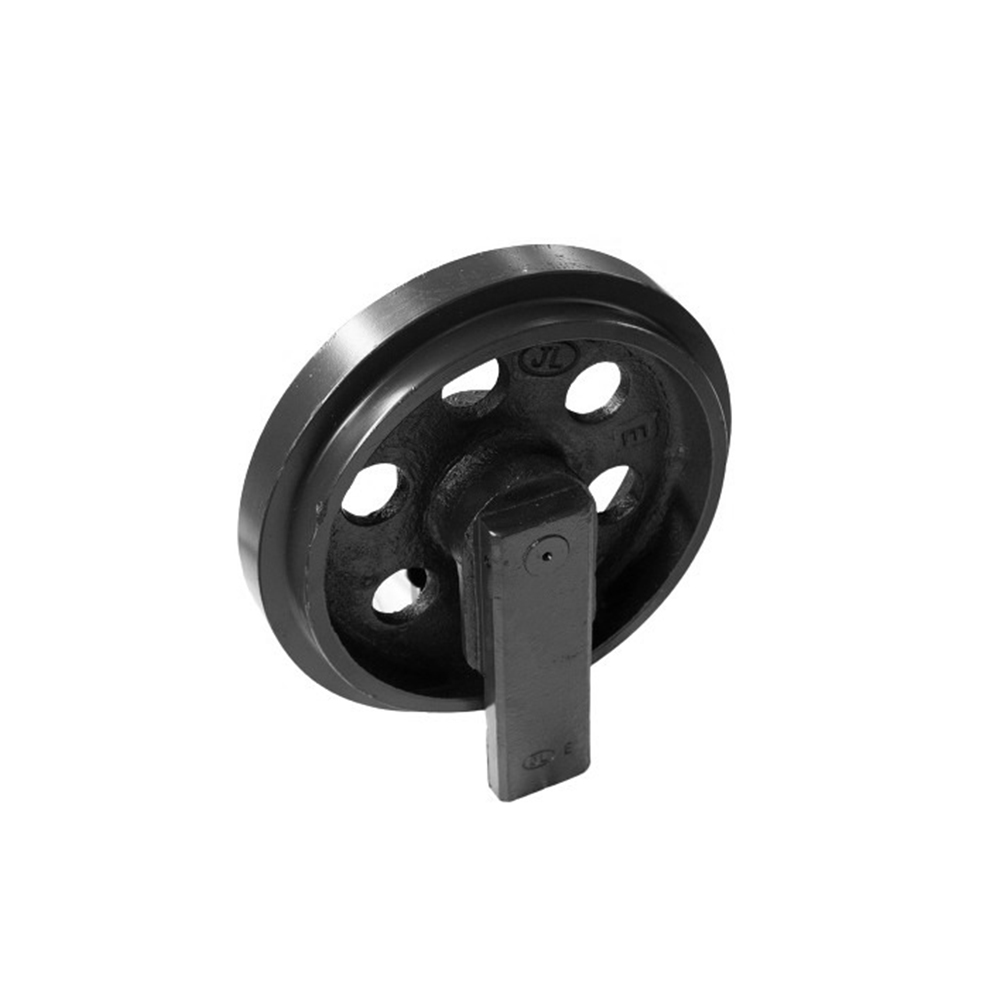
Think of the undercarriage as the drivetrain of a tracked machine. It consists of a complex assembly of sprockets, Faulenzer, Rollen, and the tracks themselves. Every time the machine moves, energy is lost to friction between the pins and bushings in the track chain, between the rollers and the track links, and between the track pads and the ground. This cumulative friction creates a resistive force, or drag, that the engine must overcome. The heavier the machine and the higher the friction, the more fuel is required to move it.
Manufacturers are tackling this challenge through a combination of improved designs and advanced materials. Zum Beispiel, rollers and idlers may be redesigned to have optimized contact surfaces, or they may use more advanced seals and bearings to reduce rotational friction. The design of the track itself is also critical. While wider tracks offer better flotation on soft ground, they also increase the machine's overall weight and ground contact area, potentially increasing friction and turning resistance on hard surfaces. Choosing the right track width and pad type for the typical application is an important first step in optimizing efficiency.
Innovations in Track Design and Materials
One of the most significant areas of innovation is in the track chain itself. Traditionally, track chains require internal lubrication (sealed and lubricated tracks, or SALT) to minimize wear and friction between the internal pins and bushings. Advances in metallurgy and sealing technology have led to undercarriages with longer lubrication intervals and more robust seals that prevent abrasive materials like sand and rock from entering the internal components.
Außerdem, the development of rubber track technology has been a game-changer for mini excavators. Rubber tracks are significantly lighter than steel tracks, which immediately reduces the machine's overall weight and the energy needed to propel it. They also eliminate the metal-on-metal friction of a steel chain, offering quieter and smoother travel. For applications on sensitive surfaces like pavement or landscaped areas, rubber tracks are essential to prevent damage, but their efficiency benefits are a major advantage in any context.
The Importance of High-Quality Components
The relentless stress and abrasive conditions of a construction site mean that undercarriage components are wear items. Jedoch, the quality of these components has a direct impact on long-term efficiency. Investing in high-quality Fahrwerkskomponenten from a reputable supplier is not just about extending the life of the part; it is about maintaining the efficiency of the entire system. Worn sprockets, stretched track chains, or seized rollers dramatically increase friction and the parasitic energy losses in the undercarriage. This forces the engine to work harder to achieve the same travel speed, directly increasing fuel consumption. Premium replacement parts that are manufactured to precise OEM specifications ensure proper fit and function, helping to keep the undercarriage operating as efficiently as the day the machine was new.
To illustrate the long-term financial impact, consider the following comparison of standard versus premium undercarriage components over a 4,000-hour operational period.
| Metrisch | Standard Quality Components | Premium Quality Components |
|---|---|---|
| Anschaffungskosten | Base Price | Base Price + 20% |
| Component Lifespan | ~2,000 hours | ~4,000 hours |
| Replacement Events | 1 (bei 2,000 Std.) | 0 |
| Downtime for Replacement | 8 Std. | 0 Std. |
| Fuel Efficiency Impact | 2-4% decrease as parts wear | <1% decrease over lifespan |
| Gesamtkosten überschritten 4,000 Std | Anschaffungskosten + Wiederbeschaffungskosten + Ausfallkosten + Extra Fuel Cost | Anschaffungskosten |
As the table demonstrates, the slightly higher initial investment in premium components is often recouped through the elimination of a mid-life replacement cycle, reduzierte Ausfallzeiten, and sustained fuel efficiency.
Innovation 4: Smart Attachments and Integrated Machine Control
The efficiency of a mini excavator is not determined by the machine alone. The tool at the end of the boom is what performs the actual work, and innovations in attachment technology and machine control are transforming how that work gets done. The move is away from "dumb steel" and towards intelligent, integrated systems that enhance precision, reduce rework, and dramatically shorten project timelines.
The Evolution from Buckets to Intelligent Tools
Seit Jahrzehnten, the standard toolkit for a mini excavator consisted of a few different-sized digging buckets, a grading bucket, and perhaps a hydraulic hammer. Heute, the array of available attachments is staggering, and many now incorporate their own technology. Tilt-rotators, Zum Beispiel, are a common sight on European job sites and are gaining popularity worldwide. This "wrist" at the end of the boom allows the bucket or other attachment to rotate 360 degrees and tilt up to 45 degrees side-to-side. This capability allows the operator to excavate complex shapes, grade slopes, and place objects with incredible precision without constantly repositioning the machine itself. Every time the operator avoids moving the tracks, they save both time and fuel.
Other smart attachments include grading buckets with integrated sensors that provide real-time feedback on slope and grade, or compaction plates that measure soil density to ensure that compaction specifications are met on the first pass. These tools provide immediate, actionable information to the operator, reducing the need for a second worker with a grade rod or a separate testing device.
Integrating GPS and Machine Control
The pinnacle of this trend is the integration of attachments with 2D and 3D machine control systems. These systems use GPS or robotic total stations to determine the precise position of the bucket's cutting edge in real-time. The project design plan is loaded into a ruggedized computer display in the cab. The operator can then see a graphical representation of their bucket's position relative to the desired final grade.
In a 2D system, the operator uses a rotating laser as a reference point and can set a desired depth and slope. The in-cab display will indicate whether the bucket edge is above, below, or on grade. This is ideal for tasks like digging trenches for utilities or creating flat building pads.
A 3D system goes much further. Using GPS, it tracks the machine on a 3D digital site model. The operator can see their position on the entire job site and dig complex contours, slopes, and profiles with centimeter-level accuracy. Some advanced systems even offer semi-autonomous control, where the system will automatically control the boom and stick functions to prevent the operator from digging past the target grade.
The efficiency gains from these systems are immense. They virtually eliminate the need for survey stakes and grade checkers on the ground, improving site safety. Rework due to over-digging or under-digging is drastically reduced, which saves time, Kraftstoff, and the cost of extra backfill material. A task that might have taken days of staking and careful manual work can now be completed in hours. The ability to use a powerful excavator ripper with precision guidance, Zum Beispiel, allows for efficient rock and hard-soil excavation without the costly guesswork of the past.
Innovation 5: Telematics and Data-Driven Fleet Management
The final piece of the modern efficiency puzzle is data. The most advanced mini excavator in the world can still be operated inefficiently. Telematics systems provide the information that fleet managers and owners need to monitor, manage, and optimize the performance of their machines and operators. This technology has moved from a luxury add-on to a standard feature on most new construction machinery.
How Telematics Works
A telematics system is essentially a small, rugged computer on the machine equipped with a cellular or satellite modem and a GPS receiver. This unit constantly collects a vast stream of data from the machine's electronic control module (ECM) and other sensors. This data is then transmitted to a secure web portal where it can be accessed by the machine's owner.
The type of data collected is comprehensive and can include:
- Standort: Real-time GPS tracking to monitor machine location and prevent theft.
- Betriebszeiten: Accurate tracking of engine hours for scheduling preventive maintenance.
- Fuel Consumption: Precise measurement of fuel burned, allowing for the calculation of fuel efficiency (Z.B., liters per hour).
- Idle Time: The amount of time the engine is running while the machine is not actively working. This is a critical metric for identifying wasted fuel.
- Machine Health & Fehlercodes: The system can report diagnostic trouble codes, high engine temperatures, or low fluid levels, often before the operator is even aware of a problem.
- Utilization Data: Information on how the machine is being used, such as the time spent in different work modes or the percentage of time a specific function is active.
Turning Data into Efficiency Decisions
This raw data is the foundation for making smarter business decisions. A fleet manager in the Middle East, overseeing dozens of machines on multiple sites, can log into a portal and see a complete picture of their fleet's health and productivity.
Are fuel costs on one project inexplicably high? The telematics data might reveal excessive idle times, indicating a need for operator training on shutting down machines when not in use. Or it might show that an operator is consistently using 'Power' mode for a light-duty task, when 'Eco' mode would be more appropriate.
Is a specific machine showing repeated hydraulic temperature warnings? This could be an early indicator of a failing component, allowing maintenance to be scheduled proactively before a catastrophic failure occurs on site. This predictive maintenance capability, guided by telematics, is a powerful tool for minimizing unplanned downtime, which is one of the biggest hidden costs in construction.
By analyzing trends over time, managers can also make better decisions about future equipment acquisitions. They can compare the real-world fuel efficiency and productivity of different models in their own applications, providing a solid basis for calculating the true total cost of ownership. The insights gleaned from telematics transform fleet management from a reactive process to a proactive, data-driven strategy for maximizing profitability.
Häufig gestellte Fragen (FAQ)
Are electric mini excavators powerful enough for real construction work?
Ja, absolutely. A common misconception is that electric power means less performance. In Wirklichkeit, electric motors produce instant torque, which can make electric mini excavators feel even more responsive than their diesel counterparts. They are engineered to provide the same breakout force and hydraulic performance as diesel models of a similar size class, making them fully capable of trenching, Abriss, and material handling tasks.
What is the return on investment (ROI) for a hybrid mini excavator?
The ROI for a hybrid machine depends heavily on fuel costs and utilization. The higher the price of diesel and the more hours the machine is used, the faster the payback. For high-cycle applications like truck loading or trenching where the swing function is used constantly, the fuel savings are maximized. A typical calculation might show a payback period of two to four years, after which the machine generates significant savings for the remainder of its operational life.
Can I retrofit my older mini excavator with these new efficiency technologies?
While some technologies can be retrofitted, others cannot. Telematics systems are commonly available as aftermarket kits and can be installed on almost any machine. Machine control systems (2D and 3D) can also be fitted to older excavators, provided they have a reasonably modern hydraulic system. Jedoch, core powertrain technologies like hybrid-electric systems or advanced load-sensing hydraulics are deeply integrated into the machine's design and cannot be practically retrofitted.
How does operator technique affect the efficiency of these new machines?
Operator technique remains a hugely important factor. Even with advanced systems, a skilled operator who anticipates movements, uses smooth controls, and minimizes unnecessary machine repositioning will be more efficient. Technologies like telematics help identify areas for operator coaching, such as reducing idle time or using the correct work mode. The goal of many mini excavator efficiency innovations is to make it easier for every operator to perform at a higher level.
Do electric and hybrid excavators require specialized maintenance?
They require different maintenance, not necessarily more specialized. Electric excavators eliminate engine-related maintenance (oil changes, filter replacements), but introduce the need to monitor battery health and electrical connections. Hybrid systems still have a diesel engine that requires standard service, plus the need to maintain the electrical components like the capacitor and motor-generator. Technicians may require additional training to work on these high-voltage systems safely.
Is the undercarriage really that important for fuel efficiency?
Ja, it is a critical and often-overlooked factor. The energy lost to friction and drag in a poorly maintained or low-quality undercarriage is significant. This parasitic loss forces the engine to produce more power just to move the machine, directly increasing fuel burn. Regelmäßige Reinigung, proper track tensioning, and the use of high-quality components are essential maintenance practices for maximizing fuel economy.
Which innovation offers the best value for a small contractor?
For a small contractor or owner-operator, the best value often comes from technologies that provide the quickest and most tangible returns. A telematics system is a relatively low-cost investment that can immediately identify fuel waste from idling. If purchasing a new machine, a hybrid model often strikes an excellent balance, providing substantial fuel savings without the infrastructure requirements of a fully electric excavator, making it a very pragmatic choice.
Abschluss
The journey through the landscape of mini excavator efficiency innovations reveals a clear and compelling narrative of progress. The industry is moving decisively beyond the singular pursuit of raw power and towards a more holistic definition of performance, one where fuel consumption, emissions, Präzision, and data intelligence are equally vital. The advent of fully electric and hybrid-electric powertrains marks the most significant technological leap, offering pathways to dramatically lower operating costs and meet tightening environmental standards, a development substantiated by extensive research into energy regeneration (Truong et al., 2021).
Gleichzeitig, the quiet revolution happening within hydraulic systems, characterized by intelligent, load-sensing controls, is empowering operators to work faster and with greater finesse. This is complemented by the growing sophistication of the machine's interaction with its environment, through undercarriage designs that minimize energy loss and smart, GPS-guided attachments that turn guesswork into precision. Endlich, the layer of telematics data spread across the entire operation provides the critical feedback loop, enabling owners and managers to transform insights into action, optimizing everything from operator behavior to long-term fleet strategy. For contractors in the competitive markets of 2025 und darüber hinaus, embracing these innovations is not merely an option for improvement; it is the fundamental strategy for building a more profitable, nachhaltig, and resilient business.
Referenzen
Kurihara, K., Naka, H., Shitara, Y., & Iitani, H. (2022). Study of full electric mini excavator. Komatsu Technical Report, 68(175), 2–9.
Quan, L., Yang, J., & Zhang, S. (2023). Research on energy efficiency characteristics of mining shovel hoisting and slewing system driven by hydraulic-electric hybrid system. Chinese Journal of Mechanical Engineering, 36(1), 164. https://doi.org/10.1186/s10033-023-00970-x
Truong, D. Q., Le, T. H., Ahn, K. K., & Park, H. G. (2021). Developments in energy regeneration technologies for hydraulic excavators: A review. Renewable and Sustainable Energy Reviews, 145, 111045.
Yang, J., Quan, L., Ge, L., Zhang, X., & Zhao, B. (2025). Design and control of a novel hybrid drive swing system for excavators integrating electrical and hydraulic energy recovery systems. Energie, 300, 134707.