
Abstrakt
Die Wahl eines Minibagger-Teileherstellers stellt eine wichtige strategische Entscheidung für Fuhrparkmanager und Eigentümer-Betreiber dar, mit direkten Auswirkungen auf die operative Verfügbarkeit, langfristige Rentabilität, und Sicherheit auf der Baustelle. In diesem Dokument wird der vielschichtige Prozess der Überprüfung und Auswahl eines Lieferanten für kritische Komponenten wie Fahrwerksteile untersucht, Eimer, Ripper, und Meißel. Es geht über die oberflächliche Kostenanalyse hinaus und schlägt eine strukturierte Lösung vor, seven-question framework designed to probe a manufacturer's core competencies. Die Untersuchung befasst sich mit den differenzierten Bereichen der Materialwissenschaft und Metallurgie, die Strenge der Fertigungs- und Qualitätskontrollsysteme, und die Tiefe der Forschungs- und Entwicklungskapazitäten. Darüber hinaus werden die praktischen Aspekte der Teilekompatibilität untersucht, Die Komplexität der globalen Lieferkettenlogistik, Die Überprüfung der Leistungsansprüche durch empirische Beweise, und die unverzichtbare Natur der technischen Unterstützung des robusten Nachverkaufs. Durch systematisch adressierte diese Bereiche, Käufer können ein ganzheitliches Verständnis eines potenziellen Lieferanten entwickeln, Ermöglichen, Partnerschaften zu schmieden, die die Langlebigkeit der Maschine verbessern und einen anhaltenden Wert in vielfältigen und anspruchsvollen operativen Umgebungen auf der ganzen Welt bieten.
Key Takeaways
- Evaluate a manufacturer's metallurgical expertise and material sourcing transparency.
- Prüfen Sie die Qualitätskontrollprotokolle von Rohstoff bis zur Endinspektion.
- Assess a supplier's commitment to research, Entwicklung, und Produktinnovation.
- Überprüfen Sie die Methoden zur Gewährleistung der Teilkompatibilität und der genauen Anpassung.
- Wählen Sie einen Hersteller von Minibagger-Teilen mit einer robusten globalen Logistikstrategie.
- Fordern Sie empirische Leistungsnachweise durch Fallstudien und regionale Erfahrungsberichte.
- Priorisieren Sie Partner, die umfassenden technischen Support und faire Garantien bieten.
Inhaltsverzeichnis
- 1. Was sind Ihre Materialbeschaffungs- und metallurgischen Fachkenntnisse??
- 2. Können Sie Ihre Herstellungsprozesse und Qualitätskontrollprotokolle detailliert beschreiben??
- 3. Was ist der Umfang Ihrer Forschung?, Entwicklung, und technische Fähigkeiten?
- 4. Wie stellen Sie die Kompatibilität und Passung von Teilen zwischen verschiedenen Marken und Modellen sicher??
- 5. Was ist Ihre globale Logistik- und Lieferkettenstrategie?, Speziell für meine Region?
- 6. Können Sie anhand von Fallstudien und Erfahrungsberichten Leistungs- und Haltbarkeitsnachweise erbringen??
- 7. Welches Maß an After-Sales-Support und technischem Fachwissen bieten Sie an??
- Häufig gestellte Fragen (FAQ)
- Abschluss
- Referenzen
1. Was sind Ihre Materialbeschaffungs- und metallurgischen Fachkenntnisse??
Das Gespräch mit einem potenziellen Hersteller von Minibagger-Teilen muss nicht mit dem Preis beginnen, sondern mit der Substanz der Komponenten selbst: der Stahl. Die Haltbarkeit eines Eimers, die Widerstandsfähigkeit eines Rippers, und die Lebensdauer eines Fahrwerks sind keine Frage des Zufalls; Sie sind direkte Ergebnisse bewusster Entscheidungen, die lange vor dem ersten Schweißen oder Schneiden getroffen wurden. Sich über die Materialbeschaffung zu erkundigen bedeutet, sich über die Grundphilosophie des Herstellers zu informieren. Bauen sie auf Langlebigkeit?, Oder werden sie lediglich zu einem bestimmten Preis zusammengebaut?? Diese Frage deckt den Charakter des Anbieters auf und liefert den ersten, der aussagekräftigste Indikator für die Qualität, die Sie erwarten können. Die Sprachsprache eines Herstellers in der Sprache der Metallurgie spiegelt direkt ihres Engagements zur Integrität ihres Produkts und dessen wider, Aus der Ausweitung, zum Erfolg Ihrer Operationen.
Die grundlegende Bedeutung von Rohstoffen
Stellen Sie sich zwei identisch aussehende Track-Links vor. Einer wird aus einem hohen Kohlenstoff gefälscht, Bor-alloy-Stahl. Der andere wird aus einem generischen hergestellt, niedrigerer Kohlenstoffstahl. Zum bloßen Auge, Sie sind nicht zu unterscheiden. Noch, im Schleifmittel, Hoch wirkungslose Umgebung einer Baustelle, Ihre Schicksale sind sehr unterschiedlich. Der erste könnte Tausende von Stunden Dienst ertragen, Während der zweite möglicherweise vorzeitig ausfällt, katastrophale Ausfallzeiten verursachen. Deshalb ist die Diskussion über Rohstoffe von größter Bedeutung.
Wir müssen zuerst verstehen, dass "Stahl" ist kein Monolith. Es ist eine Familie von Legierungen, jeweils mit einem bestimmten Eisenrezept, Kohlenstoff, und andere Elemente, die bestimmte Eigenschaften liefern sollen. Für die Komponenten der Baumaschinen, Die gefragtesten Eigenschaften sind Härte, Zähigkeit, und Verschleißfestigkeit.
Härte ist die Fähigkeit des Materials, Oberflächeneinstufung und Abrieb zu widerstehen. Für Teile wie Schneidkanten und Zähne des Eimers, die in ständigem Kontakt mit Schleifmaterialien wie Sand stehen, Kies, und Rock, Hohe Oberflächenhärte ist nicht verhandelbar. Dies wird häufig unter Verwendung von Stählen mit höherem Kohlenstoffgehalt und spezifischen Legierungen wie Chrom und Molybdän erreicht, die dann einer Wärmebehandlung unterzogen werden.
Zähigkeit is the material's ability to absorb energy and deform without fracturing. Denken Sie an einen Ripper Shank, der auf einen versteckten Felsbrocken stoßen. Ein spröde Material würde schnappen, Aber ein hartes Material absorbiert den Schock. Es gibt oft einen Kompromiss zwischen Härte und Zähigkeit; Ein sehr hartes Material kann spröde sein. Die Kunst der Metallurgie liegt darin, das optimale Gleichgewicht für jede bestimmte Anwendung zu finden. Für strukturelle Komponenten, Zähigkeit wird oft vor extremer Härte priorisiert.
Resistenz tragen ist die breitere Fähigkeit, dem Materialverlust durch mechanische Wirkung zu widerstehen. Es ist eine Funktion der Härte, Zähigkeit, and the material's microstructure. Boron Steel ist eine beliebte Wahl für Bodenentwicklungen und Fahrwerksteile aus diesem Grund. Die Zugabe einer winzigen Menge Bor (so wenig wie 0.001%) kann die Härten des Stahls dramatisch erhöhen, Während der Wärmebehandlung eine tiefe und gleichmäßige Härte ermöglichen, was direkt auf ein längeres Verschleißleben übersetzt (Beängstigend & Donertas, 2017).
Wenn Sie mit einem potenziellen Hersteller von Minibaggerteilen zusammenarbeiten, Ihre Fragen sollten konkret sein. Akzeptieren Sie keinen „hochwertigen Stahl“." als Antwort. Fragen Sie nach den spezifischen Stahlsorten, die für ihre Schaufeln verwendet werden, ihre Bahnschuhe, und ihre Müßiggänger. Fragen Sie, warum diese bestimmte Note gewählt wurde. Ein sachkundiger Lieferant kann seine Gründe erläutern, Verbindung der Eigenschaften des Stahls (Z.B., der Kohlenstoffgehalt, das Vorhandensein von Mangan oder Bor) an die funktionalen Anforderungen des Teils angepasst werden. Dieses Maß an Transparenz ist das erste Zeichen eines vertrauenswürdigen Partners.
Metallurgie in der Komponentenfertigung verstehen
Die Beschaffung des richtigen Rohmaterials ist nur das erste Kapitel der Geschichte. Die anschließende Umwandlung dieses rohen Stahls in einen langlebigen Stahl, Zuverlässige Komponente ist eine Erzählung von Hitze, Druck, und Präzision. Dies ist das Reich der Metallurgie in der Praxis, umfassen Prozesse wie Schmieden, Casting, und Wärmebehandlung. Wenn Sie die Grundlagen dieser Techniken verstehen.
Lassen Sie uns nachdenken Schmieden. Stellen Sie sich einen Schmied vor, der ein Stück heißes Eisen hämmert. Das fällt in seiner elementarsten Form. In der modernen Fertigung, Massive Pressen oder Hämmer formen den Stahl in eine gewünschte Form. Der Hauptvorteil des Schmiedens besteht darin, dass es die Kornstruktur des Stahls verfeinert. Die mechanische Kraft richtet die Körner aus, Beseitigung interner Hohlräume und Erzeugung eines dichteren Erstellens, stärker, und ermüdlicher-resistenterer Teil. Komponenten, die hohen zyklischen Stress und Auswirkungen ertragen, wie Spurenverbindungen und Verbindungsstäbe, sind Hauptkandidaten für das Schmieden. Wenn Sie mit einem Hersteller sprechen, Fragen Sie, welche ihrer Komponenten gefälscht sind. Ihre Antwort zeigt, dass sie in die Herstellung von Teilen mit überlegener innerer Integrität investieren.
Als nächstes kommt Casting, der Vorgang, bei dem geschmolzenes Metall in eine Form gegossen wird. Durch Gießen können komplexe Formen geschaffen werden, die nur schwer oder gar nicht zu schmieden oder zu bearbeiten wären. Teile wie Kettenräder, mit ihren komplizierten Zahnprofilen, werden oft gegossen. Die Qualität eines Gussteils hängt von der Reinheit des geschmolzenen Metalls ab, das Design der Form, und den Abkühlvorgang. Ein schlecht ausgeführter Gips kann zu Porosität führen (winzige innere Blasen) oder Schrumpfrisse, Dadurch entstehen Schwachstellen, die unter Last zum Ausfall führen können. Ein kompetenter Hersteller verwendet fortschrittliche Techniken wie Vakuumentgasung, um Verunreinigungen aus der Stahlschmelze zu entfernen, und computersimuliertes Formenfüllen, um einen festen Zustand zu gewährleisten, gleichmäßiger Guss.
Der vielleicht kritischste und am häufigsten missverstandene Prozess ist Wärmebehandlung. Hier wird das wahre Potenzial der Stahllegierung freigesetzt. It is a carefully controlled sequence of heating and cooling that alters the steel's microstructure to achieve the desired balance of hardness and toughness.
- Quenching: Dabei wird der Stahl auf eine hohe Temperatur erhitzt und anschließend schnell abgekühlt (oft im Wasser, Öl, oder eine Polymerlösung). Durch diesen Prozess entsteht eine sehr harte, aber spröde Mikrostruktur, die als Martensit bekannt ist.
- Temperieren: Anschließend wird das abgeschreckte Teil erneut auf eine niedrigere Temperatur erhitzt und für eine bestimmte Zeit gehalten. Dieser Prozess baut innere Spannungen ab und verringert die Sprödigkeit, Erhöhung der Zähigkeit des Teils.
Die Präzision des Wärmebehandlungsprozesses ist alles. Ein Teil, das nicht auf die richtige Temperatur erhitzt wird, nicht schnell genug abgekühlt, oder nicht richtig temperiert, wird seine Leistungsspezifikationen nicht erfüllen. Fortgeschrittene Hersteller nutzen computergesteuerte Induktionserwärmung, um beispielsweise Wärme mit unglaublicher Präzision auf bestimmte Bereiche aufzubringen, nur das Härten der Zähne eines Kettenrads oder der Schienenoberfläche eines Gleisglieds, Gleichzeitig bleibt der Kern härter und duktiler, um Stöße zu absorbieren. Fragen Sie einen Hersteller nach seinen Wärmebehandlungsmöglichkeiten. Verwenden sie Induktionshärten?? Wie steuern sie die Abschreckgeschwindigkeit und die Anlasstemperaturen?? Ihre Fähigkeit, ausführlich über diese Prozesse zu sprechen, ist ein starker Indikator für ihre technische Tiefe.
Fragen zur Materialzertifizierung und Rückverfolgbarkeit
Vertrauen, aber überprüfen. This old adage is the guiding principle when evaluating a manufacturer's claims about their materials. Eine Erklärung zur Verwendung von „Borstahl“." ist ohne ein System, das es beweist, bedeutungslos. Hier stehen Zertifizierung und Rückverfolgbarkeit im Mittelpunkt Ihrer Anfrage. Diese Systeme bieten ein Ziel, Prüfbarer Weg vom Rohstofflieferanten bis zum fertigen Teil in Ihrer Werkstatt.
Die erste Überprüfungslinie ist die Materialtestbericht (Mtr), manchmal auch als Mühlentestzertifikat bezeichnet. Hierbei handelt es sich um ein vom Stahlwerk bereitgestelltes Qualitätssicherungsdokument, das die chemische Zusammensetzung und die physikalischen Eigenschaften einer bestimmten Stahlcharge bescheinigt. Wenn ein Hersteller eine Lieferung Rohstahl erhält, es sollte von einem MTR begleitet sein. Dieser Bericht ist wie eine Geburtsurkunde für den Stahl, Einzelheiten zur genauen chemischen Zusammensetzung (der Prozentsatz an Kohlenstoff, Mangan, Silizium, Bor, usw.) und die Ergebnisse mechanischer Tests (wie Zugfestigkeit und Härte) in der Mühle durchgeführt.
Ihre Frage an den Hersteller sollte direkt sein: „Pflegen Sie MTRs für alle eingehenden Rohstoffe?, und können Sie einen bestimmten Produktionslauf von Teilen mit seinem ursprünglichen MTR verknüpfen?"
Dies führt zum Konzept von Rückverfolgbarkeit. Ein Hersteller mit einem robusten Qualitätssystem, beispielsweise eines, das nach ISO zertifiziert ist 9001 Standards, verfügt über Verfahren, um Materialien während des gesamten Produktionsprozesses zu verfolgen. Dies bedeutet, dass eine bestimmte Charge von Baggereimen, zum Beispiel, kann zurück auf die genaue Spule oder Tafel von Stahl zurückgeführt werden, aus der aus geschnitten wurde, Und im Gegenzug, to that steel's MTR. Diese Rückverfolgbarkeit dient nicht nur zur Qualitätssicherung; Es ist Ihre Versicherungspolice. Wenn im Feld ein vorzeitiger Fehler auftritt, Ein Hersteller mit Rückverfolgbarkeit kann die Grundursache untersuchen. War es eine Abweichung in der Stahlchemie von dieser spezifischen Charge?? Gab es ein Problem während der Wärmebehandlung dieses Produktionslaufs? Ohne Rückverfolgbarkeit, Jede Fehleranalyse ist nur Vermutungen.
Außerdem, Erkundigen Sie sich nach ihren Inhouse Testfunktionen. Während der MTR Daten aus der Stahlmühle liefert, Ein wirklich sorgfältiger Hersteller führt seine eigenen Überprüfungstests für eingehende Materialien durch. Dies kann die Verwendung eines Spektrometers beinhalten, um die chemische Zusammensetzung zu bestätigen oder Härtetests durchzuführen. Diese redundante Prüfung zeigt ein tiefgreifendes Engagement für die Qualität, Da es ihren Produktionsprozess und ihre Kunden schützt. Fragen Sie: "Was ist Ihr Prozess, um die Qualität eingehender Rohstoffe zu validieren?" kann sehr aufschlussreich sein. Eine selbstbewusste Antwort detailliert ihre internen Laborgeräte und Testprotokolle, while a hesitant one might suggest they are simply taking their supplier's word for it.
Fallstudie: Die Kosten für minderwertige Stahl in einem Ripper
Diese Konzepte in der starken Realität der Baustelle zu erden, Betrachten wir ein Szenario. Ein kleines Bauunternehmen in der Region Pilbara in Westaustralien sichert sich einen Auftrag für Grabungsarbeiten für ein neues Bergbauexplorationsgebiet. Der Boden ist bekanntermaßen hart, bestehend aus Laterit und Eisenstein. Sie betreiben eine Flotte von 10-Tonnen-Minibaggern. Um Anschaffungskosten zu sparen, Sie beziehen mehrere neue Aufreißer von einem Lieferanten, der einen erheblichen Rabatt bietet. The supplier's documentation is sparse, Ich behaupte lediglich, dass die Aufreißer aus „hochfestem“ Material gefertigt sind, verschleißfester Stahl."
Für die ersten vierzig Betriebsstunden, Die Ripper leisten eine angemessene Leistung. Jedoch, in der zweiten Woche, Einer der Bediener trifft auf eine Tasche mit besonders dichtem Gestein. Anstatt den Stein freizuziehen, Der Aufreißerschaft rastet etwa auf halber Höhe sauber ein. Das Versagen ist spröde, ohne Anzeichen von Biegung oder Verformung. Die Maschine ist jetzt außer Betrieb. Der nächstgelegene Ersatz befindet sich in Perth, eine zweitägige Autofahrt entfernt.
Let's calculate the real cost of this "cheaper" Teil:
- Kosten für Ausfallzeiten: Die Maschine, mit seinem Betreiber, hat einen abrechnungsfähigen Preis von ca. AUD $150 pro Stunde. Der Fehler trat früh am Tag auf. Let's assume 7 Stunden Arbeitsausfall am ersten Tag, plus das volle 8 Stunden am zweiten Tag, während wir auf den Ersatz warten. That's 15 Stunden Ausfallzeit, insgesamt AUD $2,250 zu entgangenen Einnahmen.
- Kosten für den Ersatz: Ein hochwertiger Aufreißer eines namhaften Herstellers hätte AUD gekostet $1,200. Das „billigere“" einer war AUD $800. Sie müssen jetzt sowieso den Premium-Ripper kaufen, plus Bezahlung für Expressfracht ab Perth, einen weiteren AUD hinzufügen $300. Die gesamten Ersatzkosten betragen AUD $1,500.
- Arbeitskosten: Der Betreiber ist untätig, muss aber trotzdem bezahlt werden. Für 45 AUD/Stunde, that's another AUD $675 für die 15 Stunden Ausfallzeit.
- Reputationsschaden: Das Projekt verzögert sich um einen Tag, Belastung der Beziehung zum Hauptauftragnehmer. Diese immateriellen Kosten können zukünftige Vertragschancen beeinflussen.
Die gesamten materiellen Kosten des einzelnen Ausfalls eines „Billig“." Ripper ist AUD $4,425 ($2,250 + $1,500 + $675). Die anfängliche Ersparnis von AUD $400 hat zu einem Nettoverlust von über AUD geführt $4,000. Eine anschließende metallurgische Analyse des ausgefallenen Teils würde wahrscheinlich einen minderwertigen Stahl mit unzureichender Zähigkeit oder einen fehlerhaften Wärmebehandlungsprozess ergeben, der ihn übermäßig spröde machte. Dieser Fall veranschaulicht eine grundlegende Wahrheit: in schweren Maschinen, Der Kaufpreis einer Komponente ist einer der unbedeutendsten Teile der Gesamtbetriebskosten. Der wahre Preis zeigt sich in der Leistung, Langlebigkeit, und die Vermeidung von Misserfolgen. Ihre Initiale, Eine gründliche Befragung eines Herstellers von Minibagger-Teilen zu seinen Materialien und seiner Metallurgie ist das wirksamste Mittel, das Ihnen zur Verfügung steht, um solche kostspieligen Lektionen zu vermeiden.
2. Können Sie Ihre Herstellungsprozesse und Qualitätskontrollprotokolle detailliert beschreiben??
Sobald die Integrität der Rohstoffe festgestellt wurde, Der Fokus muss sich auf ihre Transformation verlagern. Ein Stapel zertifizierter, Hochwertiger Borstahl ist wenig wert, wenn die nachfolgenden Herstellungsprozesse ungenau sind oder die Qualitätskontrollen lax sind. Diese Fragestellung untersucht das operative Herzstück des Herstellers von Minibaggerteilen. Ziel ist es, den Weg einer Komponente von der Rohstahlplatte bis zum fertigen Bauteil zu verstehen, lackiertes Teil versandbereit. A manufacturer's ability to articulate their processes with clarity and detail—from the sophistication of their machinery to the rigor of their inspection checkpoints—is a direct measure of their professionalism and the reliability of their output. It separates the artisans of industry from the mere assemblers.
From Raw Steel to Finished Part: A Process Deep-Dive
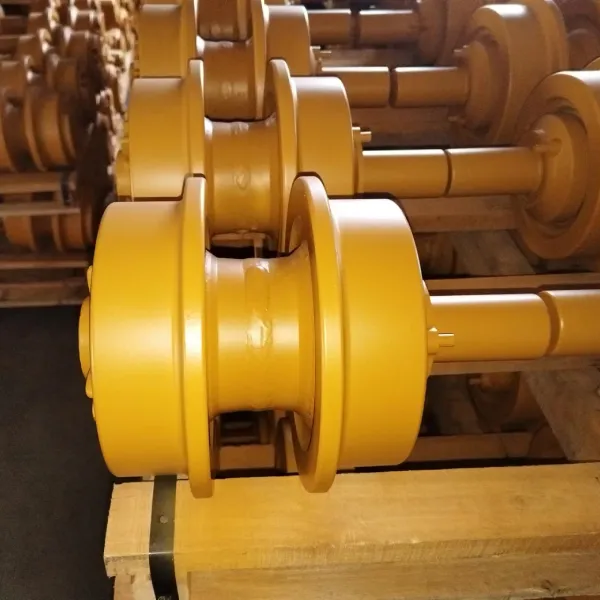
To truly appreciate the difference in manufacturing quality, it helps to visualize the life of a single component. Let's take a common but critical item: a track roller for a mini excavator's undercarriage. This part bears the entire weight of the machine, rolling along the track chain under immense pressure and in highly abrasive conditions. Its creation is a multi-stage endeavor.
The process begins with cutting. Eine große Rundstange aus spezifiziertem Stahl (vielleicht eine 40Cr-Legierung oder eine ähnliche Legierung) wird in einzelne „Rohlinge“ zerschnitten" der richtigen Länge. Ein Präzisionshersteller verwendet eine automatische Bandsäge mit feinen Toleranzen, um sicherzustellen, dass jeder Rohling ein einheitliches Gewicht und eine einheitliche Größe hat, Dies ist der erste Schritt zu einem ausgewogenen Endprodukt.
Als nächstes kommt Schmieden. Der Rohling wird auf eine präzise Temperatur erhitzt (oft um 1200°C) und in einen Würfel gelegt. Anschließend formt eine kräftige Presse den heißen Stahl in die Rohform einer Laufrolle. Wie zuvor besprochen, Bei diesem Schmiedeprozess geht es nicht nur um die Formgebung; it's about refining the internal grain structure of the steel, Dadurch wird eine Festigkeit und Ermüdungsbeständigkeit erreicht, die ein gegossenes oder aus einer Stange gefertigtes Teil niemals erreichen könnte.
Nach dem Schmieden, die Walze erfährt Grobbearbeitung. Hier, überschüssiges Material wird entfernt, und die Grundmaße werden festgelegt. Darauf folgt ein entscheidender Schritt: Wärmebehandlung. Für eine Laufrolle, Hierbei handelt es sich häufig um einen aufwändigen Prozess der Induktionshärtung. The roller shell's running surface is heated by an electromagnetic field and then rapidly quenched. Dadurch entsteht eine extrem harte, verschleißfeste Außenschicht, während der innere Kern der Walze härter und duktiler bleibt, um Stoßbelastungen ohne Risse zu absorbieren. The depth and uniformity of this hardened layer are critical for the roller's lifespan.
Nach der Wärmebehandlung, Der Teil tritt ein Fertigbearbeitung. Hier findet das Finale statt, kritische Abmessungen werden geschnitten. Einsatz modernster numerischer Computersteuerung (CNC) Drehmaschinen und Fräsmaschinen, Die Lagerbohrungen und Dichtflächen werden mit Toleranzen im Mikrometerbereich bearbeitet (Tausendstel Millimeter). The precision here is paramount; an improperly machined sealing surface will lead to oil leaks and premature bearing failure, which is a common fate for inferior rollers.
Endlich, Montage. The roller shell is fitted with high-quality seals, Buchsen, and a central shaft. It is filled with a specific grade of lubricating oil and sealed. A quality-conscious manufacturer will conduct a leak test on every single roller, often by pressurizing the assembled unit and submerging it in water to look for tell-tale bubbles. The last step is painting, which is not just for aesthetics but also provides a crucial layer of corrosion protection.
When you ask a manufacturer to detail this process, listen for the specifics. Do they mention CNC machining? Do they talk about induction hardening and case depth? Do they perform 100% Dichtheitsprüfung an abgedichteten Bauteilen? Je detaillierter und sicherer ihre Erklärung, desto wahrscheinlicher ist es, dass sie die Kunst der Herstellung beherrschen.
Die Rolle von Qualitätskontrollkontrollpunkten
Ein robuster Herstellungsprozess ist mit einer ständigen Überprüfung verbunden. Qualität ist nicht etwas, das am Ende inspiziert wird; es ist in jeder Phase eingebaut. Ein führender Hersteller von Minibaggerteilen arbeitet nach diesem Prinzip, Einrichtung einer Reihe von Qualitätskontrollen (QC) Tore in der gesamten Produktionslinie.
Wareneingangskontrolle: As we've covered, Dies ist der erste und wichtigste Kontrollpunkt. Dazu gehört die Überprüfung der MTR und häufig auch die Durchführung unabhängiger spektroskopischer oder Härtetests am Rohstahl. Kein Material sollte in die Produktionshalle gelangen, ohne dieses Tor zu passieren.
In-Prozess-Inspektion: Dies ist kein Einzelereignis, sondern eine kontinuierliche Reihe von Kontrollen. Nach dem Schmieden, Eine Probe von Teilen könnte aufgeschnitten und geätzt werden, um den Kornfluss zu überprüfen. Nach der Bearbeitung, Kritische Abmessungen werden mit kalibrierten Instrumenten wie Messschiebern überprüft, Mikrometer, und Koordinatenmessgeräte (KMGs). A CMM is a highly advanced device that can measure a part's geometry with incredible accuracy, Vergleich mit der ursprünglichen digitalen Blaupause.
Überprüfung der Wärmebehandlung: Dies ist ein Kontrollpunkt, der einen eigenen Schwerpunkt verdient. Nach der Wärmebehandlung, Teile müssen getestet werden, um sicherzustellen, dass der Prozess erfolgreich war. Dabei wird die Oberflächenhärte überprüft (mit einem Rockwell- oder Brinell-Härteprüfer) Und, für kritische Komponenten, die „Verhärtungstiefe“ – die Dicke der gehärteten Schicht. Dies kann durch Zuschneiden eines Musterteils erfolgen, es polieren, and measuring the hardened layer under a microscope.
Zerstörungsfreie Prüfung (NDT): For high-stress components like buckets welds or ripper shanks, visual inspection is not enough. NDT methods are used to find flaws that are invisible to the naked eye. Magnetic Particle Testing (MPT), Zum Beispiel, can reveal surface and near-surface cracks in ferromagnetic materials. Ultraschallprüfung (UT) uses sound waves to detect internal flaws like porosity in castings or incomplete fusion in welds. Der Einsatz von NDT ist ein Markenzeichen eines Herstellers, der sich der Vermeidung von Feldausfällen verschrieben hat.
Endmontage & Funktionstests: Bevor ein Teil lackiert und verpackt wird, Eine Endkontrolle bestätigt, dass alle Komponenten vorhanden und korrekt zusammengebaut sind. Für Baugruppen wie Laufrollen oder Achsantriebe, Dazu gehören Funktionstests wie die bereits erwähnte Dichtheitsprüfung oder die Überprüfung des Drehmoments, um sicherzustellen, dass die Lager korrekt eingebaut sind.
Wenn Sie einen Hersteller interviewen, Bitten Sie sie, ihre QC-Kontrollpunkte für ein bestimmtes Produkt festzulegen, wie ein Hochleistungsbaggerschaufel. Wo wird geprüft?? Was messen sie?? Welche Instrumente nutzen sie?? Was passiert, wenn festgestellt wird, dass ein Teil nicht konform ist?? Ihre Antworten werden ein klares Bild ihrer Qualitätskultur zeichnen.
Vergleich von Fertigungsphilosophien: OEM vs. Aftermarket
The world of machinery parts is broadly divided into Original Equipment Manufacturer (Erstausrüster) parts and aftermarket parts. Jedoch, the "aftermarket" category is vast, ranging from suppliers who rival OEM quality to those who produce dangerously substandard components. Understanding these distinctions is key to making an informed choice. A high-quality aftermarket manufacturer provides a compelling value proposition, often delivering OEM-level quality without the associated price tag.
Here is a table to clarify the philosophical and practical differences:
| Besonderheit | OEM Manufacturer | High-Quality Aftermarket Manufacturer | Low-Quality Aftermarket Manufacturer |
|---|---|---|---|
| Material Specification | Follows strict, proprietary standards developed through extensive R&D. | Aims to match or exceed OEM specifications, often using industry-standard high-grade alloys. Transparent about material choices. | Often vague or misleading. May use cheaper, lower-grade steel substitutes to cut costs, leading to poor wear resistance and brittleness. |
| R&D Investment | Very high. Designs parts concurrently with the machine itself. | Moderate to high. Focuses on reverse engineering, material analysis, and process improvement. May innovate on OEM designs. | Minimal to none. Primarily focused on simple replication by visual copying, with no understanding of the underlying engineering. |
| Herstellungsprozess | Highly automated and process-controlled. Significant investment in top-tier machinery (Z.B., CNC, Robotik). | Employs modern manufacturing techniques, including CNC machining and controlled heat treatment. Focuses on process consistency. | Often relies on older, less precise manual machinery. May skip or poorly execute critical steps like heat treatment. |
| Quality Control | Extremely rigorous, multi-stage QC integrated throughout the production line. Extensive use of CMM, NDT, and lab analysis. | Rigorous, often certified to ISO 9001. Employs a system of QC checkpoints, in-process inspection, and final testing. | Inconsistent, often limited to a basic visual check at the end. Lacks traceability and proper measurement instrumentation. |
| Price Point | Höchste, reflecting brand name, R&D costs, and dealer network overhead. | Competitive, offering significant savings over OEM without compromising on core quality. Represents high value. | Am niedrigsten, achieved by cutting corners on materials, Prozesse, und Qualitätskontrolle. Represents high risk. |
| Garantie & Die Unterstützung | Umfassende Garantie durch ein globales Händlernetz. | Often offers a warranty comparable to OEM, with a clear claims process. Support is typically direct from the manufacturer. | Warranty is often limited, non-existent, or has prohibitive fine print. Support is minimal. |
Your goal as a buyer is to find a supplier firmly in that middle column: a high-quality aftermarket mini excavator parts manufacturer who has invested in the materials, Prozesse, and quality systems to deliver reliable performance and genuine value.
Dekodierung von Zertifizierungen: Welche ISO 9001 Wirklich bedeutet
In your search, you will frequently encounter the "ISO 9001" Zertifizierung. It is often presented as a badge of quality, but it is vital to understand what it represents. ISO 9001 ist keine Produktzertifizierung; it is a certification of a company's Qualitätsmanagementsystem (QMS).
Think of it this way: ISO 9001 does not guarantee that every single part a company produces is perfect. Stattdessen, it certifies that the company has a well-documented, consistent, and auditable system for managing quality. This system includes procedures for:
- Controlling documents and records.
- Managing resources, including personnel and equipment.
- The entire product realization process, from design to delivery.
- Measurement, Analyse, and improvement, including handling non-conforming products, conducting internal audits, and implementing corrective actions.
Also, why is an ISO 9001 certification a positive sign? Because it indicates that the manufacturer is serious about process control. It demonstrates that they have defined their procedures, trained their people, and have a mechanism for identifying and fixing problems. A company that has gone through the rigorous process of achieving and maintaining ISO 9001 certification is far less likely to have chaotic, inconsistent production processes than one that has not (Abisourour et al., 2021). It is a strong indicator of professionalism and a commitment to repeatable outcomes.
Jedoch, it is only one piece of the puzzle. It tells you they have a system. Your detailed questions about their specific manufacturing and QC processes tell you how well they execute that system. Die Kombination aus einem zertifizierten QMS und der Fähigkeit, Ihre tiefgreifenden technischen Fragen souverän zu beantworten, ist der kraftvolle Doppelschlag, den Sie von einem erstklassigen Hersteller von Minibaggerteilen suchen.
3. Was ist der Umfang Ihrer Forschung?, Entwicklung, und technische Fähigkeiten?
Die Fähigkeit, ein Teil genau nachzubilden, ist die Grunderwartung eines jeden Aftermarket-Herstellers. Jedoch, die wirklich außergewöhnlichen Lieferanten, diejenigen, die langfristige strategische Partner werden, Hören Sie nicht bei der Replikation auf. Sie verfügen über eine tief verwurzelte technische Neugier und eine ausgeprägte Forschungs- und Entwicklungskapazität (R&D). This capability transforms them from mere copyists into innovators who understand the why behind a part's design, nicht nur das Was. Inquiring into a manufacturer's R&D Bemühungen besteht darin, ihren intellektuellen Kern zu erforschen. It reveals whether they are passively following the market or actively working to advance it, solving real-world problems for customers operating in challenging conditions from the frozen ground of Siberia to the abrasive sands of the Middle East.
Beyond Replication: The Value of In-House Engineering
A low-quality manufacturer might take an OEM part, measure it with calipers, and create a copy. A high-quality manufacturer with an in-house engineering team approaches the task from a completely different perspective. Their goal is not just to replicate the form, but to understand the function and, where possible, to improve upon it. This process is often called reverse engineering.
It begins with data acquisition. Instead of simple hand measurements, an engineering-driven company will use a 3D laser scanner or a Coordinate Measuring Machine (CMM) to create a highly precise digital model of the original part. This digital blueprint is far more accurate and detailed than any 2D drawing.
But the real engineering work happens next. The digital model is imported into Computer-Aided Engineering (CAE) Software. Hier, engineers can perform Finite-Elemente-Analyse (FEA). This is a powerful computational tool that allows them to simulate how the part will behave under real-world stresses. They can apply virtual loads, pressures, und Vibrationen an das digitale Modell, um zu sehen, wo sich der Stress konzentriert. Betrachten Sie es als einen virtuellen Stresstest, der die verborgenen Schwachstellen eines Designs aufdecken kann.
Warum ist das wichtig?? Ein OEM könnte ein Teil so entwerfen, dass es „gut genug“ ist" für ein breites Spektrum durchschnittlicher Bedingungen. Jedoch, Eine FEA-Analyse könnte dies unter den spezifischen Hochstressbedingungen von aufdecken, Zum Beispiel, Ständiges Aufbrechen von Steinen mit dem Meißel, Ein bestimmter Bereich des Werkzeughalters ist anfällig für Ermüdungsrisse. Ein technisch orientierter Aftermarket-Hersteller kann diese Erkenntnisse nutzen, um das Design zu verbessern. Sie könnten einen verstärkenden Zwickel hinzufügen, Erhöhen Sie den Radius einer scharfen Innenecke, um die Belastung gleichmäßiger zu verteilen, Oder wählen Sie eine härtere Stahllegierung für die jeweilige Komponente. Sie kopieren nicht nur das Teil; sie lösen ein Problem.
When you speak with a potential supplier, ask if they have an in-house engineering department. Do they use software for 3D modeling and FEA? Can they provide an example of how their engineering analysis led to a product improvement? Ein Hersteller, der eine solche Geschichte teilen kann. Sie zeigen, dass sie wie Problemlöser denken.
Innovation in Verschleißteilen: Anpassung an moderne Anforderungen
Die Welt der Konstruktion und Ausgrabung ist nicht statisch. Neue Techniken, leistungsfähigere Maschinen, und zunehmend anspruchsvolle Anwendungen erfordern, dass sich auch Verschleißteile entwickeln. Ein Hersteller, der in einer rein replizierten Denkweise steckt, producing parts for yesterday's challenges. Ein vorwärtsdenkender Mini-Baggerteilehersteller mit einem starken r&D Fokus schaut ständig nach vorne.
Betrachten Sie die Entwicklung der Baggereimer. Ein Standard-Graben-Bucket ist ein vielseitiges Werkzeug, Aber für jede Aufgabe ist es nicht optimal. An innovative manufacturer will offer a diverse range of specialized buckets, each designed and engineered for a specific purpose:
- Heavy-Duty Rock Buckets: These are not just standard buckets made with thicker plate. They are engineered with a different profile (often a V-shape) for better penetration in rock. They feature extensive use of high-abrasion steel (wie AR450 oder AR500) on all wear surfaces, reinforced side-cutters, and robust lip shrouds to protect the leading edge.
- Skeleton Buckets: Used for sorting rock from soil on a demolition site or in a quarry. The R&D here focuses on the spacing of the ribs. Too wide, and you lose valuable material; too narrow, and the bucket clogs constantly. Engineering analysis and field testing are required to find the optimal geometry for different material types.
- Trenching Buckets: These narrow buckets require careful design to ensure they have the strength to dig in tough conditions without the width to provide it. The engineering challenge is in the structural design of the bucket's "ears" and hanger, where all the force is concentrated.
- Tilt Buckets: These complex hydraulic attachments require a blend of mechanical and hydraulic engineering expertise to ensure they are both powerful and reliable.
Innovation also occurs at the micro level, in the Bodeneingriffswerkzeuge (ERHALTEN)—the teeth, Adapter, and cutting edges. R&D in this area is heavily focused on metallurgy. Manufacturers are constantly experimenting with new steel alloys and heat treatment profiles to create teeth that offer a better balance of hardness (for wear) und Zähigkeit (für Schlagfestigkeit). They might develop new locking systems that make changing teeth faster and safer for operators in the field.
Ask a potential supplier: "What new products or product improvements have you introduced in the last two years?" Their answer will tell you if they are an active participant in the industry's evolution or a passive observer. Look for a supplier whose catalog of available parts shows a thoughtful diversity beyond just standard replacement items.
The Feedback Loop: How Customer Experience Drives Product Improvement
The most valuable R&D resource for any manufacturer is not in a lab; it's on the job sites of their customers. The daily experiences of operators in Korea, Australien, Russland, and Africa are a treasure trove of data on how parts perform and fail in the real world. A truly excellent manufacturer has a formal system for capturing, analyzing, and acting on this feedback.
This is the concept of the customer feedback loop. It works like this:
- Data Collection: The manufacturer actively seeks feedback. This can be through their sales team, technical support lines, warranty claims process, or by conducting regular visits to customer sites. They don't wait for complaints; they proactively ask, "How is the part performing? What challenges are you facing?"
- Analyse: The feedback, especially regarding failures or premature wear, is not just handled by a customer service agent. It is routed directly to the engineering department. A failed part might be requested back for a full failure analysis, including metallurgical testing and microscopic examination, to determine the root cause.
- Action: The insights gained from this analysis are then used to drive real change. If a specific model of track shoe is showing accelerated wear in the abrasive soils of a particular region, the engineers might decide to change the steel specification or modify the heat treatment profile for that part. If customers report difficulty installing a certain seal, the engineers might redesign the part or create a more detailed installation guide.
- Communication: The loop is closed when the manufacturer communicates back to the customer base. This could be through a technical bulletin explaining the improvement or simply by the improved product becoming the new standard.
This process transforms the customer-supplier relationship from a simple transaction into a partnership. The manufacturer is not just selling steel; they are selling a continuously improving solution. When vetting a supplier, ask them to describe their process for handling a field failure report. Who gets involved? What analysis is done? Can they give an example of a product improvement that was a direct result of customer feedback? A manufacturer who embraces this feedback loop is one who is committed to the long-term success of their clients. They understand that their own success is intrinsically linked to the performance and durability of their products in the diverse and demanding environments where they are put to the test.
4. Wie stellen Sie die Kompatibilität und Passung von Teilen zwischen verschiedenen Marken und Modellen sicher??
In an ideal world, every part would snap into place perfectly, every time. In the complex reality of heavy machinery, achieving this "perfect fit" is a significant engineering and logistical challenge. The mini excavator market is particularly fragmented, with dozens of manufacturers (like Kubota, Yanmar, Bobcat, Raupe, Komatsu, Hitachi, und Doosan) each producing numerous models with unique specifications that can change from one production year to the next. For an aftermarket mini excavator parts manufacturer, guaranteeing fitment is not a trivial matter; it is a core competency that separates reliable suppliers from sources of frustration and downtime. This question probes the precision of their data, the rigor of their processes, and the strength of their guarantee.
The Challenge of a Fragmented Market
To grasp the scale of the challenge, consider the undercarriage of a single 5-ton mini excavator. It is a complex system of interlocking components: dozens of track links forming the chain, multiple track rollers and top rollers, a front idler, and a rear sprocket. Jetzt, imagine that the specifications for the pitch of the track chain (the distance from one pin to the next), the diameter of the rollers, the bore of the idler, and the tooth profile of the sprocket can all vary slightly between a machine made by Brand A and one made by Brand B, even if they are in the same weight class. Worse, Brand A might change the design of its sprocket between its 2023 model and its 2025 Modell.
A manufacturer attempting to serve the global market must contend with this enormous matrix of variations. A track chain that fits a Kubota KX057-4 will not fit a Yanmar ViO55-6A. A bucket linkage pin for a Bobcat E50 may be a millimeter different in diameter from one for a Cat 305. These small deviations are the difference between a smooth installation and a costly problem. An ill-fitting part can lead to:
- Installation Failure: The part simply won't go on, leading to immediate downtime while the correct part is sourced. This is especially painful for customers in remote locations, like mining sites in Africa or agricultural operations in Southeast Asia, where shipping can take weeks.
- Accelerated Wear: A sprocket with a slightly incorrect tooth profile might engage with the track chain bushings improperly. While it may seem to work initially, this mismatch will cause rapid, destructive wear to both the new sprocket and the existing track chain, turning a single component replacement into a full undercarriage rebuild.
- Catastrophic Failure: An improperly fitting pin or bolt can create unforeseen stress concentrations, leading to a sudden fracture of a component under load, which poses a serious safety risk.
This is why a casual approach to compatibility is unacceptable. A manufacturer cannot simply rely on old catalogs or visual comparisons. They must treat fitment as a discipline of precision.
Leveraging OEM Data and Precision Measurement
Also, how does a top-tier manufacturer conquer this challenge? They build a "library of fitment," a vast and meticulously maintained database of OEM specifications. This is not something that can be bought off the shelf; it is a strategic asset built over years of painstaking work.
The foundation of this library is data acquisition. The process for a new part might look like this:
- Procure the OEM Part: The manufacturer obtains a genuine OEM component for the specific machine model they wish to support.
- 3D Digital Scanning: The part is scanned using a high-resolution 3D laser scanner. This non-contact method captures the complete external geometry of the part, creating a "point cloud" of millions of data points.
- CMM Measurement: For critical interface points—such as bearing bores, pin holes, mounting surfaces, and gear teeth—a Coordinate Measuring Machine (CMM) verwendet wird. The CMM's tactile probe can measure these features with sub-micron accuracy, capturing the precise dimensions and geometric tolerances (like concentricity and perpendicularity) that a laser scanner might miss.
- Create the "Golden" CAD Model: The scan data and CMM measurements are combined to create a highly accurate 3D Computer-Aided Design (CAD) Modell. This is the manufacturer's "golden" reference, the digital master against which all production parts will be compared.
This data-driven approach is fundamentally different from simple copying. It captures the design intent of the original engineers. The manufacturer's engineering team will maintain this database, constantly updating it as new machine models are released. When you order a ripper for your specific mini excavator, they are not just pulling a generic part off the shelf. They are matching your machine's make, Modell, and serial number against their database to ensure the mounting bracket, pin dimensions, and hydraulic connections are an exact match.
Ask a potential supplier: "How do you obtain the dimensional data for the parts you manufacture? What technology do you use to measure and verify these dimensions?" Look for answers that include terms like "3D scanning," "CMM," and "CAD model database."
The "Fitment Guarantee": What to Look for in a Warranty
A manufacturer who is confident in their data and their production tolerances will stand behind their product with a clear and unambiguous fitment guarantee. This guarantee is one of the most powerful indicators of a supplier's quality and customer focus. Jedoch, not all guarantees are created equal. Here is what to look for in the fine print:
- Clarity: The policy should be simple. It should state that if the part does not fit the specified machine for which it was sold, the manufacturer will rectify the situation.
- Scope of Remedy: What does the manufacturer promise to do? A good guarantee will offer a full refund or, noch wichtiger, an expedited shipment of the correct part at their expense. The best policies may even offer some form of compensation for the downtime caused by their error, though this is less common.
- Cost Coverage: Who pays for shipping? A strong guarantee will state that the manufacturer covers the cost of shipping the incorrect part back and the cost of shipping the new part out. This is a major consideration for international customers, where shipping costs can be substantial.
- Simplicity of Process: How do you make a claim? It should be a simple process involving contacting their technical support, providing the machine details and photos of the fitment issue. Ein verworrenes, multi-step process with excessive paperwork is a red flag.
The existence of a strong fitment guarantee tells you two things. Erste, it shows that the manufacturer has invested heavily in their data and quality control, because they are financially confident that fitment issues will be rare. Zweite, it shows that they respect their customers' time and business, and are prepared to take responsibility when an error does occur. It shifts the risk of an incorrect part from you, the buyer, back to them, the manufacturer.
A Second Comparison Table: Fitment Risk Factors
To summarize the key differentiators, consider this table when evaluating a potential supplier's approach to compatibility:
| Faktor | Low-Risk Manufacturer | High-Risk Manufacturer |
|---|---|---|
| Data Source | Meticulously maintained database built from OEM part scanning (3D) and CMM measurement. | Relies on outdated catalogs, visual copying from photos, or simple hand measurements. |
| Maschinenbau | Inhouse Engineering Team, das detaillierte CAD-Modelle für jeden Teil erstellt und überprüft. | Kein spezielles Ingenieurwesen für die Ausstattung. Die Produktion basiert auf einfachen Zeichnungen oder physischen Kopien. |
| Produktionstoleranzen | Dicht gesteuert mit CNC -Bearbeitung und regelmäßiger Kalibrierung von Geräten. | Lose Toleranzen aufgrund manueller Prozesse oder schlecht gepflegte Maschinen, führt zu Teil-Teile-Variationen. |
| Überprüfung | Produktionsteile werden regelmäßig gegen die "Golden" überprüft" CAD -Modell unter Verwendung von CMMs oder Präzisionsvorrichtungen. | Die Inspektion beschränkt sich auf grundlegende GO/No-Go-Messgeräte oder visuelle Überprüfungen, Wenn es überhaupt passiert. |
| Ausstattungsgarantie | Klar, umfassend, und kundenfreundlich. Deckt die Rendite- und Ersatzversandkosten ab. | Vage, voller Ausschlüsse, oder nicht existent. Der Käufer trägt das Risiko und die Kosten eines falschen Teils. |
| Technische Unterstützung | Staffed by knowledgeable technicians who can troubleshoot fitment issues based on serial numbers and machine specs. | Handled by sales staff who lack deep technical knowledge and cannot provide effective support. |
Letztlich, a manufacturer's approach to fitment is a proxy for their overall attention to detail. A company that is meticulous about ensuring a part fits is also likely to be meticulous about the quality of their steel, the precision of their heat treatment, and the integrity of their welds.
5. Was ist Ihre globale Logistik- und Lieferkettenstrategie?, Speziell für meine Region?
Ein perfekt gefertigtes Bauteil nützt nichts, wenn es nicht rechtzeitig an Ihren Einsatzort geliefert werden kann, zuverlässig, und kostengünstige Art und Weise. Für Unternehmen, die in geografisch unterschiedlichen und oft herausfordernden Märkten tätig sind – von den weiten Weiten des australischen Outbacks bis zu den geschäftigen Häfen Südostasiens oder den abgelegenen Industriegebieten Russlands – ist Logistik kein nachträglicher Gedanke. Es ist ein Kernelement des Wertversprechens. Wenn Sie einen Hersteller von Minibaggerteilen zu seiner Lieferkette befragen, Sie bewerten ihre Fähigkeit, auf globaler Ebene zu agieren. Sie messen ihr Verständnis für Ihre regionalen Gegebenheiten und ihre Bereitschaft, ein verlässlicher Partner zu sein, nicht nur eine entfernte Fabrik.
Von der Fabrikhalle bis zur Baustelle: Navigieren im globalen Versand
The journey of a heavy steel part, like an excavator bucket or a set of undercarriage tracks, from a factory in Asia to a customer in the Middle East is a complex ballet of transportation, documentation, and regulation. A sophisticated manufacturer understands and manages this complexity on behalf of their customers.
The primary mode of transport for such heavy goods is ocean freight. It is the most economical method, but it requires careful planning. A manufacturer must have strong relationships with freight forwarders and shipping lines to secure space on vessels and negotiate competitive rates. They should be able to provide you with clear estimates for transit times to your nearest port.
For more urgent needs, air freight is an option, but it comes at a significantly higher cost. A good supplier can provide quotes for both, allowing you to make an informed decision based on the urgency of your need versus the cost.
Beyond the transport itself lies the labyrinth of customs and documentation. Every country has its own set of rules for imports, including required documents (like the Bill of Lading, Commercial Invoice, and Packing List), import duties, and taxes (like VAT or GST). A seasoned global supplier will have an export department that is expert in preparing this documentation accurately. Errors in paperwork can lead to lengthy and costly delays at customs. They should also be able to provide the correct HS (Harmonized System) codes for their products, which are essential for customs classification and duty calculation. Ask them: "What support do you provide for customs clearance in my country?" Their answer will reveal their level of international experience.
The Importance of Regional Distribution Hubs
For a customer in Dubai or Singapore, a manufacturer's promise of "fast shipping" is meaningless if the parts must first travel for four weeks on a ship from a single factory in Northeast Asia. Lead time—the total time from placing an order to receiving the goods—is a critical factor in managing your inventory and responding to unexpected machine failures.
This is why the most forward-thinking manufacturers adopt a hub-and-spoke model for their distribution. Instead of shipping every individual order directly from the factory (the spoke-to-customer model), they establish regional distribution centers or warehouses in strategic locations (the hubs). Zum Beispiel:
- A hub in Dubai (Jebel Ali Free Zone) could efficiently serve the entire Middle East and parts of Africa.
- A hub in Singapore or Malaysia (Port Klang) could drastically reduce lead times for the booming construction markets across Southeast Asia (Indonesia, Thailand, Vietnam).
- A European hub, perhaps in Rotterdam or Antwerp, could serve Russia, the CIS countries, and North Africa.
- A presence in Australien (Z.B., Perth or Brisbane) would be a massive advantage for serving the continent's sprawling mining and construction sectors.
By stocking high-volume parts in these regional hubs, a manufacturer can cut lead times from weeks to days. An order from a customer in Qatar could be fulfilled from the Dubai hub in 2-3 Tage, rather than 3-4 weeks from the factory. This has a profound impact on your business. It allows you to operate with a leaner inventory, freeing up cash flow. It means a downed machine can be back up and running in days, not weeks, saving thousands in lost revenue.
When vetting a supplier, this is a powerful question: "Do you have any warehousing or distribution partners located in or near my region?" A "yes" to this question can be a significant competitive advantage and a strong reason to partner with that manufacturer.
Packaging and Preservation: Protecting the Investment
A track roller that arrives rusted or a bucket that is dented from shifting in a container is a failed delivery, regardless of how well it was manufactured. The final stage of the production process—packaging—is a critical quality step, especially for goods undertaking a long and arduous journey across the ocean.
Heavy steel parts present unique packaging challenges. They are dense, often have sharp edges, und sind sowohl für physische Schäden als auch Korrosion anfällig. Ein hochwertig ausgerichteter Hersteller von Mini-Baggerteilen verfügt über ein detailliertes Verpackungsprotokoll:
- Korrosionsschutz: Stahlteile, die auf dem Seeweg fahren, salziges Umfeld seit Wochen. Einfach malen, ist nicht immer genug. Qualitätslieferanten tragen eine Schicht gegen Stofföl oder Wachs auf. Für fertig, unbemaltte Oberflächen wie Lagerbohrungen, Sie könnten VCI verwenden (Dampfkorrosionsinhibitor) Papier oder Taschen, die einen harmlosen Dampf emittieren, der eine schützende molekulare Schicht auf der Metalloberfläche erzeugt.
- Physischer Schutz: Einzelne Teile sollten vor dem Schlagen gegeneinander geschützt werden. Kleine Komponenten können einzeln getätigt werden. Größere Gegenstände wie Walzen und Idler sollten Schützer auf bearbeiteten Oberflächen haben.
- Kisten und Palettierung: The parts are then securely packed into custom-built wooden crates or strapped onto heavy-duty pallets. The goal is to create a solid, stable block that will not shift or break apart during handling or in rough seas. The wood used for these crates must often be fumigated and certified to ISPM 15 standards to comply with international quarantine regulations—another detail an experienced exporter will handle automatically.
Look at a manufacturer's product photos. Do they show parts neatly arranged in sturdy, well-built crates? Or are they just piled loosely on a pallet? Ask for photos of how their products are packaged for export. It is a small detail that speaks volumes about their professionalism and respect for the product you are purchasing.
Understanding Incoterms: Who is Responsible for What?
When you receive a price quote from an international supplier, it will be accompanied by a three-letter code like "FOB," "CIF," or "EXW." These are Incoterms, a set of globally recognized rules that define the responsibilities of the seller and the buyer in an international transaction. Understanding them is vital to knowing your total landed cost and your risks.
- EXW (Ex Works): This term places the maximum responsibility on you, the buyer. The price quoted is simply the price of the goods at the factory gate. You are responsible for arranging and paying for everything else: transport from the factory, export customs, ocean freight, Versicherung, import customs, and final delivery. This option gives you control but also requires significant logistical expertise.
- FOB (Free On Board): This is one of the most common terms. The manufacturer is responsible for all costs and processes to get the goods loaded onto the vessel at the designated port of origin. From that point forward, you are responsible for the ocean freight, Versicherung, and all subsequent costs and risks.
- CIF (Kosten, Insurance, and Freight): With CIF, the manufacturer takes on more responsibility. They arrange and pay for the cost of the goods, the ocean freight to your destination port, and the insurance to cover the goods during transit. Your responsibility begins when the goods arrive at your country's port. You must handle customs clearance, import duties, and transport from the port to your location.
A good manufacturer will be flexible and able to quote you prices based on different Incoterms. They should also be able to clearly explain what each term means for you. This educational approach demonstrates that they are not just trying to make a sale, but are trying to build a transparent and understandable business relationship. It allows you to accurately calculate your total landed cost and avoid any surprise expenses, which is the foundation of a healthy and sustainable supply partnership.
6. Können Sie anhand von Fallstudien und Erfahrungsberichten Leistungs- und Haltbarkeitsnachweise erbringen??
Claims are easy to make. "Durable," "long-lasting," and "high-performance" are words that flow freely in marketing brochures. But for the discerning buyer of heavy equipment parts, these words are hollow without proof. The sixth crucial question you must ask a potential mini excavator parts manufacturer is for tangible evidence that their products perform as advertised in the unforgiving laboratory of the real world. This inquiry moves the conversation from the theoretical realm of specifications and processes to the practical domain of results. It demands that the manufacturer substantiate their claims with data, stories, and references that are relevant to your specific operational context.
Moving Beyond Marketing Claims: The Need for Proof
In any industry, there is a gap between what is promised and what is delivered. In the world of construction machinery, that gap can be measured in thousands of dollars of unplanned expenses and lost productivity. Your task as a buyer is to bridge that gap with information before you commit your capital. You must cultivate a healthy skepticism toward unsubstantiated marketing language and instead adopt an evidence-based approach.
Think of yourself as an investigator. The manufacturer is making a case that their product—be it a bucket, a ripper, or a set of undercarriage components—is a wise investment. Your job is to cross-examine their evidence. This evidence can take several forms, but it must always be specific and verifiable. A vague statement like "our parts last longer" is not evidence. A documented report showing that their track links achieved 4,500 hours of operation in abrasive silica sand before needing replacement, while a competitor's product lasted only 3,000 hours under the same conditions, is evidence. It is your right and your responsibility to ask for this level of proof.
Analyzing a Meaningful Case Study
A well-constructed case study is one of the most powerful forms of evidence a manufacturer can provide. It is a narrative of performance, a story with a beginning (the problem), a middle (the solution), and an end (the result). Jedoch, not all case studies are created equal. Here is how to dissect a case study to determine its value:
Context is Key: A meaningful case study will begin by setting the scene in detail.
- Maschine: What was the exact make and model of the mini excavator? (Z.B., a Caterpillar 308 CR)
- Anwendung: What was the machine doing? (Z.B., Grabenaushub, Abriss, bulk earthmoving, rock breaking).
- Operating Conditions: This is the most important element. Was the environment highly abrasive (Z.B., sand and gravel quarry in the UAE)? Was it high-impact (Z.B., demolition of reinforced concrete in Seoul)? Was it low-impact but highly corrosive (Z.B., working in swampland in Indonesia)? The conditions dictate the wear patterns and failure modes.
- Standort: Knowing the geographic location helps you assess its relevance to your own operations.
The Comparison: A case study is most powerful when it includes a direct comparison. This could be a "before and after" Szenario, comparing the performance of the manufacturer's part against the part it replaced (which could be an OEM part or a competitor's aftermarket part). The metric for comparison must be clear. Für Verschleißteile, the universal metric is cost per hour.
- Cost Per Hour = (Purchase Price of Part) / (Total Service Hours Achieved)
The Data: The results should be presented with quantifiable data, not just qualitative descriptions.
- Service Life: How many hours did the part last? This should be measured using the machine's hour meter.
- Maintenance Interventions: Were there any unexpected maintenance needs during the part's life?
- Measurements: Für Verschleißteile, a great case study might include wear measurements taken at set intervals, showing the rate of material loss over time.
Let's imagine a case study for a set of bucket teeth. A weak case study would say: "A customer in Australia used our teeth and was very happy with the long life." A strong case study would state: "A gold mining operation near Kalgoorlie, Western Australia, fitted our X-400 series teeth to their 8-ton excavator used for clearing abrasive, quartz-rich overburden. The previous OEM teeth had an average service life of 350 hours at a cost of $80 per tooth, resulting in a cost per hour of $0.23. Our X-400 teeth, under identical conditions, achieved an average service life of 500 Std.. At a purchase price of $90 per tooth, our cost per hour was $0.18. This represents a 22% reduction in operating costs for bucket teeth." This level of detail is credible, compelling, and allows you to perform your own analysis.
The Value of Regional-Specific Testimonials
While case studies provide hard data, testimonials offer a human perspective. They speak to the qualitative aspects of a supplier relationship: einfache Installation, customer service, and overall satisfaction. Jedoch, just like with case studies, the relevance of a testimonial is highly dependent on its context.
For a construction company in Johannesburg, Südafrika, a glowing review from a contractor in Norway is of limited value. Their operating environments—climate, soil conditions, labor practices, and supply chain realities—are completely different. What that South African company needs is to hear from another business operating in the high-altitude, rocky conditions of the Highveld.
A globally astute mini excavator parts manufacturer understands this. They will not just have a generic "Testimonials" page on their website. They will be able to provide you with references or testimonials from customers in your specific region.
- If you are in Russland, you want to hear from someone who has used their undercarriage parts through a Siberian winter.
- If you are in the Naher Osten, you want a testimonial from a company that can attest to how the seals and hydraulic components stand up to extreme heat and fine, Schleifstaub.
- If you are in Südostasien, you want to know how their paint and coatings resist the corrosion of a hot, humid, and salt-laden atmosphere.
When you ask for testimonials, be specific: "Can you provide me with a reference or a testimonial from a customer in my country, or in a country with a similar operating environment?" A manufacturer with a deep and diverse global customer base will be able to fulfill this request. Their ability to do so is strong proof that their products are not just designed in a lab but are proven to work across the varied and demanding job sites of the world.
How to Spot a Fake or Low-Value Testimonial
In the digital age, it is easy to fabricate positive reviews. As a savvy buyer, you should learn to recognize the signs of inauthentic or low-value feedback.
- Overly Generic Language: Phrases like "Great product, fast shipping!" or "Five stars, highly recommend!" without any specific detail are often signs of low-effort or fake reviews.
- Lack of Verifiable Detail: Authentic testimonials usually include specifics. The person might mention their machine type, the job they were doing, or a particular feature of the part they appreciated. They often name their company and location. A testimonial from "John S." is far less credible than one from "John Smith, Site Manager, ABC Construction, Perth, WA."
- "Stock Photo" Vibe: Be wary of testimonials accompanied by generic stock photos of excavators rather than real pictures from the customer's job site.
- Exclusively Positive: A collection of nothing but flawless, five-star reviews can be suspicious. Real product experiences are nuanced. A credible manufacturer might even share a story about how they resolved a customer's problem, which can be more powerful than a simple glowing review.
Your quest for evidence is a critical due diligence step. It protects you from inflated marketing promises and grounds your decision in the bedrock of real-world performance. A manufacturer who willingly and transparently provides detailed case studies and relevant testimonials is a manufacturer who is confident in their product and respects your need for verifiable proof.
7. Welches Maß an After-Sales-Support und technischem Fachwissen bieten Sie an??
The relationship with a mini excavator parts manufacturer should not end when your payment is processed or when the shipment arrives at your port. The delivery of the component marks the beginning of a new, long-term phase of the partnership. The quality of this post-purchase relationship is defined by the manufacturer's after-sales support and technical assistance. This final question probes the supplier's commitment to your success long after the initial transaction. It explores their warranty policies, the accessibility and knowledge of their technical team, and the resources they provide to ensure their products are used correctly and deliver maximum value. A superior manufacturer views the sale as the start of a collaboration, not the conclusion of a deal.
The Partnership Begins After the Sale
Imagine this scenario: ein neues, aftermarket final drive arrives for a mini excavator that is down on a critical job. Your mechanic begins the installation but finds that the hydraulic hose fittings are slightly different from the old unit. The installation manual is a poorly translated, single-page document. The machine is losing money every hour it sits idle. You call the supplier. Jetzt, you face a critical juncture that reveals the true character of the manufacturer.
- Scenario A (Poor Support): You are routed to a generic call center. The agent does not understand what a final drive is and can only read from a script. They promise someone will call you back. Hours or days pass.
- Scenario B (Excellent Support): You are connected directly to a technical support department. The person on the line is an experienced technician or engineer. You explain the issue, providing the machine's model and serial number. They immediately recognize the problem, explaining that for that specific serial number range, an adapter fitting is required, which they had included in the shipment. They guide your mechanic to the small, separately bagged part, and within minutes, the installation is back on track.
This is the difference between a simple supplier and a true partner. A partner understands that their responsibility extends to ensuring the part is installed correctly and performs as expected. They have invested in a support infrastructure to solve problems quickly and efficiently because they understand that your uptime is their ultimate measure of success.
Assessing the Technical Knowledge of the Support Team
The effectiveness of an after-sales support system hinges entirely on the knowledge and empowerment of its people. When vetting a potential mini excavator parts manufacturer, you need to assess the depth of their technical bench.
A key differentiator is the separation of sales and technical support. While a salesperson is expert in pricing and logistics, they are rarely equipped to diagnose a complex mechanical or hydraulic issue. A premier manufacturer maintains a dedicated technical support team composed of individuals with hands-on experience: former mechanics, field service technicians, or engineers.
When you have a technical question—either before or after a purchase—you should have a direct line to these experts. Their role is not to sell you something, but to solve your problem. Sie sollten dazu in der Lage sein:
- Answer detailed installation questions.
- Help troubleshoot a performance issue (Z.B., "Why is my new bucket not curling with full force?").
- Assist in failure analysis, understanding wear patterns to offer advice on extending component life.
- Provide technical specifications that may not be in the general catalog, such as bearing preload values or hydraulic pressure settings.
A simple way to test this is to call the manufacturer with a hypothetical technical question before you ever place an order. Zum Beispiel: "I am considering your chisel for my Doosan DX63-3. What is the recommended operating pressure, and what are the signs that the accumulator needs recharging?" The quality of the answer you receive—its accuracy, clarity, and the confidence with which it is delivered—will tell you everything you need to know about their commitment to technical excellence.
Warranty Policies: The Fine Print Matters
A warranty is a manufacturer's written promise about the quality of their product. It is a form of insurance for you, the buyer. Jedoch, the value of that insurance is determined entirely by the terms and conditions—the "fine print." A "12-Month Warranty" Banner kann eine Vielzahl von Ausschlüssen verbergen, die es nahezu unbrauchbar machen.
Bei der Bewertung einer Garantierichtlinie, Suchen Sie nach Antworten auf diese Fragen:
- Was ist die Garantiezeit?? Wird es in Monaten gemessen?, Jahre, oder Servicezeiten? Für Verschleißteile, Eine auf Stunden basierende Garantie ist oft relevanter als eine auf Zeit basierende.
- Was ist abgedeckt?? Deckt die Garantie nur „Material- und Verarbeitungsfehler“ ab?? Dies ist eine standardmäßige und angemessene Einschränkung. Seien Sie vorsichtig bei Garantien, die eine lange Liste spezifischer Ausschlüsse enthalten.
- Was nicht abgedeckt ist? Achten Sie genau auf die Ausschlüsse. Zu den üblichen und fairen Ausschlüssen gehört eine unsachgemäße Installation, Mangel an routinemäßiger Wartung, Anwendungsüberlastung (Verwendung des Teils über seine Konstruktionsgrenzen hinaus), und normale Gebrauchsspuren. Unfaire Ausschlüsse könnten zu weit gefasst sein, wie „nichtig bei Verwendung unter abrasiven Bedingungen“.," which would disqualify most real-world use for a digger.
- What is the Remedy? If a part fails under warranty, what will the manufacturer do? Will they repair the part, replace it, or offer a credit? A good warranty provides a replacement part.
- Are Consequential Costs Covered? This is a major differentiator. A standard warranty will only cover the cost of the part itself. It will explicitly exclude the cost of labor to remove the old part and install the new one, the cost of machine downtime, and any damage the failed part may have caused to other components. While full consequential damage coverage is rare outside of OEM warranties, some top-tier aftermarket manufacturers may offer a contribution toward labor costs as a sign of goodwill.
- What is the Claim Process? Is it straightforward? Typischerweise, it should involve contacting the technical support team, providing proof of purchase, the machine's service hours, and evidence of the failure (photos, videos, or sometimes returning the part for inspection). A process that requires excessive bureaucracy is a red flag.
A transparent, gerecht, and easily understood warranty policy is a sign of a manufacturer that stands behind its product with integrity.
Proactive Support: Installation Guides, Videos, and Training
The best manufacturers do not just wait for you to have a problem. They proactively provide resources to prevent problems from occurring in the first place. This demonstrates a deep-seated culture of customer success. This proactive support can take many forms:
- Detailed Installation Manuals: Not just a single sheet, but a comprehensive, Gut geschriebene Anleitung mit klaren Diagrammen oder Fotos für jeden großen Schritt. Für komplexe Komponenten, Dies kann Drehmomentspezifikationen für Schrauben und Tipps für Sitzdichtungen korrekt umfassen.
- Video -Tutorials: In today's visual world, Ein kurzes Video, das die richtige Prozedur zum Ändern einer Unterstarkrolle oder das Ersetzen von Eimer -Zähnen zeigt, kann weitaus effektiver sein als ein schriftliches Handbuch. Ein Hersteller, der in die Erstellung einer Bibliothek dieser Videos investiert' Erfolg.
- Technische Bulletins: Wenn eine Verbesserung vorgenommen wird oder ein gemeinsames Problem identifiziert wird, Ein proaktiver Hersteller wird sein Händlernetz und Kunden ein technisches Bulletin ausstellen, wertvolle Informationen bereitstellen.
- Wartungsempfehlungen: Abgesehen von dem Verkauf des Teils, they provide guidance on how to maintain it to achieve the longest possible service life. This could include information on proper track tensioning to extend undercarriage life or tips on welding techniques for repairing a bucket.
This library of resources is a powerful indicator of a manufacturer's maturity and expertise. It shows that they have accumulated a wealth of knowledge and are committed to sharing it for the benefit of their customers. Wenn Sie einen Lieferanten auswählen, you are not just buying their parts; you are also gaining access to their ecosystem of knowledge and support. Choosing a manufacturer with a rich ecosystem of proactive support is a strategic move that pays dividends in reduced maintenance costs, increased uptime, and a more knowledgeable team.
Häufig gestellte Fragen (FAQ)
Q1: What is the main difference between OEM and high-quality aftermarket mini excavator parts? The primary differences lie in price and, sometimes, Innovation. Erstausrüster (Originalausrüstung Hersteller) parts are made by or for the machine's brand and guarantee perfect fitment, but come at the highest price. High-quality aftermarket parts are produced by third-party manufacturers who aim to meet or exceed OEM specifications in material, fit, und Leistung, but at a more competitive price point. In manchen Fällen, these manufacturers innovate on the original design, offering improvements based on field data from a wide range of applications.
Q2: How can I be sure an aftermarket part will fit my specific mini excavator model? A reputable aftermarket manufacturer guarantees fitment through a rigorous process of reverse engineering. They use 3D laser scanners and CMMs (Coordinate Measuring Machines) to create precise digital models of the original OEM parts. They maintain a vast database that cross-references part numbers with machine makes, Modelle, and serial number ranges. Always provide your machine's full details when ordering and ask about their fitment guarantee, which should cover replacement and shipping costs if an error occurs.
Q3: Is the cheapest part usually the worst option? In the realm of heavy machinery parts, an exceptionally low price is almost always a red flag. These savings are typically achieved by compromising on critical factors: using lower-grade steel, skipping essential manufacturing steps like proper heat treatment, or having non-existent quality control. The initial savings are often quickly erased by premature failure, führt zu kostspieligen Ausfallzeiten, additional labor costs, and potential damage to other components. Den besten Wert bieten Teile, die niedrige Gesamtbetriebskosten bieten, nicht der niedrigste Kaufpreis.
Q4: Was bedeutet ISO 9001 Zertifizierung Erzählen Sie mir von einem Hersteller von Minibaggerteilen? ISO 9001 Die Zertifizierung bedeutet, dass der Hersteller über ein dokumentiertes und geprüftes Qualitätsmanagementsystem verfügt (QMS). Es bescheinigt nicht die Qualität des Produkts selbst, sondern vielmehr die Prozesse, mit denen das Unternehmen es herstellt und liefert. Es ist ein positives Zeichen, dass der Hersteller auf Konsistenz setzt, Prozesskontrolle, und kontinuierliche Verbesserung. Das bedeutet, dass sie über Systeme zur Rückverfolgbarkeit verfügen, Umgang mit nicht konformen Produkten, and implementing corrective actions, Dadurch wird die Wahrscheinlichkeit zufälliger Qualitätsprobleme verringert.
F5: Wie wichtig ist das Herkunftsland für Minibaggerteile?? The country of origin is less important than the manufacturer's specific quality systems, Materialauswahl, und technische Fähigkeiten. High-quality and low-quality manufacturing can be found in almost any country. Instead of focusing on the "Made in" label, focus on the manufacturer's transparency, their technical expertise, their investment in modern machinery (like CNC and CMM), and their ability to provide verifiable proof of performance through case studies and robust warranties.
Q6: What are the most common wear parts on a mini excavator undercarriage? The undercarriage is a system of moving components that experiences the most wear. The most frequently replaced parts are the sprockets (which drive the track), the track chains (composed of links, Stifte, und Buchsen), the track rollers (which support the machine's weight on the track), and the front idlers (which guide the track and hold tension). The rate of wear depends heavily on the application, operator technique, and ground conditions.
Abschluss
Navigating the global market for mini excavator components requires a mindset that transcends the simple act of purchasing. It is an exercise in strategic sourcing, where the objective is not to find the cheapest part, but to identify the most valuable partner. The framework of seven questions outlined in this guide provides a logical pathway for this investigation. It encourages a shift in focus from the price tag on a bucket or a ripper to the fundamental character of the manufacturer who produces it.
By inquiring into the nuances of metallurgy, you assess their commitment to a foundation of quality. By scrutinizing manufacturing processes and quality control, you gauge their dedication to precision and consistency. Probing their R&D capabilities reveals their capacity for innovation and problem-solving. Questioning their approach to fitment, Logistik, and after-sales support illuminates their understanding of your operational realities. Endlich, demanding empirical evidence of performance ensures that your decision is grounded in fact, not just marketing prose.
Letztlich, selecting a mini excavator parts manufacturer is an investment in your own fleet's reliability and profitability. A partnership with a supplier who can confidently and transparently answer these questions is a partnership that will yield returns far beyond the initial cost of a component. It delivers reduced downtime, enhanced machine performance, and the peace of mind that comes from knowing your equipment is supported by a foundation of engineering excellence and unwavering support.
Referenzen
Abisourour, A., Mhamdi, A., Abid, M. R., & Sghir, A. (2021). The impact of ISO 9001 quality management system on operational performance. International Journal of Quality & Reliability Management, 38(1), 183–204. https://doi.org/10.1108/IJQRM-11-2019-0358
Juli Maschinen. (n.d.). Was ist eine Laufrolle?? Abgerufen im Juni 10, 2025, aus https://www.julimachinery.com/what-is-a-track-roller/
Beängstigend, I., & Donertas, M. A. (2017). The influence of different heat treatment methods on the mechanical properties and wear behavior of a boron steel. Materials Testing, 59(5), 455-460. https://doi.org/10.3139/120.111022
Kumar, S., & Phrommathed, P. (2005). New product development: an empirical study of the effects of innovation strategy, organization learning and market conditions. Journal of Engineering and Technology Management, 22(4), 350-353.
Lofsten, H. (2016). New product development in the process industry: A study of the effects of project, firm, and market characteristics. Journal of Engineering and Technology Management, 41, 30-46.
Rane, S. B., & Thakker, S. V. (2021). An integrated approach for risk management in a global heavy engineering supply chain. Journal of Engineering, Design and Technology, 19(1), 193-219. https://doi.org/10.1108/JEDT-01-2020-0015
Sarma, D. K., & Kumar, R. (2020). Failure analysis of an excavator bucket tooth. Engineering Failure Analysis, 118, 104886.
Süer, G. A., Arikan, F., & Babayigit, C. (2011). A fuzzy logic based approach to the design of cellular manufacturing systems. Computers & Industrial Engineering, 61(4), 932-940.
Trebuna, P., Kliment, M., & Petrik, J. (2014). Using finite element method for optimization of digging process. Procedia Engineering, 96, 464-468.
Zhang, Y., Liu, J., & Chen, H. (2019). A study on wear resistance of excavator bucket teeth based on bionic design. Journal of Bionic Engineering, 16(2), 336-346. https://doi.org/10.1007/s42235-019-0027-6