
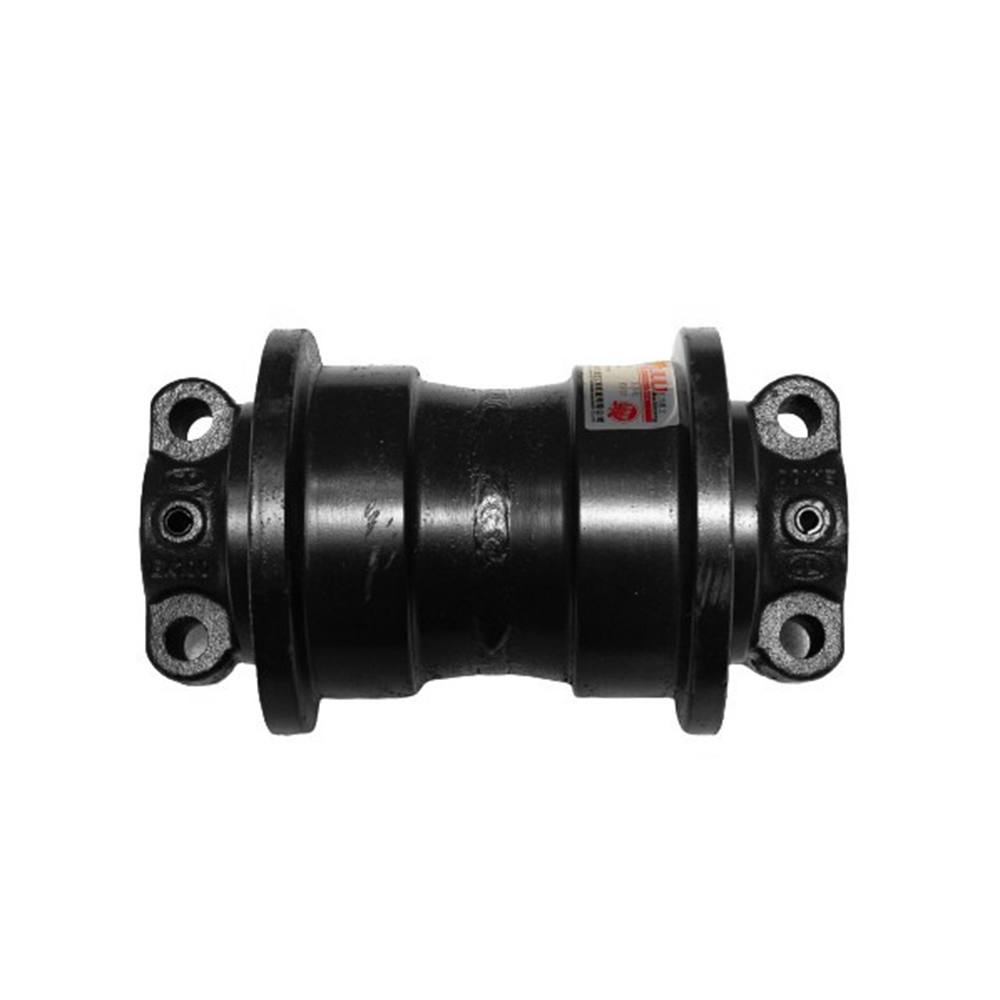
Abstrak
Pembuatan komponen mesin berat, khususnya bagian undercarriage seperti track roller, memerlukan lapisan permukaan yang memberikan daya tahan dan ketahanan korosi yang luar biasa. Dokumen ini membahas seluk-beluk proses pengecatan otomatis track roller, pergeseran teknologi dari metode aplikasi manual ke sistem robotik yang menawarkan konsistensi unggul, efisiensi, dan kualitas. Analisis terhadap proses ini mengungkapkan metodologi multi-tahap yang mencakup persiapan permukaan yang cermat, pemrograman robotik yang canggih, kontrol kimia cat yang tepat, dan protokol jaminan kualitas yang ketat. Investigasi ini mengeksplorasi keunggulan komparatif dari berbagai teknologi otomatis, termasuk lengan robot artikulasi dan berbagai teknik atomisasi cat. Ini lebih lanjut membedah interaksi penting antara persiapan substrat, seperti peledakan tembakan dan pelapis konversi kimia, serta daya rekat dan kinerja cat akhir. Tujuannya adalah untuk memberikan kerangka kerja yang komprehensif bagi produsen dan insinyur di wilayah seperti Rusia, Australia, dan Asia Tenggara untuk memahaminya, melaksanakan, dan mengoptimalkan garis pengecatan otomatis, sehingga meningkatkan umur operasional track roller di lingkungan yang menantang seperti pertambangan dan konstruksi. Wacana ini mensintesis prinsip-prinsip dari ilmu material, robotika, kimia, dan rekayasa kualitas untuk menyajikan pandangan holistik tentang proses manufaktur canggih ini.
Kunci takeaways
- Persiapan permukaan yang tepat adalah dasar untuk daya rekat cat dan ketahanan korosi jangka panjang.
- Memilih sistem robotik dan alat penyemprot yang tepat berdampak langsung pada efisiensi perpindahan cat dan kualitas hasil akhir.
- Mengontrol viskositas dan kandungan kimia cat sangat penting untuk aplikasi yang konsisten dan kinerja pengawetan.
- Terapkan proses pengecatan otomatis track roller yang kuat untuk mencapai kesempurnaan, pelapisan berulang.
- Pengendalian lingkungan di dalam bilik pengecatan tidak dapat dinegosiasikan untuk mencegah kerusakan permukaan.
- Sistem visi yang didukung AI mengubah kontrol kualitas dengan memungkinkan deteksi cacat secara real-time.
- Rencana pemeliharaan preventif yang terstruktur sangat penting untuk umur panjang dan keandalan sistem otomatis.
Daftar isi
- Keharusan Dasar: Mengapa Pengecatan Otomatis untuk Track Roller?
- Pertimbangan 1: Pra-Perawatan – Pahlawan Adhesi Cat Tanpa Tanda Jasa
- Pertimbangan 2: Seleksi dan Integrasi Sistem Robot
- Pertimbangan 3: Kontrol Kimia dan Viskositas Cat
- Pertimbangan 4: Seni dan Ilmu Pemrograman Jalur
- Pertimbangan 5: Pengendalian Lingkungan dan Pencegahan Kontaminasi
- Pertimbangan 6: Kontrol Kualitas dan Analisis Cacat dalam Jalur Otomatis
- Pertimbangan 7: Pemeliharaan, Keamanan, dan Pembuktian Masa Depan
- Pertanyaan yang sering diajukan (FAQ)
- Kesimpulan
- Referensi
Keharusan Dasar: Mengapa Pengecatan Otomatis untuk Track Roller?
Sebelum kita bisa mengapresiasi tarian rumit dari lengan robot yang mengaplikasikan lapisan cat tanpa cacat, pertama-tama kita harus memahami dunia tempat subjeknya berada, roller trek, hidup dan beroperasi. Ini adalah dunia dengan tekanan yang sangat besar, abrasi yang konstan, dan paparan tanpa henti terhadap elemen korosif. Buldoser, ekskavator, dan mesin terlacak lainnya adalah pekerja keras konstruksi modern, pertambangan, dan pertanian (Rentz Besar, 2023). Kemampuan mereka untuk menavigasi medan yang kasar sepenuhnya bergantung pada sistem undercarriage, perakitan sproket yang rumit, pemalas, rantai, Dan, Tentu saja, track roller. Untuk memahami perlunya proses penyelesaian akhir yang canggih adalah dengan terlebih dahulu memahami kenyataan brutal yang dihadapi komponen-komponen ini sehari-hari.
The Brutal Reality of a Track Roller's Life
Bayangkan sebuah buldoser yang beratnya lebih dari 70 ton yang melewati tambang batu di Pedalaman Australia atau lokasi konstruksi berlumpur di Asia Tenggara. Seluruh bobot alat berat ini didistribusikan melalui beberapa titik kontak pada rantai track, yang pada gilirannya didukung oleh track roller. Rol ini terus-menerus bergesekan dengan jalur baja, menahan beban statis dan dinamis yang sangat besar. Mereka dibombardir oleh batu, pasir, dan kerikil. Mereka terendam lumpur, air, dan drainase tambang yang bersifat asam. Lingkungan operasional merupakan tempat yang rawan terhadap keausan mekanis dan korosi kimia.
Kegagalan pada satu track roller dapat membuat seluruh mesin bernilai jutaan dolar terhenti, menyebabkan downtime yang mahal dan mimpi buruk logistik. Integritas track roller, Karena itu, bukanlah masalah mekanika sederhana; ini adalah masalah kelayakan ekonomi dari proyek yang dilayaninya. Pertahanan utama melawan serangan gencar ini, di luar metalurgi awal dan perlakuan panas dari baja itu sendiri, adalah lapisan pelindung. Pekerjaan cat yang diaplikasikan dengan buruk lebih dari sekedar cacat kosmetik; ini adalah undangan bagi karat untuk memulai pekerjaannya yang berbahaya, mengorbankan integritas struktural komponen dari luar ke dalam. Tuntutan ditempatkan pada hal ini komponen undercarriage yang kokoh memerlukan proses pelapisan yang sekuat dan dapat diandalkan seperti bagian itu sendiri.
Dari Penyemprotan Manual hingga Presisi Robotik: Sebuah Lompatan Evolusioner
Selama bertahun-tahun, metode standar untuk mengecat bagian-bagian mesin berat adalah penyemprotan manual. Operator yang terampil, dipersenjatai dengan pistol semprot, akan mengaplikasikan cat dengan kemampuan terbaiknya. Padahal cara ini bisa menghasilkan hasil akhir yang layak di tangan pengrajin sejati, itu penuh dengan inkonsistensi yang melekat. Ketebalan film dapat bervariasi secara dramatis dari satu bagian ke bagian lainnya, atau bahkan di satu bagian. Satu operator mungkin mengaplikasikan lapisan yang sedikit lebih tebal dari yang lain. Kelelahan bisa terjadi, menyebabkan tetesan, melorot, dan tempat yang terlewat. Lebih-lebih lagi, efisiensi perpindahan—persentase cat yang benar-benar menempel pada suatu komponen versus cat yang hilang akibat penyemprotan berlebih—seringkali cukup rendah dalam proses manual, menyebabkan limbah material dalam jumlah besar dan emisi Senyawa Organik Mudah Menguap (Volatile Organic Compounds) yang lebih tinggi (VOC).
Proses pengecatan otomatis track roller mewakili perubahan paradigma. Ini menggantikan variabilitas tangan manusia dengan pengulangan mesin yang tepat. Sistem robotik dapat mengikuti jalur yang sama persis, dengan kecepatan yang sama persis, dengan laju aliran cat yang sama persis, untuk ribuan bagian tanpa penyimpangan. Hal ini menghasilkan ketebalan film seragam yang dioptimalkan untuk perlindungan dan biaya. Ini adalah evolusi dari kerajinan ke sains, dari perkiraan hingga presisi.
Argumen Ekonomi dan Kualitas untuk Otomasi
Alasan bisnis untuk otomatisasi di bidang ini sangat menarik. Meskipun investasi modal awal untuk jalur pengecatan robotik cukup besar, laba atas investasi diwujudkan melalui beberapa cara utama. Mengurangi konsumsi cat karena efisiensi transfer yang lebih tinggi, biaya tenaga kerja yang lebih rendah, peningkatan throughput, dan pengurangan yang signifikan dalam pengerjaan ulang dan klaim garansi semuanya berkontribusi pada keuntungan yang lebih sehat. Tabel di bawah ini memberikan perbandingan nyata antara kedua metodologi tersebut, illustrating the quantifiable benefits of embracing a track roller automated painting process.
| Metrik | Manual Spray Painting | Automated Robotic Painting |
|---|---|---|
| Film Thickness Consistency | Rendah hingga Sedang (High operator dependency) | Sangat Tinggi (Repeatability within microns) |
| Transfer Efficiency | 30% – 50% (Conventional spray guns) | 65% – 95% (Electrostatic/HVLP atomizers) |
| Throughput (Parts per hour) | Variabel, dependent on operator skill | High and consistent |
| Labor Requirement | Tinggi (Skilled painters required for each booth) | Rendah (Supervisors and maintenance personnel) |
| Material Waste (Paint) | Tinggi | Rendah |
| VOC Emissions | Tinggi | Rendah hingga Sedang (depending on paint/abatement) |
| Rework/Defect Rate | 5% – 15% (Commonly) | < 1% (With proper setup) |
| Operator Health & Keamanan | Higher exposure to solvents and particulates | Minimal direct exposure |
The quality argument is just as powerful. A consistent, uniform coating provides predictable and reliable corrosion protection. There are no weak spots where rust can gain a foothold. Hasil akhirnya secara estetika lebih unggul, yang, sementara berfungsi sekunder, mencerminkan kualitas keseluruhan dari komponen yang diproduksi dan merek itu sendiri. Untuk pemasok yang melayani permintaan pasar internasional, dari daerah beku di Rusia hingga iklim lembab di Timur Tengah, memberikan produk dengan lapisan yang benar-benar unggul merupakan keunggulan kompetitif yang signifikan.
Pertimbangan 1: Pra-Perawatan – Pahlawan Adhesi Cat Tanpa Tanda Jasa
Seseorang mungkin dimaafkan jika berpikir bahwa proses pengecatan dimulai dengan cat. Pada kenyataannya, keberhasilan atau kegagalan suatu pelapisan ditentukan jauh sebelum setetes cat diatomisasi. Tahap pra-perawatan adalah fondasi tak kasat mata yang menjadi dasar dibangunnya seluruh sistem perlindungan. Anda bisa menggunakan sistem robot tercanggih dan termahal, cat yang direkayasa secara kimia, but if you apply it to a contaminated or improperly prepared surface, you are guaranteeing a premature failure. The goal of pre-treatment is twofold: to create a surgically clean surface and to modify that surface to promote maximum adhesion. This stage is a critical component of any serious track roller automated painting process.
Mechanical Surface Preparation: Shot Blasting vs. Grit Blasting
The first step in dealing with a raw steel forging or casting for a track roller is to remove any mill scale, karat, welding flux, or other surface contaminants. More than just cleaning, the goal is to create a surface "profile" or "anchor pattern"—a series of microscopic peaks and valleys that dramatically increases the surface area and gives the paint a physical structure to grip onto. The most common methods for achieving this are shot blasting and grit blasting.
Imagine trying to paint a sheet of polished glass versus a sheet of sanded wood. The paint would bead up and easily flake off the glass, while it would soak into and firmly adhere to the wood. This is the principle behind creating a surface profile.
- Shot Blasting: This process uses a centrifugal wheel to propel small, spherical metallic particles (shot) at high velocity against the part's surface. The impact of the round shot peens the surface, creating a dimpled, uniform texture. It is very effective for removing scale and is generally a faster, less aggressive process than grit blasting. It is often preferred for new parts where the primary goal is cleaning and creating a consistent profile.
- Grit Blasting: This method uses compressed air to propel angular, sharp particles (menggertakkan), such as steel grit or aluminum oxide, at the surface. The sharp edges of the grit cut into the steel, creating a more angular and typically deeper anchor pattern. Grit blasting is more aggressive and is excellent for removing heavy rust, thick coatings, and for achieving a very deep profile when required by a specific paint system.
The choice between shot and grit, and the specific size and hardness of the media used, is not arbitrary. It is dictated by the part's initial condition, its metallurgy, and the specifications of the primer that will be applied. The standard for surface cleanliness, often specified as Sa 2.5 or "Near-White Blast Cleaning" by ISO 8501-1, is a common target. This standard dictates that the surface must be free from all visible oil, grease, kotoran, debu, mill scale, karat, and paint, with only slight stains or streaks remaining.
Chemical Cleaning and Conversion Coatings: The Molecular Bond
After mechanical blasting, the part may look clean, but microscopic residues can remain. The next phase of pre-treatment moves from the mechanical to the chemical realm. The part is typically run through a multi-stage washer.
- Alkaline Degreasing: The first stage is a hot alkaline wash to remove any residual oils, lubricants, or greases from the manufacturing process or handling.
- Rinsing: Multiple rinse stages follow to remove the alkaline solution and any saponified oils, ensuring the surface is free of any chemical residues that could interfere with the next step.
- Conversion Coating: This is perhaps the most sophisticated step in the pre-treatment process. The part is immersed in or sprayed with a chemical solution, most commonly an iron phosphate or zinc phosphate solution. This is not just another cleaning step. The solution reacts with the steel surface to grow a thin, inert, crystalline layer that is chemically bonded to the substrate.
Think of a conversion coating as a molecular bridge. It transforms the active steel surface into a stable, non-metallic surface that is not only more corrosion-resistant on its own but also has a crystalline structure that is exceptionally receptive to the paint's polymer chains. An iron phosphate coating is a good, cost-effective option, while a zinc phosphate coating provides superior performance, creating a more robust crystalline structure that offers enhanced adhesion and under-film corrosion resistance. The choice depends on the desired performance characteristics and cost targets.
The Role of Drying and Dehumidification
The final act in the pre-treatment saga is the drying oven. After the final rinse, the part must be dried completely and quickly to prevent flash rusting—the instantaneous formation of a thin layer of rust on a freshly cleaned and activated steel surface. Any moisture left on the surface or trapped in crevices will become a point of failure when painted over. The drying oven uses heated, circulating air to evaporate all water. The temperature and time in the oven are carefully controlled to ensure complete drying without overheating the part, which could affect the freshly formed conversion coating. In humid environments, like those found in parts of Africa and Southeast Asia, controlling the ambient humidity in the transition from the dry-off oven to the paint booth is also a major consideration to prevent moisture from re-condensing on the cool steel surface.
Pertimbangan 2: Seleksi dan Integrasi Sistem Robot
With a perfectly prepared track roller now ready for its protective layer, our attention turns to the heart of the automated system: the robot itself. The selection of the robotic system is not a one-size-fits-all decision. It is a careful calculation based on the size and complexity of the part, the required throughput, the layout of the factory floor, and the type of paint being applied. The goal is to choose a system that provides the necessary reach, fleksibilitas, and payload capacity to perform the painting task with maximum efficiency and precision. Integrating this robot into the larger production line is a complex task of mechanical, electrical, and software engineering.
Articulated Robots vs. Cartesian Systems: A Kinematic Choice
When people envision a "robot," they typically picture a six-axis articulated robot, which closely mimics the versatility of a human arm with a "shoulder," "elbow," and "wrist." This is, by far, the most common choice for complex painting applications.
Six-Axis Articulated Robots: These robots offer the greatest flexibility. Their multiple rotating joints allow them to reach around corners, paint complex internal surfaces, and maintain the optimal angle and distance between the spray gun and the part at all times. For a component like a track roller, with its curved outer surfaces, flensa, and central bore, the dexterity of a six-axis robot is invaluable. They can be programmed to follow intricate paths that would be impossible for a human or a simpler machine.
Cartesian Robots: These robots, also known as gantry or linear robots, move in three linear axes (X, Y, Z). Think of them like an overhead crane with a spray gun attached. While they lack the fluid flexibility of an articulated arm, they excel in painting large, relatively flat surfaces. They are simpler mechanically, often less expensive, and can be easier to program for simple geometries. For a high-volume line dedicated to a single, simple part, a Cartesian system might be considered, but for the varied and complex shapes of undercarriage components, the articulated robot is the superior choice.
The selection also involves considering the robot's "work envelope" (the space it can reach), its payload capacity (it must be able to carry the spray gun, selang, and any other tooling), and its classification for use in a hazardous location (paint booths are explosive environments).
End-of-Arm Tooling (EOAT): The Atomizer at the Forefront
The robot is just the motive force; the real work of painting is done by the End-of-Arm Tooling (EOAT), specifically the atomizer or spray gun. The choice of atomizer is fundamentally linked to the type of paint being used and the desired finish quality. The goal of atomization is to break the liquid paint into a fine, controllable mist.
- High Volume, Low Pressure (HVLP) Guns: These use a high volume of air at a low pressure to atomize the paint. They offer good transfer efficiency and fine control, making them suitable for high-quality finishes.
- Airless/Air-Assisted Airless Guns: Airless systems use high hydraulic pressure to force paint through a tiny orifice, causing it to atomize. They can deliver very high volumes of paint quickly but can be harder to control. Air-assisted airless adds a small amount of air at the nozzle to improve the pattern and reduce mottling.
- Electrostatic Rotary Atomizers (Bells): This is the high-tech end of the spectrum. The paint is fed to the center of a rapidly spinning cup or bell (30,000-60,000 RPM). Centrifugal force flings the paint to the edge of the bell, where it forms extremely fine ligaments that break up into a soft, consistent mist. Serentak, an electrostatic charge (hingga 100,000 volts) is applied to the paint particles. Since the track roller is grounded, the charged paint particles are actively drawn to the part, even wrapping around to coat the back side. This "wraparound" effect gives electrostatic bells the highest possible transfer efficiency, often exceeding 90%. This means less wasted paint, lower VOC emissions, and a more uniform coating, making it a premier choice for a high-performance track roller automated painting process.
PLC Integration and the Human-Machine Interface (HMI)
The robot does not operate in a vacuum. It is the centerpiece of a larger system that includes conveyors, part recognition sensors, paint mixing rooms, safety interlocks, and curing ovens. The conductor of this entire orchestra is the Programmable Logic Controller (PLC). The PLC is a ruggedized industrial computer that receives inputs from sensors (MISALNYA., "a part is in position"), processes the logic ("if part type A is present, run program A"), and sends outputs to actuators (MISALNYA., "start conveyor," "tell robot to begin painting").
The communication between the robot controller and the master PLC is vital for seamless operation. The Human-Machine Interface (HMI) is the window into this system for the human supervisor. It is typically a touchscreen panel that displays the status of the entire line, allows the operator to select recipes, start and stop the process, and view alarms or diagnostics. A well-designed HMI is intuitive, providing clear information and control without overwhelming the user. It allows an operator with minimal robotics training to effectively manage a highly complex automated system.
Pertimbangan 3: Kontrol Kimia dan Viskositas Cat
We have prepared the surface and selected our robotic painter. Now we must turn our attention to the paint itself. The coating applied to a track roller is not merely "paint" in the decorative sense; it is a highly engineered chemical system designed to withstand extreme conditions. The selection of this system and the precise control of its physical properties during application are paramount. An automated process can only be as good as the material it is applying. A failure to understand and manage the paint chemistry is a recipe for inconsistent results and field failures.
High-Solids, Waterborne, or Powder Coatings? Analisis Komparatif
The choice of paint technology is a balance of performance, biaya, and environmental regulation. The main contenders for heavy equipment applications are high-solids solvent-borne paints, waterborne paints, and powder coatings.
| Jenis Pelapisan | Karakteristik Utama | Advantages for Track Rollers | Kekurangan |
|---|---|---|---|
| High-Solids Solvent-Borne | Traditional technology with high percentage of solids (pigment/resin) and lower solvent content. | Excellent adhesion, high gloss, fast curing, robust and proven performance. | Higher VOC emissions, flammable, requires solvent-based cleanup. |
| Waterborne | Uses water as the primary carrier instead of chemical solvents. | Very low VOCs, non-flammable, easy cleanup with water. | Slower drying/curing, requires stainless steel equipment, sensitive to humidity during application. |
| Powder Coating | A dry, free-flowing powder applied electrostatically and then cured with heat to form a "skin". | Extremely durable, excellent chip/abrasion resistance, zero VOCs, high transfer efficiency. | Requires a curing oven, difficult to achieve thin films, color changeover can be time-consuming. |
Selama bertahun-tahun, high-solids solvent-borne epoxies and polyurethanes have been the go-to choice for heavy equipment due to their unmatched durability and ease of application in a wide range of conditions. Namun, increasing environmental regulations regarding VOCs, particularly in regions like Europe and parts of Asia, have driven significant innovation in waterborne and powder coating technologies. Powder coating, in particular, offers a compelling case for track rollers. The tough, thick film it creates is exceptionally resistant to the chipping and abrasion that these parts constantly face. The track roller automated painting process must be designed around the specific requirements of the chosen paint system. A line designed for liquid paint cannot be easily converted to powder, and vice-versa.
The Science of Viscosity: Temperature, Shear, and Flow Rate
For liquid paints (both solvent-borne and waterborne), the single most important physical property to control is viscosity—a measure of the fluid's resistance to flow. Think of the difference between water and honey. Water has a low viscosity, honey has a high viscosity. The viscosity of paint determines how well it will atomize, how it will flow out on the surface, and its tendency to sag or run on vertical surfaces.
Paint viscosity is highly sensitive to temperature. As paint gets warmer, its viscosity drops; as it gets colder, its viscosity increases. A 5°C change in paint temperature can alter the viscosity by as much as 30-50%. Without temperature control, a paint line in a non-climate-controlled factory in Korea could be spraying thin, runny paint in the summer afternoon and thick, poorly atomized paint on a winter morning. This leads to massive inconsistency.
A robust automated system must include a paint circulation system with temperature control. The paint is constantly circulated from a central mixing room through a heat exchanger to maintain it at a precise temperature (MISALNYA., 25°C ± 1°C) all the way to the robot's atomizer. This ensures that the viscosity at the point of application is always the same, day or night, summer or winter, which is a cornerstone of a repeatable process.
Curing Mechanisms: From Thermal Ovens to Infrared and UV
Once the paint is applied, it is still just a wet film. The final step is curing, the chemical process that transforms the liquid into a hard, tahan lama, solid coating. The curing method is dictated by the paint's chemistry.
- Thermal Convection Ovens: This is the most common method. The painted part passes through a long oven where hot air is circulated to accelerate the evaporation of solvents (or water) and drive the cross-linking chemical reactions in the resin. The time and temperature profile of the oven (MISALNYA., 20 minutes at 80°C) is precisely controlled.
- Infrared (IR) Ovens: IR ovens use infrared radiation to directly heat the surface of the painted part. This is a much faster method of heating than convection, as it does not waste energy heating the surrounding air. IR can significantly reduce the curing time and the physical footprint of the oven. It is particularly effective for flat or simple parts but can have trouble evenly heating complex geometries with shadowed areas.
- Ultraviolet (UV) Curing: This is a highly specialized process used for UV-curable coatings. The paint contains photoinitiators that, when exposed to high-intensity ultraviolet light, instantly trigger a polymerization reaction, curing the paint in seconds. This method is extremely fast and energy-efficient but requires specially formulated (and often more expensive) paints and a clear line of sight from the UV lamps to the painted surface.
For the robust coatings required for track rollers, a combination approach is often effective. Misalnya, a short IR "gelation" zone can be used to quickly set the surface of the paint to prevent sagging, followed by a longer convection oven to ensure the entire film thickness is fully cured.
Pertimbangan 4: Seni dan Ilmu Pemrograman Jalur
A state-of-the-art robot and perfectly conditioned paint are useless without the right instructions. The programming of the robot's path is where the "intelligence" of the system resides. This is the set of digital commands that dictates the robot's every move, translating the requirements of the painting process into a physical ballet of precision. The goal is to apply a perfectly uniform layer of paint over the entire complex surface of the track roller, wasting as little material as possible and completing the cycle in the shortest possible time. It is a task that blends the empirical science of fluid dynamics with the practical art of a master painter.
Offline Programming (OLP) vs. Teach Pendant Programming
There are two primary methods for telling the robot what to do: teach pendant programming and offline programming.
Teach Pendant Programming: This is the traditional method. A skilled technician takes the physical robot into the paint booth and uses a handheld controller (the "teach pendant") to manually move the robot's arm through the desired painting motions. They "teach" the robot by saving a series of points that make up the path. This method is direct and intuitive but has significant drawbacks. It requires shutting down the production line for programming, which means lost production time. It is also highly dependent on the skill of the programmer, and it can be difficult to create perfectly smooth, optimized paths. The programmer is also exposed to the paint booth environment.
Offline Programming (OLP): This is the modern, software-driven approach. Programmers work on a computer in an office, far from the production line. They use a 3D CAD model of the track roller and a simulation software that contains a digital twin of the robot and paint booth. Within this virtual environment, they can create and test the robot's paths. They can specify parameters like speed, spray angle, and paint flow rate for every segment of the path. The software can automatically generate paths, check for collisions, and even simulate the resulting film thickness. Once the program is perfected in the virtual world, it is downloaded to the real robot. OLP maximizes production uptime, allows for far more complex and optimized paths, and is safer for programmers. For a high-volume, high-quality track roller automated painting process, OLP is the superior methodology.
Optimizing Gun-to-Part Distance and Overlap
Two of the most fundamental variables in any spray application are the distance from the atomizer to the part and the amount of overlap between successive spray passes.
Gun-to-Part Distance: This distance directly affects the size of the spray pattern and the transfer efficiency. If the gun is too close, the pattern is small, and the force of the air can create bounce-back and turbulence, leading to defects. If the gun is too far away, the pattern becomes too wide and diffuse, a significant amount of paint mist fails to reach the part, and the transfer efficiency plummets. For an electrostatic bell, the optimal distance is typically around 25-30 cm. The robot's program must maintain this optimal distance with high precision, even as it follows the curved surfaces of the track roller.
Overlap: To achieve a uniform film, each pass of the spray gun must overlap the previous one. A typical target is a 50% overlap. This means the center of each new spray pattern is aimed at the edge of the previous one. Too little overlap results in light and dark stripes ("striping"). Too much overlap leads to an excessively thick film and potential for sags and runs. The robot's path must be programmed to maintain this precise overlap consistently across the entire part.
Navigating Complex Geometries: Flanges, Hubs, and Seals
A track roller is not a simple cylinder. It has mounting flanges, a central bore where the bearings and seals reside, and recessed areas. These features present challenges for painting. The areas where the roller contacts the track chain need a robust coating, but the precision-machined surfaces for seals and bearings must remain completely free of paint.
This is where the precision of robotic programming shines. The robot can be programmed to:
- Masking Avoidance: Precisely trace the edge of a masked-off area, applying paint right up to the line without overspraying onto the protected surface. This reduces or eliminates the need for manual touch-ups or paint removal after curing.
- Angle Adjustments: The robot can constantly adjust the "wrist" angle of the atomizer to keep it perpendicular to the surface, even when painting the radius of a flange or the inside of the central bore. This ensures an even film build in areas that are difficult for a human painter to reach consistently.
- Trigger Control: The program can turn the spray gun on and off with millisecond precision, a technique known as "triggering." This allows the robot to paint specific sections while skipping others, such as the openings in the flanges, minimizing overspray and wasted paint.
Programming for these complex geometries is an iterative process of virtual simulation and real-world testing to achieve a perfect, efisien, and complete coating.
Pertimbangan 5: Pengendalian Lingkungan dan Pencegahan Kontaminasi
The perfect part preparation, the ideal robot, and the flawless program can all be rendered worthless by a single speck of dust. The painting environment itself is a critical variable in the equation of quality. The goal is to create a self-contained micro-environment that is optimized for paint application and free from external contaminants. The paint booth is not just a box to contain overspray; it is a sophisticated piece of environmental engineering. In a world-class track roller automated painting process, the control of this environment is absolute.
The Pressurized Paint Booth: A Fortress Against Defects
The primary defense against airborne contamination is the pressurized downdraft paint booth. Here’s how it works:
- Positive Pressure: The booth's air handling system brings in more filtered air than it exhausts. This creates a slight positive pressure inside the booth relative to the surrounding factory. This means that air is always flowing out of any small openings, retak, or conveyor slots, actively preventing dust and dirt from the factory from being drawn in.
- Downdraft Airflow: The clean, filtered air is introduced through a diffusion ceiling across the entire top of the booth and flows vertically downwards, like a gentle, uniform curtain, over the part being painted. This downward flow captures any overspray particles and carries them down into a filtered exhaust plenum in the floor. This prevents overspray from one part from drifting onto another and keeps the air around the robot and part exceptionally clean.
This controlled, laminar airflow is essential for achieving a "Class A" finish, free from nibs, debu, and other airborne defects. The air velocity is carefully balanced—fast enough to effectively remove overspray but not so fast that it disrupts the atomized paint pattern from the robot.
Air Filtration, Temperature, and Humidity Management
The air entering the paint booth must be cleaner than the air in a hospital operating room. This is achieved through a multi-stage filtration system. Pre-filters capture large particles, while high-efficiency final filters, often HEPA-grade, remove particles down to the sub-micron level.
Just as paint temperature is critical, so too is the temperature and humidity of the air inside the booth.
- Temperature Control: Maintaining a stable air temperature (MISALNYA., 22-24°C) helps to stabilize the evaporation rate of the paint's solvents or water. This consistency contributes to predictable flow-out and curing.
- Humidity Control: This is especially important for waterborne paints. High humidity can dramatically slow down the evaporation of water from the paint film, leading to sags, runs, and extended curing times. Low humidity can cause the paint to dry too quickly, resulting in poor flow-out and a textured "orange peel" appearance. A proper air handling unit will include humidification or dehumidification capabilities to maintain the relative humidity within a narrow band (MISALNYA., 50-65% RH). For manufacturers in the highly variable climates of Africa or the humid conditions of coastal Australia, humidity control is not a luxury; it is a necessity for consistent quality.
VOC Abatement and Environmental Compliance
The air that is exhausted from the paint booth carries with it the solvent fumes (VOC) and paint overspray that were captured by the downdraft flow. Environmental regulations across the globe, from Russia to Korea, place strict limits on the amount of VOCs that can be released into theatmosphere. Karena itu, the exhaust air must be treated.
The first line of defense is a series of paint-stop filters in the exhaust plenum to capture solid overspray particles. The solvent-laden air then proceeds to an abatement system. The most common technology for this is a Regenerative Thermal Oxidizer (RTO). An RTO is essentially a very high-temperature furnace (lebih dari 800°C) that uses a bed of ceramic media to preheat the incoming solvent-laden air. At these high temperatures, the VOCs are oxidized (burned) and converted into harmless carbon dioxide and water vapor. The "regenerative" part of the name comes from the fact that the hot, clean air leaving the combustion chamber is used to heat another ceramic bed, which will then be used to preheat the next cycle of incoming dirty air. This process recovers up to 97% of the thermal energy, making RTOs a highly effective and energy-efficient method for environmental compliance.
Pertimbangan 6: Kontrol Kualitas dan Analisis Cacat dalam Jalur Otomatis
The promise of automation is a perfect part every time. The reality is that even in the most sophisticated systems, deviations can occur. A nozzle can become partially clogged, a pressure regulator can drift, or a batch of paint can be slightly out of specification. Karena itu, a comprehensive quality control (QC) strategy is not eliminated by automation; lebih tepatnya, it evolves. The focus shifts from inspecting every part for human error to monitoring the process for any deviation from its optimized state. The goal is to catch these deviations instantly, preventing the production of a large number of defective parts.
In-Process Monitoring: Film Thickness and Wet Film Gauges
Waiting until a part is fully cured to discover a problem is inefficient. Modern QC emphasizes in-process monitoring.
- Wet Film Thickness (WFT): Immediately after painting, the thickness of the wet paint film can be measured. This can be done manually with a simple notched comb gauge for spot checks. More advanced automated systems can use non-contact sensors (such as ultrasonic or laser-based systems) mounted on a separate robot or fixed gantry to automatically measure the WFT at several critical points on the track roller. If the WFT is out of specification, it indicates a problem with paint flow, robot speed, or gun distance that can be corrected immediately. The WFT is a direct leading indicator of the final Dry Film Thickness (DFT).
- Process Parameter Monitoring: The PLC and HMI are constantly monitoring hundreds of process variables in real-time: paint pressure, paint flow rate, bell speed, electrostatic voltage, oven temperatures, air-flow velocities, dan banyak lagi. Alarms can be set to trigger if any parameter drifts outside its acceptable window, alerting the supervisor to a potential issue before it results in a bad part.
Post-Cure Inspection: Adhesion, Kekerasan, and Corrosion Testing
Once the paint is cured, a battery of tests is performed on a statistical basis to validate the quality of the final product and the stability of the process. These tests are often destructive and are performed on sample parts or test panels that go through the line.
- Dry Film Thickness (DFT): This is the most basic QC check. A small, non-destructive electronic gauge using magnetic induction or eddy currents is used to measure the thickness of the cured paint. The measurements are taken at multiple specified points on the roller to ensure the entire part meets the engineering specification (MISALNYA., 80-120 microns).
- Adhesion Testing (ASTM D3359): This is a critical test to ensure the paint is properly bonded to the substrate. The most common method is the cross-hatch test. A special knife is used to cut a grid of 6×6 or 11×11 squares through the paint down to the steel. A special adhesive tape is applied firmly over the grid and then rapidly pulled off. The amount of paint removed from the grid is then rated on a scale from 5B (no paint removed, perfect adhesion) to 0B (lebih dari 65% removed, complete failure). For a part like a track roller, a 5B or 4B rating is typically required.
- Pencil Hardness Test (ASTM D3363): This test measures the coating's resistance to scratching. A set of calibrated pencils of varying hardness (from 6B, very soft, to 9H, very hard) are pushed across the surface at a specific angle and pressure. The "pencil hardness" is defined as the hardest pencil that does not scratch or gouge the coating. A durable polyurethane topcoat might be specified to have a hardness of 2H or greater.
- Corrosion Resistance Testing (ASTM B117): To simulate long-term performance in corrosive environments, painted parts are placed in a sealed salt spray cabinet. A hot, atomized solution of 5% salt water is continuously sprayed inside the chamber, creating an extremely aggressive corrosive environment. Parts are left in the chamber for a specified duration (MISALNYA., 500 hours or 1000 jam) and then evaluated for signs of blistering, rusting, or creepage of rust from a scribe mark made in the coating. This accelerated test provides confidence in the long-term durability of the coating system. The results of these tests provide crucial feedback for ensuring the longevity of high-quality track rollers.
AI-Powered Vision Systems for Real-Time Defect Detection
The cutting edge of QC in automated painting is the integration of Artificial Intelligence (AI) and machine vision. High-resolution cameras are placed inside the paint booth or at the exit of the curing oven. These cameras capture images of every single part that comes through the line. An AI model, which has been trained on thousands of images of "good" parts and parts with specific defects (drips, melorot, craters, kotoran), analyzes these images in real-time.
If the AI detects a defect, it can instantly flag the part for rejection or rework and, lebih penting lagi, can correlate the defect with process data. Misalnya, if it starts detecting a series of sags on the lower flange of the rollers, it might correlate this with a slight drop in paint viscosity that occurred minutes earlier. This allows the system to not just detect problems but to begin diagnosing their root causes, moving from simple quality control to intelligent process control.
Pertimbangan 7: Pemeliharaan, Keamanan, dan Pembuktian Masa Depan
An automated painting line is a complex ecosystem of mechanical, electrical, and chemical systems. Ignoring its need for regular care is a direct path to costly downtime, declining quality, and potential safety hazards. A proactive approach to maintenance, a deeply ingrained culture of safety, and a forward-looking strategy for technological upgrades are the final pillars supporting a successful and sustainable operation. Investing in the system does not end on the day of commissioning; it is an ongoing commitment.
Preventive Maintenance Schedules for Robotic Systems
A robot may not get tired, but its components do wear out. A Preventive Maintenance (PM) program is a structured schedule of checks, cleanings, lubrications, and parts replacements designed to prevent failures before they happen. A typical PM schedule for a painting robot would include:
- Daily Checks: Visual inspection of hoses for wear, checking the atomizer for cleanliness, verifying safety sensors are functional.
- Weekly Tasks: Cleaning the robot arm and base, checking fluid levels in gearboxes, backing up the robot program.
- Monthly/Quarterly Tasks: Lubricating joints and bearings, changing filters in the paint and air lines, inspecting the robot's wrist assembly for wear.
- Annual Service: A more in-depth service, often performed by the robot manufacturer's technicians, which may include replacing wear items like seals and gaskets, re-greasing harmonic drives, and recalibrating the robot's positional accuracy.
Demikian pula, every other component in the line, from the conveyor chain to the oven burners to the RTO's ceramic media, must have its own PM schedule. This disciplined approach minimizes unexpected breakdowns and ensures the track roller automated painting process runs with the reliability it was designed for.
Safety Protocols: Interlocks, E-Stops, and Explosion-Proofing
A paint booth is an inherently hazardous environment. The combination of flammable solvents, high-voltage electrostatics, and powerful, high-speed machinery creates a significant risk of fire, explosion, and injury. Safety cannot be an afterthought; it must be designed into the system from the ground up.
- Explosion-Proofing: All electrical components inside the paint booth—lights, motors, sensor, and the robot itself—must be "intrinsically safe" or "explosion-proof." This means they are designed in a way that they cannot create a spark capable of igniting solvent fumes.
- Interlocks: The access doors to the paint booth are fitted with safety interlocks. If a door is opened while the system is in automatic mode, the robot will immediately stop, and the high voltage will be shut off. The system cannot be restarted until the door is closed and a reset sequence is initiated.
- Emergency Stops (E-Stops): Red, mushroom-head E-Stop buttons are located at all operator stations and at key points around the line. Pressing any E-Stop will immediately halt all hazardous motion.
- Fire Suppression: Automated paint booths are equipped with fire detection systems (UV/IR sensors) and an integrated fire suppression system, which can rapidly flood the booth with a suppressant agent like CO2 in the event of a fire.
Comprehensive training for all personnel on these safety systems and emergency procedures is non-negotiable.
The Path to Industry 4.0: Data Analytics and Predictive Maintenance
The future of automated manufacturing lies in the intelligent use of data. A modern automated painting line generates a vast amount of data every second. The principles of Industry 4.0 involve harnessing this data to create a smarter, self-optimizing factory.
- Data Analytics: Instead of just alarming when a parameter goes out of spec, advanced analytics platforms can identify subtle trends and correlations over time. Misalnya, the system might learn that a gradual increase in the robot's motor current on Axis 4, combined with a slight increase in vibration detected by a sensor, is a leading indicator that a gearbox is beginning to fail.
- Predictive Maintenance (PdM): This is the evolution of preventive maintenance. Instead of replacing a part on a fixed schedule, PdM uses data analytics to predict when a component is likely to fail and then schedules maintenance just before that happens. This maximizes the life of each component, reduces maintenance costs, and prevents unscheduled downtime.
- Digital Twin Integration: The OLP software's digital twin can be connected to the real-time data from the factory floor. This allows engineers to test process changes or troubleshoot problems in the virtual world using live data, before implementing them on the real production line.
By embracing these concepts, manufacturers can future-proof their investment, transforming their track roller automated painting process from a static set of instructions into a dynamic, learning system that continuously improves its own efficiency, kualitas, dan keandalan. This is the ultimate goal of automation in the 21st century.
Pertanyaan yang sering diajukan (FAQ)
What is the typical return on investment (ROI) for a track roller automated painting process?
The ROI for an automated painting system typically ranges from 18 ke 36 bulan. This depends heavily on factors like local labor costs, current paint usage, production volume, and the initial cost of the system. The main drivers for the return are significant reductions in paint consumption (due to higher transfer efficiency), biaya tenaga kerja yang lebih rendah, peningkatan throughput, and dramatically reduced rework and warranty claims associated with coating failures.
How difficult is it to program a robot for a new track roller model?
With modern Offline Programming (OLP) software, programming for a new part is significantly easier and faster than traditional methods. If a 3D CAD model of the new track roller is available, a programmer can generate and simulate the painting paths in a virtual environment in a matter of hours, without ever stopping the production line. The final program may require minor touch-ups on the real robot, but the bulk of the work is done offline, making the introduction of new parts highly efficient.
Can one automated line handle different sizes of track rollers?
Ya. Automated lines are designed for flexibility. The system can use sensors (like vision systems or laser scanners) to automatically identify the specific model of track roller entering the booth. The master PLC then instructs the robot to run the corresponding pre-programmed paint path for that specific model. The system can switch between different part sizes and geometries on the fly without any manual intervention.
What are the most common defects in an automated painting process and how are they fixed?
The most common defects are often related to process drift. "Orange peel" (a textured surface) can be caused by paint viscosity being too high or improper atomization. "Sags" or "runs" are caused by applying too much paint or having a viscosity that is too low. "Craters" or "fisheyes" are typically caused by contamination (often oil or silicone) on the part surface or in the compressed air supply. These are fixed by rigorously controlling the pre-treatment process, maintaining precise paint temperature and viscosity, and ensuring meticulous cleanliness of the booth and air supply.
Is powder coating always better than liquid paint for track rollers?
Belum tentu. Powder coating offers exceptional durability and abrasion resistance, which is ideal for a track roller. It also has zero VOCs. Namun, the process requires a substantial investment in curing ovens and can be less efficient for complex shapes or when frequent color changes are needed. High-performance liquid coatings, like two-component polyurethanes, can offer comparable corrosion protection and a smoother finish. The best choice depends on a manufacturer's specific priorities regarding durability, environmental compliance, operational flexibility, dan biaya.
Kesimpulan
The journey of a track roller from a raw steel forging to a finished, resilient component is a testament to modern manufacturing capabilities. The track roller automated painting process stands as a pivotal stage in this journey, a sophisticated synthesis of materials science, robotika, and chemical engineering. It is a process that moves beyond the mere application of color, treating the coating as an integral, engineered component of the final product. By systematically addressing the core considerations—from the foundational importance of pre-treatment to the intelligent future of data-driven maintenance—manufacturers can elevate their production from a craft-based art to a repeatable science.
Implementing such a system is a significant undertaking, demanding capital, keahlian, and a commitment to process control. Belum, the rewards are equally significant. The consistency of an automated system yields a product with predictable, peningkatan daya tahan, reducing field failures and strengthening brand reputation in competitive global markets. The efficiency gains in material and labor, coupled with environmental compliance, create a compelling economic and ethical case. For any supplier of heavy machinery parts aiming to compete and lead in 2025 dan di luar, mastering the principles of automated finishing is not just an option for improvement; it is a fundamental requirement for excellence. The flawless, uniform coating on a track roller is more than just a layer of paint; it is the visible signature of a commitment to quality that runs deep into the heart of the manufacturing process.
Referensi
Rentz Besar. (2023, Oktober 24). Bulldozer types, parts and their uses: Full guide. Rentz Besar. https://www.bigrentz.com/blog/bulldozer-types
Horie, K., Barón, J. R., Hoyle, C., Knaack, D., & Vabrik, P. (2004). Terminology of polymers and polymerization processes in dispersed systems (IUPAC Recommendations 2004). Pure and Applied Chemistry, 76(4), 889–906. https://doi.org/10.1351/pac200476040889
Mafi, R., & Mirabedini, S. M. (2014). The role of surface chemistry and morphology in the adhesion and corrosion performance of a polyester/melamine coating on aluminum substrate. Journal of Coatings Technology and Research, 11(6), 889–897. https://doi.org/10.1007/s11998-014-9596-7
Mishra, A. K., & Yick, S. (2009). Powder coatings for corrosion protection. In S. K. Mittal (Ed.), Coatings and Adhesion (pp. 1-42). Scrivener Publishing.
Müller, B., & Poth, U. (2011). Coatings formulation: An international textbook. Vincentz Network.
Reanod International Network Technology Co.,Ltd. (2025, Berbaris 26). Essential parts of a bulldozer and their functions. HBXG Dozer. https://www.hbxgdozer.com/news/essential-parts-of-a-bulldozer-and-their-functions.html
Schmid, S. R., & Kalpakjian, S. (2020). Manufacturing engineering and technology (8edisi ke-7.). Pearson.
Shanbo Dozer. (2025, February 19). Key differences between various bulldozer types and their uses. Shanbo Dozer. https://www.shanbodozer.com/key-differences-between-various-bulldozer-types-and-their-uses
Weismantel, G. E. (1981). Paint handbook. McGraw-Hill.
Zorll, U. (Ed.). (2001). Coatings on steel. Vincentz Network.